We were lucky to catch up with Renee recently and have shared our conversation below.
Renee, appreciate you joining us today. How did you learn to do what you do? Knowing what you know now, what could you have done to speed up your learning process? What skills do you think were most essential? What obstacles stood in the way of learning more?
I am an artist by nature. I grew up drawing and being creative in whatever way I could. I learned to paint abstract oil paintings by my own experimentation and application over the past ten years. How it all started was during my undergrad degree in interior design. I took fundamental art classes such as drawing, color theory, 3D and graphic design, art history, and photography. It was the amount of training I had visually in interior design–– seeing so many shapes, lines, forms, and patterns that really trained my eye. We also did a lot of hand drafting. It wasn’t until two years into my degree that I decided to try painting. I was shown to simply squirt some paint on a palette and dip the brush in oil to thin the paint and that’s all the instruction I had on how to oil paint. The rest was self-taught by doing my own research online. For me, there’s so much that I learned in my art degree that indirectly helped me to be able to create abstract art. It’s all about composition and finding your own way. I think it’s essential to learn the fundamentals of art in general and that way you have something to build off of.
Renee, love having you share your insights with us. Before we ask you more questions, maybe you can take a moment to introduce yourself to our readers who might have missed our earlier conversations?
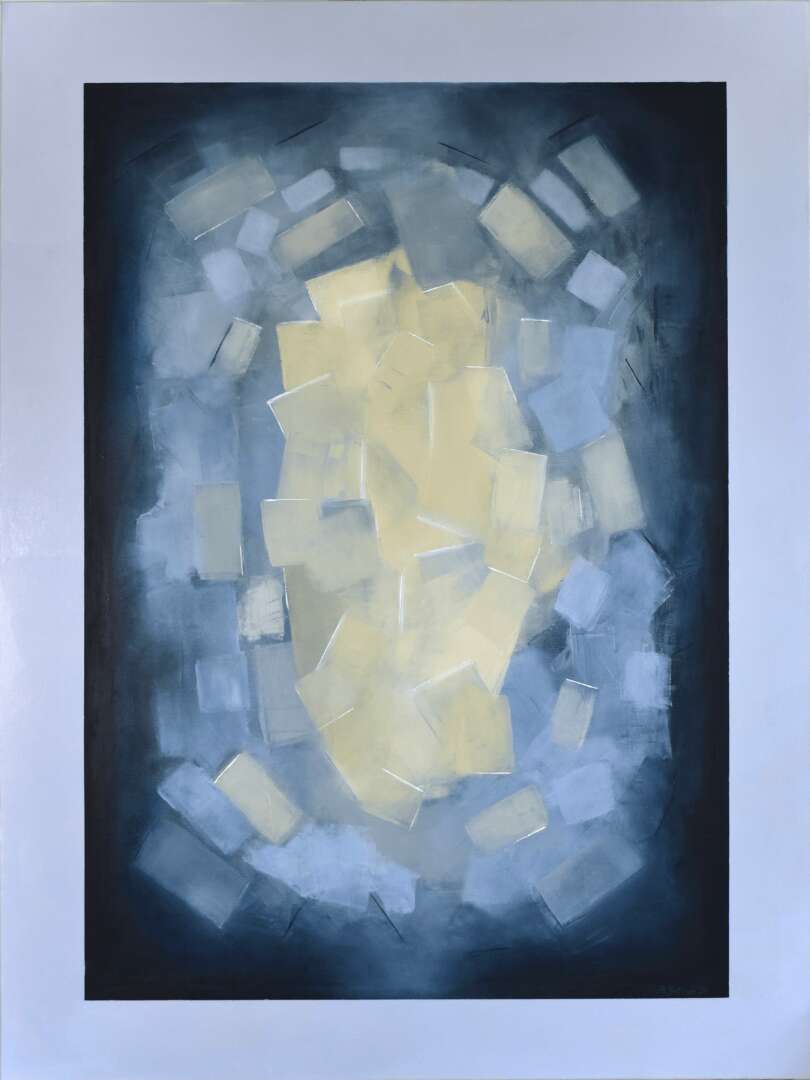
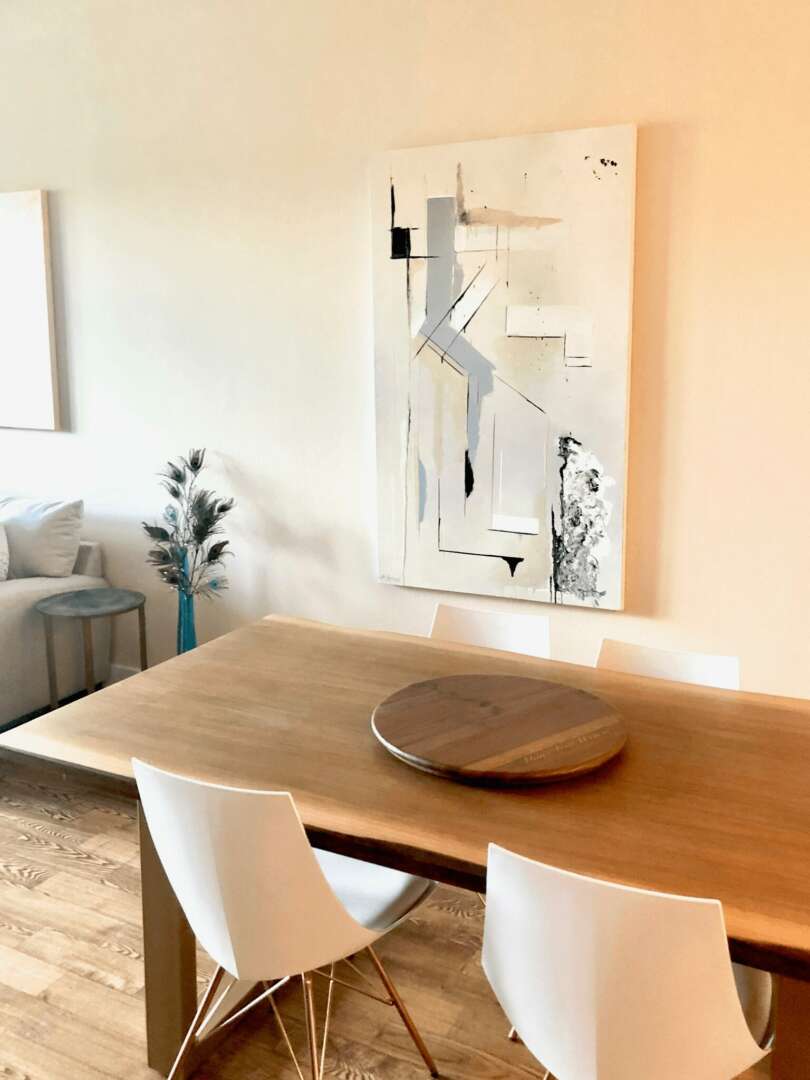
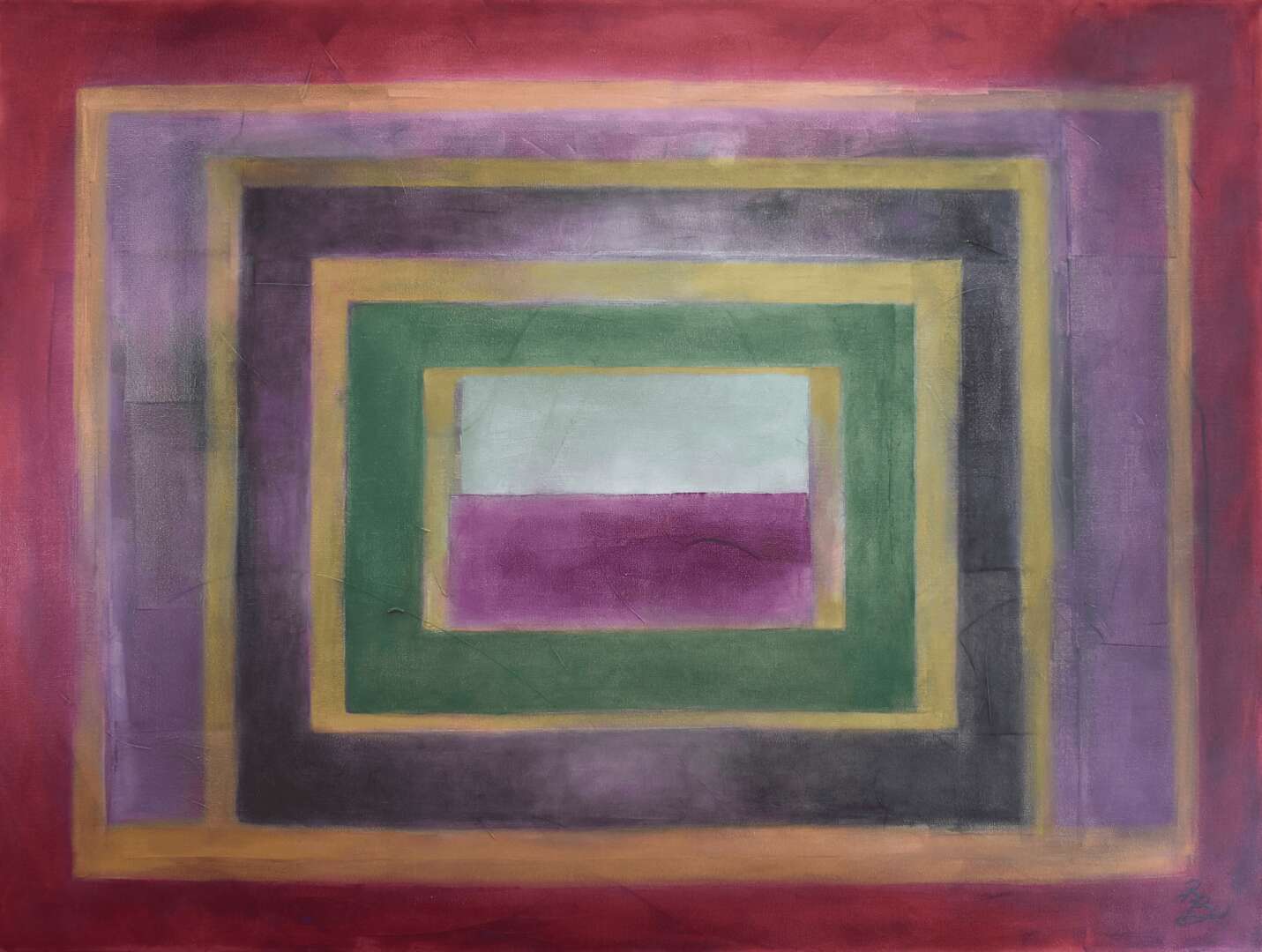
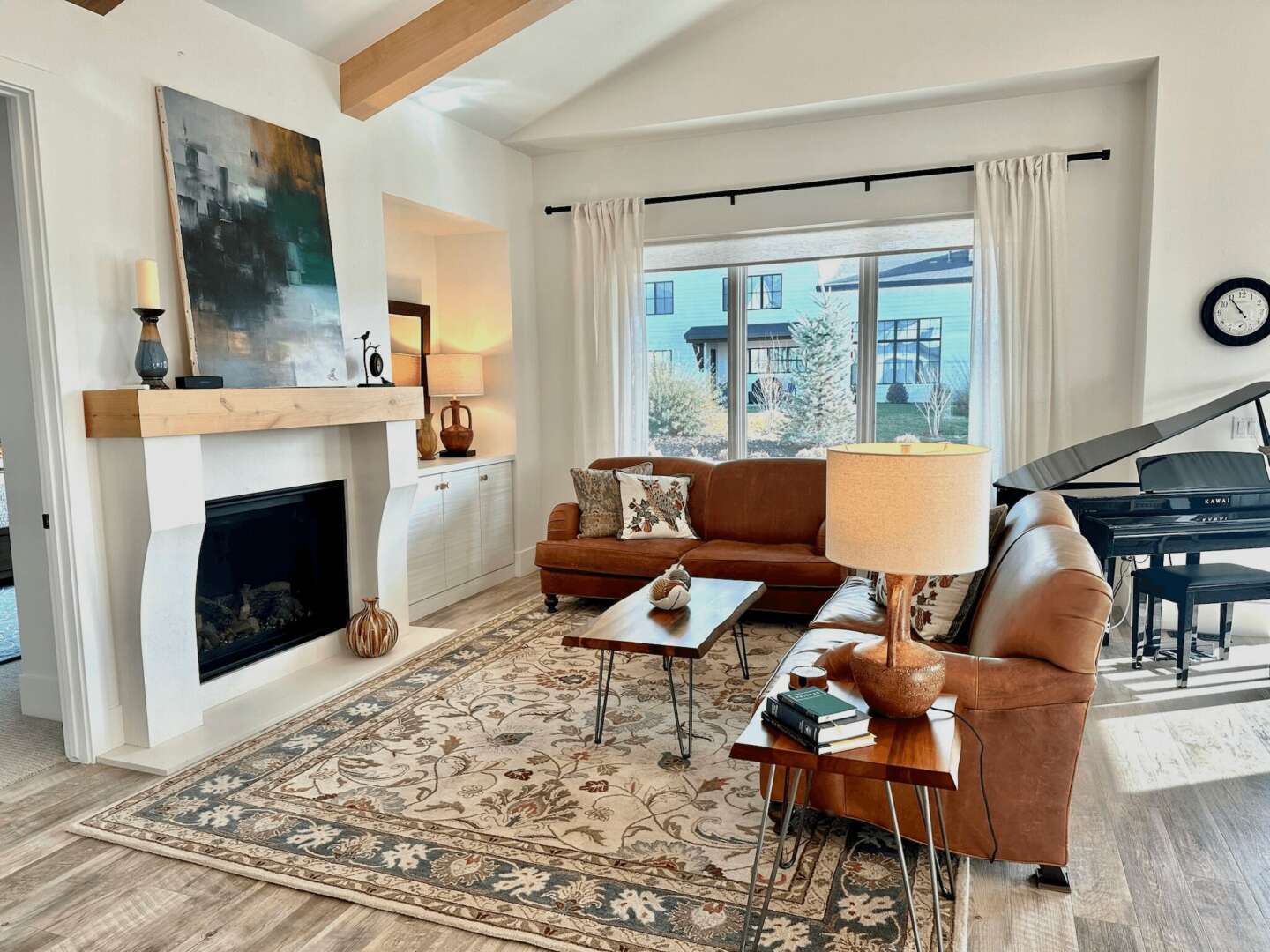
I’m an abstract oil painter with a background and training in interior design. I got a bachelor’s degree from the Art Institute, began in the interior design industry and started my art practice in Portland, Oregon which is where I’m natively from. I learned so much in my undergrad degree in interior design and I attribute the bringing out of my fine art skills to my education. Because of all I was exposed to in my schooling and in the field, it really increased my ability to look and see what works together whether it’s colors, shapes, or proportions. I’m a self taught abstract painter, creating purely from my imagination and through my emotions. I feel my art has so much to offer. It is aligned with modern art styles which is from the mid-century, and it is soothing and balancing; my work gives off so much great energy, and the coolest thing is that it seems to evolve with you and change throughout the years you have the pieces on your walls. I don’t just create my work randomly, it is with all of my background and knowledge and done with a lot of intention and forethought. My paintings range from extra large five foot by five foot to mid sized four foot by five foot to smaller two foot by three foot pieces. I work on smaller pieces as well which center around a more condensed pattern whereas the larger pieces incorporate a lot more space and motion. All my paintings have depth, movement, soothing blending, and a serene feeling. I also offer custom framing which is meticulously selected and brings out the best in each piece, providing more value to your investment and protecting the wood frame structure of the painting, preventing warping and ensuring longevity. I use the best practices with oil painting techniques to last many years.
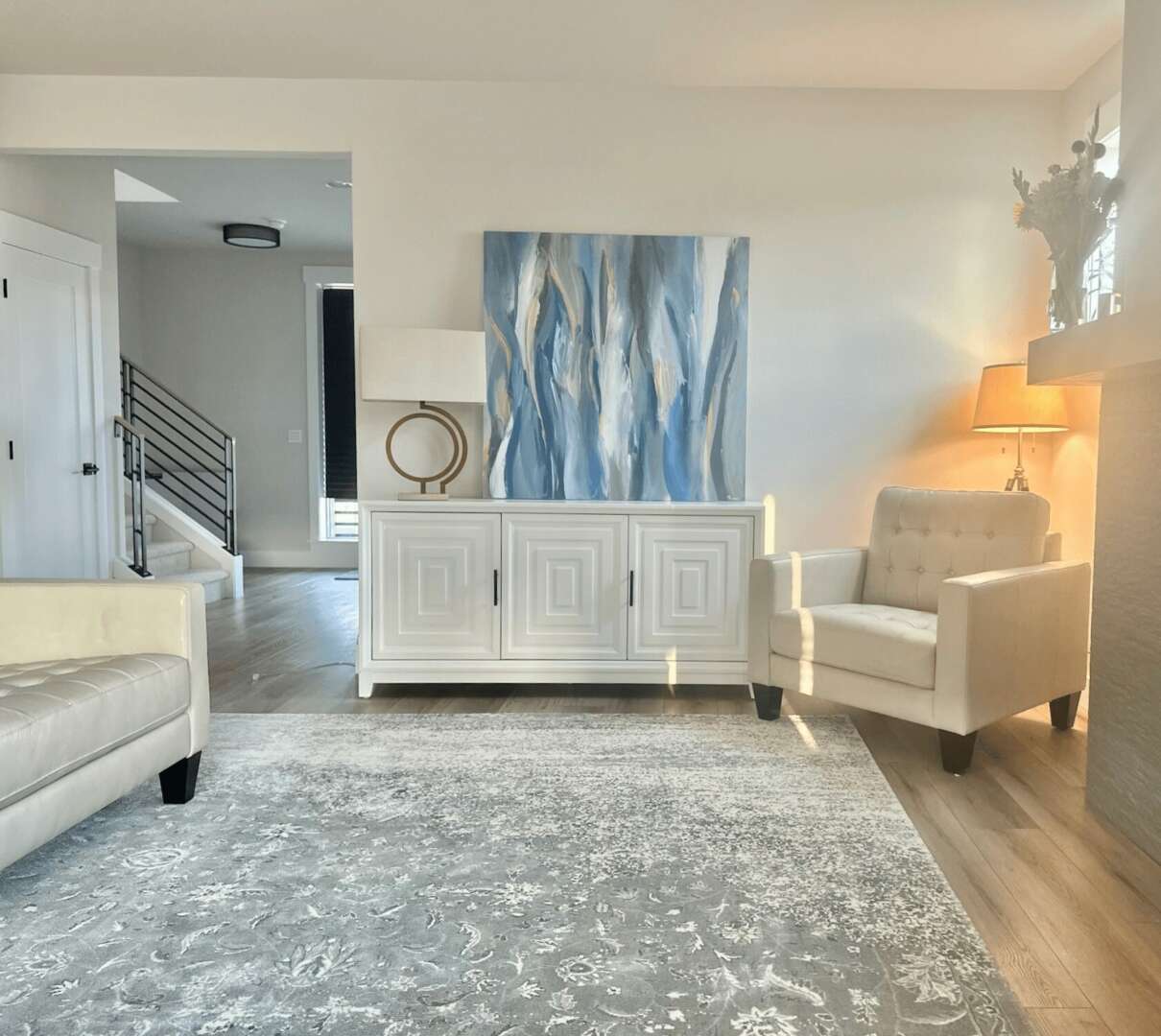
What’s the most rewarding aspect of being a creative in your experience?
As an artist, we deal purely in admiration and happiness. Art uplifts and brings the best out of people. When people view my work, I see them, who they truly are, I bring them out of whatever might be going on in their life, and I provide a moment of clarity, of awe, inspiration and serenity. For me, this is the most rewarding aspect. I feel like art is the universal language and can communicate to anyone. So we as artists have a responsibility to continue to create and be leaders. What a rewarding position to be in!
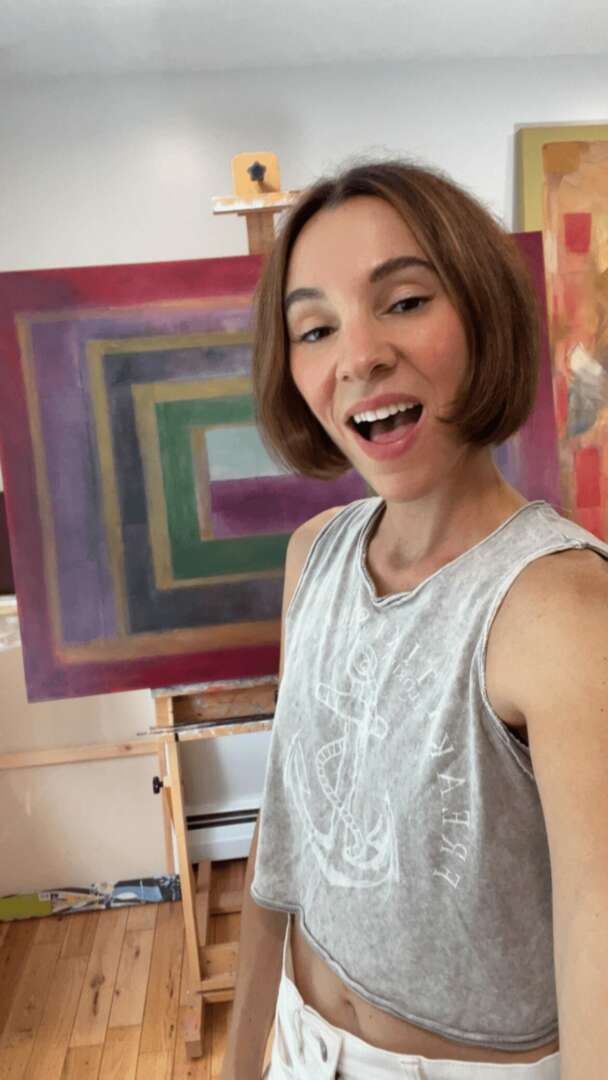
Is there something you think non-creatives will struggle to understand about your journey as a creative?
Sometimes there will be those who don’t understand what it’s like to be an entrepreneur or business owner, let alone an artist. But being an artist is being all of those things. If you aren’t plugging away at a miserable 9-5 job, people can get envious and/or uncomfortable at your “instability.” Yet what they fail to see is that no job is truly stable. I’ve seen many people with “stable jobs” get laid off, fired unexpectedly, treated horribly by coworkers and bosses, and worse. Being an artist and business owner is always something we can lean back on, we can pursue full time or part time, and into our retirement. It’s a stable source of income because all we need is someone who likes it and they buy it. It’s independent and it’s all based off the value we’ve built into our practice. And this is the most valuable thing ever, I believe! So for those who are non-creatives and can’t understand or have a hard time with this, I say just look at it as you would any business venture, because being an artists isn’t any different. We are all business owners and entrepreneurs as artists. There will also be personal doubts that creep in when being an artist. I’ve at times wanted to give up, but I realized that being an artist is native and not something we can just stop doing. So it’s okay to take breaks and keep going when you feel ready. I’ve also had aspirations to get master’s degrees in art and so forth, but unless you want to teach art, it isn’t necessary. I found by surveying others that it is more workable to take a few art classes here and there, not to commit to a whole degree for it since art is something that can’t really be “taught” but it is good to learn fundamentals and have a community of peers. I hope this helps!
Contact Info:
- Website: https://www.reneebitinas.com
- Instagram: @reneebitinasart