



Alright – so today we’ve got the honor of introducing you to Rebeca Gonzalez. We think you’ll enjoy our conversation, we’ve shared it below.
Alright, Rebeca thanks for taking the time to share your stories and insights with us today. Let’s kick things off with your mission – what is it and what’s the story behind why it’s your mission?
I am from a city with a very high Spanish speaking community and few Spanish-speaking attorneys. There are virtually no attorneys who are Spanish speaking and specialize in business or property law. My firm’s mission is to not only serve the underserved, but give meaning to the term attorney-client relationship again by bringing trust back into our profession. The general public does not trust attorneys. Attorneys are among professionals most disliked. I believe this has to do with a lack of trust. In part this is because the legal system does not always make sense; justice isn’t always just. However, it’s the best system we have and as attorneys we have to work within the system. The general public thinks “it must be the attorney’s fault. They’re not telling me the whole story.” This comes from a lack of communication and transparency. Attorney’s do not offer a product; we are a service industry and advisors. As such, our focus should be to cultivate and develop relationships with our clients before and during the course of the services we’re hired to do. Unfortunately, “thinking like a lawyer” means you see a problem you want to solve first and foremost, not a person sitting in front of you. Before taking a case, I always keep this in mind. As an attorney, we’re human too. We each have different personalities, work styles and communication styles. If a potential client’s personality or communication style does not compliment or pair well with the attorney’s, the two of you will not develop a significant relationship. This doesn’t mean befriend all of your clients. It means set expectations and boundaries early on so that there is mutual respect. The second thing we do differently is communication and transparency. It’s difficult to balance and get it just right; not too much not too little. Realistically, we can’t spend our time and all of our staff’s time on the phone giving updates. In the same way, a client will never completely understand or grasp the substance of the work we’re hired to do and the processes involved; this is why trust is so important. However, dedicating having a process in place for keeping clients informed regularly is crucial in my opinion. My office has streamlined the process of communicating updates to clients through technology and setting aside a dedicated time of the week for this sole purpose. The time element is incorporated into the cost of legal services, but client’s appreciate this so much. As for transparency, we are very upfront with clients regarding our strengths and our weaknesses. Acknowledging from the beginning that no matter how experienced the attorney or simple the case may seem, you should never assume you know everything or make guarantees. That is simply not how the justice system works nor is it how litigation works. Judge’s get things wrong too; that is why there is an appeal process of most types of legal matters. I am very upfront with my clients about what to NOT expect from the litigation as opposed to making promises of what to expect. Everyone also makes mistakes. As long as its not one that will cost your client money or their case, your client should and will understand this if you are transparent with them and work to fix the mistake right away.
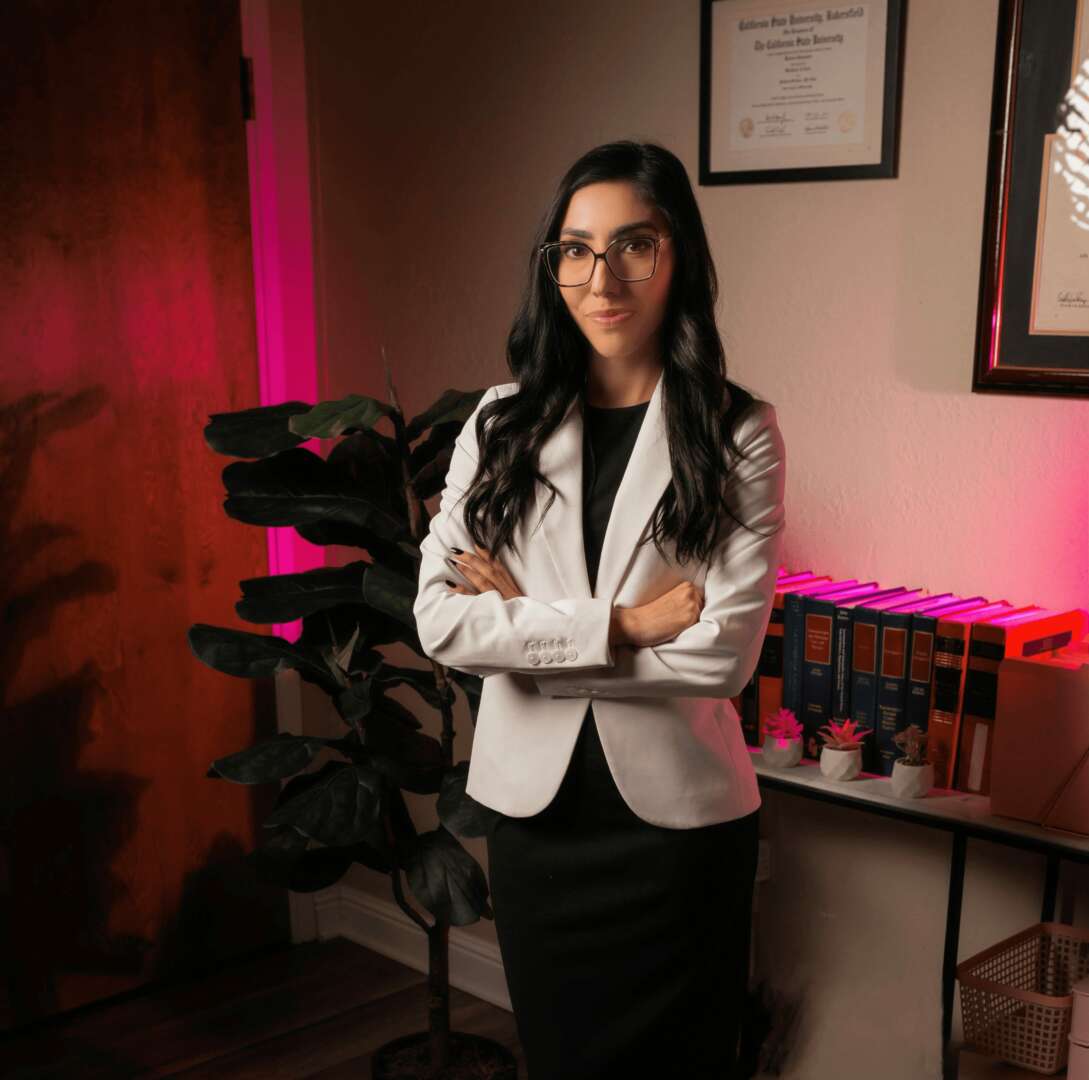
Rebeca, love having you share your insights with us. Before we ask you more questions, maybe you can take a moment to introduce yourself to our readers who might have missed our earlier conversations?
My parents immigrated from Mexico. They were not educated about finances or business, much less property, wealth and asset management. They were Spanish speaking my entire childhood and I served as their translator a lot of the time. I start with this because my practice really focuses on serving this population and helps me understand why they might react a certain way or think a certain way. Our Spanish speaking community also owns land, property and businesses. This extends not only to the Spanish speaking community, but folks who have businesses and property but lack the education to navigate the issues that come with both. It helps me understand their frustrations better, which in turn allows me to work better with my clients and develop better relationships. I was born and raised in my small community and realized early in my college years that talent is quick to leave for what people think is bigger and better. For this reason, I left Bakersfield to get an education but always intended on returning. I attended a law school that focused highly on public service and what we call public interest law. Due to my educational background and upbringing, I wanted to serve the underserved. I thought the best way to do this was by working the non-profit sector and government sector. This path really helped me become better at my job as an attorney and a litigator because I was learning from other people at no expense to me or my clients. However, I realized it wasn’t the best way to help people because most of the people I was helping were unfortunately stuck and their problems were much bigger than the case I was handling at any given moment. At my first job, I was initially hired to do immigration services. By the time my start date came around, the grant had run out and I was told I would be put into the housing unit doing eviction defense. I never went to law school thinking I would litigate evictions. However, this was how I was called on to serve and I became surprisingly good at it. My mind quickly understood the intricacies and niches involved in landlord-tenant law. During Covid, California laws were changing so rapidly around housing laws that the court was hiring for a new research attorney. This was the same court I had practiced in front of for two years now so I was very flattered. In my position with the court system, I not only worked on landlord-tenant issues but ALL civil issues, including but not limited to personal injury, adverse possession cases, partnership dissolution disputes, real estate disputes and title disputes, fraud actions. Because my job was to research all of these issues that would be presented in these cases for the judges, I learned so much not only about the substantive law but about the process that goes into decision making, and how cases are actually litigated and decided on. This gave me the confidence to open my own practice because I also realized how much I missed solving problems and working directly with clients.
A lot of my practice focuses on evictions but I also handle a number of property disputes of which it’s often difficult and expensive to find an attorney. I pride myself in being one of the few if not only Spanish speaking attorney whose practice focuses on these issues in my city. I also pride myself into making it as practical as possible to reach a resolution in these types of cases because litigation can get very expensive making it easier sometimes to just give up as opposed to go after what is right. We work within client’s budgets early on and set realistic expectations to obtain actual results. As I often have to explain to people, unfortunately sometimes the person who throws the most money at a case gets better results. However, cultivating good relationships within the legal community, having experience with the local judges and creativity, are still just as valuable of assets. I proudly have all three. While I do not specialize in immigration law, I have immigration law experience and it is a passion of mine. I offer low cost immigration services, not because the quality of the services isn’t there but because I am careful and selective with the types of cases I take. I am also able to subsidize my immigration practice through the eviction work we do because evictions are such a high volume area of law. I really pride myself in the transparency I bring to potential immigration clients. If the case is risky, too complicated or if there simply is no way forward for a client, I would rather not take the case and lose their hard earned money. Every client and case is important. However, unlike most of my civil cases, immigration matters sometimes involve life and death situations, if not the safety of a person. I will not take an immigration case to “file and see what happens” and my clients appreciate this and trust me for this.
How’d you build such a strong reputation within your market?
My temperament and professionalism. I don’t let zealous advocacy get in the way of civility. Ultimately, civility helps you help your clients as well. In a small legal community, people pay attention to the way you address not only the court but the other side. This boosts your credibility and in turn yields better results in court. At one point in my career, I litigated against many attorneys whom have offered my employment and I can say I work very well alongside in my career.

What’s been the best source of new clients for you?
Referrals and word of mouth. I advertise very little if at all. About 98% of my clients are referred or returning clients.
Contact Info:
- Website: https://gonzalezlawapc.com
- Instagram: https://www.instagram.com/rbg_esq/
- Facebook: https://www.facebook.com/
- Linkedin: https://www.linkedin.com/feed/?trk=nav_logo