



We’re excited to introduce you to the always interesting and insightful Rc Bennett. We hope you’ll enjoy our conversation with RC below.
Hi RC, thanks for joining us today. Has your work ever been misunderstood or mischaracterized?
One thing that I’ve noticed, and granted I haven’t exactly been under the national spotlight, but I’ve noticed a tendency to assume the surface read of a story is the only read that could be intended. So, in that sense, it isn’t so much that the book, or myself as an author have been mischaracterized, but just not quite fully understood. And I get it. The book is about a highschool baseball player who falls in love. But really, it’s not about that at all. It’s about what you are supposed to do with the weight of tragedy—what you do when a stupid mistake that in theory anybody could have made costs someone their life. Because that’s a hell of a question. And I think the only way we know how to answer it is with stories. It’s not the sort of question that can be answered propositionally, with mathematical sort of language, it’s too personal for that. So the goal, the intent, I guess, was to try and wrestle with that sort of ethical—or perhaps metaphysical—question while moving along a plot line that couldn’t be more practical. There’s nothing special about a kid who plays baseball and drinks with his friends and falls in love before he’s old enough to know what to do with it all. But there’s a tension there. When you open up The Hobbit, you know you’re in for a ride because there’s, well for starters, there’s a hobbit, and then there’s a wizard and all sorts of other creatures, so you have an idea from the jump that something mystical is going on, but I think with stories like “some may roam” there’s a tendency to assume that there’s just nothing beyond the story. As if it is just a snapshot from some timeline in the here and now, but that’s not really how stories work if the author is doing their job. And my hope is that people will see that in this book and in my future books .
Awesome – so before we get into the rest of our questions, can you briefly introduce yourself to our readers.
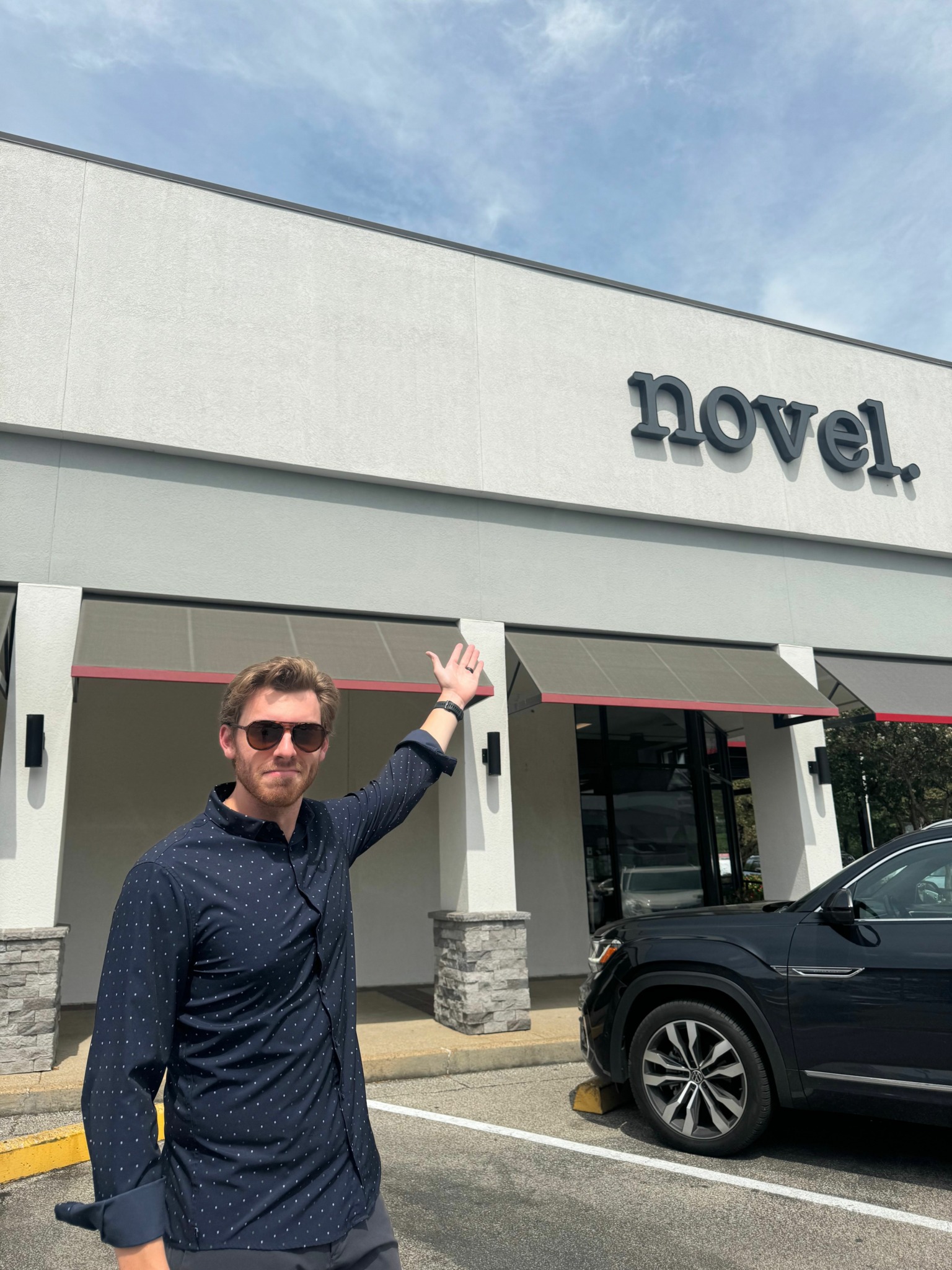
Yeah, so I am an author here in Memphis. I grew up here and I write stories that are set here. Everything that I publish is published through my own label, Grove Park Publishing, which is named after the neighborhood out in Germantown, where I grew up. Memphis is a unique place culturally, and I try to tap into that with the stories that I write, whether it’s highschoolers pulling off in Eads to do what highschoolers do pulled off the roads under the cover of darkness out in Eads, or its playing on the development of different neighborhoods over the years, which is more of the focus with my next book, I try to make Memphis a character. My hope is to take some of these stories back to the big screen the way John Grisham did. I can’t promise Tom Cruise, but we can dream.
Are there any books, videos, essays or other resources that have significantly impacted your management and entrepreneurial thinking and philosophy?
As strange as it might seem in our modern, secular times, I’d say the stories of the bible have made the most significant impact on my writing. The whole book, from Genesis to Revelation is full of these big characters, most of whom have all sorts of wildly dangerous faults, and basically every one of them ends in tragedy. Sometimes the tragedy is their own fault, sometimes it is unavoidable, but stories rarely end happily at least in the material sense. Think about a guy like Sampson. He’s got super human strength and he’s in this position of power, and he knows the woman that he “loves” is trying to turn him over to his enemies, but he literally can’t help himself. Eventually, once her plan finally works, and his enemies chain him up, his hair finally grows back—which is a whole separate rabbit hole about the sort of arbitrary nature of our talents—but anyways, his hair grows back which is the source of his strength, and he rips down the columns of the house they have him in, where he’s basically on display as a trophy, and the whole house crumbles, and Sampson dies along with everyone else. And it’s strange because in the West, we have this casual, comfortable relationship with these stories. And maybe that’s because they’ve been turned into Veggie Tales or Chick-fil-A toys, but I mean there’s just nothing PG about Sampson’s life. It’s about as PG as Game of Thrones. So, for me, as a student of stories, to go back and see these epics that wrestle with the outermost extremes of human morality, it’s certainly shaped my thinking. And what’s been really fascinating is that the more I study the stories, the less propagandistic I feel my writing becomes. Which is a good thing. Nobody wants that. No one wants to be preached to, especially not in a novel, and I don’t want to preach. I can’t. I don’t have all the answers. But what I try and do is take a sort of mode of behavior, and then crash it against reality to see what breaks. In the case of Sampson, for example, does it work to trust the woman who is trying to sell you to your enemies? You might say we don’t need a story to know that, but look around, all sorts of people justify horrendous relationships in the name of love. But is love the right word? What do we call that sort of feeling Sampson had towards Delilah? Is that love? Lust? I don’t know. Is Sampson immoral? I don’t know. I’ll leave that up to the reader, but that sort of wrestling makes for some compelling narratives.

How can we best help foster a strong, supportive environment for artists and creatives?
Be a learner. I think the best stories, the best art, the best music all wrestles with the sort of pain and beauty that gets better and better the wiser and more mature we become. And I don’t think that applies exclusively to what we might consider classic pieces of art. I think that it applies to lighthearted pieces as well. I’ve seen in my own life, for example, that “The Office” is even funnier now after having a kid and increasing the overall stress that can come with that sort of responsibility. There’s a line in one of C.S. Lewis’ books where he says, “the best kind of fun is between people who take each other seriously,” and I think he’s right. It’s a strange kind of oxymoron where the more serious you take your life and your role to be mature and responsible, the more fun things become, the more you can appreciate beautiful art and funny shows. As far as I can tell, at the root of it all, and I’ve seen it in my own life, is a desire to learn, to grow, it’s a sort of understanding that I’m not enough as I currently stand. Which at first might seem depressing, but if you realize that maybe if you were stronger and smarter and more patient and caring and mature, then perhaps your relationships would be better, you’d be a better friend, a better employee. I think once that vision sets in, the fact that you “aren’t enough” flips to being quite encouraging, where you see that not being enough means that you can be more, and if you were more, then maybe you could be like one of the characters in the stories you like so much. So, go learn. Be a learner.
Contact Info:
- Website: https://grovepark.us
- Instagram: https://www.instagram.com/groveparkpublishing/
- Facebook: https://www.facebook.com/people/Grove-Park-Publishing/61566866124038/