

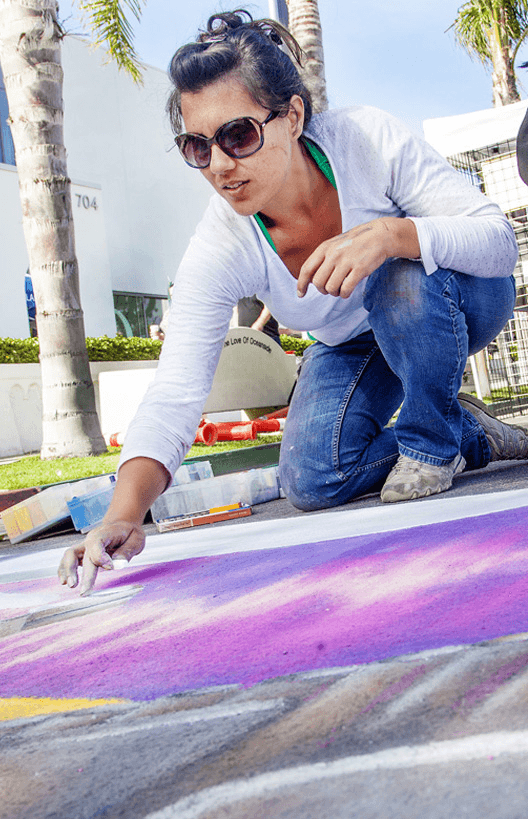

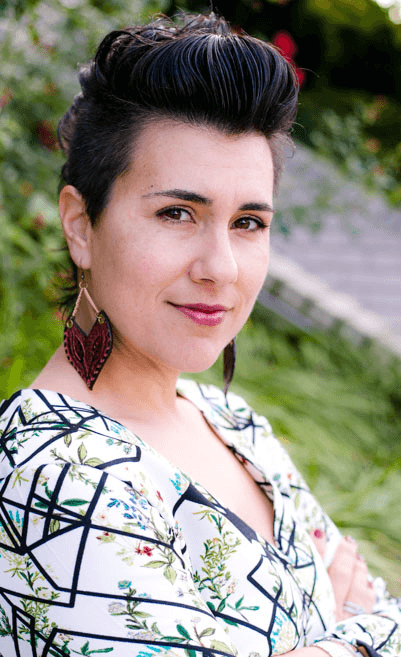
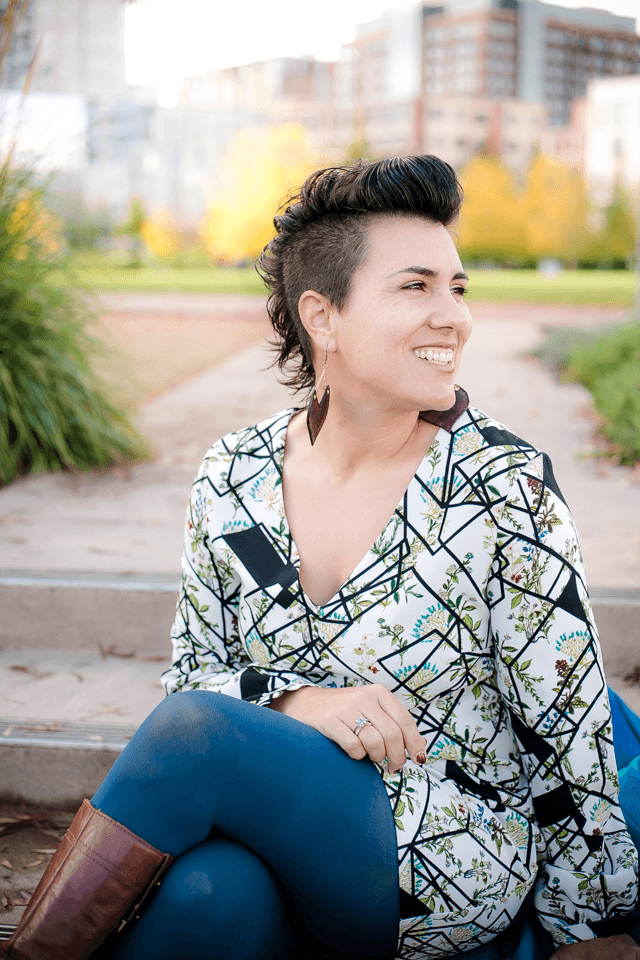
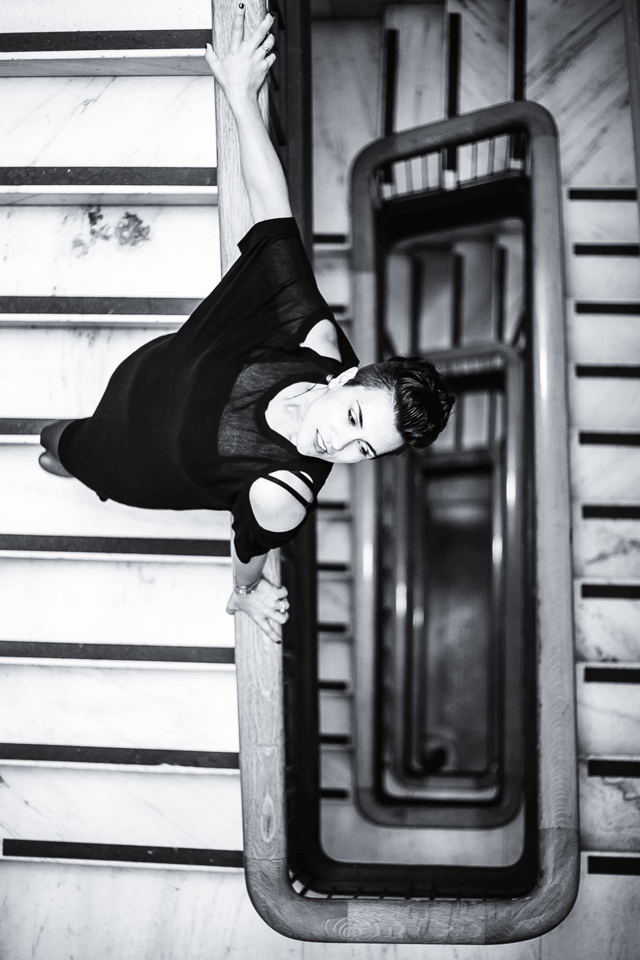
Alright – so today we’ve got the honor of introducing you to Raziah Roushan. We think you’ll enjoy our conversation, we’ve shared it below.
Raziah, thanks for joining us, excited to have you contributing your stories and insights. Earning a full time living from one’s creative career can be incredibly difficult. Have you been able to do so and if so, can you share some of the key parts of your journey and any important advice or lessons that might help creatives who haven’t been able to yet?
Surviving and thriving as a professional artist is absolutely possible! I learned early on that it takes tenacity, perseverance and the ability to be inventive to achieve it though. Beyond having the stamina to create new art in the face of criticism, I’m grateful that I was raised in a family of entrepreneurs who gave me a lot of leeway to experiment with my visual art and ultimately see if their was a customer base. My mom took me at age 17 to register my business, then taught me about overhead, profit margins, and how to effectively use debt/credit. Understanding these principles at an early age has kept me out of art debt, influenced my prices, and “in the black” in regards to making a living.
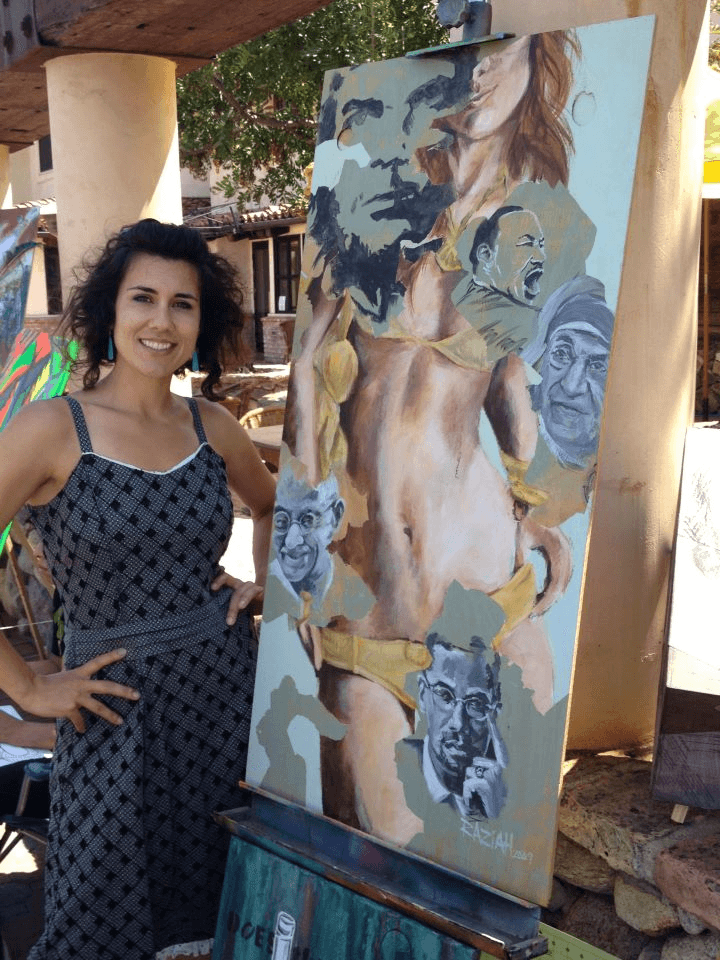
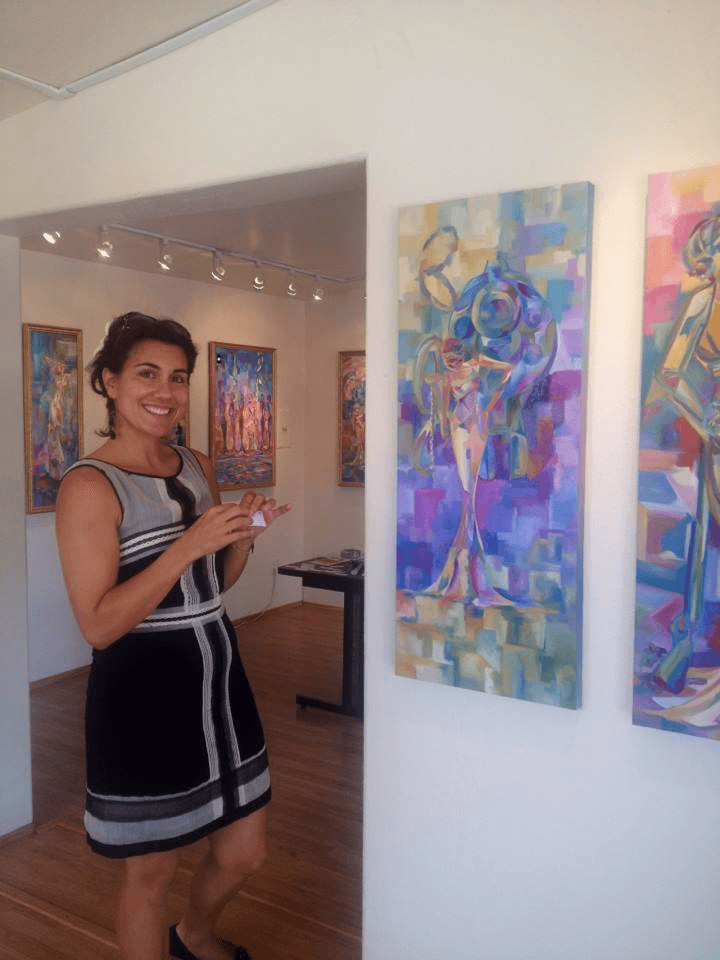
Raziah, love having you share your insights with us. Before we ask you more questions, maybe you can take a moment to introduce yourself to our readers who might have missed our earlier conversations?
Like so many professional artists, I’ve been addicted to doodling since I could hold a pencil. It’s how I translate the world around me. My grandmother kept paper and crayons at the dining table for me, and I seemed to be the default artist for school projects. It was in my sophomore year in high school when I was expelled from the school news channel that I signed up for an art elective and fell in love with how freeing art became for my pent-up teen aggression. Learning the traditional concepts of visual art, such as shading, perspective, and color theory allowed me to create new surreal environments and characters as an outlet for the chaos of my home life under an alcoholic stepfather. Then, when I started selling my drawings and paintings every weekend as driveway exhibitions, it all clicked.
I dropped out of mainstream high school in the middle of my junior year to attend alternative school. I hustled through the curriculum to graduate by that June. I was 16 when I got the customary ultimatum from my mom – Either get a job to start paying rent or go to college to advance into a career. It took me 10-minutes debating a career in politics, history, mathematics, or teaching when I realized that I could do any of those for 40-hours a week, but I would still spend every night and weekend making my art. So why waste the daylight hours, I chose art! And, because my mom is an entrepreneur herself (small business owner, CPA and engineer), she helped me map out a path.
I started taking community college courses that summer in bronze casting, beginning drawing, and stain glass to experiment beyond the canvas. I also took political science and psychology to expand influences in my symbolism and visual narratives. After balancing community college and side jobs (delivering automotive paint, working at an art supply store, being a “sandwich artist”) I transferred into a BFA program and focused on just selling my own art through commissions and alternative art sales/exhibitions.
I graduated with my BFA in 2004 in Painting, with a minor in Printmaking from the Pacific Northwest College of Art. This was still an era when the Yellow Pages listed artists. Without paying for my own ad, I took two weeks to cold-call artists, galleries, commercial agencies, and even Courtroom Illustrators to build my commercial arts network. Within a week I was working on a mural crew in San Diego, CA, and gaining referrals from some of the adjacent tradespeople I connected with. That summer I was completely self-sufficient as a working artist without a side W2 job. That is also the summer I was introduced to large-scale street painting (aka chalk art).
Over the last two decades, my personal artwork has exercised the breath of my abilities, including a juxtaposition of styles from traditional representations (figures, still life, etc.) to graffiti text and stencil. My work has been called social and political commentary because of the interweaving of narratives inspired by contemporary events and themes. In the studio, I work in acrylic, oil, graphite, spraypaint, and periodically with printmaking.
For my commercial and client-based work across the USA, I offer interior and exterior murals, and large-scale chalk art (10’x10′ on average). I’ve performed at more than 40 chalk art festivals across the USA, and look forward to many more to come!
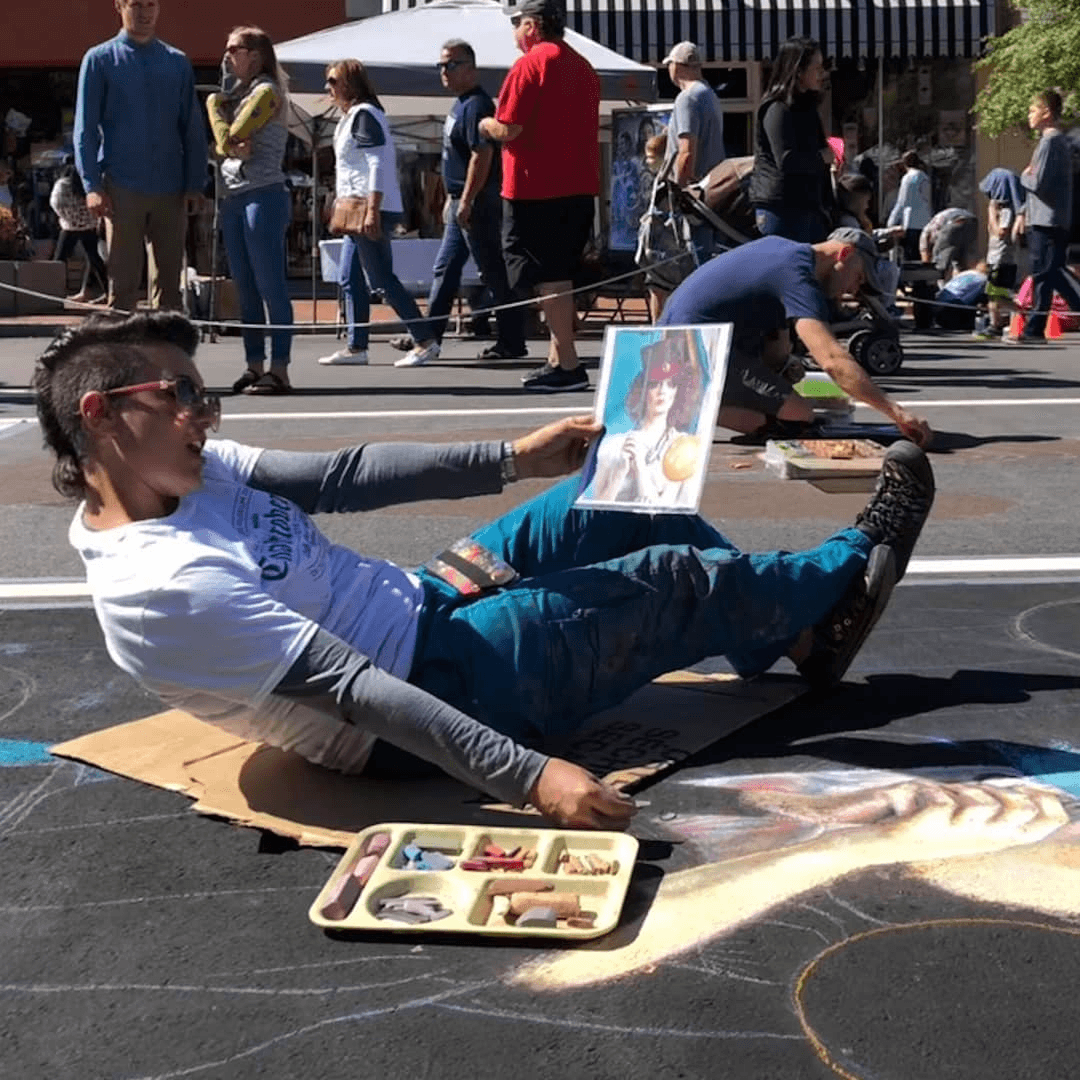
In your view, what can society to do to best support artists, creatives and a thriving creative ecosystem?
If you haven’t already heard, Arts and Culture is 4.9% USA GDP; that’s greater than agriculture. So, if we all continue to make small adjustments on buying the original painting when we see it; commissioning a friend to play guitar at our workplace(s) on Fridays; and/or attending the art festival when its full swing, we’ll move the needle on art appreciation in this country.
From my own little soapbox, I ask readers to please not perpetuate the “Starving Artist” stigma. That is dismissive, assuming that an artist doesn’t deserve to be paid for their craft like a lawyer, carpenter, plumber or engineer does; they all require years of training and refinement. No- “exposure” doesn’t pay the bills. When there is a possibility to do so, add a little to the job budget to compensate an artist to perform or create a semi-permanent public art installations. Murals are proven graffiti abatement, heck, hire the graffiti artist to do something dynamic as a sanctioned mural!
Are there any books, videos or other content that you feel have meaningfully impacted your thinking?
Check out “How to be Everything; a Guide for those who (still) don’t know what to be when they grow up” by Emilie Wapnick. Emilie talks about being a multipotentialite, and that many creates live a very successful circuitous path operating in 6 directions simultaneously. I was gifted this book at the beginning of COVID lockdown. It validated my own experiences to date, and it gave me hope for friends and family who were more impacted by not fitting into the “point A to point B” career expectation. What I enjoyed about the book’s theme is that creative thinkers require more stimulation so it’s important to celebrate this superpower and craft ways to stay inspired in everything we do.
Contact Info:
- Website: https://www.raziahroushan.com
- Instagram: @raziahroushanartist
- Facebook: @raziahroushanartist
- Linkedin: https://linkedin.com/in/raziah-roushan-278457b9
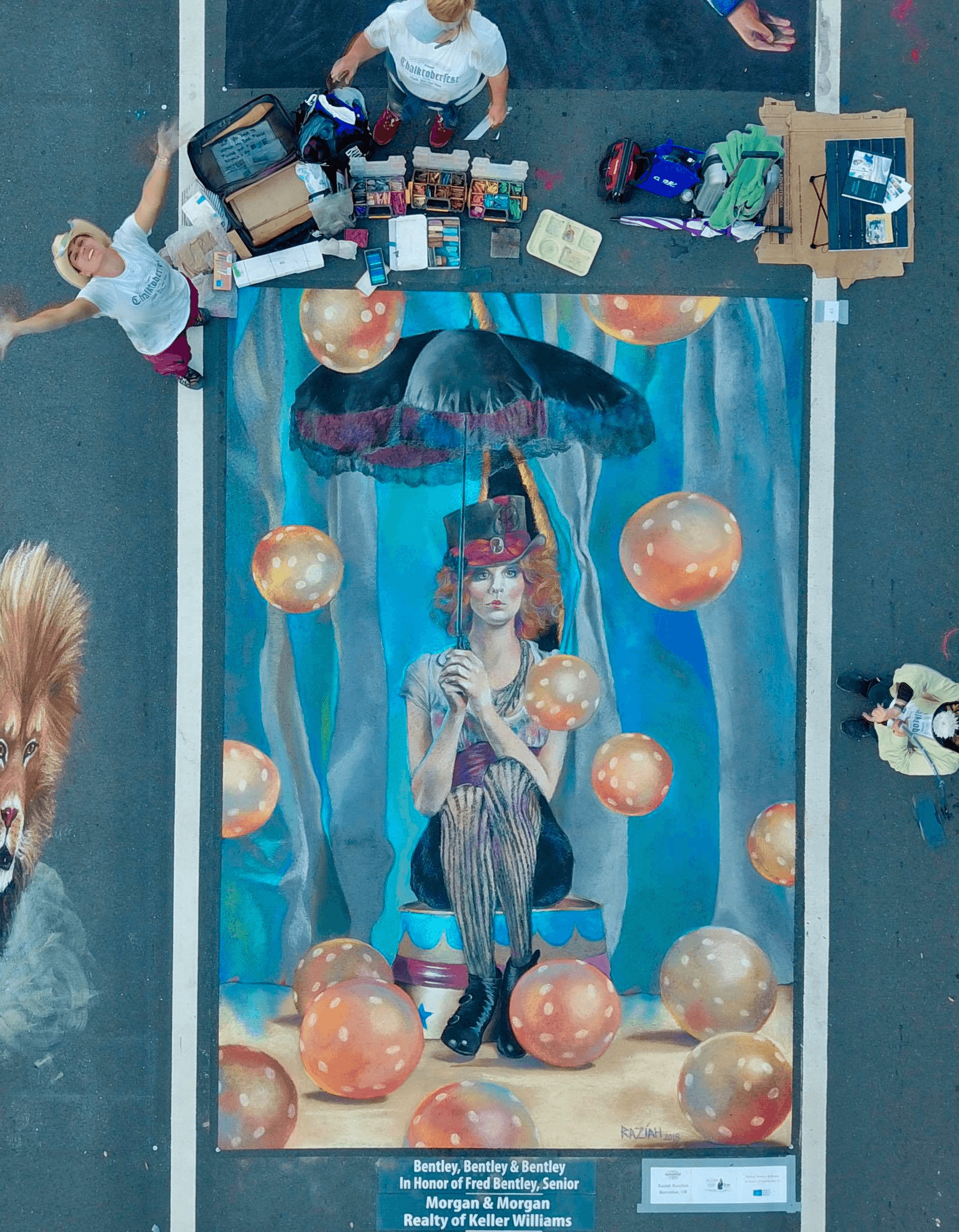
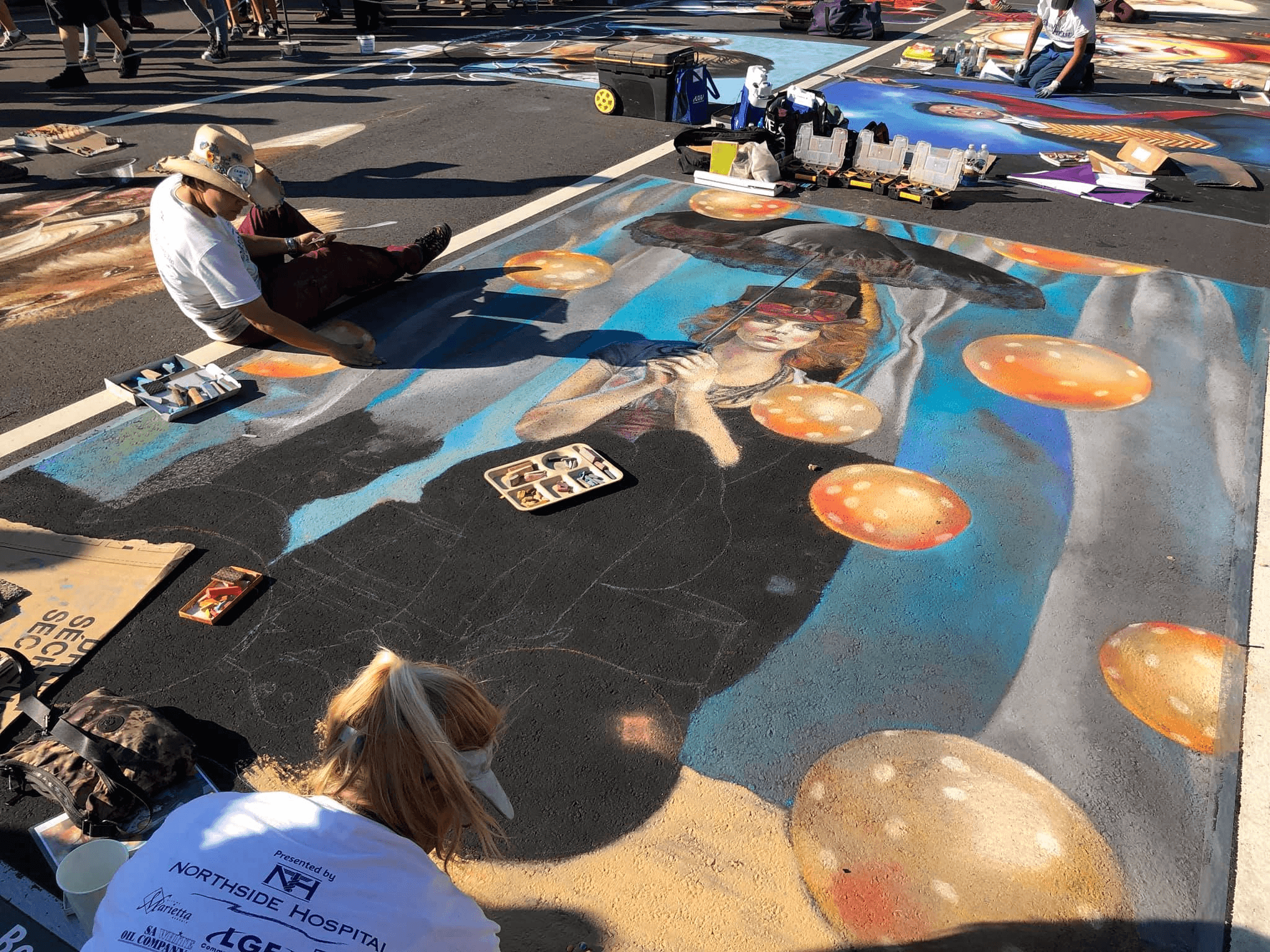
Image Credits
See file names on each photo for their respective credit.