

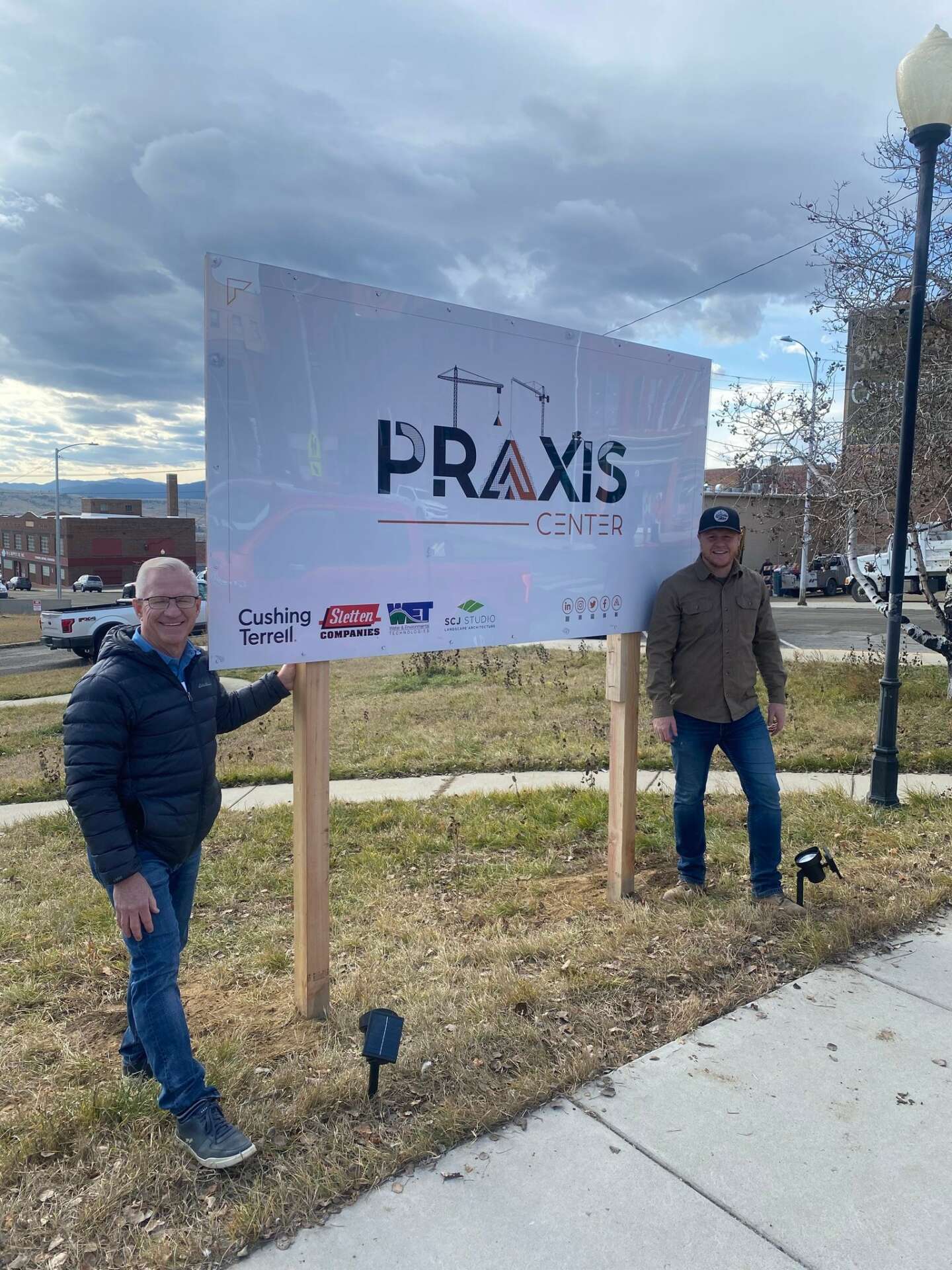

We’re excited to introduce you to the always interesting and insightful Raymond Rogers. We hope you’ll enjoy our conversation with Raymond below.
Alright, Raymond thanks for taking the time to share your stories and insights with us today. Coming up with the idea is so exciting, but then comes the hard part – executing. Too often the media ignores the execution part and goes from idea to success, skipping over the nitty, gritty details of executing in the early days. We think that’s a disservice both to the entrepreneurs who built something amazing as well as the public who isn’t getting a realistic picture of what it takes to succeed. So, we’d really appreciate if you could open up about your execution story – how did you go from idea to execution?
The story of the Praxis Center dates back to the very end of 1999. I was working at Montana Tech as the Director of College Relations and Marketing, and I had never had any plans to work in the field of healthcare. At a Career Fair at Montana Tech, I was approached by a friend of mine, Pat Dudley, who was the HR Director at St. James Healthcare. Pat was talking about how the Healthcare industry was ready to go through a major shift from being a paper-based system to an electronic-based system (Electronic Medical Records). Pat mentioned that this transition was going to require professionals with the right background to help with the transition. We discussed the possibility of creating a BS degree in Healthcare Informatics at Montana Tech to help provide professionals who could work at this interface of IT and Healthcare. So, working together, with me representing the Montana University System and Pat representing the healthcare industry in Montana, we worked to create the nation’s first bachelorette degree in Healthcare Informatics at Montana Tech. That happened in 2002. At the same time, Pat and I recognized the opportunity to create a business around this, so in 2004, we formed the National Center for Healthcare Informatics (NCHCI) as a Montana non-profit corporation. In 2005, I quit Montana Tech and started the NCHCI full-time spending most of my time working in the areas of Electronic Medical Records and Health Information Exchange. Pat joined me full-time in 2007. At that time, we were evaluating the next major trends in healthcare education and training, and we identified Simulation-based training as that new frontier. Working with Rod Alne, President of The Peak, Inc., in Butte, we landed some significant contracts with the US Air Force Special Operations Command and the Air Force Research Labs to develop Next Generation Simulation Training for the USAF Pararescuemen (PJs – the Air Force Special Operations Forces). We worked on that contract from 2008 – 2017 during which time we developed some really cool technologies (both hardware and software) for the Air Force PJs.
At the beginning of that project, we were tasked with developing a Roadmap Document for the USAF for simulation training. That research took us to simulation training centers around the country in academic centers (mainly large universities), large hospitals, and at military installations. We recognized during that study that almost all simulation training was occurring in those three settings. We also recognized that rural healthcare practitioners (surgeons, doctors, nurses, mid-level providers, EMS, etc.) have no place to go if they want continuing education using simulation. That is as true today as it was when we did that study.
At that time (2008), we recognized the need for a rural healthcare simulation training center that was focused nationally and could meet the diverse training requirements of rural practitioners. We wrote an initial feasibility study and traveled Montana getting feedback on the idea (which was all positive). Then we got very busy just working on our USAF contract, and it wasn’t until about 2017 that we dusted the idea off and began working on it again. We have been working on it since. Unfortunately, I lost Pat (my business partner of 19 years) to cancer in March 2019. But, we just kept grinding away, working on lots of possible funding scenarios, going through Covid, and keeping the project moving forward.

Raymond, before we move on to more of these sorts of questions, can you take some time to bring our readers up to speed on you and what you do?
My previous answer talks about how I got into healthcare simulation. As far as my background, it’s a bit of a meandering path. I started my career with a degree in engineering and spent five years working as a engineer and marketing representative for an environmental consulting firm. I left that job to become a major gifts fundraiser for the Montana Tech Foundation after which I became the college’s Director of College Relations and Marketing. During that time, I received a MS in Technical Communications. I have three grown children, four wonderful grandchildren, and although I have had many opportunities to leave Butte, my career and love of this community always kept me here. I love being active and spend lots of time working out, running, hiking, skiing, snowshoeing, etc. I love doing Spartan Races.
As for the Praxis Center. This has been such an amazing journey. The Praxis Center will be a game changer for Rural Healthcare Practitioners. If you look at rural healthcare facilities across North America, many are very remote, disadvantaged, and they have limited resources and staffing. None of them have specialists available that can be called upon in a time of crisis, so these doctors, nurses, and mid-level providers, have to deal with whatever walks through their doors. They also suffer from a lack of frequency. For example, most rural healthcare facilities in Montana will only see one emergency obstetric emergency each year. As a result, clinicians (like anyone who doesn’t practice a skill) get rusty and have skill decay. But yet, these rural practitioners have to deal with everything that comes through their doors. That is where the Praxis Center comes into the picture. Praxis will be a place where rural healthcare practitioners can practice high-risk, low-frequency procedures over and over in a safe environment, so they can be prepared for those emergencies when they happen.
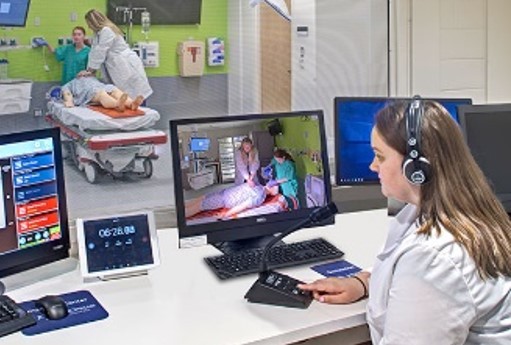
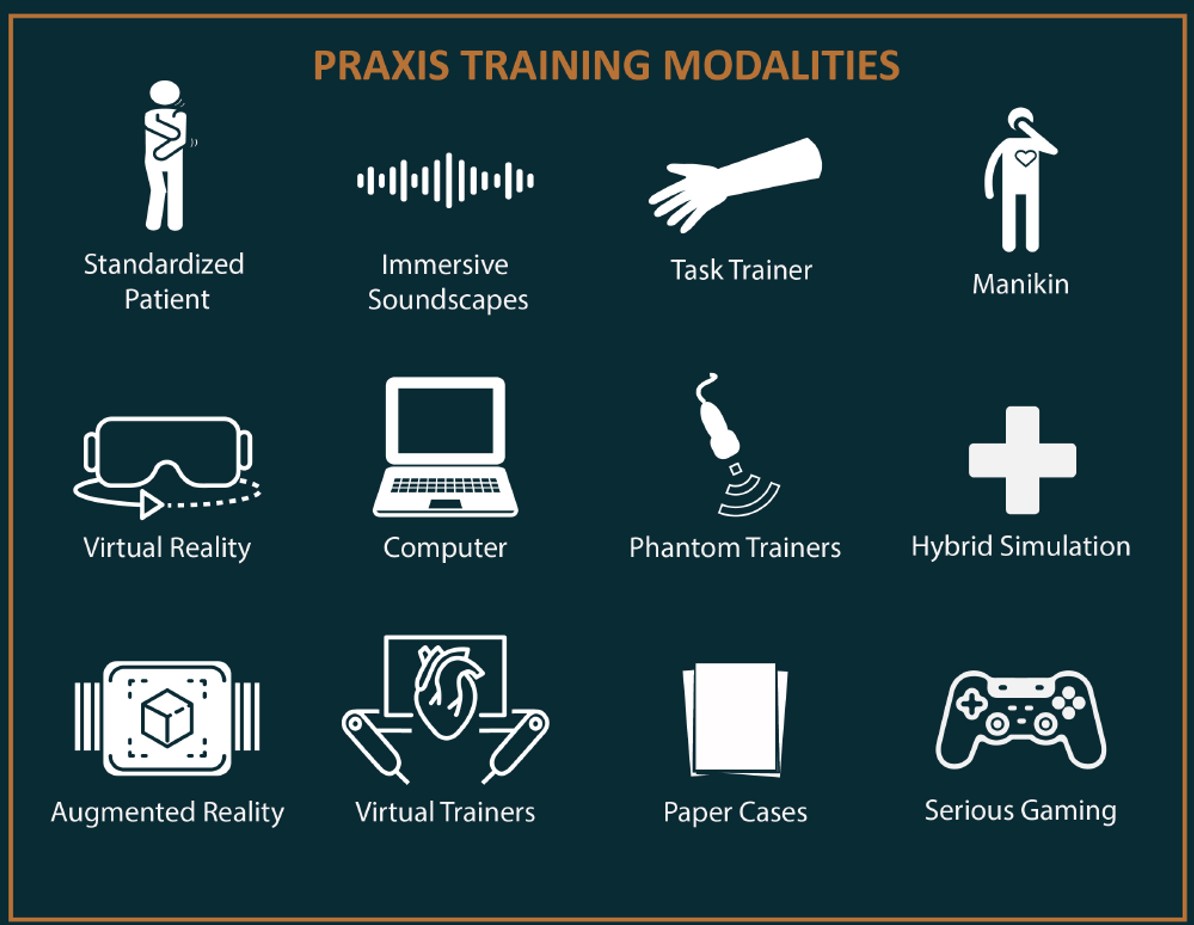
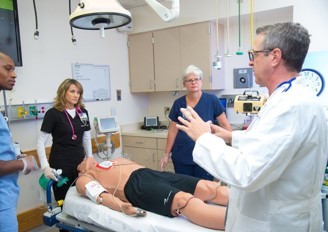
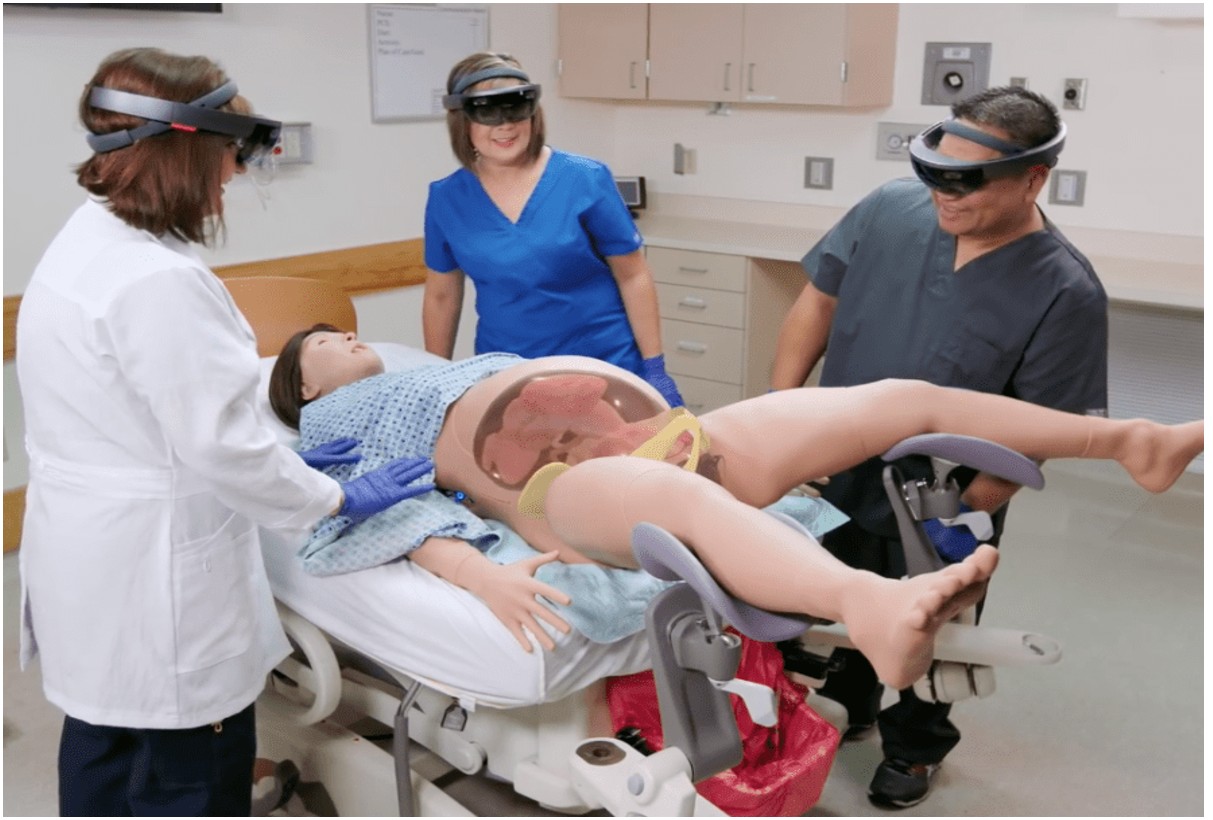
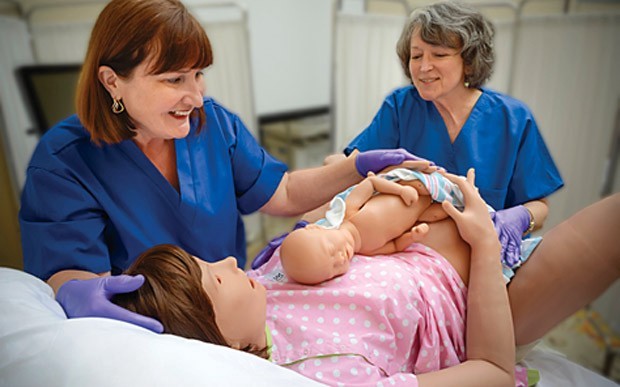
At Praxis, we will offer a broad curriculum that covers most medical procedures from simple (part-task training) to very complex scenarios (like a mass causality event). We will offer many modalities of training including part-task trainers, medical mannequins, ultrasonography simulation, VR surgical simulation, augmented reality, standardized patients (patient actors), cadaver training, and a broad suite of distance education training. We will also have a significant emphasis on wellness and resilience – most healthcare workers are burned out and many do not do a great job of focusing on their own health. We will introduce resilience training into everything we do.
We created Praxis as an independent, non-aligned center which is important to our mission. If we were aligned with a major medical center or major university, that would likely limit who would participate in our training. So we are open to anyone who is seeking continuing education using simulation including healthcare workers, law enforcement, EMS, and the US Military medical personnel.
We are also really excited about what this project will do for Butte and SW Montana. We anticipate a workforce of 40-50 full-time employees, and 25+ part-time employees. Annually, we hope to train 5,000 rural healthcare workers and US military personnel from throughout North America. An economic impact study shows that the Praxis Center will result in $32M+ of economic impact to the Butte community on an annual basis. And, we sited the Praxis Center in Historic Uptown Butte to have an impact on the continued revitalization of the Uptown district.
Most importantly, the Praxis Center will save lives, improve the quality and safety of healthcare, result in fewer medical errors, and improve the outcomes of patients. And, rural hospitals and clinics struggle with medical staffing. With training through Praxis, we hope that medical professionals in these rural communities will feel more comfortable in their roles and capabilities, and we hope this will improve employee retention in these rural communities.
I’m very proud that we have been able to keep this project going against all odds. We continue to drive forward to create a world-class training facility in Butte.
Let’s talk about resilience next – do you have a story you can share with us?
I think the Praxis Center has been a story of resilience and perseverance. Trying to create a $35 million project from scratch in a rural community has been no easy task. This has required lots of partners, great relationships, and many people who saw and believed in the vision. I can tell you that this project has almost died on a number of occasions. But each time we have faced a major crisis, something (sometimes miraculous) has happened to keep the project moving forward. And it hasn’t been easy to do this in Butte, Montana. With neighboring cities like Bozeman and Missoula that are booming and attracting lots of venture and other capital, we just haven’t seen that happen in Butte. So our funding strategy has been very grassroots, and it involves investors, granting organizations, the USDA for a loan guarantee, and bank financing to tie it all together. We have overcome a lot. The death of Pat Dudley was a major blow to the project. With Pat’s death, that left me to keep this project moving forward. Then Covid struck and everything came to a standstill. But I began adding really key people to my team like my part-time CFO, Chris Ewing with Audaciter from Denver, our legal team at Holland and Hart, and most recently, Phill Wortham who is one of the best simulation experts in the country. Chris has been instrumental in helping us with our organizational structure, getting a private placement set up to attract investors, and helping us managing our finances. Phill Wortham joined us as our Chief Clinical Simulation Officer after running some of the biggest sim programs in the country. We added Cushing Terrell to our team as our architect and Sletten Companies as our builder.
Now we are faced with increasing interest rates and exceptionally high building costs. But we keep plowing forward with a plan to begin construction in 2024.
I really don’t every look for credit when it comes to keeping this project moving forward. I always point to the hundreds of friends, family, community supporters, and key partners who have stood me back up every time I have fallen, who have stepped in with support or financial help at the right moment. They are the heroes in this story. This is truly a community project, one that will hopefully have a very significant impact now and into the future.
How do you keep your team’s morale high?
In order for a team to thrive and have high morale, what they do every day has to be tied to a vision that they deeply believe in and trust. At Praxis, we have built an undeniably important and compelling vision of a world-class training center that will truly change the lives of our rural healthcare professionals and the patients they treat.
In today’s rapidly moving world where it is really easy for a person to move from job to job, where employees have the flexibility to live and work wherever they want, and where employees define their success and happiness much differently than previous generations, the work environment needs to match a person’s core values to a businesses’ core values more than ever before.
For me, it’s about a few things: (1) creating a vision that compels employees to throw their hearts and souls into the work; (2) creating a positive work environment that is guided by the principles that back the company’s vision; and, (3) developing and creating a culture where employees are empowered, supported with a robust wellness/resilience program, are thanked and rewarded for the work they do, and supported and encouraged to have a work/life balance.
Contact Info:
- Website: www.praxis-center.com
- Instagram: @Praxis_Center
- Facebook: facebook.com/PraxisSimCenter
- Linkedin: @Praxis_Center
- Twitter: @PraxisSimCenter
Image Credits
Credits to CAE Healthcare for the three clinical photos Credit to Phillip Wortham for the Simulation Control Room Photo