

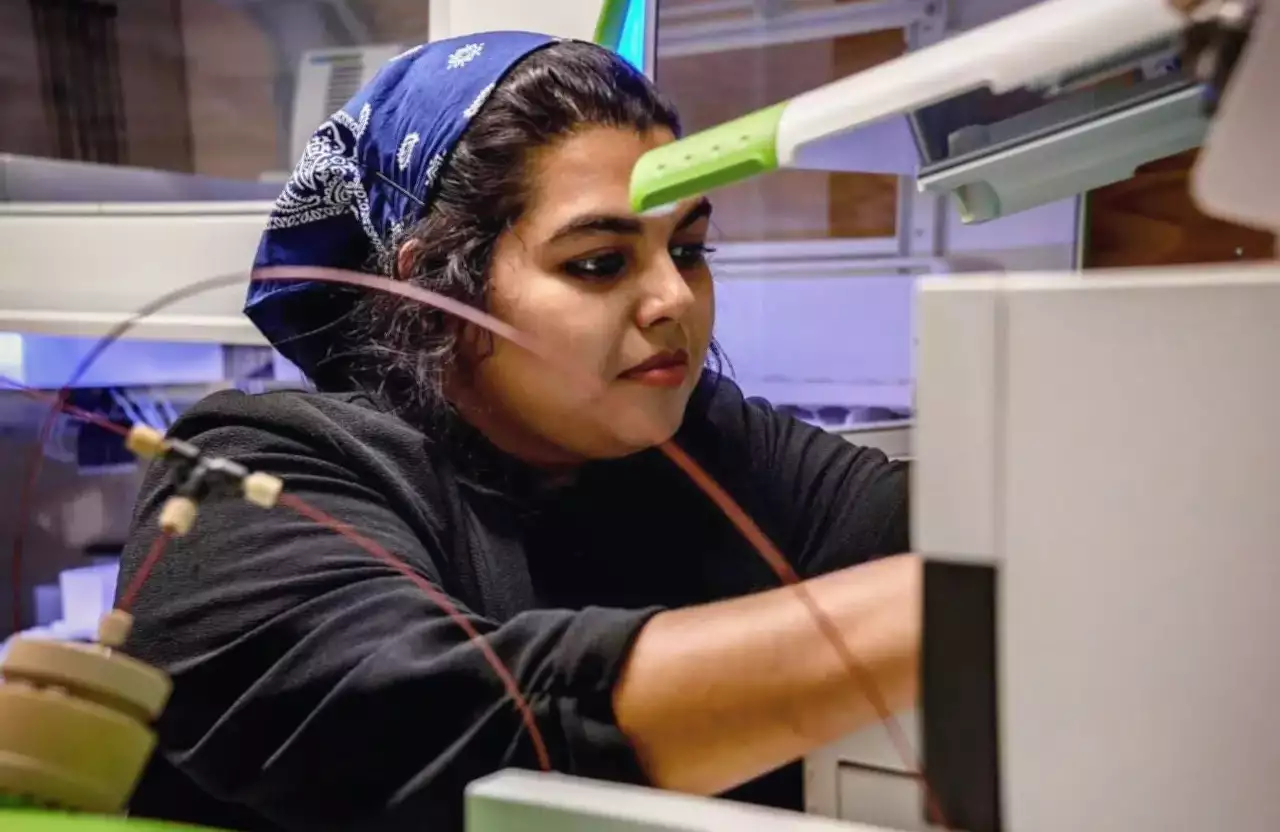

We caught up with the brilliant and insightful Ramisa Fariha a few weeks ago and have shared our conversation below.
Ramisa, appreciate you joining us today. Do you think your parents have had a meaningful impact on you and your journey?
Growing up as a neurodivergent kid who defied social norms was far from easy. Picture a small town in the U.S. in the ’70s or ’80s—this was my hometown, where we had one shared desktop for the entire family and lived in a multigenerational home filled with cousins and grandparents. Since my sibling and cousins were all boys, I chose NOT to identify as a girl. I dressed, acted, and even adopted a male pseudonym, making everyone call me Shah Rukh Khan after the famous Bollywood actor. I played with cars, airplanes, Legos, and spent hours watching sports—activities that clashed with the traditional expectations for girls at the time.
While this might seem simple in today’s world, it created significant challenges for my parents. Yet, instead of bowing down to societal pressure, they let me be myself. They were remarkably open to raising a child who questioned norms. I vividly remember one birthday when someone gave me a doll. I cried for hours, deeply upset that the gift-giver thought I was a girl who wanted to play with dolls. To this day, my mother teases me, recalling how I said, “He could’ve given me a book without pictures, but a doll??” She jokes that it was her first clue that I’d grow up to be a bibliophile. Rather than forcing me to accept the gift, my parents explained my feelings to their friend who gave it. He kindly returned the doll and brought me crayons instead, and I was a happy camper!
This is just one example of how my parents supported my individuality. It wasn’t always easy for them, but they tried. While many of my friends’ parents dictated their children’s life choices—what careers to pursue, whom to marry—my parents allowed me to choose my own path. They stood by me, even when I decided to move to the U.S. for my education as a single woman. Despite pressure from members of our hometown to marry me off, fearing I would become the “rotten apple,” my parents believed in my dreams.
Their greatest sacrifice was living on a different continent, watching me grow up through a cell phone screen. It wasn’t easy for them, especially for my emotional father and my best friend—my mother. As challenging as it was for me, I was further removed from things that carried memories and I got busy with life. But my parents continue to live in our home, surrounded by things that constantly remind them of me. While they’ve watched me grow up, I’ve also watched them grow older.
As a teenager, I often questioned their parenting choices. I wondered why they didn’t make life easier by telling me what to do, what to eat, or who to be. Looking back, I now realize they parented just right. They gave me the freedom to explore and discover my true self. My parents gave me their biggest assets: their ability to dream big, and their courage to chase those dreams.

Ramisa, before we move on to more of these sorts of questions, can you take some time to bring our readers up to speed on you and what you do?
To give you a brief window into my journey, I was born and raised in the small town of Narayanganj in Bangladesh, and I had no idea what I wanted to be when I grew up. Being the daughter of an attorney, everyone just assumed I was going to be a lawyer someday. The only thing that made a difference in my life was my high school Chemistry teacher Mr. Momin. He introduced me to the world of Chemistry where everything had numbers and real-life applications. Despite my love for Chemistry, though, I was unsure of my career choice because there was nothing that combined my passion for volunteering, helping people, AND Chemistry. Back then, the internet was not as accessible in Narayanganj as it is today, and I never knew of any female scientists or engineers who I could relate to. I almost did not have a career plan to be honest! However, it was Dave Bautista (former WWE wrestler and Hollywood actor) who almost gift-wrapped and gave me my current career back when I was in seventh grade. Sounds crazy, I know. I had the biggest crush on Dave Bautista (who then went by his stage name ‘Batista’) who released his autobiography ‘Batista Unleashed’. In the book, he openly talked about his ex-wife Ms. Angie’s battle with ovarian cancer, and the term ‘ovarian cancer’ was foreign to me coming from a society where discussing reproductive health was not common back in the day. Ms. Angie’s journey propelled me to learn more about the disease, its mechanism, causes, treatment options etc. and that is when I came across the work of Dr. Jeff Morgan at Brown University. Jeff was working on creating a mice artificial ovary at the time and I thought it was the coolest thing in the universe! I had no idea there was an entire field called ‘Biomedical Engineering’ (BME) and how one can design devices, artificial organs and prosthetics, implantable biomaterials, novel drugs etc. pursuing that field. Soon after, I casually announced to my parents that I would grow up to become a biomedical engineer and I would train with Dr. Jeff Morgan at Brown University. Things are easier said than done, however. I had jaundice and my GCSE grades weren’t really Ivy League-esque. But I didn’t lose hope. I joined Penn State for my BS in BME, and my first-ever exposure to research was at the Lian Lab for human stem cell engineering. I still remember the first time I saw human embryonic stem cells under the microscope and the beating cardiomyocytes that my PhD mentor Dr. Lauren Randolph was working with. The hands-on research experience as a mere undergraduate student sealed my fate as a scientist. Upon graduation, I felt I needed to train further before I was ready to commit to a graduate program. So, I joined ACell Inc. (Columbia, MD) as a Research and Development Intern, and trained under the mentorship of Dr. Luai Huleihel. Luai was a strict boss, but I learned so much from him during my year-long training. Prior to my internship, I had reservations about working with animal samples and tissue decellularization, simply based on my theoretical understanding of the field. But working in the company and first-hand observing how the science and work impacted patient lives broadened my vision as a scientist. Right after that internship, I received the opportunity to attend Brown University for my master’s in BME under the joint mentorship of Dr. Jonghwan Lee and Dr. Jeff Morgan. The opportunity to work with Jeff was a dream come true for me! I cried the first time I met him because it was equivalent to meeting Albert Einstein in the flesh for me. For my master’s research, I demonstrated the application of Optical Coherence Tomography imaging for longitudinal drug studies on 3-dimensional breast cancer tissues that I made using Jeff’s Microtissues platform. This meant that I was on my feet in the lab at least 17-hours a day. What is funny is I always fancied myself as a wet-lab scientist following my stem cell and tissue engineering training, so optics was not something I was too passionate about. But one of the biggest lessons I have learned in my life is to never say no to science. I have never said no to any scientific learning opportunity in my lifetime so far: whether it was the super sensitive stem cells that I barely knew anything about as an undergraduate, or it was the image deconvolution from terabytes of data, I have always kept and open mind to research. I defended my master’s thesis during the COVID-19 lockdown with nothing planned for the near future. It was then that I received an email from my PhD advisor Dr. Anubhav Tripathi- microfluidics and genomics specialist- who had heard about me from one of his colleagues and he wanted to hire me to take charge of the liquid chromatography tandem mass spectrometry (LC-MS/MS) research in his lab. I was open with Anubhav about not knowing anything about his work, LC-MS/MS (I had never seen the instrument at the time), and I was not a device/microfluidics/genomics person at all. But I accepted the challenge to work with him regardless. The learning curve was steep, combined with the stress of a PhD degree, but soon I found myself leading the ‘Clinical Diagnostics and Automation’ team in Anubhav’s lab. I had a group of talented undergraduates and master’s students working with me, and together we designed and developed methods and assays that were automatable and could be applied in clinical settings in real-time. As an advisor, Anubhav was very hands-off; he would give you questions to solve but will make sure the novelty and innovation, and the project ownership is established within your core. Prior to working with him, I was typically a scientist following a senior scientist’s project vision. But Anubhav changed it. He allowed me to explore and find my own interest in the field of devices and automation- yet another dry branch of biomedical engineering that was new to me. Even though I did not have any primary inclination towards the work, but I never said no. And just like that, I was publishing in a new field, getting patents, and global recognition for some of my work with Anubhav. So by the time I was done with my doctoral dissertation, I was getting referred to as a ‘mass-spec expert’ even though I was still relatively new in the field. This led to finding my postdoctoral position at the Brown RNA Center- a part of the RNome Project- where I am expanding my knowledge on mass spectrometry by developing nucleoside quantification methods using different types of mass spec systems.
One of the most valuable lessons I’ve learned as a scientist is the profound impact that mentorship can have on fostering a love and curiosity for science. I’ve been incredibly fortunate to have crossed paths with accomplished scientists early in my career, each of whom helped me break through barriers as a woman of color in STEM. But I know not everyone has access to those same opportunities.
Mentorship during the early stages of one’s career is crucial to long-term success, and it’s this belief that fuels my passion for mentoring. Today, I mentor students from around the world—ranging from high schoolers to graduates—helping them access resources they might not otherwise have. Whether serving as an academic or career counselor, a peer offering support, a scientist providing informational interviews, or a coach helping students build connections, I aim to create opportunities for those who need it most.
One of my biggest dreams is to promote educational equity through my mentoring network, as well as the books and programs I plan to launch in 2025. My hope is to help bridge the gender and racial gaps that persist in higher education, ensuring that the next generation of scientists is more diverse and empowered.

We’d love to hear a story of resilience from your journey.
You can’t make it through graduate school without resilience—it’s essential! Science, especially experimental research, demands persistence. One thing I always tell my students and mentees is: if your experiment works perfectly the first time, don’t trust it! Always repeat it at least three more times before drawing any conclusions. Science is about reproducibility and troubleshooting, whether it’s an assay, a device, or a model. And it’s about learning from failure.
I’ve had plenty of moments in my career when giving up seemed easier than pushing through, but resilience always paid off. One example was a project where I was developing an antidepressant assay to monitor postpartum depression. We kept running into problems with calibrator accuracy. My team and I tried different extraction techniques, but the errors wouldn’t go away. For the longest time, I questioned my methodology. Then, one morning, I decided to take apart the entire LC-MS/MS system and troubleshoot it part by part. That’s when I discovered a continuous charge build-up inside the instrument, which was causing inaccurate readings.
Even though there was no guarantee that discharging the system would fix the problem, it was a starting point. By that time, we had tested around 20 different methods and generated eight different prototypes. After weeks of frustration, I made the tough decision to discard all previous samples, re-order new reagents, and start fresh from scratch. This meant another month of work, but I kept reminding myself of the importance of the study and the difference it could make. In the end, our perseverance paid off, we got the results we were aiming for, and the paper was eventually accepted for publication.
This experience taught me that science is as much about patience as it is about discovery. Resilience is not just a quality—it’s a necessity.

Do you think you’d choose a different profession or specialty if you were starting now?
Yes! A thousand times yes! My mom always says how being in a legal profession or a literary field would have come naturally to me, whereas I am always stressed and worried about my research, but I don’t think I would have my career any other way. I thrive on solving problems and asking questions. I can’t imagine not having the knowledge and tools to ‘build’ solutions that make a real difference in patients’ lives— whether it is in the form of a computational model for preliminary concept generation, or a final device for immediate application. I genuinely love being a biomedical engineer and a scientist. I have certainly questioned my life choices during many all-nighters in college and graduate school, and to this day manuscript rejections or failed experiments frustrate me, but I can’t discount the joy of introducing newer technologies and concepts to the world, and the sigh of relief when an experiment works out. I know I have a lifetime of learning ahead of me, with so much more to discover, and I’m ready for that challenge. Have all these experiences turned me into a bit of a “jack of all trades” scientist? Probably. But would I trade that for specializing in one narrow field? Absolutely not! I love the diversity of my work and the opportunity to explore new horizons.
Contact Info:
- Website: https://ramisafariha.com/
- Instagram: https://www.instagram.com/what_the_fari/
- Facebook: https://www.facebook.com/whatthefari
- Linkedin: https://www.linkedin.com/in/ramisafariha/
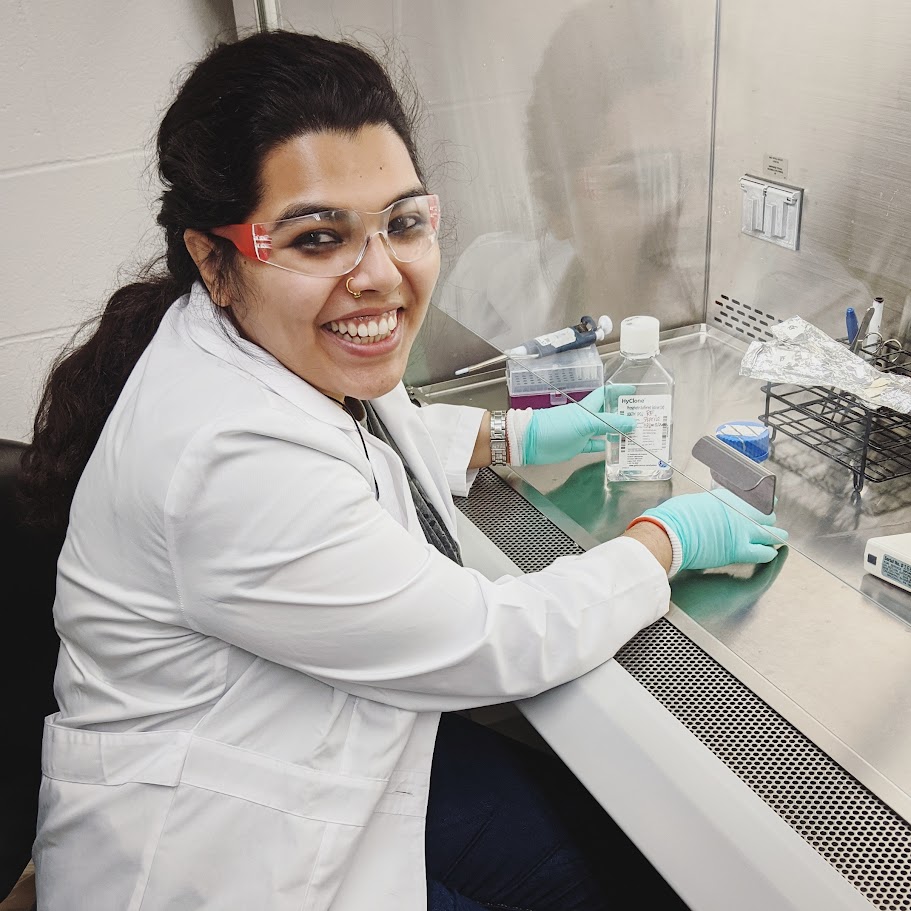


Image Credits
Feature/personal photo: Jose Alejandro Alvarez for Tripathi Lab
Second photo (with students in white coat): Brown University school of engineering