

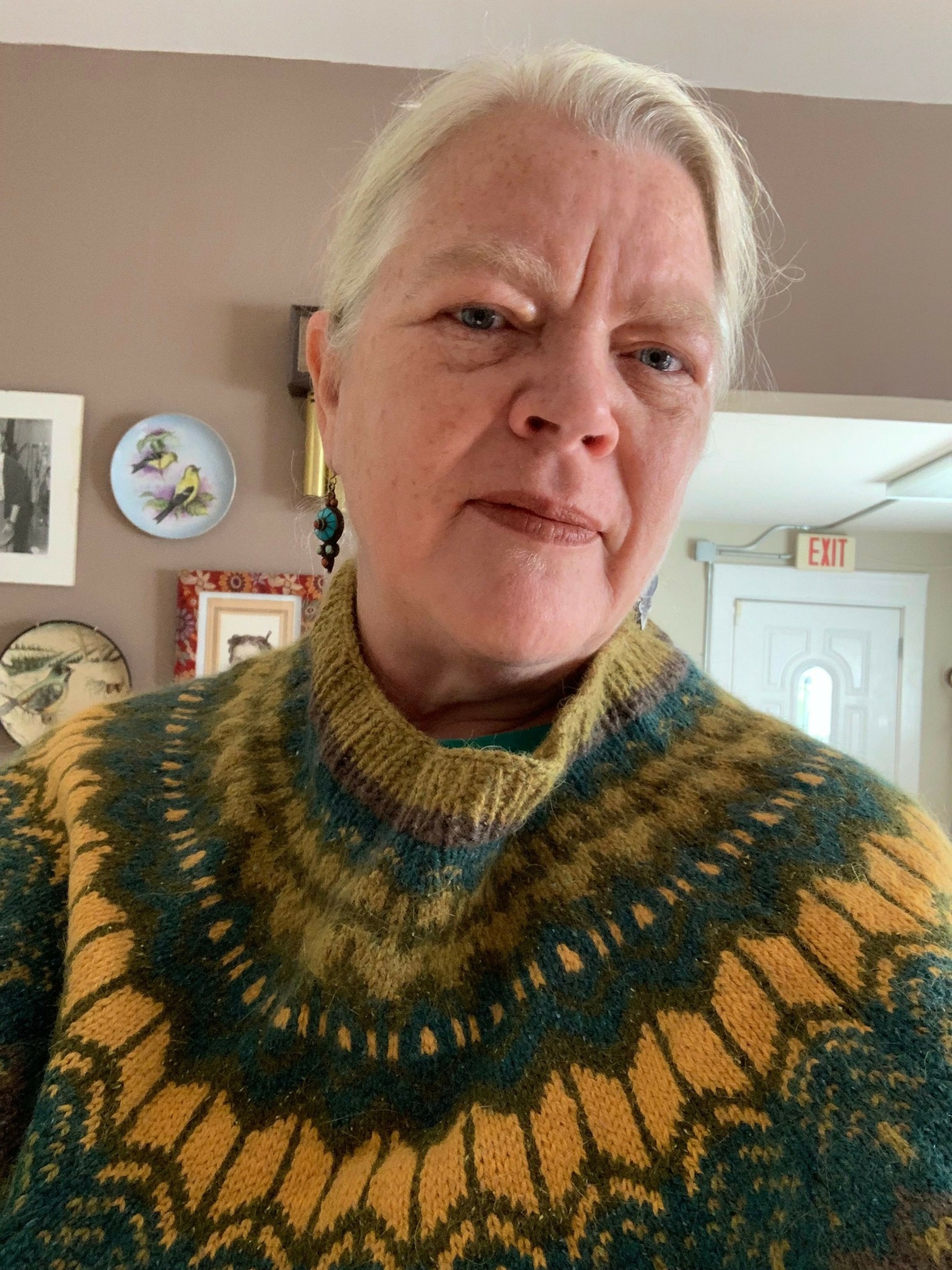

We’re excited to introduce you to the always interesting and insightful Rachel Biel. We hope you’ll enjoy our conversation with Rachel below.
Alright, Rachel thanks for taking the time to share your stories and insights with us today. undefined
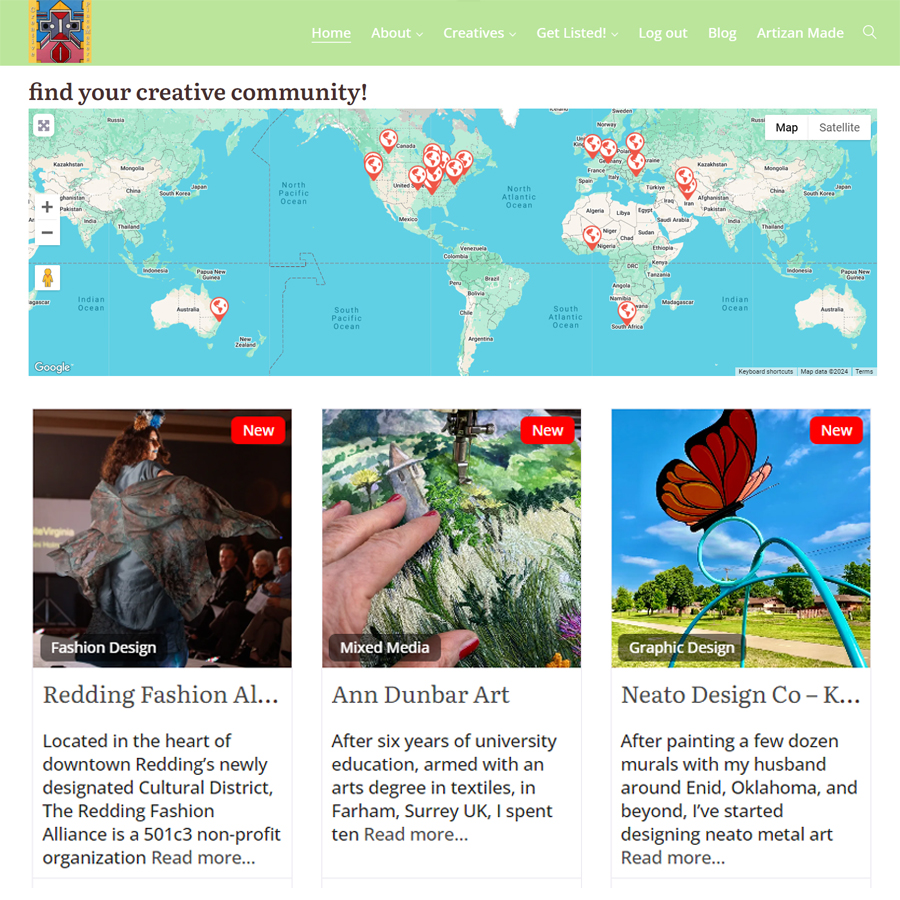
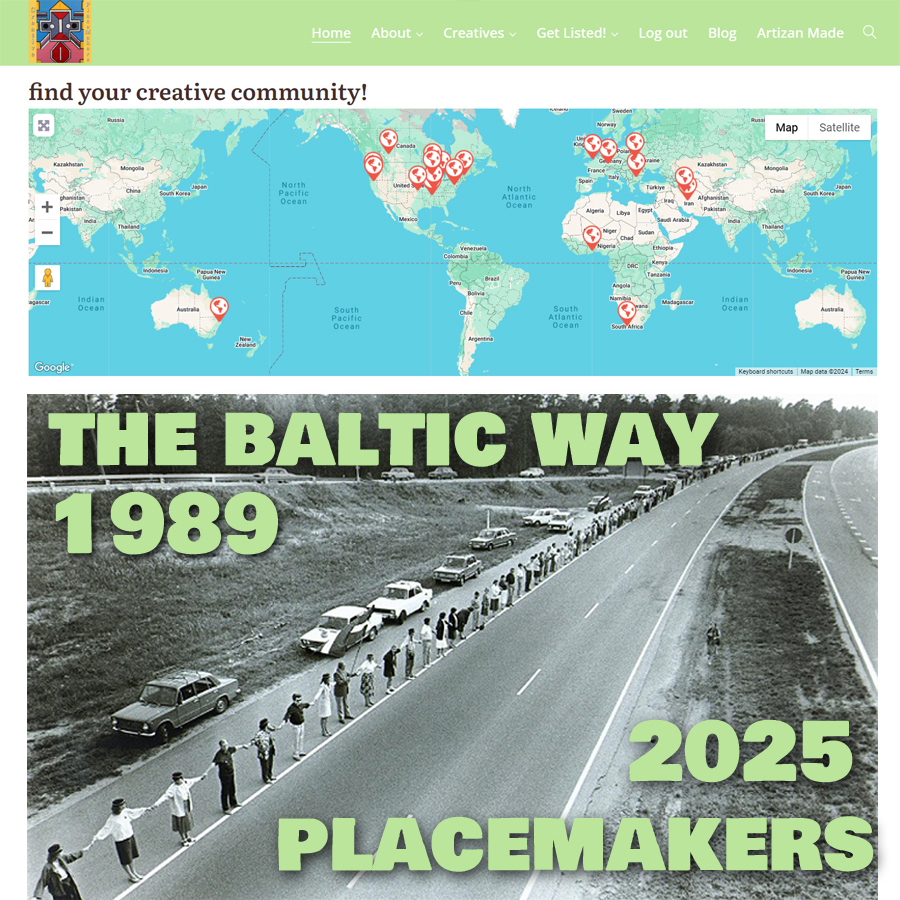
I recently launched Creative PlaceMakers, a directory of creatives who embrace diversity and care about climate change: https://creativeplacemakers.net/ Each member gets a listing where they can have six images, a video, and as much text as they need to tell their story. They also get six categories to pick from where their listing will show up. Their listing shows up on a map and the hope is that people will find and connect with them both locally and online.
I started working on it in the Fall of 2024, assuming that Kamala Harris would be President. Donald Trump was chosen instead and that changed everything for me in terms of this project. Embracing diversity (and equality and inclusion) along with concern about climate change, suddenly became dangerous. It’s mind boggling. I now see our map as a kin tool similar to the The Negro Motorist Green Book, a directory of safe businesses for African Americans. Creative PlaceMakers also shines a guiding light, informing people that it is a safe space. Acknowledging that this is now a potentially dangerous stance, members do not need to use their actual addresses to show up on the map. They can use a public place like a library, park or school near them and then people who want to connect with them can message them through their public links.
The idea came to me through an exercise I did last year. I was honored to be selected as a Fellow of the Golden Institute of Chicago. They train people to use the principles of Asset Based Community Development to develop their projects. (ABCD) Basically, the approach focuses on building from the ground up instead of a top down method. I wrote about this exercise here: https://www.artizanmade.com/goldin-fellowship-creative-cities-and-artizan-made/
There were 20 of us Fellows, from different countries. Most were in Africa and Asia and much younger than me. I am 63 now and have been working with the handmade community for over 30 years. We each had to have a project to work on while we went through this training. I wanted to do something with using beer bottles as a construction material as we do not recycle glass here. But, when I did this one exercise, a light bulb went off. We were asked to map our community assets. I live in Paducah, Kentucky, USA, which is a UNESCO creative city so I decided to map some of our creative assets. I got very excited about this and saw the amazing potential of taking this to an International level. We have 50 members now and I hope that creatives around the world will join and see this as an act of rebellion against totalitarianism as well as a loud vote for inclusiveness and for protecting our natural world. I have never seen anything like this, so I do think it’s the brain child of all of the years I have spent living among creatives who struggle to make ends meet and whose neighborhoods get taken over by gentrification.
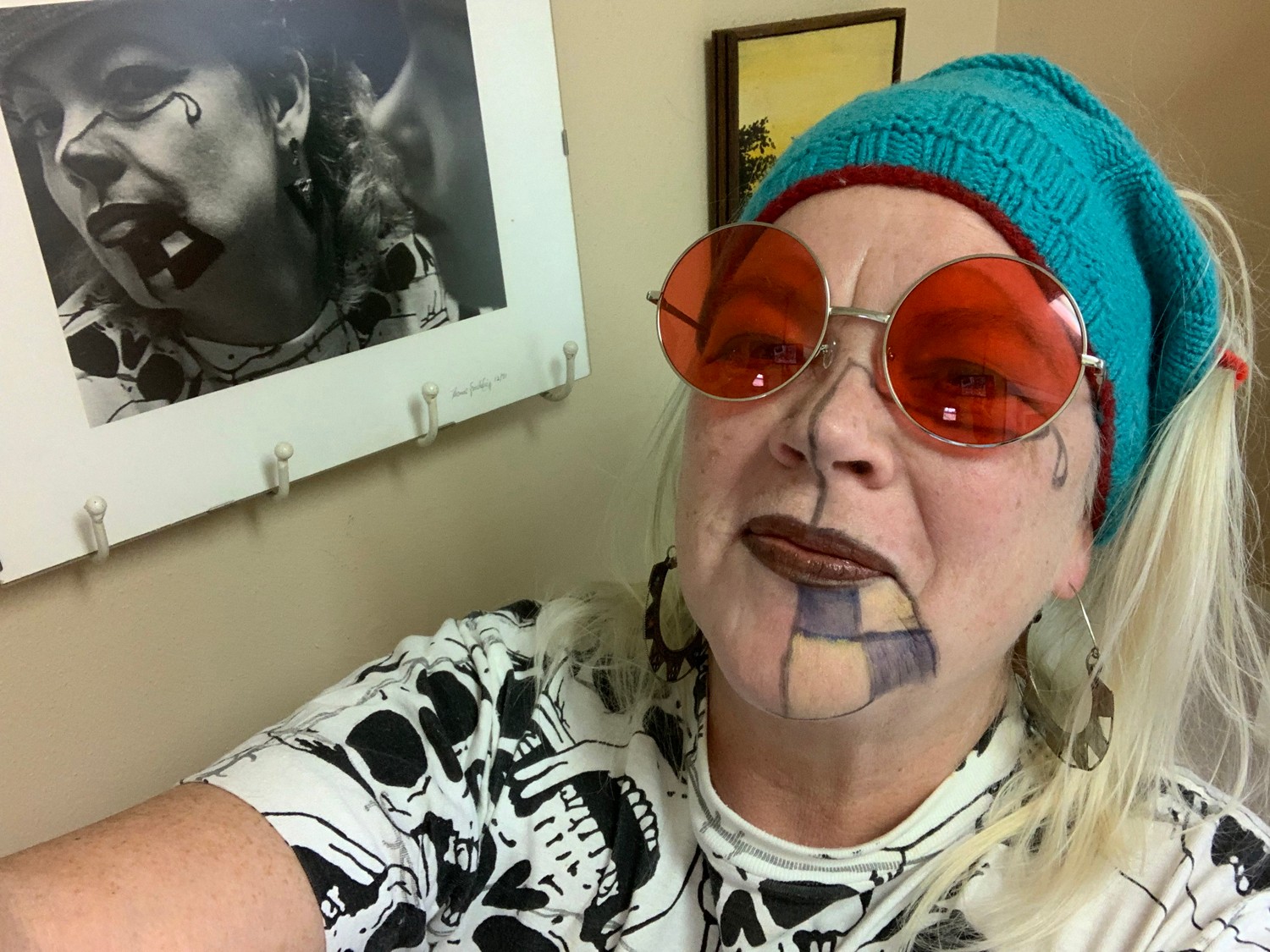
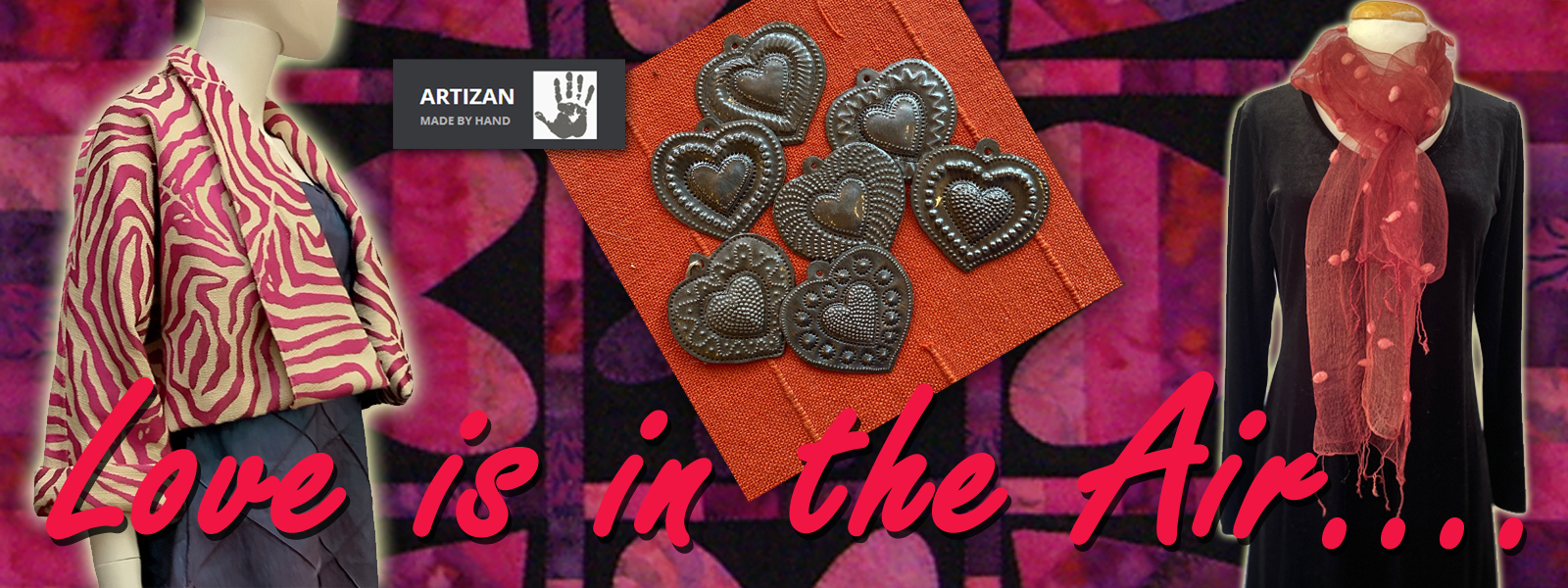
Awesome – so before we get into the rest of our questions, can you briefly introduce yourself to our readers.
18 years in Brazil, 20 in Chicago and 20 in Paducah
I spent the first 18 years of my life in Brazil as a Lutheran missionary kid. We were there from 1962-1980, living in Paraná, a state in the South that was coffee country when we first got there and quickly expanded to wheat, corn, soy and other agricultural products. Our church was founded by Germans whose families had arrived in the late 1800’s and built its first seminary during those early years. While they were training indigenous pastors, Germany and the United States supplied pastors to the settlements spread all over the South. Our city, Maringá, was one third Japanese and home to many first and second generation immigrants from all over the world. All of these cultural groups brought their crafts, music, dance and stories, making it a vibrant and exciting place to live. My parents encouraged my brother, sister and me to explore any creative interests we had. My father was a creative who carved, played the violin, tinkered with inventions and led the youth to pursue musical and theatrical performances.
At the same time, we lived under a military dictatorship. Even though we didn’t witness anything “bad” happening where we were, thousands of university students were tortured and disappeared, especially in Argentina and Chile. Culturally, this tied into the hippie movement in the United States and many of our Brazilian pop stars went into exile for many years. All of this left a deep impression on me as I tried to understand what it meant to be an American in Latin America. I went straight into college when we moved back, St. Olaf in Northfield, Minnesota. Both of my parents had gone there and the small liberal arts school was mostly wealthy, Norwegian and white. Big culture shock! There were about 50 International students there and many of us huddled together, having more in common with each other than with suburban America. St. Olaf had a program called the paracollege where you could make up your own major by exploring a theme through three different fields. It was an amazing way to learn! My topic was “Church and State Relations in Brazil” with religion, sociology and political science as the lenses. I learned how to think critically there and cherish the memories of the professors who challenged us to ask questions and to think outside of the box.
From there, I went to inner city Chicago where I lived for the next 20 years. I started out in social service, but soon found the marriage of all of my interests in working with crafts through an economic development focus. This is where I learned about Fair Trade, about the creative cities movements and where my understanding of how the arts impact our quality of life. My friends in Chicago were from many different countries and our parties felt like microcosms of the United Nations. It was SO much fun! Life back then was also affordable for artists. We could live off of a part time job, having enough to pay rent, buy what we needed, eat out and go hear live music. Things changed drastically under Reagan. From one day to the next, homeless people were everywhere! Many were Vietnam vets and their halfway houses had been closed down. I ended up managing a craft collective and then had my own shops, always working with artists and fair traders, until I moved to Kentucky in 2005. The best years we had financially were under Clinton when people seemed to have a lot of disposable income and supported the arts freely.
The internet changed everything. I learned how to use a pc when I had a shop and started selling online, first for nine years on eBay and then another nine years on Etsy. I sew, knit, and can make a lot of different crafts but mostly I re-sold handmade products brought in by immigrants. For the first few years, this worked really well as I had little competition from international crafters but once they started selling similar products directly, I got priced out. Plus, it was so much work to try to do everything! Social media became a thing around 2010 and many of us started bumping in online, trying to figure things out. I took an interest in helping other artists and small importers and have been working on that since. I run a collective, Artizan Made, that promotes online shops: https://www.artizanmade.com/ Instead of selling their products, I’ve created a marketplace for them which redirects people over to their shops. We have about 50 members and I promote them on Facebook and Instagram.
Now we have the capacity to create almost anything we want to online. We have amazing tools, many of them free, but at the same time, these platforms have become greedy and make it very difficult to have reach. For example, I grew one page on Facebook to 44,000 followers, which is pretty good nowadays, but few of my followers see my content unless I pay. And, I have done that, but I have not found that the paid content reaches the right people. Anything I post on that page does get 1,000 views, but that means that 43,000 followers are not seeing my posts. It’s frustrating, time consuming and exhausting. I have a great community online and enjoy these relationships a great deal. I love working with the creative community and having access to what people are doing, their techniques, their thought processes behind their work and the cultural exchanges that we can have. But, when Trump was elected the first time I had a rude awakening about how ugly people can be and how much is embedded in deep racism, sexism and hunger for power. I realized that a big part of the problem was that people like me had withdrawn from our local communities, investing all of their talents online. It’s a big problem!
When I was in college, I studied about what happened during those years we were in Brazil. The United States invested in a lot of the social chaos that happened there through the CIA and the School of the Americas (where torture was taught as a means of control). I had nightmares from what I was learning and I always understood that the United States had a split personality. On the one hand, we were the number one exporter of culture to the world through our music, film, and fashion. We have had humanitarian programs around the world and have a rich history in defending democracy, in protecting the least among us, and in having progressive institutions that have been a shining beacon to the rest of the world. At the same time, we have been war mongers, invaders, vacuuming up natural resources from weaker countries. Even so, I felt that we were slowly moving forward, becoming better people and leaders over time. Now, Trump has been re-elected for a second time and every day has been a shocking wake up call to the real possibility of the United States becoming one more totalitarian state. It’s mind boggling! Artists have never fared well in dictatorships so my alert buttons are on at full force…
Religion is mixed into all of this. I still identify as a Christian even though I feel like “Evangelicals” have corrupted the message to the core. When we were in Brazil, I was so jealous of my Catholic friends because they had all of the Saints, the stories, the pageantry… I love folk art from Latin America from the ornate crucifixes to the carved Saints and Day of the Dead. The closest I have ever experienced spirituality is when I am in the throes of making something. I don’t have much opportunity to do that these days but I feel deeply that art, in all of its forms, is our human connection with the “other”. So, to see the corruption within these churches and their anointment of Donald Trump as their spokesperson makes me nauseous.
Brazil’s path has mirrored that of the United States. It is a country split down the middle, just like ours. At stake is the Amazon, the indigenous people, and Democratic representation. I made a video of my creative life and how it ties into these two countries and how they have informed my worldview: https://www.youtube.com/watch?v=zGVX9npQnho It’s an hour long, so a bit of a commitment, but people who have watched it have said they found it interesting. I tried to grapple with how the arts have been as powerful of a force for me as has religion and society. These are all long discussions but big happenings like Trump, Covid and all of the natural disasters we have been seeing forced me to zoom into what should really be the driving force for whatever time I have left and I realized that it is climate change. That is the existential threat that unites all of us. The rest is distraction.
The Goldin Institute Fellowship gave me a path, a direction, on how I can address these things. Both Artizan Made and Creative PlaceMakers offer communities for people who want to identify under this umbrella of caring for the planet and for each other. I have lots of ideas of what I would like to do locally, mostly related to creating jobs that use waste to create useful products. Unfortunately, I have had health issues in the last four years that have had a big impact on my energy level: hip replacement, basket ball sized ovarian tumor and now a collapsed disc that makes walking difficult. Happily, I can sit and sleep with no pain, so I am still productive. Yay! These physical limitations have made it hard for me to engage myself locally like I want to. And, yet… I hope that I can contribute to grow the understanding that the arts have economic value that is underestimated by the community leaders who help decide where investments will be made.
Here is an example:
Paducah is a port town on the Ohio River and a crossroads for travelers. We are in the middle of a triangle that connects St. Louis, Nashville and Memphis. We are known as Quilt City, USA, and are home to the National Quilt Museum: https://quiltmuseum.org/ Travelers will stop, visit the museum and go on their merry way. Over the years, our creative assets have grown and now attract people who live within driving distance. Our tourism office does a great job of promoting our local entertainment, restaurants and shopping opportunities: https://www.paducah.travel/ But, there are hundreds of creatives who live here and who struggle to make a living. We don’t have a way of knowing how many musicians, painters, actors, dancers, writers, etc. live here. If Creative PlaceMakers takes off, we might find neighbors we never knew were here because they identify as a nurse or a teacher or a plumber, but love music, quilting or woodworking on the side. Knowing that we have groups that share these common interests, we can organize and find out what they need to thrive. Let’s say there are 200 musicians here who would like to have a practice space. We have lots of empty buildings here that could be fixed up and made affordable for them. The City could invest in them and then profit by the business these musicians bring to the city.
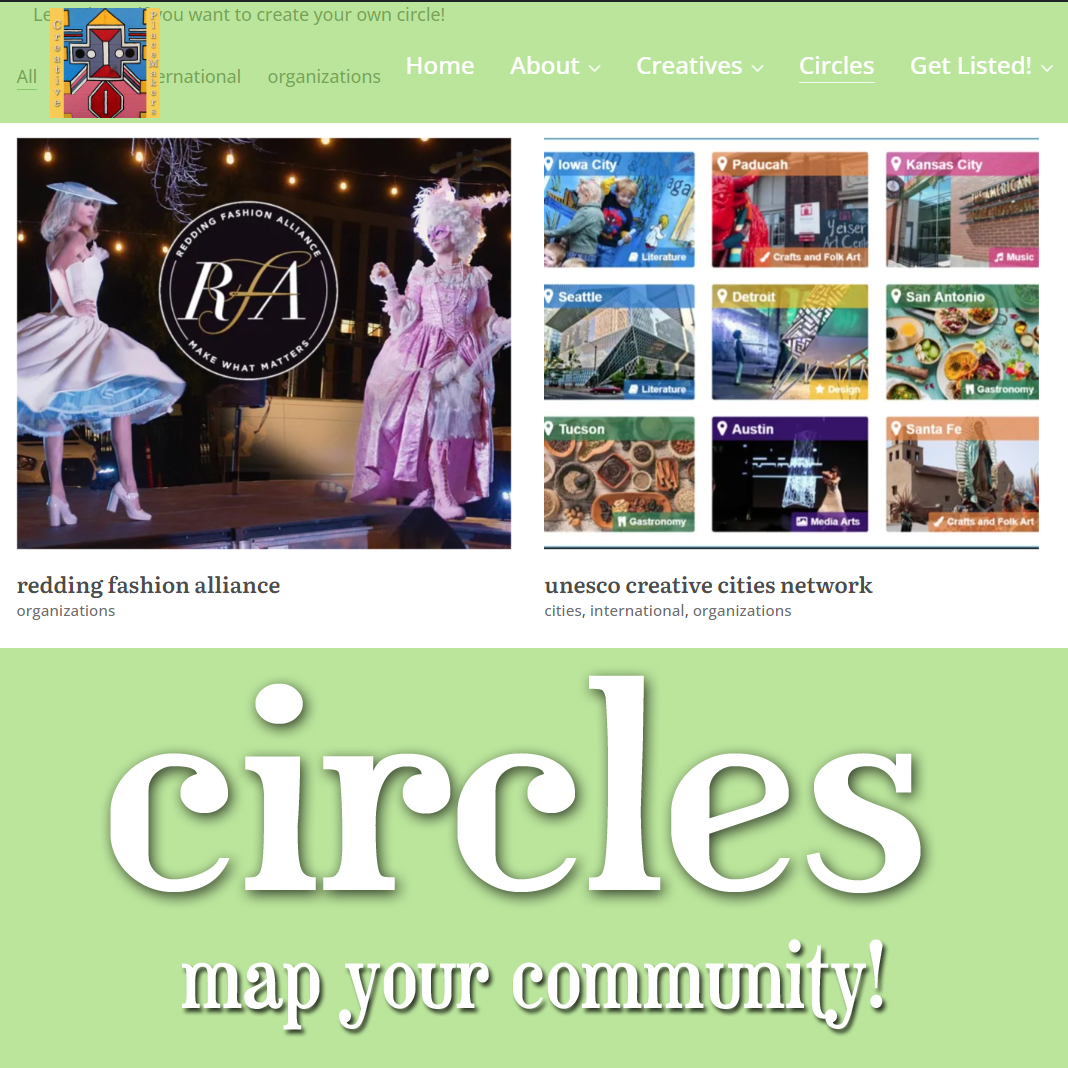
We are also a UNESCO creative city and have had several exchanges back and forth with different countries. If you go to the UNESCO creative cities site, there is one contact person for each city, no way to communicate with who lives in that city. I started something called Circles on Creative PlaceMakers where a community can have their own map. Any Paducah resident who joins will be added to the Creative Cities Circle and over time, I will approach other cities to join us and they will be able to find each other. Here are Circles we have so far: https://creativeplacemakers.net/circle/ Each one has their own map.
Both Creative PlaceMakers and Artizan Made have the potential to grow into huge sites. I am using WordPress and can’t code so am limited by what these themes can offer. But, I hope that at some point, a few good people will say, “Wow.” I would like to find the people who can grow these ideas into tools that actually make a difference in people’s lives. I can slog along and keep up with basic tasks, but I really am an idea person, not a marketing one. What sets me apart from others is my years of experience, the international comfort that I have and my passion for technique and innovation. I have seen thousands of websites and videos and have lived the creative experience. I have a nose for what is authentic and true and for what is commercial nonsense. My commitment now is to keep working at these projects for another five years and then hopefully have a few years where I can finally get back to my own art. Don’t be shy! Contact me if these stories pull you in. I make no qualms about it: I believe in a society that offers safety nets for the poor, that lifts up the arts as a core value, that accepts dissent, that enjoys critical thinking, and that isn’t self serving.
Have any books or other resources had a big impact on you?
I was given several options on topics that I could talk about with my business and the truth is, I have not found the way to make money at what I love. I don’t have good advice on that, but I have found great fulfillment in following my passions and I believe that I have helped many people along the way. I’d like to share some of the thinkers and a couple of practical things that might be of good use.
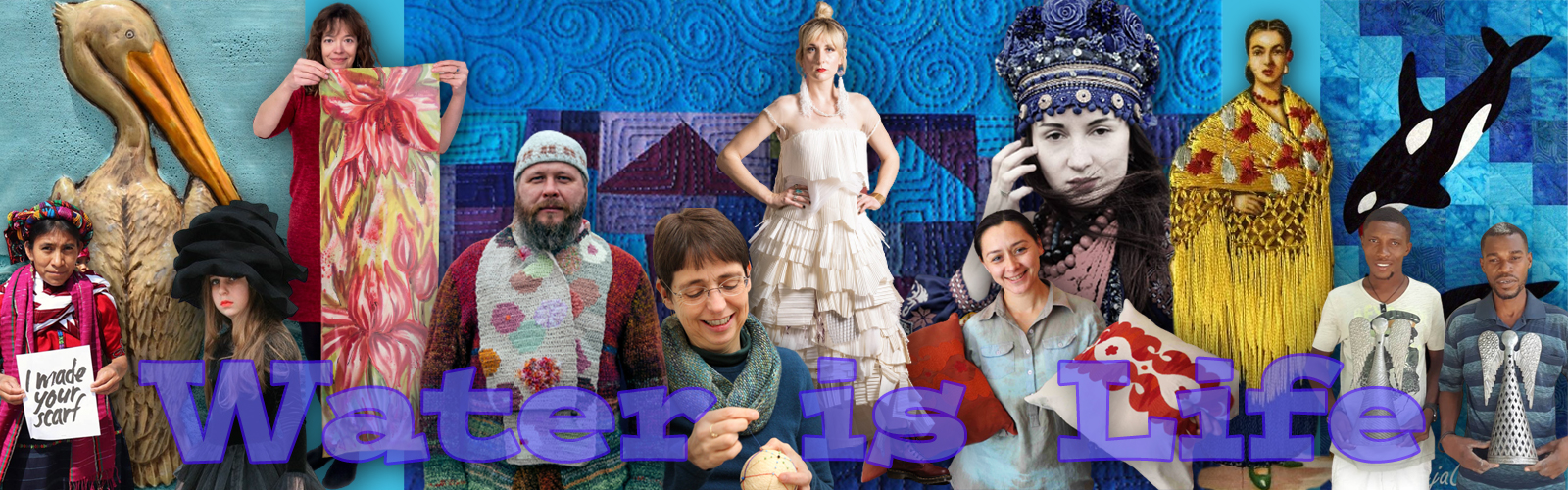
Subscriptions: Many years ago I watched a video on a WordPress tutorial. I don’t remember who the guy was or even how to find him, but he said that the best thing to do was to find a business where you can charge subscriptions for a service. That sparked an idea for me and led to the launching of Artizan Made, my handmade collective: https://www.artizanmade.com/
In exchange for a sizable presence on the site and for social media marketing, members pay $12.50/month for their membership. We have been stuck at 50 members for quite a while and it is not enough to pay for the time and effort that I put into it. The biggest challenge is that it takes me about 10 hours or more to set up a new member and I am just not excited about doing that. I’ve looked at automation options, but none of them are as good as taking the time to do it properly. With 200 members, we would have enough income to do some good marketing that would bring much more attention to the site. I’m still trying to figure that out. But, I LOVE the members, their products and how the site looks.
Inspiration:
Simon Sinek: Simon coined the idea that we need to operate out of circles that talk about Why, How and What. He did a TED Talk several years ago that was a brain changer for me: https://www.youtube.com/watch?v=u4ZoJKF_VuA&t=160s The most important motivator should be the Why. Why do you want to do this? The least important is the What? And, yet, most businesses focuses on the end product, the What. If you can harness your passion and sell that motivation, you have a winner! Many of his examples in this video are now dated, but the core of his message is timeless and he continues to motivate people to find their core in the Why. He is a compassionate man who is able to spread that message and show how it can be profitable. I haven’t figured out the profit part yet, but the Why is definitely central to all that I do.
Cormac Russell: An Irish ambassador for the Asset Based Community Development approach, Cormac describes how to tap into community assets to empower communities: https://youtu.be/a5xR4QB1ADw?si=uXepWgLeZg0IYfnO
Cormac uses a couple of examples of how lowly art initiatives brought people together.
JR: Face2Face Project, Israel and Palestine: https://youtu.be/4u_G0G6Jog4?si=2DmLysoWkEVK8f7c
A French photographer, JR has used images to bring people together and to show their humanity. He works in large scale, often creating installations that can only be seen from far above. In this video, he photographed Israelis and Palestinians who had the same vocation and plastered their faces on the wall that divided them. He asked them to be funny, so the faces are comedic which makes them more personable. The video was made in 2007 and is a testament to the possibilities of connection, something that has been wiped out for so many these many years later. And, yet, it is inspiring and he continues to shine the light on big social issues through his photos.
Sir Ken Robinson: An advocate for creativity in the school systems, Sir Ken said: “I believe our only hope for the future is to adopt a new concept of human ecology, one in which we start to reconstitute our conception of the richness of human capacity. Our education system has mined our minds in the way we strip-mined the earth for a particular commodity. We have to rethink the fundamental principles in which we are educating our children.” His TED talk is funny and profound: https://youtu.be/iG9CE55wbtY?si=Kwt0lhlvsf4Eo9fR He died of cancer in 2020, such a loss!
The Guardian’s obituary: https://www.theguardian.com/education/2020/aug/26/sir-ken-robinson-obituary
There are so many other thinkers and creatives who have inspired me over the years! I was a big reader from an early age and my father had me reading Camus and other European post world war II authors even when I was a teenager. The hounding of books, libraries and free thinking under today’s current climate is terrifying!
I have been putting together a list of resources on Creative PlaceMakers: https://creativeplacemakers.net/resources/
Given the climate of persecution that we are in, my advice to people is to start investing in private sites and create communities outside of the big social media places. Pick three and see where it goes. I am in the process of creating a private forum area for Creative Placemakers as several members have said that they would like to move away from Facebook and have privacy.
Okay – so how did you figure out the manufacturing part? Did you have prior experience?
I did spend several years making and selling products that I created. I sew and have several other skills and still dream of fun things I would like to make if I had more time. For a couple of years, I made hats, bags and pillows and sold them on Etsy. I used the same patterns and would do several of the same steps at the same type, changing the fabrics and finishing. Everything I made sold. But, I found that I was incredibly bored by the process. I LOVED making the first one, but not the next ones. I also made assembled jewelry for a time (beads and findings) and enjoyed making the first earring and abhorred making the second one. I finally gave up because I just didn’t like doing it.
At the same time, product development fascinates me. I am constantly inspired by the originality that I see every day, both from present day artists and from the past. I have no patience for the crafts that you see everywhere. My special interest is in what we can make out of trash and I have lots of ideas, just itching for experimentation. I recycle and feel pangs of distress every time I put the bins out for collection. They are filled with such great materials! Cereal boxes, cat food tins, cardboard and so much more. When I first moved to Paducah, I had four big dogs and went through a lot of dog food. Back then, there were three layers of packing for each bag: a waxy paper that was in contact with the kibble, another heavy brown paper for structure and the outside layer, a thin coated paper for the outside. That outside layer was perfect for folding projects. I made quite a few bags using the candy wrapper technique. Now the bags are made out of plastic. I have a big dog now, too, but I cook for him. I do give him kibble which he eats when he wants to. The current bags are strong and would make great shopping bags.
The main thing about trying to sell a product that you create is to try to find something that isn’t already being made, especially if it’s done in China or India. I went down to Brazil one year on a buying trip, thinking that I could represent some of the wonderful folk art that is down there. I brought back beautiful lace table cloths and placemats but couldn’t sell them because people didn’t know what they were and crochet from China and India was so cheap. The table cloths took a month to make in Brazil. I ended up giving most of them away as wedding presents.
Contact Info:
- Website: https://creativeplacemakers.net/
- Instagram: https://www.instagram.com/creativeplacemakers/
- Facebook: https://www.facebook.com/CreativePlaceMakers/
- Linkedin: https://www.linkedin.com/in/rayela/
- Youtube: https://www.youtube.com/@RayelaArt/playlists
- Other: Artizan Made: https://www.artizanmade.com/
Pinterest: https://www.pinterest.com/ArtizanMade/_profile/
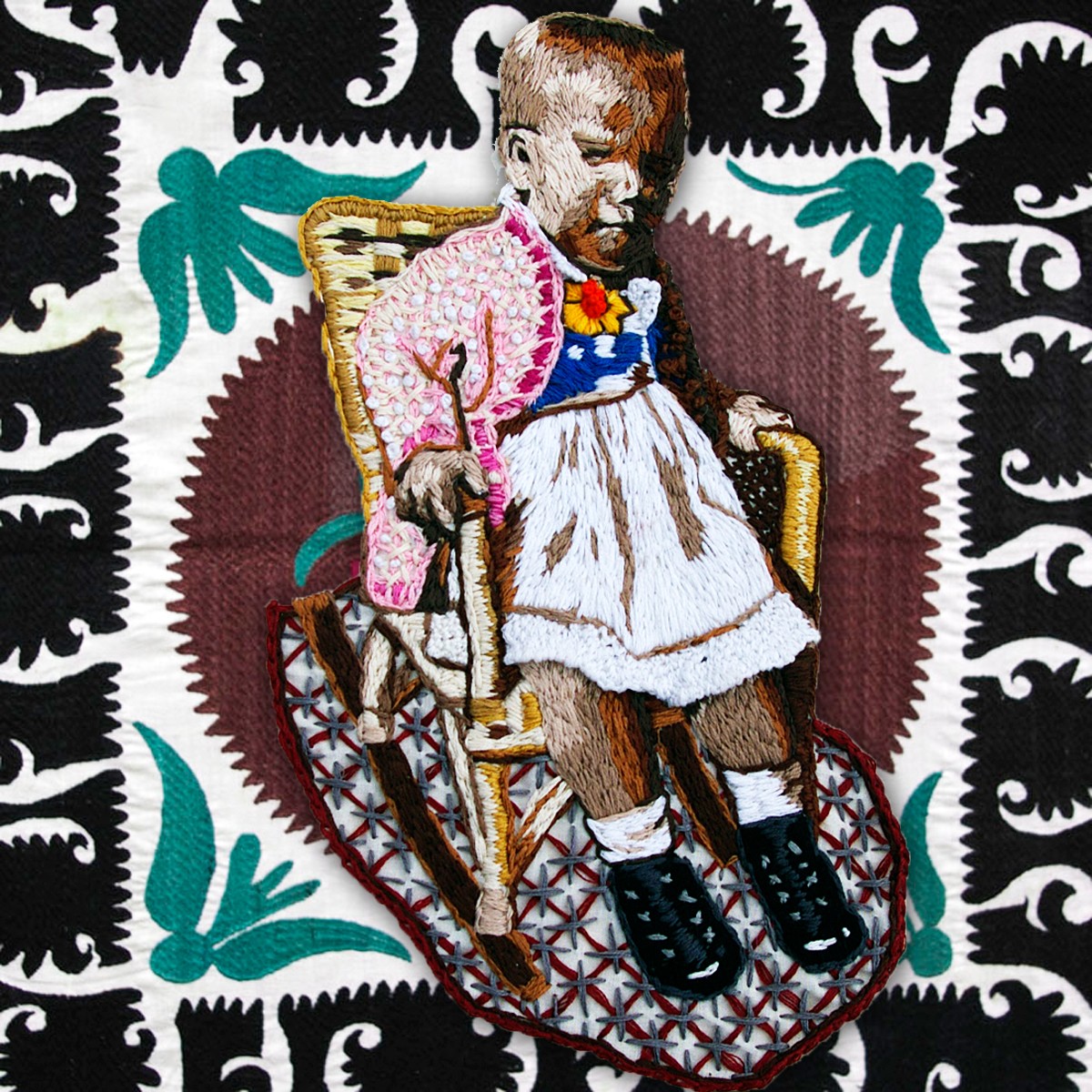
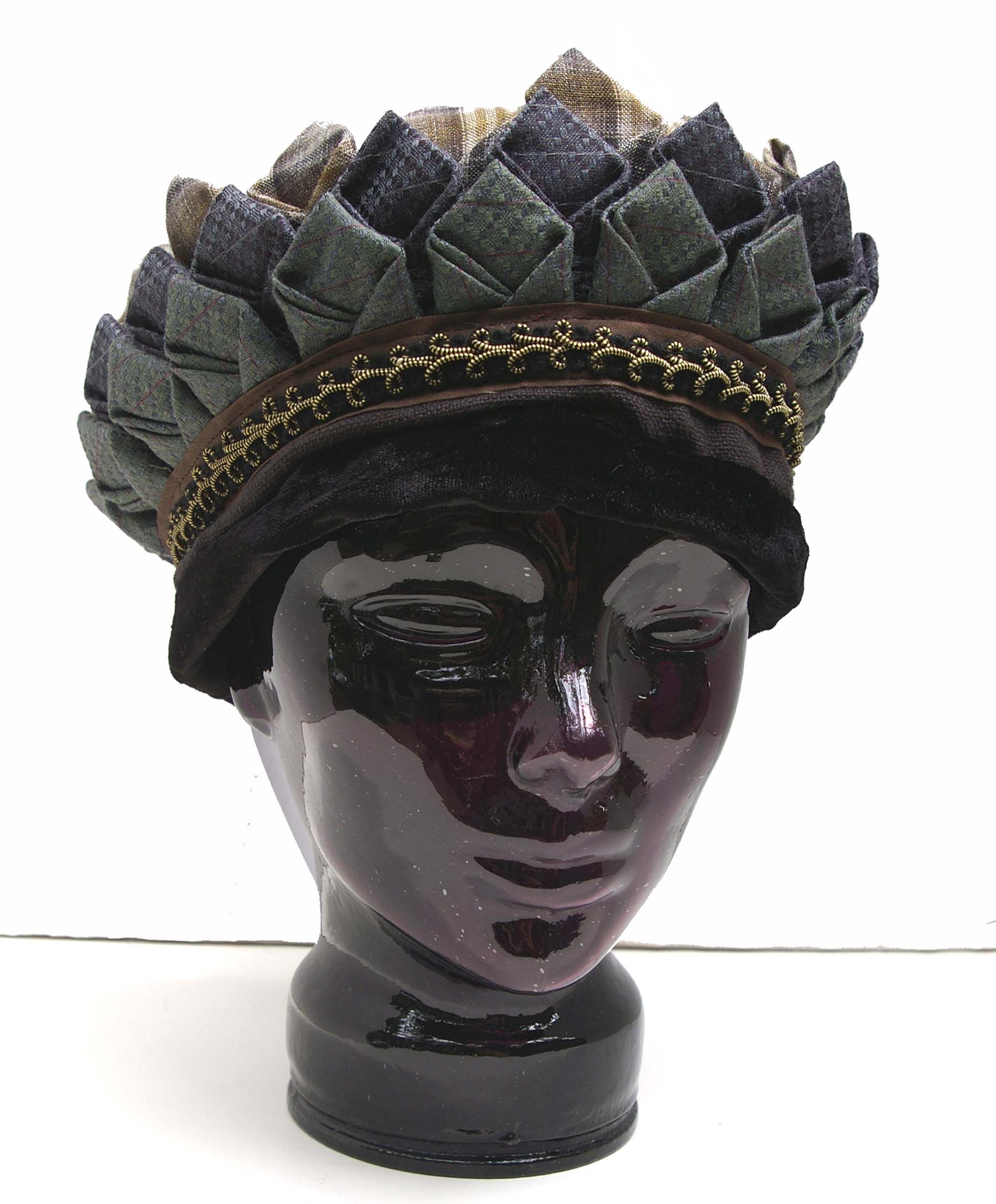
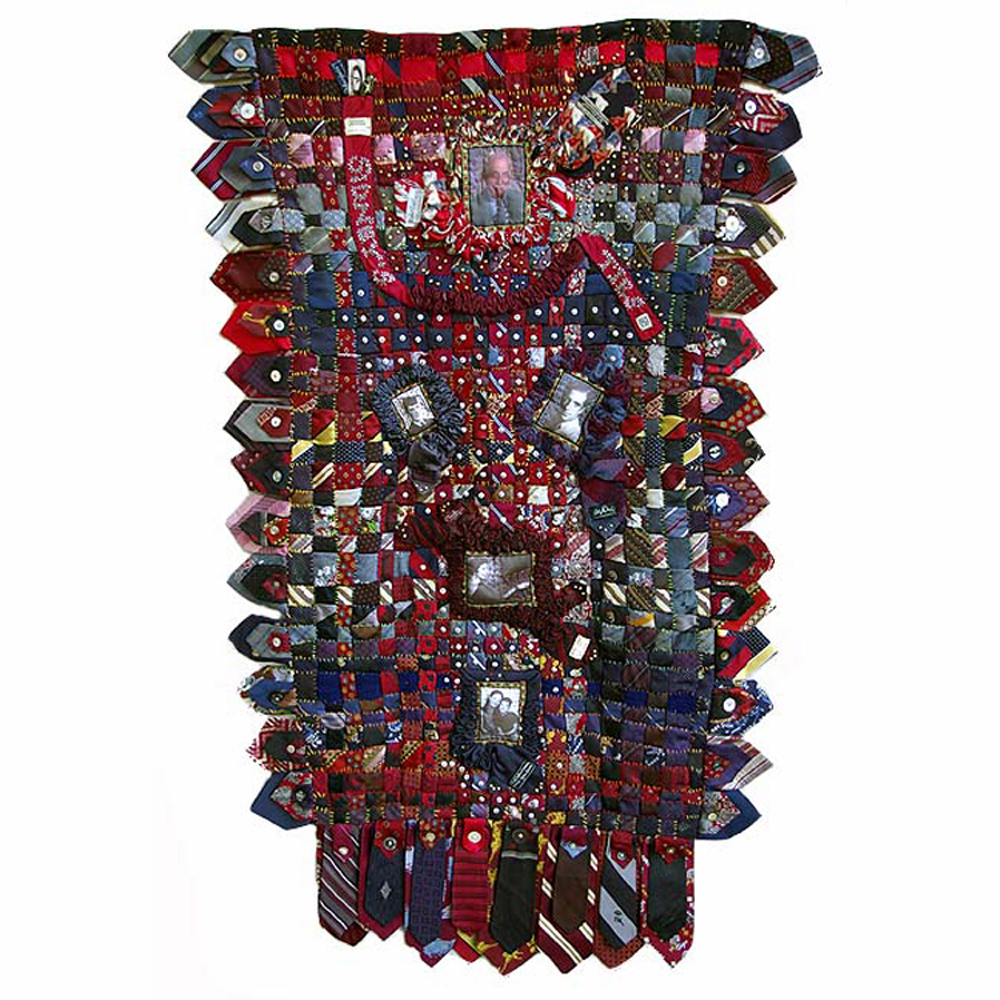
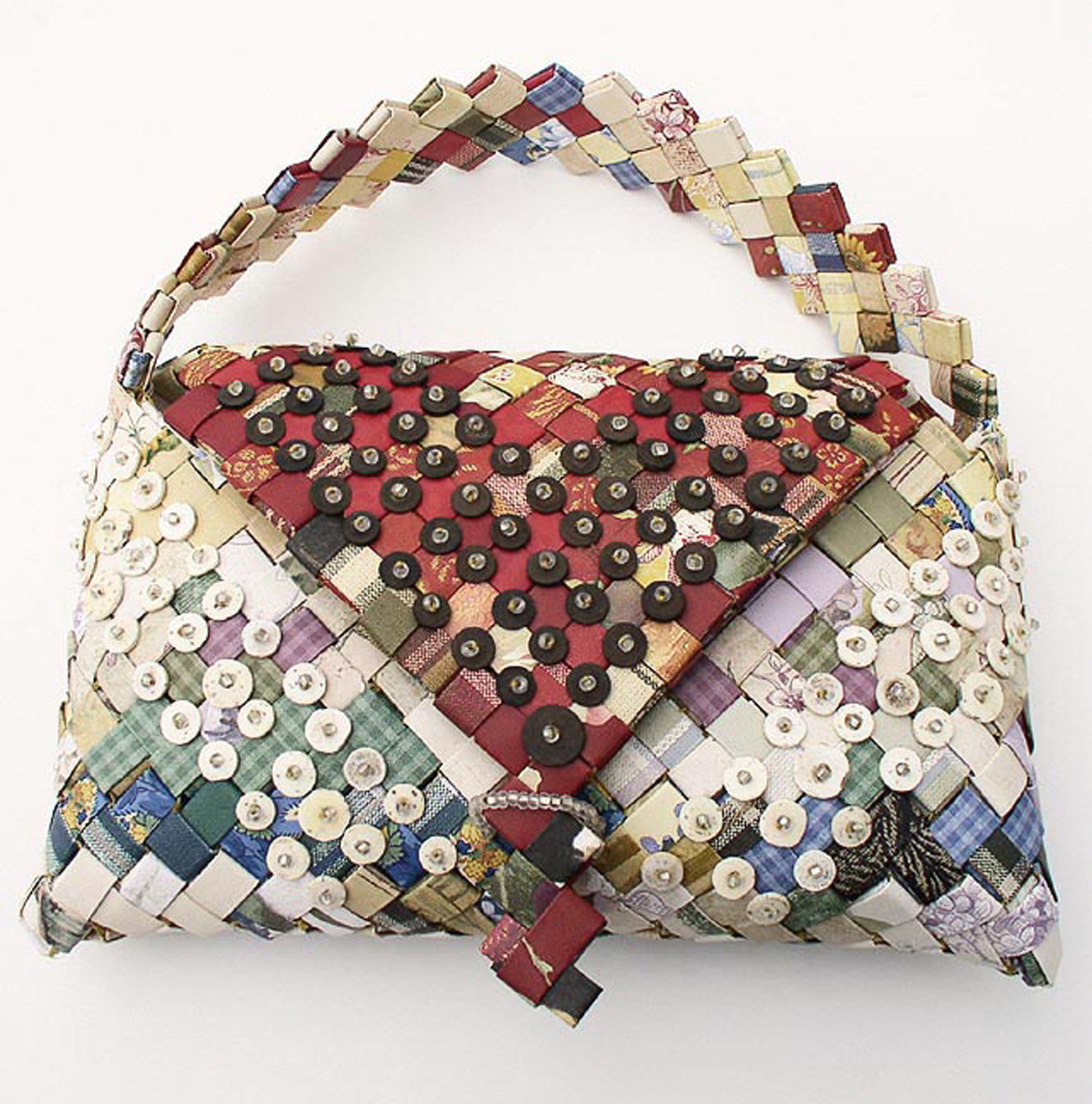
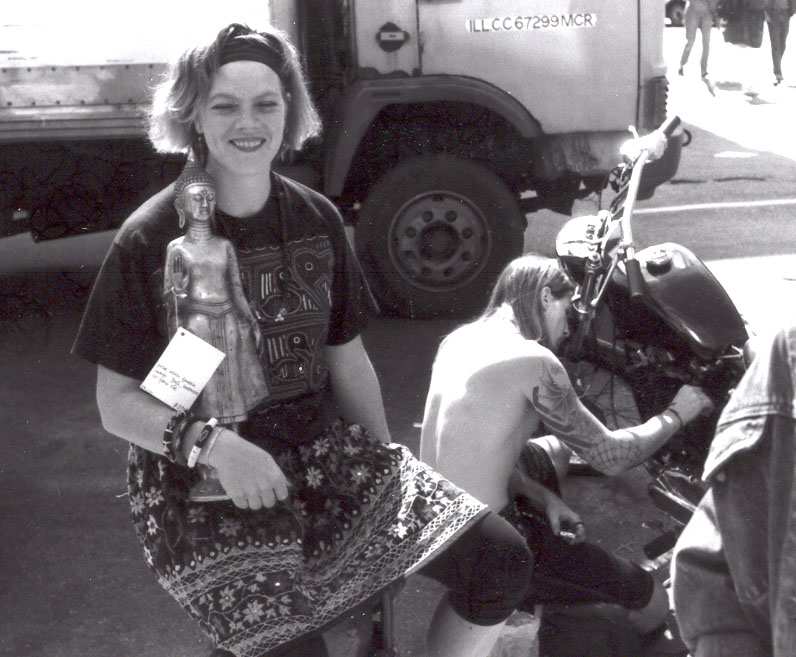
Image Credits
All photos and collages are credited to Rayela Art.