



We were lucky to catch up with Priscilla Long recently and have shared our conversation below.
Priscilla, looking forward to hearing all of your stories today. How did you learn to do what you do? Knowing what you know now, what could you have done to speed up your learning process? What skills do you think were most essential? What obstacles stood in the way of learning more?
Making art involves a constant learning process, from early days up into old age. And in old age making and learning help keep our neurons and synapses zinging around. The learning never stops and it’s one reason that being a creator for life is thrilling, despite some hardships and difficulties. We’re not factory producers, we do not stamp out cookie-cutter objects, we do not have how-to-assemble instructions. Every new poem, every new essay, every new story is a new beginning. I believe in working slowly and steadily, not in speed.
But yes, various technical and craft skills become an enormous resource base. In writing it’s never about being correct. But different forms of the sentence have shockingly different effects. To give one example, at moments of great tension, muscles go tense, shorten. So in a tense scene, why not use short, sharp words, short sentences, fragments. Thus the sentence not only says what it means, it embodies or enacts its meaning. Also, the line in poetry is worth a great amount of scrutiny. And on and on.
How did/do I learn? For me, a main resource is studying the moves and strategies of virtuoso writing that’s out there, our literature. I collect and use and teach from models—many different kinds of models that change all the time. This is not about some canon. It is about reading (as a writer!) all kinds of work, from crime stories and novels to poems to literary fiction. This is on a granular level. Read Cormac McCarthy to see what you can do with the compound sentence.
Teaching is the greatest learning aid ever invented. I don’t mean teaching the same thing over and over. I teach at writers’ conferences. I also teach adult writers in private classes. I change our agenda or curriculum every year. I do all the assignments and hand them to the writers I am working with as they hand their assignments to me. These assignments end up as published pieces. No one learns more than the teacher!
I have also learned a lot from taking adult education classes starting during the years (12 in all) I worked as a printer (press operator and lithographic camera operator) in Boston. Then, after I finally completed my first book (Where the Sun Never Shines: A History of America’s Bloody Coal Industry), researched and written in the early mornings and on weekends and vacations,, which took a long time. I did go for an MFA at the University of Washington in Seattle. I loved that time. But it has been more than thirty years, and I have kept on learning. I teach courses and I also take courses, especially courses involving generating (rather than workshopping) poems.
I participate in a once-per-month workshop that has been going thirty years. These poets, novelists, and visual artists are very skilled. Skilled and compatible peer artists are essential. My workshop began in the early 1990s as a performing group, The Seattle Five Plus One. We workshopped our poems, practiced performing, and then went out. We drew crowds!
I often read (perform) poetry at various venues around town. I consider reading a poem to an audience an essential piece of realizing it, bringing it to the point of done.
I collect models of creators, especially from the visual arts, which I love, though I am not a visual artist. I note strategies these world-class artists have in common, though they lived at different times and in different places. (To give one example, they almost invariably work on more than one piece at a time.)
There’s a lot more to say but I will close by saying that for me, learning how to be productive was a most essential piece of learning. It involved learning high self-esteem (yes, this can be learned), learning to have faith that a work that is an utter mess will bit by bit work itself out, learning to complete works. As the visual artist Louise Nevelson noted, one can make a decision to be productive. Also, I have an old friend, the poet Bethany Reid, who is a peer poet (we are roughly equal in skill). We choose a model poem each week, and each write our own poem having something to do with the model. Then once a week, often on Zoom, we study the model poem and workshop our poems. This has resulted, for each of us, in 52 new poems per year. They are drafts that create a body of work to work on.
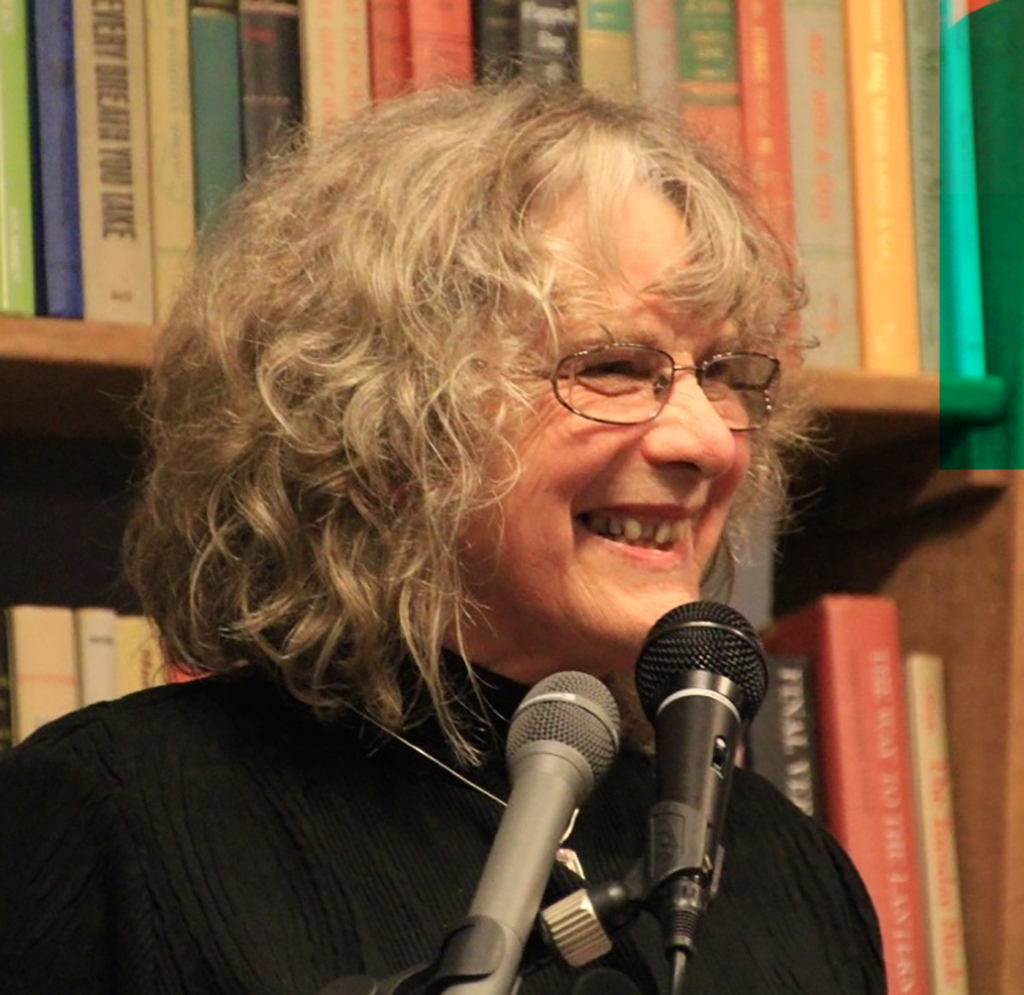
Great, appreciate you sharing that with us. Before we ask you to share more of your insights, can you take a moment to introduce yourself and how you got to where you are today to our readers.
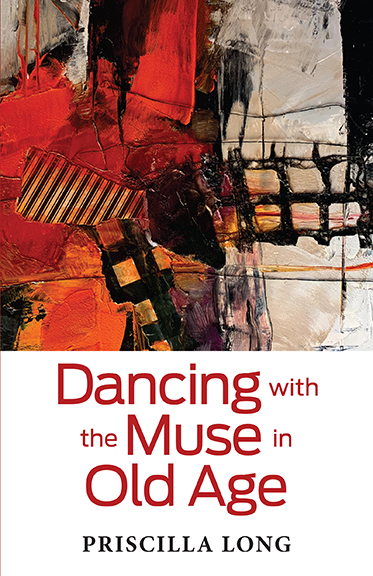
I am a poet, science writer, writer of fiction, essays, creative nonfictions, and history, and a longtime independent teacher of writing. I am author of seven books, so far, and intend to write ten more. (Actually two more books are forthcoming in 2026 and two others are circulating right now.) My book on thriving while aging is “Dancing with the Muse in Old Age” (Coffeetown Press). You must read it if you fall into one of two categories: Category 1: Over age 40; Category 2: Under Age 40. I have published so far two poetry books—”Crossing Over: Poems” (University of New Mexico Press) and “Holy Magic” (MoonPath Press). My how-to-write book is “The Writer’s Portable Mentor: A Guide to Art, Craft, and the Writing Life” (University of New Mexico Press). My guide for creatives of all sorts is “Minding the Muse: A Handbook for Painters, Composers, Writers, and Other Creators” (Coffeetown). My book of memoirist essays from University of Georgia Press is “Fire and Stone: Where Do We Come From? What Are We? Where Are We Going?” I am proud that ten of my creative nonfictions have been recognized as notable in various editions of Best American Essays and that one of these received the National Magazine Award for fiction writing. I am proud of my science column, Science Frictions, which ran for 92 weeks on the website of The American Scholar and is still available online: https://theamericanscholar.org/the-complete-science-frictions/
I also love presenting work, and I love teaching.
What’s the most rewarding aspect of being a creative in your experience?
To be deeply immersed in making—whether poem, essay, short fiction, or whatever—that makes a good life. And the community around the arts is just the best, full of brilliance and kindness. I find teaching to be very gratifying and when one of “my” writers makes a beautiful piece and then publishes it I am beyond thrilled. I love the feeling of deep satisfaction when a piece (whether book or poem) comes up finished, complete. The truth is I can’t even imagine another life.
What can society do to ensure an environment that’s helpful to artists and creatives?
Let’s start with ourselves. Poets should purchase the books of other poets. We should attend plays, purchase a painting when possible, read books (yes, read books) and write the author a note if you like the book. Buy from independent bookstores for godsakes. Attend art openings. Pay attention to the work of other artists.
Contact Info:
- Website: https://www.priscillalong.net/
- Linkedin: https://www.linkedin.com/in/priscilla-long-385358a/
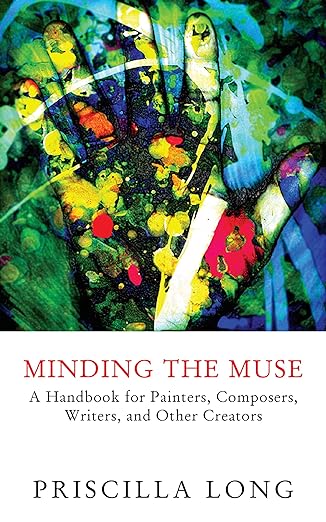
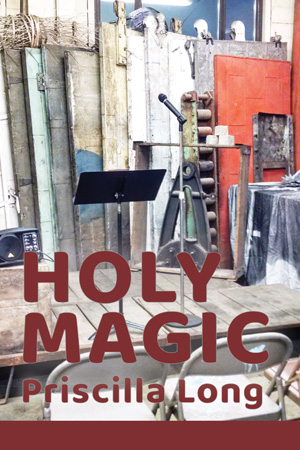
Image Credits
Anne Herman
Jerry Jaz
Jerry Jaz