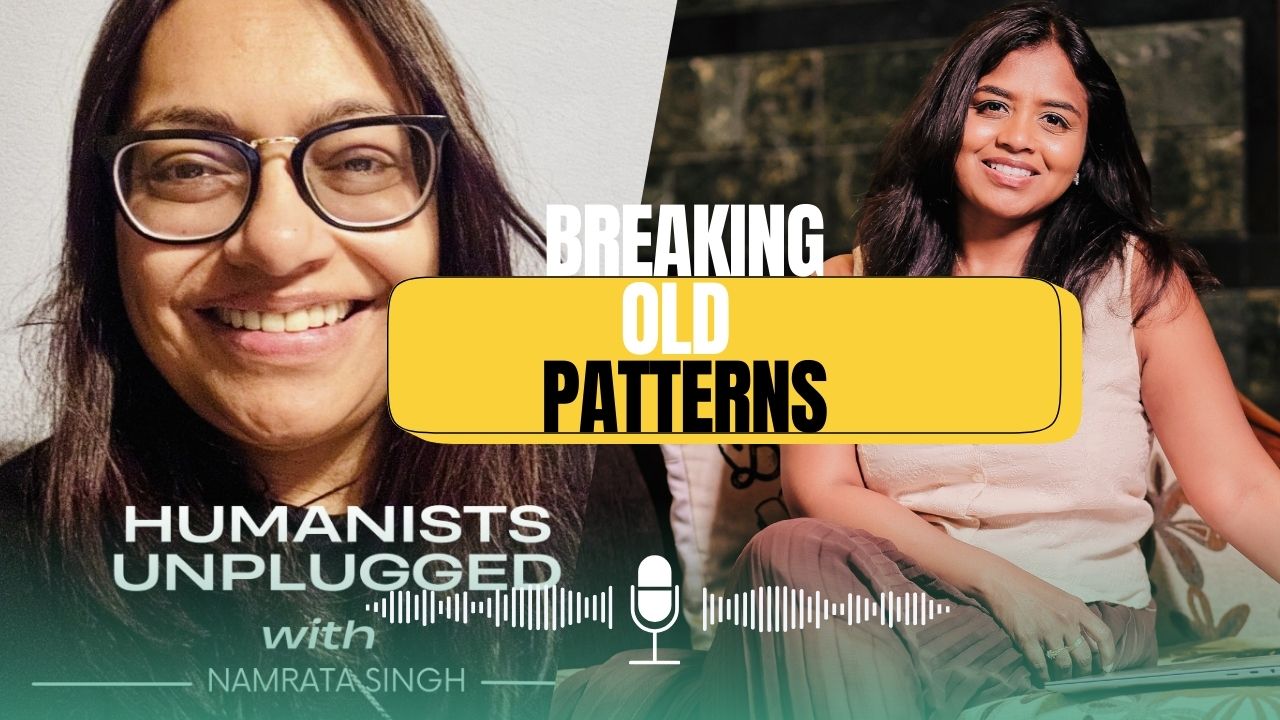

Alright – so today we’ve got the honor of introducing you to Poonam. We think you’ll enjoy our conversation, we’ve shared it below.
Poonam, thanks for joining us, excited to have you contributing your stories and insights. Alright, so you had your idea and then what happened? Can you walk us through the story of how you went from just an idea to executing on the idea
I didn’t start my business because I had a grand entrepreneurial plan.
It began with observation.
At the time, I was operating in high-performance environments. On paper, I was thriving. But as my scope expanded, I noticed something subtle: the complexity of decisions increased, the rooms got bigger, and the margin for error narrowed. It required a different level of precision.
That shift fascinated me.
I realized leadership at higher levels isn’t just about more strategy — it’s about sharper judgment, steadier presence, and clearer thinking in environments where consequence compounds.
So instead of jumping straight into “starting a business,” I went into study mode.
The next phase wasn’t branding or marketing. It was research and pattern recognition.
I started documenting what changes when leaders step into bigger roles:
How decision cycles shift
How visibility alters communication
How team dynamics evolve
Where clarity begins to blur under complexity
I studied neuroscience, decision science, and leadership psychology. I sought mentors. I tested insights informally with other senior leaders. I paid attention to what they actually needed — not what coaching culture said they should want.
What kept coming up wasn’t motivation.
It was thinking space.
Leaders didn’t need hype.
They needed disciplined clarity.
That’s when I moved from insight to structure.
I mapped what I was already doing in conversations and turned it into a repeatable framework. I pressure-tested it privately with a small group of founders and senior operators.
The first year wasn’t about scaling. It was about refinement.
I had to figure out:
Who truly has this problem?
What language resonates at an executive level?
What outcomes are leaders actually willing to pay for?
How do I position this so it feels performance-driven, not therapeutic?
I kept my focus narrow.
One audience.
One core problem.
One structured offer.
I launched quietly. No dramatic announcement. Just direct conversations, small pilots, feedback loops, iteration.
What moved me beyond the idea phase was this realization:
Clarity compounds when you stay close to real-world decision environments.
The business didn’t begin with branding.
It began with recognizing that as leaders grow, their internal systems must grow with them — and very few spaces exist to support that recalibration.
Everything I’ve built since has been in service of that single idea.

Awesome – so before we get into the rest of our questions, can you briefly introduce yourself to our readers.
For much of my career, I operated inside performance-driven environments.
I worked in high-performance environments, where results mattered daily, decisions carried consequence, and clarity wasn’t optional. On paper, I was doing well. But as my scope expanded, I became fascinated by something I kept observing:
As leaders grow, the complexity of decisions increases faster than most people are trained for.
The rooms get bigger.
The stakes rise.
The margin for error narrows.
What got someone promoted doesn’t automatically sustain them at the next level.
That observation became the foundation of my work.
I didn’t enter this industry through a traditional coaching path. I entered through pattern recognition. I noticed how easily clarity can compress when responsibility compounds — even for highly capable, high-achieving leaders.
Instead of treating it as burnout or confidence issues, I became deeply curious about the mechanics behind it.
I studied neuroscience, decision science, leadership psychology, and identity development. I worked with mentors. I pressure-tested ideas in real leadership contexts. Over time, I structured what I was doing informally into a clear, disciplined framework.
Today, I serve as a confidential thinking partner to founders and senior leaders stepping into expanded scope.
Through my Strategic Reset™ 90-day intensive, I help leaders:
• Improve decision quality as complexity increases
• Elevate executive presence in high-visibility environments
• Resolve internal friction that slows clarity
• Navigate team conflict without emotional spillover
• Build stronger alignment across product, operations, and growth
• Lead through rapid change — including AI integration — without losing judgment
The leaders I work with are not looking for motivation.
They are thoughtful operators who want cleaner decisions, steadier communication, and influence that feels natural rather than forced.
What sets my work apart is that it’s not therapy, and it’s not surface-level executive coaching.
It’s structured recalibration at the level where decisions are formed.
We don’t focus on performance theatrics.
We focus on disciplined clarity.
I am most proud of the leaders who tell me that after working together:
• Decisions land once.
• Conversations feel simpler.
• Their teams mirror their steadiness.
• Conflict resolves faster.
• Their authority feels earned — not performed.
The biggest misconception in leadership is that growth is purely strategic.
In reality, sustainable growth requires internal capacity to expand alongside scope.
That is the work.
If there’s one thing I want potential clients and partners to know, it’s this:
I don’t help people become someone new.
I help them operate fully at the level they’ve already stepped into.
Clear thinking.
Clean decisions.
Calm leadership at scale.
We often hear about learning lessons – but just as important is unlearning lessons. Have you ever had to unlearn a lesson?
One of the biggest lessons I had to unlearn was the belief that performing at a high level meant carrying everything internally.
Early in my career, especially in performance-driven environments, I believed that competence meant being self-contained. If I could handle it, I should handle it. If I had doubts, I should process them privately. If I felt tension, I should push through.
That mindset helped me succeed.
It built resilience.
It built discipline.
It built results.
But as my roles expanded, I realized something subtle: the higher you go, the more dangerous silent over-processing becomes.
Not because you’re weak — but because the cost of distorted judgment increases with scope.
I began noticing that what looked like strength on the outside — “I’ve got this” — sometimes masked inefficiency on the inside. Decisions that could have been closed cleanly lingered longer. Conversations replayed more than necessary.
Nothing dramatic.
Just friction.
The lesson I had to unlearn was that strong leaders operate alone.
The truth is, strong leaders create thinking space.
They use confidential sounding boards.
They refine judgment in conversation.
They don’t wait until something breaks to recalibrate.
That shift changed everything for me.
Instead of asking, “Can I handle this?”
I started asking, “Is there a cleaner way to think about this?”
That unlearning directly shaped my work.
Now, I help leaders build disciplined clarity before friction compounds — not after.
And what I’ve found is that the most capable leaders aren’t the ones who carry everything.
They’re the ones who know when precision matters enough to invite reflection.
Let’s talk about resilience next – do you have a story you can share with us?
Resilience, for me, didn’t show up as a dramatic collapse and comeback.
It showed up quietly during a period when I was performing at a high level while building something new in parallel.
At the time, I was operating in demanding roles. Performance targets didn’t slow down. Visibility didn’t decrease. Expectations didn’t soften.
And at the same time, I was beginning to explore this deeper question:
What actually happens to leaders as their scope expands?
There wasn’t a clear path in front of me. I wasn’t leaving one career cleanly for another. I was holding both — building credibility in one arena while constructing something new in another.
There were months where progress felt invisible.
I was studying late at night. Writing. Refining frameworks. Testing ideas quietly in conversations. Questioning whether this was truly a differentiated space or just intellectual curiosity.
No applause.
No immediate validation.
No guarantee.
The resilience wasn’t in pushing harder.
It was in staying disciplined when the outcome wasn’t immediate.
In continuing to refine the work even when it would have been easier to stay fully comfortable where I was already succeeding.
There was also the internal resilience of recalibrating identity.
It’s one thing to succeed in a known environment.
It’s another to step into a new arena where you’re building authority from scratch.
What sustained me was clarity of pattern recognition. I kept seeing the same leadership tension repeated across different environments. That conviction carried me through the uncertainty.
Looking back, resilience wasn’t about force.
It was about consistency.
Consistency in refining the idea.
Consistency in showing up.
Consistency in improving the articulation.
And trusting that if the problem was real, disciplined work would eventually meet demand.
That period shaped how I think about leadership now.
Resilience isn’t dramatic.
It’s the quiet decision to keep building alignment between what you see and what you’re willing to commit to — even when progress is invisible.
Contact Info:
- Instagram: https://www.instagram.com/radiateinnerharmony/
- Linkedin: https://www.linkedin.com/in/poonampremnath
- Youtube: https://www.youtube.com/@radiateinnerharmony