

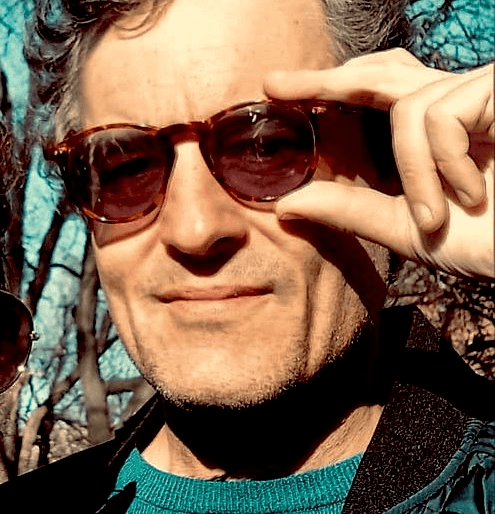

We were lucky to catch up with Paul Assimacopoulos recently and have shared our conversation below.
Paul, thanks for taking the time to share your stories with us today Can you open up about a risk you’ve taken – what it was like taking that risk, why you took the risk and how it turned out?
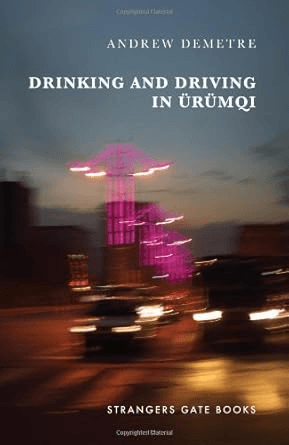
After penning my first book, Drinking and Driving in Urumqi (Strangers Gate Books, 2013), under a pseudonym, I still had no idea what kind of risk becoming a paid writer would entail or even how to take that risk. So I defaulted to the risky profession I knew best—concert producing and venue programming. Let me explain.
Back in the ’90s, I ran the El Rey Theatre, in the Miracle Mile area of Los Angeles, where besides being the person responsible for bringing all the noise, glitz, and glamor, I was also the designated writer of such things as promo copy, press releases, as well as the odd letter to, say, Leonardo DiCaprio’s management office to collect a delinquent bar tab (not the actor’s fault).
Ten years on now, sitting at a Cantonese seafood buffet having lunch with a friend in Flushing, Queens, New York, unsure what steps to take next in my “writing career” and going broke thinking about it, I received a call from the El Rey’s former production manager. He had head-hunted me to basically create what I—we—did at the El Rey: create an amazing performance venue, this time with the irresistible raw-venue material of three of the most iconic theatres in Downtown Los Angeles (DTLA)—The Los Angeles, Palace, and Tower Theatres, on Broadway. Needing the work and afraid of becoming the cliché of the starving writer, I took the job and started commuting between coasts, fully entrenched back in live music and not writing a creative word.
A couple years of concerts and events went by, the yearning to write still clawing at my gut—I freaked out, departing the swanky, company-funded Airbnb I had been renting in Montecito Heights in favor of renting rooms in literary hotels in and around DTLA, places like the Mayfair, where noir author Raymond Chandler honed his craft. I also started to frequent literary bars like The King Eddy, where author Charles Bukowski used to drink and probably threw/took a punch or two or passed out before reconvening with his typewriter. On weekends, I would rent a car and quest all over LA for what remained of the California scene brilliantly described by Joan Didion in her book of essays, Slouching Toward Bethlehem. All great inspiration, but with few words of my own being written.
Peregrinating these cheap literary hotels and bars and the LA basin in the wake of some of my literary heroes, perhaps trying to get over any imposter syndrome preventing me from taking the same risks they had taken to achieve legitimacy, I felt myself quietly quitting the venue business. It no longer gave a spark. I met with the theatre owner and gave my notice.
Even after all that, call it procrastination or call it fear, I didn’t immediately attempt writing for a living. Maybe because of my sometimes-chaotic temperament, or probably because of the rattling experience I had trying to write a novel before completing my first, albeit short, book. It sounds like so much hyperbole now, but my all-at-once neophyte attempt sans any shred of discipline caused so much centrifugal force in me, it jettisoned my hyperactive self far away from who I thought I was into a million little pieces, like I had encountered my own personal kryptonite. My soul wasn’t ready.
The other thing stalling me up was that I have always been a borderline-addicted solo-adventure traveler. I equated writing with travel, which left me long stuck in the dilemma of living out an experience versus chronicling it—or at least this is how I rationalized the fear of revealing myself on paper. Traveling to the ends of the earth was the perfect distraction! One ironically fueled by my love for reading and books. Let me digress.
My first journey beyond North America was inspired by a book, The Sheltering Sky by Paul Bowles, which is set in North Africa. I chose Morocco. My stubborn transition of later, from music impresario to writer, involved another journey inspired by another book, Under the Volcano by Malcolm Lowry. Besides describing a semblance of my mental state, Lowry’s book sent me on a soul-searching mission where I believed I could clear my creative block, fear, indecision, or whatever it was. First I would climb Guaga Pichincha, a 15,696 ft high stratovolcano and spiritual entity above Quito, Ecuador, that always fascinated me and nearly destroyed its town. Then I would go to Colombia and cross the Darien Region by sea into Panama—one of the immigrant paths we’ve been hearing more about lately, which I had also always wanted to experience. Surely I could come to a decision then, no?
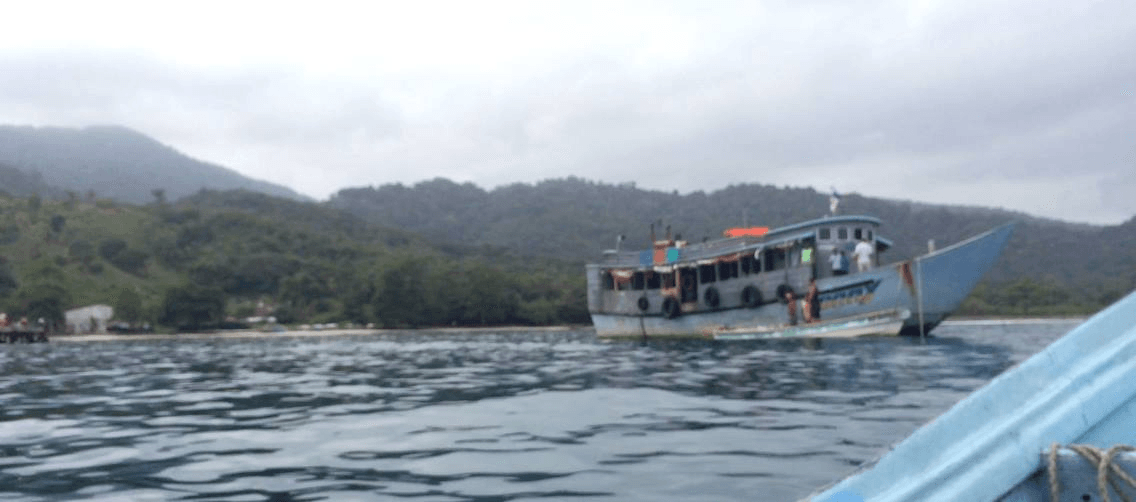
The moment occurred on a small, narrow boat propelled by two massive ocean-going outboard motors. As the boat flailed all of us travelers across the swells of the Bay of Darien, with salt spray slapping us in the face as we slipped past menacingly jagged rock outcroppings, knuckles white from gripping the boat’s dented and rickety benches, I had what can only be described as an epiphany. Suddenly, I knew I could become a working writer. All I had to do was try. I couldn’t have been more elated…or humbled, humbled by the reality that those around me were willing to risk far more than me for less-entitled reward. If I can endure all of this, I can certainly go back to New York and get a writing career going, were my hyperbolic thoughts at the time. Ego swallowed; deep paradigm shifted.
As a working writer-editor with some credentials now, I credit both venue programming and solo travel with helping me sustain my chosen career in a profession whose perils, as far as I can tell, equal its benefits. Programming taught me the importance of spreading out the risk, as in back then I had quickly learned that booking a diverse, busy event calendar ensured no single event could sink the venue ship. Thus, my writing practice doesn’t solely fixate on authorship, but also on editing, rewriting, coaching, ghostwriting, etc. I run a “wordshop,” taking on all comers at all levels. Solo travel taught me how to withstand, even enjoy, the patient solitude it takes to sit alone with your words and make them express what you want them to. In the words of the great author and traveler Henry Miller, to “stand still like the hummingbird.”
Without taking these risks, I would have never answered my true calling or quelled that yearning in my gut, come what may.
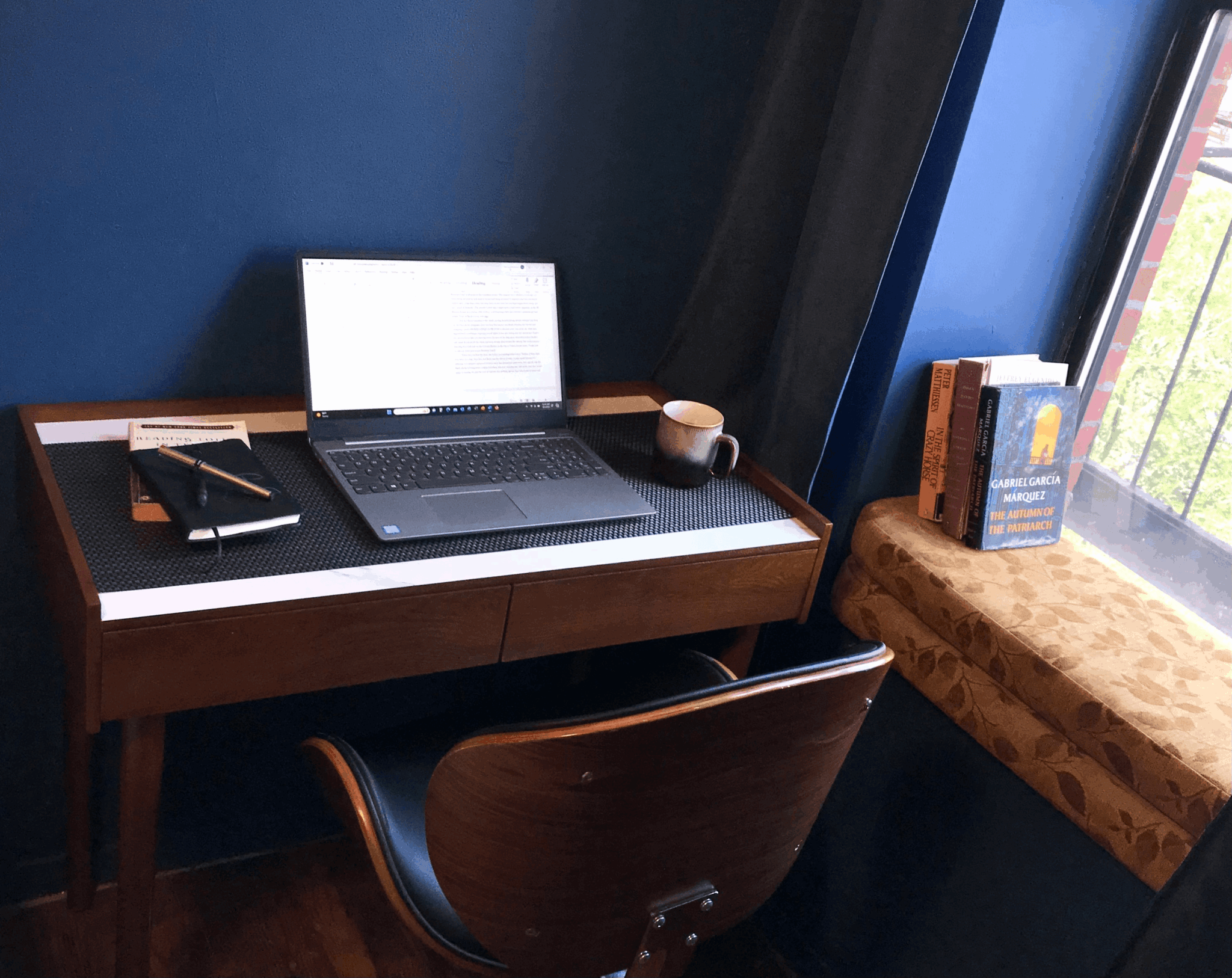
As always, we appreciate you sharing your insights and we’ve got a few more questions for you, but before we get to all of that can you take a minute to introduce yourself and give our readers some of your back background and context?
I got into the writing business after a colorful, 15-year career in the music business (please see my “The Risks Less Taken” narrative) and a tangent profession as business manager and gallery logistician to a fine artist, a painter. Primarily, I coach my writer-clients in how to better express themselves through writing, whatever their background and whatever it takes. My main focus is on creative writing geared toward the completion of books, whether fiction, nonfiction, or academic. I think what sets me apart as a writer, editor, or rewriter/ghostwriter of such is my diverse background, life experience, and vast knowledge and reading of books, which I always call upon for both craft and inspiration whenever I ply my craft. I am most proud of helping new authors discover their voice and the commitment, creativity, and discipline it takes to complete their books, find agency representation, and in the best case, get published (!). Few things are more rewarding.

What do you find most rewarding about being a creative?
On a practical level, the most rewarding aspect of being a creative is that my time is my own and I have a lot of freedom. I can literally work anywhere and often do. On a creative level, the most rewarding aspect is the pleasure of expressing part of your soul and sharing it with others.
Any stories or insights that might help us understand how you’ve built such a strong reputation?
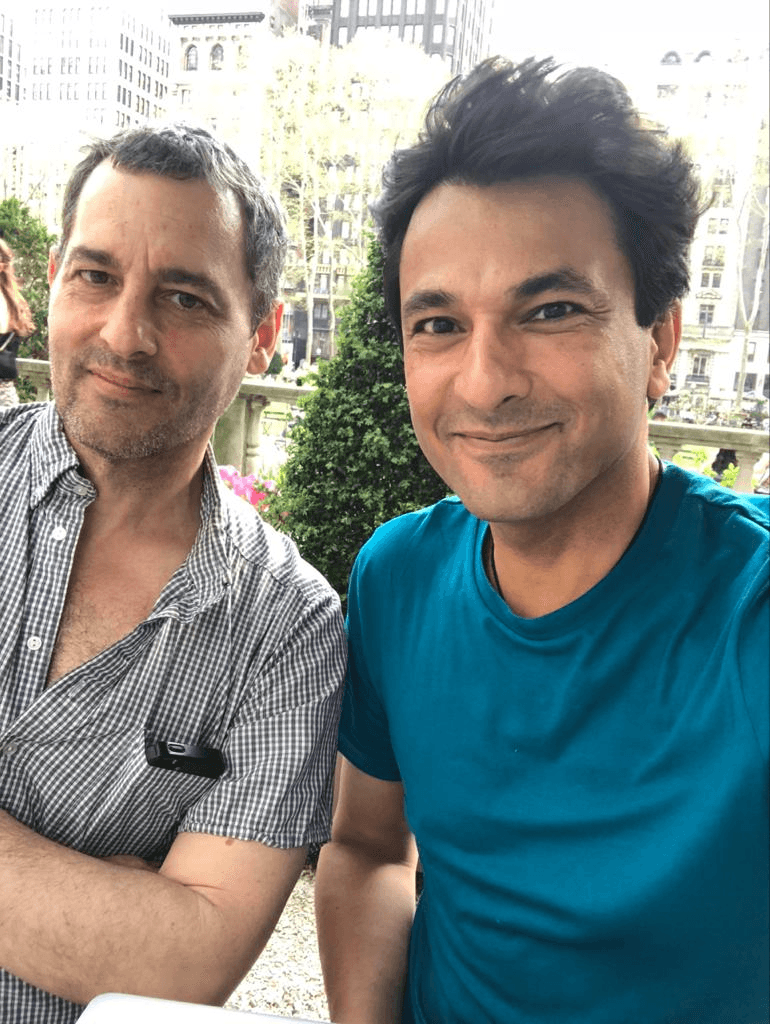
In my profession as a writer and editor, the greatest elevator of reputation is to have your name appear somewhere in the pages of published works. I have been fortunate to have been credited by some key writing clients, one of whom is a multiple Grammy/Latin Grammy nominee and winner and Columbia University PhD ethnomusicologist; the other of whom is an internationally renowned, Michelin-starred MasterChef who has also written two novels—I am his go-to editor and rewriter and am currently working on his third novel, a fictional, reimagined history.
Contact Info:
- Website: https://www.PaulAssimacopoulos.com
- Other: Email(s):
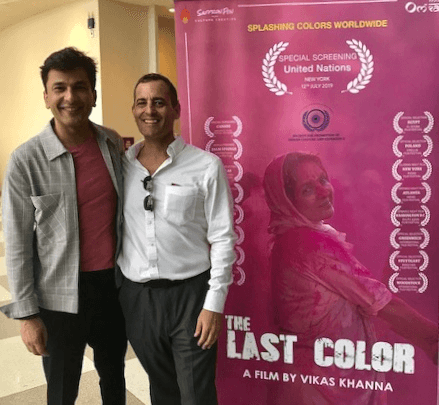
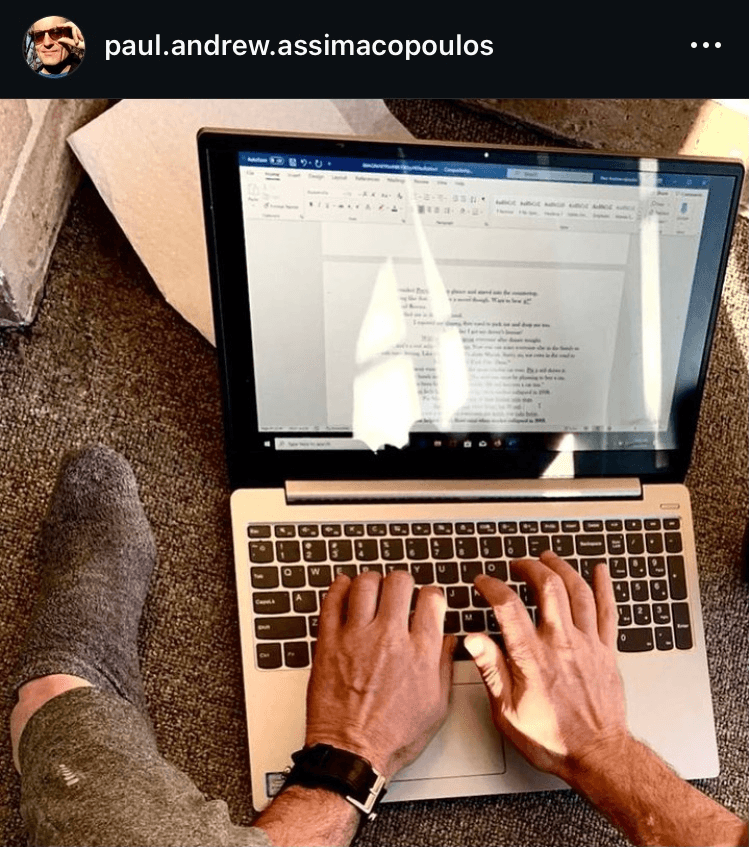
Image Credits
Paul Assimacopoulos