


We caught up with the brilliant and insightful Pat Magers a few weeks ago and have shared our conversation below.
Pat, looking forward to hearing all of your stories today. I’m sure there have been days where the challenges of being an artist or creative force you to think about what it would be like to just have a regular job. When’s the last time you felt that way? Did you have any insights from the experience?
I have not wished to have a regular job, unless it involved teaching what I have learned. But even that would need to be kept within tight time parameters because the energy outflow of teaching is completely different for me than what happens in the studio as I create.
When I pursued my MFA the thought was that I would teach at the college level upon completion. But in the course of the three year program I became disillusioned with many aspects of that path. I saw that at the stage of development of my studio practice that I didn’t want to devote as much time to teaching in the university setting as it would require, and also that it would likely mean relocation.
What works for me now is teaching one class per week to adults in eight week sessions at a community ceramics center. This is the perfect balance for me to be engaged with and help students in a casual setting. It enhances my own practice by getting me out into the world regularly. Working through projects with a variety of students with differing experience levels is fun and challenging.
For me to create new work I know that it is crucial to carefully protect my solitary studio time. There is no way for me to get into the flow of ideas and the energy to create without a lot of alone time. It has taken experience to find the balance that works best for me and there is no longer any doubt about whether I am a regular job person.
Pat, love having you share your insights with us. Before we ask you more questions, maybe you can take a moment to introduce yourself to our readers who might have missed our earlier conversations?
I have been creating drawings, paintings and sculpture since very early childhood. I have ten brothers and sisters and there was always lots of activity surrounding me but also lots of time where I could play quietly. This usually included pencils and crayons, clay, yarn and fabric and glue, whatever I could find to use inside and outside the house. My favorite book was titled Things To Make And Do. Popsicle sticks, paper-mache, balloons, newspaper, chalk, sticks, pine cones, string–everything had potential. It was so much fun that I haven’t really ever stopped. My first job in high school was making pen and ink illustrations for publication in a botanical book. I studied painting, drawing and printmaking in college and later completed an MFA in painting. Along the way I did editorial and advertising illustration and portrait painting. As my interests shifted into different subject matter or media I found teachers to guide me. These individuals, plus focus and many many hours practicing, taught more than any formal education or degree I earned. This is probably why I love teaching outside of the college setting.
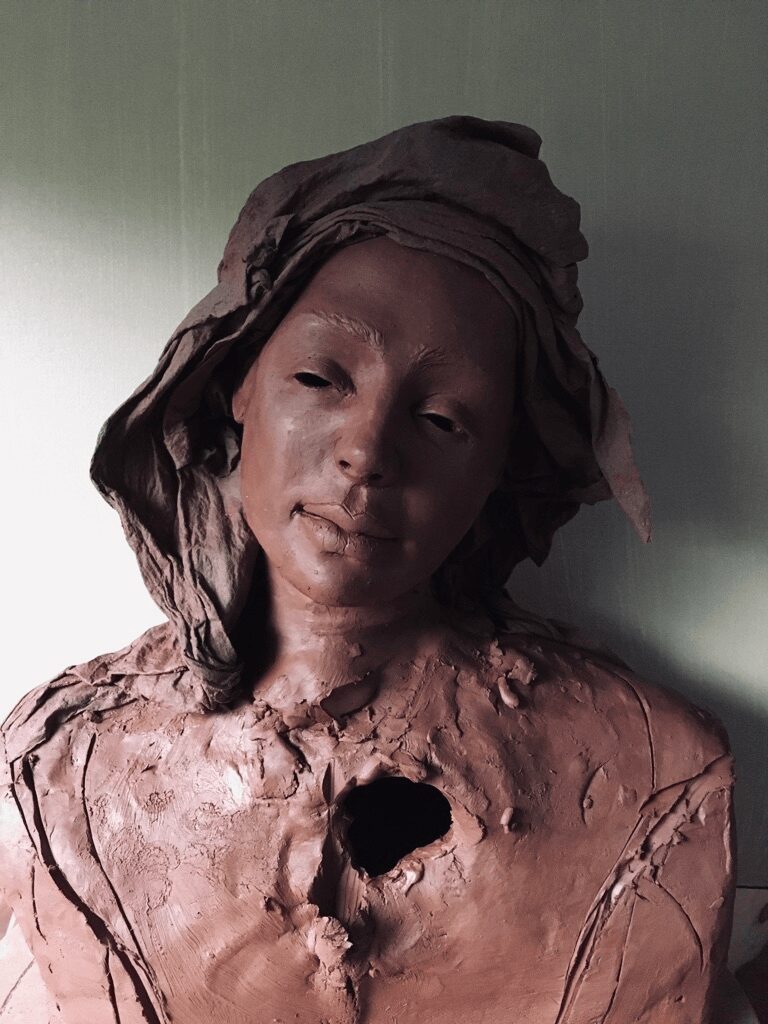
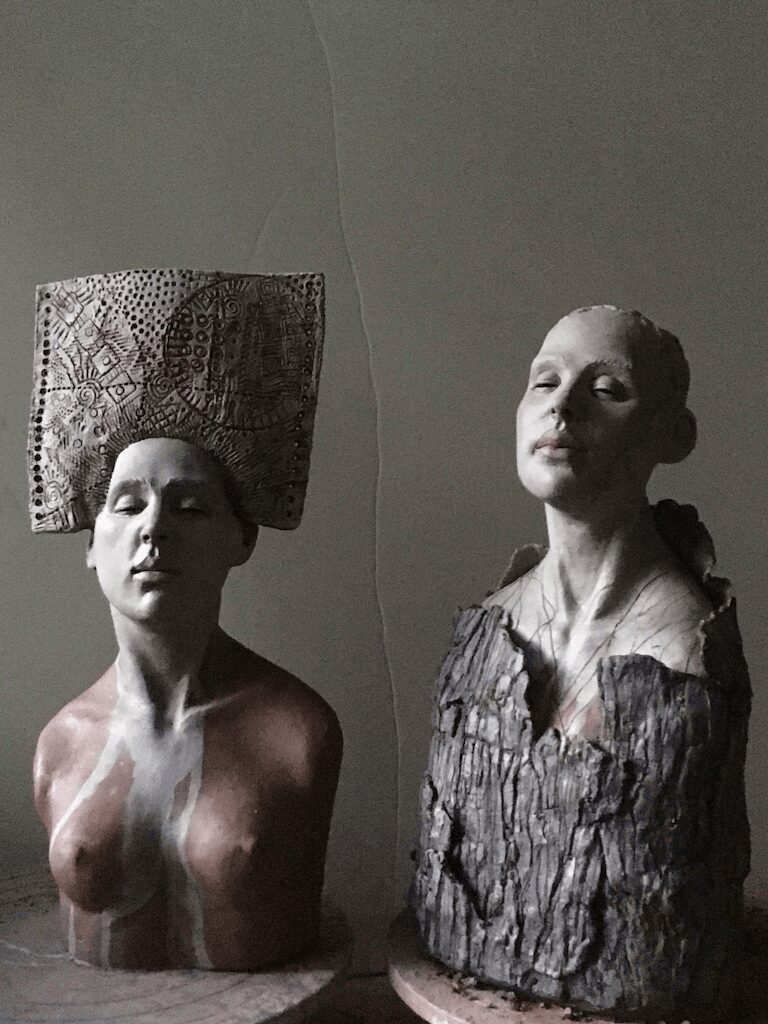
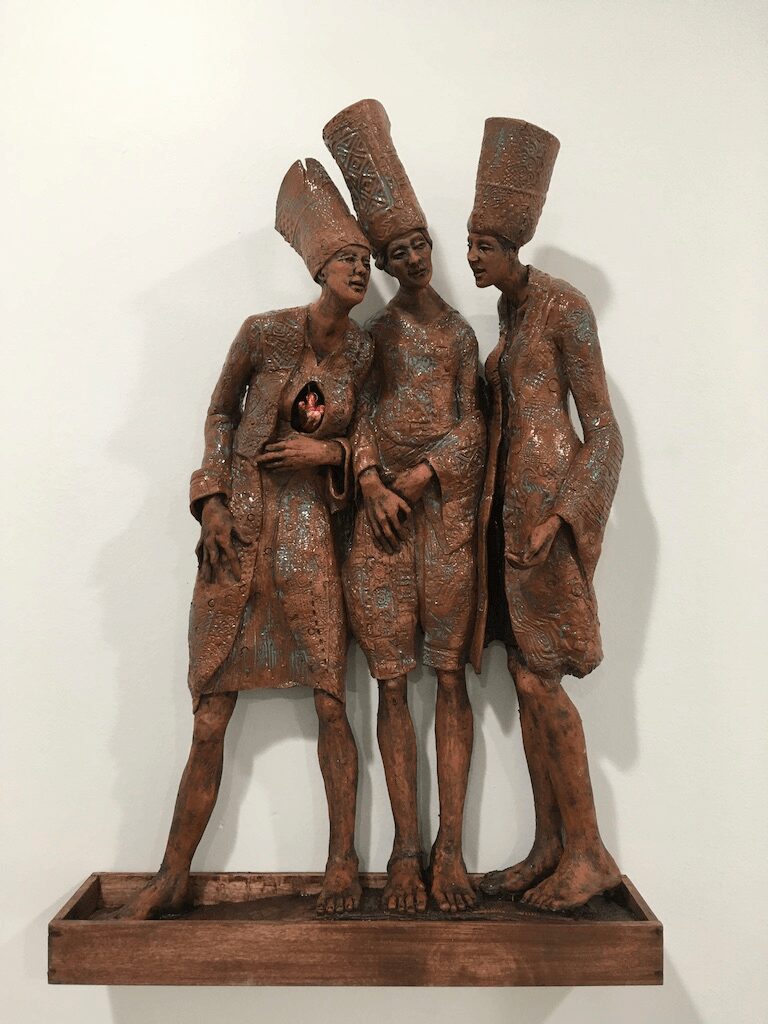
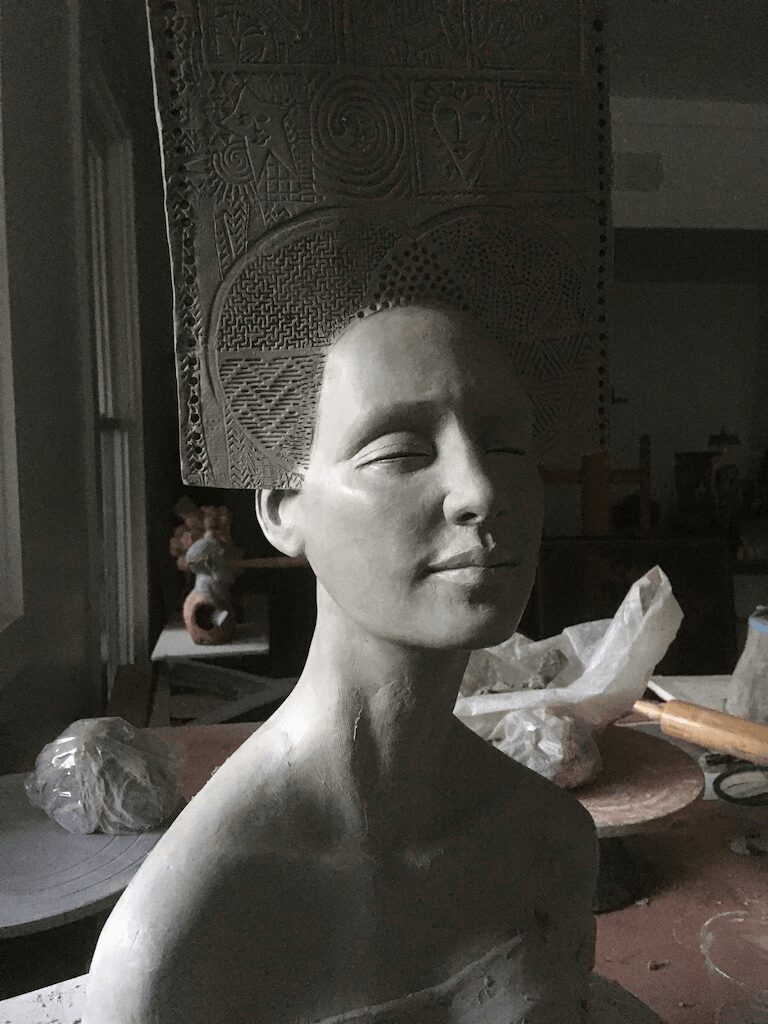
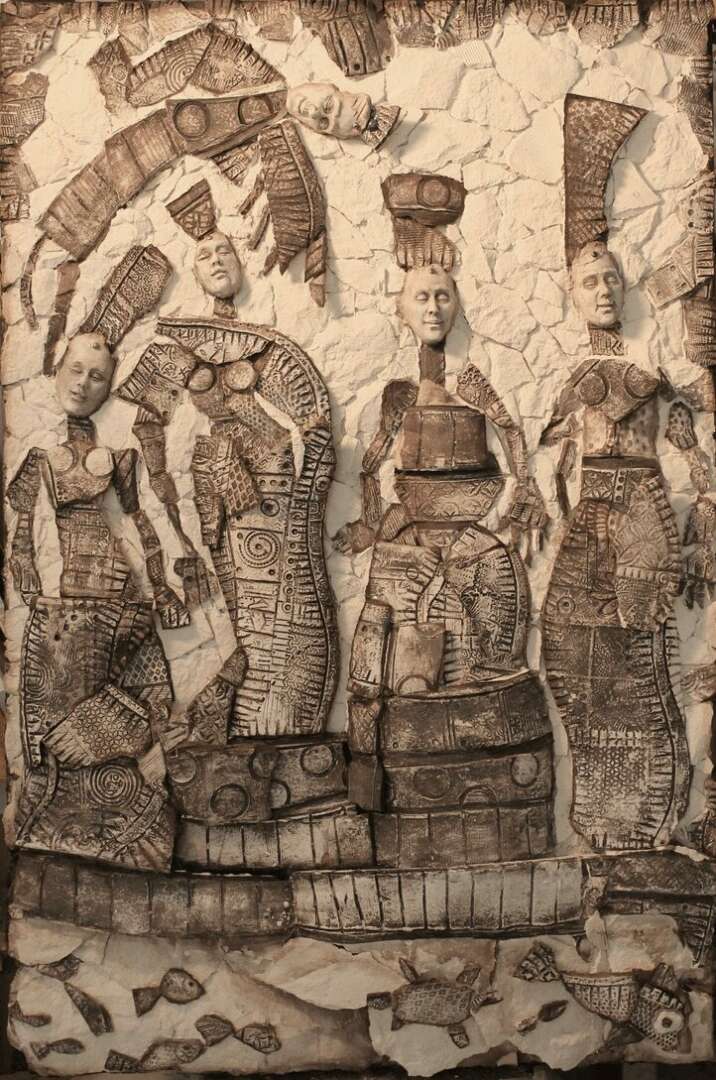
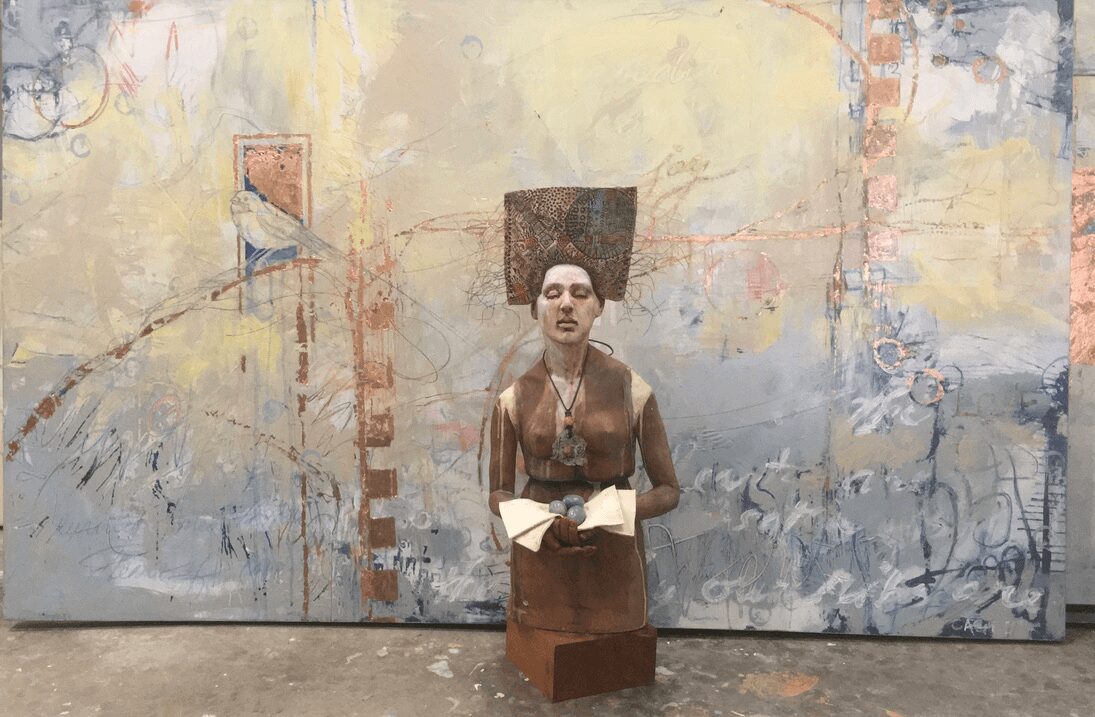
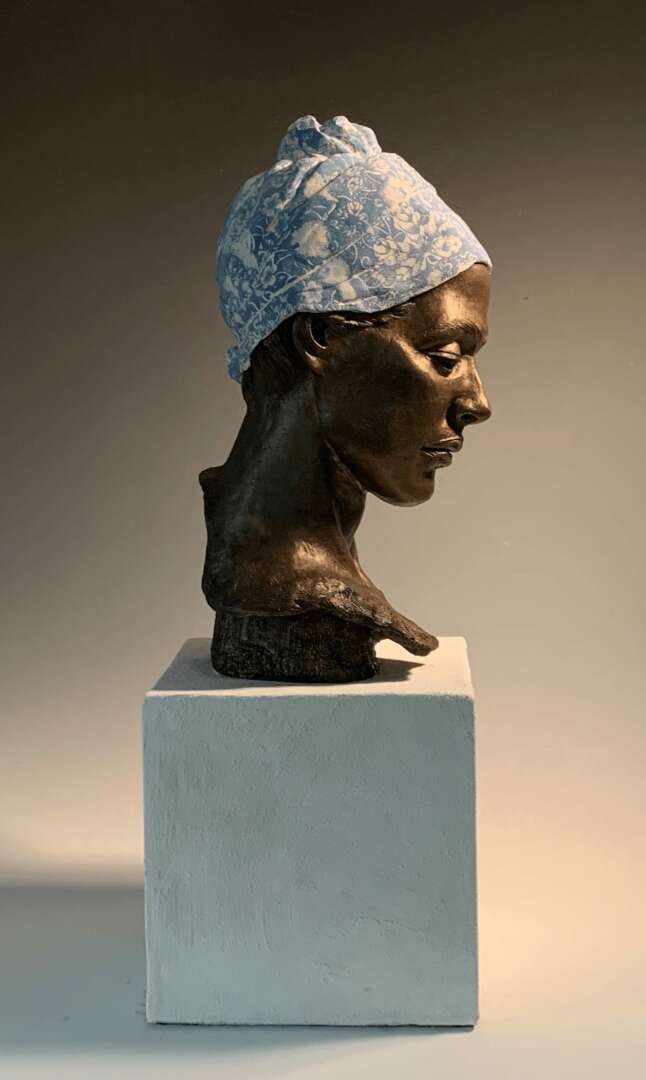
Recently ceramic sculpture has been of most interest to me. After years and years of painting I discovered how much I love working three-dimensionally, particularly with clay. I have loved the work of Edgar Degas since I was a teen, partially because of how beautifully adept he was with figurative drawings, paintings and sculpture. Aspects of drawing and painting come into play with fired clay sculpture and it sometimes feels like three-dimensional painting to me.
The only thing I offer my collectors that is unique is that I go into my studio and make whatever naturally happens. The work grows out of whatever surrounds me, whatever occurs to me and whatever has been brewing in my spirit. It’s often a surprise to me. I’m usually not quite sure where it comes from or even if it will work. Accidents happen, things explode in the kiln. Often these are the biggest gifts. One of my best ‘paintings’ came about after opening the kiln to discover a heartbreaking mountain of shards which ended up as an intricate mosaic.
None of this is a great business model. I do produce a lot of work and I do have lovely galleries that find collectors for many pieces. But my working methods, where I follow sometimes circuitous paths as my curiosity pulls me along to an unknown conclusion can make it difficult for galleries to anticipate what may show up next. I am proud of prioritizing invention and creativity over repetition, and also of my tenacity over so many decades of being a visual artist.
Is there something you think non-creatives will struggle to understand about your journey as a creative?
So often I find that people are very interested in what I do and in talking to them it becomes clear that they think that it is all magical, like a special lucky gift I’ve had bestowed upon me. They often say things like, “I can’t even draw a stick figure!”. My response to that is that much of it is a very teachable skill but that what is not teachable is the passion and love for it that is necessary to drive the student to commit to the unbelievable amount of time it will take to make it happen. I would like them to know that the ability to create visual art takes a lifetime of focus, determination and practice, often without any monetary compensation. It’s very difficult to make a living from it and I tell people who are considering it to only do it if they can’t help it.
How about pivoting – can you share the story of a time you’ve had to pivot?
At the end of my three year MFA program I was disillusioned by what I had experienced. I found myself completely rejecting the entire academic atmosphere, which was full of all sorts of complete nonsense. I was at odds with so much of the prevailing behavior, thinking and attitudes and I no longer wanted to be in that situation, either as a student or as a teacher. I had worked very hard and I was exhausted and really disillusioned. I also, for the first time in memory, could not come up with one good reason to make any more art. I determined that I would stop and not resume unless or until I found one.
What happened next was a deep spiritual journey that took me to Tibet and to India multiple times. This was very unexpected, pretty far out of character, often unpleasant, and it lasted for an intense ten years. At some point a clear path toward resuming my art practice opened up and I began again. Much had changed within but the biggest and best shift was that I no longer was particularly attached to it. There was a new freedom to just fool around with it, without the same striving or grasping that had once been there. I would throw myself into a project fully, bring it to a stopping point and then just leave it. Whether it was judged as successful, by me or by others, didn’t matter much. It was the best thing that ever happened and it renewed and sustained my creative life.
Contact Info:
- Website: patriciabeggins.com & honeypondstudio.com
- Instagram: @honeypondstudio
- Facebook: Honey Pond Studio Fine Art by Patricia Beggins Magers
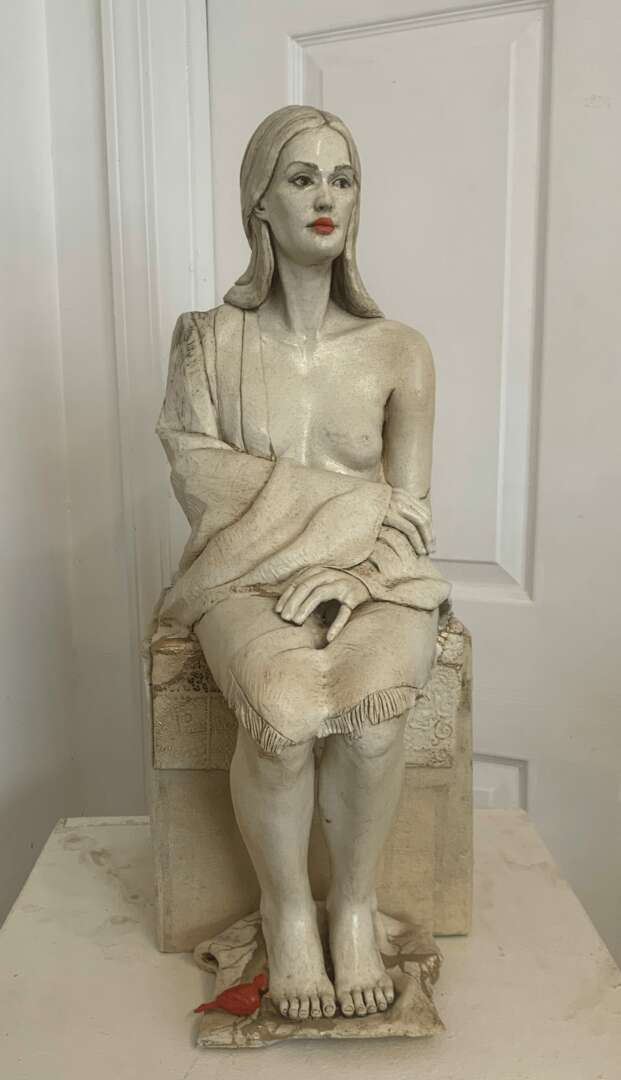
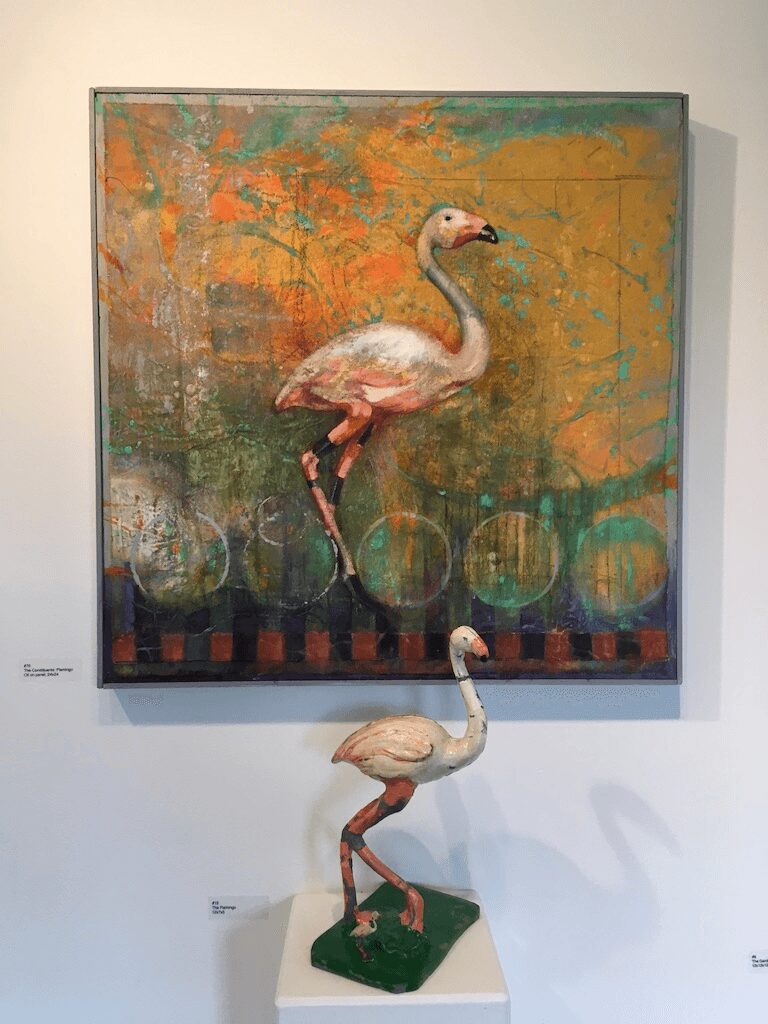
Image Credits
Pat Magers