

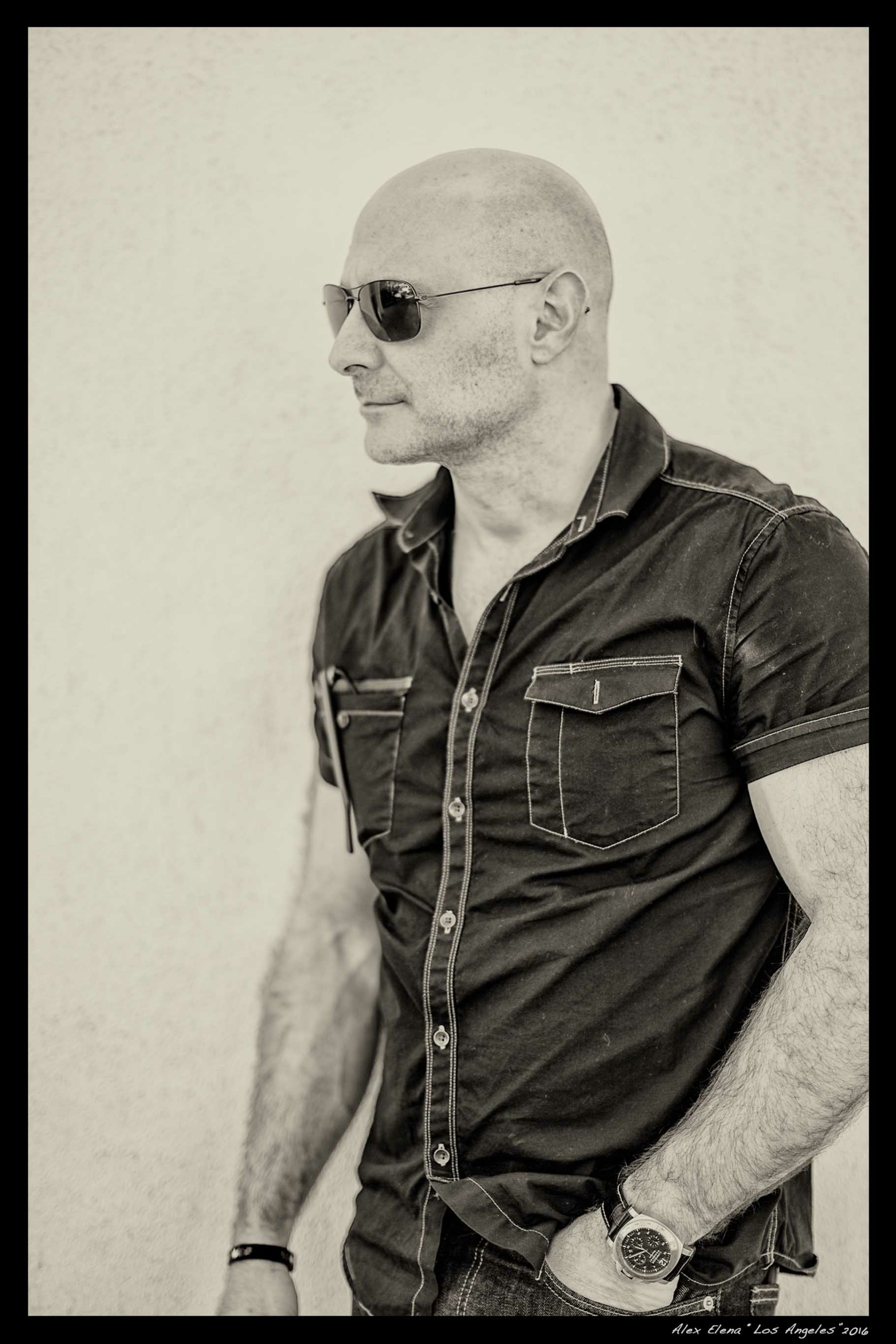

We recently connected with Paolo and have shared our conversation below.
Paolo, appreciate you joining us today. We’d love to hear the story of how you went from this being just an idea to making it into something real.
I do not have a successful business; I am a starving artist.
I grew up in Rome around cinema, studied film, and eventually found myself producing, directing, shooting, editing, managing crews, dealing with impossible deadlines, nervous interview subjects, and technical disasters — all of it. A lot of people romanticize filmmaking, but most of the real learning happens at 11 PM, when everyone’s exhausted and something just went wrong.
I am not an entrepreneur at all. I am just trying to get better. Better at storytelling. Better at understanding people. Better at creating work that actually made someone feel something.
I started taking on freelance projects while still working full-time. One project led to another. Someone liked the way I handled an interview, another client liked how calm I stayed under pressure, and another liked the emotional tone of the edit. Most of the opportunities came through relationships and word of mouth.
There wasn’t some dramatic moment where everything suddenly took off. Most creative people I know are still figuring it out as they go. I definitely am.
I also realized pretty early that the work I connected with most involved real people and emotional truth. Whether it was documentaries, branded pieces, nonprofit work, or interviews, I was always drawn to stories that felt human instead of overly polished.
I think that became the foundation.
And honestly, there were plenty of moments of doubt. Freelance creative work can mess with your head because there’s rarely stability. One month feels full of momentum and the next feels quiet. But over time you learn that momentum isn’t always loud. Sometimes it’s just continuing to show up long enough for trust and experience to compound.
Understanding that cameras and gear matter far less than the ability to connect emotionally with people.
But as the opportunities came, they also left.


Paolo, love having you share your insights with us. Before we ask you more questions, maybe you can take a moment to introduce yourself to our readers who might have missed our earlier conversations?
I’m a filmmaker, producer, director, cinematographer, and editor originally from Rome, Italy. I grew up around cinema and storytelling, and eventually studied film at a school that was formerly part of the De Laurentiis Studios. Because I grew up without many friends, I spent hours watching whatever the TV was showing, and in many cases, it was old films, Italian, French, and American films. Film never felt separate from life to me. It was how I understood emotion, people, memory, and even silence.
What pulled me into this industry was human behavior. I’ve always been fascinated by why people do what they do, what they hide, what they reveal, and how storytelling can create empathy between strangers. That’s what still drives me today.
Over the years, I’ve worked across almost every layer of production. I’ve directed, produced, shot, edited, managed teams, built productions from scratch, and worked with everyone from nervous first-time interview subjects to executives, physicians, students, educators, and nonprofit organizations. A lot of my experience came not just from making films, but from learning how to connect with people in high-pressure environments and help them feel comfortable enough to be real on camera.
That human connection is probably the biggest thing that sets me apart.
A lot of filmmakers know cameras. A lot fewer know how to listen.
I’ve always believed that the emotional truth of a story matters more than polished visuals alone. Beautiful cinematography means very little if the audience feels nothing. My approach has always been rooted in authenticity. Even in branded or commercial work, I’m looking for the human pulse underneath the message.
Professionally, I’ve worked on everything from healthcare campaigns and university storytelling to documentaries, interviews, promotional content, and independent films. I’ve collaborated with agencies, nonprofits, healthcare organizations, educational institutions, and brands that needed more than just content. They needed trust. They needed stories that connected emotionally with real people.
I think one of the problems I solve is helping people communicate emotionally without losing clarity or professionalism. Many organizations know what they do, but they struggle to express why it matters in a human way. That’s where storytelling becomes powerful. My job is often translating emotion into something visual and relatable without making it feel manipulative or artificial.
I’m deeply involved in the interview process itself, which is something I care about a lot. Whether someone is grieving, nervous, vulnerable, or simply uncomfortable on camera, I try to create an environment where people feel seen instead of “used” for content. Some of the strongest moments I’ve captured happened because people forgot the camera was there and simply started speaking honestly.
As for what I’m most proud of, it’s probably the fact that I’ve stayed connected to the emotional side of filmmaking in an industry that can sometimes become overly commercial or image-driven. I’m proud that people trust me with their stories. I’m proud of the documentaries and independent work I continue to develop because they reflect the kinds of stories I believe need to exist. And I’m proud that after years in this field, I still genuinely care about the work instead of treating it like assembly-line content production.
I also edit my own work, which keeps me closely connected to the rhythm and emotional structure of the story from beginning to end. Editing taught me patience. It taught me that sometimes the most powerful moments are the quietest ones.
If there’s one thing I’d want potential clients, collaborators, or audiences to know about me, it’s this:
I care deeply about the people behind the story.
Whether I’m filming a documentary subject, directing a branded piece, or creating narrative work, I’m always searching for something emotionally truthful. I’m not interested in creating noise just to feed algorithms. I want the work to linger with people. Even if it’s subtle. Even if it’s quiet.
At the end of the day, cameras, trends, and technology will always evolve. Human emotion won’t. That’s the part I’ll probably spend the rest of my life chasing.


Is there a particular goal or mission driving your creative journey?
I think the biggest thing driving me creatively is the desire to create empathy.
That may sound simple, but I honestly believe we’re living in a time where people are becoming more disconnected from each other while constantly being flooded with content. There’s a difference between content and storytelling. Content fills space. Storytelling makes someone feel seen.
That’s the work I’m interested in.
Whether it’s a documentary, a short film, a branded piece, or even an interview, I’m always looking for the human truth underneath everything. I’m drawn to stories about identity, fear, loneliness, resilience, immigration, sacrifice, family, memory — the things people often carry quietly. A lot of my work is rooted in observing people emotionally and trying to create something honest out of that observation.
I also think growing up in Rome shaped me deeply. You grow up surrounded by history, art, beauty, contradiction, politics, religion, struggle — all layered on top of each other. Cinema there still feels tied to humanity in a very raw way. That stayed with me.
As I’ve gotten older, I’ve become less interested in perfection and more interested in honesty.
I’m not chasing the loudest work in the room. I’m chasing work that lingers emotionally after people watch it. Even in commercial or branded projects, I try to find a way to ground things in something human instead of overly polished or artificial.
A big mission for me is also giving voice to people or experiences that are often flattened into headlines, statistics, or stereotypes. That’s part of why documentary storytelling means so much to me. When people truly see another human being up close, it becomes harder to reduce them to an ideology or label.
At the same time, I want to keep growing creatively without losing myself to the business side of the industry. That balance is difficult. The industry pushes speed, trends, algorithms, volume. I still care about craft, emotional pacing, atmosphere, silence, performance, and human connection.
What drives me is the belief that film still has the power to slow people down emotionally for a moment.
And honestly, I think I’m still searching too. Every project teaches me something about people and about myself. That search is part of the reason I continue doing this.


Let’s talk about resilience next – do you have a story you can share with us?
Resilience for me has honestly been less about one dramatic moment and more about continuing forward during long periods of uncertainty.
For the last seven years, I’ve been searching for a stable full-time position while continuing to create and survive as a filmmaker. During that time, I’ve submitted well over 3,000 applications. Thousands. And despite years of professional experience producing, directing, shooting, editing, managing teams, and leading productions, I still haven’t found the right opportunity that would give me the stability to fully pursue my art without constantly worrying about survival.
That kind of experience changes you.
At first, every rejection feels personal. Then after a while, it becomes psychological warfare if you let it. You start questioning your value, your choices, your talent, even your identity. Especially in creative industries where so much of what you do is tied to who you are emotionally.
But I think resilience is what happens after the disappointment.
What I’m proud of is that I never stopped creating through all of it.
Even during periods where things felt financially unstable or emotionally exhausting, I kept filming, writing, editing, pitching ideas, developing stories, applying for opportunities, learning new skills, refining my voice, and trying to grow both creatively and professionally. I kept showing up even when there was no guarantee anything would come from it.
There were definitely moments where I felt invisible. Sending application after application into what feels like a void can wear you down. Especially when you know what you’re capable of and still can’t seem to find the right door opening. But over time I realized resilience is not always loud or inspirational. Sometimes resilience is simply refusing to completely disconnect from the thing that gives your life meaning.
For me, that thing has always been storytelling.
I’ve continued developing documentaries and narrative projects because I still believe film has the power to create empathy and emotional connection. That belief kept me moving even when external validation wasn’t there.
I also learned that resilience is tied to adaptability. Over the years I’ve worn multiple hats not because it was glamorous, but because I had to. Producer, director, cinematographer, editor, manager, interviewer, writer. You learn to survive creatively. You learn to build with limited resources. You learn patience. You learn humility.
Most importantly, I think this journey taught me compassion toward other people struggling quietly. There are so many talented individuals carrying invisible disappointments while still trying to function, create, provide, and move forward. I understand that now in a very real way.
So when people ask me about resilience, I don’t think of success stories or motivational quotes. I think about continuing to believe your voice matters even during seasons where the world doesn’t seem to notice it yet.
Contact Info:
- Website: https://www.paolomugnaini.com
- Instagram: @paolomugnaini
- Linkedin: www.linkedin/in/paolomugnaini
- Soundcloud: https://soundcloud.com/brando_usa


Image Credits
main pic is by Alex Elena