

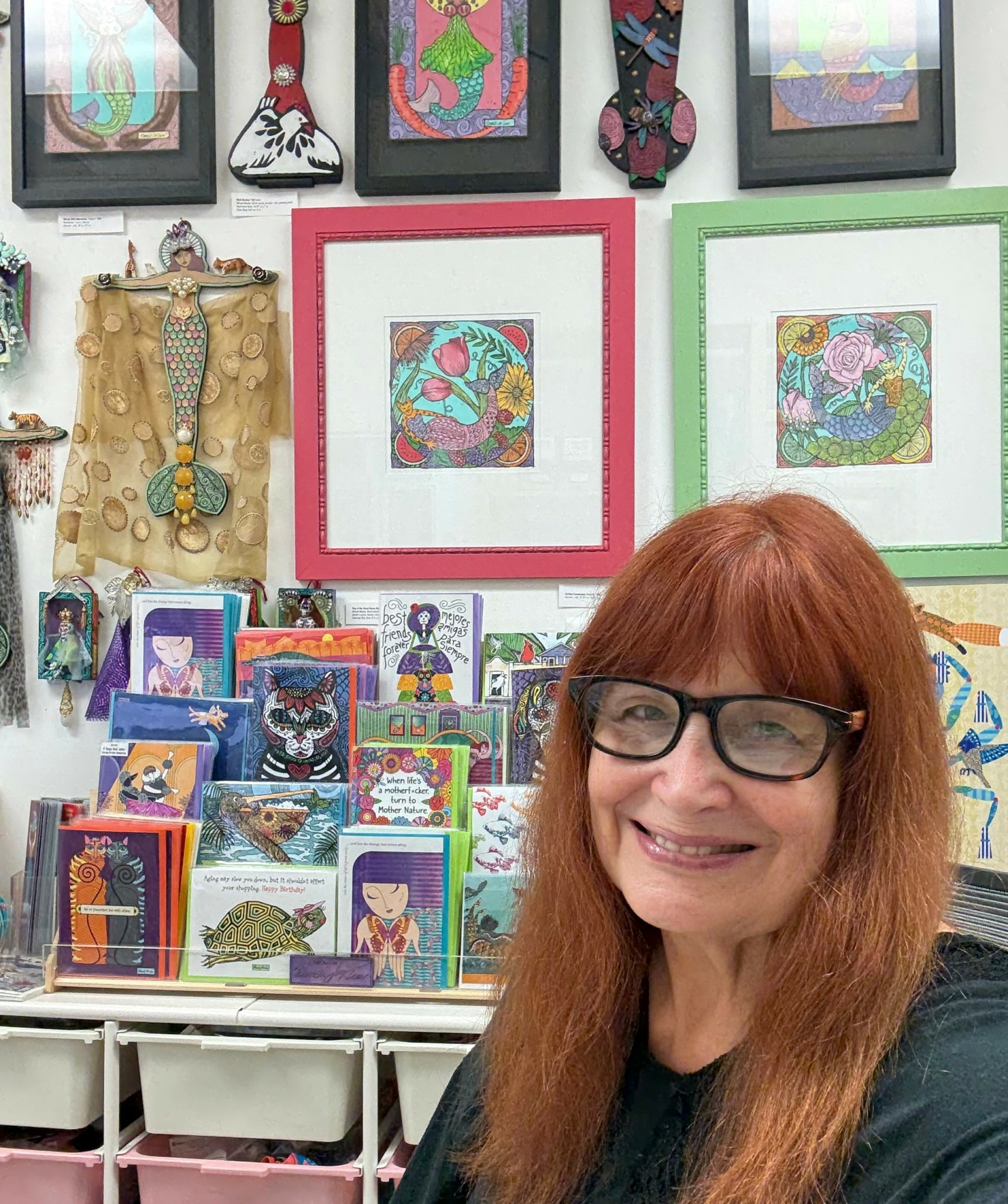

We’re excited to introduce you to the always interesting and insightful Pamela Joy Trow. We hope you’ll enjoy our conversation with Pamela Joy below.
Alright, Pamela Joy thanks for taking the time to share your stories and insights with us today. Risk taking is a huge part of most people’s story but too often society overlooks those risks and only focuses on where you are today. Can you talk to us about a risk you’ve taken – it could be a big risk or a small one – but walk us through the backstory.
The greatest risks I’ve taken in my life have come through physical moves. Over the years, I’ve moved to seven different cities in six different states, and each move required courage, reinvention, and a willingness to start over. My most recent move, in July 2025, was one of the hardest and most meaningful risks I’ve ever taken.
I moved from the west coast of Florida to Silver Spring, Maryland after living in the St. Petersburg area for nine years. Florida had become home. I was well established in the arts community, had built strong friendships, and had created a network of organizations and opportunities that supported my work. Leaving meant stepping away from everything familiar and beginning again in a new place where I would have to rebuild from the ground up.
The backstory to this move began in 2024 when the governor of Florida defunded the arts by 36 million dollars. It was devastating. Many of the arts organizations I was part of lost funding, and I personally felt the impact through grant losses and reduced opportunities. I began asking myself a difficult question: why would I continue paying taxes to a system that did not want the arts, or artists like me, to succeed? The arts in St. Petersburg had contributed millions to Florida’s economy, yet they were being dismantled. It felt like the creative community was under attack.
At the same time, hurricanes were becoming a growing concern. During the double-back hurricanes, a Gulfport store that carried about $1,000 worth of my greeting cards was flooded with five feet of water, destroying everything inside. While my loss was small compared to friends who lost homes and cars, the reality was that tourism stopped for months afterward. For artists, that meant lost income, lost sales, and long periods of uncertainty.
Then came the event that truly broke my heart — the unexpected death of my sister. With my brother and extended family in Atlanta, she had been the last of my immediate family in Florida. After she passed, Florida no longer felt like home. I knew I wanted to leave, but I didn’t know where to go.
I didn’t want to return to Atlanta after living there for 24 years, yet I wanted to be closer to family. Around this time, something unexpected and meaningful happened. I reconnected with my cousin, Yehuda, who I had not seen since childhood, when he began visiting Florida to spend time with his sister, my cousin who had retired there. Through those visits, we got to know each other again and discovered that we had both built careers in the creative world — he in documentary film and photography, and me in graphic design and illustration. Over time, he experienced profound loss, first losing his sister during the COVID pandemic and later losing his wife in a tragic accident. His grief, combined with my own loss after my sister’s death, created a deeper understanding between us and gave me more reason to consider moving to Maryland, where he lived. Reconnecting felt natural and healing, and it offered the possibility that we could support each other not only as family, but as artists.
The decision to move to Maryland became a shared step toward rebuilding our lives and supporting each other creatively. It was still a risk. I was leaving an art community I was familiar with, friendships, and years of professional growth. I was starting over in a new region, unsure of what opportunities would come.
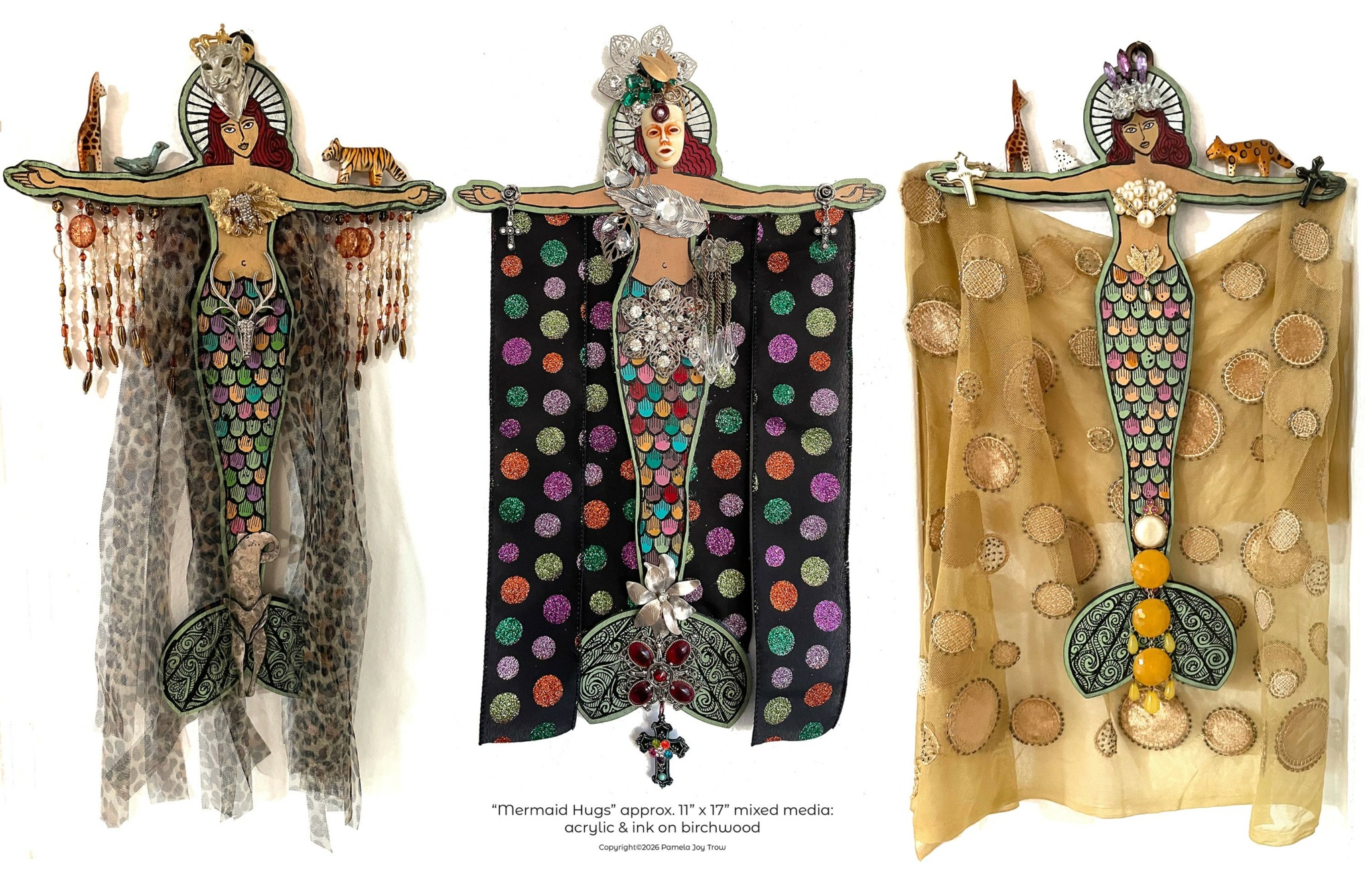
Now, nine months later, I see how that risk is unfolding in beautiful ways. We share an art studio and actively support each other’s work. I am meeting new creatives, becoming involved in strong arts organizations, and building a new network. Each place I’ve lived has shaped my art in unique ways — Brooklyn introduced me to mythology and symbolism, Atlanta taught me the power of the message, Bend opened my eyes to nature, Santa Fe influenced my Day of the Dead work, and Florida inspired mermaids and fantastical creatures.
Maryland is already shaping me too.
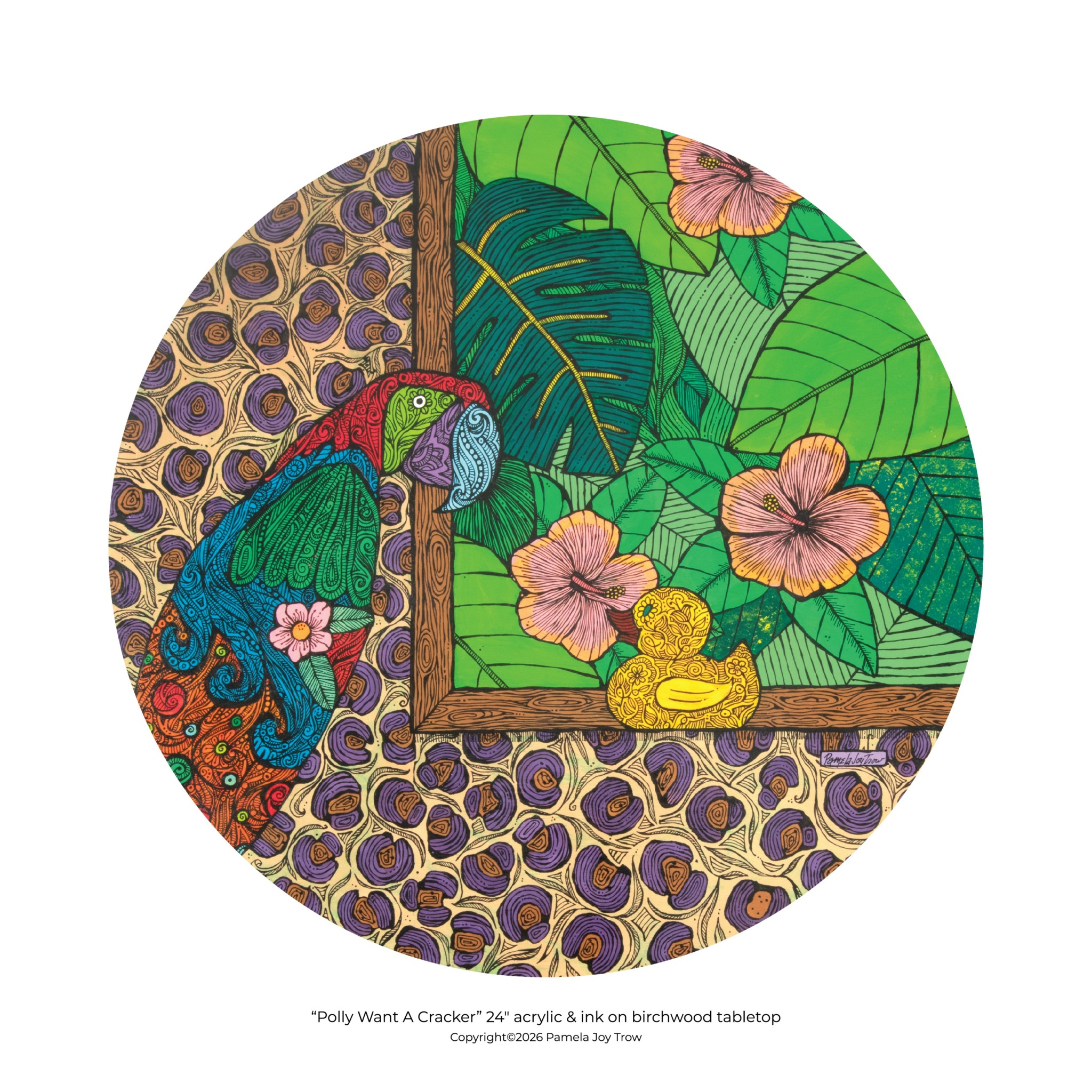
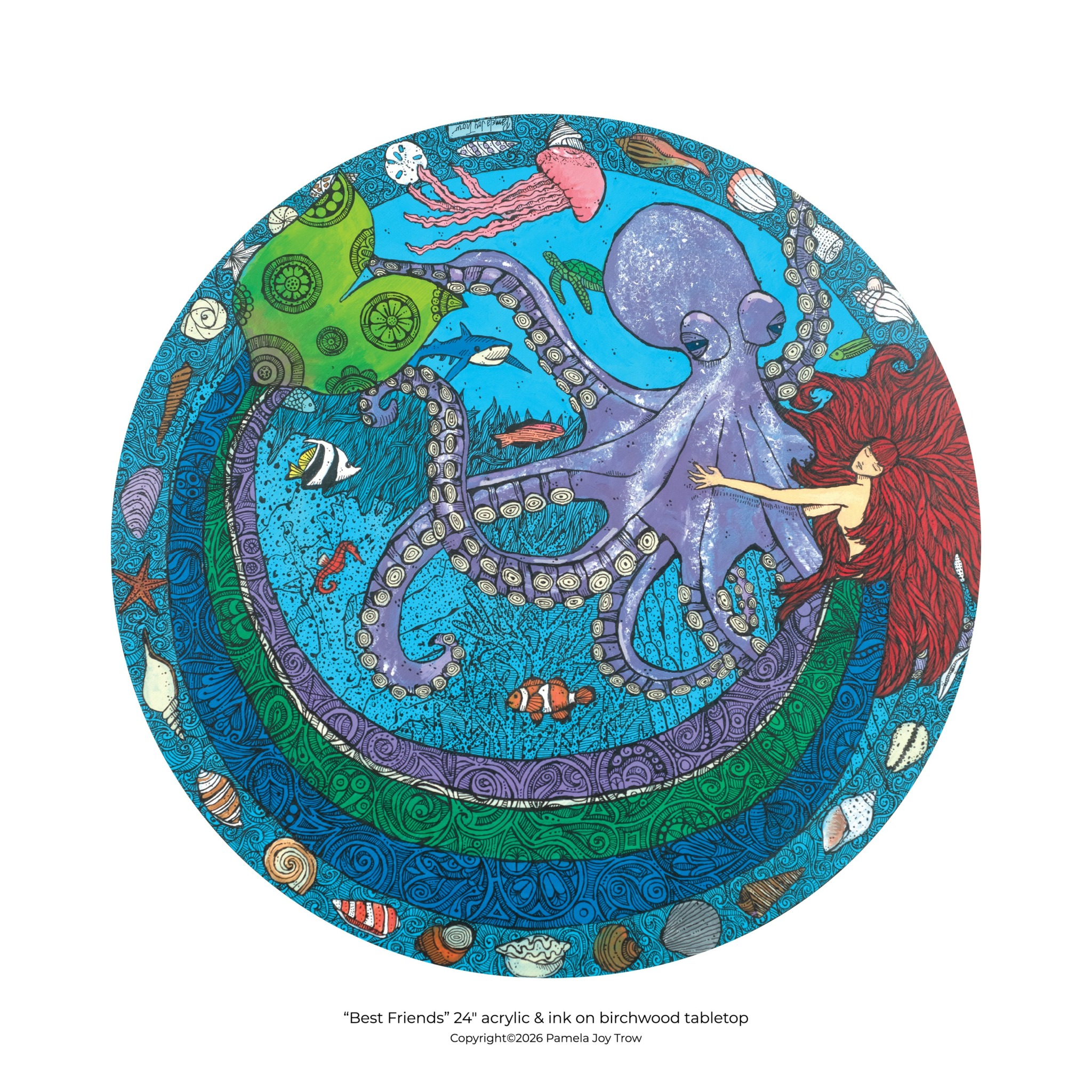
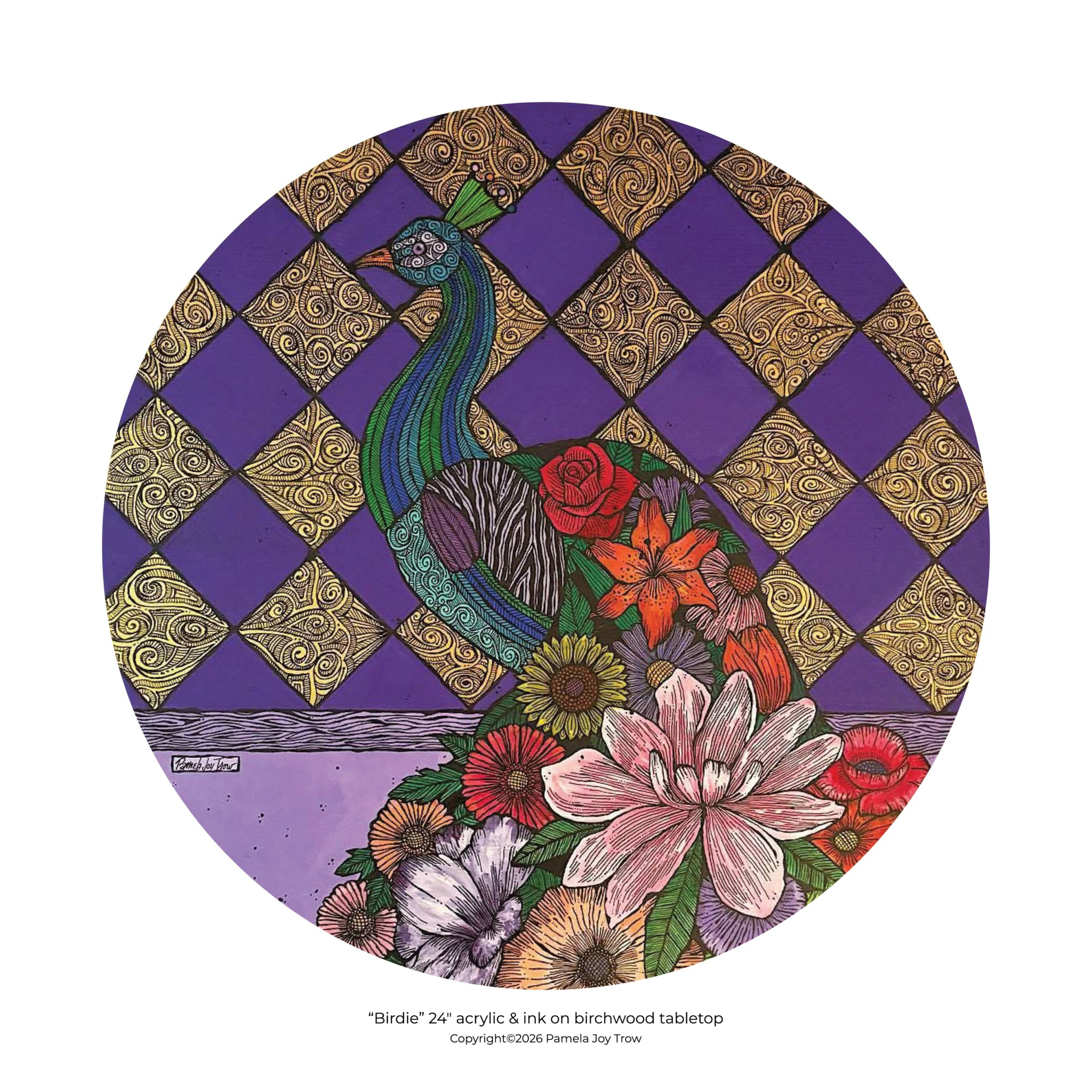
Here, I am creating a new line of 24-inch hand-painted tables, using acrylic and ink, edged with rich trims and upholstery nails. Each table tells a story filled with humor, joy, hope, and encouragement. I am also expanding my teaching, offering classes on turning art into wholesale products and helping self-taught artists understand design and typography. I am building a strategic vision for where this new work can take me.
Looking back, I realize I could have stayed in Florida and tried to push through the uncertainty. But instead, I took the risk of starting over. It wasn’t easy, and it required letting go of comfort and familiarity. Yet today, even though I am rebuilding from the ground up, I feel something stronger than fear — I feel confidence, excitement, and a renewed sense of purpose.
This move reminded me that risk is not just about leaving something behind. Sometimes, risk is about believing that a new place, a new chapter, and a new creative life are waiting on the other side of uncertainty.
And in Maryland, I feel that new chapter beginning.
As always, we appreciate you sharing your insights and we’ve got a few more questions for you, but before we get to all of that can you take a minute to introduce yourself and give our readers some of your background and context?
I consider myself a lifelong artist. My journey began in kindergarten when my teacher gave each student a letter of the alphabet and asked us to draw something that started with that letter. I was given the letter “B” and drew a broom. My teacher was so excited that she praised me in front of the class and said, “You should be an artist when you grow up.” From that moment on, my future felt clear — I knew I would be an artist.
At the time I was growing up, making a living as an artist often meant becoming a graphic designer, art director, or illustrator, and that is the path I followed. Over the years, I built a career in graphic design and illustration, developing strong conceptual and visual communication skills. Today, I still practice design and illustration, but I have expanded my work into a full creative business that includes fine art, functional art, and a paper product line sold both direct-to-consumer and wholesale. My background in design allows me to create not only the artwork itself, but also the marketing, branding, and product development that brings the work to life in the marketplace.
I work in a variety of media including acrylic and ink, digital illustration, fiber art, mixed media, and now hand-painted functional furniture such as 24-inch art tables. Across all of these mediums, the common thread is a commitment to vibrant color, whimsical imagery with deeper symbolic meaning, and careful attention to detail. My work is meant to spark joy, invite curiosity, and offer encouragement through visual storytelling.
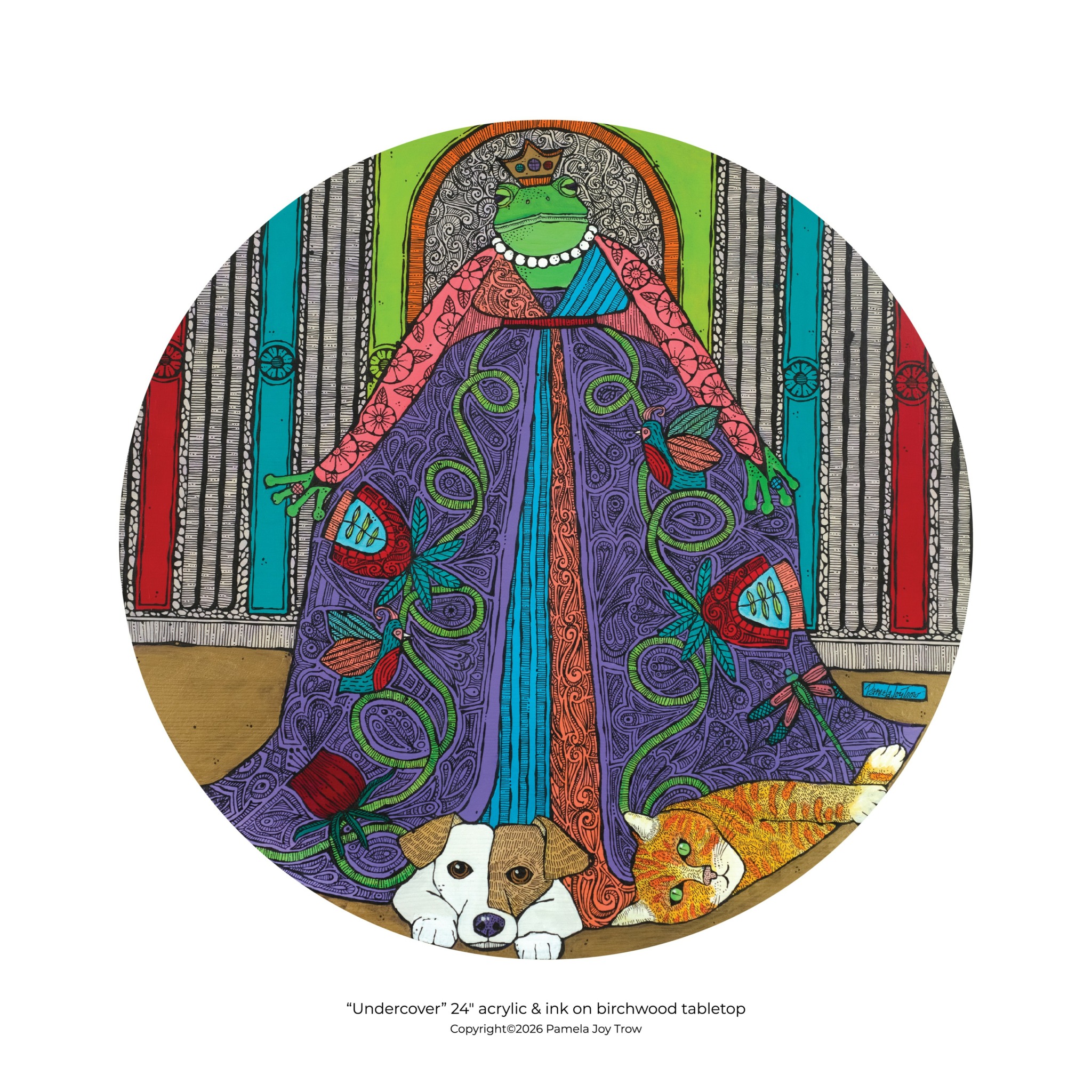
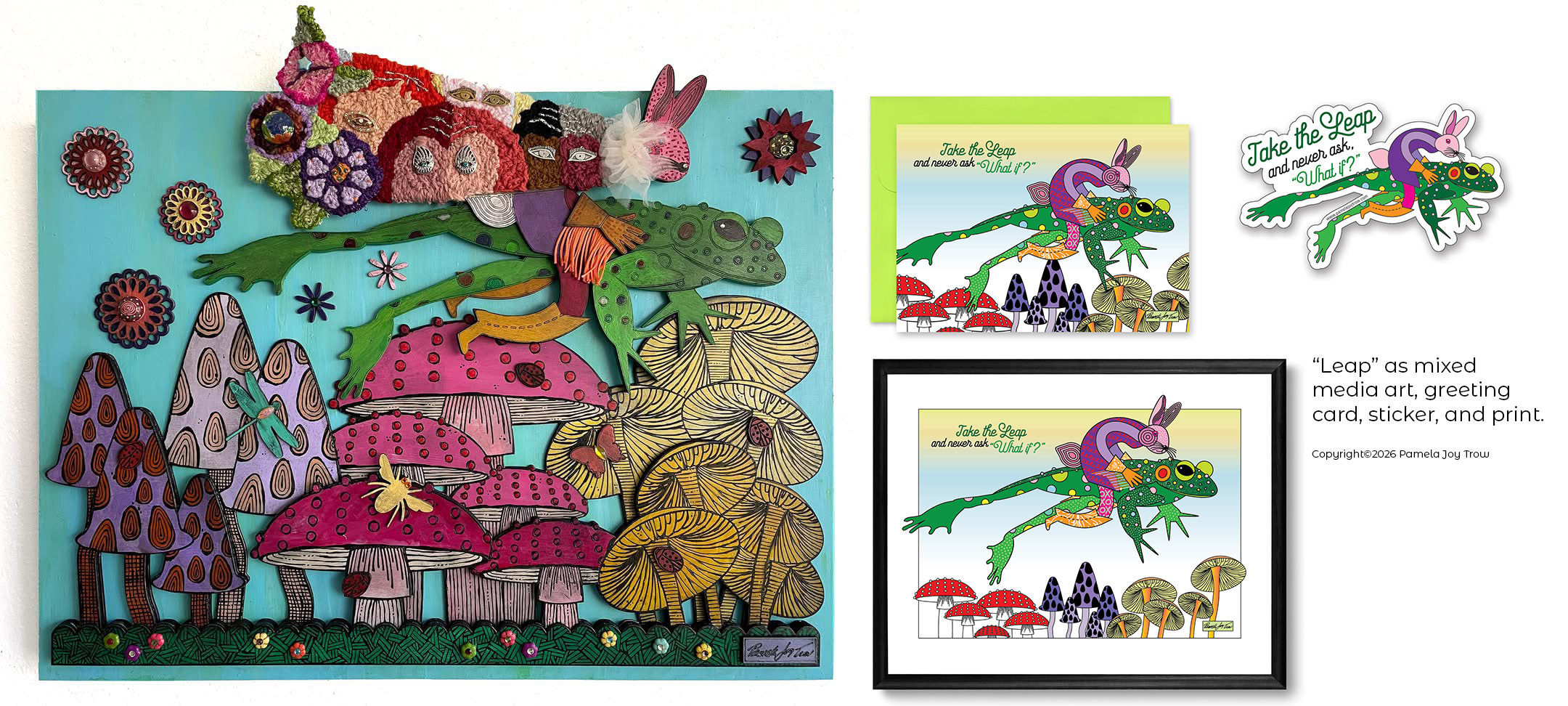
The inspiration for my art comes from everyday life, animals, mythology, symbolism, and human emotion, but what remains constant is my desire to create smiles while delivering deeper messages of hope, resilience, and belief in one’s self. For example, I recently created a tabletop image of a frog queen with a dog and cat peeking out from underneath her royal gown. My audience loves animals, especially dogs and cats, so the imagery immediately creates connection. The piece is titled “Undercover.” While the animals are literally under the gown, the deeper meaning reflects the frog queen as protector, symbolizing diversity, safety, care, and love in an uncertain world. Each table is a one-of-a-kind piece, but I translate the artwork into prints, greeting cards, stickers, and bookmarks so more people can experience the message and bring it into their daily lives.
Beyond creating art, I also help other artists grow. I teach workshops on turning artwork into wholesale products, design fundamentals, typography, and business strategies for self-taught artists and makers. Many creatives struggle with understanding how to present and sell their work professionally, and my years in the design industry allow me to bridge that gap. I help artists move from passion to sustainable creative business, giving them tools, confidence, and direction.
What sets me apart is the combination of fine artist, product designer, and educator. I don’t just create art — I create meaningful visual stories and practical pathways for art to live in the real world through products, teaching, and community engagement. My work blends joy, humor, symbolism, and strategy, allowing both collectors and artists to benefit from what I create.
What I am most proud of is building a life centered around creativity while helping others do the same. I am proud that my work brings encouragement and smiles to people, and that my teaching empowers artists to believe their work has value and deserves a place in the marketplace.
The main thing I want potential clients, collectors, and followers to know is that my brand is rooted in joy, storytelling, and support for the creative spirit. Every piece I create carries a message of hope and connection, and every workshop I teach is designed to lift artists forward. My goal is simple: to create art that touches people’s hearts and to help others find their own creative voice and success.
Let’s talk about resilience next – do you have a story you can share with us?
One story that illustrates my resilience comes from my years living in Bend, Oregon (2001–2014), where I became deeply immersed in the artist community. I applied to serve on the City of Bend Arts, Beautification, and Culture Commission and was honored to be appointed by the mayor. I served two three-year terms—first as a member and then for four years as Chair.
Shortly after becoming Chair, I was called into the newly elected mayor’s office and learned she was considering decommissioning the Arts Commission. Politics were in play, and I knew I had to clearly demonstrate the Commission’s value to the community. Rather than feeling defeated, I chose to respond with action and vision.
At the same time, our ABC commissioners had been discussing a new art initiative that would highlight the synergistic power of art to connect businesses, nonprofits, and the identity of Bend. I asked the mayor for the opportunity to present this concept to her and the City Commissioners at their next meeting, and she agreed. After our presentation, we were given approval to move forward.
The concept became City Walls at City Hall, a rotating exhibition that opened each First Friday and transformed City Hall from a place people visited only for permits and paperwork into a vibrant cultural space. Each exhibition aligned with the city’s Bend 2030 vision and connected artists with local nonprofits and businesses. One exhibition, “Inside Out,” focused on the environment by pairing 14 juried artists with environmental organizations. Artists spent time with these groups and created work inspired by their experiences, and on opening night both the artists and nonprofit partners shared their stories with the community. The exhibitions raised awareness for important causes, attracted new supporters, and gave artists meaningful visibility. Four additional shows followed, addressing themes such as a healthy community and a strong economy, and the program continued for nearly two years.
This was an intense and demanding time, but it reinforced my belief that resilience means standing firm in your purpose and finding creative solutions when something valuable is at risk. By advocating for the arts and demonstrating their real impact on community, economy, and connection, I helped transform a threatened commission into a program that proved the power of art to bring people together and strengthen a city.
What’s a lesson you had to unlearn and what’s the backstory?
One lesson I had to unlearn was the belief that even accomplished artists can still feel like imposters.
Like many artists, I experienced “imposter syndrome” at different points in my career. We are often told that to be legitimate we must have certain credentials, follow a specific fine art path, or meet rigid industry expectations. Despite being an award-winning designer and artist with more than 40 years of experience in design and illustration, those quiet doubts would still surface from time to time. I chose a design school and commercial art path rather than pursuing an MFA, worked independently for much of my career, and built fine art alongside a strong commercial art foundation. At moments, the industry’s narrow definitions of success would try to suggest that this wasn’t enough.
Over time, I realized that these expectations were simply untrue. My career in design and illustration is exactly what allows me to create art that connects with people. Design taught me how to concept, communicate visually, and speak to an audience. Business experience taught me how to present and sell work. Rather than weakening my identity as an artist, these experiences strengthened it.
Unlearning imposter syndrome allowed me to fully embrace my role as both an artist and an educator. Today, I encourage other artists—especially self-taught and emerging artists—to recognize that their skills, experience, and creative journey are valid. The lesson I carry forward is that imposter syndrome is often built on false industry expectations, and once you let go of those expectations, you can step confidently into your voice and help others do the same.
Contact Info:
- Website: http://www.pamelajoytrow.com
- Instagram: https://www.instagram.com/pamelajoytrow
- Facebook: https://www.facebook.com/pamela.joy.trow
- Linkedin: https://www.linkedin.com/in/pamela-joy-trow-932a3b12/
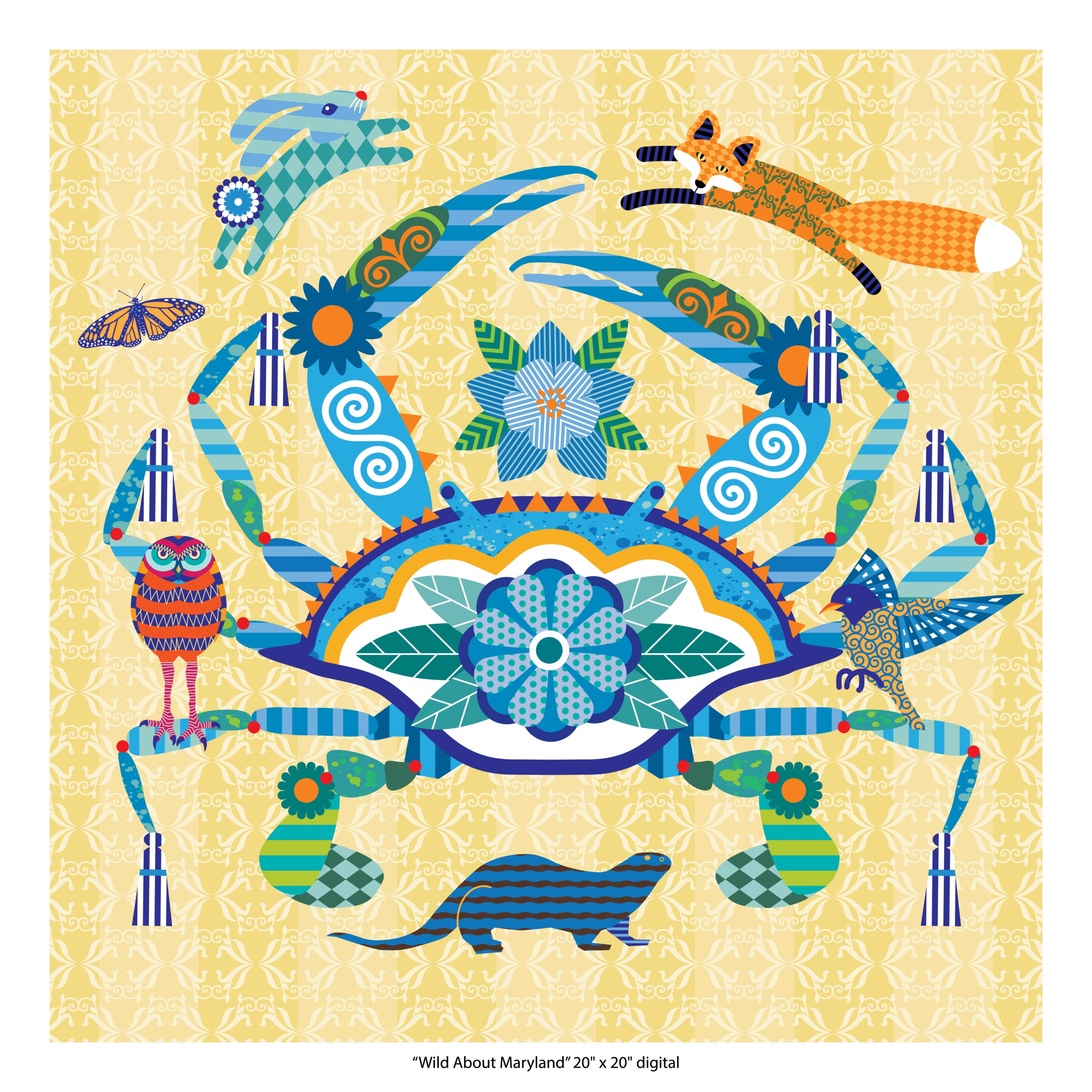
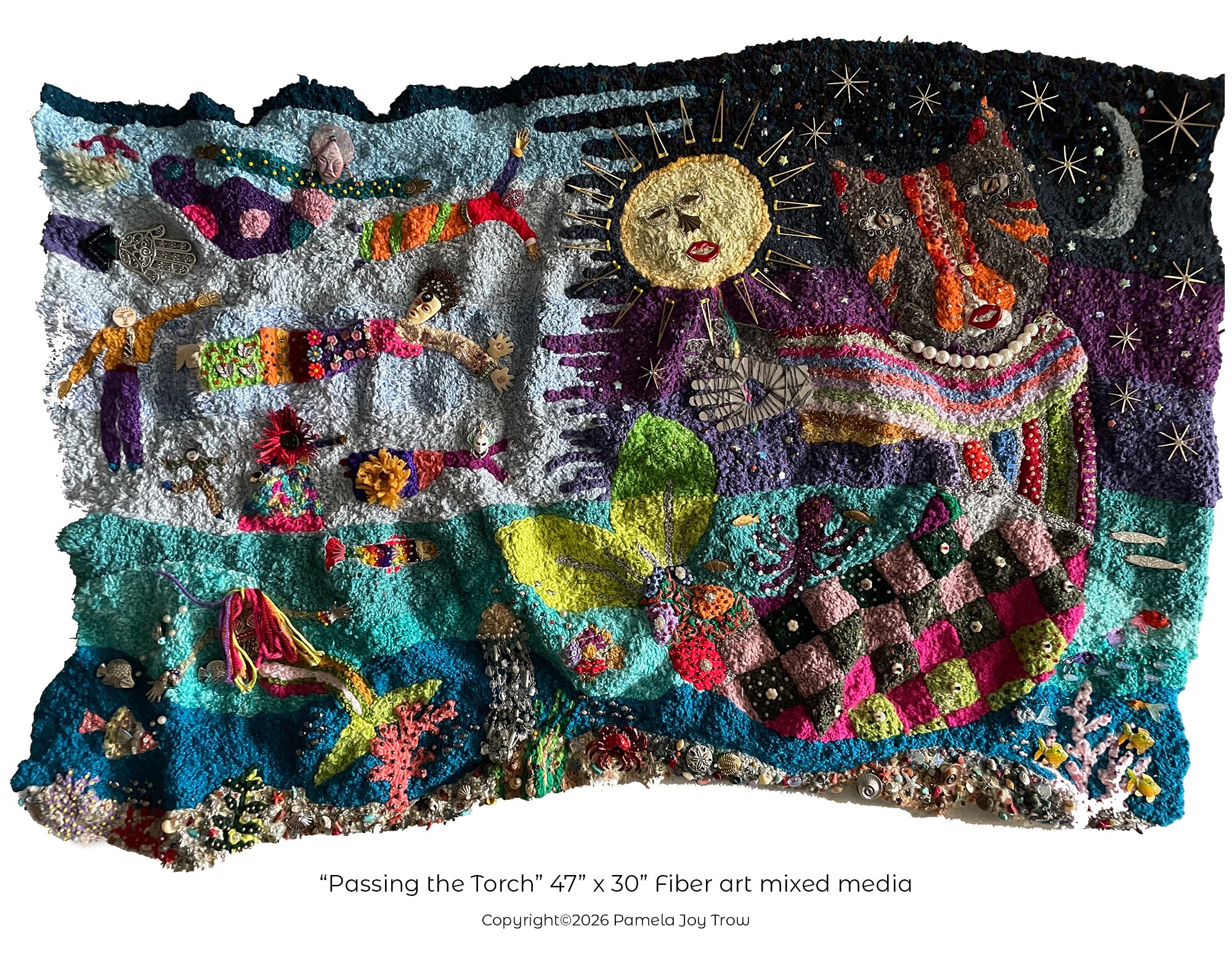
Image Credits
Tabletops (“Polly Want A Quacker”, “Undercover”, Best Friends”, “Birdie”): Gregory R. Stanley Photography