


We recently connected with Olivia Cappelletti and have shared our conversation below.
Olivia, looking forward to hearing all of your stories today. How do you think about cost-management? Growing a business is always exciting, but often businesses run into issues when costs grow faster than revenue – have you experienced such an episode? Any advice for other operators around how to keep costs in line?
While my business is still quite young, how to set myself up for sustainable growth is something I’m thinking about all the time. Frankly, I’ve just moved past the phase of saying yes to any and everything that comes my way, and I’m more strategic about the types of jobs I’ll take on. I’ve kept a P&L from my very first event—before I was even a real business—and having all that data to build upon, review, tweak & update, has really helped me hone in on cost forecasting.
Now, if I know I won’t make a certain margin on a project, I’ll do my best to redirect the client to a more fitting option for all. As lame as it is to say, time really is money, and having a project on the roster where there isn’t great alignment with the client can be a massive time suck, and a serious drain on the whole business. And that’s surely felt on their side too. As hard as it may feel in the moment, passing on a project that isn’t right for us means we’re freeing up time and energy for something more lucrative and/or creatively fulfilling.
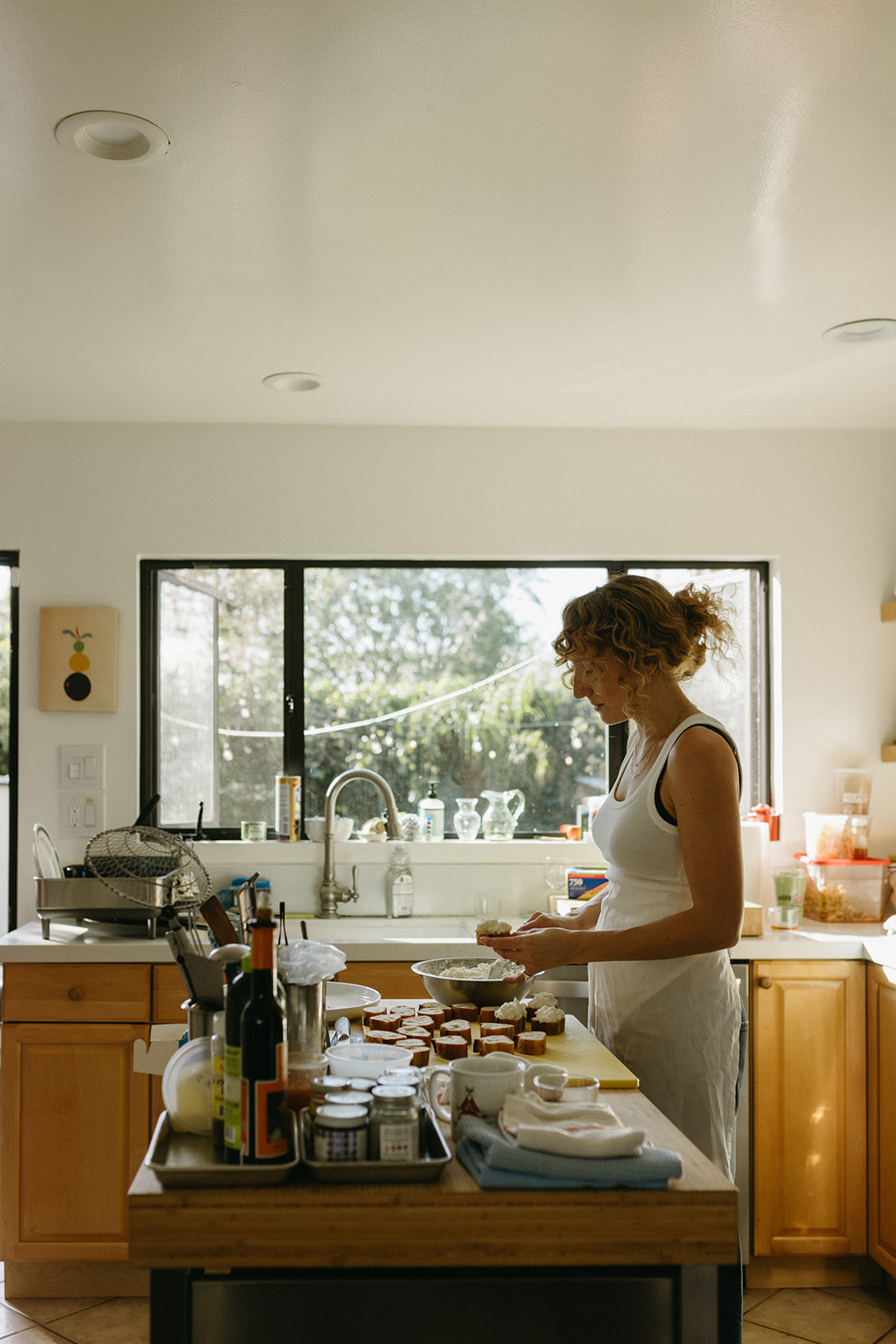
In terms of overhead costs, I’ve kept things as conservative as possible. Renting a commercial kitchen space would absolutely make life easier, and there will be a time when crossing that threshold is undeniable, but for the time being, I’ve gotten quite crafty with the space I have in my home. I typically only buy a new piece of equipment when there is a direct need associated with a job, and I can neatly tuck it within a project P&L and still make my margin. I’m transparent with my clients that I’m paying outside labor for sous chefs, bussers, dishwashers & servers and include it as a line item on my invoices. Where I won’t sacrifice cost is on ingredients. The core of little hat is about bringing seasonal and local food to the people we feed, and being intentional about where that money is flowing. I know a local Californian-grown, in-season peach is going to be more expensive than anything in a commercial supermarket, but I also know the farmer who grew it, and that it’s the best peach out there.
As always, we appreciate you sharing your insights and we’ve got a few more questions for you, but before we get to all of that can you take a minute to introduce yourself and give our readers some of your back background and context?
Looking back, the breadcrumbs of Little Hat began to start following me in 2020. My insatiable desire to learn about new ingredients, techniques, and culinary compositions was demanding so much attention that it was impossible to ignore. My fascination for storytelling and culture—which, at the time, was driving my work as a podcast producer for digital fashion publication Who What Wear—was pulling me further and further towards the world of food. The years to follow were spent staging in restaurants in NY and LA, traveling to Italy to study regional cuisines, and throwing dinner parties for friends and clients. Along the way, my culinary identity started to take form without my even realizing it.
A few things became clear: I am a glutton for farmers markets. I love to preserve the best of one season’s produce so I can continue cooking with it the following. I like bright, punchy flavors and evolving tradition. I cook with generous amounts of acid, really good olive oil, and all kinds of herbs. New ingredients leave me starstruck and then obsessive, like an anxiously attached lover. I will surely pack my bag full of smuggled treats from any new place I visit to add to my progressively unhinged larder. I cook produce-forward, and I source locally, wherever I may be.
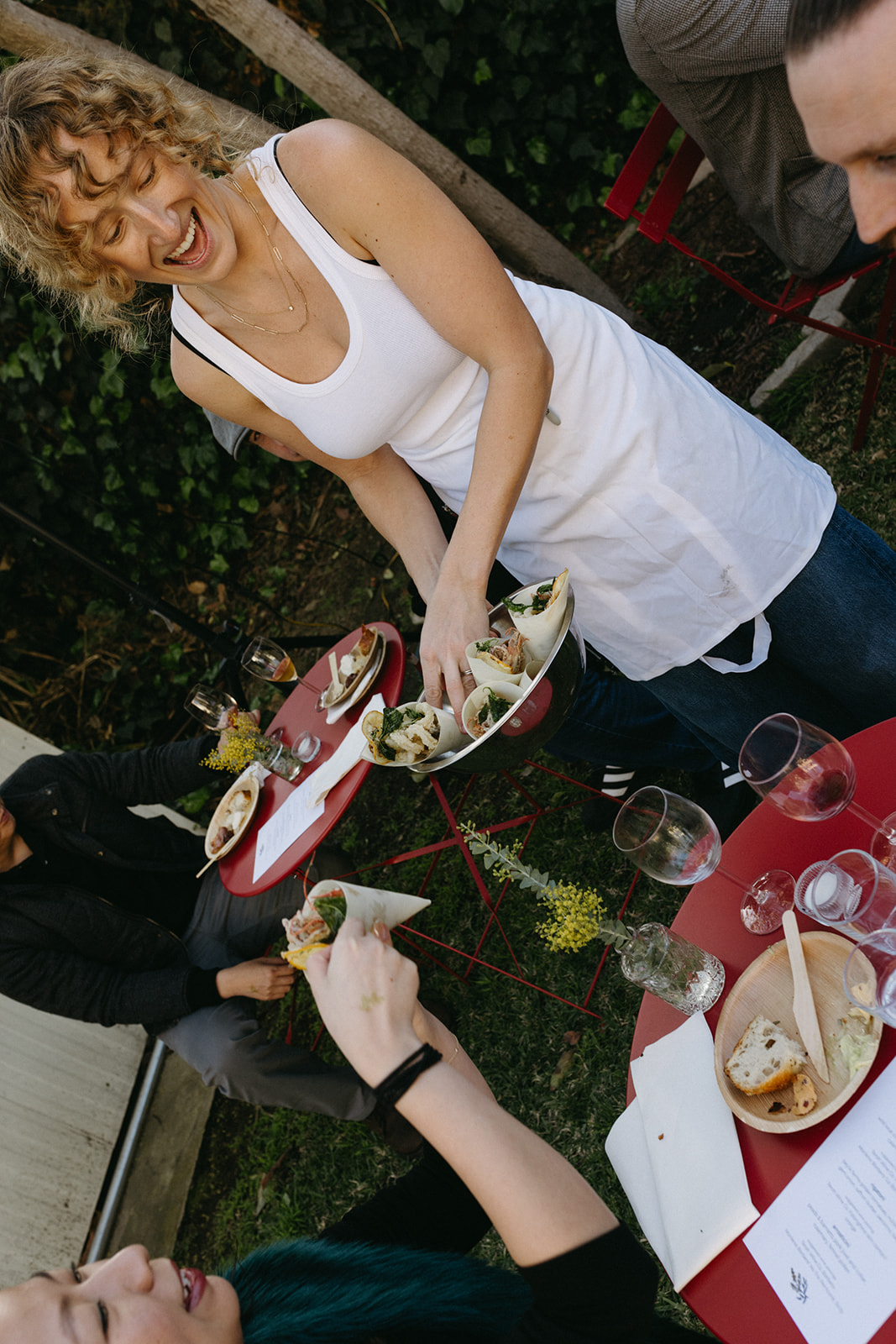
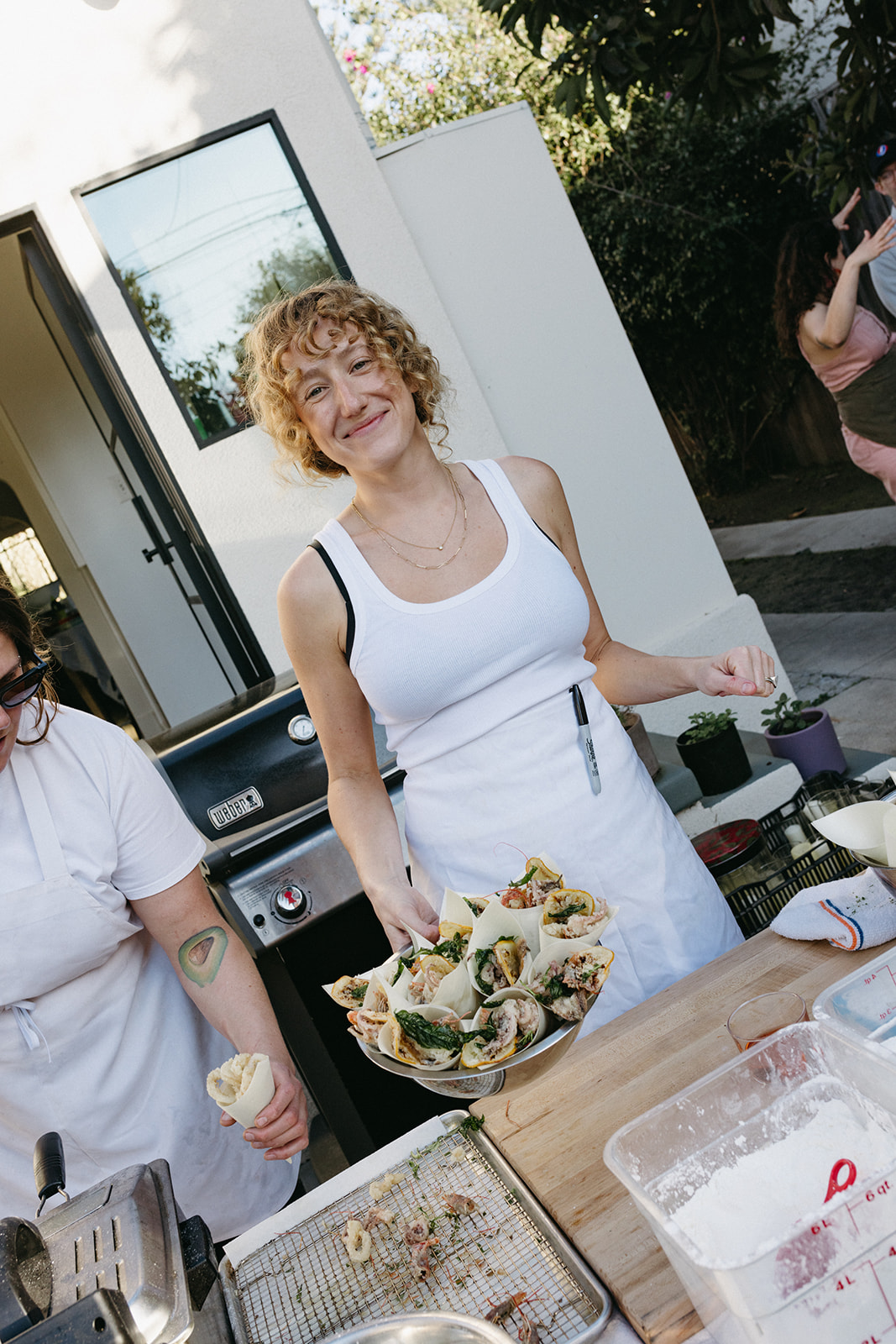
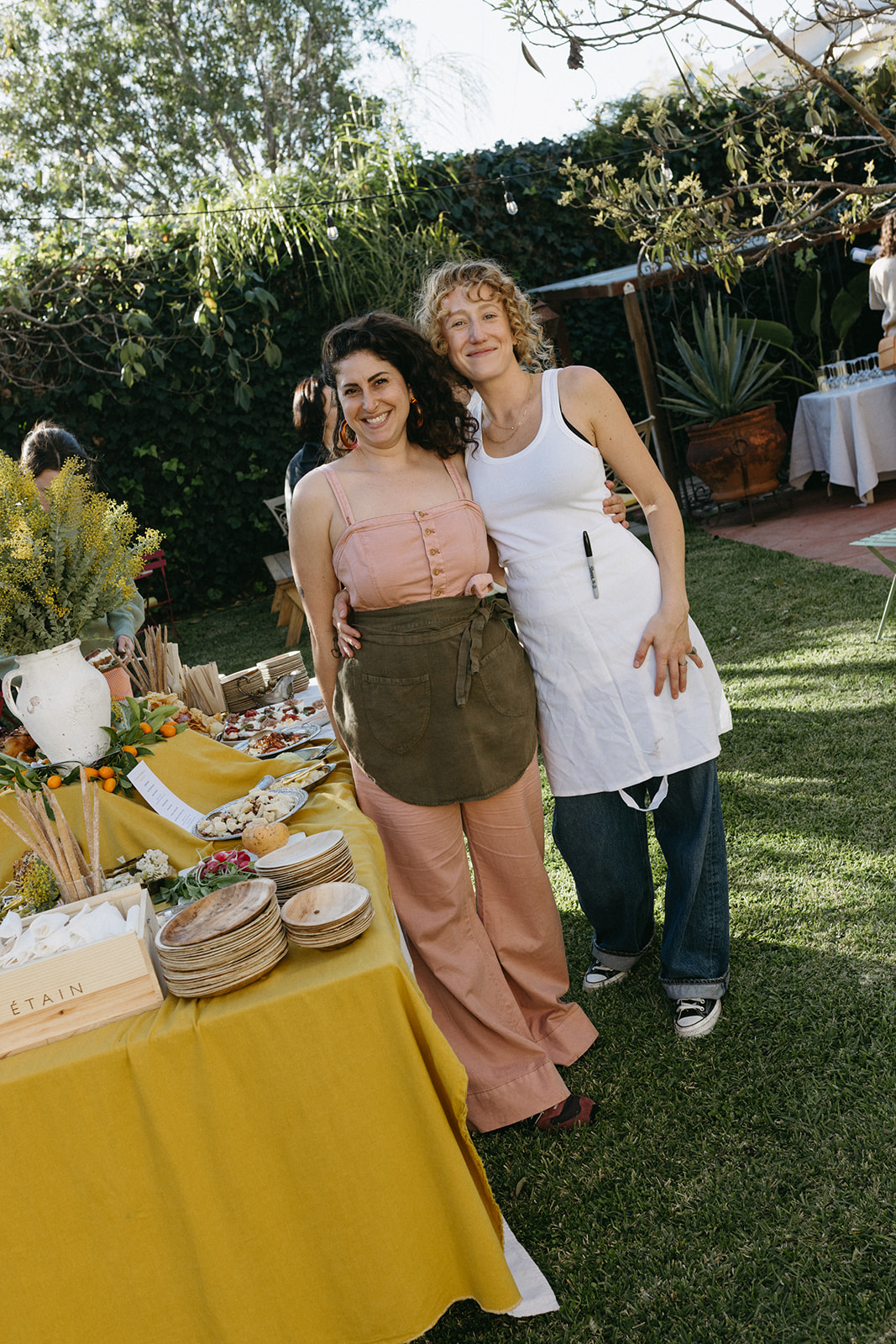
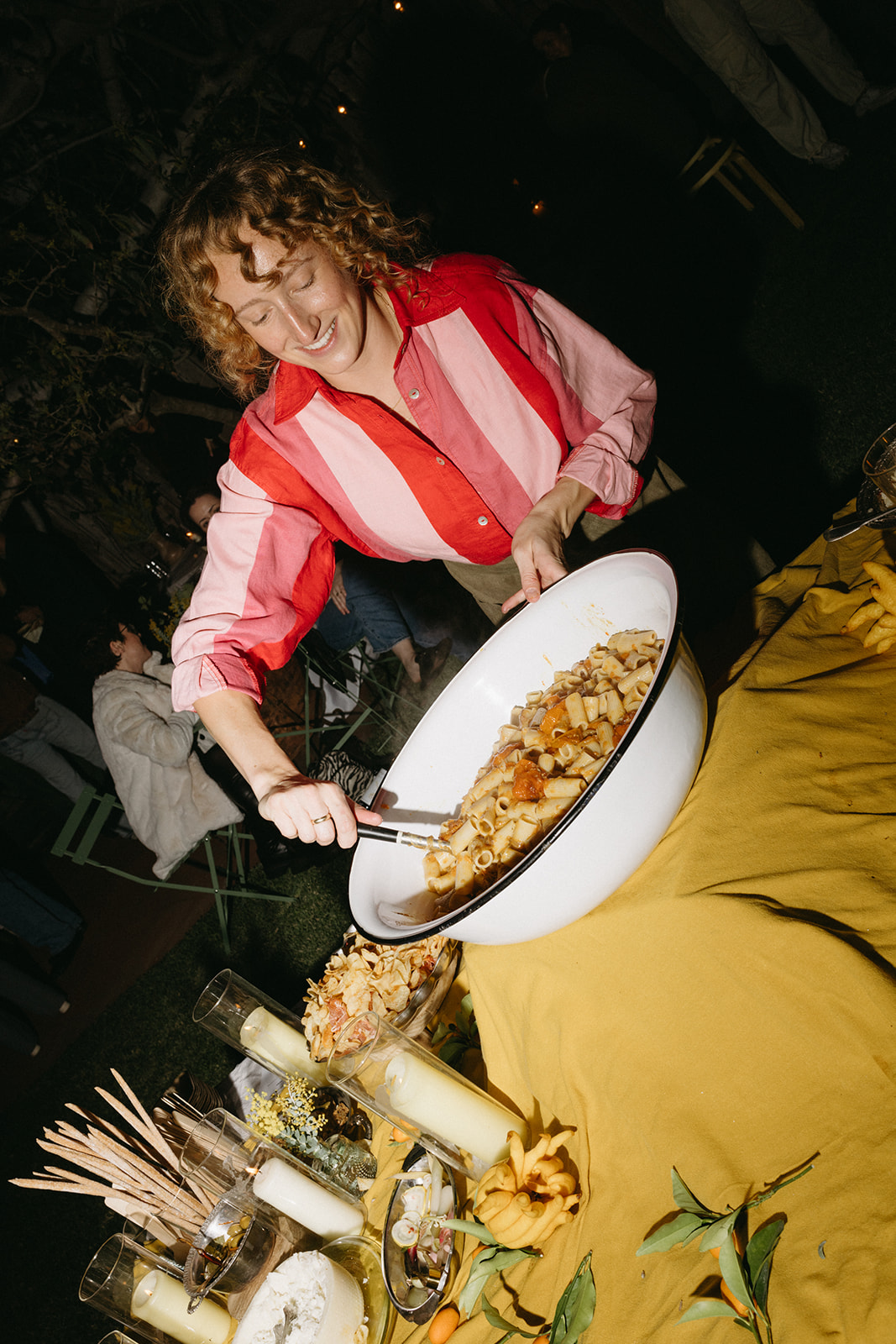
Today, LA-based Little Hat is a representation of all these things. It’s where I get to dream up culinary projects in collaboration with my community of farmers, purveyors, fisherpeople, sommeliers, and chefs. Together we host vibrant parties in backyards, private homes, and friends’ borrowed restaurant kitchens. We produce hyper-seasonal food events and design menus around the cream of the local crop. We bring private clients the comforts of their favorite dishes, plus those obscure ingredients we can’t wait to introduce. Our favorite memories involve food, and we want to create some new ones with you.
Can you talk to us about how your side-hustle turned into something more.
Before I started cooking professionally, I was producing podcasts; one of which, was a show about women who have made major career pivots. I joke that after producing 350 episodes, it became hard not to internalize some of the women’s advice I was hearing on the show— “Follow your passion! Take the leap! Jump into the unknown” It’s funny that cooking has been something I’ve adored since I was a kid, yet for so long I never viewed it as a viable career path for myself. I studied entrepreneurship and business development in undergrad and had some vague dream that I’d have my own business one day, but again, no idea where, or if, that would actually land. I really have my friends to credit for pointing me towards the path of cooking as a career. After telling me over and over again that my passion was obvious and I needed to pursue it—plus all the swirling advice of Second Life guests in my ear—I asked my boss to take a leave of absence from work. I still can’t believe she said yes. From there I was off to Italy to begin wrapping my head around regional Italian cuisines. I worked in a masseria in Puglia, an enoteca in Rome, and a trattoria in a tiny mountain town in Emilia Romagna where I also learned to to work a mattarello. I took a bread course in Tuscany and worked a wine harvest in Calabria. And when I came home, I knew I wanted more. To get faster, stronger, more organized, more skillful.
I worked as a senior podcast producer for another year, while working catering events and pop-ups on the evenings and weekends. Eventually, someone who I worked one of those pop-ups with gave me a call about a kitchen manager position at a specialty provisions and wine shop called Gjusta Grocer in Venice, CA. I thought I was wildly under qualified, but also felt it was an opportunity I couldn’t pass up, to create a rotating array of breakfast and lunch items using all farmers market produce and the best pantry in the game.
As I made the switch, I’ll admit that the identity shift was tricky for me to settle into. The first six months, I kept a toe in the freelance production world to supplement the significant pay cut I was taking. Simultaneously, I felt a world open up. Talking to producers, makers, and farmers; getting access to catalogues of provisions and ingredients direct from the source; endlessly inspired by the rotating seasonal produce that came through our doors. It was a really pivotal stepping stone for me. And in the background, my friends were there again, asking me to cater engagement parties or collaborate on a dinner series together. Eventually, my work as a producer began to lessen, and my work as a private chef & caterer began to shape. And then it began to take over. It was a scary leap, but it was clear that doing both was no longer sustainable, and I was desperately craving the flexibility of owning my own time. So with $10,000 as my runway to get started, I left my position at Gjusta and leaned into Little Hat whole heartedly.
Does your business have multiple or supplementary revenue streams (like a ATM machine at a barbershop, etc)?
In addition to my culinary offerings, I have created an inventory of serveware that I offer as a rental catalogue for my events. When rentals are requested, I find clients are typically eager for us to handle that piece on their behalf rather than adding a separate rental house into the mix. Having inventory of vintage silver platters and cutlery or ceramics from Oaxaca have also proven helpful in defining the aesthetic and branding of Little Hat. Our growing catalogue of vintage and one-of-a-kind pieces helps to stylize the look of an event to match the client’s vision. It’s also lovely to know exactly what my chefs and I will be plating on ahead of arrival!
Contact Info:
- Website: https://littlehat.co
- Instagram: https://www.instagram.com/littlehat.la/
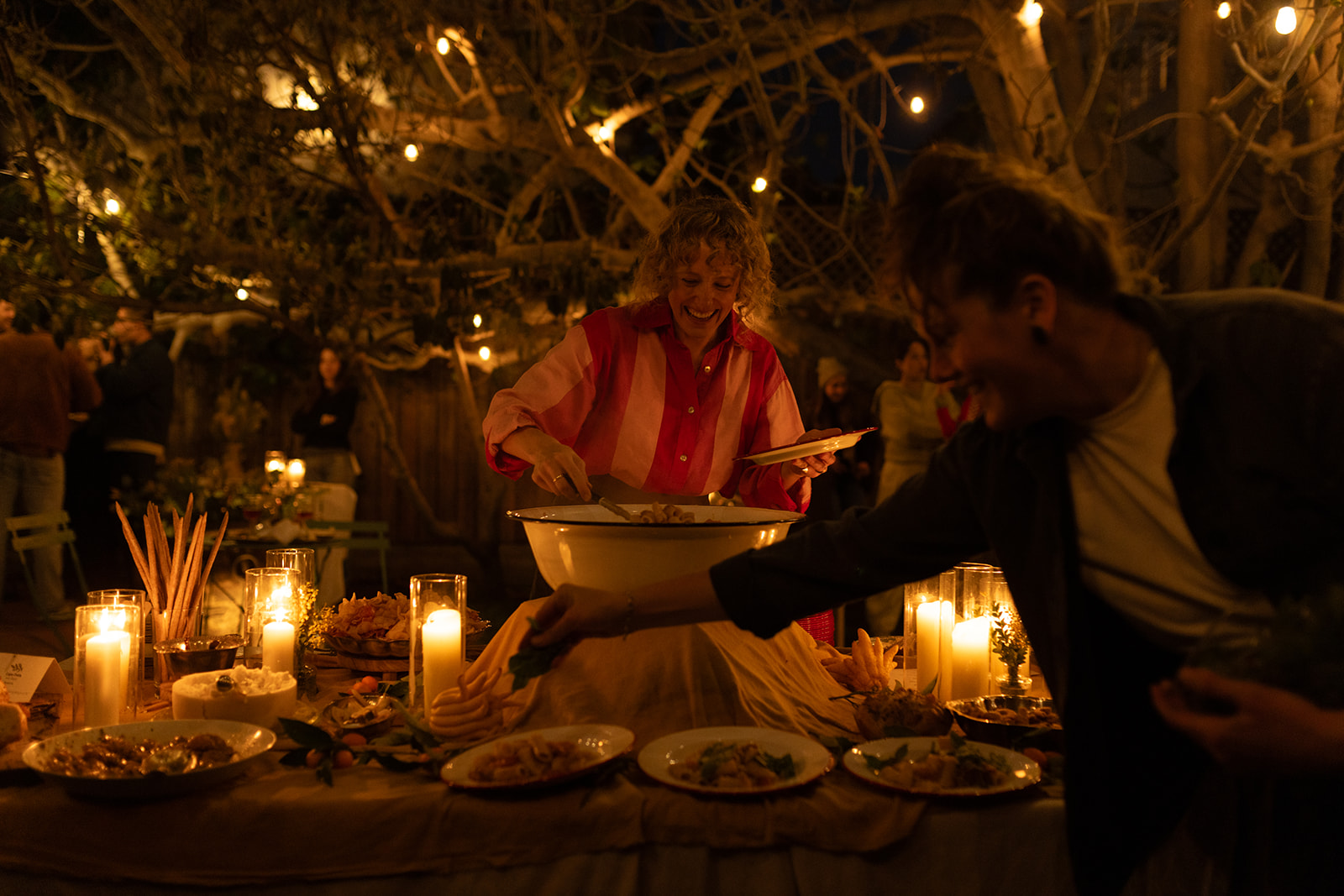
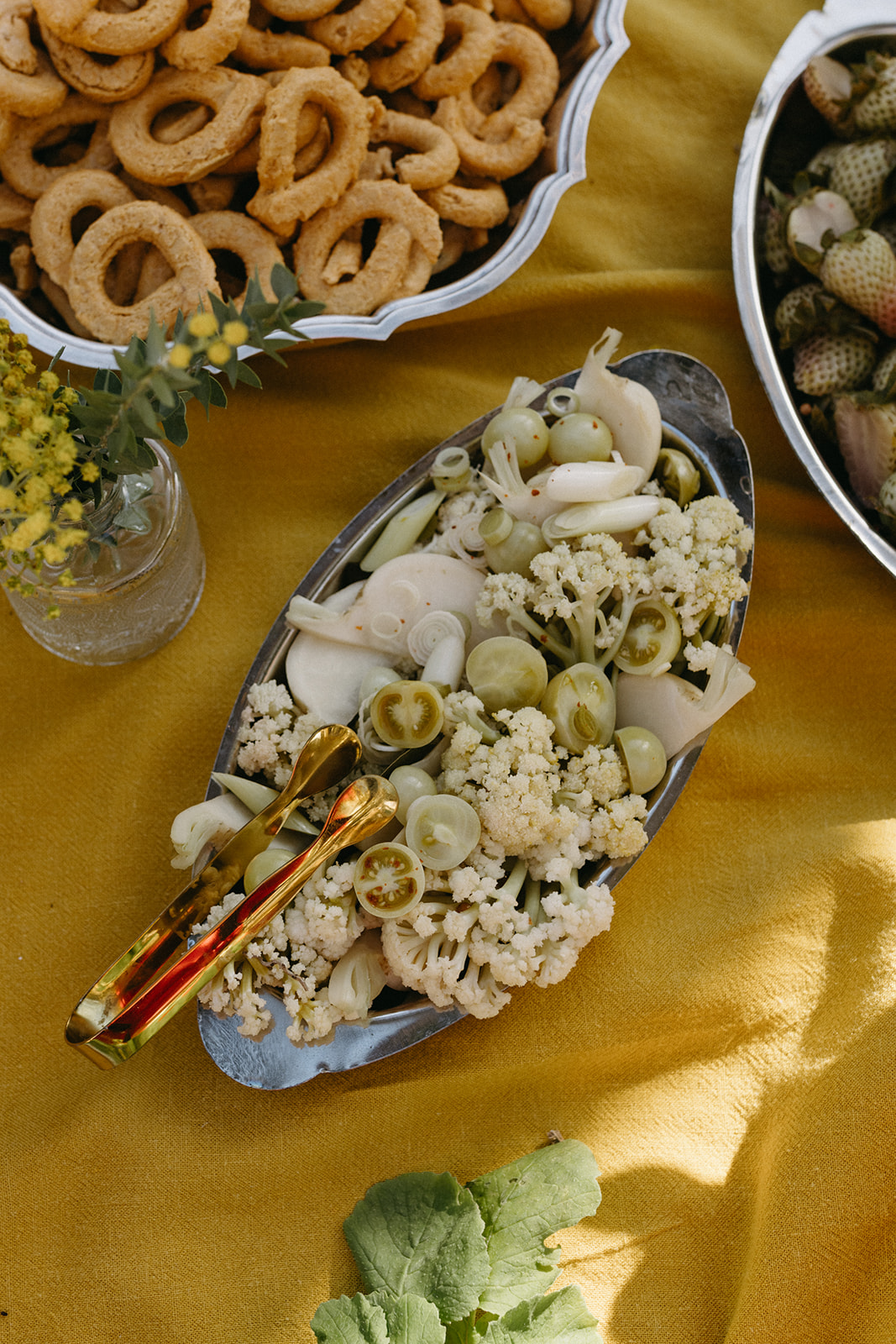
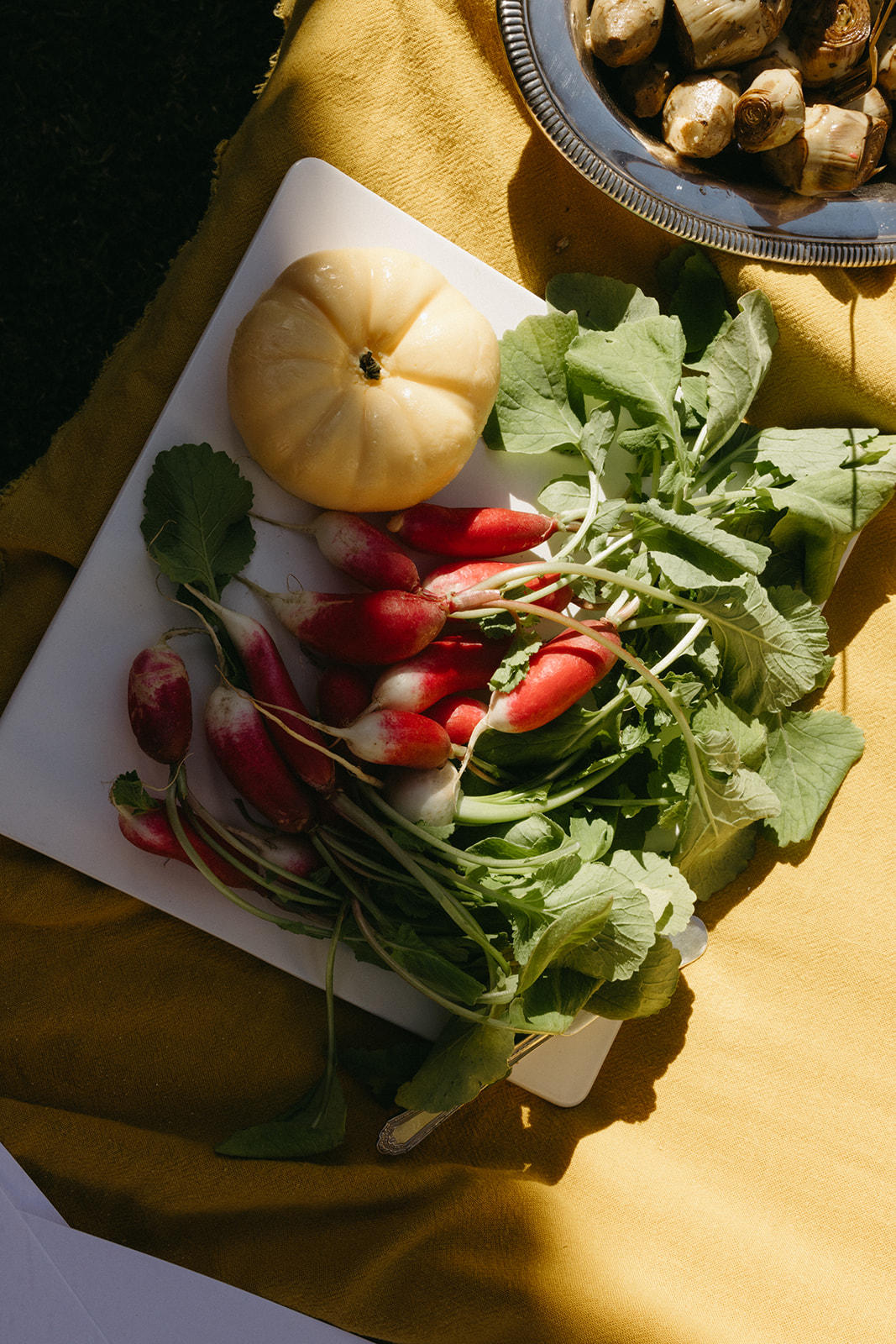
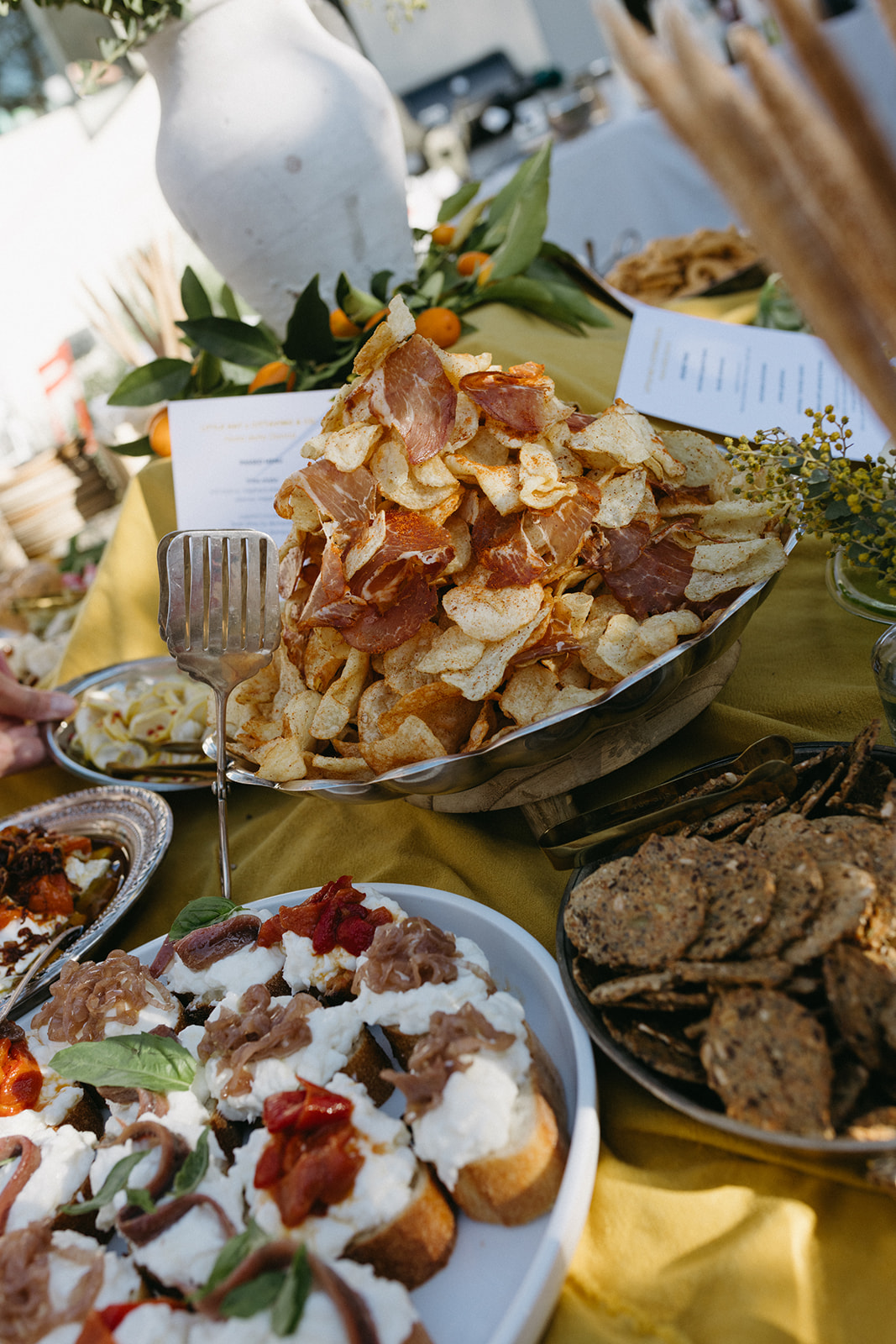
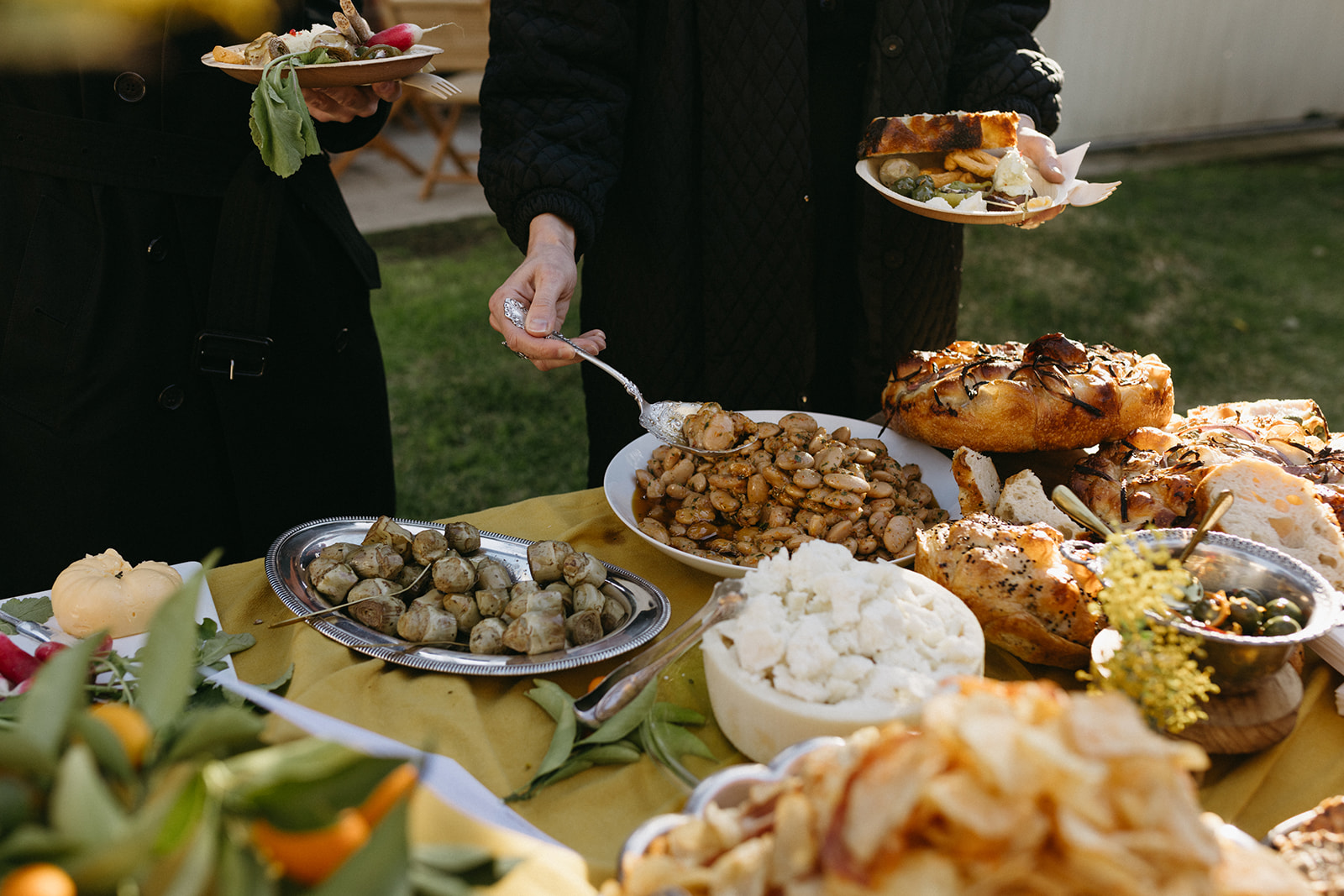
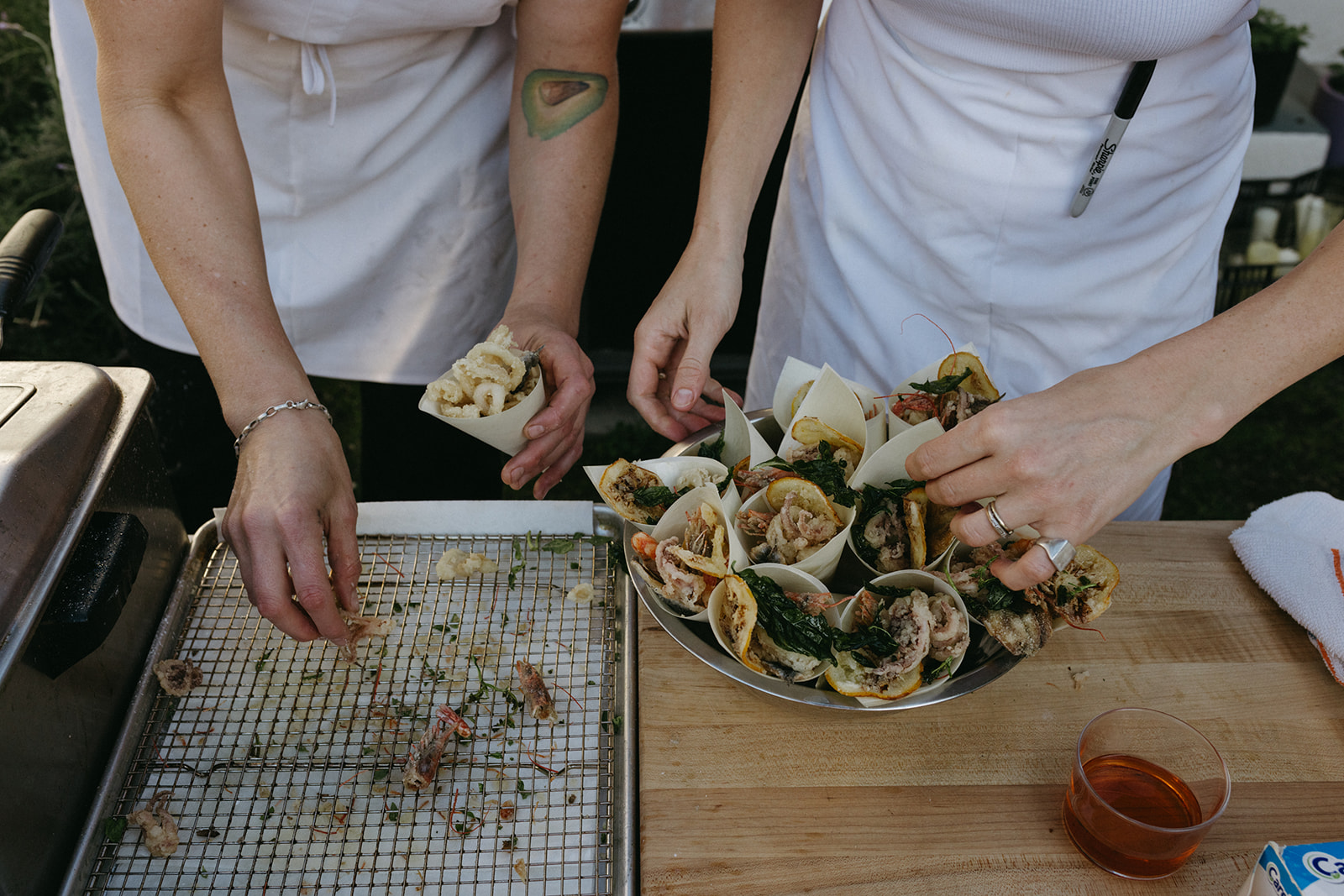
Image Credits
Emily Ferretti