
We were lucky to catch up with Olga Khaletskaya recently and have shared our conversation below.
Olga, appreciate you joining us today. Let’s jump back to the first dollar you earned as a creative? What can you share with us about how it happened?
Esquire magazine, non-profit and autopsy.
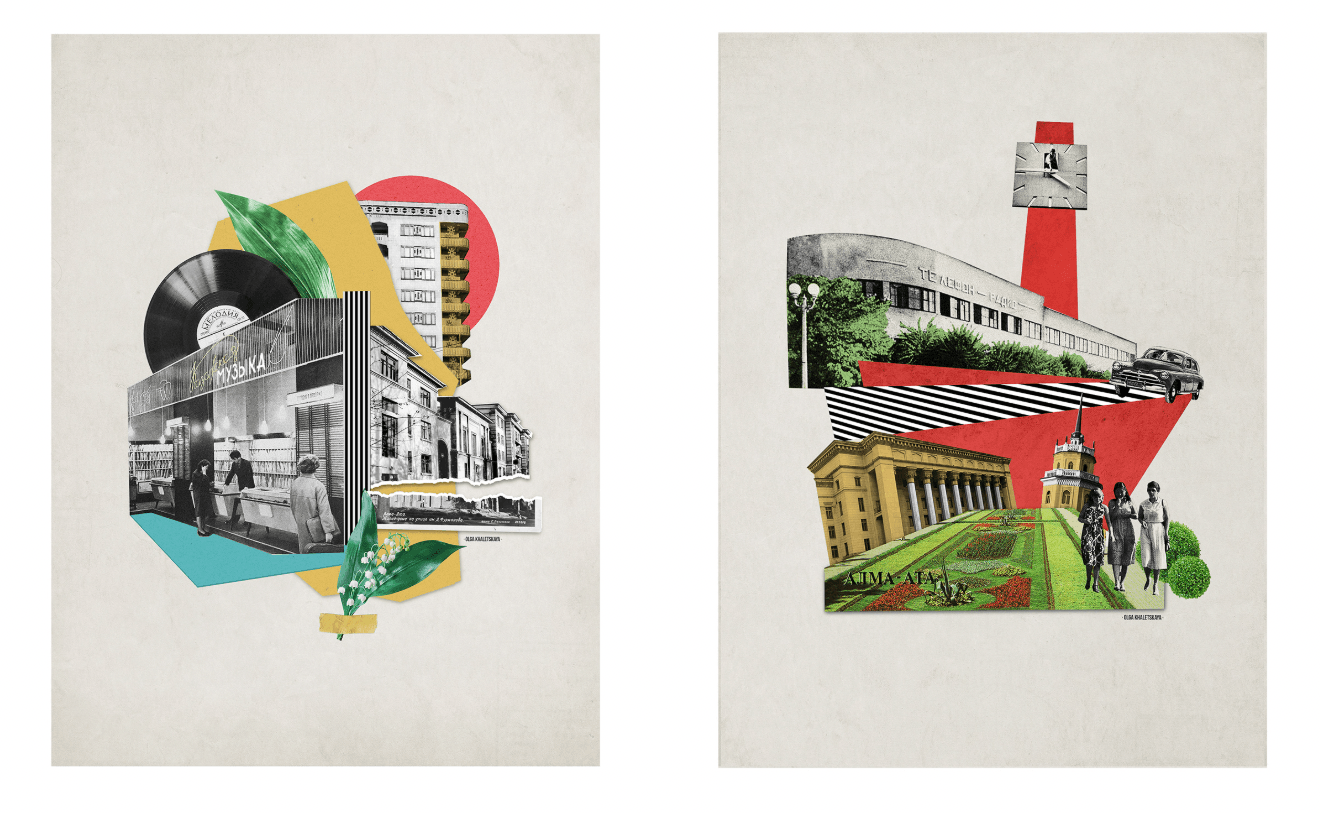
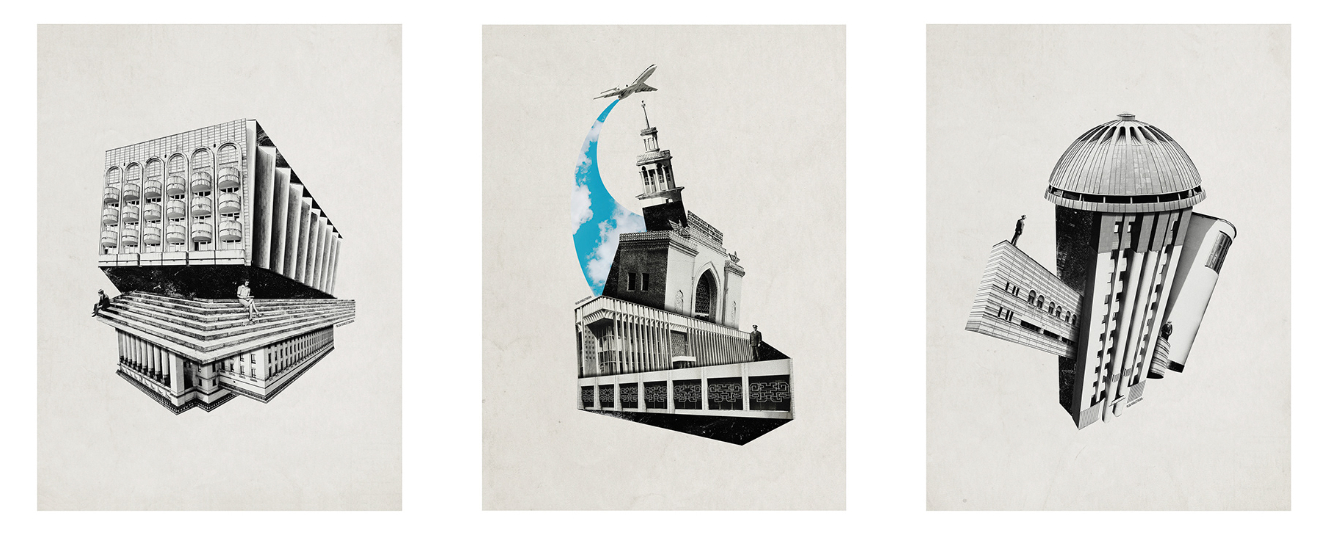
As a self-taught artist, I grew from a beginner collage artist to a professional commercial illustrator, now working with agencies, magazines, and clients around the world.
The journey of a freelancer—especially a self-taught one—means constantly facing fears and finding the courage to take on new challenges, even when they feel frightening. No matter how many years you work—one, five, or twenty—there will always be firsts. New experiences bring excitement and uncertainty, again and again.
In my more than 10 years illustrator’s experience, I’ve had multiple moments of earning my “first money” from creativity. These were different stages of growth, each teaching me valuable lessons and shaping principles that help me move forward.
I want to share these insights so that emerging artists and creatives can find confidence in their journey and keep pushing forward.
Pt 1
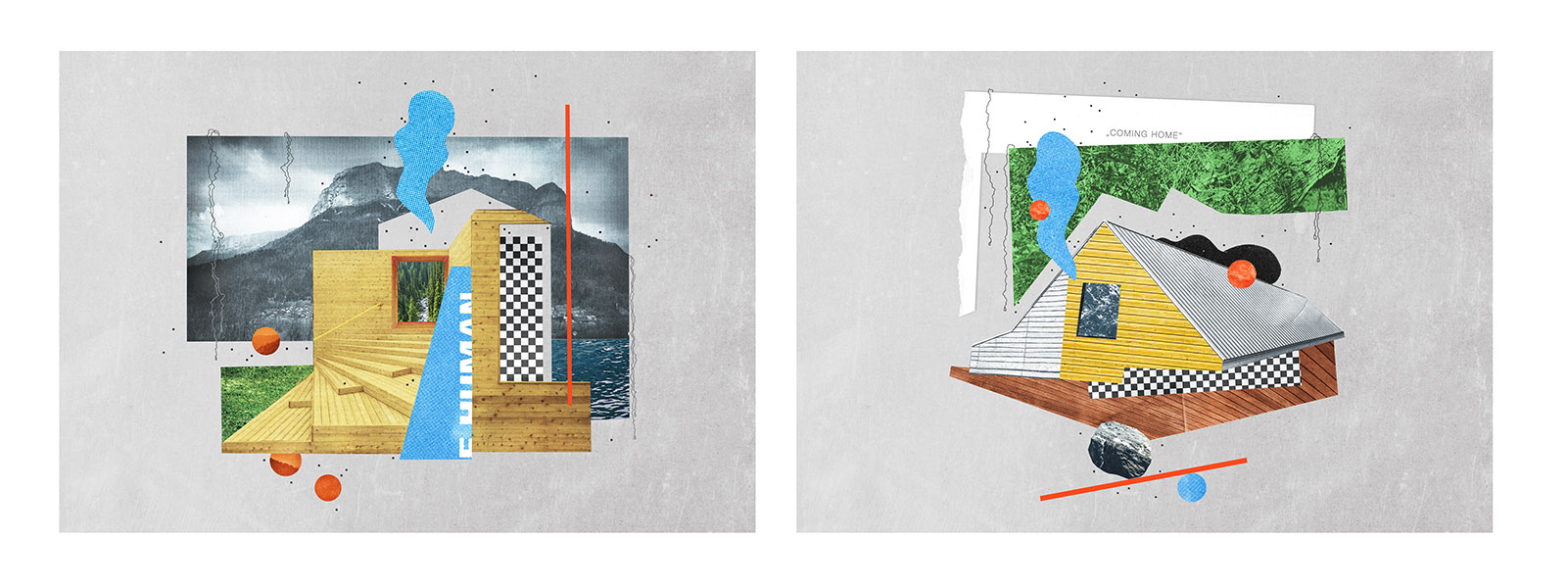
I used to work in a bar in my hometown of Almaty, Kazakhstan. One day, I had the sudden inspiration to create something artistic. But since I couldn’t draw (and didn’t want to learn at the time, to be honest), I decided to experiment with paper collage using old books and magazines. I enjoyed the process and ended up making five or six collages.
At first, I was nervous about showing my unpolished work, but I decided to post them on Facebook anyway. To my surprise, I received a lot of support and likes from my friends. But after that, I forgot about that and didn’t return to collage for a long time.
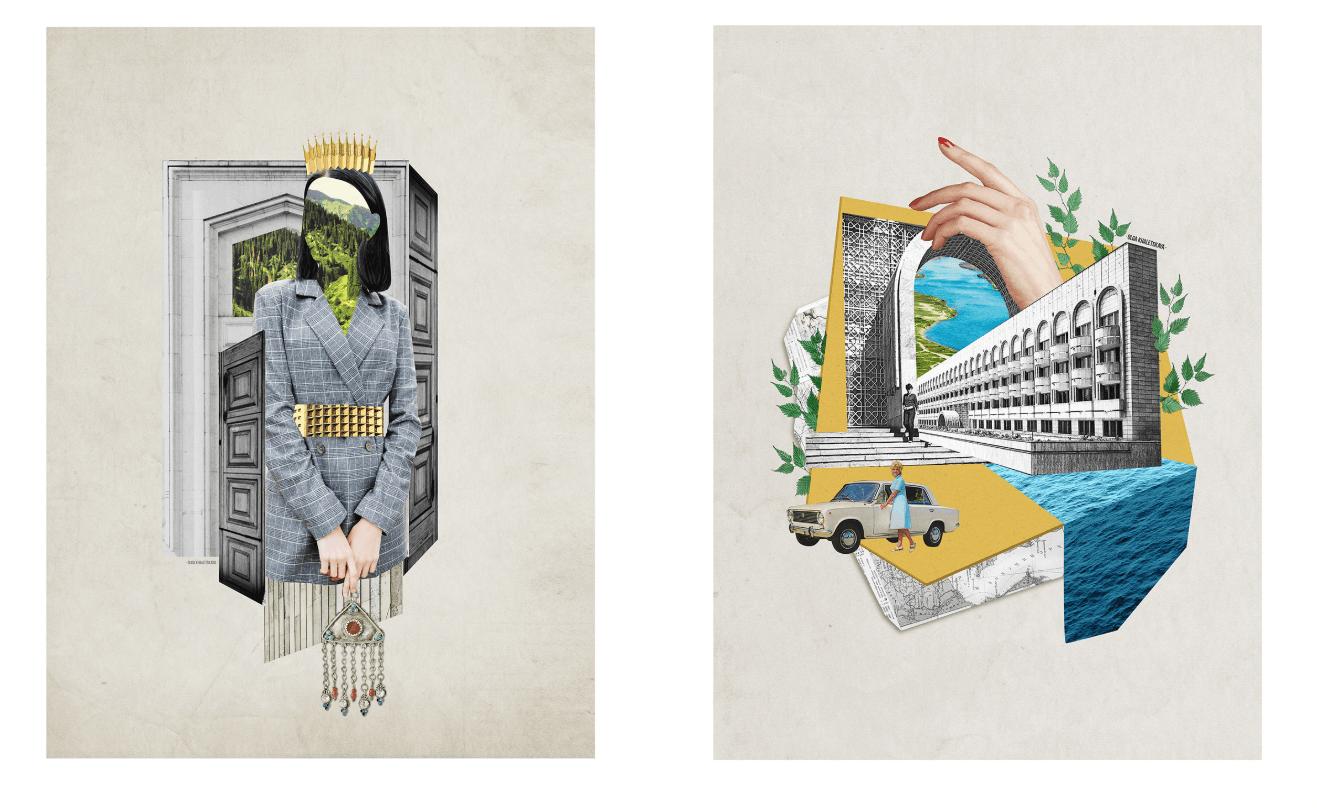
About a year later, a friend remembered my collages and suggested to me to create illustrations for Esquire Kazakhstan magazine, where he was working as an art director.I was scared—I thought I wasn’t good enough and that only professionals could do this kind of work. But despite my doubts, I decided to try.
At the time, I wasn’t good at graphic design programs, so the process was complicated. I came up with illustration concepts, searched for suitable images online, printed them at a local print shop, then assembled everything by hand on a white sheet, glued it together, and took a photo. Only after that did I do some basic color correction on the computer. Today I do all of this much faster digitally in Photoshop!
The illustrations were published in the issue, they were even praised by the art director of Esquire New York when the Kazakhstan editorial team visited their US office. I earned my first money as an illustrator and continued working with Esquire.
To this day, I’m grateful to my friend—he suddenly handed me a golden ticket.
Based on this story, my first takeaway was: *Show what you do. Be visible. Talk about your work*
Don’t be shy about your first steps—because among your friends, there may be someone who opens the right door for you.
Pt 2
A Different Kind of “First Job”: small money, big meaning.
After my success with Esquire, I went through a period of searching for new projects. I actively reached out to various publications—fashion, lifestyle, women’s and men’s magazines, popular science outlets— anything, hoping for a lucky break. Sometimes I was lucky to get a commission, but more often, my messages went unanswered. I had no clear direction and didn’t know what kind of work I truly wanted to do.
One day, I came across a newly launched online media focused on charity projects, covering social issues and personal stories of people facing difficult life situations—serious illnesses, homelessness, alcoholism, activism, and more. I contacted them right away, offering my services as an illustrator. I was honest about my limited experience but showed a strong wish to work with them.
To my surprise, they responded immediately and invited me to collaborate. They warned me that their budget was small since the project was charitable – about $12 per illustration, which seems incredible now. But I was attracted to the team of talented journalists and illustrators who do great work.
My first assignment was an article about children living with cancer. I cried while reading the text, but poured all my empathy into the work, searching for meaningful visual metaphors and illustrations turned out well.
I worked with this media for two or three years, the workload was intense – one or two illustrations per week, often heartbreaking stories. But the experience was invaluable. Through this work, I developed a deep understanding of working with text, built a strong portfolio, and—most importantly—I fulfilled my need to be helpful and contribute to something meaningful. My illustrations got noticed, opening up new opportunities
From this experience, I formed another principle: *Find what truly excites you beyond money*.
Working for something that genuinely matters to you—not only for financial gain but because it resonates with your values—it will give you emotional support and a deeper sense of purpose. Being honest with yourself is a strong motivator in your career.
Part 3
A truly significant step (but again, a “first” for me) was working with the largest and prestigious illustration agency in Russia, where I lived for several years before moving to the U.S. For four years, I consistently sent my portfolio to the top illustration agency—the one every illustrator hoped to work with. Each year, I got a polite but unenthusiastic reply: there was no project for me (maybe my unique style was too ahead of its time—who knows?).
During that time, I kept improving my skills, updating my portfolio, and every year, I sent another email.
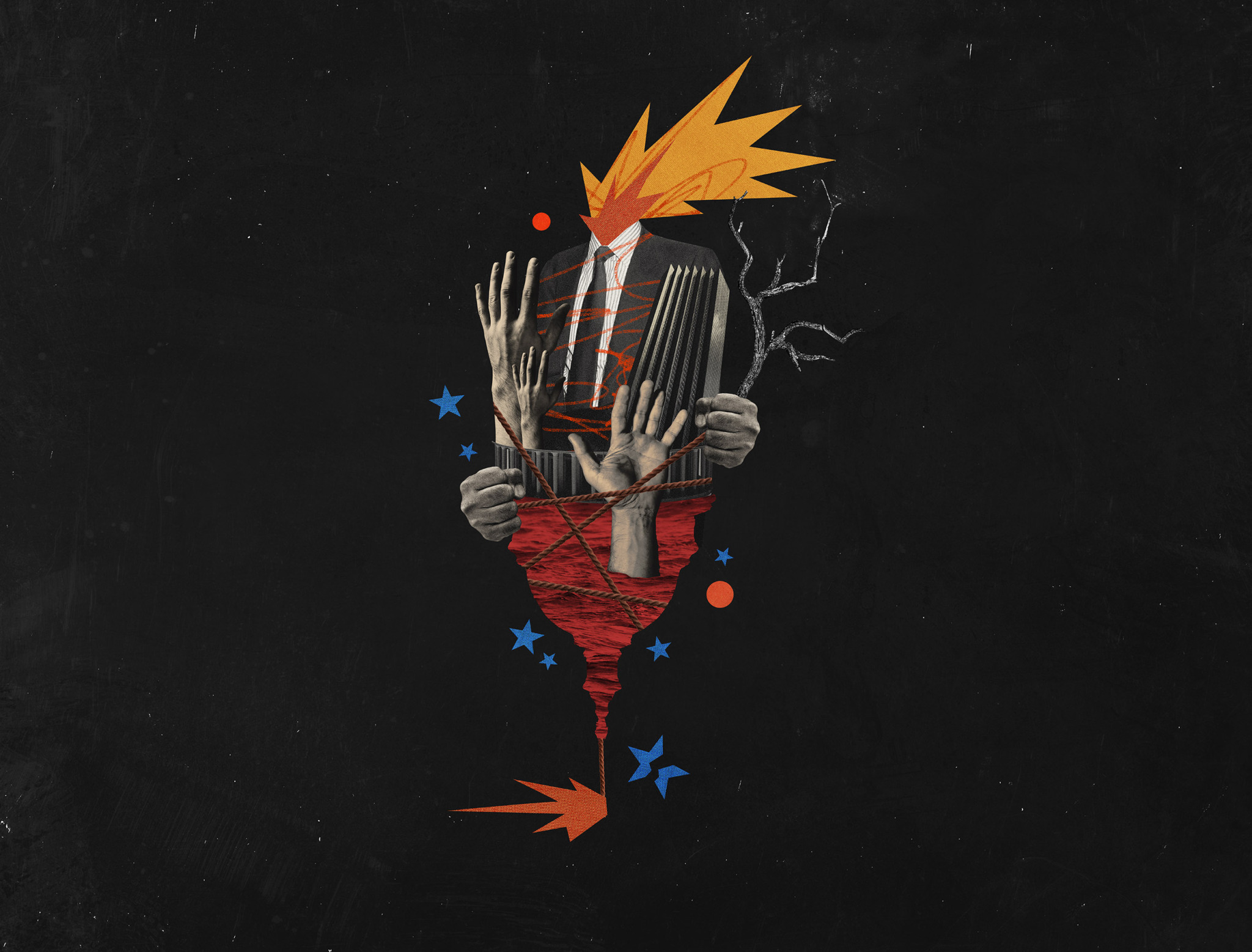
Finally, after four years, the agency offered me a dream project: illustrating an entire book—15 illustrations in total. I was thrilled and accepted immediately, without even looking too deeply into the material.
When I received the book text – I was stunned.
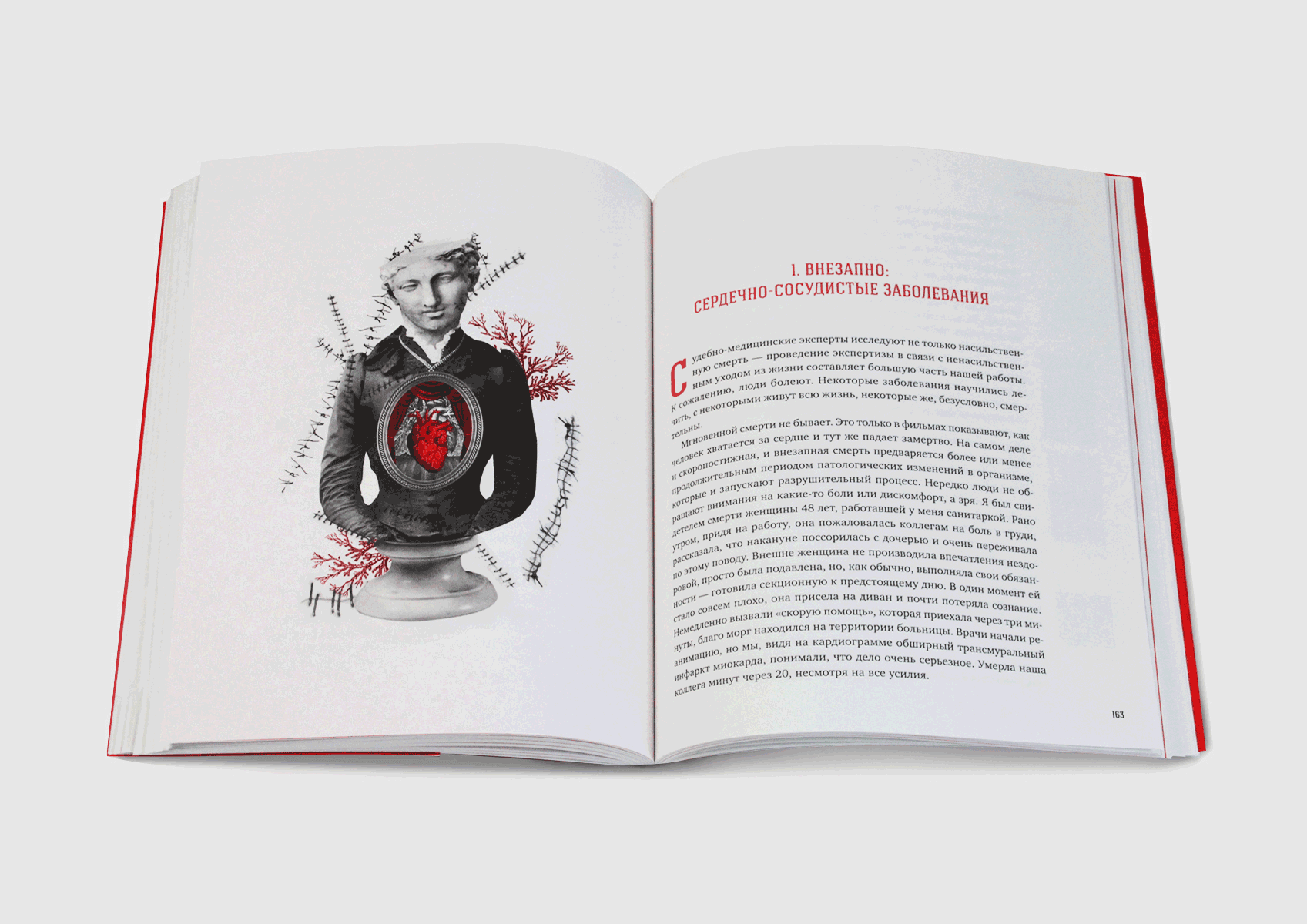
It was a non-fiction book by a medical examiner, written with dark humor, detailing his work. Yes, that’s right—it’s the doctor who performs autopsies and examines corpses. It was the ultimate creative challenge!
With little time to prepare, I was reading it everywhere, as fast as I could:
At breakfast, I learned about the most common causes of death.
At lunch, I discovered what happens to the body afterward.
Before bed, I read about how autopsies are performed (spoiler: the body is cut open with a single motion from head down).
It was shocking, yet fascinating. My task was to illustrate accurately—without making it terrifying or repulsive to the reader.The book changed my perspective on death and made me more aware of how fragile life is and how vulnerable the human body can be.
The author and publisher were delighted with my work. This book is still a bestseller in Russian-speaking countries and has even been translated into English (I saw it on Amazon). I kept working with that agency for a while, but my first acquaintance with the book illustrations was deadly unforgettable.
And from this experience, I learned one more important lesson:
*Be persistent and consistent.*
Don’t give up. Keep improving your portfolio. Keep coming back. Keep knocking on the same door. Eventually, it will open.
And even if it doesn’t – you’ll still gain incredibly valuable experience and find a better path to move on.
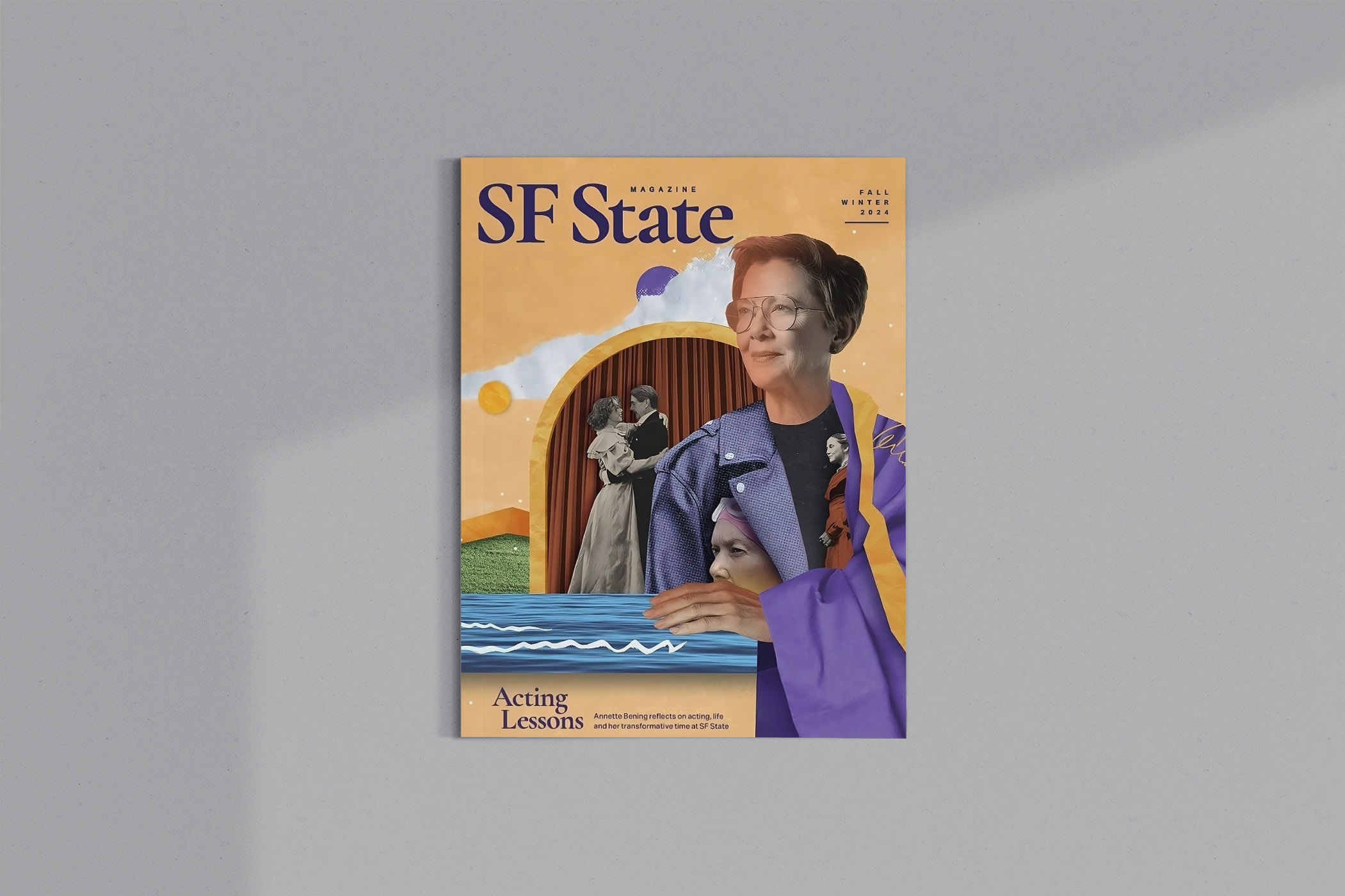
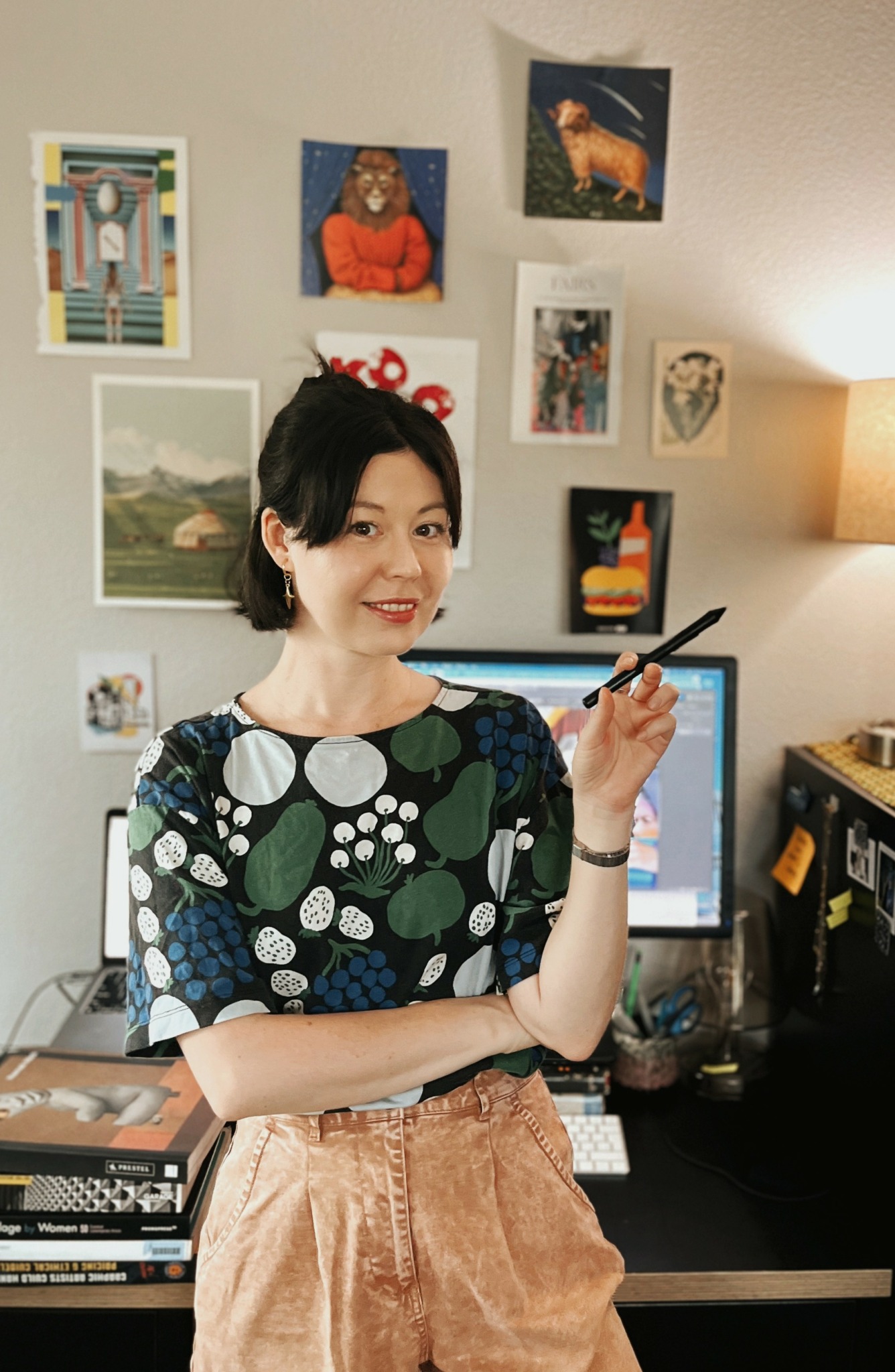
As always, we appreciate you sharing your insights and we’ve got a few more questions for you, but before we get to all of that can you take a minute to introduce yourself and give our readers some of your back background and context?
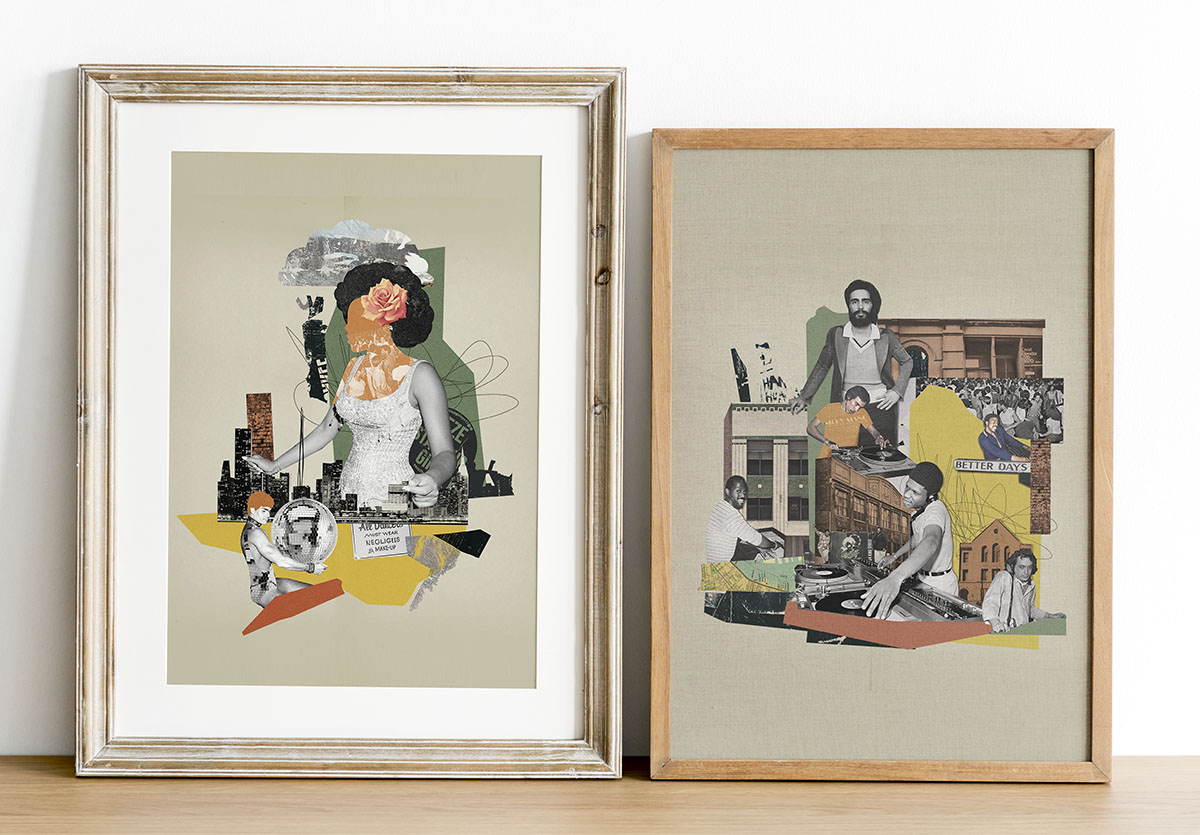
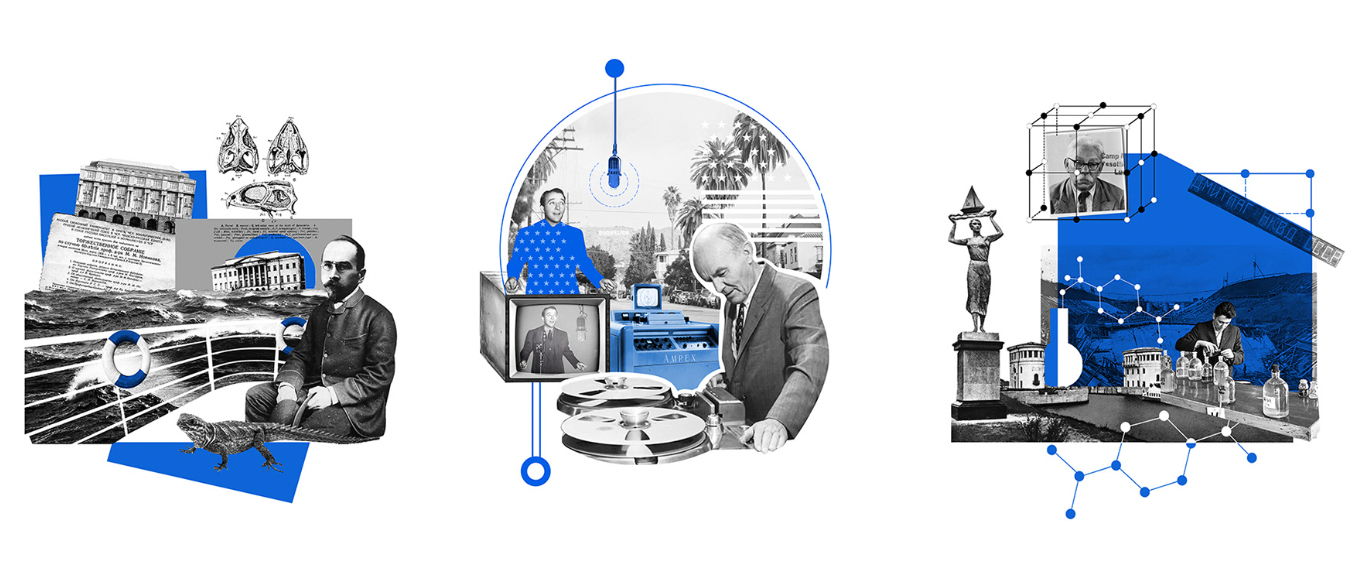
I am a commercial collage illustrator and collage artist.
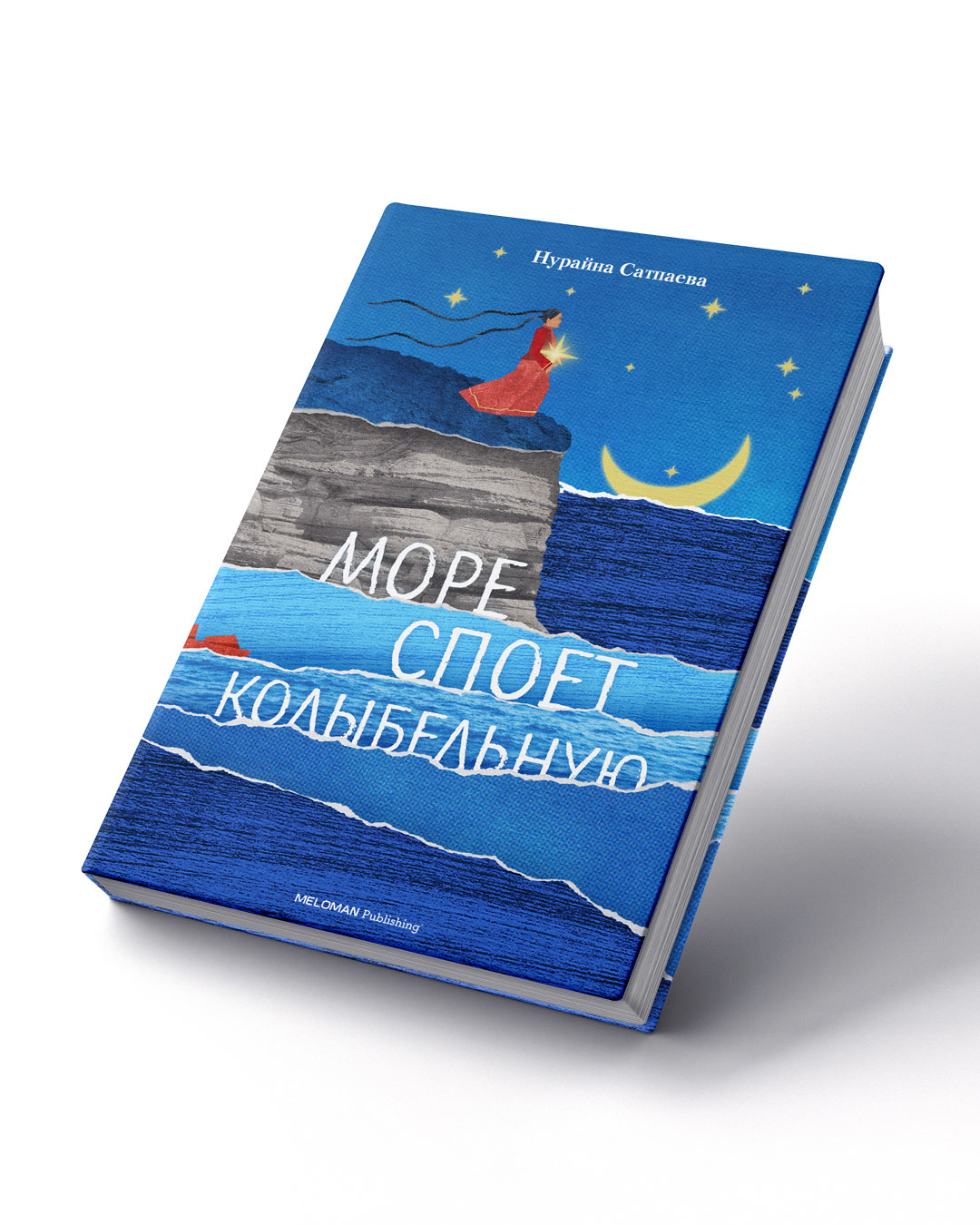
I have 10 years of experience, working worldwide across a wide range of fields: editorial, advertising, books, interiors, fine arts, etc. Worked for the Russian and Kazakh editions of Esquire magazine, Cosmopolitan, The Guardian (UK), Men’s Health, Women’s Health and much more.
I feel free in a variety of directions: I can make a conceptual collage for a wine label, interior print or a book cover. Love working for small entrepreneurs and nonprofit organizations.
Now I have started my journey as an independent artist.
Do you think there is something that non-creatives might struggle to understand about your journey as a creative? Maybe you can shed some light?
My insight is that every person is creative by nature. Creativity is an inherent part of being human—it exists in all of us to some degree, manifesting in different aspects of life. The key is to recognize it, nurture it, and dare to explore beyond the familiar.
Without even noticing, you engage in small creative acts every day—whether it’s cleaning your home, raising children, or choosing a gift for a friend. The moment you break monotony, step outside routine, or do something for the first time—beyond the rules—you express your creativity. The more you challenge, rethink, and push beyond the familiar, the stronger your creative muscle becomes.
And I don’t place much faith in talent alone. Talent stops working if you do nothing. I believe in persistent effort and the courage to step into the unknown.
How about pivoting – can you share the story of a time you’ve had to pivot?
My pivot is happening right now. I moved to the U.S. not long time ago, leaving behind my past achievements, opportunities, and everything familiar to start from scratch in a completely new reality.
Stress, fear of failure, separation from parents and friends at first led me to despair, and then this crisis helped me find the impetus to move forward, staying true to myself and finding something new and bold in my creativity.
I am restructuring my work processes, redefining my relationship with creativity, and observing myself with curiosity—without yet knowing where this journey will lead. Exciting, yet intriguing.
Contact Info:
- Website: https://olgakhaletskaya.com/
- Instagram: https://www.instagram.com/olga.khaletskaya/
- Facebook: https://www.facebook.com/khaletskayaillustrator
- Linkedin: https://www.linkedin.com/in/olga-khaletskaya-677a8a58/