

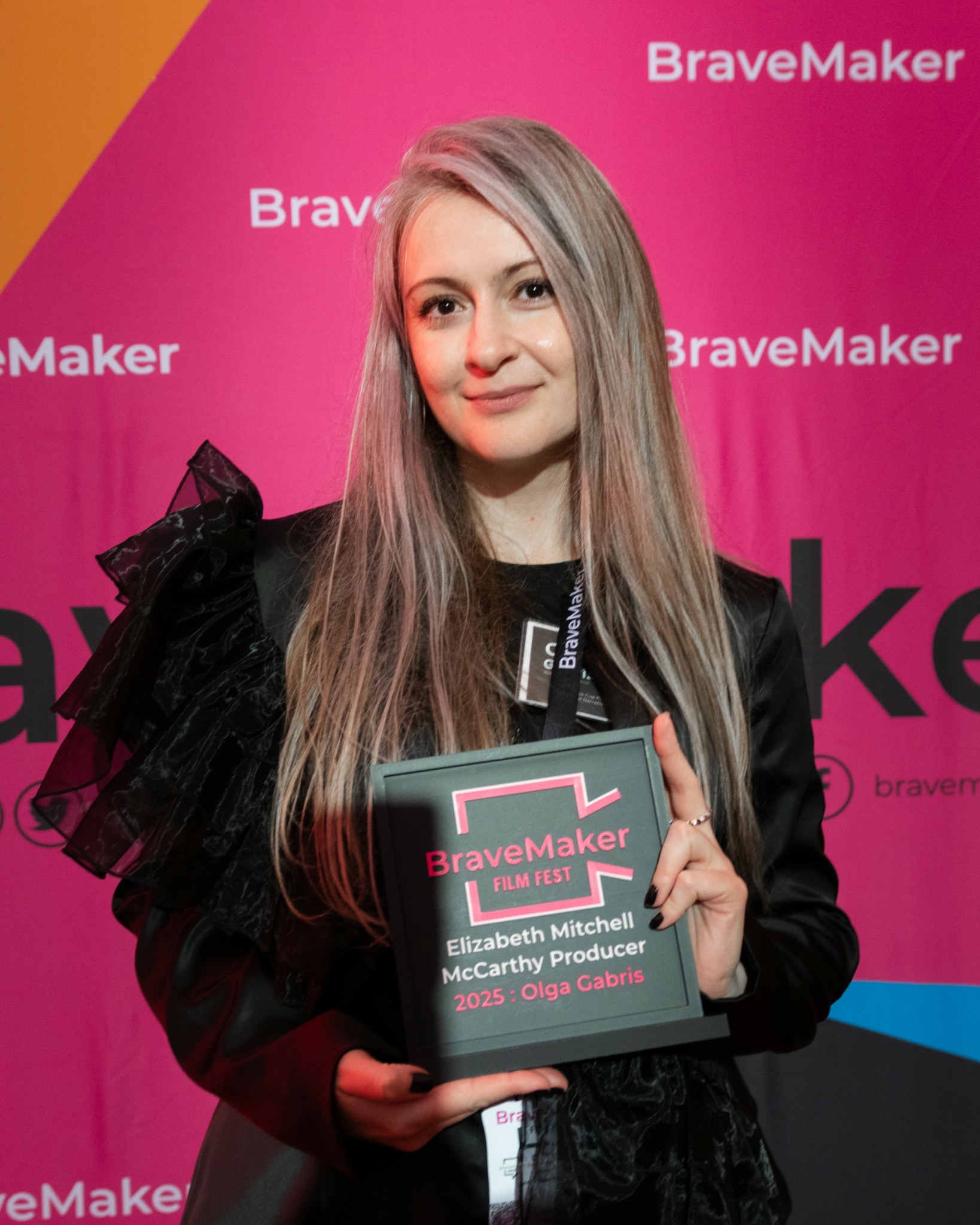

We’re excited to introduce you to the always interesting and insightful Olga Gabris. We hope you’ll enjoy our conversation with Olga below.
Olga, thanks for taking the time to share your stories with us today One deeply underappreciated facet of being an entrepreneur or creative is the kind of crazy stuff that happens from time to time. It could be anything from a disgruntled client attacking an employee or waking up to find out a celebrity gave you a shoutout on TikTok – the sudden, unexpected hits (both positive and negative) make the profession both exhilarating and exhausting. Can you share one of your craziest stories?
“Can You Cheat?” We were in the middle of yet another pre-production meeting. Six crew members at a dining table, coffee in hand, sleep nowhere in sight, we got up for a quick break. In the hallway, the director KD Karnati looked at me and casually dropped this bomb:
“Can you cheat?”
I blinked. “On the schedule? The budget? My sanity?”
“No,” he said, dead serious. “In the film.”
Suddenly I’m being recruited to play the woman my protagonist’s husband is cheating with. In our movie, the women’s sports drama Boundaries, the heroine – a cricket player – runs home to grab her lucky gloves. She catches her Super-Supportive Husband stepping out of the bedroom looking guilty, while another woman emerges wearing his shirt. Drama, betrayal, heartbreak… and, apparently, me?
The caveat: we needed a background actress for exactly one line. No emotional arc. No backstory. Just “walk out wearing the shirt.” It could’ve been anyone – an extra, a friend, a good-looking neighbor’s grandma. Yet the director looked at me for my “diverse skillset”.
He said it half-jokingly, half-seriously. As if running financing, contracts, development, scheduling, logistics, HR concerns, catering disasters, occasional mental health counseling and crisis management wasn’t diverse enough.
And while I knew he meant no harm (KD wasn’t actively trying to label me a cheater), his comment made me pause. We all know that even within this industry, a role of a producer is full of mysticism. What do producers actually do?
Before I became one, I also thought producers were mostly financiers or people who appeared magically during post-production to make decisions about distribution. Sort of powerful, sort of distant, sort of undefined.
But in reality?
We are the under-specified backbone of the operation.
There are executive and line producers, creative, development and marketing producers, post producers, and a dozen more shades in between. And on an indie film with a limited budget? You end up being all of them, all at once.
In our case, we had wonderful executive producers who invested in the film and supported us deeply. But they weren’t on set every day dealing with:
logistics
scheduling chaos
city permits
wardrobe delays
actor conflicts
PEOPLE
food deliveries gone rogue
outdoor scenes being held hostage by unpredictable weather
and props that arrived three days late despite being “guaranteed overnight”
And nothing teaches you agility like shooting an outdoor sports drama in a city whose weather changes moods every hour. We got rain. Then blistering sun. Then wind that could’ve taken out a drone. The team had to rearrange entire shoot days at the last second, swapping exterior scenes for interiors to avoid delays, and it took me hours of sweet-talking and some tasty fresh chai to convince a few diva-esque actors to come onboard.
So when KD suggested I play the mistress, part of me wanted to laugh, and the other part felt like I was betraying myself. Not because of the scene, but because I had always told myself I’d never stretch this thin.
And here I was, doing it.
But I also knew this: If I stepped into that role, people wouldn’t remember the 20-hour days of work I put in. They’d remember the 2-second shot of me walking out of a bedroom wearing a man’s shirt. That’s how audiences work. Especially for women.
So I told him, kindly but firmly:
“No. I have enough on my plate, and I’m not being labeled as the cheater.”
He understood immediately and respected it. And fortunately, I found the perfect actress – a talented friend who delivered exactly the tone needed.
The scene worked beautifully, the schedule stayed intact, and production moved on.
But that question – “Can you cheat?” – still stands out as one of the craziest moments of this film. Not because the request itself was wild, but because of everything it represented:
How unpredictable producing is
How misunderstood the role remains
How much flexibility and resilience the job demands
And how often you end up breaking your own boundaries of what you thought you could do
In a way, I was unfaithful – to my old idea of what producing looked like. I learned I could handle far more than I imagined. I learned to pivot instantly. I learned to survive chaos with humor, creativity, and probably too much caffeine.
And on top of the above, producers take on these other roles, while the list goes on:
Crisis-manager
Logistics wizard
Therapist
Bodyguard
And, occasionally, human forklift
That’s the business.
And honestly?
I wouldn’t want it any other way.
Awesome – so before we get into the rest of our questions, can you briefly introduce yourself to our readers.
I’m a writer, director, producer, a poet, gothic minimalist, and a Morbid Optimist. I make films about life, death and everything in between. My why is mental health and supporting our humanity in the age of tech and automation. My work often delves into dark psychological narratives that seek to decode the meaning of life. Beyond my professional endeavors, I’m passionate about learning new languages, traveling, and getting lost in graveyards with a cup of black coffee. What makes me the most proud is creating stories that help people at the cross-roads feel less alone.
My company Coffee Cup Productions is a California-based multimedia production company on a mission to promote mental health and self-worth. Since our inception in 2024, we bring awareness to the stories that could’ve been otherwise left untold. In addition to film production, Coffee Cup Productions offers services in educational content creation, website development, copywriting, and marketing, aiming to empower individuals and businesses alike.
I’m also a partner at Visual Narrative Films – a full-service indie film production company based in the Bay Area, California. Founded in 2019 by Cinematographer Unni Rav, the company focuses on developing and producing visually compelling narrative-driven indie feature films and shorts. Our third partner is writer and director Kirandeep (KD) Karnati.
With a strong emphasis on story and cinematic quality, Visual Narrative Films provides end-to-end services from in-depth script analysis and creative development to pitch deck creation and comprehensive financial modeling. The team specializes in crafting optimized finance plans, forging strategic partnerships, and managing seamless production and post-production workflows. Beyond production, the company supports marketing strategy, and actively pitches completed projects to sales agents, distributors, and festival programmers, ensuring that powerful stories reach audiences worldwide.
In addition, I lead email marketing for educational webinars at BraveMaker – a Bay Area 501(c)3 non-profit organization that celebrates diversity and aspires to help foster justice and inclusion across communities through guided discussions and powerful authentic storytelling. BraveMaker produces a weekly podcast, monthly film screenings and mixers, quarterly acting and screenwriting classes and an annual film fest, where I lead press communications.
Have you ever had to pivot?
Change was always there – in life, in business, and in every version of my career. I grew up in Russia, and my first degree was in linguistics. At the time, it felt like the perfect choice: I loved languages, they came naturally to me, and I imagined a life spent traveling and working with different cultures. Then I discovered the political side of the profession – the diplomacy, the bureaucracy – and at 20, I knew that path wasn’t for me. So I moved to the United States, where no one particularly cared about my linguistic credentials. But as a caveat, I had to pivot immediately.
I went into retail and customer service simply because I needed work that paid. My longest role in that phase was at a bookstore, where I was hired as a retail clerk and, in under a year, became the head of online commerce for California – a department that didn’t exist before I helped build it. But after 4.5 years, I hit a ceiling. The only next step was relocating to the corporate office in Texas, and that wasn’t a life I wanted.
So I pivoted again – into e-commerce. At first I did content management, then web design, copywriting, and pretty much everything in between. That experience pushed me into digital marketing, so I pursued a certification that later became invaluable for product management roles.
Still, something in me felt like I wasn’t done evolving. I wanted to go deeper into the technical side of business, so while working as a product manager at Levi Strauss where we were building a global wholesale B2B platform, I decided to earn a Bachelor of Science in IT Management.
My career grew quickly after that, with several promotions, but I knew reaching senior leadership would eventually require a master’s degree. So I took the leap and completed my MBA. What I didn’t realize at the time was how perfectly everything I’d learned – linguistics, marketing, business strategy, problem-solving, communication – would later align with the work of a producer in the entertainment industry.
While being a writer for the most part of my life, I didn’t dive deep enough on the writing craft, so while still in tech, I spent a few years in various online courses and certifications to get things more “official”.
Fast-forward to late 2023: I left my tech job and went full-time into filmmaking. I already had freelance clients in web design, copywriting, and marketing, and I was simultaneously studying screenwriting, directing, and producing. What surprised me most was that the producer skill set – the planning, the strategy, communication, logistics, and marketing – was something I had been building for over a decade without realizing it.
Every pivot I’d ever made flowed into this moment. Every career change prepared me to solve problems in real time and make the best decisions for a business, a team, or now – a film.
So when I look back, I don’t regret anything. Creative entrepreneurship, especially filmmaking, requires it. I always tell people who are unsure about their path: try as much as you can. See what fits. And what doesn’t. Pay attention to where you feel alive.
Every major shift in my life felt uncertain at the time, but each one brought me exactly where I needed to be.
Any advice for managing a team?
Be the best example you’d want to follow yourself. A cool mentor you never had. Someone you learn from, and get inspired by. There’s so much talking in Entertainment – and much less doing. Be the change you wished to see in the industry. Be honest. While not every detail can be shared with the broader team or external contractors, it’s important to be authentic and not sugarcoat anything. “I don’t know” and “No” are complete and valid answers. Hire people not only with perfect skills, but with a potential. Skills can be learned, ethics and morale need to be there.
Contact Info:
- Website: https://www.coffeecupproductions.com/
- Instagram: https://www.instagram.com/olgagabris_/
- Linkedin: https://www.linkedin.com/in/olgagabris/
- Youtube: https://www.youtube.com/@CoffeeCupProd/videos
- Other: My personal website: https://www.helloolga.com/
Code Death feature film website (Written and directed by me): https://www.codedeathfeaturefilm.com/
Visual Narrative Films: https://www.visualnarrativefilms.com/about
BraveMaker: https://bravemaker.com/
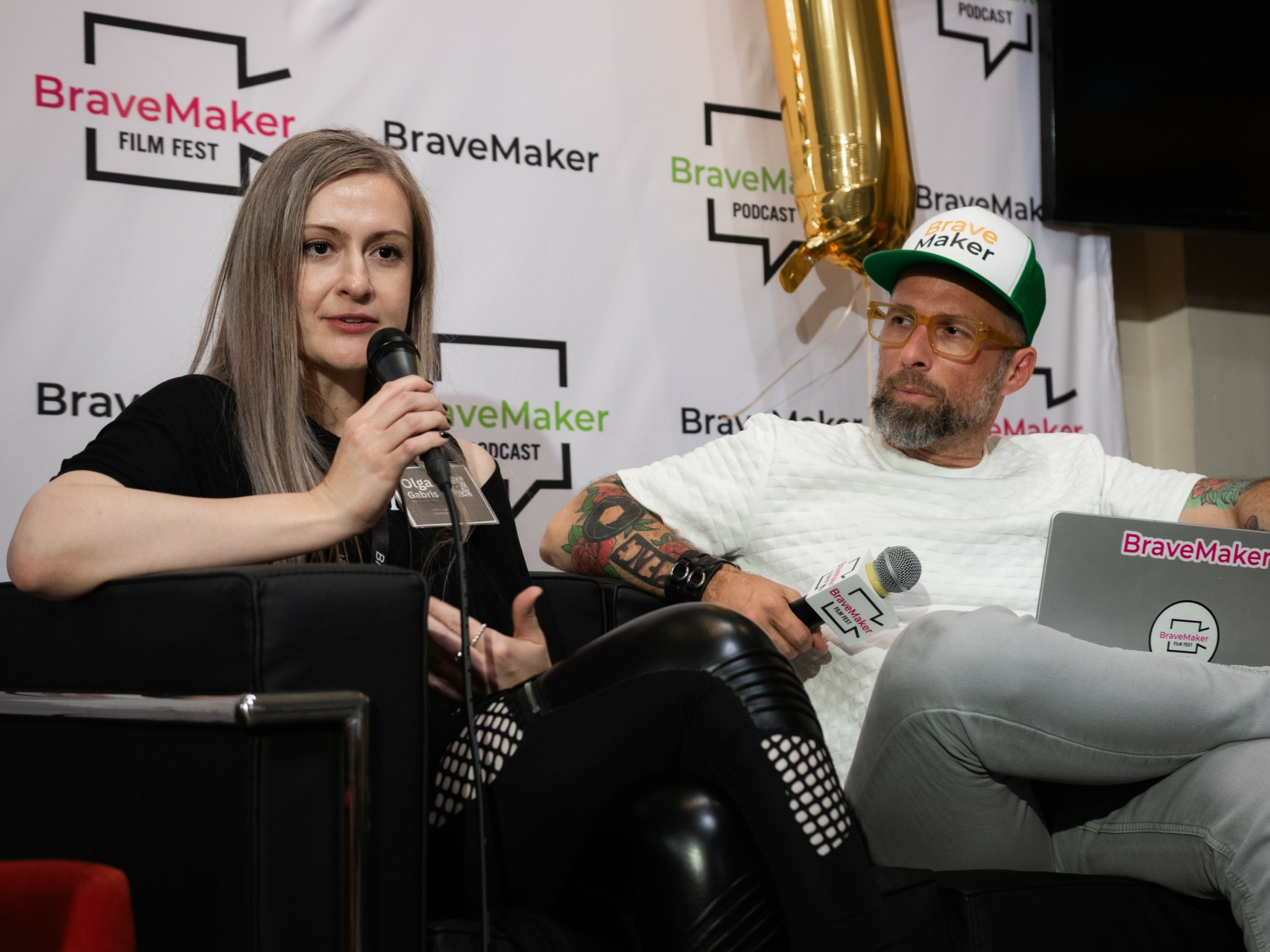


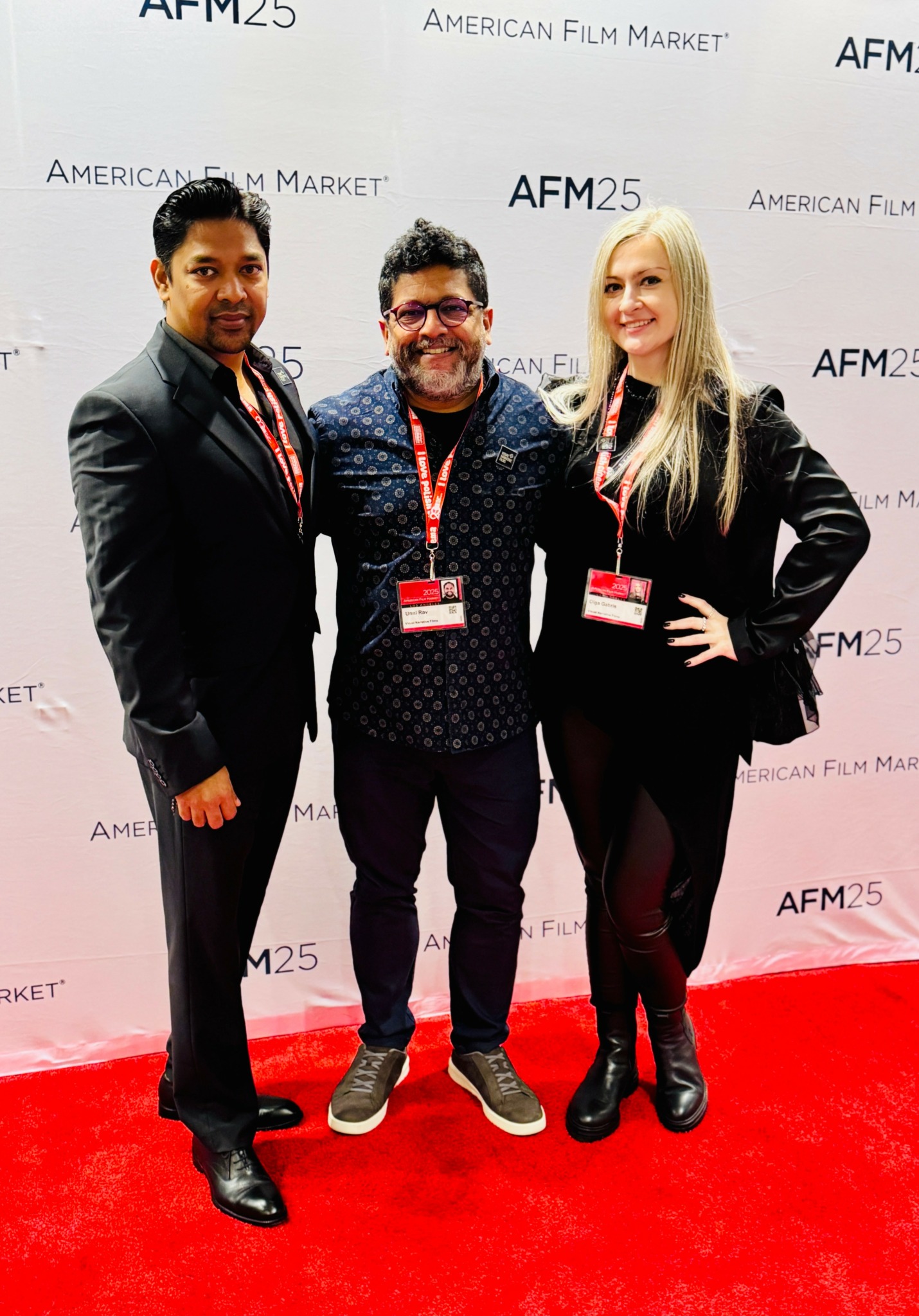
Image Credits
Darryl Merquillo, Kayla Meechelle, Olga Khludneva, Grant Terzakis