
We caught up with the brilliant and insightful Noah Spade a few weeks ago and have shared our conversation below.
Noah, thanks for taking the time to share your stories with us today We’d love to hear about when you first realized that you wanted to pursue a creative path professionally.
I’ve wanted to pursue comedy since I was 10 years old. Growing up, I was always the “comedic relief”—which is basically a nice way of saying I’d shoot my mouth off when I probably should’ve kept it shut.
I remember sitting with my family around the computer one night, watching a clip on YouTube of Tim Hawkins performing one of his routines and thinking how much fun it must feel to stand on that stage—how that rush of adrenaline must hit when a joke lands perfectly and an entire room explodes with laughter. My mother looked over at me, as if she’d just read my mind, and said, “I could really see you doing this one day!” The idea was instantly burned into my mind.
I was mostly silent about this aspiration, mainly due to fear of other people’s opinions and the potential ridicule of my dream. I can only remember telling three people about it: my older brother, a lover of the arts who was—and still is—massively supportive; my best friend, who constantly pestered me to stop dreaming and start doing up until the day I finally set foot on stage; and my first girlfriend’s dad. I have absolutely no clue why I thought that last one was a good idea.
At one point, I reached out to Tahir Moore, a then-rising (and now extremely successful) comic I followed on Instagram, and asked for advice on how to start. To my surprise, he responded and simply told me, “Just do it. You’ll know very quickly if it’s for you or if it isn’t.” He continued with more advice on writing and performing, but he always came back to the same thing he started with—just do it. Looking back, it was incredible advice, but for years I continued letting the dream just be a dream. I always told myself “one day,” never really knowing if or when that day would come.
I’m not really sure what happened the day I finally pulled the trigger. I was 25 and had just moved to DC. I looked up open mics and found a guy who booked three-minute newbie slots on a Saturday show. I sent him an email asking if I could go on, not really expecting a reply. Ten minutes later, my phone buzzed. I looked down to see an email notification, and my heart skipped a beat as I read the message: “January 25th, be here at 7:45pm.”
I won’t lie—I instantly felt a knot in my stomach. I was excited, but I also started panicking at the thought of, “What in the world am I even going to say?” I’d been told I was funny most of my life, but those people knew me. What if these people didn’t think that? What followed was three weeks of stress. Drafts, redrafts, trashing the whole thing, starting over, drafting, redrafting, trashing again—burning the whole trash can. It had to be perfect. I had to be Robin Williams. Why did every single funny thought I’d ever had suddenly disappear?
Before I knew it, the day had arrived. Despite my nerves, I’d been asking people to come watch me perform for the first time, and to my surprise, some of them actually showed up…expecting me to be funny. The nerves were raging. The show producer walked up to me, shook my hand, and said, “Great to see you, kid. You’re gonna kill it! Oh—don’t get drunk before you go on stage!” Wonderful. Not even Captain Morgan could help me sail these uncharted waters.
The show began, and I still had no idea what I was going to say up there. I’d written and written, but none of it felt right in the moment. I started reading the room, noticing the types of humor the audience responded well to and the types they didn’t favor as much.
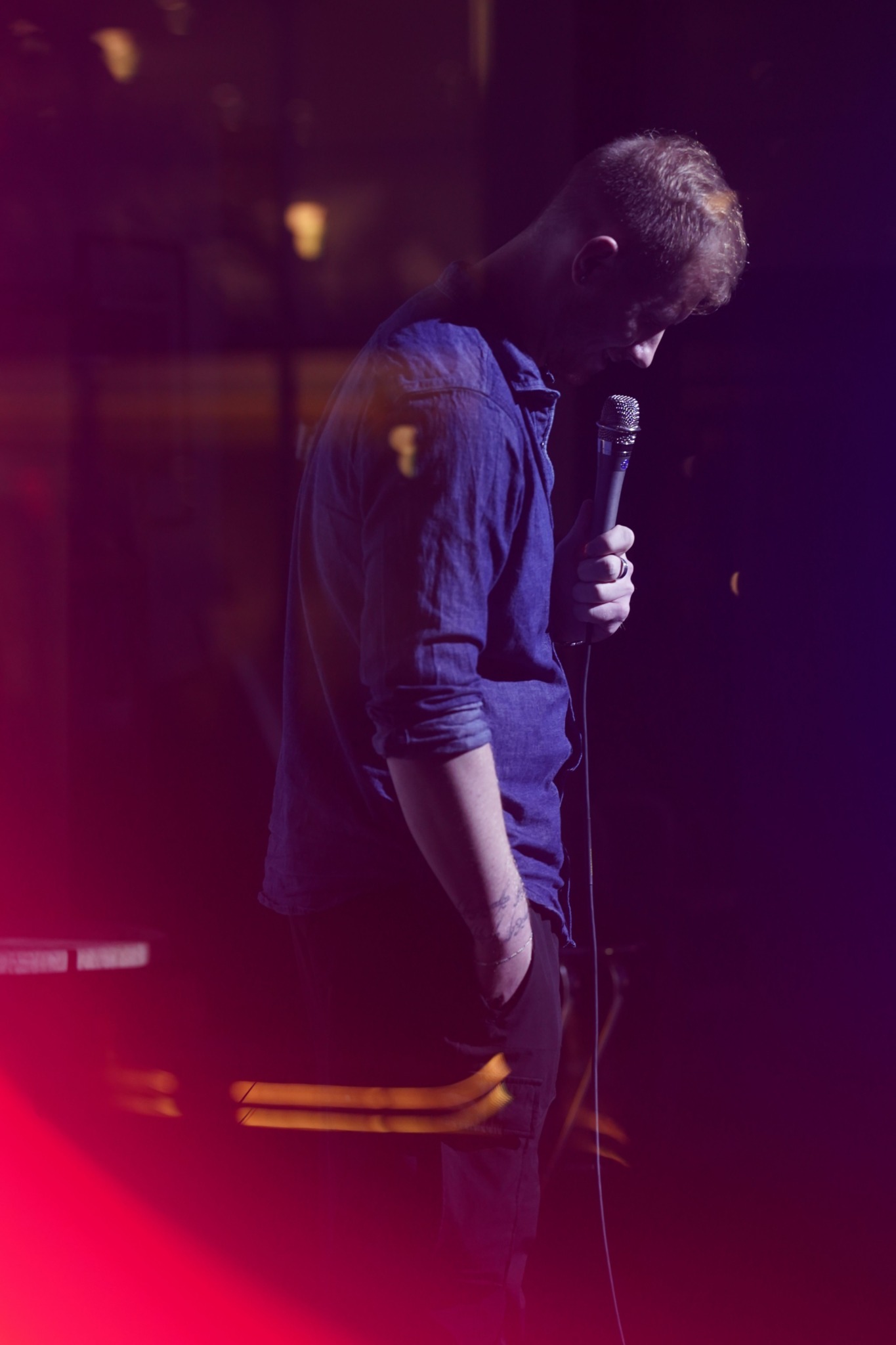
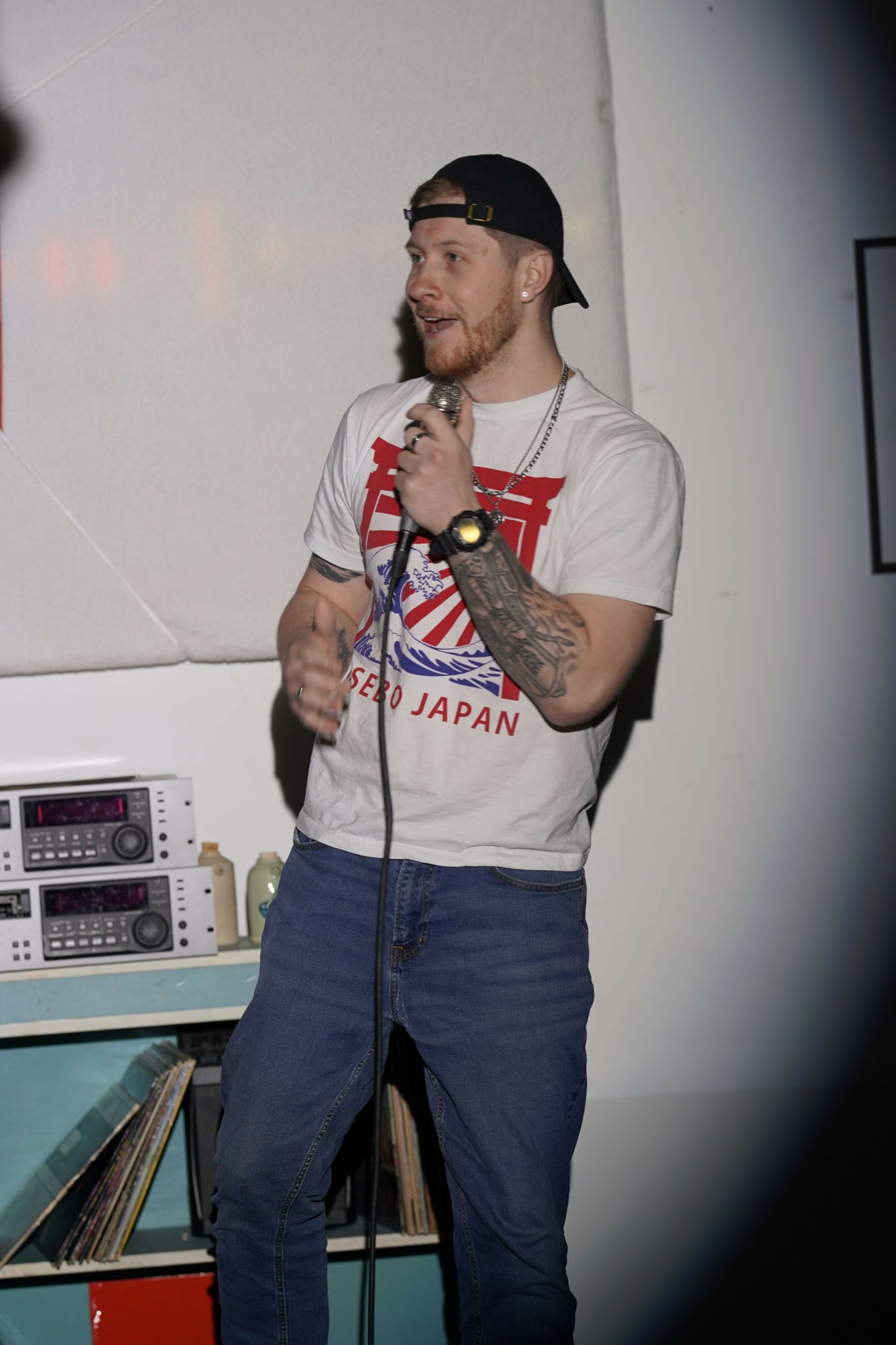
In my mind, I began constructing a Frankenstein’s monster of a routine, pieced together from bits and parts of everything I’d written. Another newbie was performing for the first time that night, going up right before me. His name was Tim. I don’t even remember what he was talking about; I just heard people laughing. My mind raced as I tried to finish piecing together what I wanted to say. Before I knew it, my time was up. My name was called, and I stepped onto the small, round stage, turning to face the audience for the very first time. The spotlight was blinding. I could only see silhouettes and vaguely make out the faces of the front row.
“Kinda messed up how they put the two new guys back to back, right? Feels like two virgins standing outside of a whorehouse. NEXT!”
Laughter. Sweet, beautiful laughter. I will never forget that first, incredible wave of euphoria that washed over me as that sound reached my ears. After 15 years of dreaming, that first laugh was when I finally knew that this is where I belonged and that it could never just be a hobby.
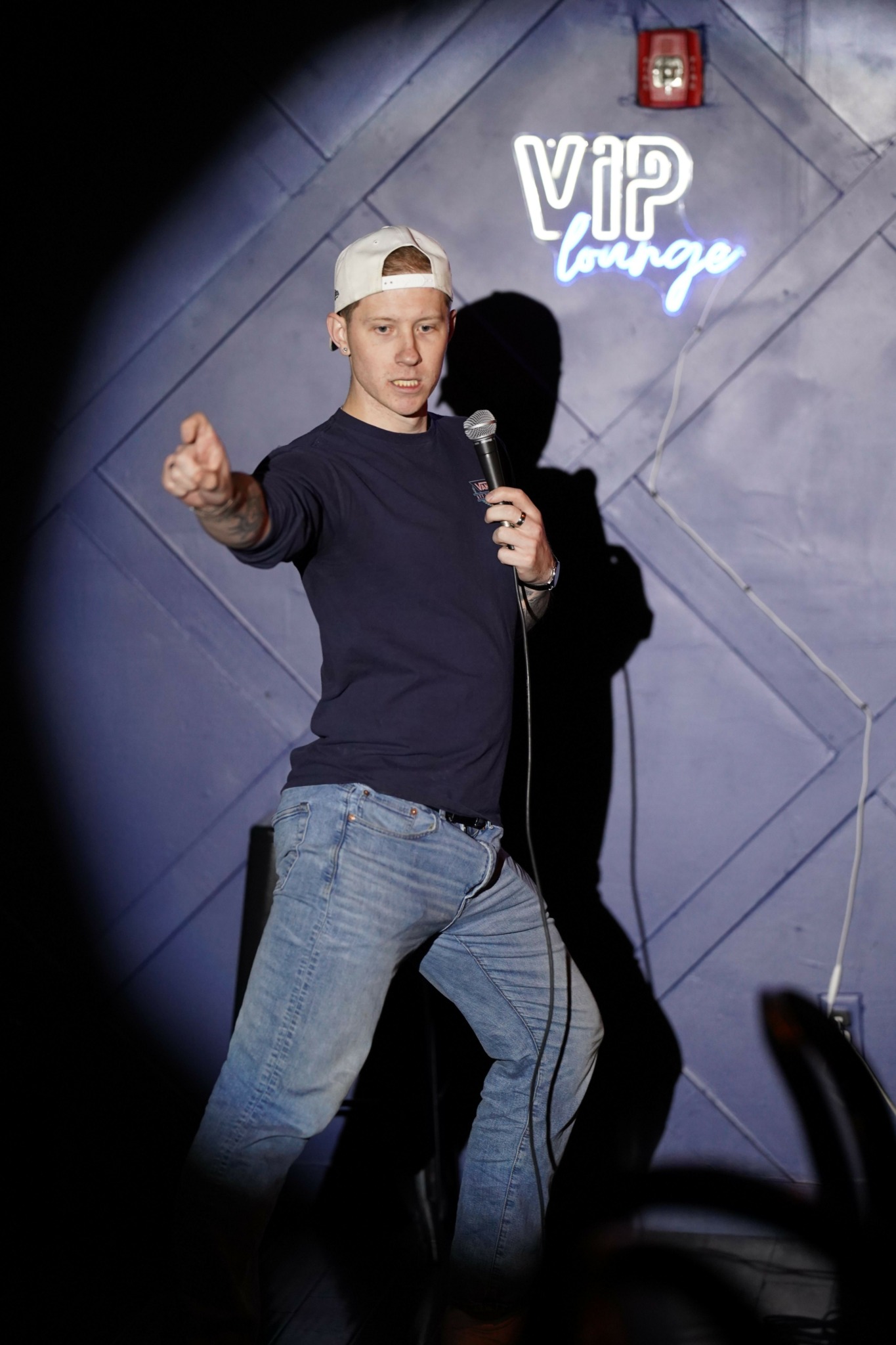
Awesome – so before we get into the rest of our questions, can you briefly introduce yourself to our readers.
Standup comedy has a low barrier for entry—anyone can get up on a stage and tell jokes. Setting yourself apart from the competition is another story entirely. A lot of people want the same thing you do, and not all of them are going to help you along the way.
I accepted this early on, choosing to seek out the people who genuinely wanted to help and refusing to let anyone who simply wanted to ridicule—or, in some cases, actively hinder my efforts—get to me.
I’ve been fortunate to meet fellow comics who work hard and share my vision for comedy. I wouldn’t be where I am without them.
I’ve also met some people whose advice I didn’t take, simply because I refused to accept what they were saying. When I first started, I was told by many, “Your first year is going to suck.” I won’t allege that any of them meant this maliciously—I’m sure some were trying to tell me not to be too hard on myself. But I refused to buy into that rhetoric for one reason:
If I listened to it, I’d be okay with sucking my first year… and then I would suck my first year.
I wasn’t okay with that. So I wouldn’t accept it.
I believe positive visualization and constructive introspection are crucial to success in any area of life. Even if you don’t succeed the way you hoped, at least you didn’t hand yourself an excuse not to give 100%.
I believe this mindset is a huge part of what’s helped set me apart and why people are often surprised to learn I’ve only been doing standup for a year—a year that has definitely not sucked.
I started my own show and sold out 15 events. I didn’t know how to market or do graphic design, but I learned—because no one else was going to do it for me, and I refused to allow myself to suck. It just isn’t an option. I know I’ll look back someday and say, “Wow, I didn’t know anything back then,” or maybe, “I’ve come so far since that.” But I’ll say it with fondness, not embarrassment.
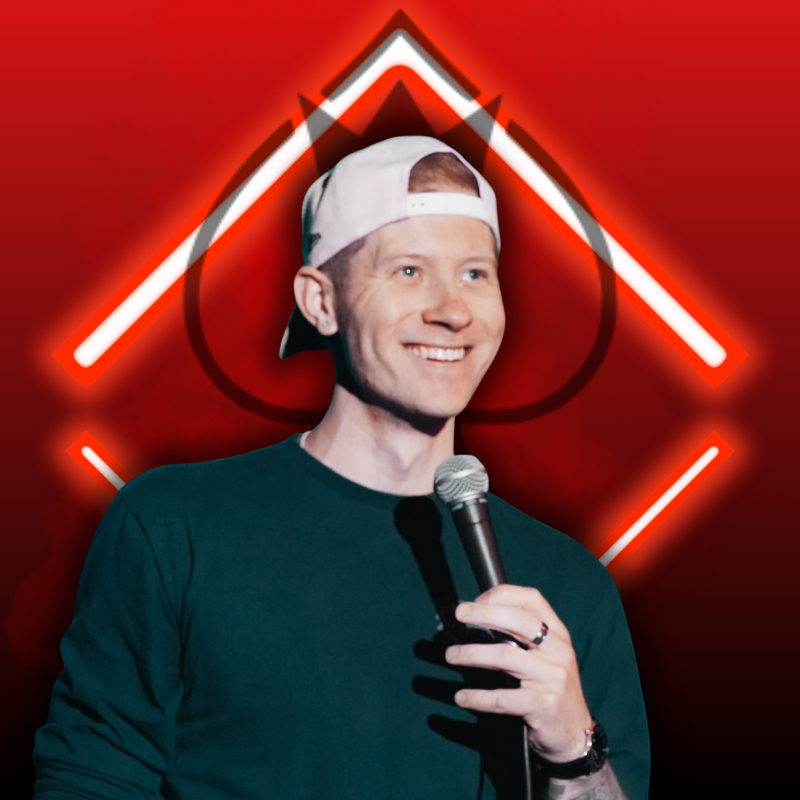
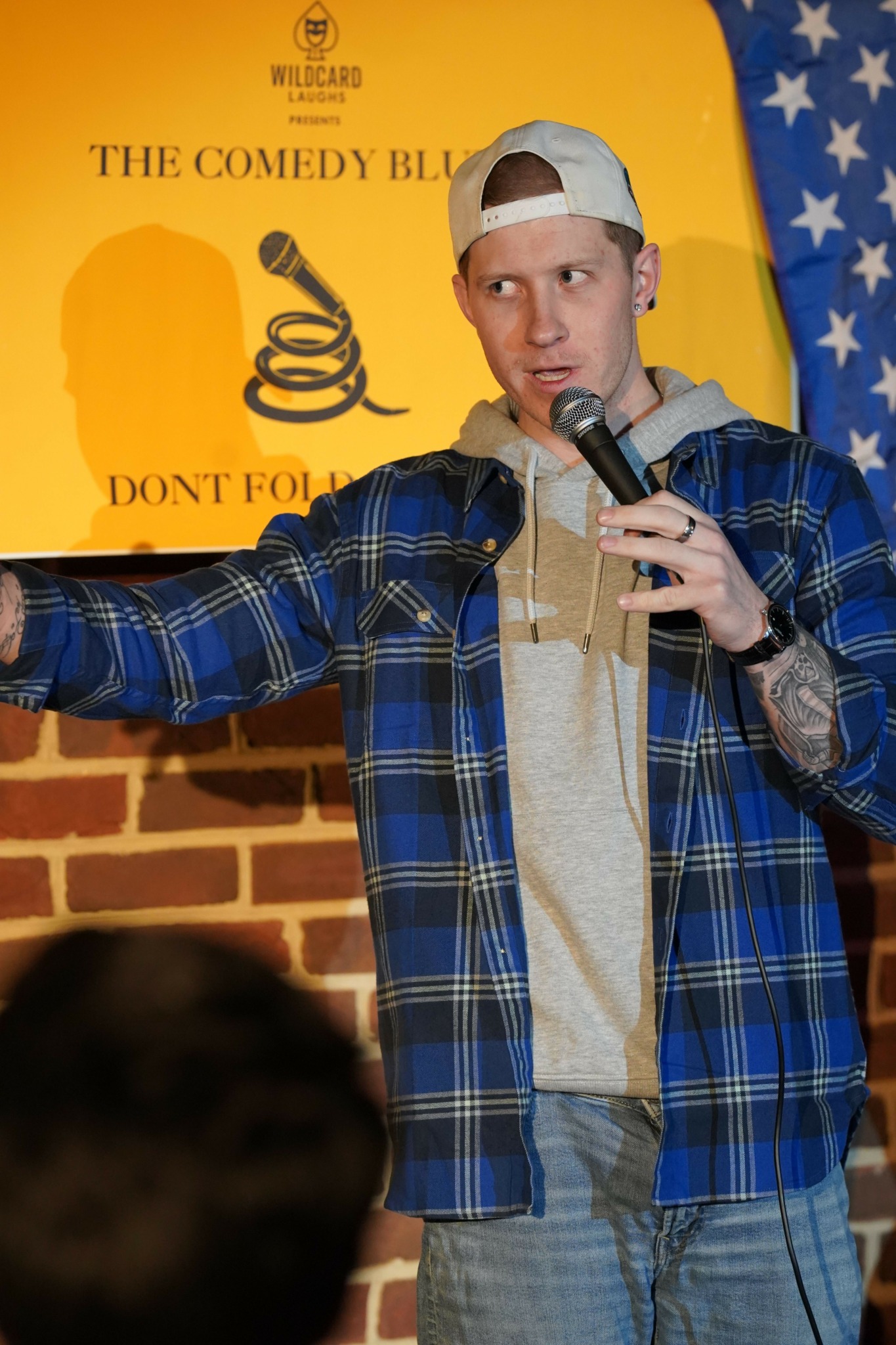
I’m proud that I’ve created a personal brand—small and modest as it is—and that I started a production company, Wildcard Laughs, that’s growing at a rate I never expected. How many one-year comics can say that? I’m sure there are many, and I’m sure there are many that have been far more successful than I have, but I’m proud that I’ve quickly established myself in my local community and that I’m starting to push outwards.
I can’t take all the credit, though. I’ve had help. I’ve found mentors in the comedy community, and I definitely wouldn’t be where I am without them. Finding a supportive group of peers and mentors in whatever community you’re part of is unbelievably important for success.
As a comic, I always approach things from the angle of “The audience comes first.” I don’t care if the comics loved the joke—we can be some sick and twisted bastards sometimes. If the audience didn’t like it, it needs more work. As I often say at my shows:
“Thank you for coming out tonight to support live comedy! Comedy is really hard in an empty room. If you want to see what that looks like, come by my bedroom later. Anyone. Please. I’m lonely.”
My goal as a live performer and a producer is to give the audience a show they’ll never forget—to return the love I feel from them just for being there. Wildcard Laughs would be nothing without its Wildcards—the people who show up and laugh.
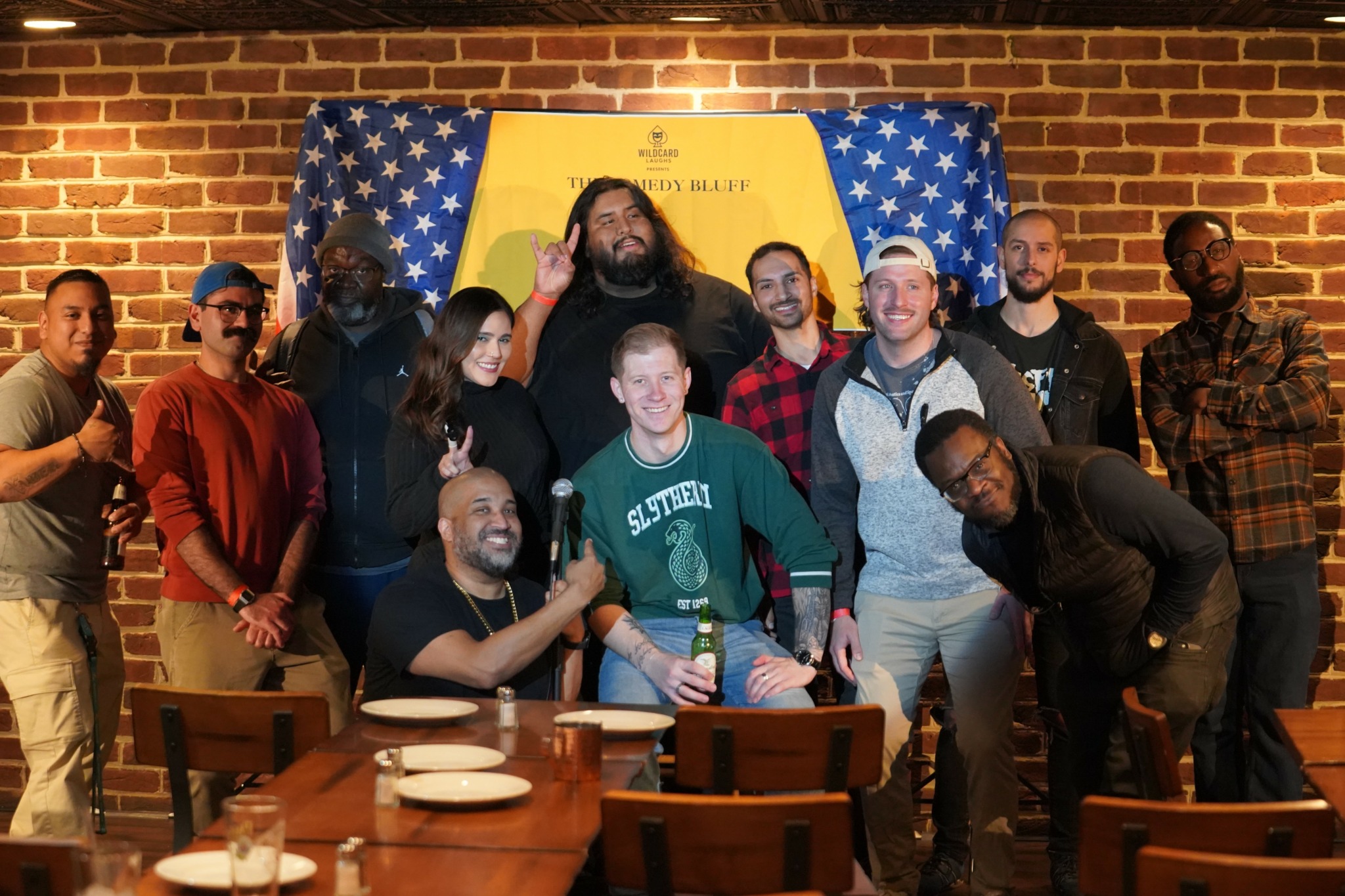
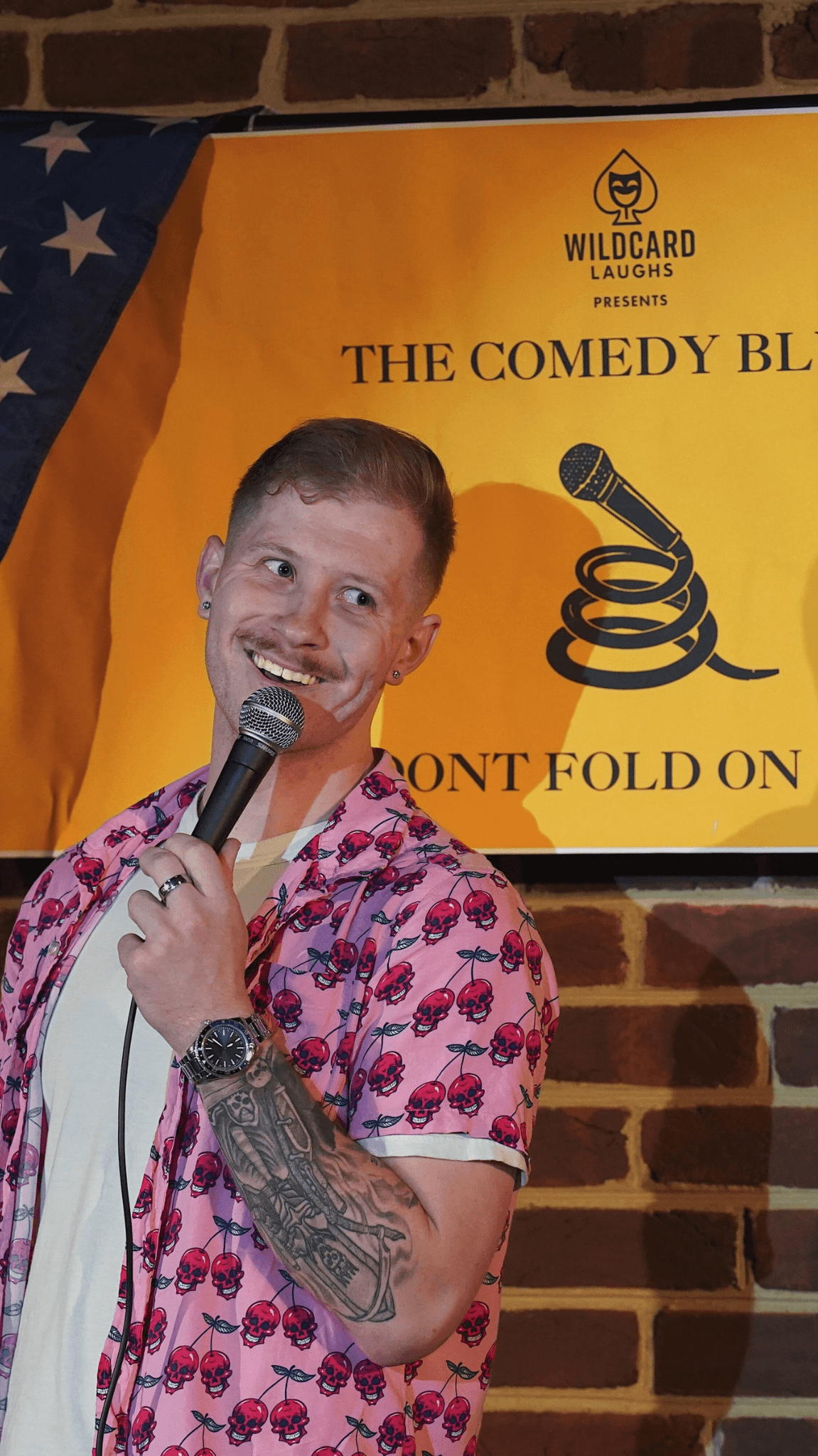
Do you think there is something that non-creatives might struggle to understand about your journey as a creative? Maybe you can shed some light?
I think non-creatives often struggle to understand creatives because of a preconceived notion: “It’s all just luck. How can you be sure you’ll make it?”
As a creative, I don’t view it as luck. It’s work—a lot of very intentional work over a long period of time that builds toward the goal you’re striving for. Some people reach it sooner than others, so yes, luck can play a part. But it’s not the deciding factor.
“What about the people who never make it? Did they just not work hard enough?”
It’s a fair question, and I think it comes with a hard answer. They may very well have worked hard enough—but they may not have worked smart enough.
Did they ever stop to ask what wasn’t working?
Were they brutally honest with themselves?
Did they leverage every available outlet for exposure—social media, email lists, radio stations, networking events, meeting new people, pitching their ideas to anyone who stood still long enough to listen?
Did they take time to learn the skills they didn’t enjoy but that would help them succeed?
I don’t like 80% of what goes into making a show happen, but I love 100% of the outcome.
I think this mindset is easy for non-creatives to dismiss as “delusional” or “overly optimistic,” but I don’t understand why it’s treated any differently than someone wanting to be a doctor or a lawyer. People are willing to work for years to earn those degrees and climb the ladder in their profession—and I respect that completely. But if that’s considered reasonable, then why is it unreasonable for me to apply the same work ethic, the same discipline, and the same long-term commitment to my creative field and expect meaningful results?
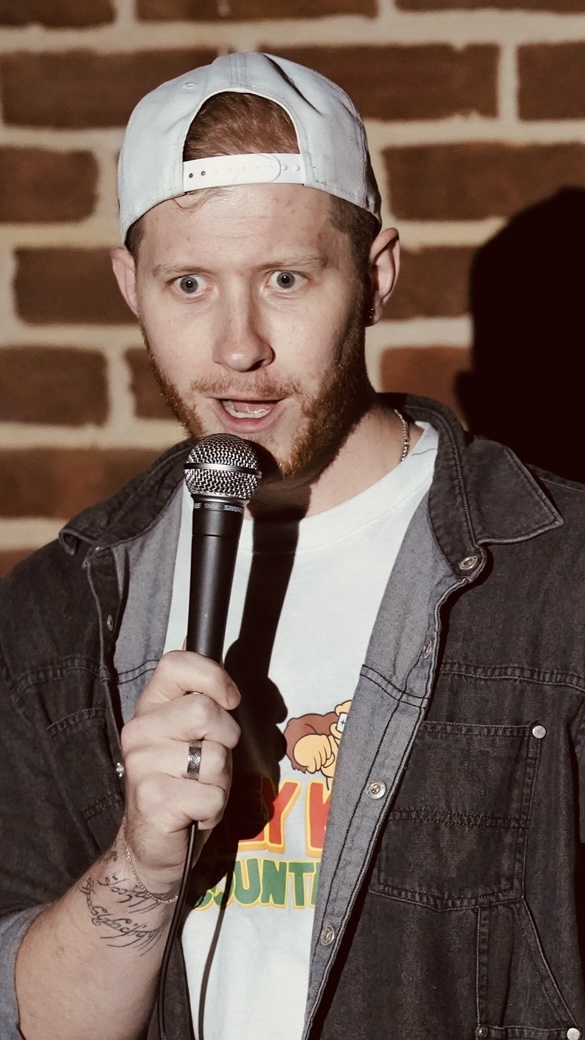

In your view, what can society to do to best support artists, creatives and a thriving creative ecosystem?
I think society is already supportive—but people want real, genuine, meaningful art.
I’m a firm believer that it’s never the audience’s fault. It’s not their job to think I’m funny; it’s my job to make them laugh. Sure, sometimes people just won’t like me or my jokes, and that’s okay. Not all art is for everyone. But chances are, someone out there will connect with what I do. As a creative, it’s my job to find those people and give them the best version of my craft that I can.
I believe creating a thriving creative ecosystem starts with recognizing that it’s not about me. I get to do what I love because of them—the people who show up, who listen, who give their time and attention. They deserve the best I can give.
I’m not always at my best, and that’s okay. I’m human. But what I can never do is blame my off nights, my imperfections, or my shortcomings on the very people I hope will support me.
Contact Info:
- Instagram: @noahspadecomedy
- Other: Email: [email protected]