

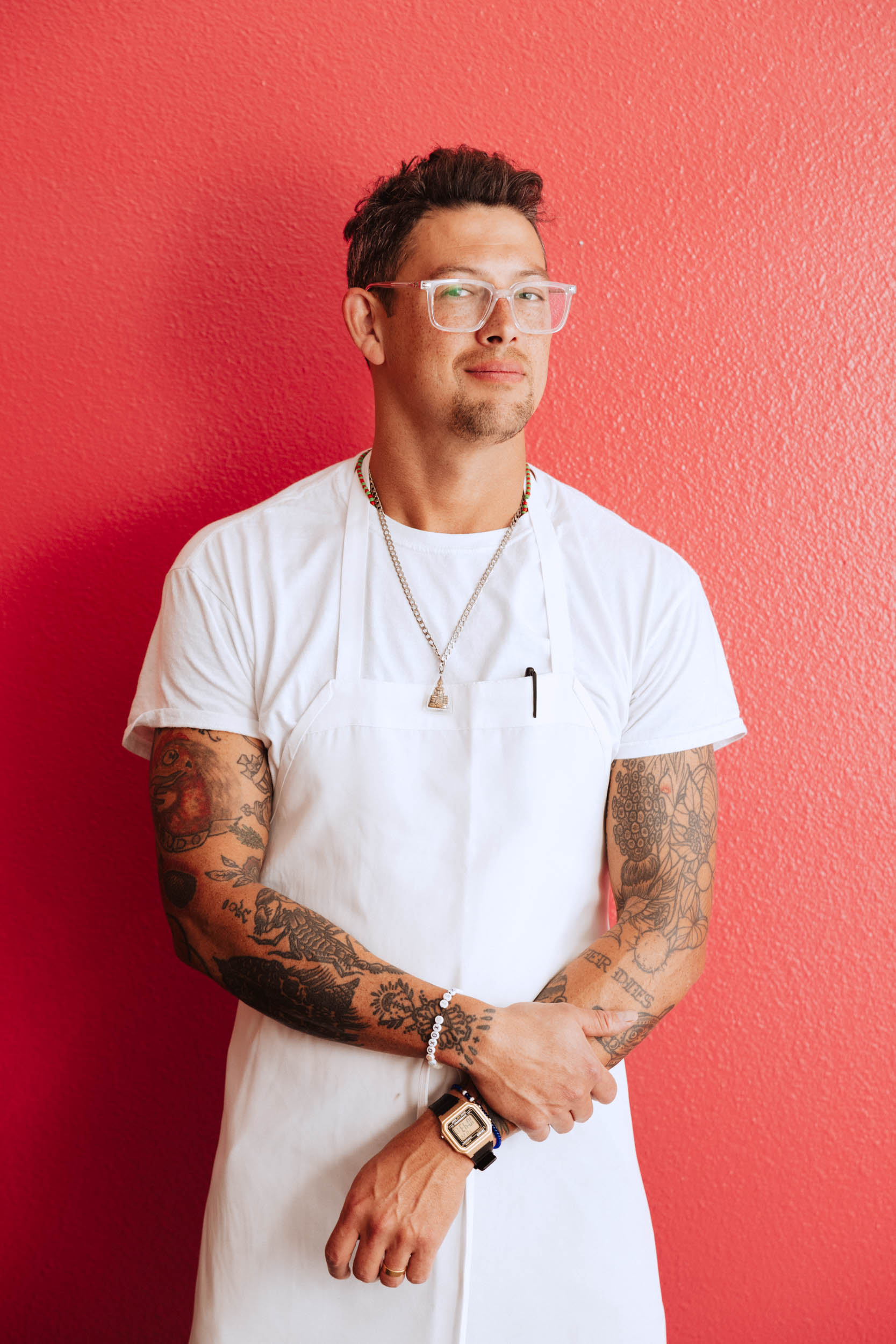

We recently connected with Nikolas Ramirez and have shared our conversation below.
Nikolas, thanks for joining us, excited to have you contributing your stories and insights. Being a business owner can be really hard sometimes. It’s rewarding, but most business owners we’ve spoken sometimes think about what it would have been like to have had a regular job instead. Have you ever wondered that yourself? Maybe you can talk to us about a time when you felt this way?
I think at the heart of this question is the classic “grass is greener” idea. You spend your whole career climbing — putting your life into something you care about, proving yourself, running teams, getting that steady paycheck — and somewhere along the way you start thinking, “I want to do this for myself. I want to call the shots. I want to fix the things I disagree with.”
And I don’t think this is rare. I think most people, especially in hospitality, eventually hit that point.
Then one day you actually get the chance. You open your own place. You become the owner. And almost immediately you realize: yes, you get to make all the decisions… but you also inherit all the weight. Every problem rolls uphill directly to you. Every gap, every cost, every crisis — that’s yours now.
Sometimes I do think about how nice it would be to just take a salary again. To have a job where the stress stays at the door when you go home. To not carry every little thing on your shoulders. There are definitely days where that sounds really, really nice.
But at the same time, owning a business lets you take a real risk — one that actually means something. You get to create the culture you believe in. You get to build something from scratch. You don’t report to anyone. And there’s a freedom in that that’s hard to describe unless you’ve lived it.
Still, the freedom doesn’t mean you don’t ever feel trapped. There are days where I feel genuinely claustrophobic — like I can’t leave, like the business owns me. I think a lot of owners feel that, but we don’t really talk about it.
And in our industry, that pressure can get dangerous. Hospitality is full of people coping with drugs, alcohol, burnout, mental health struggles. I’m no exception — I leaned on alcohol more than I should have, and for the wrong reasons. It took hitting a kind of rock bottom for me to step back and say, “I need a different perspective. There has to be another way to carry all this.”
What I learned is that there is another way. You can lay everything out clearly, strategize differently, ask for help, build a community of people who get it. You don’t have to swallow everything and keep it all inside.
And when you get through that claustrophobia — when you push past that survival mode — there’s actually this whole other layer of being an owner that’s beautiful. It’s not just about the food or the menu. It’s the innovation. The creativity in solving problems. The micro-goals that get you out of bed excited again. The character and resilience you build by facing something new every day and figuring it out.
I think that’s the part of ownership we don’t talk about enough: the creative engine that wakes back up once you’ve built enough support around yourself to breathe again.
It’s also important to remember that this is just one chapter of our bigger life. When you’re buried in the daily chaos of a restaurant — the staffing, the HR, the tiny fires every hour — you can get so zoomed in that you forget the bigger picture. And sometimes the most important skill is knowing when to zoom out. To see the whole journey. To understand that the highs and lows are all part of the same song. You can’t appreciate the bright notes without the darker ones.
So… am I happier as a business owner?
Yes — but not all the time, and not automatically.
The real answer is that it’s complicated. The grass isn’t greener. It’s just different grass. And you have to learn how to tend it without losing yourself in the process.
And I’m still learning that. Every day.
As always, we appreciate you sharing your insights and we’ve got a few more questions for you, but before we get to all of that can you take a minute to introduce yourself and give our readers some of your back background and context?
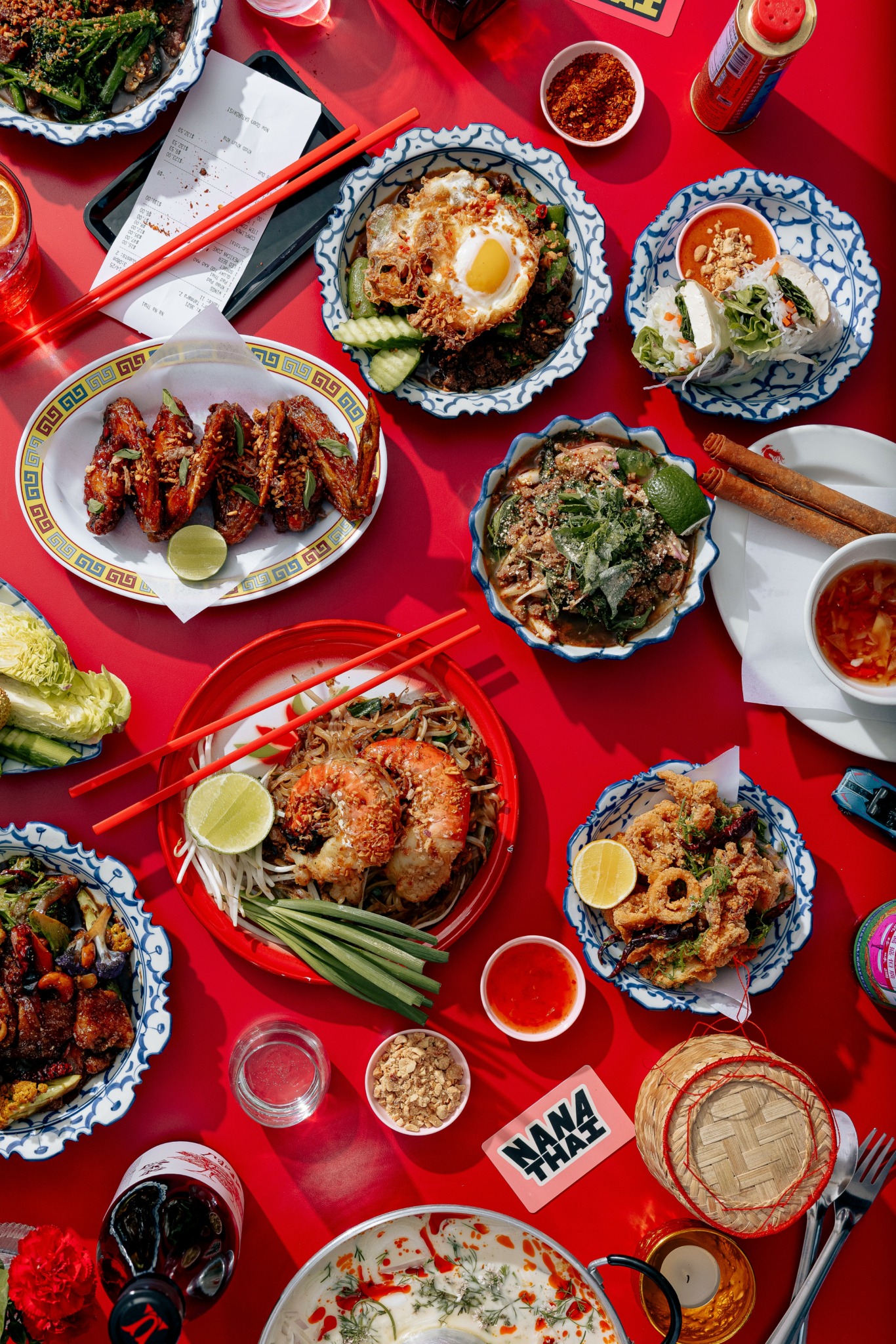
Our restaurant is rooted in Bangkok street food, but the story goes far deeper than that. My wife and I lived in Thailand for a little over four years, and during that time Bangkok became home in every sense of the word. Both of our children were born there. The food, the people, the rhythm of daily life — all of it shaped who we are. So when we came back to California, Thai food in the U.S. simply didn’t taste the same to us anymore. We didn’t know what we didn’t know until we lived there… and once we did, it became impossible to un-taste the difference.
When we started cooking at home, it wasn’t with the intention of opening a restaurant. Honestly, I only knew how to cook five Thai dishes that our team in Thailand had taught us. That’s where we started — not with a business plan, but with nostalgia, curiosity, and a desire to recreate the flavors that had become meaningful to us.
Thai cuisine is deceptively difficult. A stall on the street might serve one main dish and a couple side dishes, so from a Western perspective you think, “How hard can it be?” But once I actually tried to recreate these dishes properly, I got humbled fast. Those ancient techniques, the layering of flavor, the balance of spice, sour, sweet, fat — it takes years, if not decades, to even scratch the surface of mastering it. That challenge is what pulled me in.
We learned very quickly that many traditional recipes aren’t written down; they’re passed verbally from chef to chef. So we’d call friends in Bangkok asking, “Hey, what was that noodle dish under the BTS station by your old house?” And then we’d go down a rabbit hole trying to track down someone who still knew how to make it. Eventually, that led us to the royal libraries and these old archives holding cookbooks from the last few centuries. That became our starting point — a compass pointing us back to the origins of these recipes.
Our mission became clear: Preserve the old-world Thai cooking techniques that are slowly disappearing.
We’re not Thai, which gives us an even greater responsibility to honor the culture, not reinterpret it for convenience. So we follow the traditional methods as closely as possible while sourcing from the best California has to offer — world-class farms, fishermen, ranchers, and producers.
We don’t allow modifications or substitutions. Not to be rigid or inhospitable, but because Thai food isn’t modular. If you remove the spice, you have to remove the acidity. Remove the acidity, you lose the sweetness balance. Before you know it, the dish becomes a bland version of what it was meant to be — and that’s simply not Thai food. We want every guest to taste the dish the way it was intended.
Everything we do — from the food to the beverage program — is designed to work together as a cohesive experience. Not trendy. Not fusion. Just honest Thai food made with deep respect, technique, and intention.
At the end of the day, our goal is simple: To preserve a dying art form, honor a culture that gave us so much, and offer something truly unique — something that tastes like the real Thailand.
How do you keep your team’s morale high?
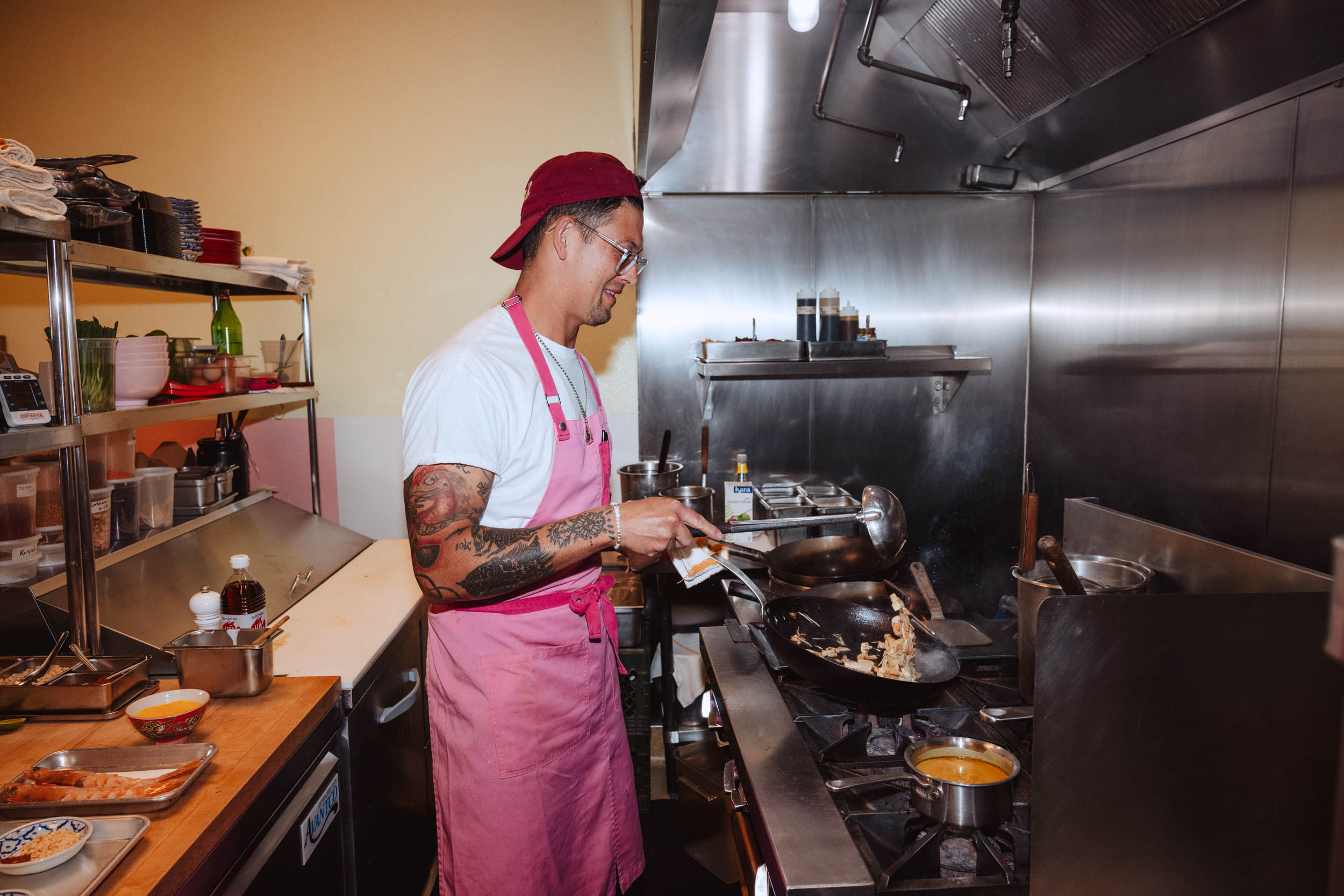
Honestly, managing a team in hospitality is the hardest part of the job. Cooking feels easy compared to this. And I say that as someone who has cooked in some tough kitchens. The truth is, leadership in this industry is often the heaviest lift—and it’s also the most important one.
I came up in the old-school, fear-based kitchen culture. The “dog-eat-dog,” bulldog sous-chef environment. You were constantly trying to prove yourself. You were set up to fail, pushed down, threatened, and controlled. Everything was punishment-based: “If you don’t do this, then…”
That was leadership.
And sure, people say, “iron sharpens iron.”
But I’ve learned that if every time you get rubbed, you crack—or you’re working in fear—there’s no polishing happening. You don’t grow. You don’t develop. You just survive.
Even early in my career, something inside me felt like: There has to be a better way.
For me, cooking has always been about intention. That X-factor that makes someone say their favorite meal is their grandma’s cooking. Why? Because there’s love in it.
And when a kitchen is filled with stress, fear, and intimidation, it is almost impossible to put intention into the food. You can see the difference—and you can taste it.
So when we opened our restaurant, I had to unlearn a lot of what I had been taught. I had to really examine why the industry had become the way it is. A lot of it goes all the way back to Escoffier and the brigade system. It created a hierarchy where the person at the top controls information as job security. They become the gatekeeper. They only teach enough to keep themselves safe.
Then you see the trickle-down effect:
The best line cook becomes the sous-chef because “he’s the strongest one.”
But nobody teaches him how to manage people.
So he micromanages, snaps, corrects, controls, becomes a tyrant—not because he’s bad, but because he’s scared and untrained.
And that’s how the cycle repeats—over and over.
It breeds resentment, it pushes out talent, and it produces another generation of jaded cooks with something to prove.
We wanted to break that cycle.
We were lucky to have partnered with Greg and Daisy at Bell’s, who were already attacking the big, systemic problems in the industry. That gave us a foundation to rethink everything—from communication to compensation to culture.
I also come from a high-level sports background. I played soccer in Romania, and I’ve always looked at teams through that lens. In pro sports, they treat athletes with respect—not because they’re soft, but because both sides know they need each other. It’s a partnership, not a dictatorship. And I think restaurants can learn a lot from that.
For us, high morale comes from a few core principles:
1. Respect, always.
You cannot build a healthy kitchen without it.
2. Create a culture that allows mistakes.
The worst thing a kitchen can do is demonize failure. That only teaches people to hide their mistakes—and then you can’t grow.
We do the opposite: we highlight mistakes, we talk through them, and we make them normal. Growth is impossible without them.
3. Leadership must go first.
We ask our staff regularly:
Where are our blind spots? What are we doing wrong? What did we miss?
Leading with vulnerability shows the team that honesty is safe.
4. Set clear standards and hold everyone to them.
Top to bottom, bottom to top. Standards don’t work unless they apply to everyone.
5. Make the team feel like partners, not labor.
We’re in this together. And when people feel that, the whole energy shifts.
At the end of the day, morale isn’t about hype or perks. It’s about creating an environment where people feel safe, respected, heard, and able to grow. If you can build that, the food gets better, the service gets better, and the entire restaurant becomes a place people want to be.
Can you share a story from your journey that illustrates your resilience?
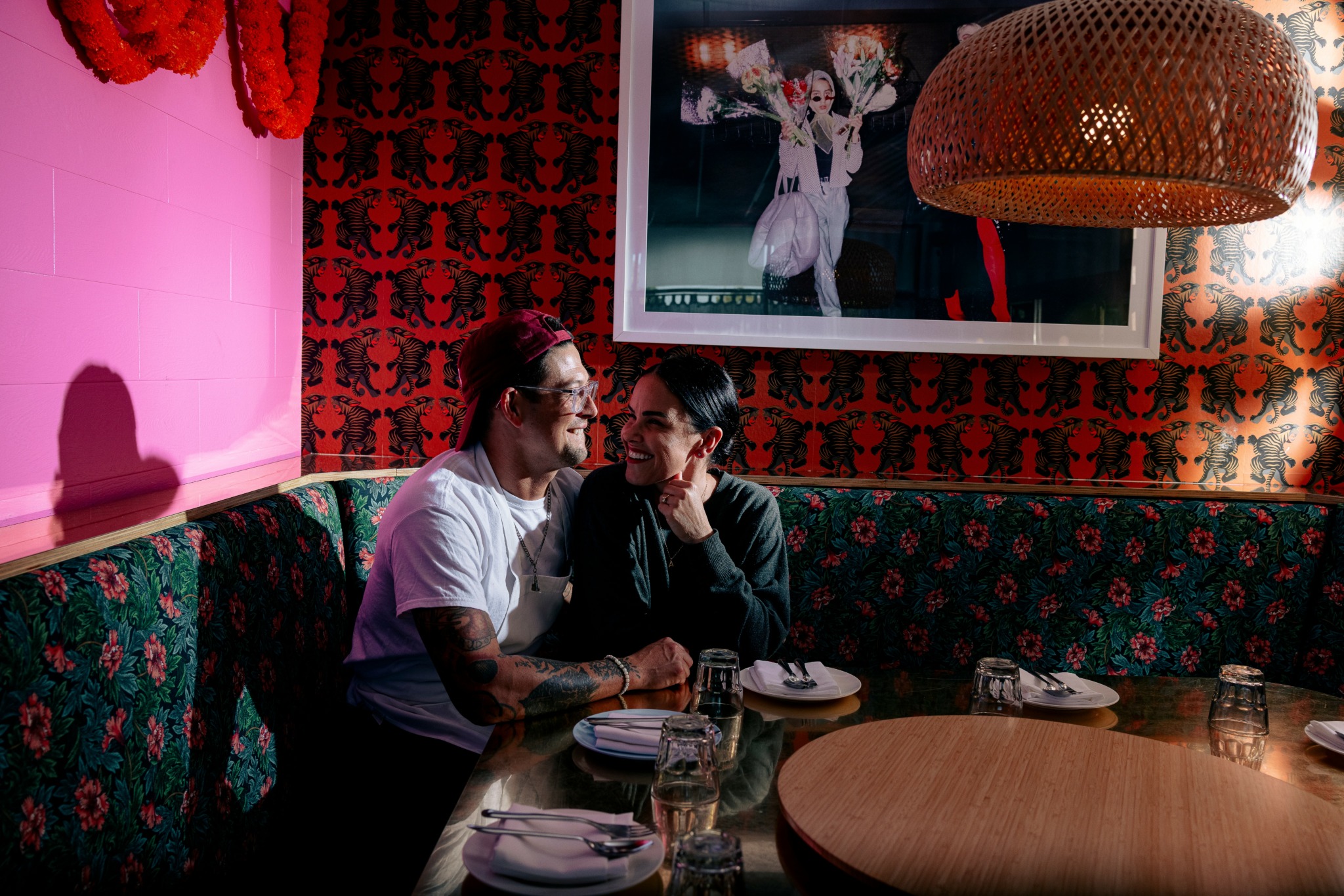
I didn’t plan on sharing this story, but I think it’s important—now more than ever. We work in an industry that’s incredibly demanding, and the culture often normalizes mental health struggles, alcohol, and drugs. It’s baked in, accessible, and easy to fall into. For me, it started long before alcohol became a problem. I learned to compartmentalize early—check your emotions at the door, perform, be consistent, cook with intention. I thought I was good at my job because I could control myself, because I could deliver under pressure.
Years went by, and I thought I had it all under control—until a turning point forced me to face the truth. I found myself at rock bottom, confronted with the reality that everything I had built—my family, our home, our business—could have vanished in a blink. Luckily, it was only a stark wake-up call.
In that moment, I realized I had a choice: either keep making the same mistakes, or take control of my life. I chose the latter. I committed to repairing myself, learning emotional regulation, and finding alternatives to drinking. That was the hardest work I’ve ever done—healing physically, mentally, and emotionally—but it led to profound growth. I became a better father, partner, and leader. I learned that discipline, honesty with myself, and facing uncomfortable truths were far more powerful than any shortcut.
This journey didn’t just change me personally—it changed how we run our restaurant. It made me a better leader and helped me foster a culture where repair is possible, where people feel supported, and where mistakes are opportunities for growth rather than shame. Our business became more resilient because I became more resilient. We’re making better decisions, supporting our team in healthier ways, and showing by example that it’s possible to bounce back from hard times.
Resilience isn’t just surviving—it’s learning, repairing, and rebuilding. And I’ve learned that the hardest times can lead to the most meaningful growth, both personally and professionally.
Contact Info:
- Website: https://www.nanathaisyv.com
- Instagram: https://www.instagram.com/na_na_thai/?hl=en
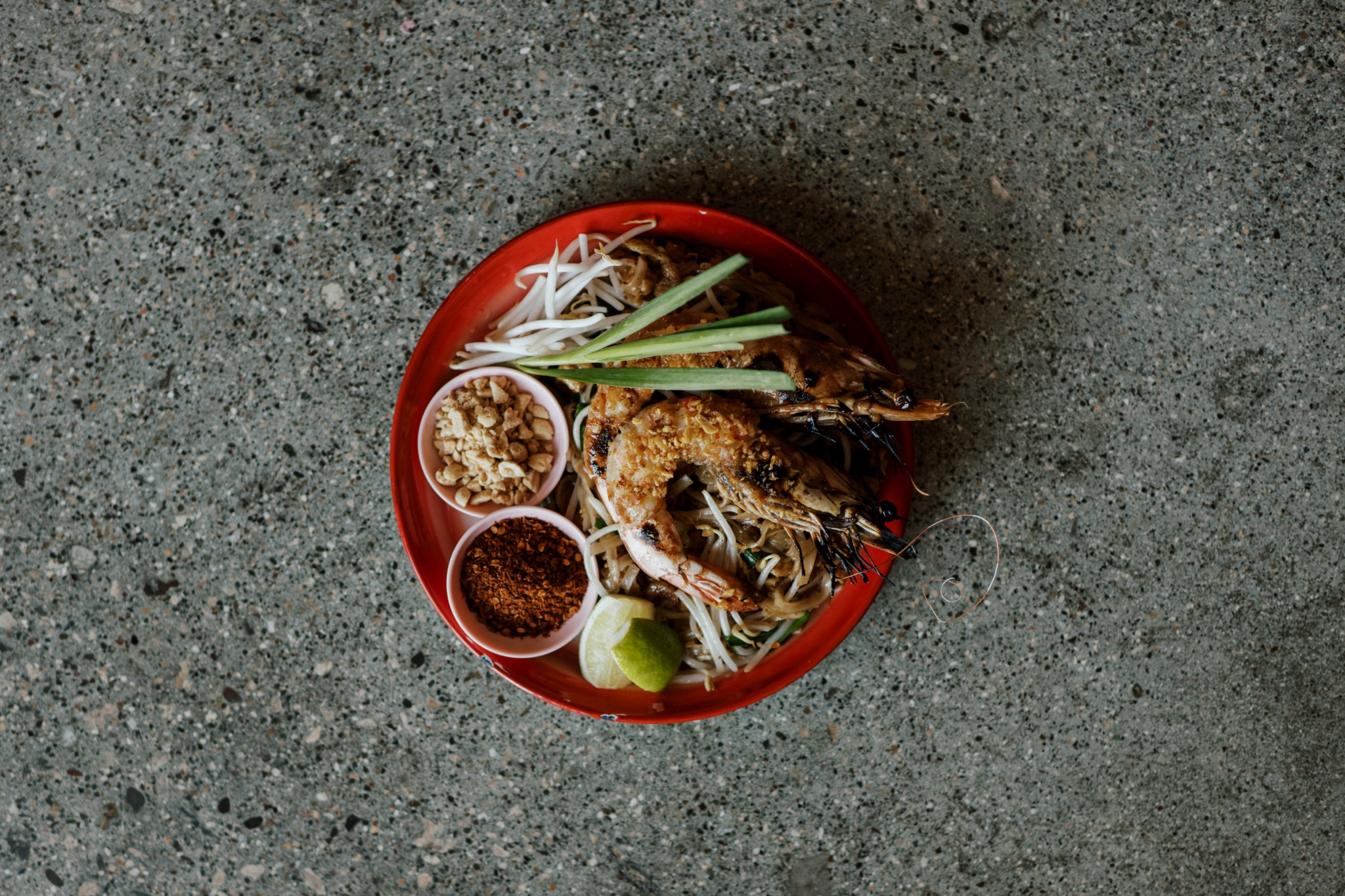
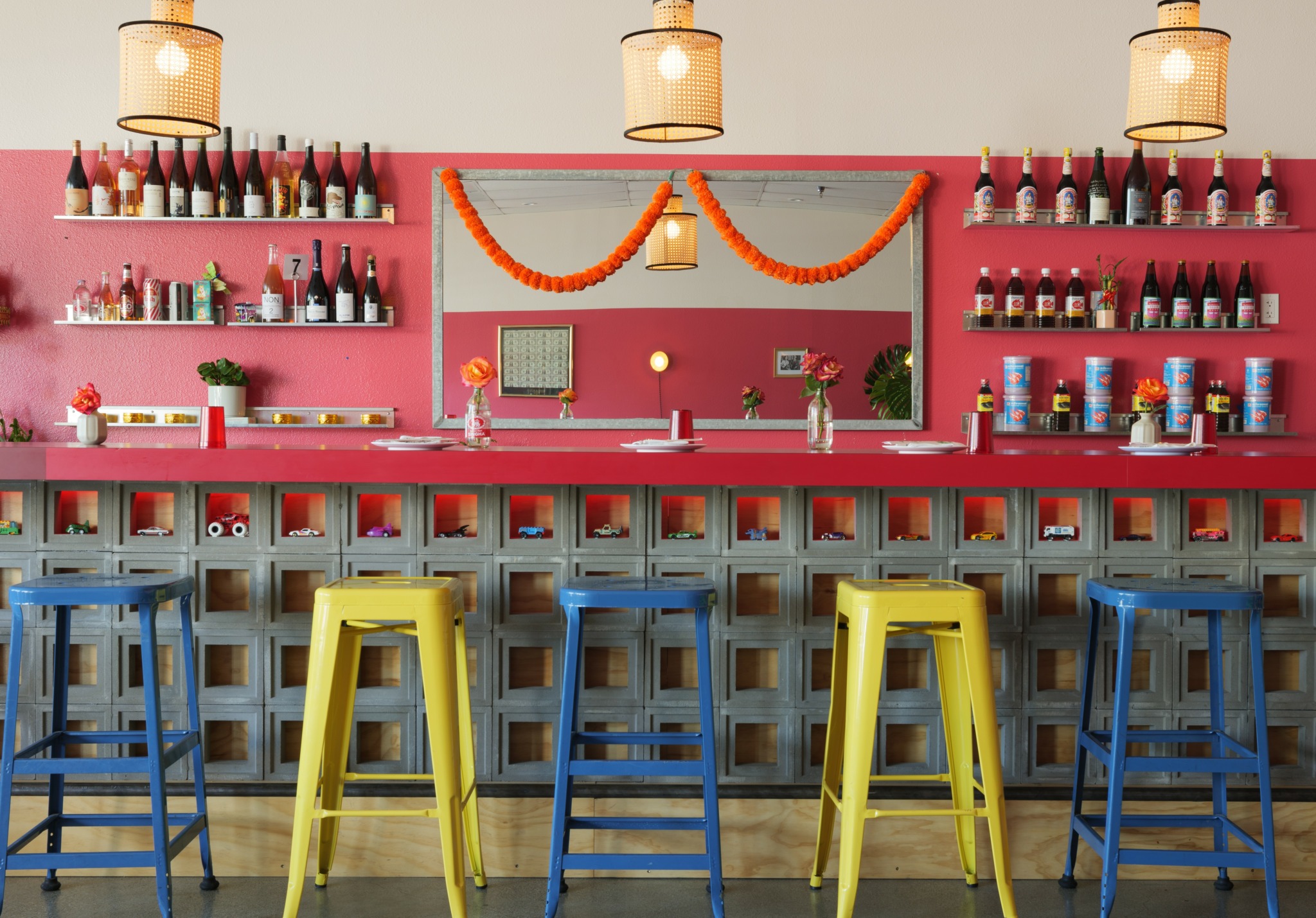
Image Credits
Silas Fallstich, Anya McInroy, Bryan Sparks, Diego Bautista, Carter Hiyama, Matt Conant