



We caught up with the brilliant and insightful Nigel Hall a few weeks ago and have shared our conversation below.
Nigel, thanks for taking the time to share your stories with us today Has your work ever been misunderstood or mischaracterized?
The performing industry is notorious for putting artists into boxes, especially artists of color. Staying within those confines is equally comforting and limiting. As a preface, I grew up in a predominantly white city with a white mother. My entire existence felt like it was to assuage the comfort of others and diminish my own self. That’ll come into play later. As an artist I started out my performing training as a flute performance major in college. In high school, I was told by a voice coach that my voice needed more time to develop, so I should “take a pause” before pursuing a career in musical theatre. Naturally, hearing that from a professional left me feeling gutted, but I felt they knew what was best for me. Instead of going to school for musical theatre, I went for flute performance and music education. I cherish the time and training I’d received for those two years, but the burnout became insurmountable because I was not aligned with my true purpose. My third year of schooling, I took a leap of faith and decided to transfer schools and states to start my musical theatre training. Immediately, I felt more like my authentic self. During my tenure in school, I was told that the ensemble was the furthest my career would develop, and that I should continue my dance training because that would be the only way I would work. Once again, I believed them. It had gotten to the point where I was almost expelled from my program because I wanted to take a principal role outside of school, but the faculty “needed me” because they were doing a show with a gospel choir and I was the diversity they needed to sell it. So I acquiesced. This mindset continued throughout my college years and permeated into the first five years of my professional career, as well. I believed that my value in the industry lied solely in dancing and fulfilling a tokenized track, so I would limit the auditions and shows I would take. It wasn’t until I signed with my first agents that I was told my worth as an actor was more multi-faceted than I was conditioned to believe. I began to break the mold I had placed upon me and started auditioning for principal roles/covers, and the response was positive. I was genuinely shocked that people were able to perceive my acting and singing abilities as desirable. Once I started studying with the Matt Farnsworth Vocal Studio and started my acting training with Joan Rosenfels, they’d collectively reinforced the belief that I was a true triple threat, and that my value as a human directly correlated to my self-esteem as an artist. I was so accustomed to being seen as a black artist that I couldn’t imagine myself as anything else. I would apologize for taking up space, and would minimize myself to make sure others in the room felt comfortable with my existence. This is the plight of a black performer: not othering or demeaning ourselves for the sake and comfort of others. The trauma I carried with me through those two experiences in my formative years, as well as the trauma I face going through this world as a black man, inhibited my ability to truly embrace my full potential. Once I was able to flip that script and work through said trauma, my career has blossomed. I realized that the reason I held so staunchly onto musical theatre is because I felt the incessant need to prove them wrong. Musical theatre no longer felt like a passion, but a prison. Now, I treat musical theatre as work, but have delved into voiceover and TV/Film life because that is where my true passions lie. I audition and book roles outside of my race. I am not simply a dancer, but am a fully realized human being containing multitudes with a skillset that reflects a true well-rounded performer. I fight every day to make sure my students are equipped with the tools to fight their trauma and embrace their bliss.

Nigel, love having you share your insights with us. Before we ask you more questions, maybe you can take a moment to introduce yourself to our readers who might have missed our earlier conversations?
I am a midwestern boy by heart with a New-England mindset. I started out in show choir and band, and didn’t start my musical theater training until high school. Into The Woods was my first musical, and Brian Stokes Mitchell was is my inspiration and role model for this biz. Nowadays, I work with a company called ReelArc to build my portfolio by creating high quality TV/Film scenes and sizzle reels for social media and marketing purposes. What sets me apart is my business wherewithal, the authenticity with which I approach all of my processes, and my competency in multiple disciplines within the industry. I am proficient in voiceover, tv/film, musical theatre, and commercial work. I truly believe we should be as well-rounded as possible, and my skillset reflects that. I am proud of the headway I’ve made in the voiceover and TV/Film industry over the past year. I have been in for some very high profile projects, and cannot wait to see what the future has in store for me. I also cannot thank my team enough for their unyielding support. My agents (CESD) and my manager (Vision Entertainment) have been a united front, and continue to help me elevate my craft and a my expectations.
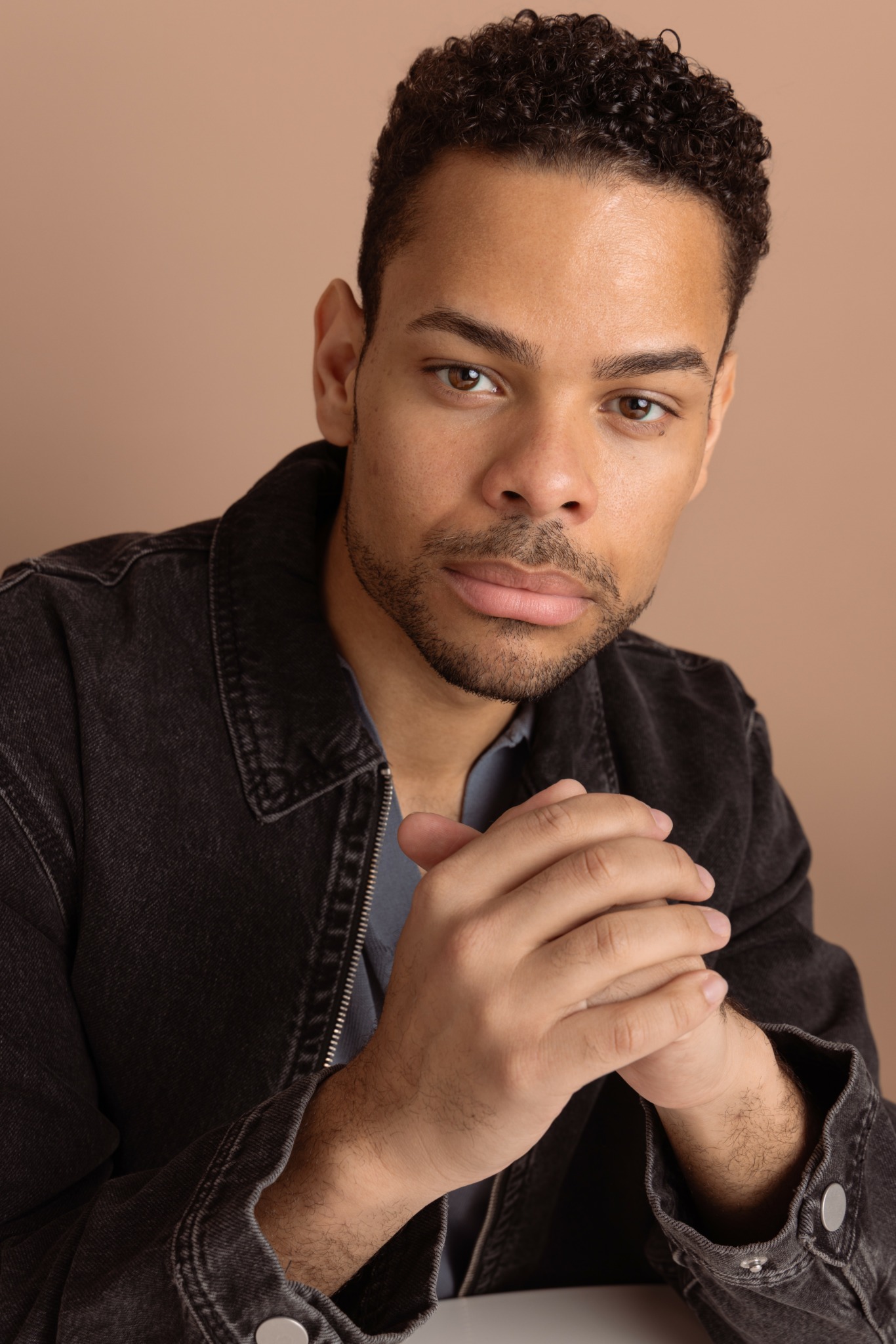
We often hear about learning lessons – but just as important is unlearning lessons. Have you ever had to unlearn a lesson?
A huge lesson I had to unlearn was saying yes to everything. This is something we, as performers, have had beaten into us in all facets of training. You say yes to everything because you never know what that job will lead to or not wanting to seem ungrateful. That is the most toxic belief that can be spread. There were many times in my career that I would say yes to projects that were not forwarding my career, only to miss opportunities that would’ve been far more lucrative. This happened to me multiple times before I was able to break that cycle. On the same vein, learning to speak up for what is needed/what doesn’t work is crucial. I had a choreographer who, when I was about to ask a clarification question, said “I don’t have time for you. Figure it out.” Following that moment, the issue I was going to bring up ended up with someone getting injured. I learned after that to make yourself heard. We are conditioned to believe that we have to be “yes” people or we’ll be branded difficult to work with. But the people who respect you as a performer and a human will admire your agency, and those who don’t aren’t people you really want to work with anyway. Agency as a human and a performer is paramount.

Is there something you think non-creatives will struggle to understand about your journey as a creative?
I think what most non-creatives have such an issue grasping is the amount of time we spend working withOUT getting paid. Prep work is 90% of the job, and it’s especially true for me. Learning the lines, prepping the songs, reading the scripts, auditioning, taking class, networking, maintaining a social media presence, etc…are all prerequisites for this industry. I may submit 10 auditions before I book one voiceover spot, or get in front of a casting director four times before they start to trust me. We spend the majority of our days paying to play. I think they also struggle to understand that having a certain look does not allow for us to automatically book their shows. I cannot, in fact, call up Tyler Perry to get booked in one of his shows.
Contact Info:
- Website: https://www.nigeljamalhall.com/
- Instagram: nigeljamalhall
- Facebook: Nigel Jamal Hall


Image Credits
Dance credits: KamerashootsNYC
Headshots: Benji Rivera and The Fearless Life