
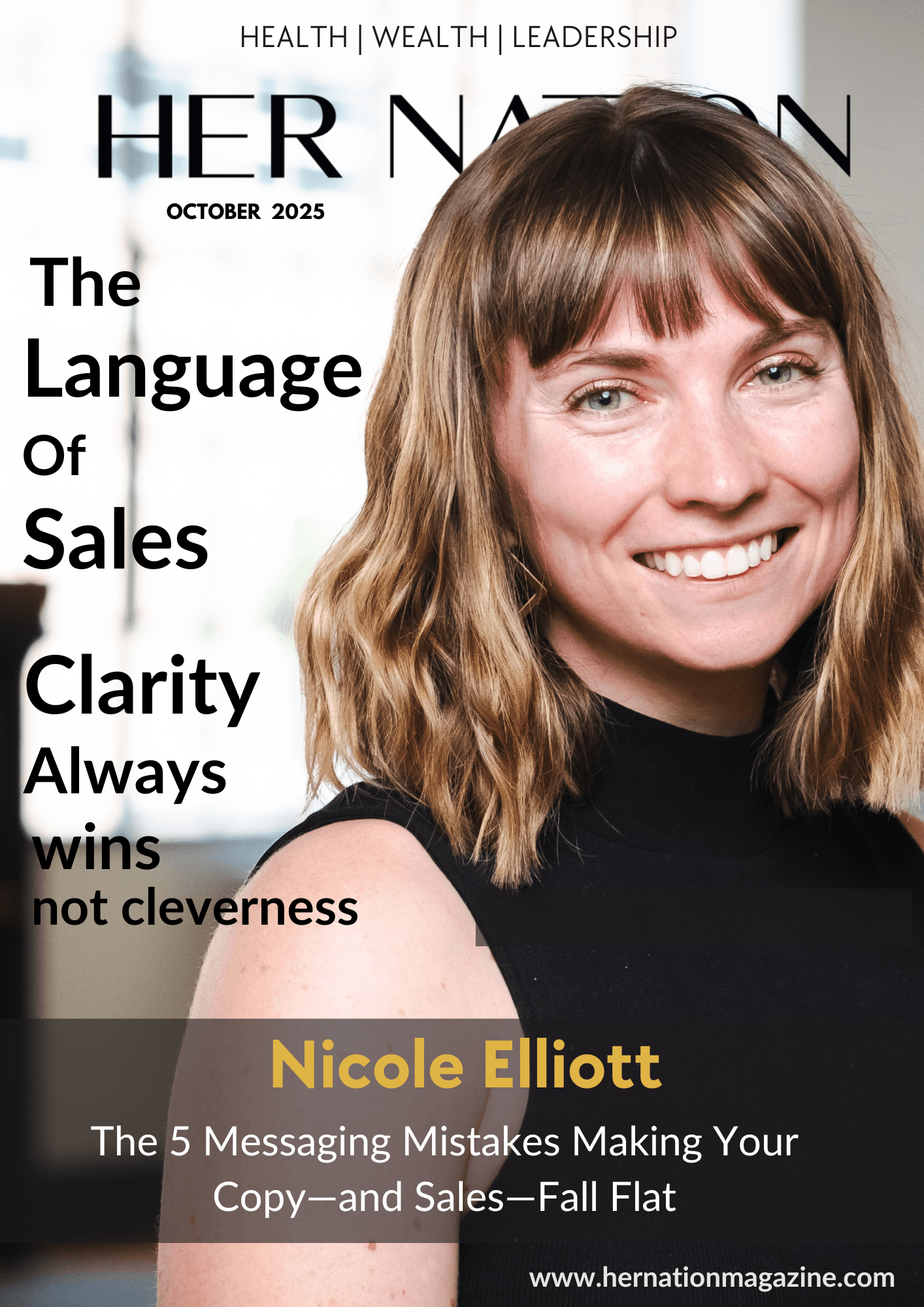
We caught up with the brilliant and insightful Nicole Elliott a few weeks ago and have shared our conversation below.
Hi Nicole, thanks for joining us today. Are you able to earn a full-time living from your creative work? If so, can you walk us through your journey and how you made it happen?
Yes, I have — though it still sometimes surprises me when I say it out loud. I’ve been earning a full-time living from my creative work for close to a decade now, with plenty of ups, downs, and plot twists along the way.
Oddly enough, I didn’t start in copywriting at all. My background is in academic writing, which quickly taught me two things: I love language, and I absolutely do not want to spend my life writing things nobody actually wants to read. The academic world felt dry, stuffy, and drained of personality — and I burned out fast as a result.
From there, I took a bit of a scenic route. I moved into translation work, then pivoted to teaching English as a Second Language, which allowed me to live and work in places like Peru, Spain, South Korea, Sweden, and the U.S. Teaching and living abroad deepened my fascination with language, culture, and human behavior, but I still felt like something was missing.
Copywriting turned out to be the missing piece. It gave me a way to merge my love of language with my interest in psychology, persuasion, and genuine human connection — and, perhaps most importantly, to write things people actually wanted to engage with. Once that clicked, I decided to take the leap and open my own copywriting business.
That said, it definitely wasn’t smooth or successful from day one.
Learning how to write strong copy wasn’t the hardest part; my real challenge was learning how to run a business. With zero background in business, I was suddenly wearing all the hats, and the learning curve was steep.
In the early years, I took on a string of odd jobs to keep the lights on while I figured things out — substitute teaching at a high school when I didn’t look much older than the students (0/10, do not recommend), working as a sample girl at a fancy grocery store (7/10, do recommend — free leftover cheese) and saying yes to far too many underpaid or misaligned projects. I made every classic mistake: not marketing myself because I was a “creative,” working without contracts, and accepting work from anyone willing to pay me.
The real turning point came a few years in, when I stopped seeing myself as “just” a freelancer and started acting like a business owner. That shift meant learning how to market more directly, build relationships, speak at events, show up in communities, write a consistent newsletter, and create offers that reflected both my expertise and my values. Once I made that mindset shift, I was able to approach my work with more confidence and intention.
Could I have sped up the process? Absolutely. When I started, I didn’t know anyone else who was self-employed or working online — this was almost a decade ago, after all — so I had to figure nearly everything out on my own. With the benefit of hindsight, I would have invested in mentorship and community much earlier. But those years of trial, error, and experimentation also shaped how I work today and how I support my clients now.
Awesome – so before we get into the rest of our questions, can you briefly introduce yourself to our readers.
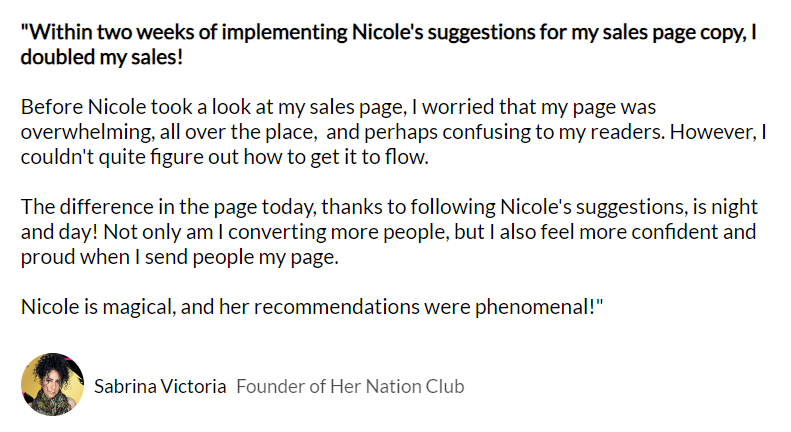
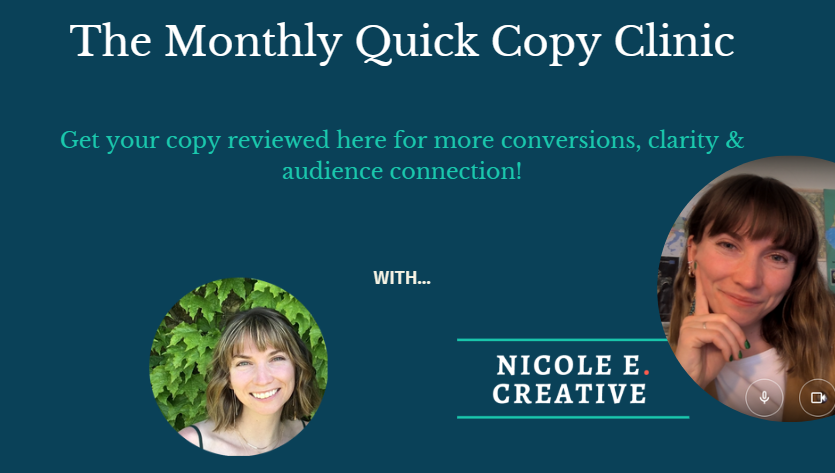
My name is Nicole Elliott, and I’m a conversion copywriter and messaging strategist who has spent the last decade specializing in human-sounding, non-salesy sales copy. Through my 3-Step Human-First Messaging Approach, I help clients turn fuzzy messaging into clear, compelling words that connect and convert — without the false urgency, sleazy tactics, or bad-car-salesman-y energy you’ve probably seen in sales copy before.
I primarily work with small business owners, founders, and industry experts who are excellent at what they do but struggle to articulate it clearly. They often have years of experience and nuance, yet their websites, emails, or sales pages don’t fully reflect the value they provide. I help translate that expertise into messaging that their audience immediately understands and connects with.
What sets my work apart is a belief that effective copy doesn’t have to be aggressive or gimmicky to sell. The strongest messaging respects the reader, reflects how real people actually think and speak, and prioritizes clarity and trust — rather than relying on exaggerated promises, manufactured scarcity, or formulaic tactics.
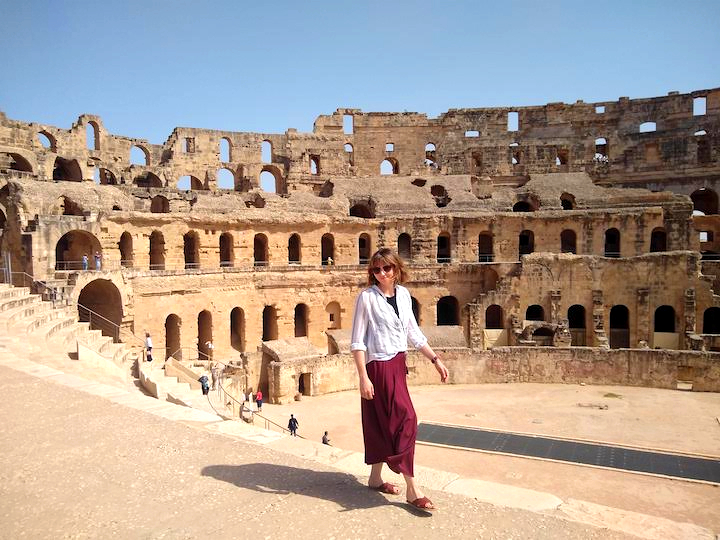
Outside of client work, I’m usually traveling (I’ve visited 100+ countries and lived in half a dozen), learning languages (I speak five languages conversationally), or occasionally teaching English as a Second Language. That ongoing curiosity about communication — across cultures, industries, and contexts — continues to shape how I approach copy, messaging, and strategy.
Let’s talk about resilience next – do you have a story you can share with us?
Early in my career, I was freelancing and slowly gaining momentum, but my business was still fragile and far from sustainable. I relied heavily on referrals, didn’t market myself really at all, and hadn’t really stepped into the role of a business owner. Things were moving forward, but mostly because I was letting them happen rather than steering them.
Then my father passed away suddenly in a tragic accident.
In the aftermath, everything stalled. I lost not only my biggest personal supporter, but also my ability to show up consistently for my work. I refunded clients instead of finishing projects, wrote off hours I’d already put in, and watched the progress I’d made quickly unravel.
To complicate things further, this all happened just before an overseas move to Sweden, a place where my husband had already relocated, where I didn’t know anyone, and where I suddenly found myself navigating grief, isolation, and work uncertainty all at once.
It took time to find my footing again. Therapy, distance, and perspective helped, but rebuilding didn’t happen overnight. Just as I was beginning to regain some stability, the pandemic hit and stripped away what little momentum I had rebuilt.
That second reset forced a different kind of response. Instead of scrambling or waiting for things to “go back to normal,” I made a conscious decision to really step up to the plate and take ownership of my business. This meant I stopped being passive. I clarified who I wanted to work with, how I wanted to show up, and what kind of business I actually wanted to run. And I began actively marketing myself, strengthening my messaging, building relationships, and owning the identity of a business owner — not just a freelancer who wrote good copy.
It hasn’t been a perfectly upward journey, but I’m still here nearly a decade later, which tells me I must have done something right!
We often hear about learning lessons – but just as important is unlearning lessons. Have you ever had to unlearn a lesson?
One of the biggest lessons I had to unlearn was the belief that I needed to be buttoned-up, restrained, and overly “professional” to be taken seriously.
I started working for myself relatively young, and, as a woman in business, I felt pressure to prove my credibility by minimizing my personality. I wore glasses I didn’t really need on consultation calls, flattened the natural inflection in my voice, kept my hands glued under the table, and stripped any hint of humor or personality from my website.
The irony wasn’t lost on me — I was a copywriter preaching authenticity as I wrote for clients while muting my own voice.
As my confidence grew in my skills and experience, that performance started to crack. Slowly, I let more of myself show up in my work. I wore vibrant turquoise Converse to networking events without second-guessing it. I started talking more honestly about the ups and downs of working for yourself. And my writing — on my website and in my newsletter — became more playful, more candid, and more me.
I even share stories now that my earlier self never would have dared to publish — like that time I crashed dramatically to the floor during my first-ever adult gymnastics competition while wearing a sparkly leotard (yes, complete with an embarrassing GIF).
What I learned is that professionalism doesn’t require erasing yourself. In fact, personality builds trust. People don’t want to work with a polished façade. They want to work with a real human. That lesson didn’t just change how I show up in my business; it shaped the kind of copy I write and the way I help my clients communicate, too.
Contact Info:
- Website: https://www.nicoleelliott.co/
- Linkedin: https://www.linkedin.com/in/nicole-elliott-copywriter/
- Other: The Anatomy of a High-Converting Sales Page (Free Guide!): https://www.nicoleelliott.co/salespagesthatsell