

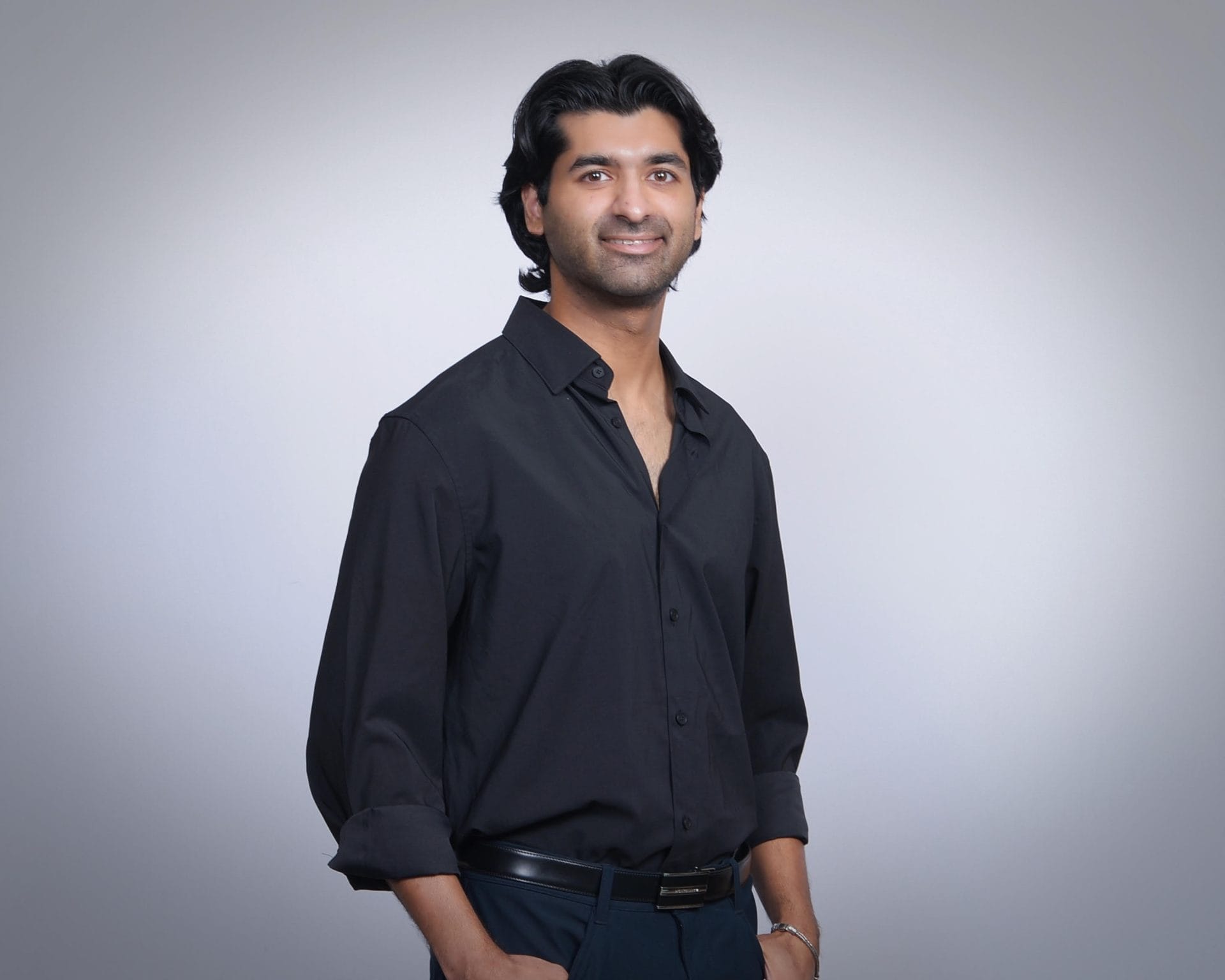

We’re excited to introduce you to the always interesting and insightful Neel Somani. We hope you’ll enjoy our conversation with Neel below.
Alright, Neel thanks for taking the time to share your stories and insights with us today. Alright, so you had your idea and then what happened? Can you walk us through the story of how you went from just an idea to executing on the idea
I was working at a hedge fund right before I started my company. Transparently, I left the hedge fund after I got my bonus, and I just didn’t think it was big enough! This isn’t an unusual story for quants at hedge funds. I was pretty much picking ideas based on what was the biggest and fastest growing market. At that time, it happened to be crypto. I built on a blockchain that wasn’t fundamentally sustainable, called Terra, and I learned many lessons from that. My day-to-day was filled with meetings that didn’t matter, focusing on goals that weren’t important.
After my experience with Terra, I decided that I was either going to stop being an entrepreneur altogether, or otherwise build something that was built to last. That led me to Eclipse, which is a scaling solution for a very “Lindy” blockchain called Ethereum. Ethereum has been executing its scaling roadmap successfully for several years.
Concretely, I was floated the idea of Eclipse by the founders of another notable blockchain called Celestia. Celestia was based on a new piece of research that could enable new forms of verifiable compute at scale. They pointed me toward various papers that I could read to get up to speed. I also found Tim Roughgarden’s research and lectures were fantastic. He’s a professor at Columbia and also works at Andreesen-Horowitz.
Much of my time at Eclipse was spent on either technical design work, or technical marketing to share that work. I had a strong engineering team that could continue scoping problems out when I was on panels or podcasts. Ultimately, we did develop a new proof system that was custom-fit to the Solana Virtual Machine (SVM), which was the key piece of our infrastructure.
High-level strategy I usually handled alone, because those decisions often implied structural changes, and it was important that the logic was sound before bringing it to the rest of the team. One lesson I learned is that when you’re making a decision that has broad strategic implications, like ending a product, you can’t really make that decision via democracy. People have entrenched interests that they might not be aware of.
Neel, before we move on to more of these sorts of questions, can you take some time to bring our readers up to speed on you and what you do?
I happened to do a bunch of security and privacy research when I was in undergrad at UC Berkeley. I interned at my mentor Dawn Song’s startup, Oasis Labs, which was a crypto company.
It’s hard to explain things looking forwards. It only makes sense looking back. When I started doing quantitative research at Citadel, I really thought I’d be working in commodities for a long time. That experience pushed me to see everything through an economics lens, which still shapes how I think. That intersection of math, computer science, and economics naturally led me to the blockchain industry.
These days, I’m still compelled by the crypto ethos of verifiability, but I’m interested in applying it to machine learning. Machine learning today relies on many “black box” algorithms where we can’t really explain the reason for a particular inference. The kinds of tooling that are common in the privacy and crypto space might be helpful in solving some of these problems.
For example, we’re not sure how to handle agents that are highly intelligent but cannot be trusted. That’s a similar problem statement to decentralized finance, where we want to trustlessly offer many permissionless primitives that untrusted actors can use. One of my projects in undergrad is called Duet, which uses what’s called a “formal verifier” to provide non-trivial guarantees about whether code is “private.” Such methodology might be useful in AI safety.
On the side, I think about the intersection of economics, technology, and philosophy, so I began writing about topics like reinforcement learning, the shift in labor allocation as AI progresses, and why traditional accounting concepts break when the “customers” are AI agents rather than people. I gravitate toward problems where the assumptions have quietly stopped matching the world.
A lot of what I write comes from extending a question to its extreme and seeing if the conclusions still hold. For example, I’ve written about how coding agents create new forms of distribution, or how the concept of a user becomes ephemeral when the entity adopting your product exists only for a moment. In other cases, I’ve explored longer-term questions, like whether Darwin’s postulates still apply in a world where longevity keeps increasing. I like using those ideas to reason about how markets, companies, or entire sectors might need to adapt.
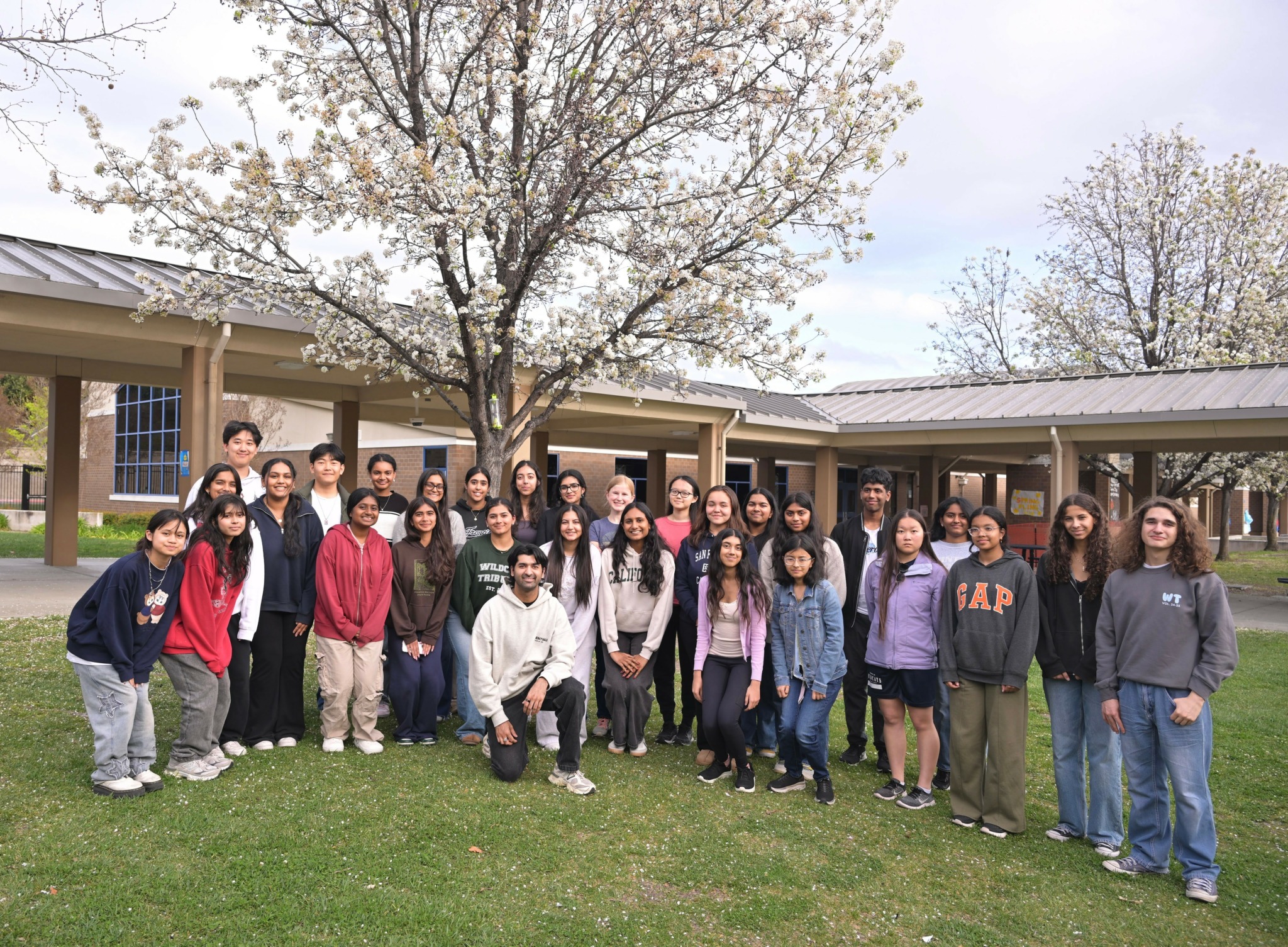
Something people might not expect is that I’ve always had a lighter side. In high school, I ran a satirical newspaper called The Lettuce. The official school newspaper was the Wildcat Tribune, and to their chagrin, I once redirected their domain to my site instead. Years later, when I visited campus, I donated fifty thousand dollars to support their paper…and returned that domain name. That combination of rigorous reasoning and occasional humor is pretty consistent with how I work. At the end of the day, I focus on whatever feels most intellectually interesting.
We’d love to hear a story of resilience from your journey.
When Terra collapsed, the entire ecosystem went to zero almost overnight. I had been building within that environment, so from the outside it looked like the kind of event that would derail everything. Instead, I treated it as a reset. The collapse forced me to strip the idea back down to first principles and rebuild the logic without relying on assumptions that had come from the broader ecosystem.
That shift ended up being useful. By reworking the thesis from the ground up, I ended up with a version of the project that was cleaner and more defensible than the one I had started with. Within a few months, I secured the capital needed for the next phase. For me, resilience was about using a major disruption as an opportunity to re-evaluate the foundations and assemble something stronger.
Learning and unlearning are both critical parts of growth – can you share a story of a time when you had to unlearn a lesson?
A lesson I had to unlearn was the idea that you have to work in the trenches for a long time before seeing results. Slow and steady, as they say. But what I’ve found in practice is that things that work tend to work quickly. It’s like in medicine. If you’ve identified the root cause behind why someone is sick and you’re treating it properly, the symptoms often start resolving very quickly.
For startups, if what you’re building isn’t cutting through, then sure, maybe you’re a visionary who’s years ahead of the market. But if you’re too early, that’s also a form of being wrong. There are big advantages to building something that sells now.
Contact Info:
- Website: https://www.neelsomaniblog.com/
- Instagram: https://x.com/neelsomani
- Linkedin: https://www.linkedin.com/in/neelsomani/