

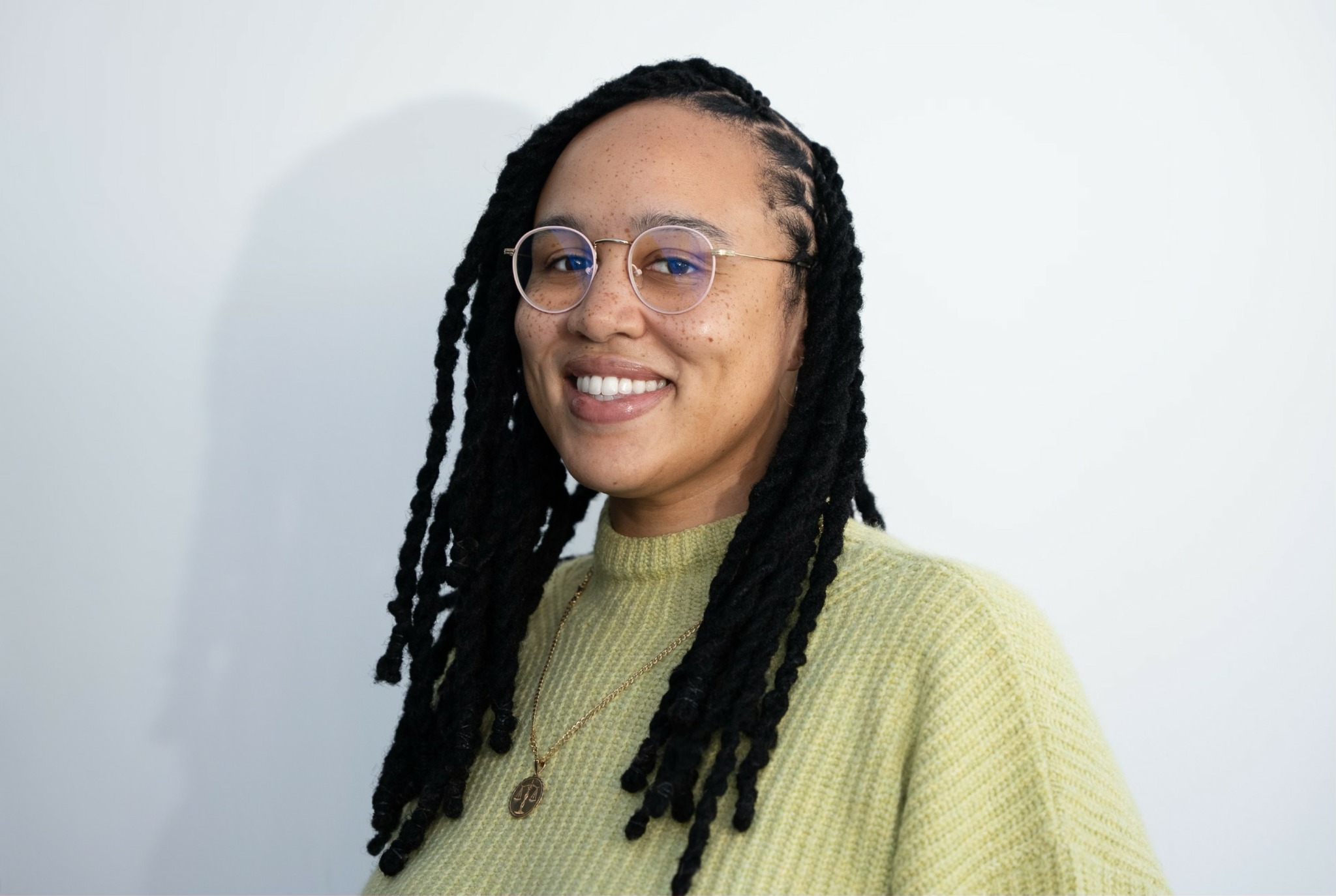

We were lucky to catch up with Natasha Camille recently and have shared our conversation below.
Natasha, looking forward to hearing all of your stories today. What did your parents do right and how has that impacted you in your life and career?
My parents are immigrants from Haiti who traveled to the United States in the 1970s. Being a first generation Haitian-American, I recall always hearing stories about their experiences after first arriving in New York City. What always stood out to me about those stories was how much bravery and courage it took for them to take the risk and go to an unknown place because they believed that their lives and the lives of their family members would be better for it. I heard about their struggles with figuring out how to navigate the subway to travel from Flatbush all the way to the Bronx to go to school, and sit in classrooms where they had to decipher what was being said because they were newly learning English. I heard about all of the family members who piled up into a small two bedroom apartment and made do with what they had. I heard about the sacrifices that everyone made in order to care for each other and make things slightly easier for each other in any way that they could.
These stories and where they are now in life showed me just how important it is to have faith in yourself, in your abilities, in what you have to offer the world, and in your community. If it wasn’t for their storytelling about their tenacity, I’m not sure that I ever would have felt brave enough to do something like open up my own private practice. Their belief in themselves and belief in me allowed me to grow up into an adult who believes in themselves and is not afraid to take the risks that feel like they will be worth it. The process of leaving a toxic workplace before I necessarily felt ready and diving headfirst into creating my own business was not easy nor straightforward, but it is the best brave decision that I’ve made in my career thus far.

As always, we appreciate you sharing your insights and we’ve got a few more questions for you, but before we get to all of that can you take a minute to introduce yourself and give our readers some of your back background and context?
I am a Black, queer, nonbinary, first-generation Haitian-American. I was born and raised in New York and attended college at Barnard College of Columbia University and went on to earn my masters in social work at Hunter College. My introduction to this industry predates all of that and actually originates in high school. As a teenager, I was active in my community as an advocate against teen dating violence. When I went to college, I hoped to find my place there and hopefully be able to continue the kind of activism that I discovered to be so important to me in high school. I became a peer educator at my school’s rape crisis center where I provided educational programming for my fellow student body about topics related to sex and relationships, sexual violence, and consent. My experiences as a peer educator invited me into the inner thoughts of some of my fellow black women peers who did not feel like the campus-wide movement against sexual violence was inclusive of or accessible to them. Although I was active in campus groups working towards ending sexual violence on college campuses, it made sense to me how others who looked like me could possibly feel like they were not included in these conversations since the activism on campus did largely revolve around non-black women’s stories. It was then that I realized that my experiences in high school getting to learn more about these topics allowed me to step into the role of a campus activist in a way that might not have been possible otherwise. That’s when I decided to create an afterschool program for black girls and non-binary youth that would focus on educating them about healthy relationships, their relationships with their bodies, and sexual violence. I ran this program for the duration of my senior year of college at a Catholic school in Brooklyn, and somewhere along the way decided that I wanted to do this kind of work for the rest of my life.
Fast forward to today: I am a Relationship and AASECT-Certified Sex therapist with my business, Wildest Dreams Therapy. Wildest Dreams Therapy is a NY and NJ based psychotherapy & consulting practice centering the healing of people of color and LGBTQ+ communities. Utilizing a combination of attachment-based, somatic, and psychedelic-assisted therapies, Wildest Dreams Therapy works with individuals, partners, & families to transform painful generational patterns into the cultivation of intimacy & deeper connection with self and others. In addition to these therapeutic services, Wildest Dreams Therapy offers a variety of transformative services for the community, organizations, and fellow mental health professionals.

What’s a lesson you had to unlearn and what’s the backstory?
Many therapists talk about the way in which our schooling and some of the work cultures that we have been a part of require us to approach our work in a way that is very disembodied and dehumanizing. In this sense, the lesson that we are learning (myself included) is that we are therapists first before we are humans. This pervasive messaging is incredibly harmful and is just the kind of thing that causes therapists to burn out. Being a business owner required me to interrogate why we are taught this way, and to seek out something different: Something that allowed me to recognize and embrace my humanity. Something that allowed me to see my own care as important and integral to the kind of care that I can provide to others. Something that allowed my work to ultimately feel more sustainable. I am happy to say that while I am a lifelong learner, I have come a long way in learning these harmful lessons from the past and have stepped into a way of working that allows me to show up as my full self, and allows me to see my own needs as a person and therapist as a priority in the way that I run my business. I learned that doing so does not make me selfish, and does not create harmful conditions for my clients. If anything, embracing my humanity makes me show up as the best therapist as possible for my clients.
Putting training and knowledge aside, what else do you think really matters in terms of succeeding in your field?
I believe that succeeding in being an owner of a psychotherapy practice requires vision; a vision of who you want to work with, why you want to work with them, what values you uphold, and what you’re working towards. I believe that one reason why my practice has been so successful is because I came into it with a clear vision. I envision a world in which individuals are able to move away from cycles of intergenerational & relational trauma, towards manifesting embodied relationships with themselves and nourishing relationships with others. I created Wildest Dreams Therapy to aid in that goal by supporting fellow queer and trans people of color heal traumas, explore areas for growth in their relationships, and discover new ways to break old patterns that are not serving them. Through my business, I show commitment for my community by centering them in all that I do.
What allows me to feel successful is knowing that my vision is seen, understood, and shared by others. I have had the honor of collaborating and working with companies and organizations that share a similar vision and mission as I do on community events, educational programming, and wellness programming. I have had the honor of being featured in various media publications that I was sought out by because of my demonstrated commitment to the vision that guides me through my work. And I believe that each and every client that reaches out to me is doing so because they too see my vision and it resonates with them, what they want for themselves, their relationships, and their communities.
Contact Info:
- Website: https://www.wildestdreamstherapy.com
- Instagram: http://instagram.com/wildestdreamstherapy
- Facebook: https://www.facebook.com/profile.php?id=100086992211423
- Linkedin: https://www.linkedin.com/company/wildestdreamstherapy/

Image Credits
Echo Yun Chen