



We caught up with the brilliant and insightful Nancy Cohen a few weeks ago and have shared our conversation below.
Nancy , thanks for joining us, excited to have you contributing your stories and insights. Let’s kick things off with your mission – what is it and what’s the story behind why it’s your mission?
I’m a visual artist. I want to make work that viewers connect to emotionally as well as visually. I try to make things that are tactile – it’s the kind of art I love and am moved to make. I want people to want to touch the work, to feel it in their bodies. I am also trying to make work that has staying power – that the viewer is drawn to but where there is enough mystery or depth to it that it is sustaining to look at and return to over time.
I have a strong connection to nature and to water. Though I am an urban person and get energy from being in the city, I have always been drawn to the waterways surrounding urban areas. I am interested in the ways communities and industries develop around waterways and the ongoing ways we impact each other. Water is essential to all life and all communities. During this time of climate change the fragility of our environment and our bodies is forefront in my mind. I am also striving to make work that speaks to this and in a way that people can take in.
Great, appreciate you sharing that with us. Before we ask you to share more of your insights, can you take a moment to introduce yourself and how you got to where you are today to our readers.
I come to making the work I do from a love of nature and working with my hands. I studied ceramics as an undergraduate in the School for American Craft at Rochester Institute of Technology and I have an MFA in Sculpture from Columbia University.
The materials that I work with and the forms they take change but there is also a consistency of touch and a sense of intimacy no matter the scale of the work that is always there.
In my ongoing work I investigate environmentally fragile landscapes as well as the vulnerability of our individual and collective bodies. Waterways and their surrounding landscapes continue to be a major focus. There is something almost human to me in their balance of fragility and strength, the way they persevere through adversity—much of it inflicted by us.
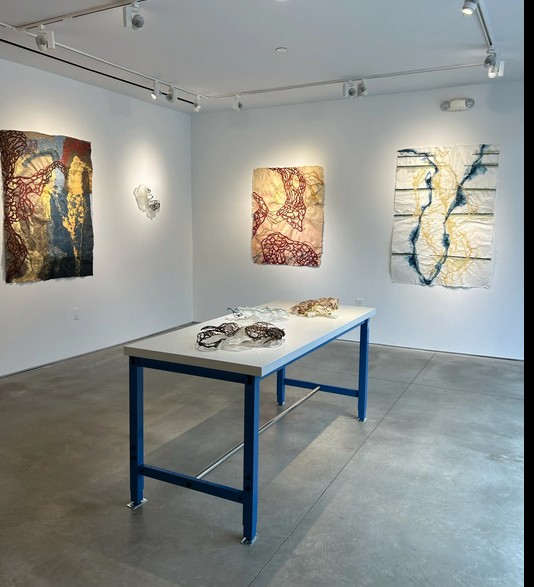
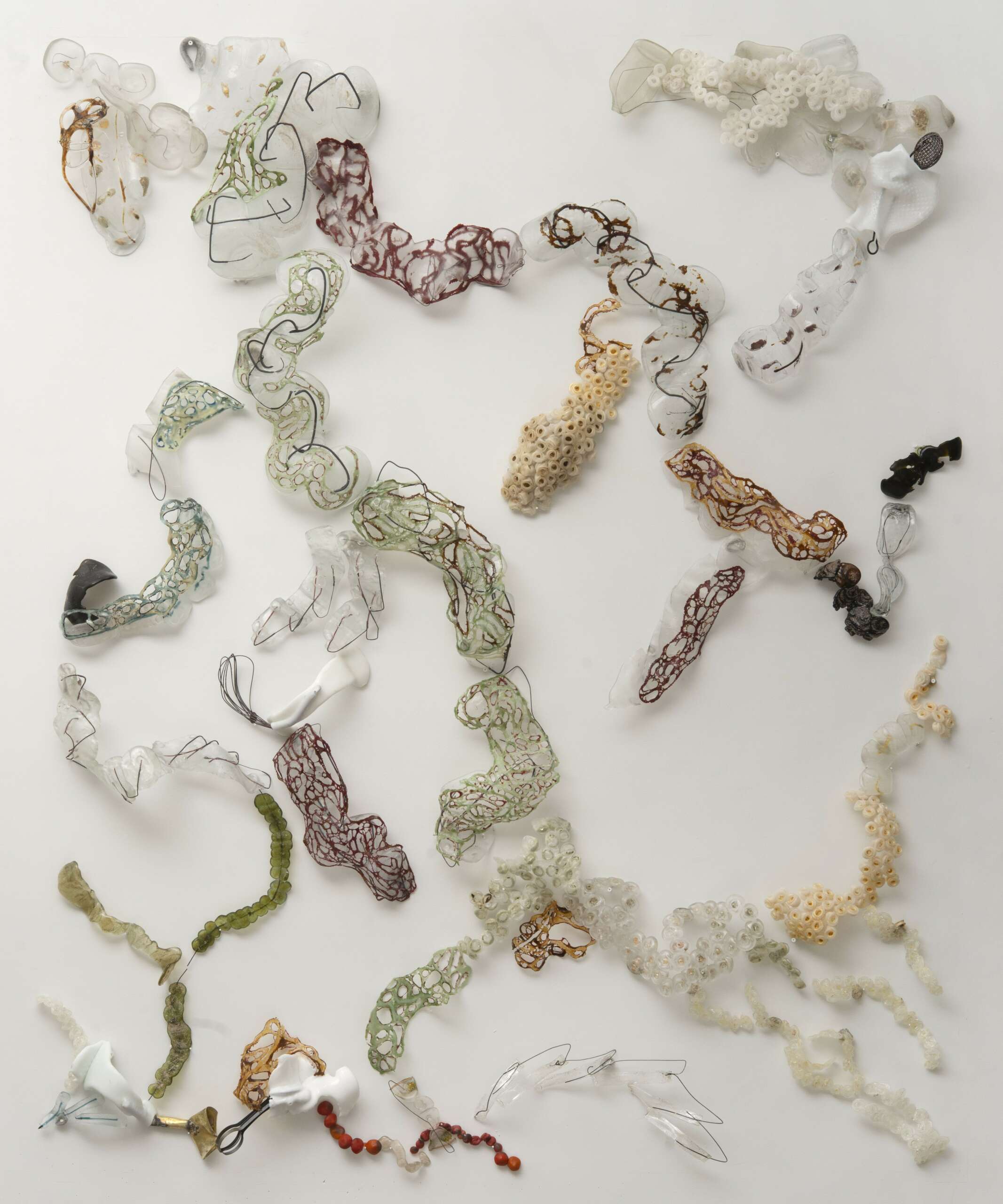
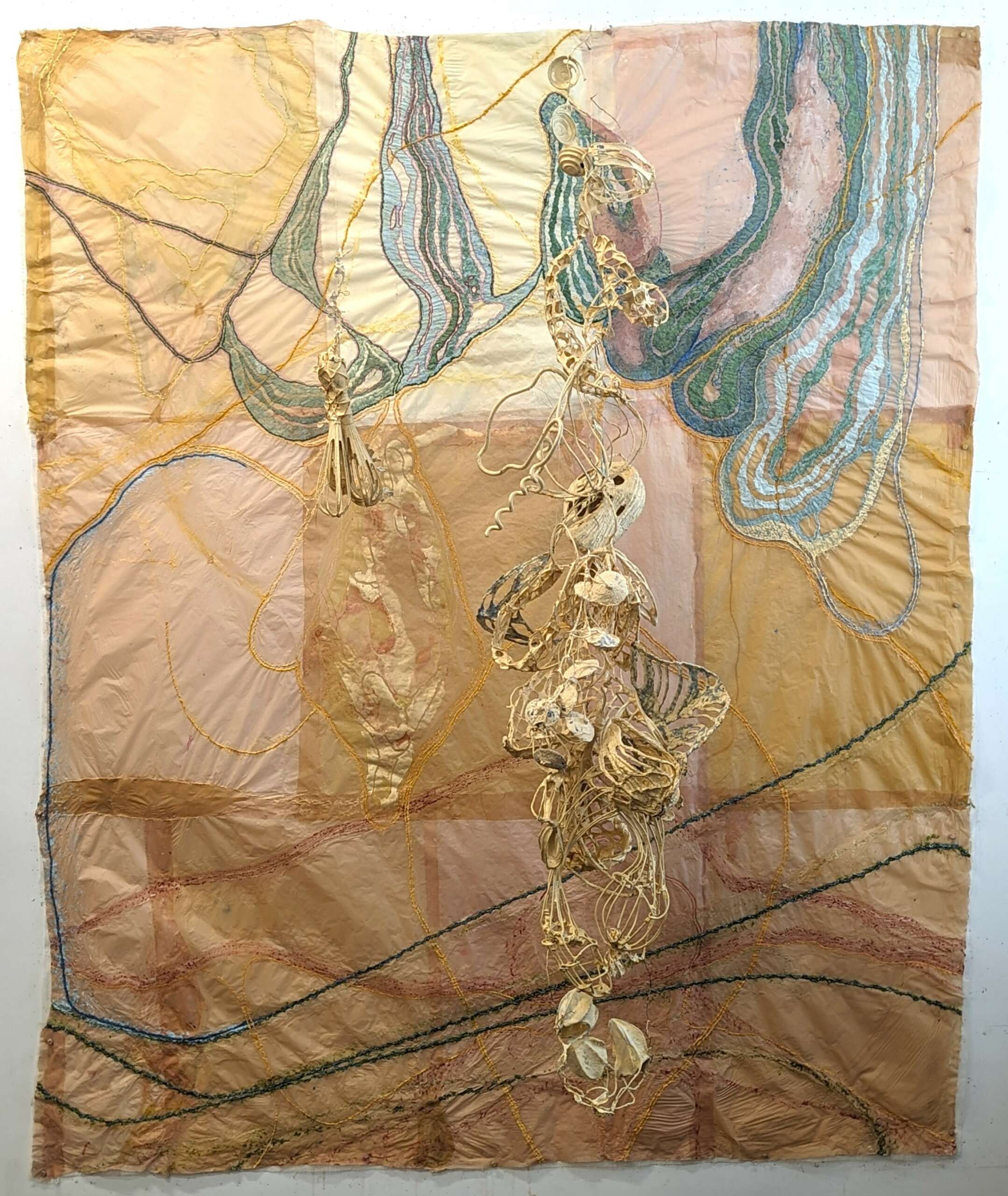
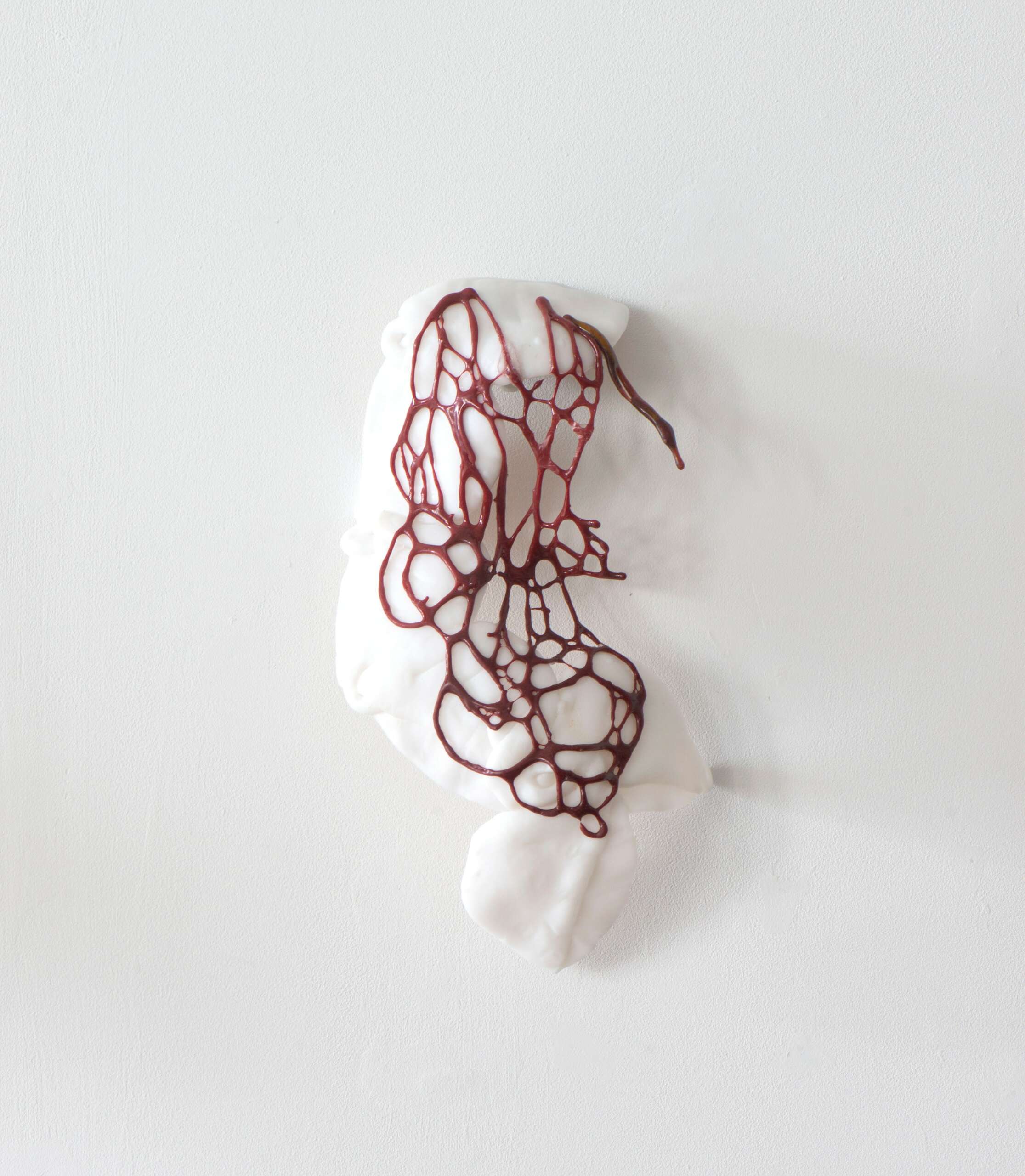
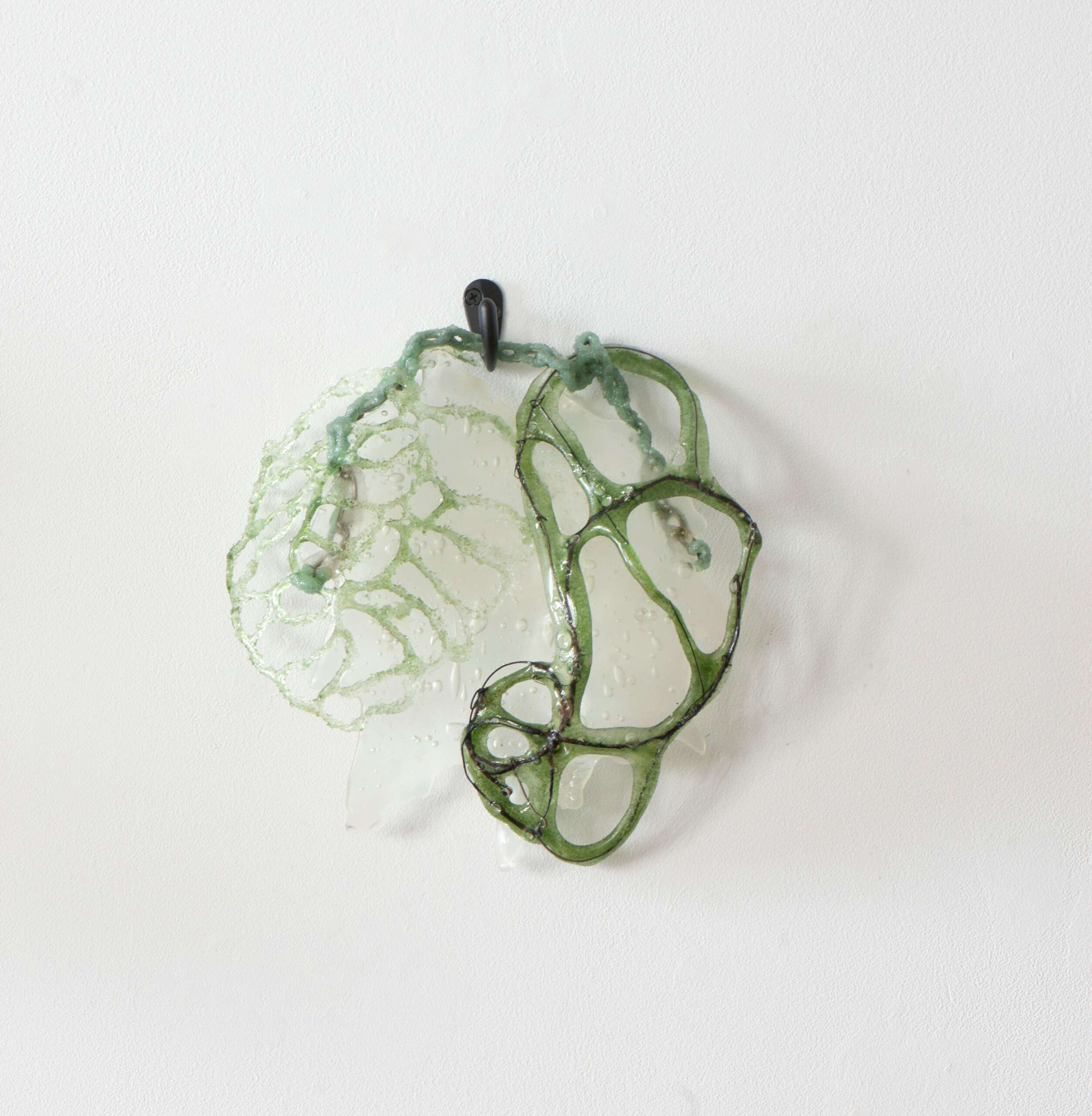
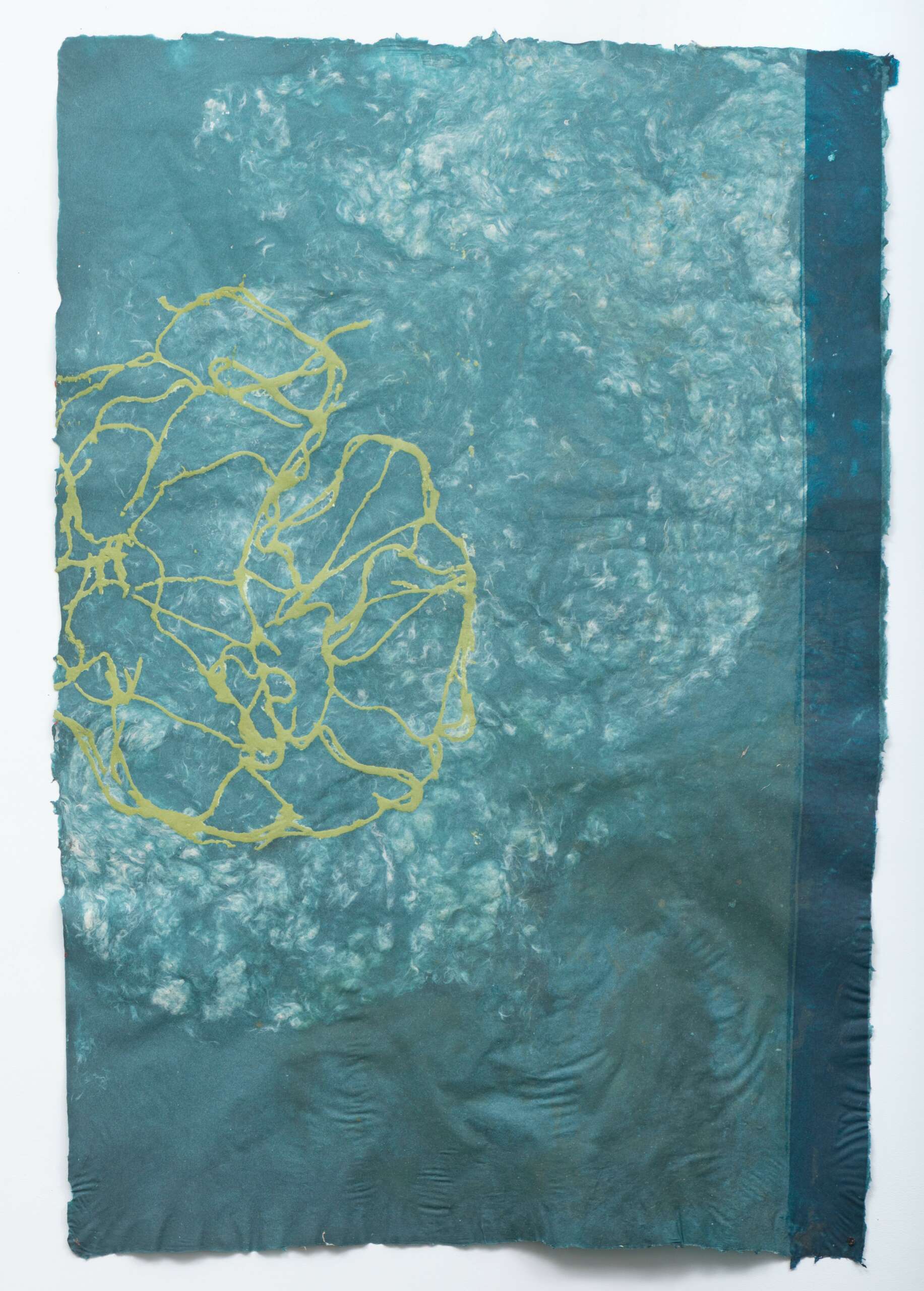
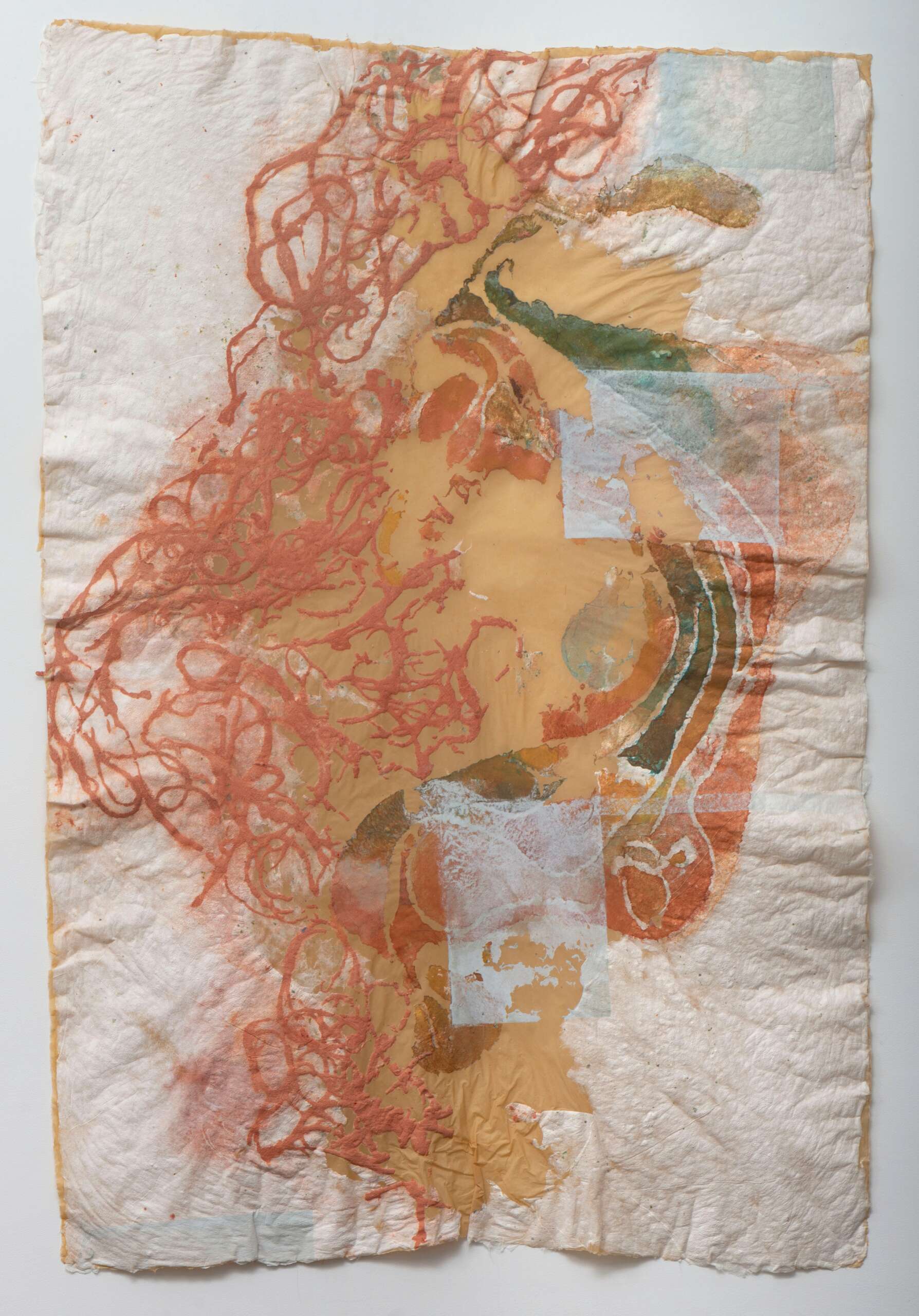
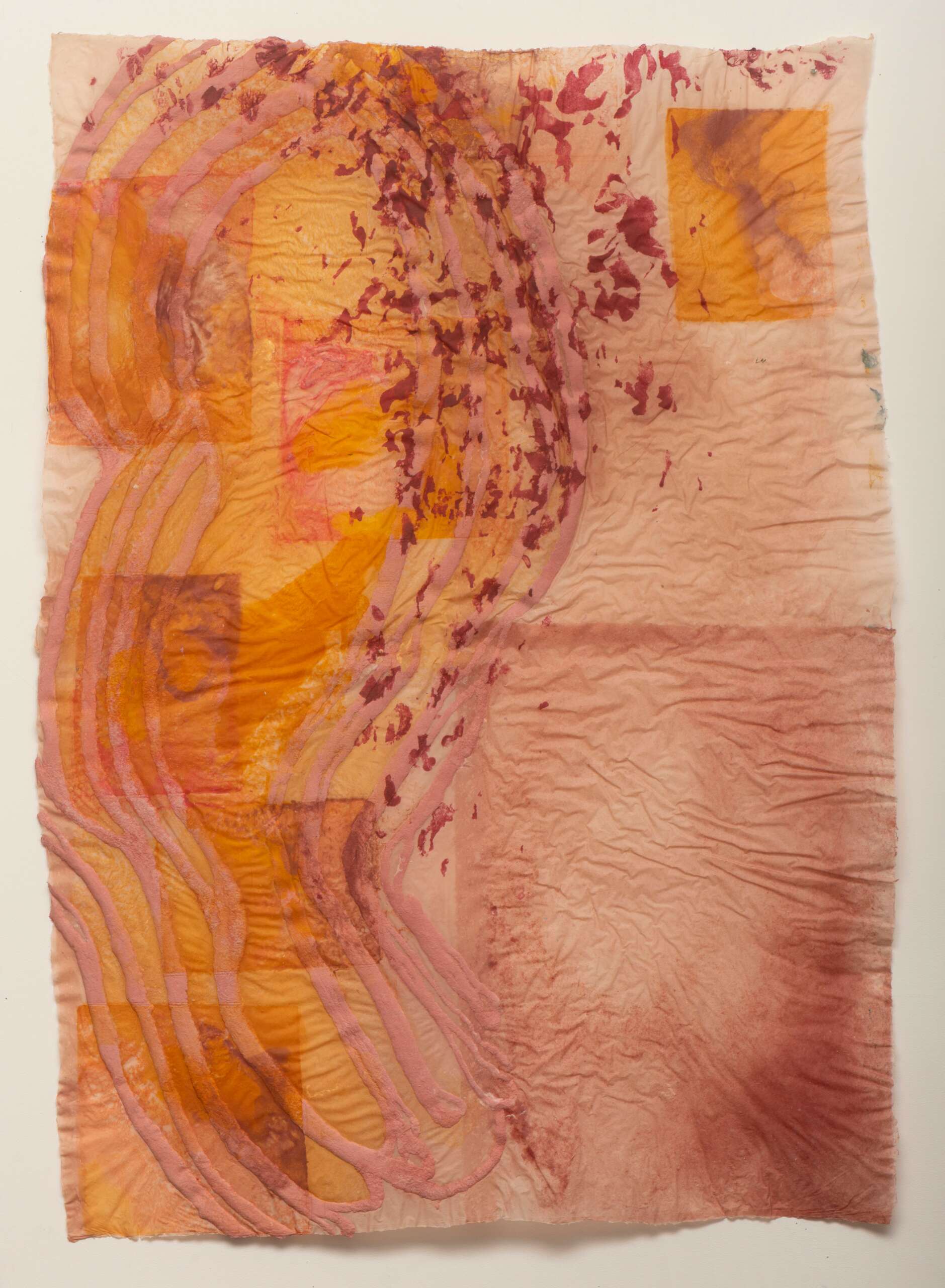
I have been working with handmade paper and glass for over 25 years now. I am drawn to these materials for their transformative qualities, their potential for translucency, and their ability to be both skin and structure. I am interested in working with processes that share these dualities and allow me to merge material and content.
My working methods allow an implication of the body in the work—its touch and tenderness, its frailty and endurance. It is my goal that in this work, as in our own lives, elements hang in the balance, each one necessary, vulnerable, beautiful and above all interdependent.
In my recent sculpture recycled industrial and domestic glass is melted and fused into new forms, often combined with wire covered in handmade paper. One sculpture might be constructed of both test tubes and wine glasses – objects that bring both touch and the body to mind. They are intimate in scale and longing for connection. I fill these glass vessels with various pigments, sands and powder and melt them into organic and three-dimensional forms. Vessels shape-shift into other vessel-like forms.
My handmade paper drawings are constructed sculpturally. Although they might look very much like paintings or textiles they are entirely made of paper and paper pulp. I begin by making pigmented papers and then assemble them, still wet, in a quilt-like fashion; later I draw on these constructed surfaces with various densities of paper pulp. The wet pulp on the dried sheets causes a buckling on the surface that appears very much like stitching. The finished works speak to the physicality of the body and simultaneously evokes an intimate sense of touch, in a way akin to being in nature experiencing both vastness and quiet moments of focus.
I also make large scale installations for both private and domestic environments. One particularly exciting project involved collaborating with Shirley Tilghman, Professor of Molecular Biology and then President of Princeton University (now emerita )and Jim Sturm, Princeton University Professor of Electrical and Computer Engineering and A. R. Willey, garden designer on an outdoor sculpture based on research on how mice percieved sound. The resulting abstract sculpture used both steel, wire, resin and electroluminescent wires that changed color and moved throughout the piece and it was installed in an environment that included plants that emitted various scents by being walked on or at different times of the day.
Most recently I collaborated with a writer, two composers, a singer and a video artist on a narrative installation “One She Dries” about coral reefs and climate change. That piece was first shown in NJ and later travelled to two museums in Taiwan and we hope it will have another life soon.
As I write this I am collaborating with glass artist Anna Boothe on both a research project and an art making one, on the history of the glass industry in southern New Jersey and its relationship to local rivers. We have been meeting with environmental organizations, glass historians. factory owners and historians while artists-in- residence at WheatonArts in Millville, NJ.
Though most of my time as an artist is spent alone in my studio I am very excited and inspired by the opportunity to collaborate and make work for the public.
What’s the most rewarding aspect of being a creative in your experience?
The opportunity to continually grow has been the most exciting. Being an artist is very hard work, many hours in the studio and generally two more jobs – trying to get the work into the world and while you are doing that finding other satisfying ways to financially support the endeavor. For me, that has been in teaching. I have something to say about each of these things.
I love being in my studio and trying new things. There is a degree of experimentation and not-knowing that is very stimulating. I continually try new materials and push the ones I am familiar with to new places – this relationship between me and my materials is a collaboration in itself as I am drawn to those that I can’t completely control.
Being an artist has also allowed me to meet and work with a range of people in a variety of places – each experience has broadened and stretched me. Although I was born and raised in and close to NYC and I knew this was where I would live long term, I have also lived and made my work in Montana, Israel and China and have opportunities to exhibit in Taiwan, Greece, The Netherlands and in many parts of the United States. I have collaborated with scientists, landscape architects, poets, and artists in other disciplines. I have learned and grown from all of that. Finally, I have worked with some wonderful curators and gallery owners who have helped me realize a range of projects and many of whom have become lifelong friends.
Finally I have taught art to both children and college students for close to 40 years. They have inspired me, pushed me to articulate my ideas and helped me be a fuller human being. It has all been rewarding.
Let’s talk about resilience next – do you have a story you can share with us?
Here’s one: In 1993 I was invited to propose a temporary project to a NYC park. I chose Thomas Paine Park, at that time a rather forlorn and neglected spot between Centre and Lafayette Streets in Lower Manhattan. The benches faced the street rather than the interior of the park and at a time of serious homelessness in NYC the trees in the park were often used to tether cardboard structures used as temporary shelters. The birds flying in and out of the park had me thinking about temporary shelters in nature and that launched the project.
I proposed six structures all human sized, 5 organic forms based on shelters in nature (nests, pods, etc) and one made of industrial parts based on the proportions of an elongated cardboard box. My first major hurdle was presenting to the community board who was worried about nothing being too large for anyone to be assaulted behind, no openings large enough for a child to get their hand stuck in or garbage to collect in it, among other things. The proposal was adapted in response.
It was an enormous undertaking to make the work and many friends helped in the endeavor. Delivering the pieces to the park was again a huge project that involved friends driving and unloading trucks and my parents showing up with lunch for everyone. I was worried the pieces would be stolen overnight, they were huge and heavy so that was probably an absurd worry.
The second day was planned for securing all the pieces with hardware. That involved digging deep holes and anchoring cables underground. That day was a torrential rainstorm but my husband, assistant and I persevered and got it all secured.
I was worried about vandalism but the piece was up for six months and a huge success. People left small things (like earrings) on some of the armatures, kids were inside the park climbing on some of the structures and people were occasionally sleeping on them as well. The project was written about in the NY Times, The Village Voice and The New Yorker and each article discussed the issues of homelessness along with the work. It felt incredibly satisfying.
Contact Info:
- Website: https://nancymcohen.com/pages/index.php
- Instagram: nancymcohen
Image Credits
Sadie Bridgers, Leslie Sheryl, Edward Fausty