
Alright – so today we’ve got the honor of introducing you to Morgan Kelsey. We think you’ll enjoy our conversation, we’ve shared it below.
Morgan, looking forward to hearing all of your stories today. Can you talk to us about how you learned to do what you do?
I grew up surrounded by woodworkers and artisans. and was taught very early on how to work with my hands. My father is a woodworker and built most of the furniture we had in our home. I learned some basic woodworking from him as a child, but more importantly he instilled a strong work ethic in me and showed me that you could do almost anything if you tried hard enough. He would carefully plan out his projects and saw them through to the end. Completing projects is sometimes the most difficult thing to do and I’ve always admired his follow through.
I also studied music as a child, starting piano at age five and guitar at age eleven. Initially I set out to be a full time musician and studied jazz guitar and piano in college. I worked for a few years as a musician teaching and playing professionally and then got very interested in computers and programming. That spawned a whole different career, but eventually I started building acoustic guitars as a hobby. When my technology career ended I began building guitars full time and have been a luthier for about ten years.
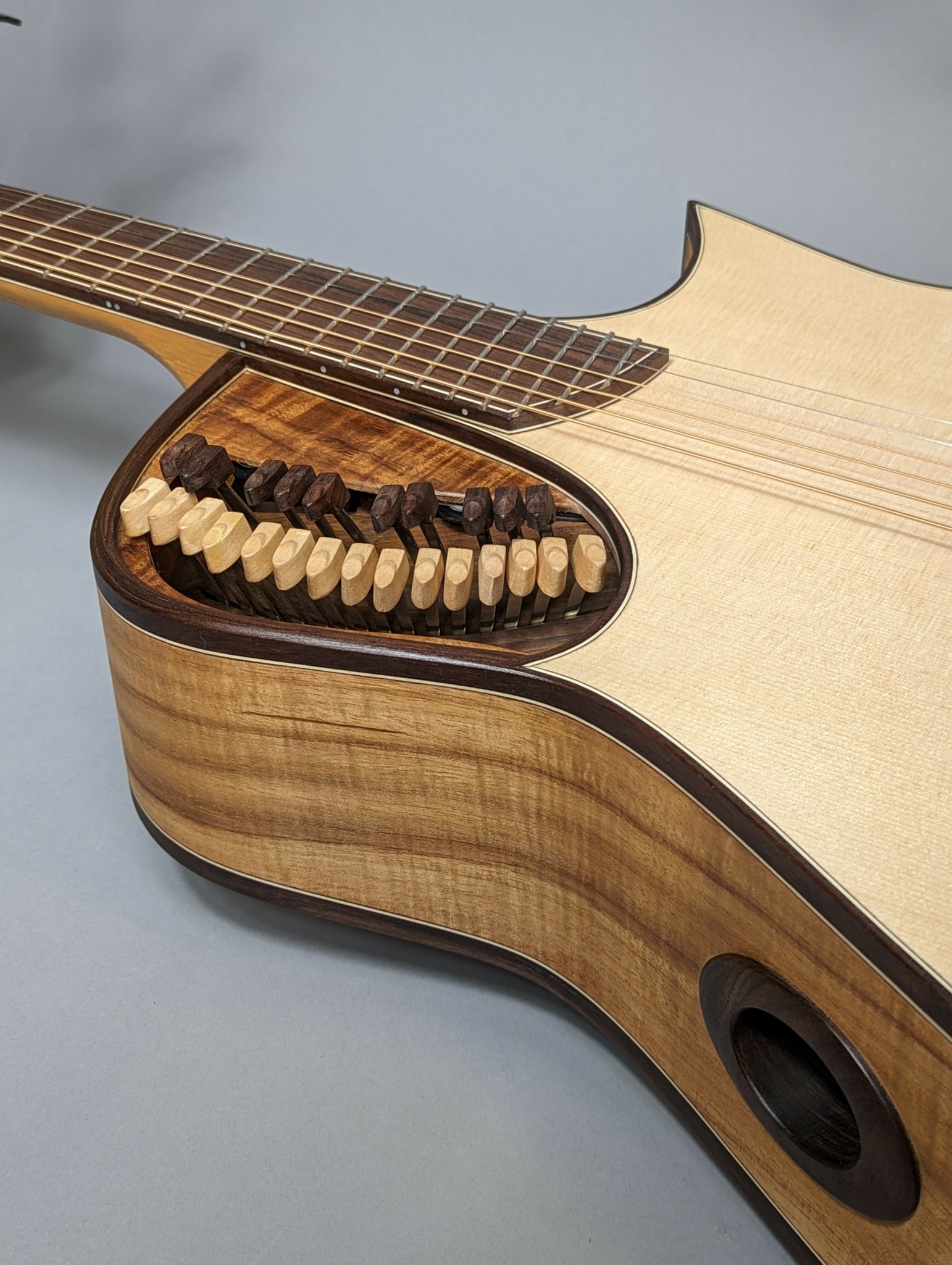
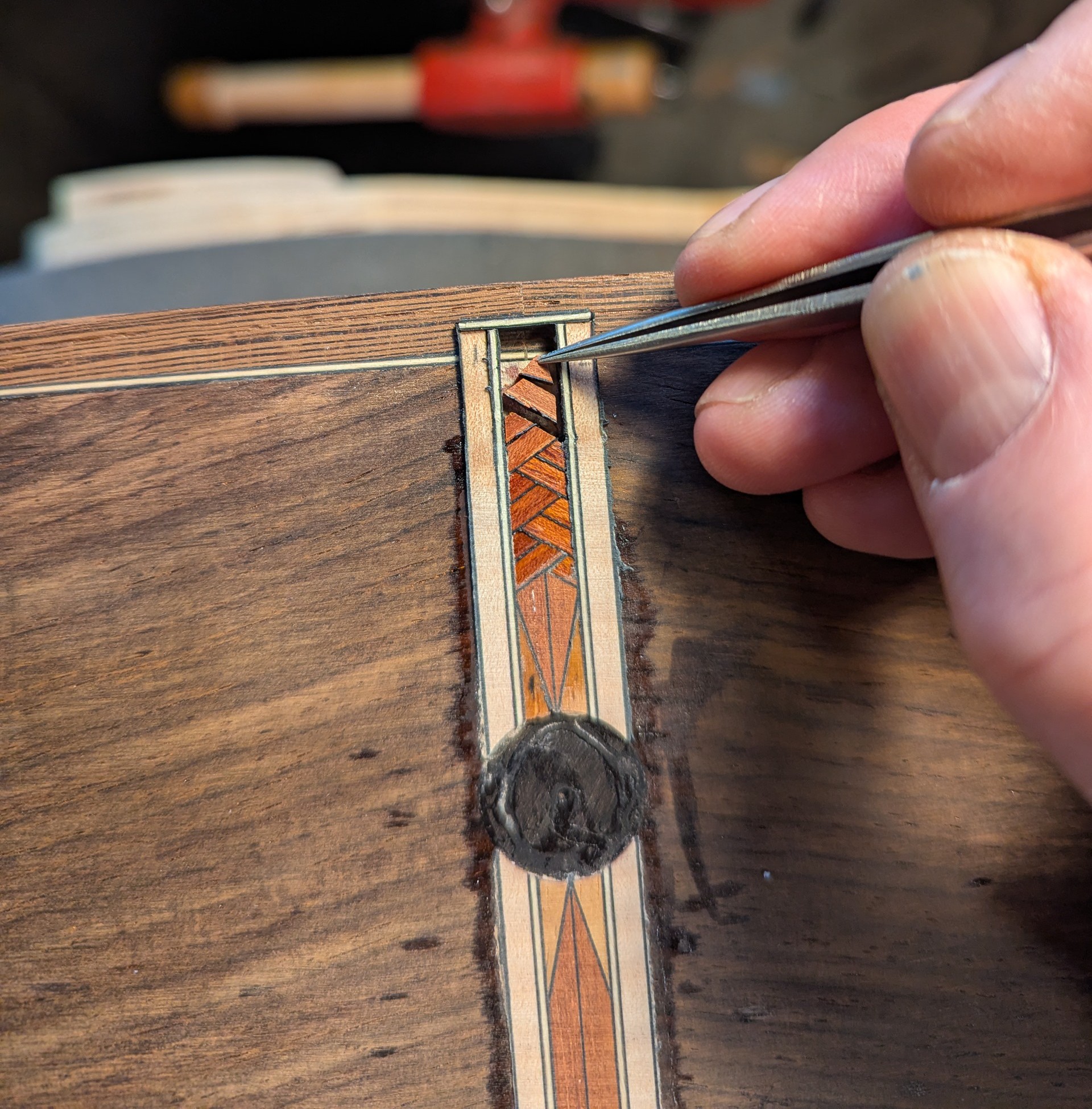
While these three areas of focus may seem a little incongruous, they actually all play an important role in my work today. Woodworking comes very natural to me and I attribute that to the time I spent doing projects with my father. My musical education and guitar playing enable me to fully test drive the instruments I build and come up with unique features that the musician in me wants from the instruments. For example, I have built guitars for percussive guitarists that incorporate tongue drums in the sides, and have also incorporated kalimbas (thumb pianos) into some of my instruments. The finger dexterity I have developed being a life long musician enables me to do very fine detail work on my instruments. Lastly, my programming career taught me a lot about data collection and analysis. The sound a guitar produces is the result of many variables and getting a pristine sound consistently requires some form of data collection. The old world method is to learn to measure the stiffness and sonic qualities of the materials by flexing them in your hands and tapping them with your fingers. In todays world of computers and high quality home recording devices these things can also be measured digitally. I practice both methods but always sample and record the different components for future reference. You never really know how an instrument is going to sound until it is completed and it is very helpful to have a record to refer back to.
Morgan, before we move on to more of these sorts of questions, can you take some time to bring our readers up to speed on you and what you do?
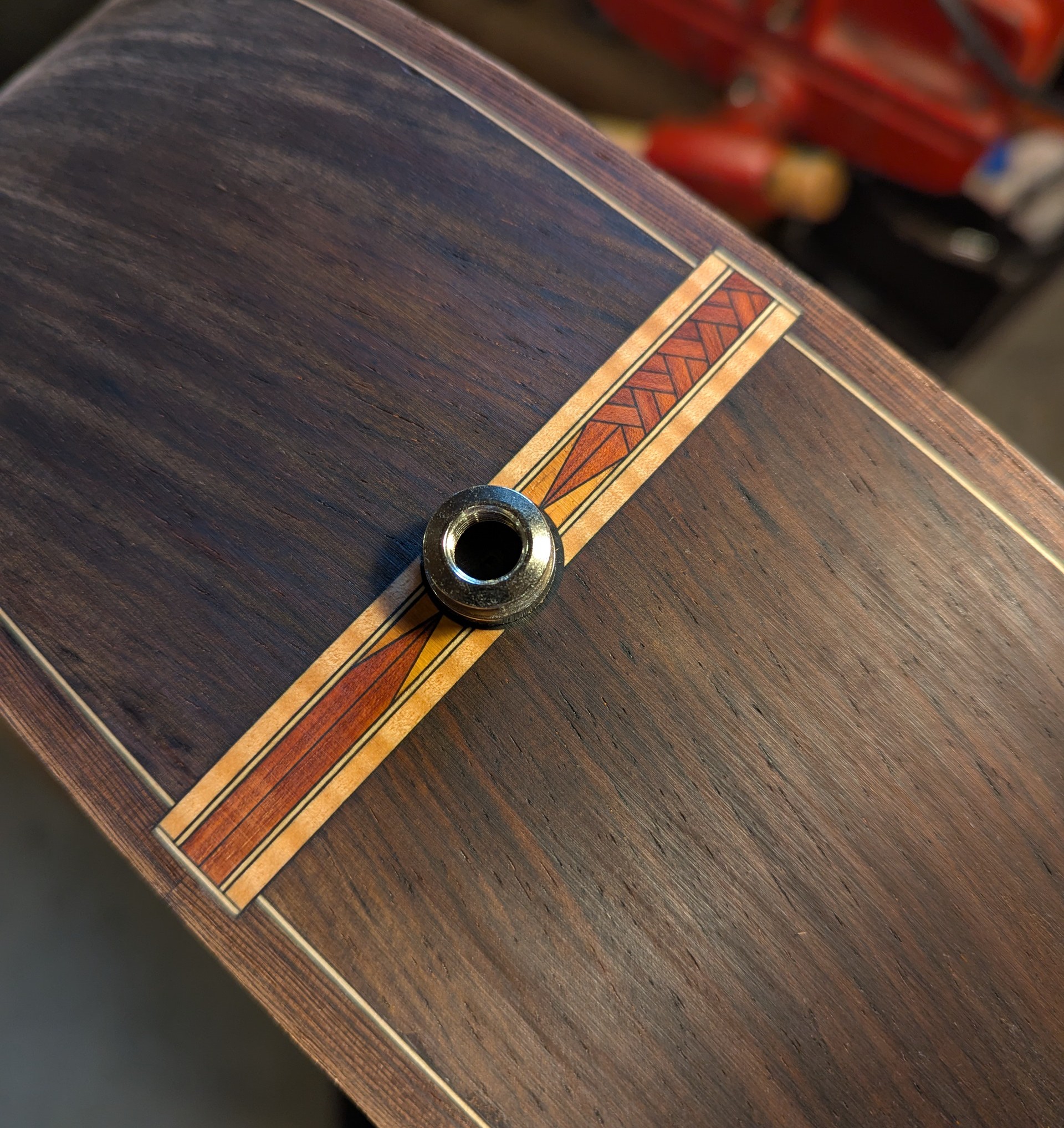
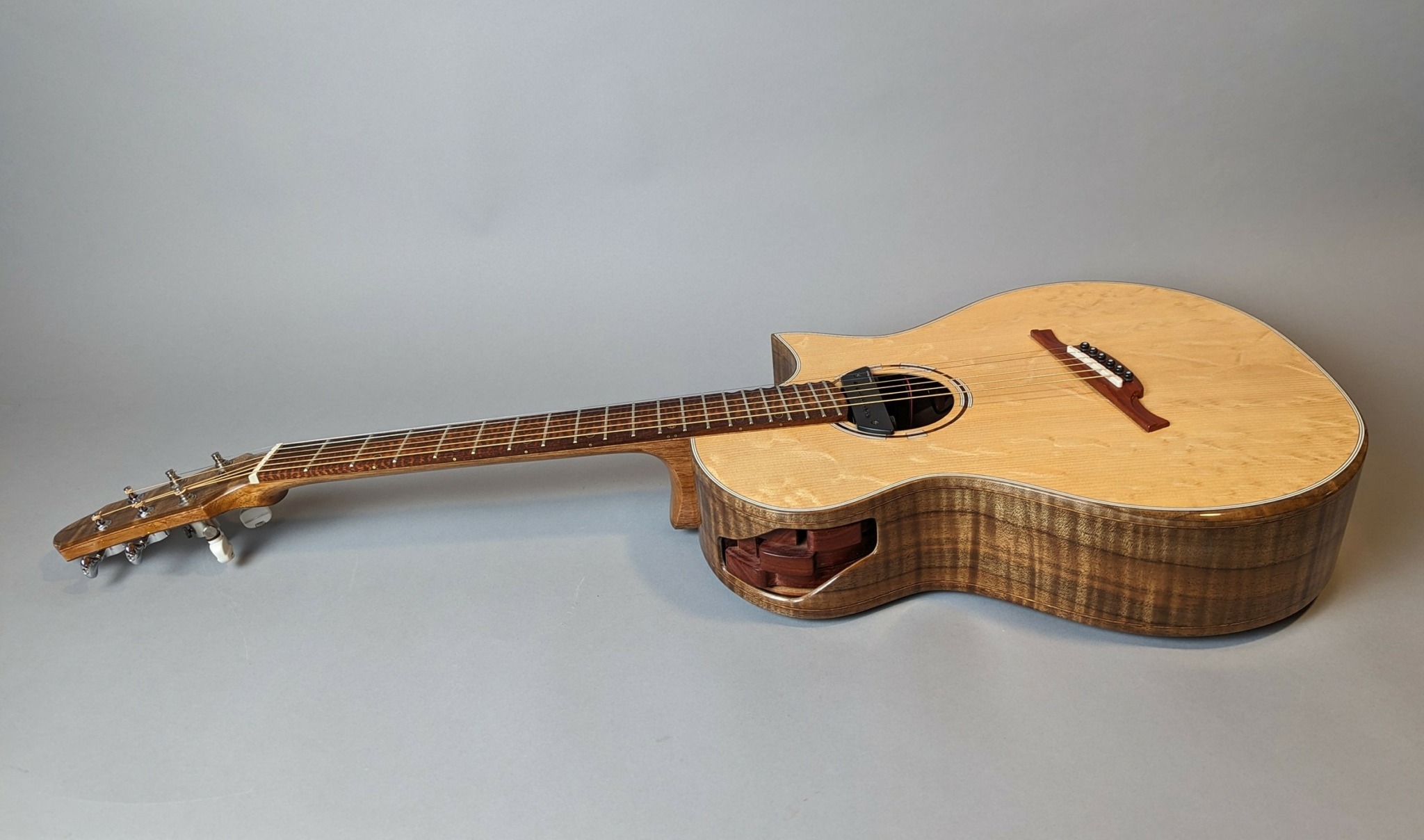
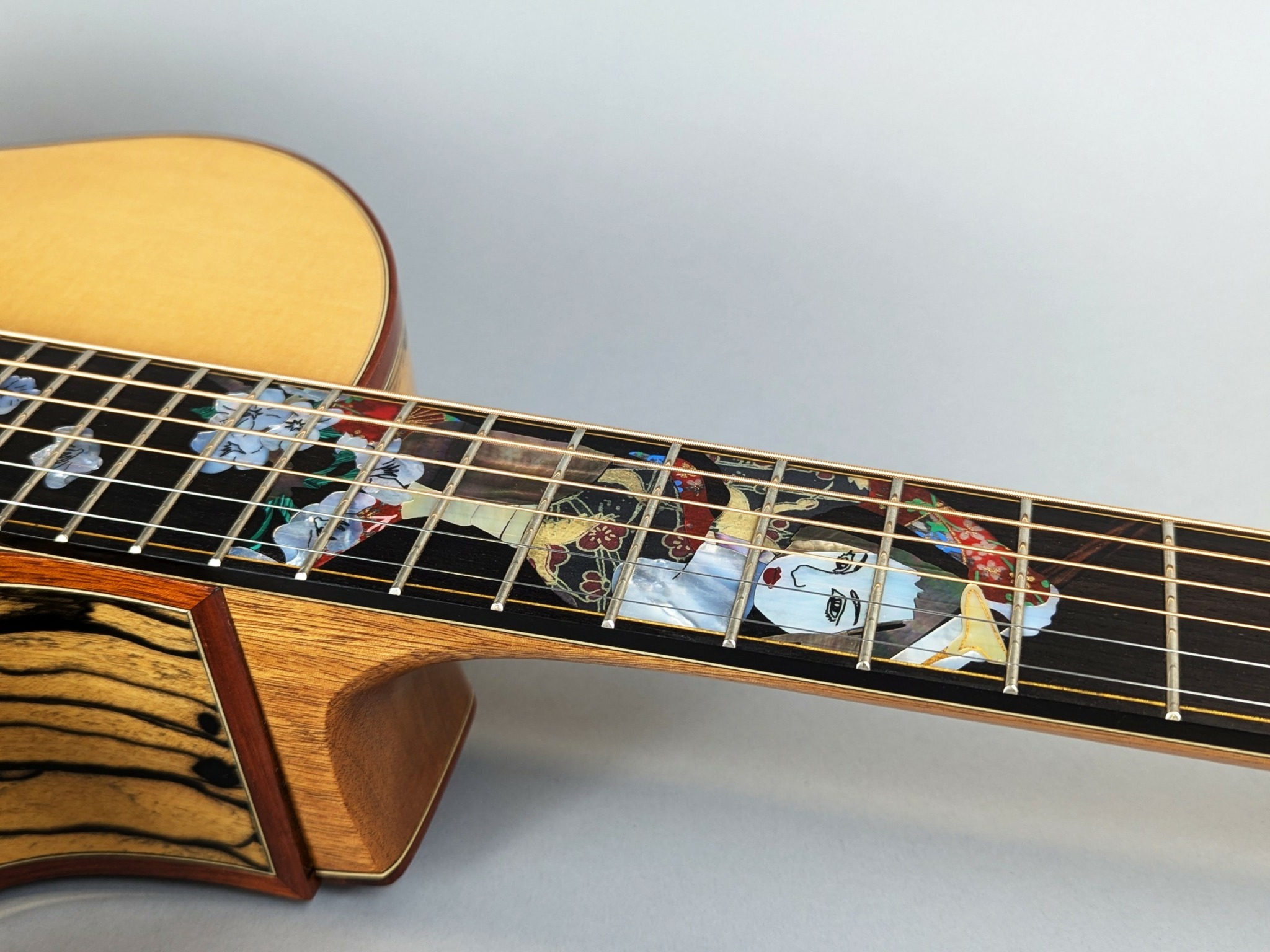
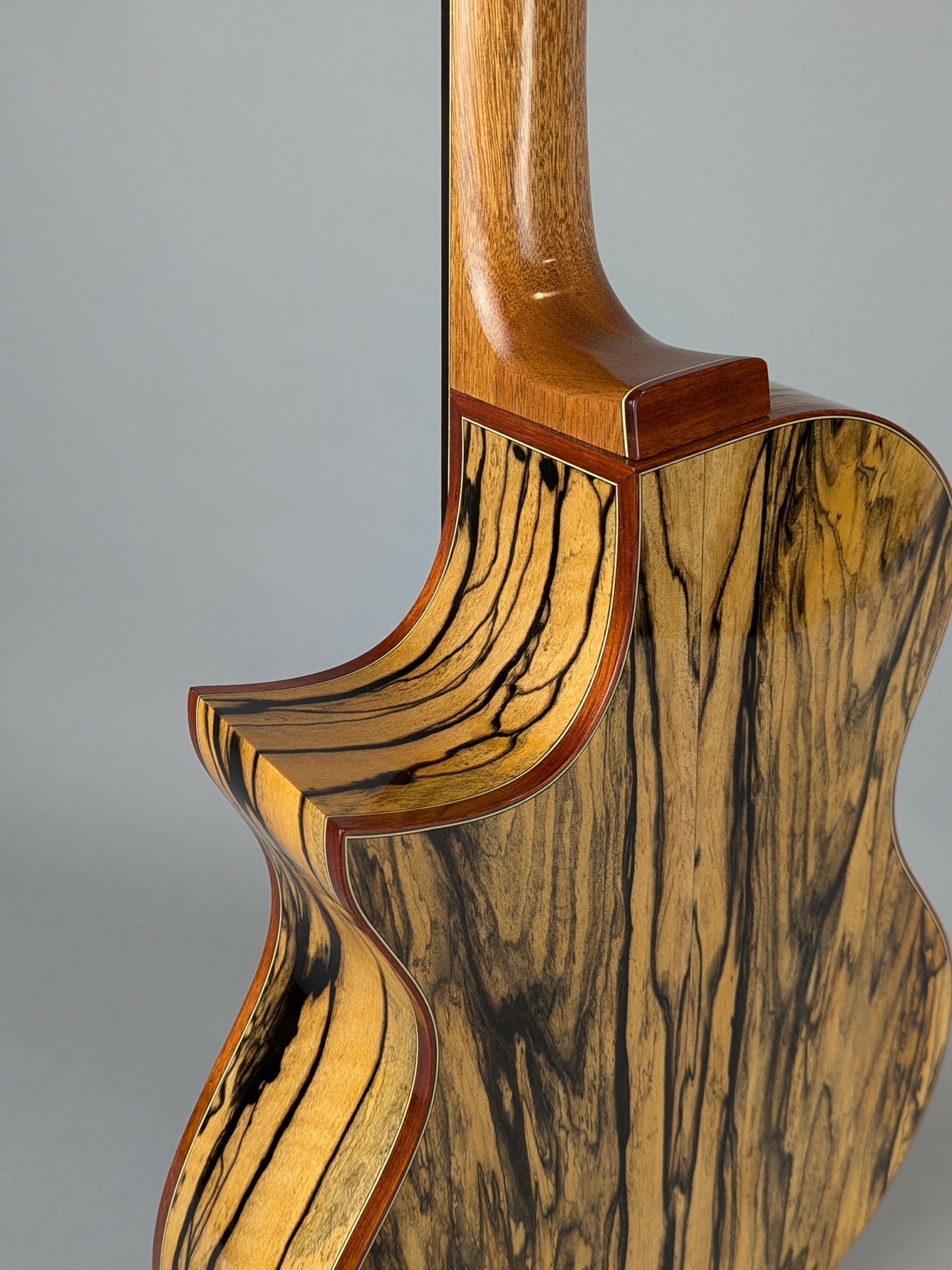
I build custom acoustic guitars, one at a time, in a small shop in my home. Each instrument is unique and I work closely with my clients to create the perfect guitar for them. The acoustic guitar is somewhat unique in the world of instruments as it has a long tradition of being customized. While we can all recognize the general shape and features of a guitar, there is an enormous amount of variety in look, shape, materials, decoration and more out there in the world. When you think of a violin, saxophone, trumpet, or even piano there is much less variation.
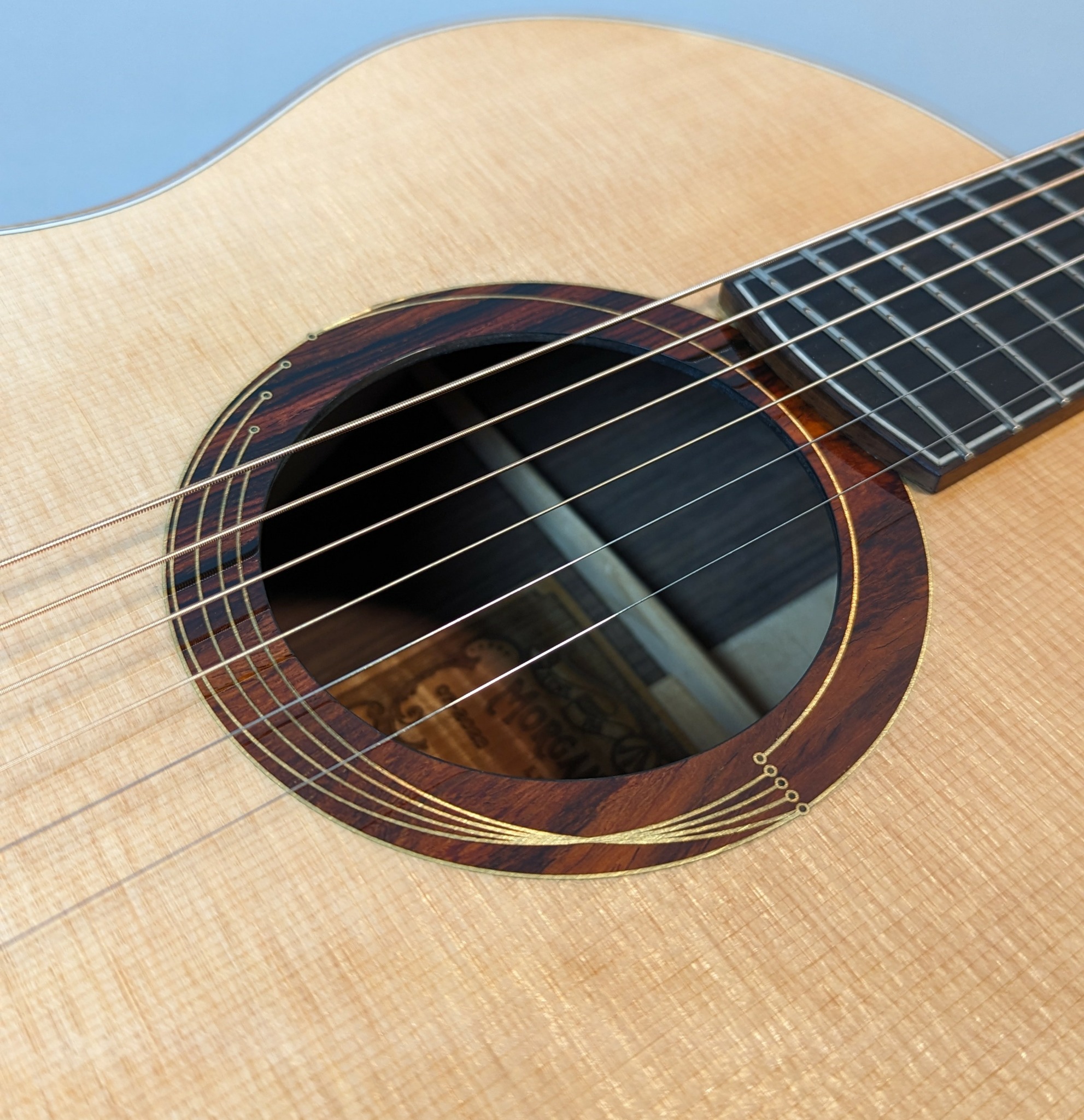
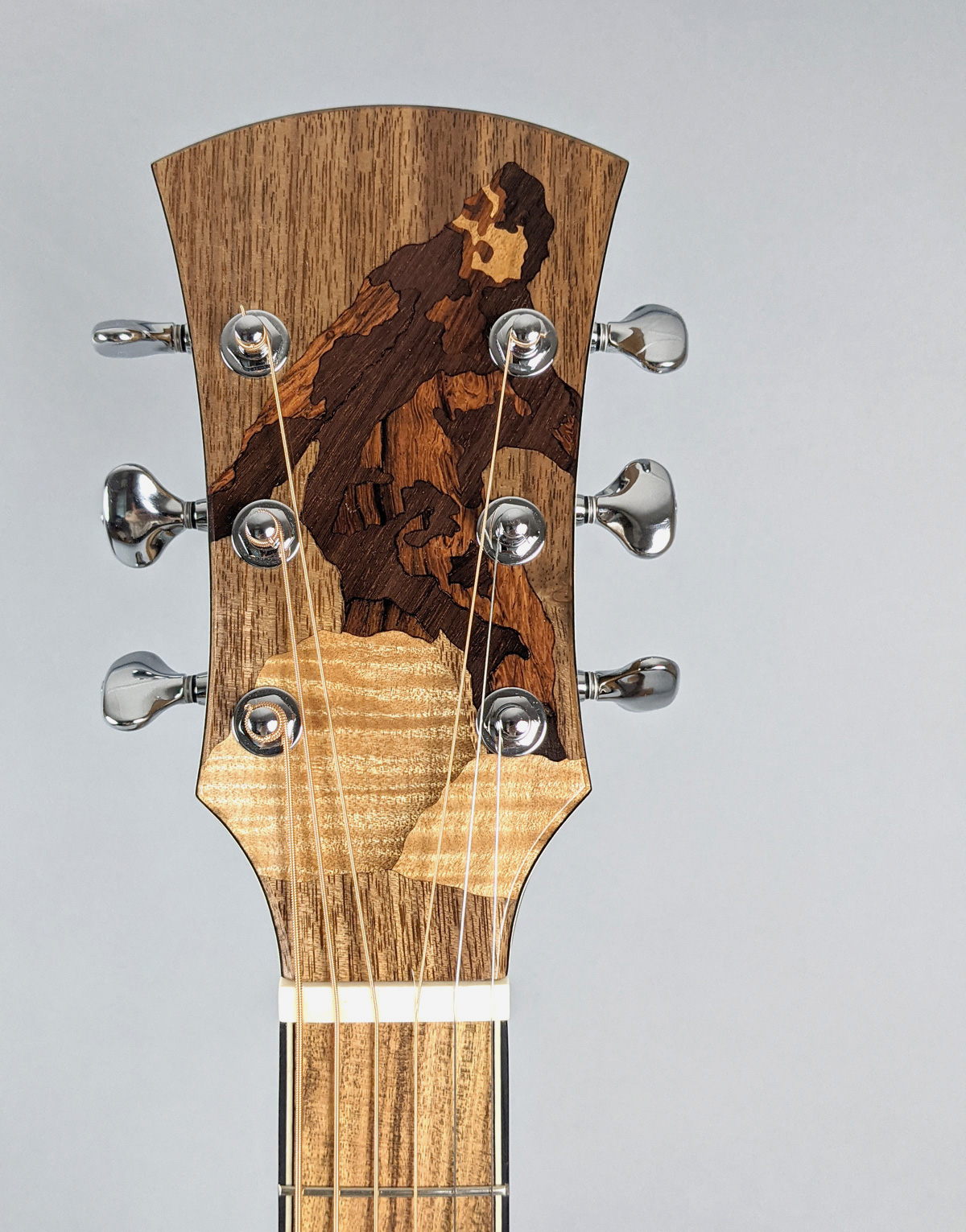
When I work with a customer on designing their guitar we discuss things such as the size of the instrument, the shape, the string spacing, the scale length (distance between frets), neck thickness, the woods and other materials, soundhole placement, decorative designs, unique features, what kind of music they play and how they want it to sound. This is a level of customization that they can not get from a factory guitar.
Most importantly, the sound and feel of the instrument is created especially for them. When you buy a factory guitar, even a high end factory guitar, you are buying an instrument that was manufactured to a set of average tolerances when it comes to the sonic qualities of the woods. Every piece of wood is different, and a custom builder can spend much more time measuring and pushing the individual pieces of wood selected for the build to their maximum potential. I also know my clients are going to take care of their instruments and not leave them in a hot car, or expose them to other extreme conditions which allows me to build them in a lighter and more responsive way than a corporation concerned with minimizing warranty repairs.
I also truly enjoy a challenge and have built some guitars with unique features that were born out of discussions with customers. For instance, percussive guitarists tap and strike the body of the instrument while also playing the strings to create a very full and complete sound in a solo setting. When a percussive guitarist came to me for a build and we incorporated tongue drums into the side of his guitar to increase the palette of sounds available to him while playing.
What’s the most rewarding aspect of being a creative in your experience?
It is a magical experience to string up an instrument after months of work and hear its first sounds. To this day I am surprised when I hear the first sounds, part of me can’t believe that you can make a box out of wood, stretch strings across it and create beautiful music.
Even more rewarding though, is putting an instrument in the hands of a great player. No matter how beautiful an guitar is, it really is a tool for creating art. The feeling I get when an artist creates music using a tool I made for them is like no other.
Do you think there is something that non-creatives might struggle to understand about your journey as a creative? Maybe you can shed some light?
I think many non-creatives don’t realize the time and effort that goes into mastering a craft. There is an assumption in our society that people are either born with gifts or not, and I don’t think that is true in most cases (prodigies may be the exception). Something that I really dislike is when someone says, “Wow, you are so talented.” I understand the sentiment, and I know it is intended it as a compliment, but it can feel like the effort behind the work is belittled. I believe talent is simply a measure of one’s persistence, and to be a creative person you have to be really persistent, and very comfortable with failure.
One of my piano teachers in college once told me, “The difference between the student and the master is that the master has made all of the mistakes, so don’t be afraid to make mistakes.” I frequently undo and redo things that I am not completely satisfied with, and there are always some things that I would like to have been better. I think this is an uncomfortable truth about all forms of art and craft. Artists and artisans are never truly satisfied with their work because if we were it wouldn’t continue to evolve into something greater.
Contact Info:
- Website: https://morgankelsey.com
- Instagram: https://www.instagram.com/morgan_kelsey_guitars
- Youtube: https://www.youtube.com/@morgankelsey