



We caught up with the brilliant and insightful Molly Foley a few weeks ago and have shared our conversation below.
Hi Molly, thanks for joining us today. We’d love to hear about a project that you’ve worked on that’s meant a lot to you.
I began creating as a way to express emotions I couldn’t figure out how to express otherwise, so many of my projects are very meaningful to me, especially the early ones. I would say my most meaningful project has been the Rebirth and Renewal woven mural installation my collaborative group, Cazimi https://www.cazimicreativecollaborative.com/ did. The pandemic came on the heels of another crisis in our town that displaced people from their homes for months and created a general feeling of unease. We wanted to do something that could bring some sense of healing to the community with the hope of engendering a sense of resiliency and vibrancy. In the winter of 2021, we approached the Andover Center for History and Culture about weaving a mural into their fence that faced Main Street and they were thrilled by the idea.
We wove 44 feet of their fence using a mile of rope in varying shades of green, evoking a spring rebirth after a long dark winter. Using nature as inspiration we considered that winter is often viewed as a time of loss and isolation, the cold keeping us in our homes and the verdant color of the other seasons now lost to a blanket of white, but under that blanket transformation is happening that allows the new growth of spring to occur. The brightness of the mural was a reminder of our own resilience and the ways our personal transformations, although painful, can bring about bright beauty as well. We also included a section of the fence for community engagement that was inspired by the concept of the Scottish Clootie Tree. Community members were invited to write messages of hope and connection on pieces of cloth and then tie them to the fence. These messages were very meaningful to all that participated and helped us all feel more connected to each other.
The opportunity to offer something to the community that might brighten their day during a time of difficulty and create a sense of connection even during a time when we were required to have so much distance from each other made this project especially meaningful to me and the rest of Cazimi. It was also the first time the three of us worked together and learning how to collaborate to bring something of this scale to life was a transformative experience for me as well.
As always, we appreciate you sharing your insights and we’ve got a few more questions for you, but before we get to all of that can you take a minute to introduce yourself and give our readers some of your back background and context?
Despite always wanting to do something creative I didn’t come to fiber art or astrology until my 40’s when I was facing a lot of change in my life. Astrology helped me make sense of things that were creating a lot of stress and confusion for me and has been an invaluable guide through many ups and downs. It’s hard for me not to relate life’s events to transits that are happening or strong planetary influences at any given time. Astrology is a visual language and the natal chart is really a planetary story that weaves the complexity of a human life into a visual picture. Astrology has also helped me embrace the fact that things are always changing and therefore we are constantly having to adjust and apply our coping skills in different ways. This can be especially helpful when we see that a transit that happened years ago is coming back around and we can apply the new tools we have acquired in order to respond in a new way. I love astrology because it is a helpful tool in understanding ourselves and our journey through this life. The human journey is an intricate mosaic and being able to give clients information that explains their experience and provides a navigational framework for working with the different energies that come our way is very meaningful to me. I believe that knowing that we all have a very unique astrological chart makes it easier to acknowledge that we all approach life in very different ways and can help us be more accepting of ourselves and each other.
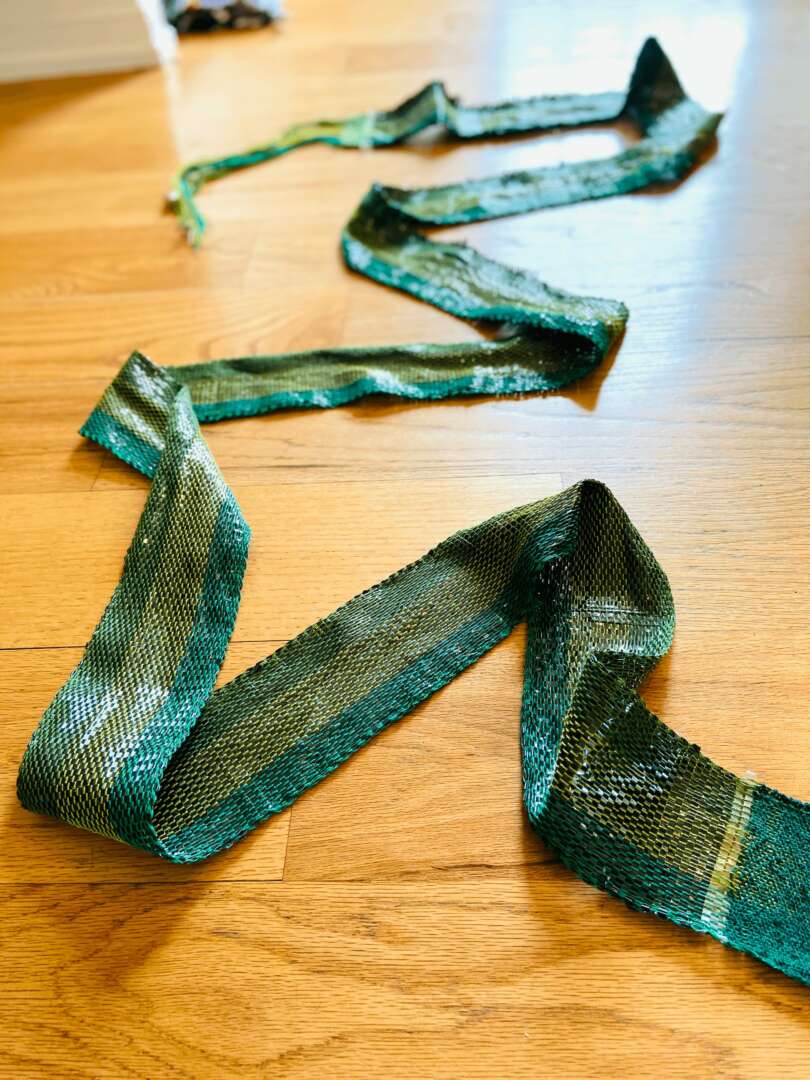
Weaving came to me in something of a lightening bolt. I was reading a magazine and saw an ad for a rug company I’d seen many times before but for some reason in that moment I knew I needed to learn to weave. A few days later I was in a weekend workshop in Vermont. I started out in traditional weaving but then went to Saori, which is more of an interpretive weaving technique. This technique showed me a lot about my own internal struggles, how different parts can come together, despite feeling like opposing forces. Astrology also showed me why things felt so in opposition within me and working with the tension on the loom was a visual aid in processing my own internal tensions. After making lots of scarves and shirts I stated weaving more unusual things like, audio tapes and strips of writing I’d done. Pretty soon anything I wanted to express went through the loom, each color combination bringing some part of me into the physical plane, especially during the pandemic. Combining colors and yarn into woven wall hangings kept my hands and mind busy during anxious times. Creativity is an incredible antidote to anxiety and stress, which is more important now than ever.
One of the things I love most about weaving wall hangings is the freedom it affords. It’s a great place to experiment and try things because it’s so easy to take something out if you don’t like it. This sense of freedom is what makes teaching this style of weaving so fun and what I think workshop participants enjoy most.
After a few years of working individually, I began collaborating with two other women and we formed Cazimi – a creative collaborative. We have been working since 2021 on large scale public art installations and more recently facilitated a project called Rebuilding at the American Holistic Nurses Association that invited participants to consider how the structures and systems they live and work within could be reshaped by removing yarn from the weaving and adding that yarn or new yarn into the weaving in a new way. This kind of facilitation is the latest addition to our practice. It is a thrill for us to be able to continue to dream up new ways to connect people and concepts in this way.
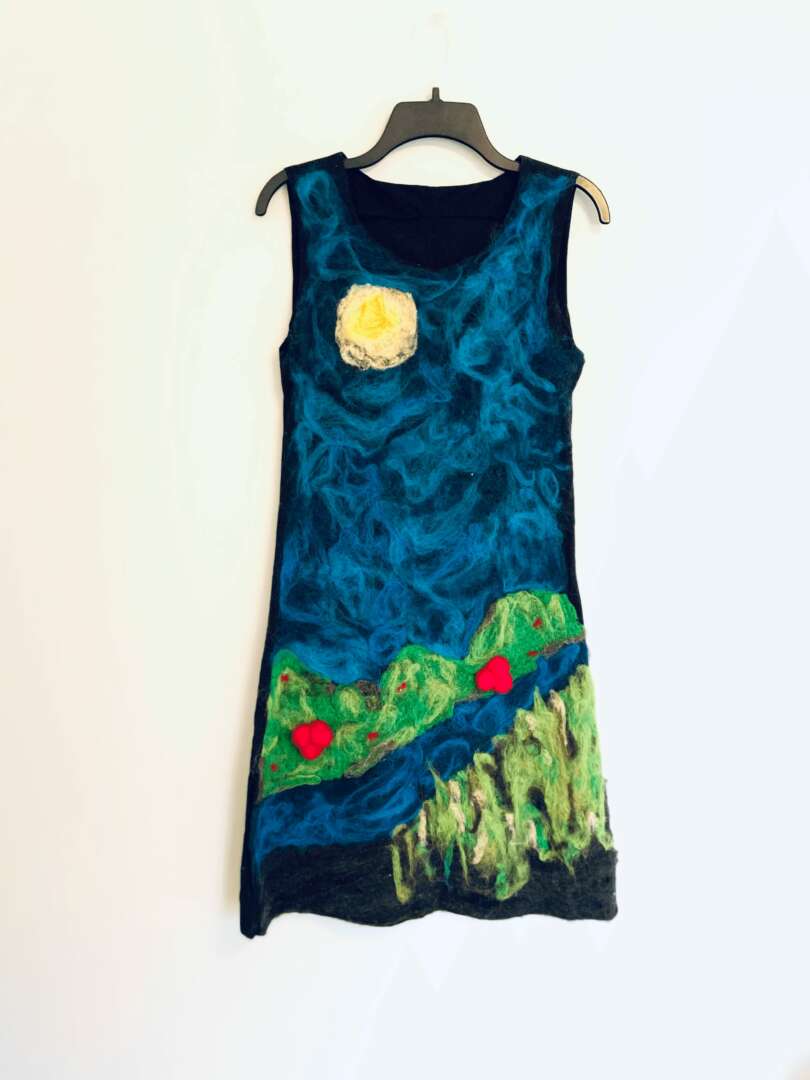
My work has branched out from weaving into altered book making, felting, and sewing as well. All of my modalities have a therapeutic or healing focus. At its core, the work that I do individually and with Cazimi is about transformation and restorying – creating visual stories, evaluating what stories we tell ourselves, and how we can look for other parts of the story that might provide an updated or more holistic view.
In that vein, I combined my love or fiber art and astrology into a workbook and workshop called What’s Your Story – a creative astrology experience (https://www.blurb.com/b/11939286-what-s-your-story-a-creative-astrology-experience) which helps users to better understand the stories of their lives through the lens of their natal chart as a planetary family. Journal questions and fiber projects connect the astrology to our lived experiences. I have found that externalizing those stories in a visual way with the fiber art projects can be very healing.
Do you think there is something that non-creatives might struggle to understand about your journey as a creative? Maybe you can shed some light?
First of all, I want to say that I think we all have an inherent creativity, whether it gets expressed in cooking, or the clothes we wear, or the way we write anything from work memos to novels, we all have creativity within us. There is no such thing as a non-creative.
That said, it’s been a challenge for me to embrace the creative part of myself. I always felt like I should be doing something more “responsible” or what I grew up thinking was what adult people did. But pushing that creative part of me away created a lot of inner turmoil and ultimately dysfunction. I’ve come to believe that art is essential to humanity. It is not meant only for “Artists” with a capital A. It is how we express what we feel. It allows us to show parts of ourselves that feel hard to express in other ways and it’s how we tell stories that ultimately help us see ourselves in others. It is the externalization of whatever is going on inside of us that helps us understand ourselves and others better. Creativity is what connects us. Pursuing creativity may seem irresponsible or fluffy to those that do not have a strong connection to their creativity, but for those of us that do have a strong connection, creating is essential to living. I recently read this quote by fiber artist Judith MacKenzie in her interview in with Melanie Falick in Making a Life “When we lose our ability to make things with our hands, we lose part of our humanness.” I think that just about sums it up.

How can we best help foster a strong, supportive environment for artists and creatives?
The biggest thing I think is a societal shift that understood that art is more than just a silly childish thing, it is a service that enhances the health of our society. One step toward that is supporting artist collectives and any vehicles that will help showcase art will be helpful. I started the Andover Arts and Culture Alliance in 2018 as a way to bring artists together and create a more significant voice. Since then, Andover has hired a Director of Business Arts and Culture who has been key in bringing more visibility to the artists in our area. I believe that those kinds of opportunities to showcase local artists is at the heart of creating a thriving creative ecosystem.
Additionally, I believe that classes that teach creative skills, like art should be required all the way through high school as this would 1. Change the mentality on some level that art is just for kids since most schools only require it through middle school, and some not even that long and 2. That given the amount of screen time and stress most young people are under these days having time during the day where creativity is part of the day is crucial.
My other inclination, and this will likely sound old fashioned but, I think wood shop and what we used to call home economics need to be a part of school again. I know these classes are often associated with traditional gender roles but they’re really just about life skills. We seem to forget that without a lot of people who are doing jobs like building and repairing our homes or growing and cooking our food, our society grinds to a halt. Concepts are interesting and fun to explore but without someone to bring them into the material plane they are nothing more than fantasy.
Contact Info:
- Website: https://www.mfcreates.com
- Instagram: @m_f_creates
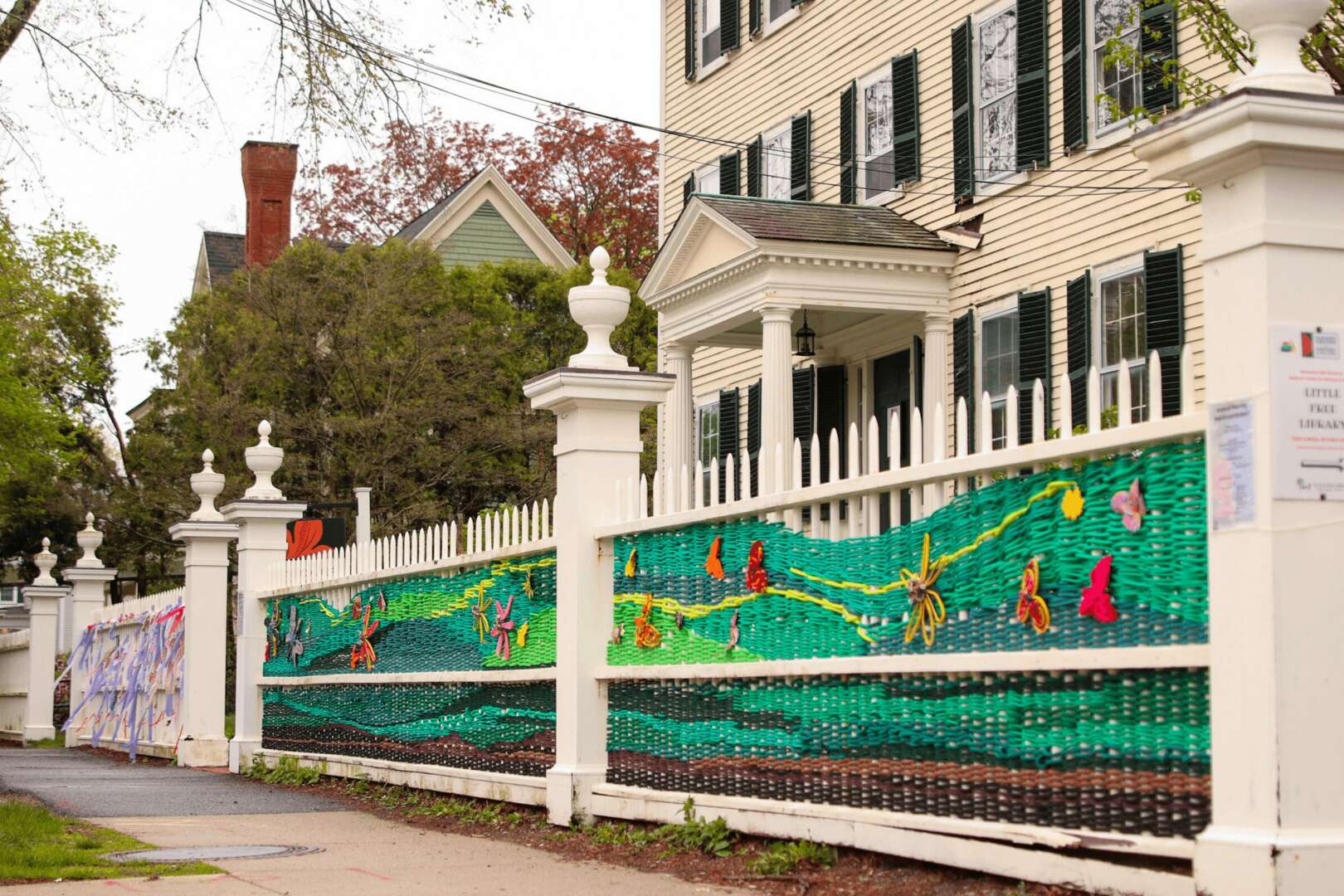
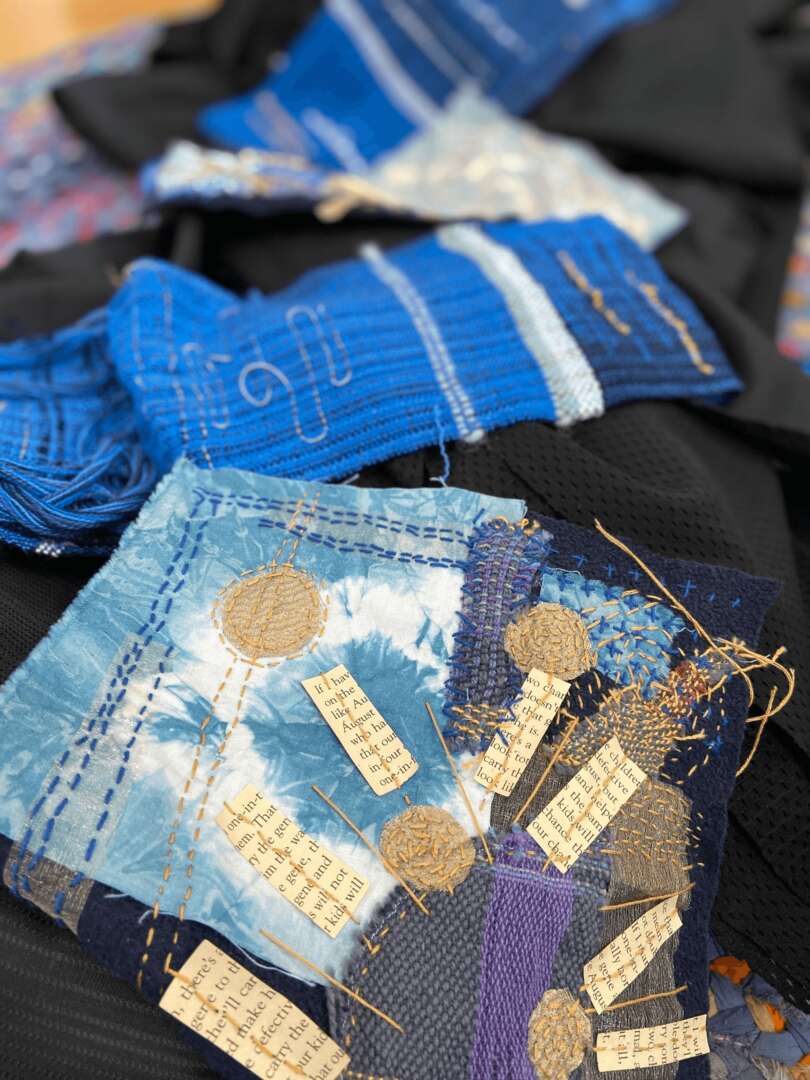
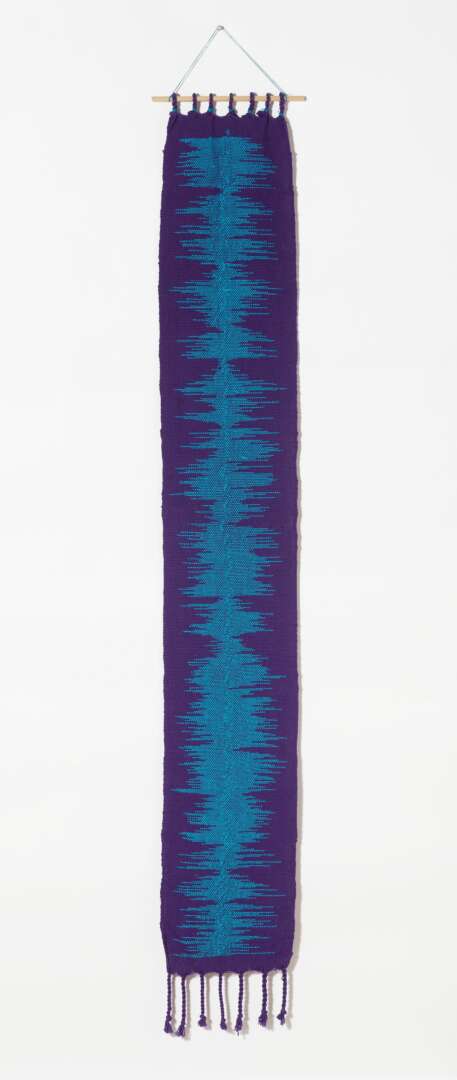
Image Credits
Large fence weaving photo credit – Ryan DiNapoli
White woven wall hanging and long blue voice weaving photo credit – Will Howcroft