

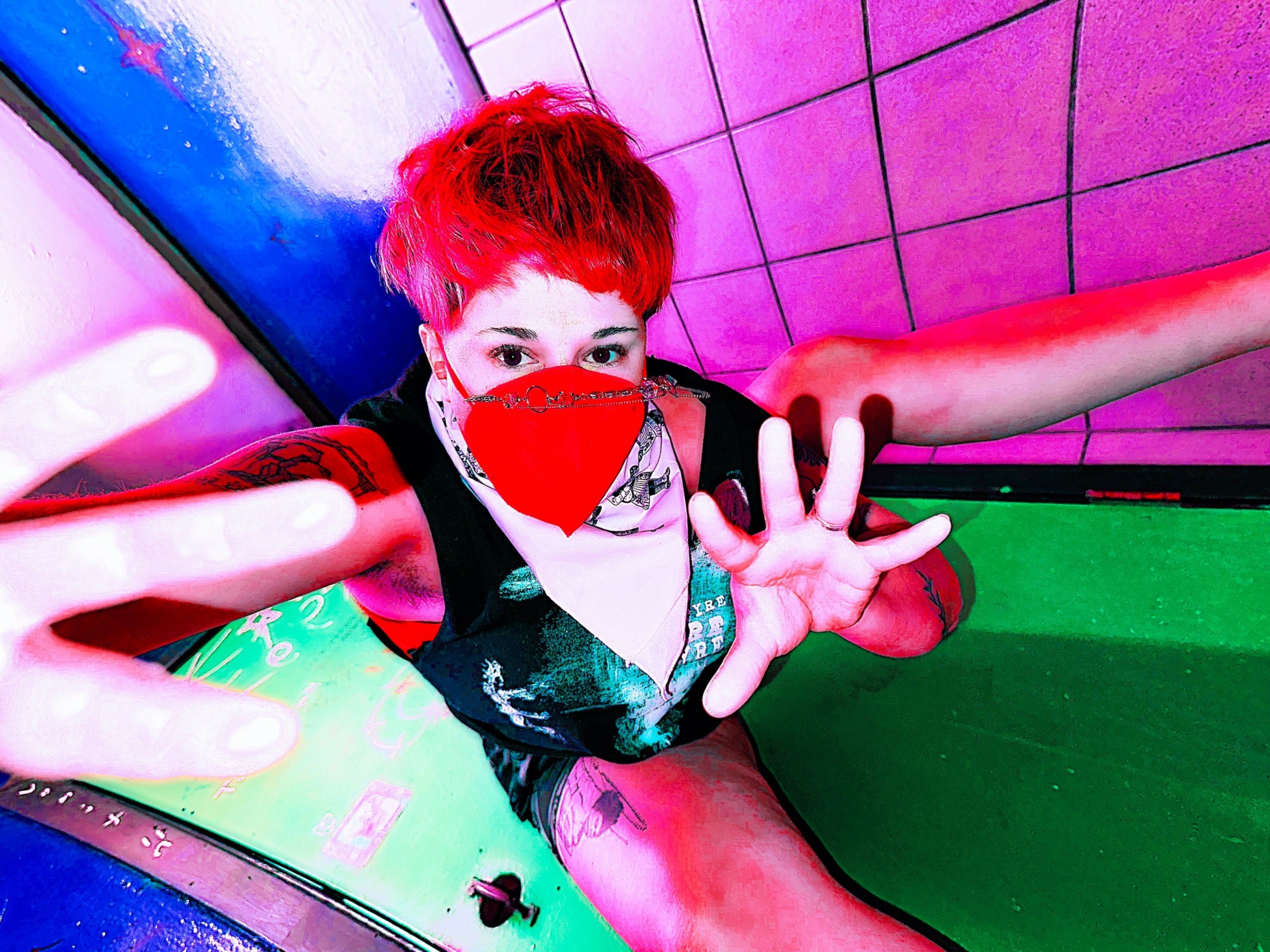

We were lucky to catch up with Mol White recently and have shared our conversation below.
Mol , thanks for taking the time to share your stories with us today Any thoughts around creating more inclusive workplaces?
Creating a more inclusive workplace starts with recognizing that people come from different backgrounds, experiences, and abilities, and those differences shouldn’t just be tolerated—they should be respected and valued. As a queer, nonbinary, chronically ill, and disabled person, I’ve seen firsthand how exclusion happens in both subtle and overt ways.
When I was a teacher for elementary school kids, it was one of the most rewarding things I’ve ever done, but also one of the most telling. I was so burnt out. I was misgendered constantly. I was mistreated by both students and parents, and while I never blamed the kids—Philadelphia’s children are underserved, and the system fails them before they even get a chance—it was clear how a lack of institutional support created environments where harm kept happening.
Then I was drafted into a corporate job, made a manager of production, and laid off after correcting the CEO on my gender and speaking up about problems in the workplace. I’ve been told my whole life that I’m too much, that my standards are unrealistic. But expecting respect, accessibility, and equity shouldn’t be considered “too much.” At the end of the day, we’re all just trying to survive in a terrifying world, and workplaces should be built with that in mind.
That’s why I decided to work for myself, taking something I enjoy—photography—and something I love—music—and melting them into one. I want to create spaces that feel intentional, trauma-informed, and safe for both clients and myself. You never know what someone is going through, and I think people should always act with that in mind. Inclusion isn’t a checklist; it’s a commitment to treating people with care, dignity, and respect. Workplaces that actually listen to people, honor their identities, and fight against burnout culture are the ones that will actually make a difference.
Awesome – so before we get into the rest of our questions, can you briefly introduce yourself to our readers.
Hey, I’m Mol White (they/them), founder of Moleman Media. I built this project to fuse my love for photography and music into something that feels honest and intentional. My path here wasn’t traditional—I tried the “stable” route, but it never fit. I’ve been a teacher, a production manager, an artist. I know what it’s like to be burnt out, overlooked, and undervalued in industries that don’t prioritize people’s well-being. I also know that reclaiming our own stories through art can be healing. That’s why I built something for myself—something rooted in honesty, connection, and representation.
Photography has been part of my life for as long as I can remember. My dad shot for his high school yearbook and local newspapers, and I grew up watching him behind the lens, sometimes ending up in front of it. That exposure stuck with me, even if I didn’t realize it at the time. I found my way back to photography through film—black and white street photography first, then a college class that opened me up to different styles. Now, as both a musician and a photographer, I focus on capturing raw emotion—those fleeting moments of presence, performance, and connection.
I play in a few bands, including Hit Like a Girl, alongside my friends Nicolle Maroulis, Blue Barnett, Sean Bonney-Burrill, and Mike Davis (who also happens to be my husband, lol). Right now, I’m on tour across the U.S., taking performance portraits of many of the bands we’ve had the honor of sharing stages with. There’s something about capturing musicians mid-performance—the rawness, the movement, the energy—that keeps me coming back to it.
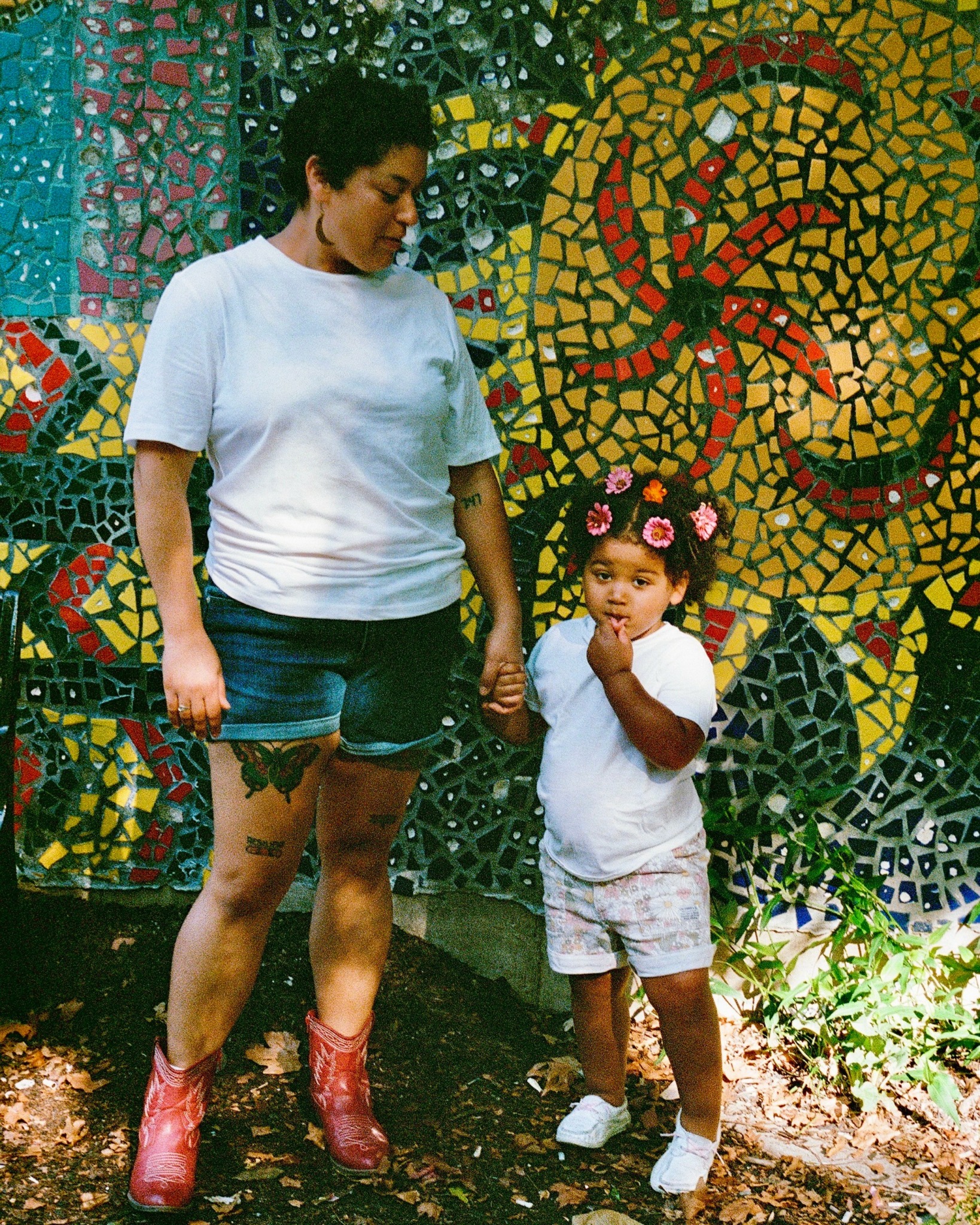
When it comes down to it, I’m drawn to identity-affirming portraiture and candid moments of bliss. With years of trauma-competence training, I understand how powerful it is to reclaim your own image, to see yourself reflected in a way that feels true. My style is intuitive and personal, emphasizing the small, often-overlooked moments that shape a life. I specialize in performance photography, documentary work, and staged portraiture, always aiming to create images that feel honest and deeply resonant.
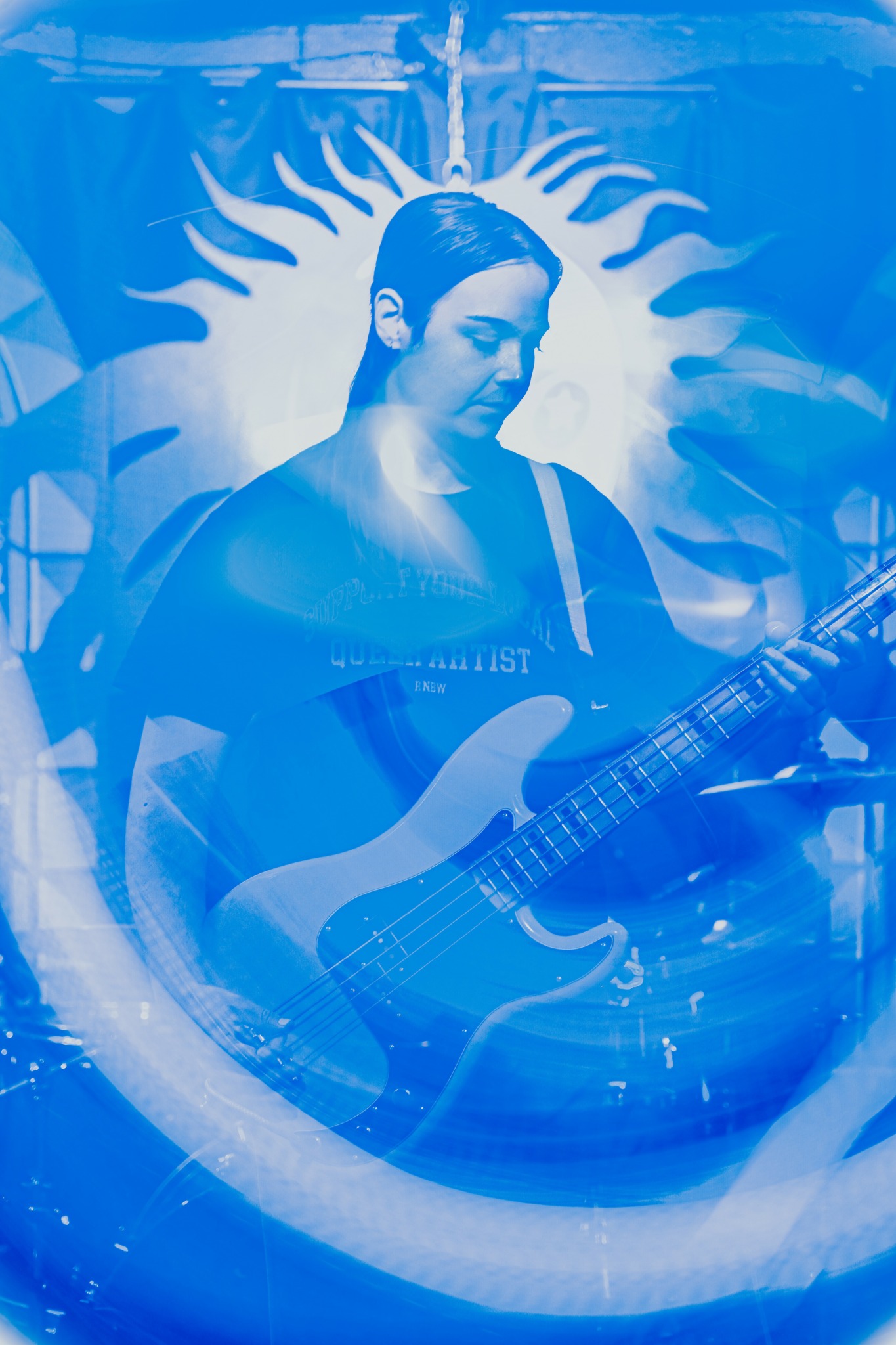
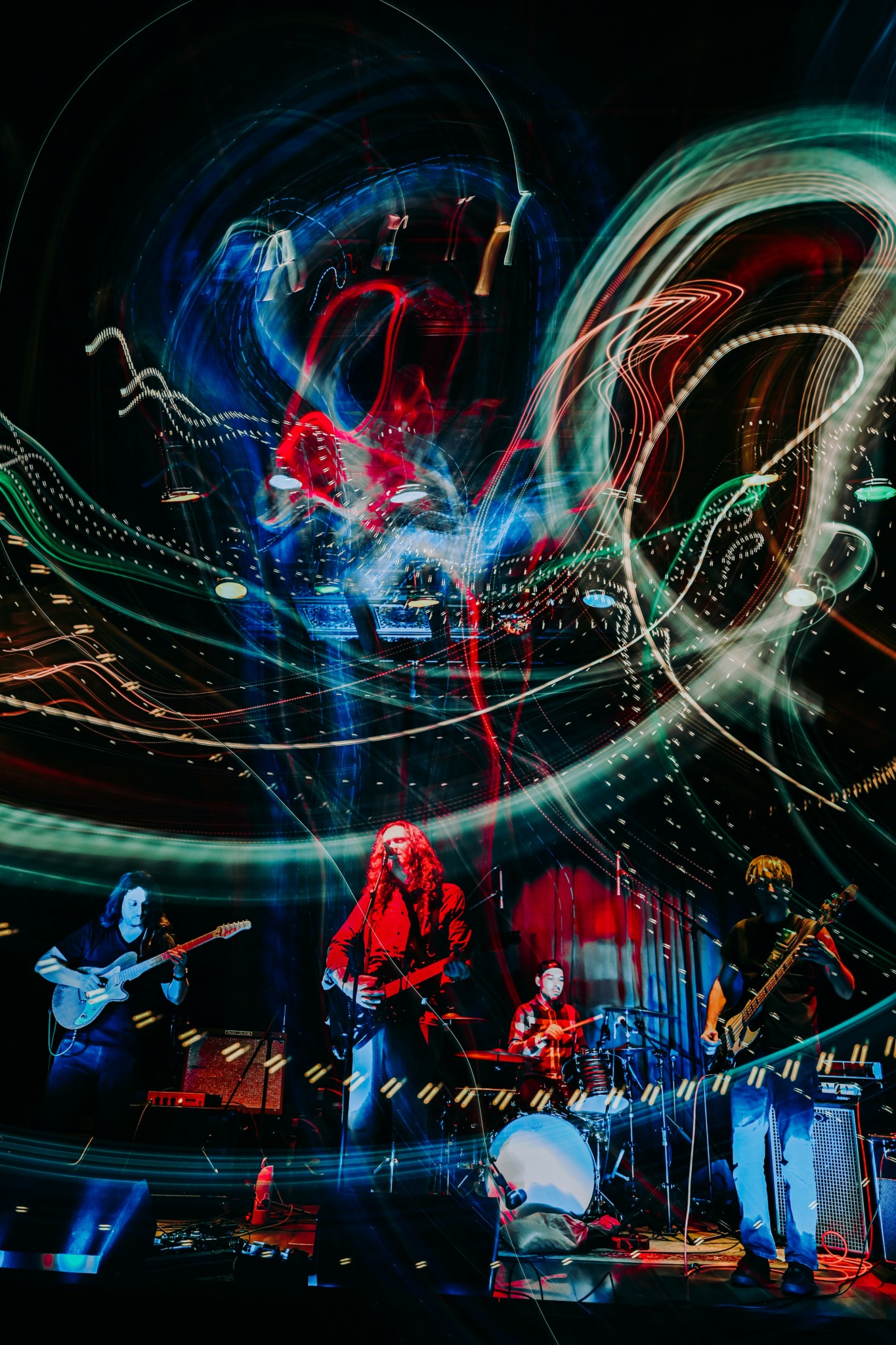
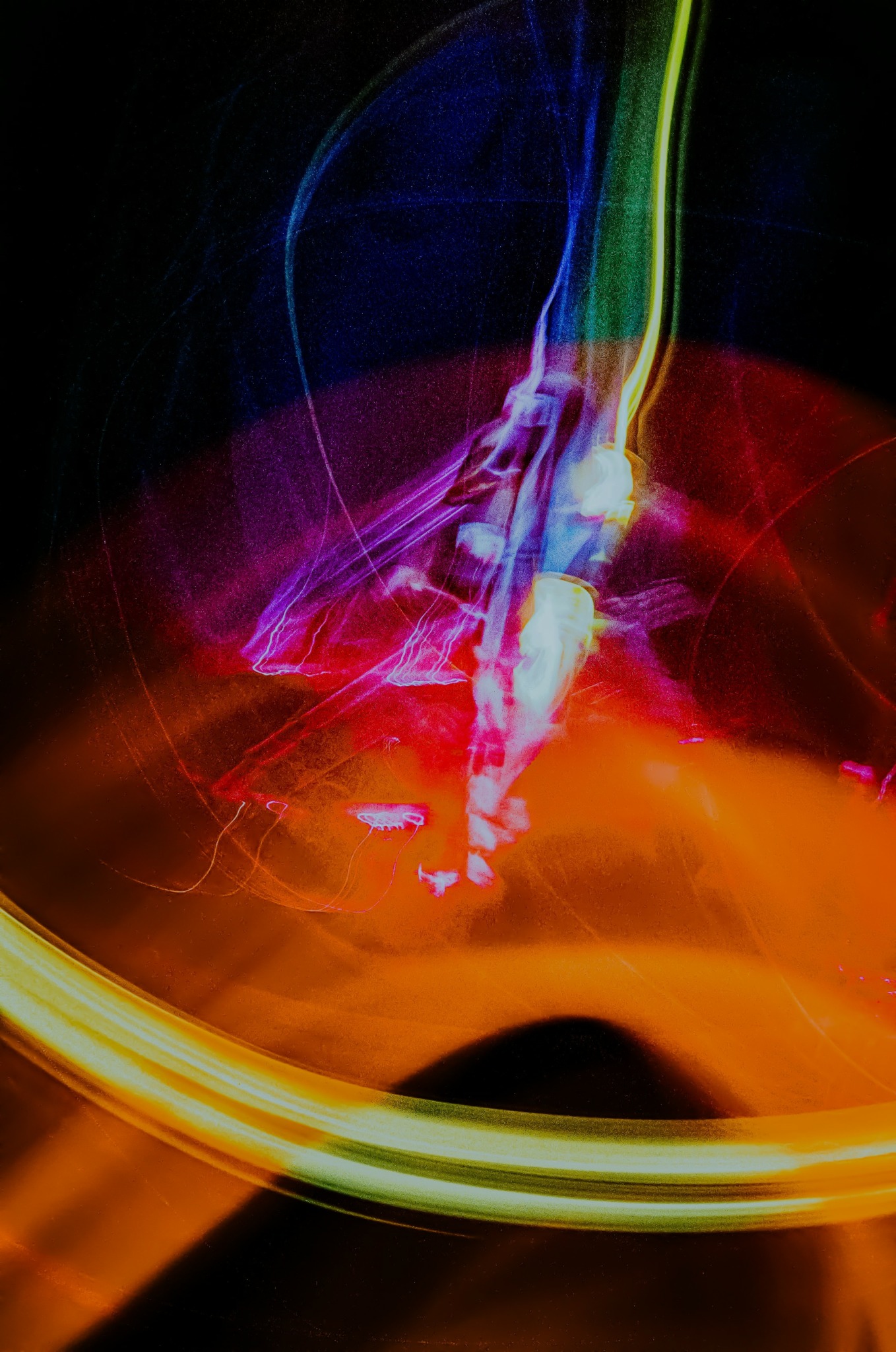
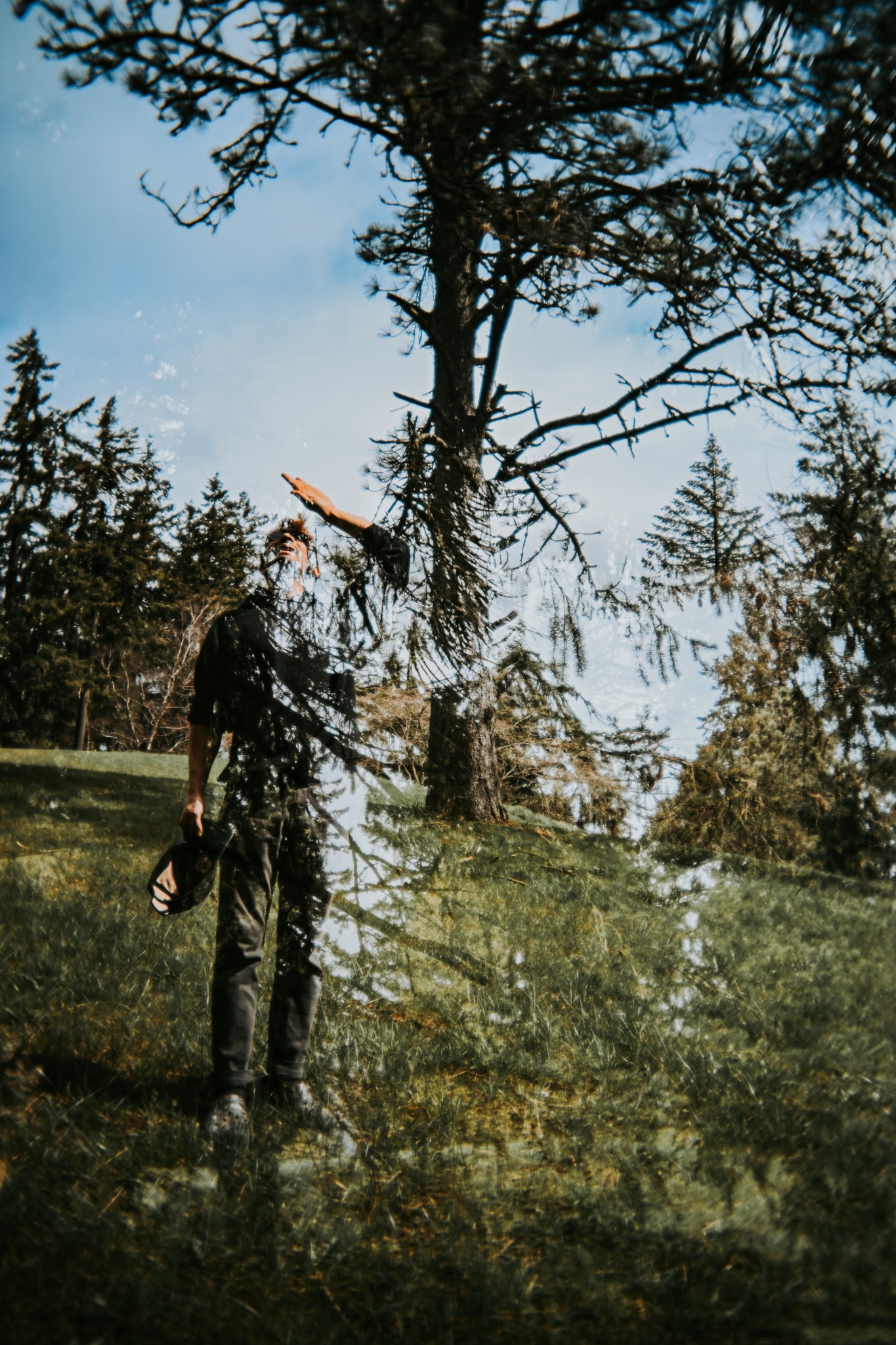
My approach to portraiture is influenced by artists who embrace abstraction and layered storytelling. Painters like Hilma af Klint and Holmquist inspire me to see photography as a meditative practice, a way of capturing not just what is, but what it feels like. I believe spirituality in art lends itself to abstraction—to expression. My work focuses on the visual language of a moment rather than strict representation. Muhammed Faread’s surrealist portraiture, Dan Mountford’s in-camera multiple exposures, and Jacques Pugin’s light painting methods all inform how I experiment with composition, movement, and layered meaning. I do a lot of in-camera multiple exposures and have been experimenting with light painting to create abstract yet emotionally charged images. While I work with light digital touch-ups, my focus is always on what can be achieved in-camera. I also love making zines/chapbooks and writing and plan to dive deeper into those mediums moving forward.
More than anything, I want to photograph souls in the margins—artists, musicians, and other creators who don’t always get the media coverage they deserve. I want to tell stories that aren’t usually told- to document different perspectives and experiences. Right now, I’m having fun in the abstract, experimenting and pushing the limits of what my images can express. But in the future, I’d love to photograph deeply vulnerable moments—a wedding, a birth, a death: moments of raw transition and transformation.
Being in Philly means I’m surrounded by an incredible community of artists who constantly push me. Shoutout to some of my favorites: Eric (@Jerseywallphl), the king of performance candids; Ollie (@olliephotographie), a flash and light trail pioneer; Jake Jackson (@Jerkjerkson), philosopher and double exposure film master; Shannon Nicole (@ShannonNicolePhoto_), who creates textured band photography like no other; and Uv Lucas (@uv_lucas), whose portraiture and creative projects always leave me breathless. Across the river in New Jersey, Luke Ivanovich (@czukphoto) pushes the boundaries of multimedia analogue photography and community organizing, and Ciece Orlando (@ciecetakesphotos) has such a sharp eye for group portraits and meticulous detail. These folks remind me that photography isn’t just about competition—it’s about community, collaboration, and constantly learning from each other.
I know what it’s like to feel unseen. To have a vision but struggle to make it tangible. To operate in places that don’t value your voice. That’s what I want to change. I work with artists and musicians to create images that feel like them—not just what’s expected or marketable, but what’s real. I always strive to take the time to listen, to collaborate, to create spaces where people feel seen.
Starting a business in my 30s is terrifying, but it’s also exhilarating. I don’t have all the answers, and I don’t think I need to. I just know I want to create, to connect, and to keep learning. I’m a sponge, always absorbing what this journey has to teach me. If there’s one thing I want people to take away from my work, it’s that you don’t have to fit into someone else’s definition of success. You don’t have to settle for being undervalued. You can build something for yourself—something that makes sense for you. That’s what I’m doing with Moleman Media, and I’m excited to see where it takes me.
How about pivoting – can you share the story of a time you’ve had to pivot?
For a long time, I thought teaching was my path. I put everything into it—trying to make it work, trying to build a stable career—but over time, I realized that stability in that environment came at the cost of my well-being. Eventually, I transitioned into a corporate job, which seemed like a logical next step, but it ultimately wasn’t the right fit either.
When I was laid off, it forced me to reassess what I really wanted. At first, it felt like failure—I had spent years trying to make different career paths work, only to find myself back at square one. But in hindsight, it was a necessary turning point. That experience showed me that success doesn’t always mean following a traditional route.
Now, I’m focusing on creative and entrepreneurial work—something that feels more aligned with who I am. It’s not always predictable, but it’s fulfilling. I’ve learned that walking away from something that doesn’t serve me isn’t failure—it’s growth. I might return to teaching in a different way one day, but for now, I’m embracing a path that truly fits me.
How did you build your audience on social media?
My Instagram started as a personal page, so many of my followers started as friends and personal irl connections. Then, when I started promoting my little business, I started entering local photo competitions (@myphotolounge) and it helped connect me to more photographers. A pal of mine also added me to a “Philly Photo” group chat, which is just a big hype chat for everyone to share resources. In addition to this, before I went on tour with my band, I decided to slide into the DM’s of every. single. band. we would be playing with. (That’s over 20 shows. Meaning, over 50+ artists!) It seemed daunting, but it was actually fine, after all- this not only helped me make money on the road but also strengthened connections with other artists. I offer sliding-scale services because I know my clientele is often as broke as I am—it’s all about helping each other out. A service for a service is the only way we can survive in this society.
For me, social media is a tool for connection, not just promotion. I share my work in a way that feels natural—candid moments, behind-the-scenes glimpses, and reflections on my creative process. I engage directly with my community, whether that’s through conversations in the comments or sharing resources and opportunities. I’m not in this business to get rich; I’m in this art form to build relationships and relate to my community in a more intentional way.
For those just starting to build their social media presence, my biggest advice is to be real and engaged. Share what excites you, reach out to others, and find ways to make your work valuable in a collaborative sense. Consistency matters, but connection is what makes people stick around. Social media is just one part of the equation—real-world interactions, mutual support, and showing up for your community are just as important. The right audience will find you when you stay true to your vision.
Contact Info:
- Website: A work in progress! – right now it’s https://molemanmedia.mypixieset.com
- Instagram: @molemanmedia
- Linkedin: https://www.linkedin.com/in/molwhite/
- Twitter: https://bsky.app/profile/holymoleman.bsky.social
- Other: Substack and blog:
https://substack.com/@holymolemanBandcamp(s) for my music:
https://littlunmusic.bandcamp.com/
https://molwav.bandcamp.com/My band(s):
@HLAGband on IG
@Comprador_Phl on IG
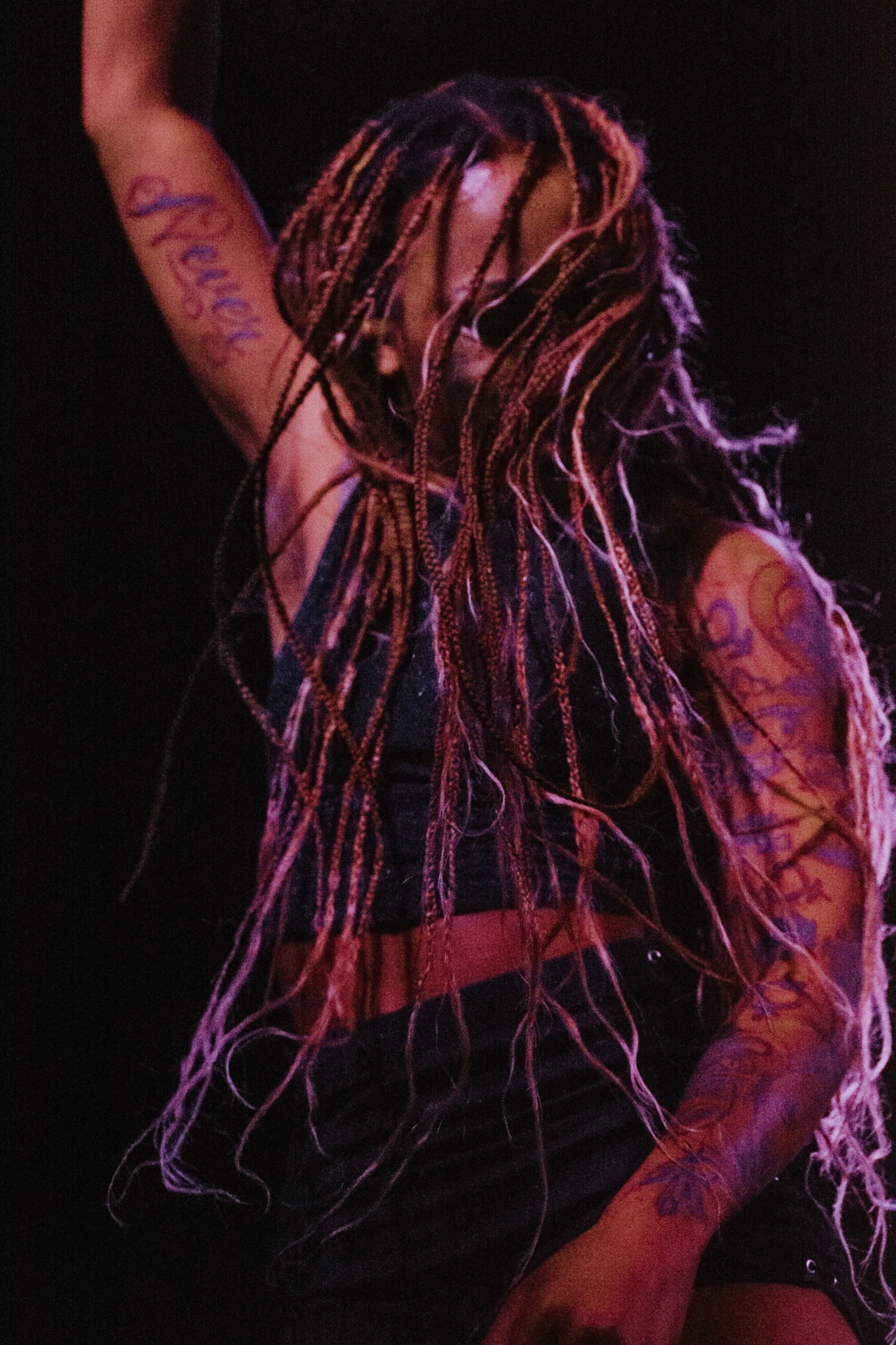
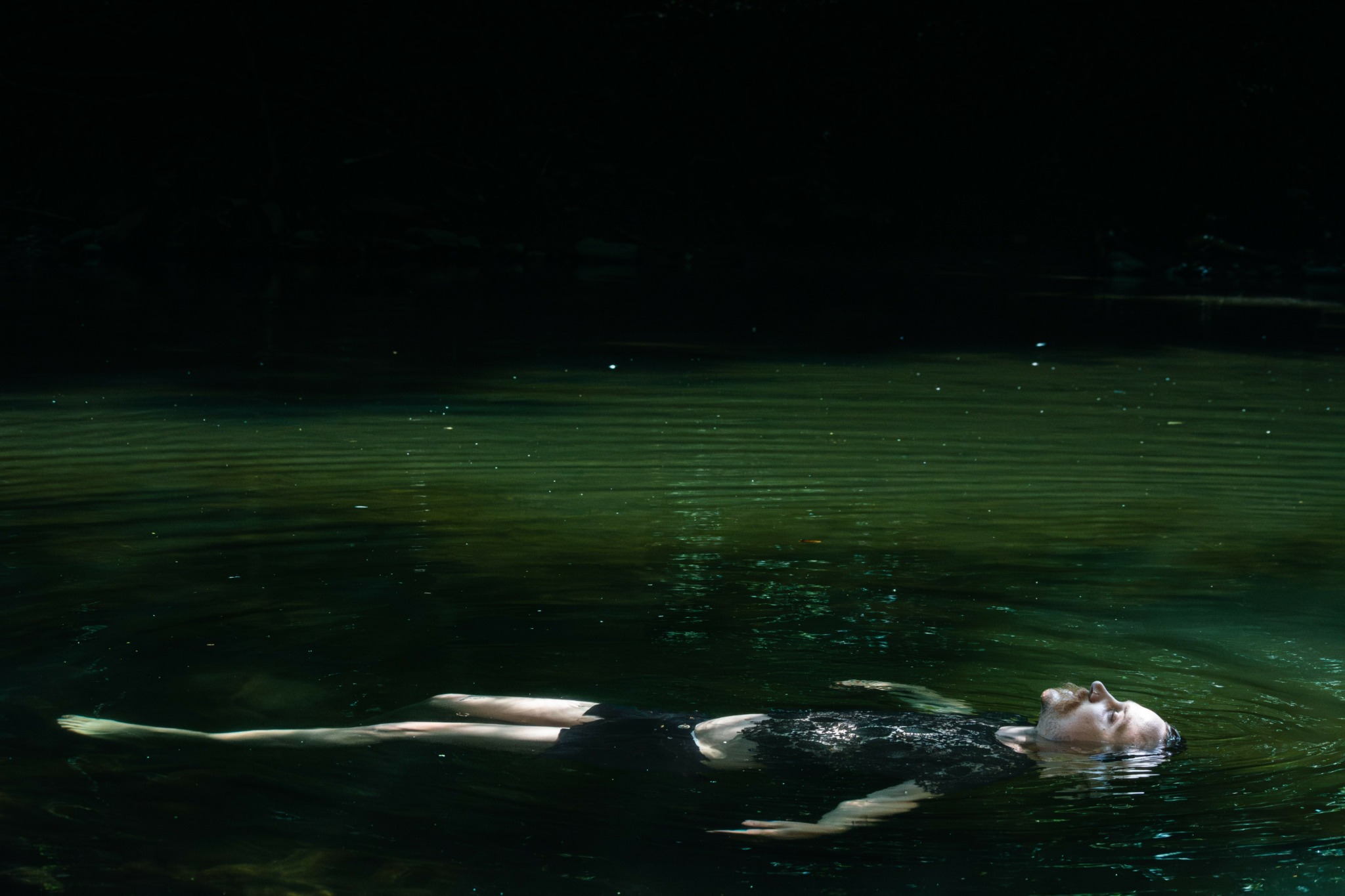
Image Credits
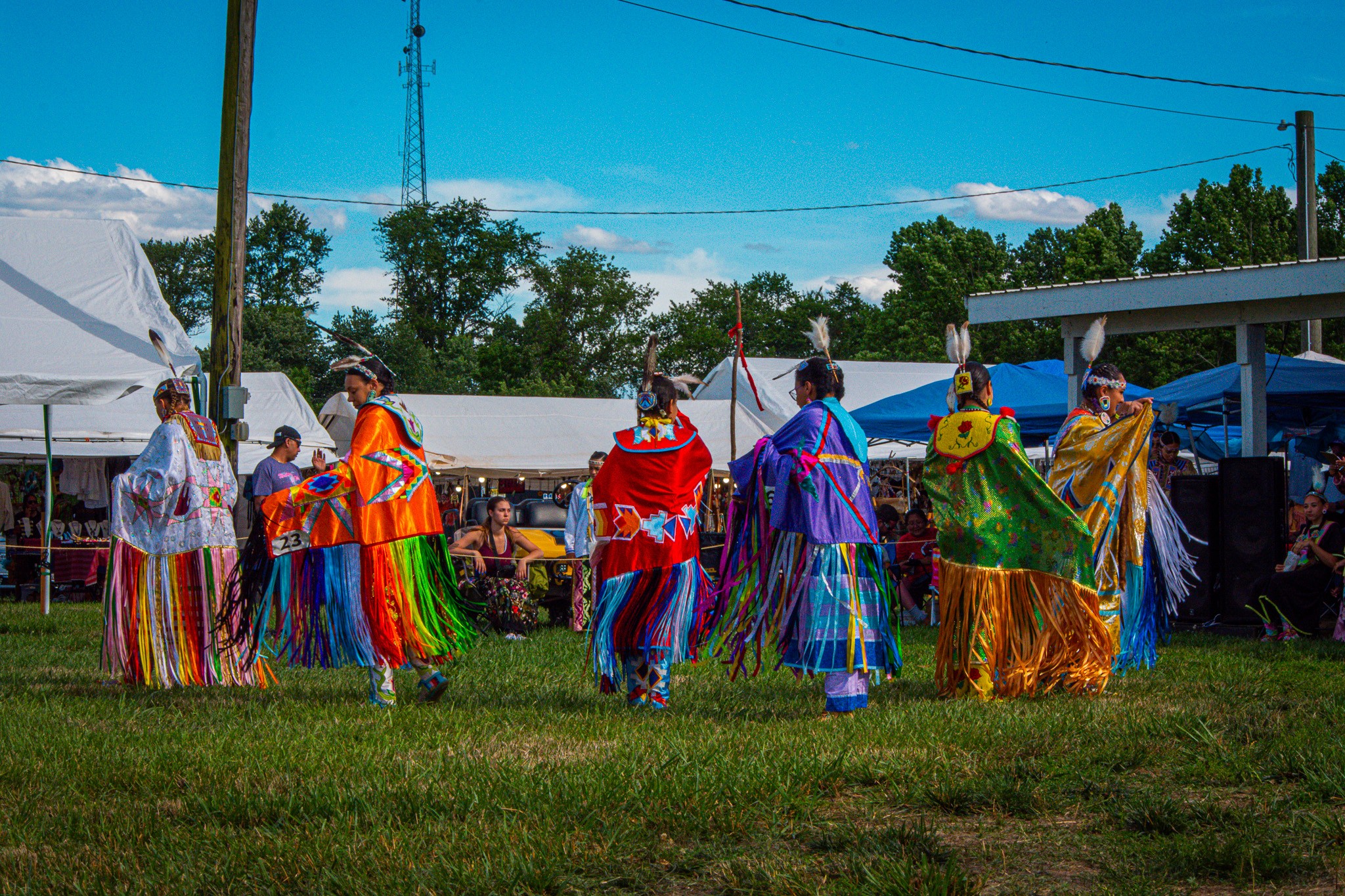
The following images were taken by, procured and edited by myself (Mol White) and feature various performers and friends of mine in the Philadelphia area and beyond (while on tour!)