



We caught up with the brilliant and insightful MNTIC a few weeks ago and have shared our conversation below.
MNTIC, looking forward to hearing all of your stories today. If you could go back in time do you wish you had started sooner or later?
A group of court-certified interpreters started the Minnesota Translators and Interpreters Cooperative (MNTIC) after years of struggle with the Minnesota Judicial Branch administration over diminishing value of our remuneration. In this context, we dreamt about what we wanted our work to do in the world. We wanted to have interpreters’ professional skills be properly remunerated, yes, but we also wanted to see language justice in our community, we wanted to make quality interpretation and translation services available to all, we wanted to educate clients about how to use interpretation and translation services effectively, and we wanted to mentor up-and-coming new interpreters.
If we had started MNTIC earlier, we could have enjoyed all of these benefits sooner, putting our energy into building our ideal work environment rather than continuing to struggle with court administration. It also so happens that the pandemic started just as we were beginning to lift-off. If we had been fully established before the pandemic started, we may have been in a position to provide services for the community and work for our members during the pandemic. Instead, it slowed (but didn’t stop) our launch.
Perhaps we couldn’t have started earlier. Our struggles with the court led us to consult with union organizers who helped us build the trust and unity needed to move forward with the coop. Our board chair, Jenny Finden, has been a key element to our success. She has administrative skills and has put in countless hours to setting up a business structure, client relationships, grant funding and consultants to help with various elements. Ultimately, we launched after Jenny moved back to Minnesota after a time on the east coast, and our members and customers are very satisfied.
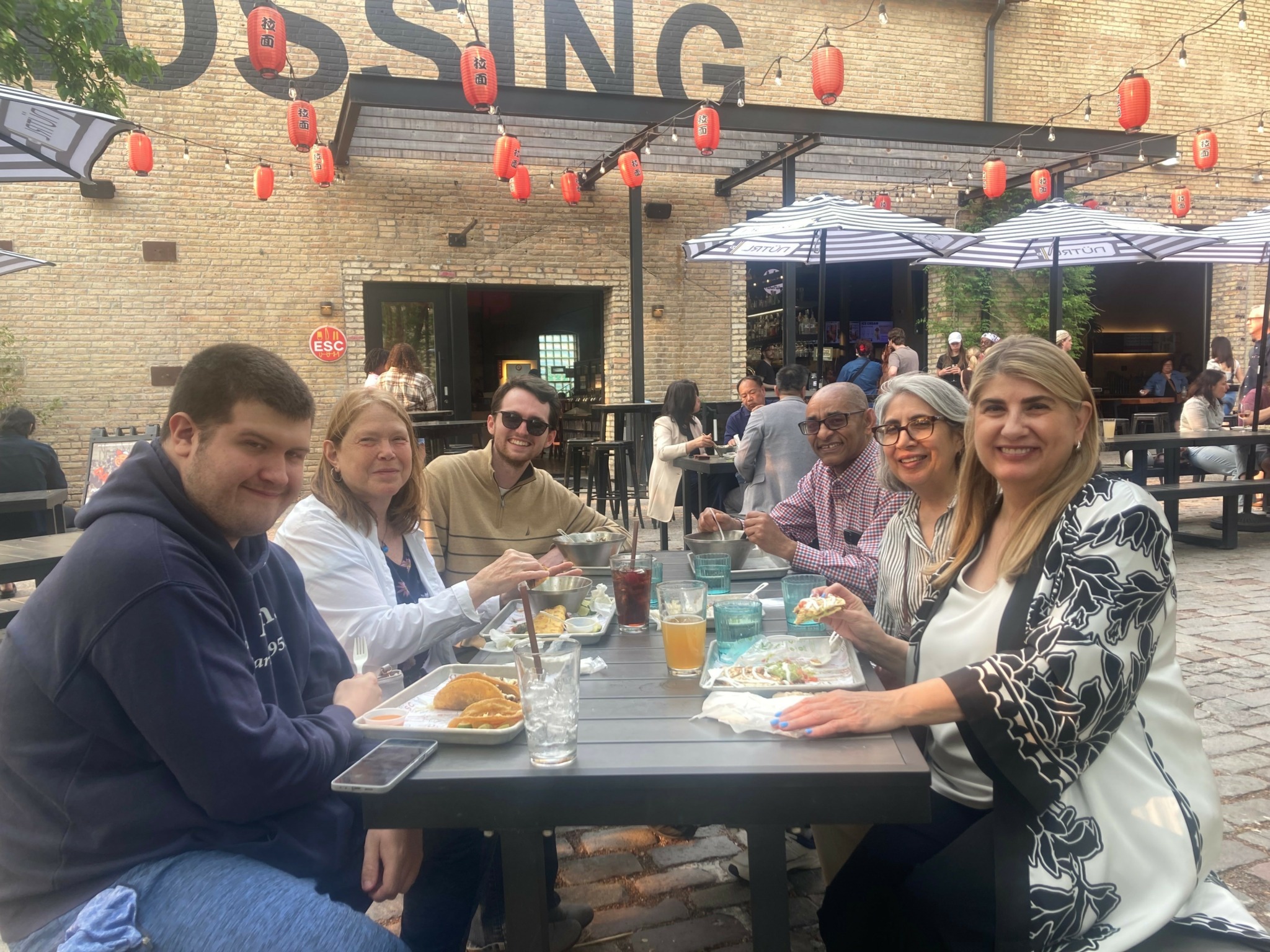
As always, we appreciate you sharing your insights and we’ve got a few more questions for you, but before we get to all of that can you take a minute to introduce yourself and give our readers some of your back background and context?
The story of Marj, the coop member responding to this question is that I took Spanish as an elective in middle and high school and loved it, then majored in Spanish and Ibero-American Studies in college. While I was in high school, my older sister introduced me to the Sanctuary Movement of the early 1980s, which was a network of churches that provided food, housing and other needs for immigrants seeking safety after escaping the wars in El Salvador and Guatemala. They also provided a forum for the people in sanctuary to tell their stories, for the purpose of educating the US public about what was happening in Central America that was not being covered in the news. My first interpreting was as a volunteer while still in high school when I brought one of the people in sanctuary to my high school to tell his story. When I went to college, I became fully immersed in the sanctuary movement with my role being interpreting for the stuff of daily life such as doctor’s appointments and school meetings and for public presentations by the people in sanctuary.
I went on to use my Spanish in my work producing Spanish-language organizing materials for the National Council of Churches’ National Peace with Justice Week, later pastoring a Spanish church and then starting an English school in the Dominican Republic. Upon return, I staffed a welcome center for immigrants in Northfield, MN for 10 years until I was laid off due to state cuts in aid to local governments at which time I became certified as a court interpreter in December, 2010.
Meanwhile, in my personal life, I married a man from the Dominican Republic who didn’t speak any English when I met him, so I was interpreting everything for the first several years, and we spoke Spanish as our primary language at home for the 37 years of our marriage.
Every coop member will have their own unique story of how they came into the profession of interpretation or translation, that is mine.
The products produced by the coop are primarily interpretation, which is a spoken rendition of the message in the source language into the target language, and translation, which is a written rendition. When needed we provide equipment (transmitters and headsets) to enable simultaneous interpretation, sometimes in multiple languages. So, for a conference, there may be Hmong, Somali and Spanish participants each hearing the translation to their own language through headphones of a presentation that is happening in English.
Of course, when a conference involves multiple languages, various breakout rooms, the need for communication at a registration table, during informal networking…the logistics can become a bit complicated. MNTIC offers services coordinating all this as well.
More recently, we have begun to do voice-over work, recording webinars originally presented in English, in Spanish.
Additionally, MNTIC offers workshops about language justice, which goes beyond just providing translation and interpretation to creating an environment where everyone’s voice and leadership is embraced on equal footing.
Because MNTIC holds mentoring new interpreters among its core values, we have relationships with interpreter training programs and provide shadowing opportunities to students and have participated in classroom panel discussions when asked.
Another core value of the coop is to make access to quality interpretation and translation the norm for all, not just the wealthy. For this reason, we have created a sliding fee structure that allows for small- and medium-budget non-profit organizations to pay lower-than-market rate fees.
MNTIC vets candidates for membership. Court certification or listing on the court roster is a foundational marker of quality. Being on the roster indicates awareness of ethical practices and certification indicates that the interpreter has passed a rigorous test of language skills. Additionally, MNTIC observes interpreter candidates in action prior acceptance into coop membership.
We started with court interpreters, so have a strong level of expertise in legal interpretation. In addition, due to a member with a background in agronomy, we have developed a niche interpretation for agricultural conferences and workshops for new farmers.
One of our early and frequent clients is a church and the denomination to which it belongs, so we have become specialized in that area as well.
As professional interpreters, we research our client’s event and prepare a glossary. We share the vocabulary from member-to-member to provide consistency.
Any stories or insights that might help us understand how you’ve built such a strong reputation?
We know, because we hear from clients, that it is the quality of our services and the professionalism with which they are rendered. We set a high bar for admission into membership because one of our core values is for high quality interpretation to be the norm.
Additionally, we get to know our clients, first through the contracting process. As language professionals, we educate our clients about the importance of providing information necessary for our interpreters to prepare in advance. This is different from some agencies that simply match an interpreter in the language to the time slot and send them out unprepared. A professional interpreter studies the unique terminology, acronyms, place names, and jargon specific to an interpreting event in advance. Further, professional interpreters and translators are curious people who enjoy learning new things. When we translate a document or interpret an event that goes into detail about something we didn’t know before, the process of learning about our client’s area of specialization is part of our professional satisfaction. This genuine interest in our clients strengthens the bond that was established in the contracting contact.
Finally, following large events, we have debriefing session with our clients. We talk about what worked well and how things could be improved from the prospective of both the client and MNTIC. This continuously increases the quality of services and at the same time creates a true partnership with our clients rather than a simple transactional relationship.
What’s worked well for you in terms of a source for new clients?
Early on, our board members recommended MNTIC to organizations that were looking for translation and interpretation services. Some even shared their own personal clients with MNTIC! We have established a practice of giving the member who refers their client “first dibs” on work with that client to encourage more of that. Once we began providing services for the first clients, they recommended MNTIC in their network. So the best source of new clients has been satisfied clients!
Contact Info:
- Website: https://mnticoop.com
- Instagram: http://www.instagram.com/mnticoop
- Facebook: https://www.facebook.com/MNTICoop
- Linkedin: https://www.linkedin.com/company/mnticoop/
Image Credits
N/A–my own screenshot when about to start an interpreting session.
N/A–from a member’s phone.