

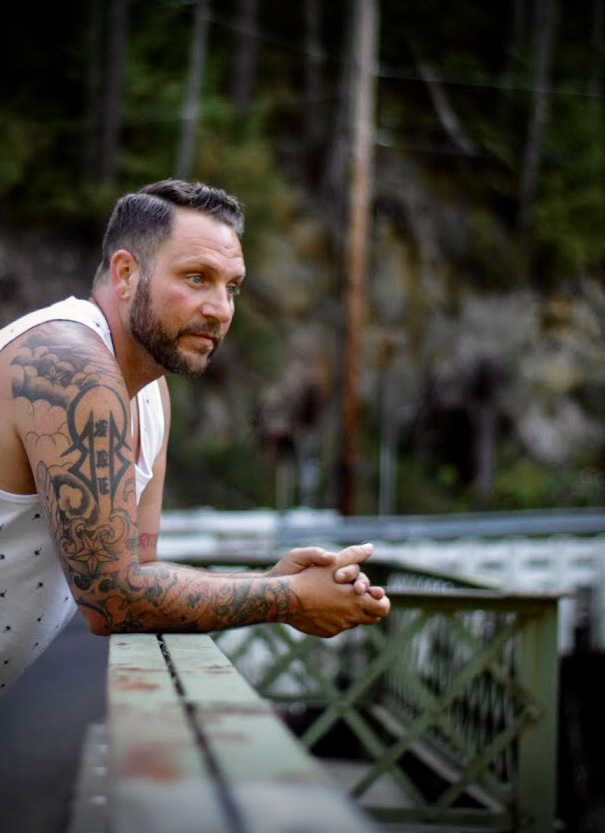

We were lucky to catch up with Mitch Calhoun recently and have shared our conversation below.
Hi Mitch, thanks for joining us today. So, let’s start with a hypothetical – what would you change about the educational system?
One of the biggest changes I would make to the education system is shifting the focus from rigid academic structures to a more dynamic, skills-based learning approach that prepares students for real-world success. Too often, education prioritizes standardized testing and theoretical knowledge over practical application, adaptability, and leadership—qualities that are essential for a fulfilling life and career.
As a retired U.S. Army veteran and a CTE teacher, I’ve seen firsthand how critical skills like problem-solving, teamwork, and resilience are in both military and civilian careers. In the military, training is highly practical, scenario-based, and focused on developing leadership under pressure—something that traditional education often lacks. I believe schools should integrate more hands-on, experiential learning that teaches students not just to memorize information then dump it onto a test, but how to apply it in real-world scenarios.
During my time in the Army, I learned the value of adaptability and continuous learning—skills that were far more important to my success than any single test or textbook. When transitioning into civilian life, I saw how these same principles applied in the professional world. From building sets for Fox’s “American Grit” to the incredibly fast paced style of Thrasher and Vice Media’s “King of the Road”, adaptability, some intestinal fortitude, and a willingness to keep learning is vital to being successful. Later, when I became an educator, I realized how much students could benefit from this mindset if we restructured education to be more skill-driven, interdisciplinary, and career-connected.
The education system should empower students to explore their passions, develop practical skills, and understand how they fit into the larger world. If we can shift our focus from test scores to real-world readiness, we’ll produce graduates who are not just employable but genuinely excited about their futures.


Mitch, before we move on to more of these sorts of questions, can you take some time to bring our readers up to speed on you and what you do?
I’m Mitch Calhoun — a retired U.S. Army Sergeant First Class, educator, visual storyteller, and a founder of Sound Sports Photography. My journey into the arts and communication world has been anything but traditional. After decades of military service, I transitioned into film and television and marketing which led me to education, where I now teach digital photography, visual storytelling, and career-focused creative courses to high school students in Washington State. At the same time, I’m pursuing a PhD in the Philosophy of Communication, where I explore how digital media can meaningfully engage people — whether in classrooms, on screens, or in communities.
My work lives at the intersection of creativity, purpose, and connection. As an artist, I’ve dabbled in music, video production and photography. Having two athletic sons definitely steered me towards the sports photography side of things. Whether I’m designing a custom lesson plan, crafting a music track, filming an explainer video my goal is always the same: to create something that resonates with people.
What sets me apart is the combination of grit, adaptability, and curiosity. My military background taught me how to lead, improvise, and execute under pressure — but my creative work is where I get to break rules, take risks, and connect through shared experience. I don’t believe in phoning things in. Whether I’m helping a student discover their creative voice or building a brand from scratch, I pour myself into it.
I’m most proud of the relationships I’ve built through my work — the students who’ve grown into artists, the followers who message me after a livestream, the fellow educators and creators who’ve joined me on this journey. I want people to know that what I do isn’t just about content or cameras — it’s about building spaces where people feel seen, challenged, and inspired.


Can you tell us about a time you’ve had to pivot?
One of the biggest pivots in my life came when I transitioned from a career in the U.S. Army into a completely different world — teaching and creative work. That shift wasn’t just a change in profession; it was a full-on identity reset. For decades, I lived by structure, precision, and a mission-first mindset. I was proud of my service, but as retirement approached, I started asking a new question: What do I want to build now?
My academic background had been geared toward pre-med and leadership. At one point, I was seriously considering medical school in Tucson — but my kids were in Washington. During my military career, I didn’t always have control over where I lived or how close I could be to them. But this time, the choice was mine — and there was no way I was going to be apart from my children again. So I left San Antonio, Texas, and moved to Washington State with no plan, just a clear priority: be present for my kids. It was scary, to say the least.
In that uncertainty, I made a bold move and pursued an MFA in Producing and Filmmaking at the Seattle Film Institute. I saw it as a chance not just to chase a dream, but to model what it looks like to pursue your passions while maintaining balance. I still had my Bachelor’s degree to fall back on, but I wanted to lean into creativity.
I’ve always had a creative streak — music, photography, storytelling — and for a while, film and television work gave me the outlet I craved. But it also pulled me away from my kids again, with long travel and unpredictable hours. That’s when I realized education could be the bridge: a way to merge creativity with purpose, stability, and impact. I stepped into the classroom, first teaching digital photography and design, and now helping young people find their voices through visual storytelling.
That pivot wasn’t always easy. I went from giving orders to giving feedback. From camouflage and combat boots to cameras and critique. But the mission stayed the same: help people grow, push through adversity, and find meaning in the work. I didn’t leave leadership behind — I redefined it. In the classroom, tasks, conditions, and standards became learning targets, success criteria, and rubrics.
Today, I’m not only teaching — I’m building a brand rooted in my passions, and I’m pursuing a PhD in Communication to deepen my understanding of how media can shape lives, education, and community.
That pivot taught me that reinvention doesn’t mean abandoning your past — it means carrying it forward with new purpose.


Are there any books, videos, essays or other resources that have significantly impacted your management and entrepreneurial thinking and philosophy?
There are a handful of books and resources that have significantly shaped how I approach leadership, entrepreneurship, and creative work — especially as someone who’s moved through very different professional worlds: the military, education, and media.
Simon Sinek’s Leaders Eat Last was one of the first books that really stuck with me when I began to transition out of the Army. It reinforced a lot of what I had already lived — that real leadership is about putting your people first, building trust, and creating a culture of safety. In the military, leaders literally eat last to make sure their soldiers are taken care of. Sinek expands on that idea in the context of business and organizational leadership, using neuroscience and case studies to show how servant leadership drives performance and loyalty. It gave me language and strategy for something I had already believed at a gut level.
As I started leaning more into creative work, Seth Godin’s The Practice was a game changer. It helped me break free from the need to wait for inspiration or approval before creating. Godin challenges artists and entrepreneurs to trust the process, make things daily, and detach from outcomes. That mindset has been crucial in everything from writing music to launching Redleg TCG and even building curriculum for my students. It’s about showing up consistently and being brave enough to “ship the work” — even when it isn’t perfect.
In my current role as an educator and PhD student in communication, Floyd Cobb and John Krownapple’s Belonging Through a Culture of Dignity has been incredibly influential. While it’s focused on equity in education, its insights are universal to leadership. The authors argue that dignity is a prerequisite for meaningful engagement and equity — and that belonging isn’t just a warm, fuzzy concept; it’s something you design for. That perspective has shaped how I manage classrooms, facilitate dialogue, and think about company culture in any setting. Whether I’m teaching high schoolers or collaborating with fellow creatives, the dignity lens reminds me to lead with empathy and intentionality.
And honestly, YouTube has been one of my most practical and ongoing sources of insight. Channels like Think Media helped me learn how to build a digital presence and improve my production skills. Gary Vee reinforced the importance of authenticity, patience, and engaging with community over numbers. And Peter McKinnon reminded me that creative expression and storytelling are powerful tools — whether you’re a teacher, entrepreneur, or artist.
Together, these resources have helped me form a leadership philosophy rooted in service, creativity, consistency, and authenticity. I don’t have it all figured out, but I try to model what it means to be a lifelong learner — someone who’s willing to pivot, reflect, and keep building with purpose.
But the most important resource of all? A willingness to take action. You can read every book, watch every tutorial, and listen to every podcast — but none of it matters if you don’t move. Even if the action you take turns out to be a mistake, it’s still progress. You learn, you recalibrate, and you go again — this time with more clarity. Growth doesn’t come from waiting until you have all the answers. It comes from doing. From taking the shot, testing the idea, saying yes to the opportunity. Execution is the real teacher — everything else is just preparation.
Contact Info:
- Website: https://www.soundsportsphotography.com/
- Instagram: https://www.instagram.com/mitchcalhoun/

Image Credits
Mitch Calhoun