

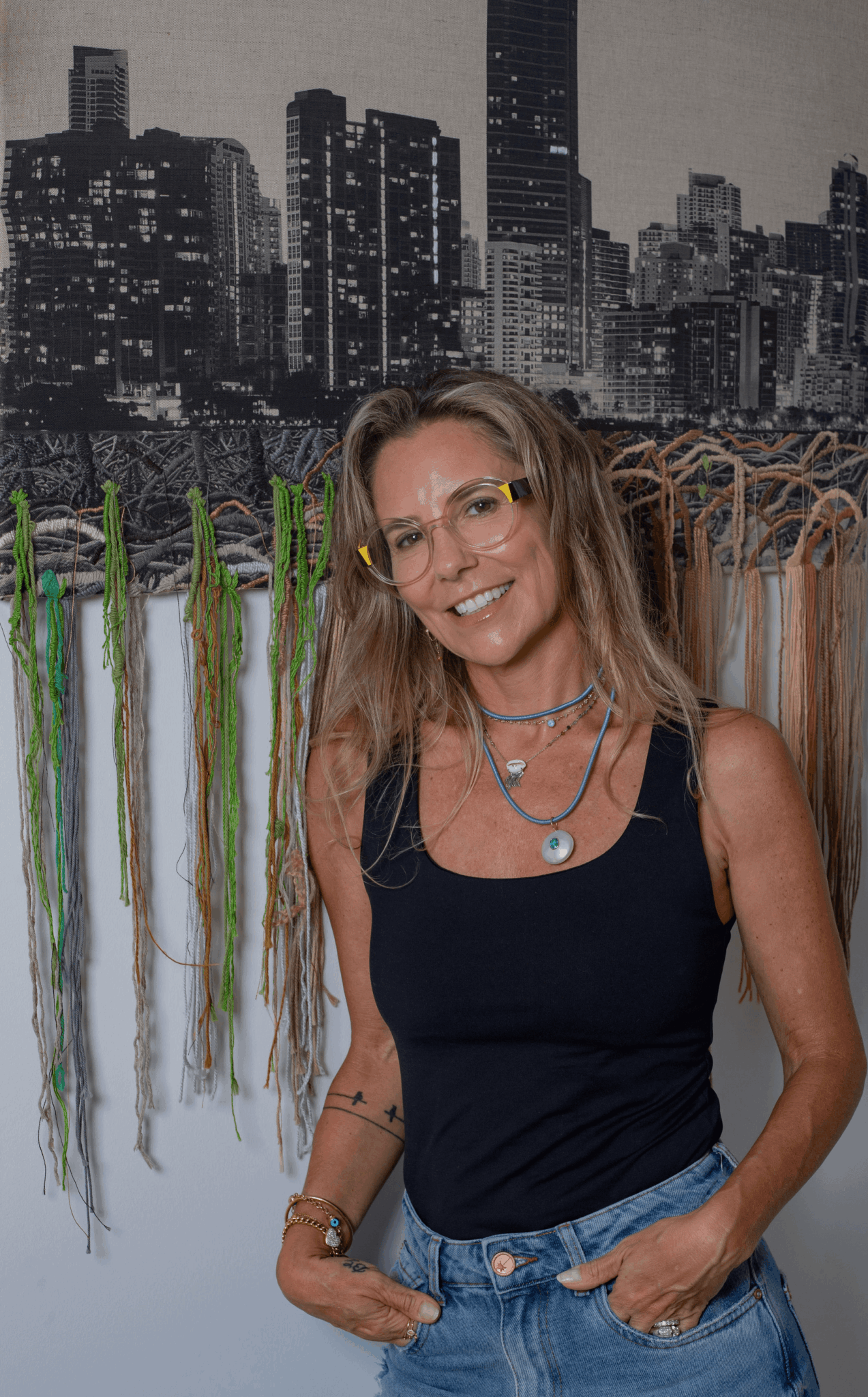

We caught up with the brilliant and insightful MIRELE VOLKART a few weeks ago and have shared our conversation below.
MIRELE , thanks for joining us, excited to have you contributing your stories and insights. How did you learn to do what you do? Knowing what you know now, what could you have done to speed up your learning process? What skills do you think were most essential? What obstacles stood in the way of learning more?
learned what I do today from a very young age, almost without realizing it. I was raised in the countryside of Rio Grande do Sul, in southern Brazil, in a region of German heritage where women were traditionally taught to sew, embroider, and master textile techniques as part of household responsibilities. These skills were passed down from my mother and grandmothers, and for a long time, I didn’t see them as art, they were viewed more as obligations than as creative expression.
At the age of 12, I started painting classes. I was the only child in a group of adult women, since there were no art courses for kids in my town. Later, I earned a degree in Fashion Design, which helped me deepen my technical and aesthetic knowledge. But the real turning point came when I moved to the United States and pursued an MFA in Photography and Visual Arts. It was during that time that I joined FAMA (Fiber Artists Miami Association), a collective that completely transformed the way I saw my own work.
Until then, I had been combining textile techniques with painting, but I often felt conflicted — as if using “domestic” techniques made me less of an artist. Through my academic journey and the connection with other fiber artists, I finally came to understand that what I was creating was indeed art — and a powerful kind of art, because it holds history, identity, and resilience.
What could have sped up my learning process would have been realizing earlier that what I saw as limited was, in fact, a rich visual language. The most essential skills have been patience, sensitivity to materials, and the courage to claim my own voice. The biggest obstacles were internal, overcoming the bias toward traditional femininity and learning to recognize the value in what was often dismissed as “craft.” Today, I see these techniques as an extension of my body and my story — and as a deeply authentic form of art.
MIRELE , before we move on to more of these sorts of questions, can you take some time to bring our readers up to speed on you and what you do?
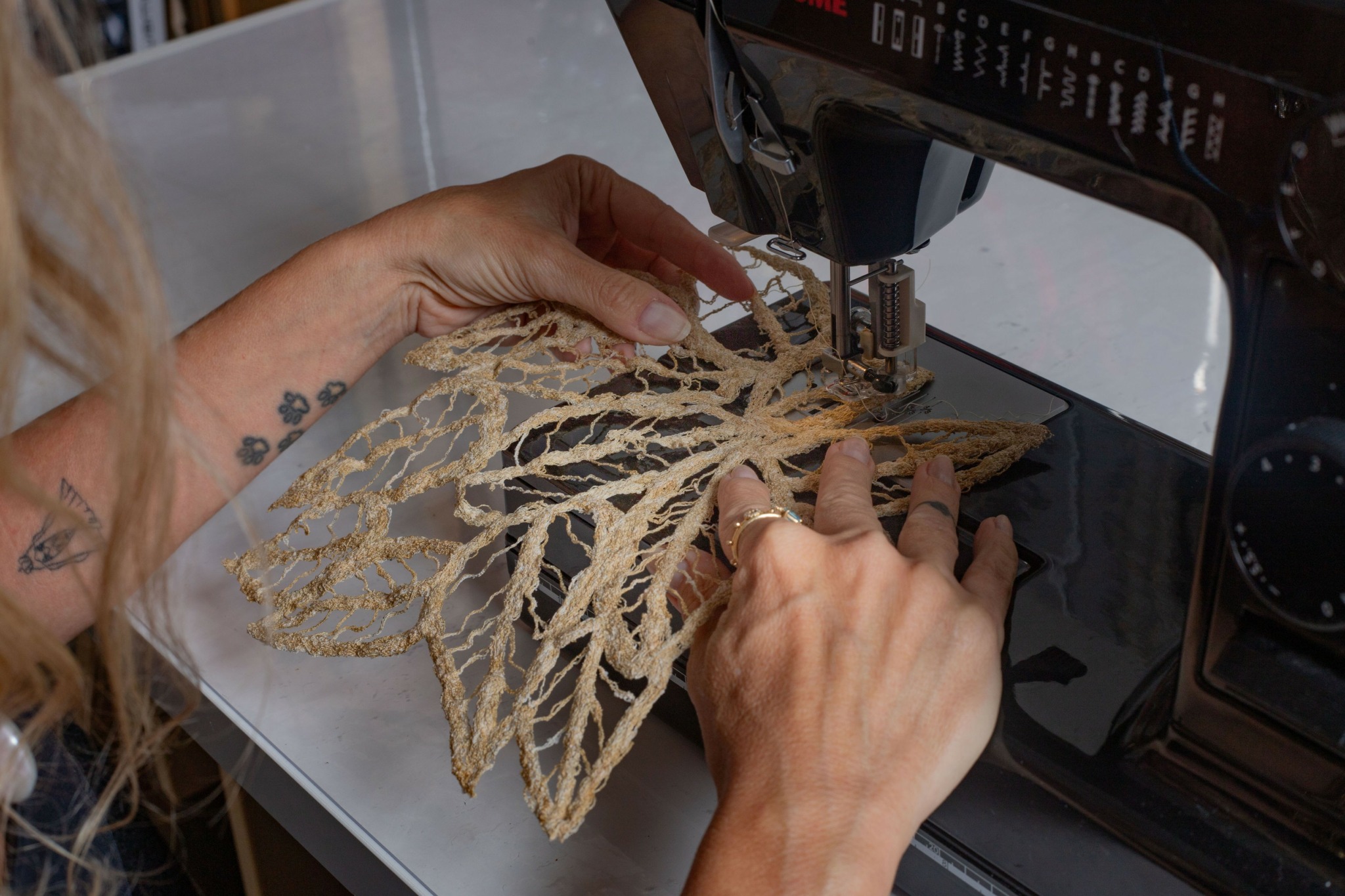
I’m Mirele Volkart, a Brazilian visual artist based in Miami, with a focus on textile practices within the language of contemporary art. I was born and raised in the south of Brazil, in a region with strong German cultural influence. Although I only formally embraced my path as an artist later on, creative making has always been present in my life. While living in Brazil and working in other fields, I maintained a fully equipped studio in my home — a space where I embroidered, painted, worked with ceramics, mosaic, and constantly experimented with different techniques. It was a living, breathing place of creation where my ideas were shaped by hand into form.
Moving to the United States marked a significant turning point. Here, I was able to return to my studies and chose, wholeheartedly, to dedicate myself to visual arts. From there, exhibitions began to emerge, along with encounters with other artists who, like me, worked with fiber techniques. That’s how I joined FAMA (Fiber Artists Miami Association), a network that played a fundamental role in sharing my work through group shows and events. In 2024, I was invited by artist Aurora Molina to become part of Red Thread Art Studio Miami, a collective studio of 17 textile artists. This marked a new phase in my career. Every first Friday of the month, we open our doors to the public — a dynamic moment where people can see our work up close. It’s also a space of community and exchange, where I present my process, inspirations, and the poetic layers within my practice.
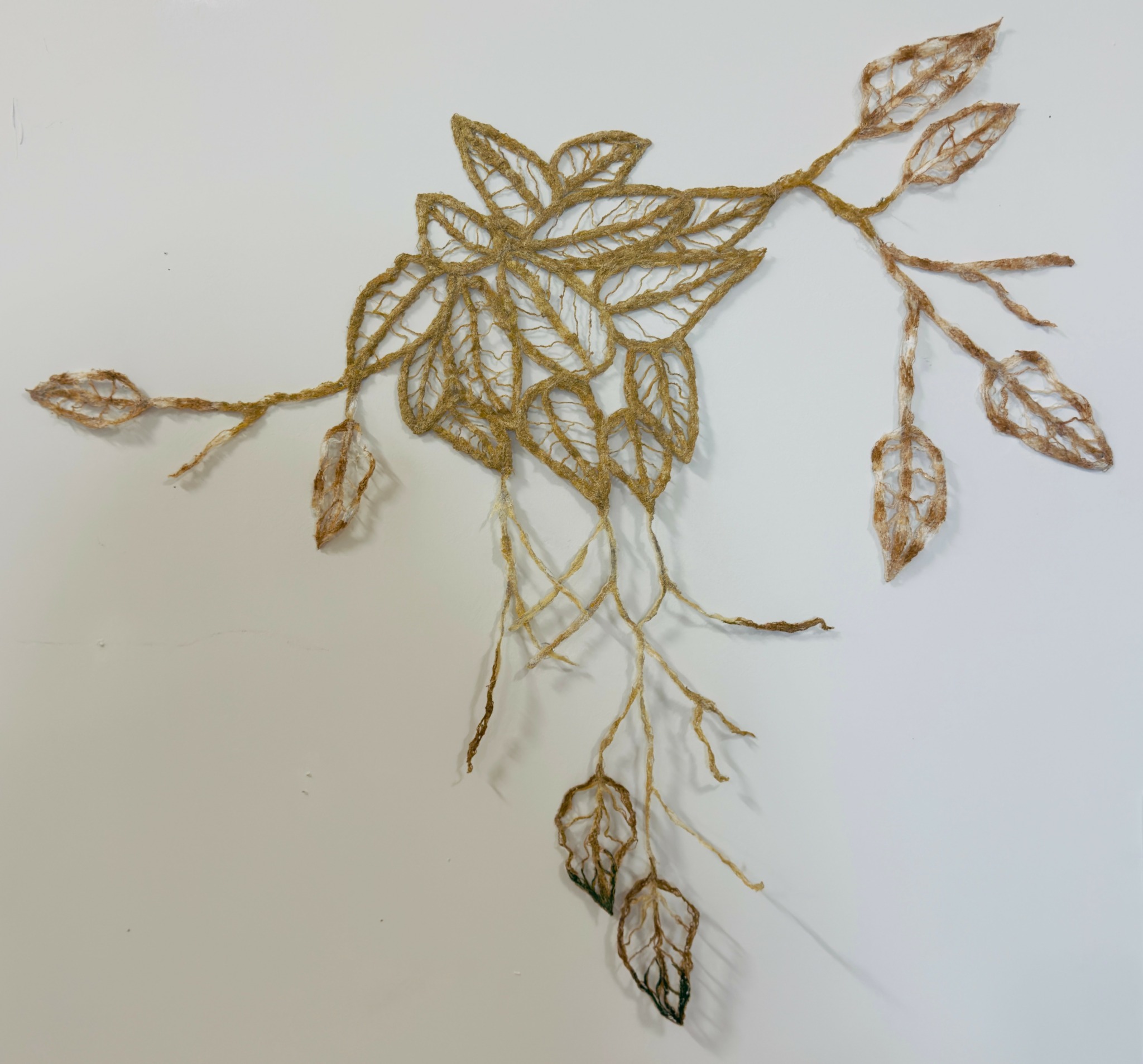
My inspiration almost always comes from nature. I seek to draw parallels between the natural world and human experiences, exploring themes such as cycles, migration, connection, and belonging through shapes like leaves, flowers, roots, and plants. I work with textile techniques — primarily machine embroidery — combined with photography and other natural materials. Each piece emerges from careful attention to materials and time, carrying a visual narrative that connects personal memory, ancestral history, and the present moment in transformation.
What sets me apart is how I integrate ancestral and traditionally feminine techniques with contemporary and existential concerns. I treat thread as language — as line, as trace, and as a bridge between past and present. I’m proud of transforming what I once saw as a limitation into strength — and of helping to give visibility to a form of art that, for too long, was devalued for being linked to the domestic sphere.
More than offering objects, I offer visual and sensory experiences that speak of belonging, delicacy, and resilience. I want my work to be a celebration of everything that is built slowly, by hand and with care.
What do you find most rewarding about being a creative?
For me, the most rewarding aspect of being an artist is the ability to transform something intimate — memories, experiences, emotions — into something that can be shared and, often, deeply moving to others. It’s incredibly fulfilling when someone connects with my work, not just because of its aesthetics, but because of the feeling or story it evokes — even when that response is entirely different from my original intention.
What I find truly beautiful in art is its inherent ambiguity. A piece is often born from something deeply personal — a memory, an animal that crossed my path, an image on the street, or even a dream. But the viewer doesn’t need to know that. Sometimes, someone feels joy or peace when looking at a piece that I created in a moment of sadness. And that’s okay. A single artwork can become many different works, depending on who is observing it.
Many artists don’t like to talk about their work, believing that art’s power lies exactly in that openness to interpretation. I, on the other hand, enjoy sharing my process — but I find it magical when I hear how someone else reads or feels the work. That’s when the piece truly comes alive, beyond me. For me, art is not something that ends in itself. It’s a space of dialogue, of listening, of connection.
Working with thread, fabric, and techniques historically viewed as domestic is both a political and emotional gesture — reclaiming what has long been overlooked and honoring it as artistic language. There’s a certain poetry in the slowness of making — in the layers that build patiently — and it’s within that expanded sense of time that I find meaning.

Is there something you think non-creatives will struggle to understand about your journey as a creative?
I think one thing that many non-creatives may struggle to understand is that art isn’t something you need to “solve” — there’s no one right answer or secret meaning you must unlock to truly connect with a piece. Sometimes people feel like they need to understand exactly what the artist meant in order to appreciate the work — and that can create unnecessary distance.
What I wish more people knew is that personal interpretation is valid and valuable. Art isn’t a closed code — it’s an open language, one that’s completed through the experience of the viewer. When someone feels something in front of a work — whether it’s joy, melancholy, curiosity, or even discomfort — that’s already a dialogue in motion. And that doesn’t offend the artist. On the contrary, it’s a sign that the piece is doing its job: it touched someone, in some way.
Many people believe that in order to enjoy art, they have to “understand” it. But for me, the most powerful kind of art is the one you feel before you try to explain it. And that kind of emotional response is available to everyone. That’s what makes art such a deeply human and democratic form of communication.
Contact Info:
- Website: https://mirelevolk.art
- Instagram: @mirelevolk.art

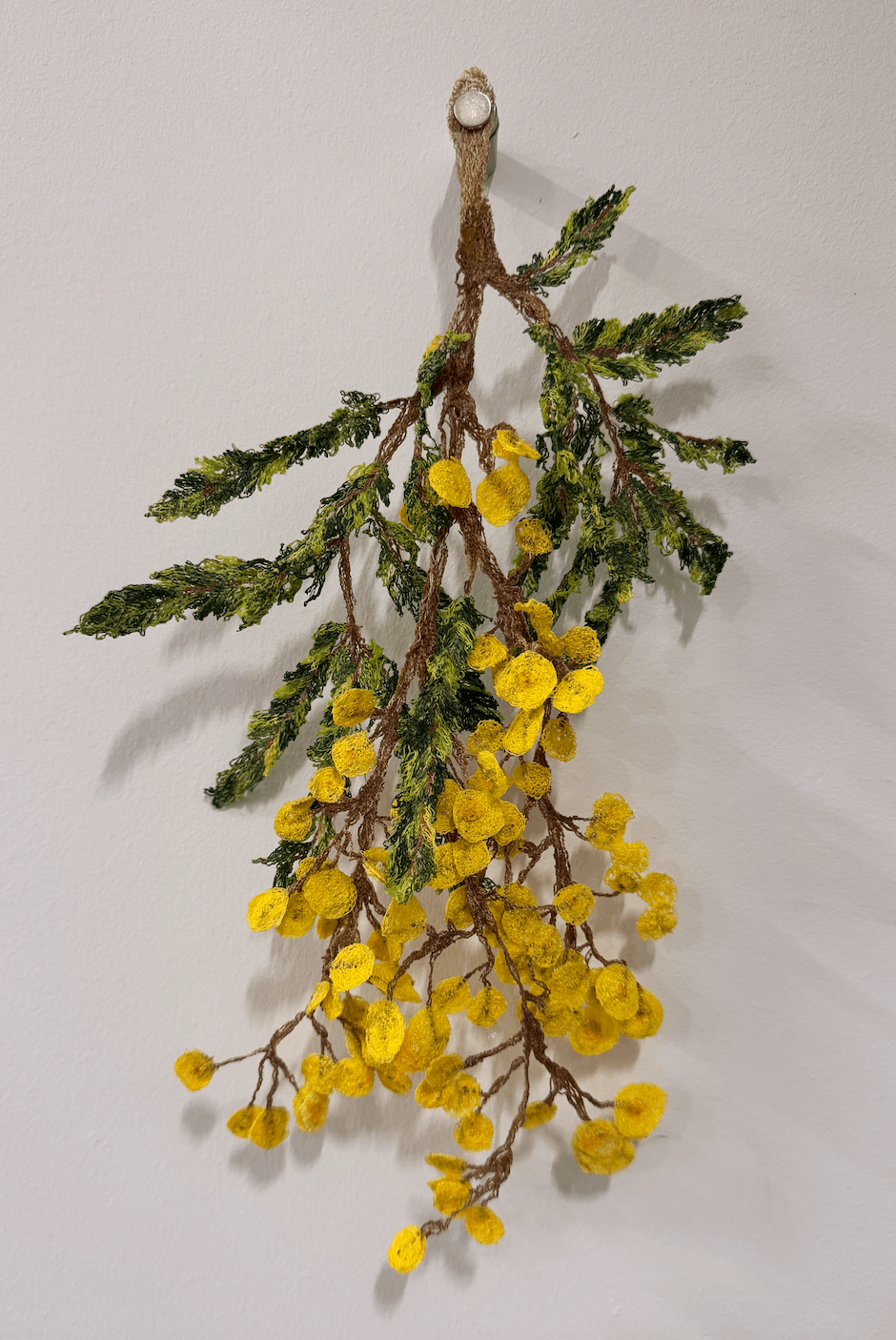

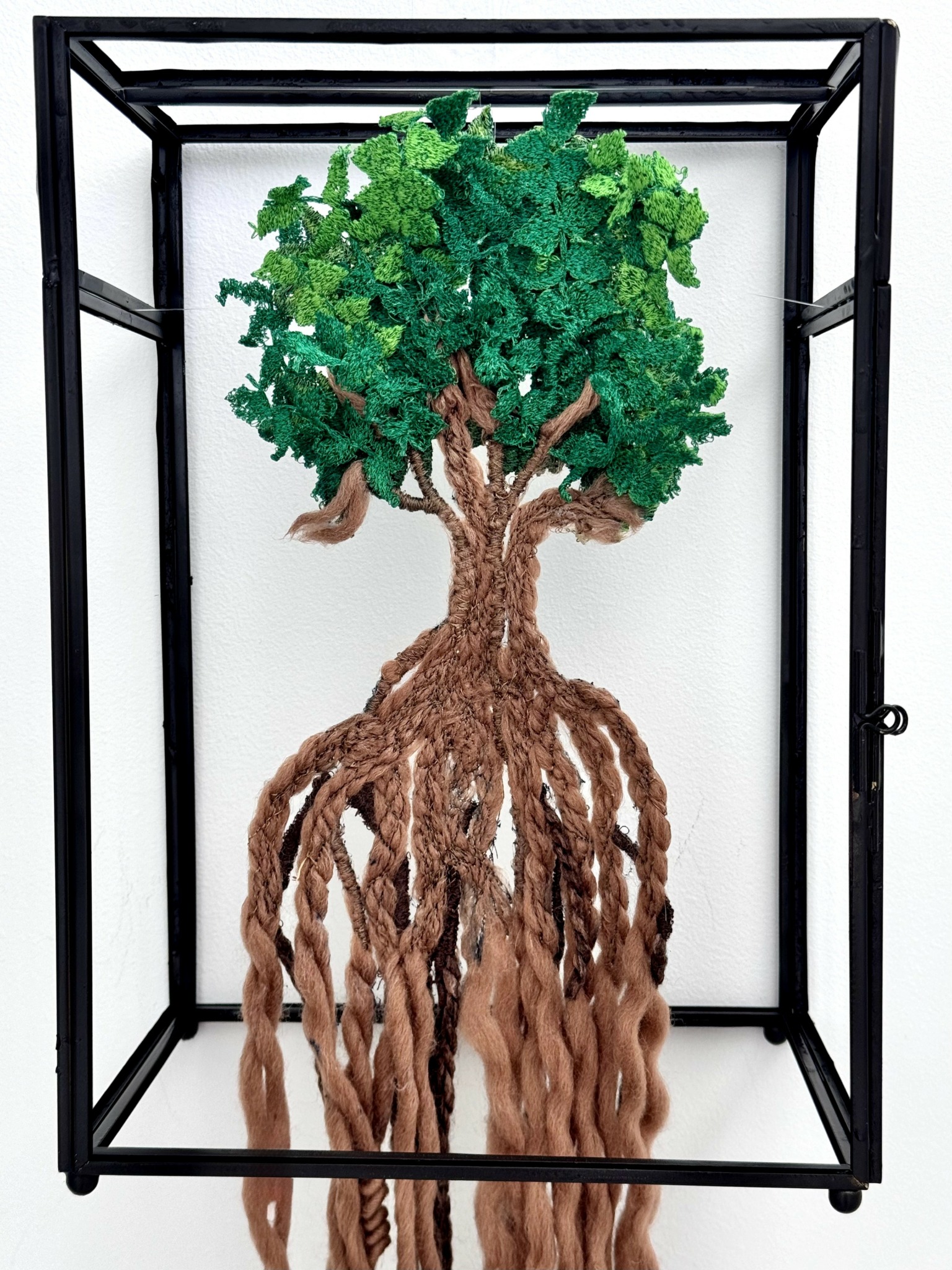
Image Credits
The two images in which I appear are from: Bruna Marcon Weber