



We were lucky to catch up with Milan-Devi LaBrey recently and have shared our conversation below.
Milan-Devi, thanks for joining us, excited to have you contributing your stories and insights. Let’s kick things off with a hypothetical question – if it were up to you, what would you change about the school or education system to better prepare students for a more fulfilling life and career?
There isn’t just one thing I would change about our education system because the fact is that it is broken in a myriad of different ways. This isn’t anything that we haven’t heard before. There isn’t enough funding. Teachers aren’t paid enough. Children deal with the looming threat of a mass shooting. There are countrywide budget cuts. Students aren’t reaching grade-level milestones. There is more physical and verbal violence in school. The long of the short is that children are not getting an education that not only gets them ready to be contenders in a global job market but also prepares them to cope with the hardships of life.
I have lived all over the world. Some education systems clearly are better than others. But across this world, what many schools are lacking is teaching children some foundational principles that support the development of their emotional intelligence and teach them how to mediate and communicate with nonviolent communication. An inordinate amount of research tells us that emotional intelligence is a far more significant predictor of success. So, why our education system perpetuates this narrative around achieving higher testing scores is well beyond my comprehension. These testing scores do not always reflect a child’s intelligence as they don’t allow for all learning styles and can be biased. But that isn’t even the point in 2023, as children need the skills to cope with the ever-changing landscape of the world and all the challenges that come with that. But they are not ready, and we are seeing that reflected in the number of youth incarcerations, suicides, self-harm, and substance abuse.
Compounding our poor education with inappropriate social media, films, and TV, we are adding fuel to an already burning fire by creating content that is not appropriate for children. For example, parents see the PG rating and think…”It is acceptable for my child to watch this.” But that rating means Parental Guidance, which also means it is inappropriate for some ages. Support for children’s emotional and cognitive development is lacking in homes, schools and communities. We don’t let kids drive until they are 16 or drink or smoke until they are 18 or over for a reason. So, why do we think they should have unlimited exposure to other things they are not ready for without teaching them emotional intelligence starting in their formative years so they can be more aptly prepared for what they will inevitably encounter? It is time for us to make serious changes in the education system and the media. Suppose we don’t support children in meaningful ways that foster healthy cognitive development and effective coping strategies. In that case, we might as well just bubble-wrap all the upcoming generations, as they will not be able to handle even the simplest of upsets in their realities (which we already see).
Awesome – so before we get into the rest of our questions, can you briefly introduce yourself to our readers.
I firmly believe that emotional intelligence and creating content that raises the collective consciousness are critical to our evolution and ensure we progress as compassionate, tolerant, loving human beings. We do not see enough emotionally intelligent, driven content in the education system or external environments. So, to reach the masses effectively, I felt we needed a top-down, bottom-up approach. In response to what I think is lacking, I created PremaStar Productions and KideoGo.
At the heart of PremaStar Productions lies a compelling vision to transform how stories are told and experienced in film and television. Our overarching goal is to produce content that fosters emotional intelligence, empathy, and deep reflection, prompting viewers to embark on their journey of spiritual and psychological evolution. KideoGo is for children, offering interactive, emotionally intelligent, educational, and socially responsible programming and educational content for children of all ages, learning levels, disabilities, and languages.
Education and the film industry have one thing in common: they keep using the same recipe to create content. But these antiquated ways don’t shift the narrative or raise the vibration of the collective. They continue to do the same things over and over. So, how can we expect a different result? If we want to see real change, more people must stand and band together to demand something different in what their children are learning and what we, as consumers, choose to support, whether in schools or at the box office. To be clear, I am not talking about burning books or glossing over the truth about our history. I am talking about ensuring that we add emotional intelligence and nonviolent communication into the conversations surrounding education and media.
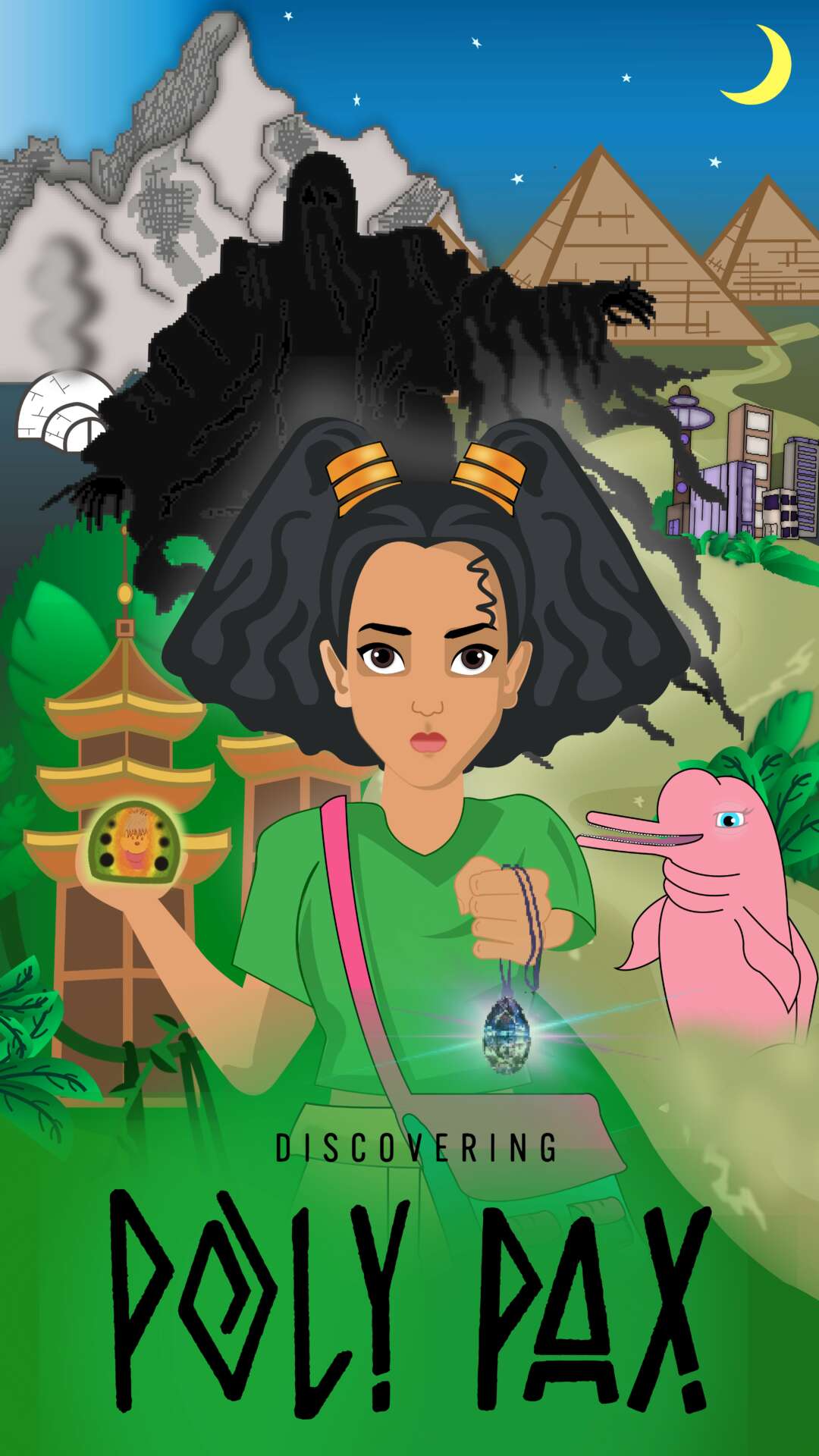
PremaStar is currently working on an exciting animated series, Discovering Poly Pax, about a young Latina descendant of the Goddess Hippolyta and her musical, magical caterpillar Morpho. They travel the world chasing an enigmatic shadow that led to the fall of the ancient city of Amazopia and is now wreaking havoc on the modern-day rainforest. This series teaches children coping strategies, emotional regulation, history, culture, foreign languages, and more. We also have an aminated feature in development called Quinbe. The feature is about a determined outcast bee named Quinbe, who becomes the Queen at the hands of fate. Quinbe and her human friend, Fleur, forge an extraordinary bond to reunite their two worlds and save them from the brink of disaster.
At KideoGo, we are building our Web App, which will offer a streaming service that provides educational, emotionally intelligent programming for children. Parents and teachers alike will never again have to wonder if what their children are watching is age-appropriate content or if it is supporting healthy cognitive development. We hope that by creating new, innovative, emotionally intelligent materials, other creatives will follow suit, and we will start to see a shift in how content is made and disseminated.
Learning and unlearning are both critical parts of growth – can you share a story of a time when you had to unlearn a lesson?
I think the greatest lesson I have learned is to surrender. But to be clear, it is a daily lesson, and some days, I pass, and other days, I struggle. One thing that people have to remember about life and business is that not everything will go as planned. Often, things don’t go as planned. That old saying is, “People plan, and God laughs.” I find this to be very accurate. There are so many times that I thought something would happen in a certain amount of time or that an idea would progress to a defined point. That isn’t always the case, and I have had to pivot more times than I care to discuss. Some of those pivots or course corrections have been painful, and others have been costly (or both). Now, I just try to breathe through those moments and just observe them. Instead of getting angry or reactive, I respond as needed and often calmly think, “Ok, that just happened.” It isn’t always easy to stay present and not let the mind take you on a journey where you start searching for problems that don’t exist. If you allow enough time to pass, you can clearly see why something happened, and I can say from experience it is always for the best, regardless of how it feels in the moment.
Is there a particular goal or mission driving your creative journey?
We are all on a personal journey, and it really isn’t easy for any of us. But how wonderful would it be if the world surrounded us with the love, support, and tools we needed to help us along the way? Like so many, I had an abusive, tumultuous childhood. If I had been able to learn effective coping strategies early on or been exposed to more strong female role models, I would have struggled far less as a teenager and subsequently as an adult. But there are too many things around us that keep us in our trauma, keep us doubting who we are, and are stuck in the illusion of what society expects us to be, which is wholly perpetuated by media and antiquated narratives.
As adults, we are bombarded by negative media that portray physical, verbal and sexual violence. We visually consume things that change how we think and how our brains wire. But I believe that films, streaming, and TV can create moments and movements that can change lives for the better. A notable example is the movie What the Bleep Do We Know?, which sparked The Secret and an entire generation awakening to the idea that what we choose to see and be merely reflects what we are thinking and projecting into the world. The point is that we need more content that encourages and propagates positive change and raises the vibration of the collective as we become what we seek.

Contact Info:
- Website: www.drmilanlabrey.com
- Instagram: www.instagram.com/kideogo
- Facebook: @kideogo
- Linkedin: @Kideogo @premastar
- Youtube: www.youtube.com/kideogo
- Other: www.premastar.com OR www.kideogo.com
- www.Premastarproductions@
gmail.com
Image Credits
The image with the dog is by Raymond Hamlin