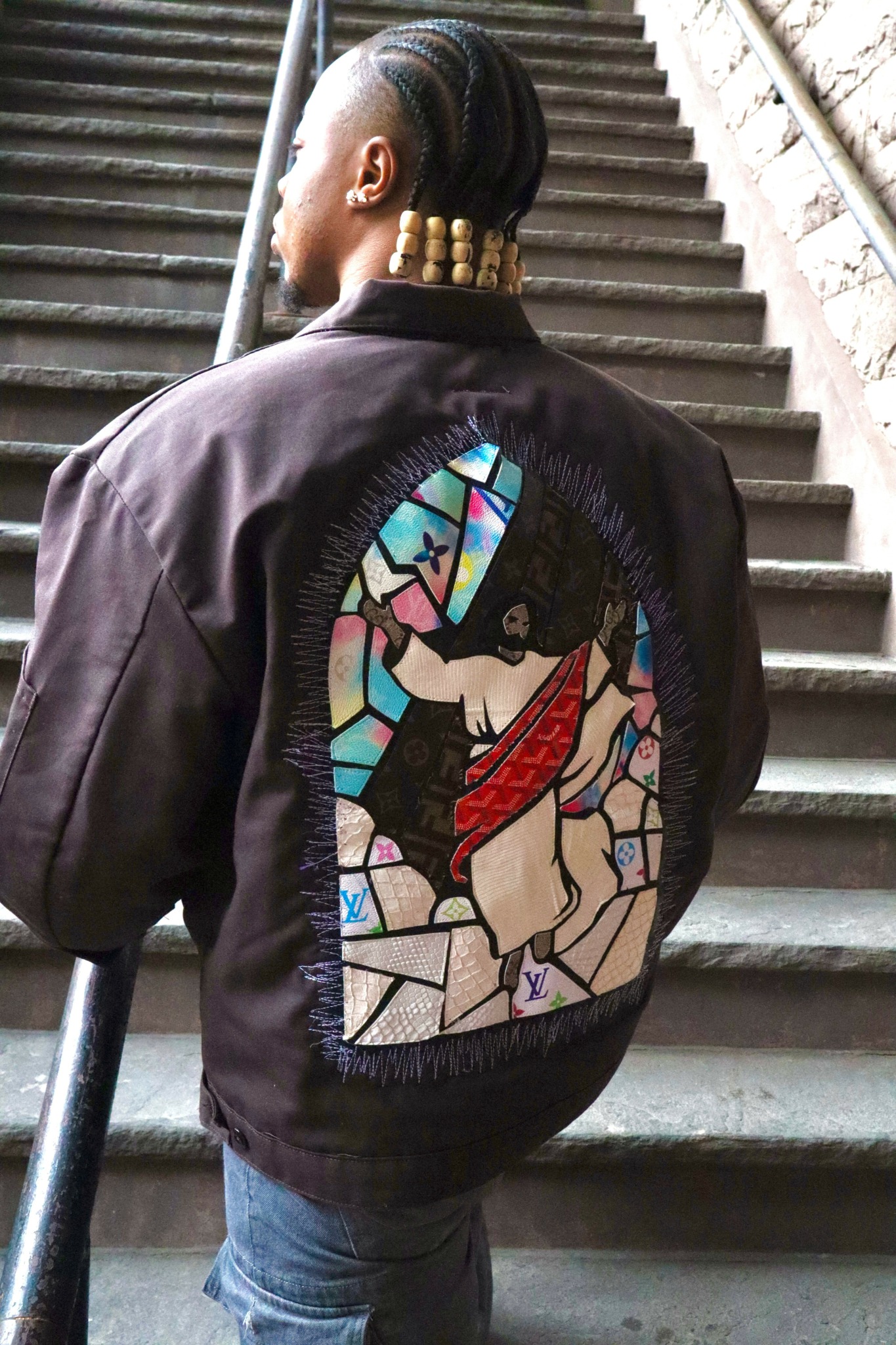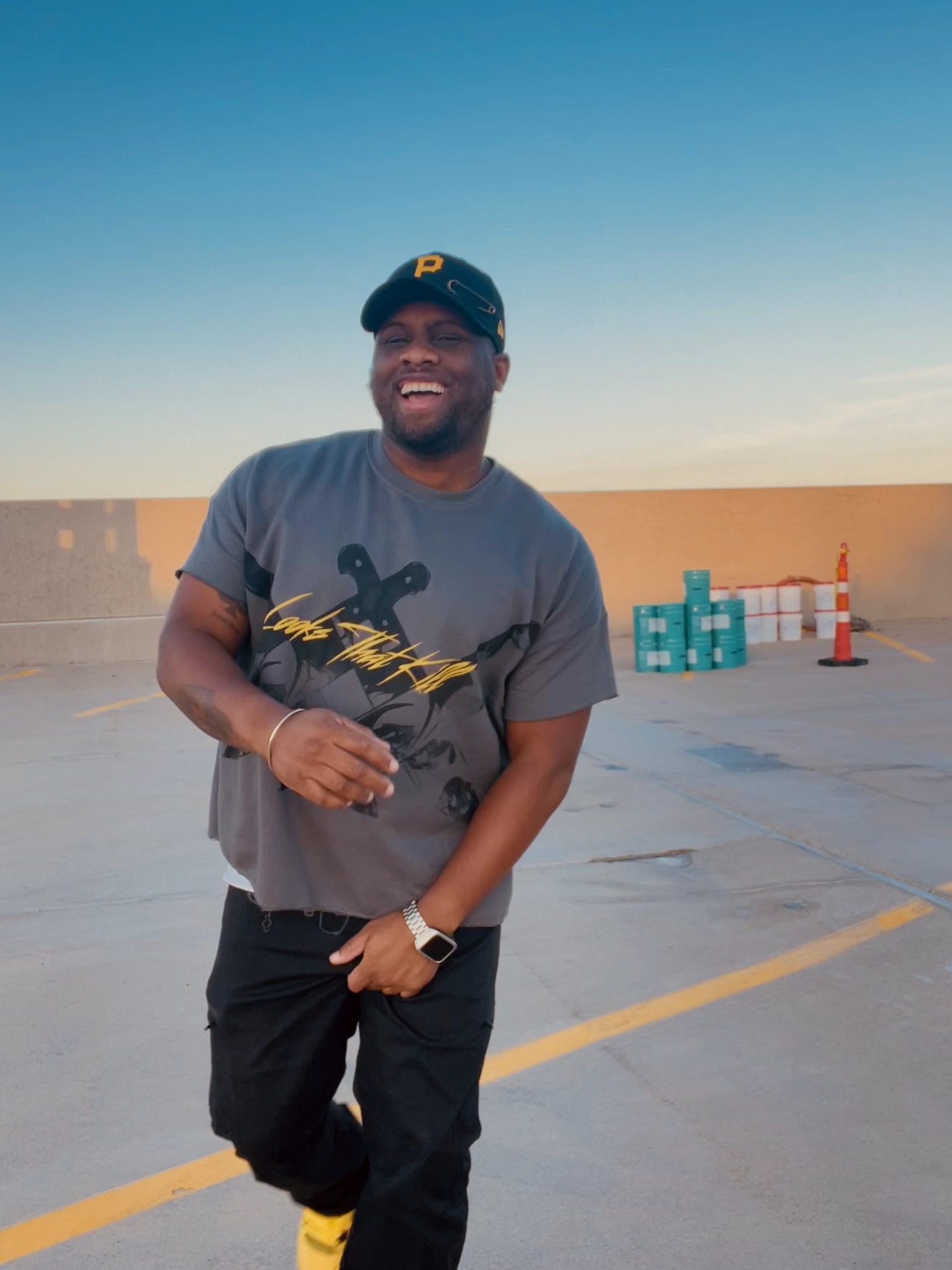

We recently connected with Mikel Arrindell and have shared our conversation below.
Alright, Mikel thanks for taking the time to share your stories and insights with us today. How did you learn to do what you do? Knowing what you know now, what could you have done to speed up your learning process? What skills do you think were most essential? What obstacles stood in the way of learning more?
I’ve failed a lot — and honestly, failing has been one of my greatest teachers. I started by literally taking things apart just to understand how they were made, then putting them back together in my own way. Every time something didn’t come out right, I learned what to do differently and how to let my own style come through the process.
My work has lived in so many forms over the years — T-shirts, hats, dresses, and eventually leatherwork. Each transition forced me to adjust my skill set and figure out how to express myself in a new medium. I didn’t have any mentors in the field. YouTube and failure were my best friends. I was just hungry to learn, experiment, and improve.
If I could’ve sped up my learning, I would’ve allowed myself to slow down. In the beginning, I rushed everything — I wanted to master every skill at once. Now I know that craftsmanship requires patience, repetition, and room to make mistakes. I also would’ve exposed myself to more creative communities earlier, instead of trying to figure everything out in isolation.
The most essential skills for me has been adaptability, problem-solving, and curiosity. Leather doesn’t behave like fabric. Fabric doesn’t behave like canvas. Every medium forces you to think differently, so being able to adjust and stay open-minded was huge. And having an eye for detail — even when no one else sees the mistakes — is what elevated my work.
The biggest obstacle was not having a roadmap. No mentor, no school, no guidebook. Everything I learned was trial and error. But looking back, that’s what made my craft mine. My customers trusting me with ideas I wasn’t sure I could execute yet pushed me to grow fast. Every project became a lesson, and every mistake became part of the story.
Mikel, before we move on to more of these sorts of questions, can you take some time to bring our readers up to speed on you and what you do?
I’m a multidisciplinary designer based in Boston and the founder of WUHN, a brand focused on custom leather goods, upcycling, and one-of-one fashion pieces. I didn’t come into this industry through a traditional path—no fashion school, no mentors—just curiosity, YouTube, and a lot of trial and error. I started by taking things apart to understand their construction and rebuilding them in my own way. That process shaped my style and taught me how to express myself across different mediums, from clothing to leatherwork.
Today, I create custom purses, crossbodies, accessories, and upcycled pieces that feel personal and one-of-a-kind. Clients come to me when they want something unique that they can’t find anywhere else. I guide them through the entire design process, making the experience just as intentional as the final product.
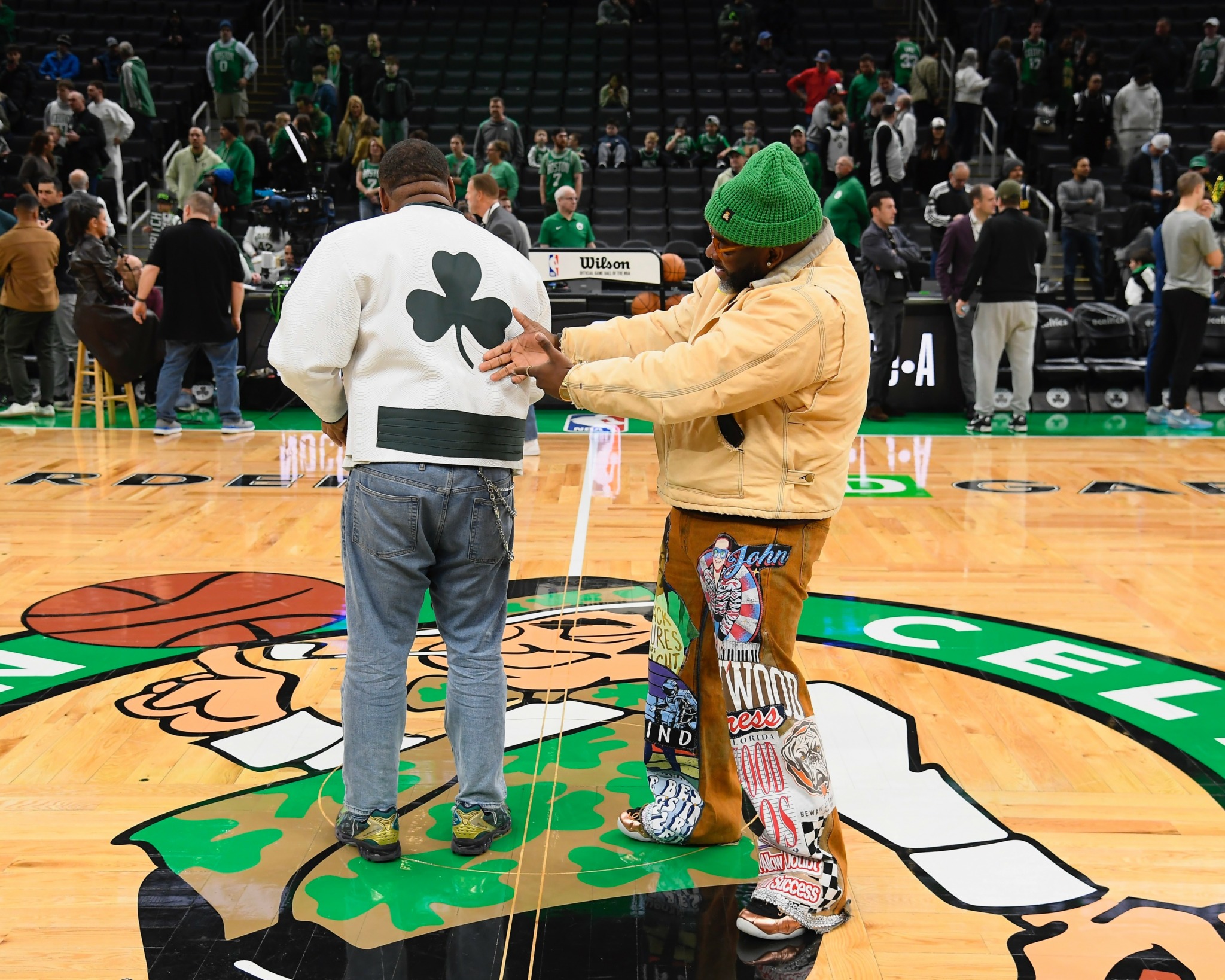
What sets WUHN apart is the craftsmanship and storytelling behind each piece. Everything is hand-made, thoughtful, and rooted in minimalism and texture. I’m proud of the community that has supported me from the beginning and the trust they place in my creativity. My goal is to keep building timeless work that reflects authenticity, culture, and individuality.
For you, what’s the most rewarding aspect of being a creative?
For me, the most rewarding part of being a creative is seeing an idea that lived only in my head become something real that people can touch, use, and connect with. There’s something powerful about taking raw materials and turning them into pieces that carry someone’s story, their style, or their emotions.
I also love the impact my work can have on people—when a client sees their finished piece and realizes it was made just for them, that reaction never gets old. It reminds me that creativity isn’t just about making things; it’s about making people feel seen.
And on a personal level, the process itself is rewarding. Every project teaches me something new, pushes me creatively, and keeps me growing. The freedom to express myself and build a world through my work—that’s what keeps me inspired.
Is there something you think non-creatives will struggle to understand about your journey as a creative?
One thing I think non-creatives often struggle to understand is how much of this journey is built on uncertainty and invisible labor. People usually see the final product—a bag, a jacket, a piece of art—but they don’t see the hours of trial, error, redesigning, doubting, and starting over that happened before it. Creativity isn’t a straight path; it’s a lot of exploration, failed attempts, and small breakthroughs that eventually add up to something meaningful.
People misunderstand that they “aren’t creative.” I hear that all the time, but creativity isn’t limited to art or design—it shows up in the way you solve problems, how you think, how you move through the world. Everyone has it; it just looks different from person to person.
For me, my creativity comes from my childhood and the way I learned to navigate life. A lot of it was shaped by not having certain resources or skills at the time, so I had to improvise, experiment, and be stubborn enough to figure things out anyway. That resourcefulness became my style. What people see now in my work is really just the result of me shaping my limitations into something expressive.
If more people realized creativity isn’t about perfection—but about perspective, resilience, and making something out of what you have—I think they’d see how much of it they already carry.
Contact Info:
- Website: https://www.wuhn.shop
- Instagram: https://www.instagram.com/__mikelangelo/?hl=en
- Youtube: https://www.youtube.com/@TheMikelarrindell