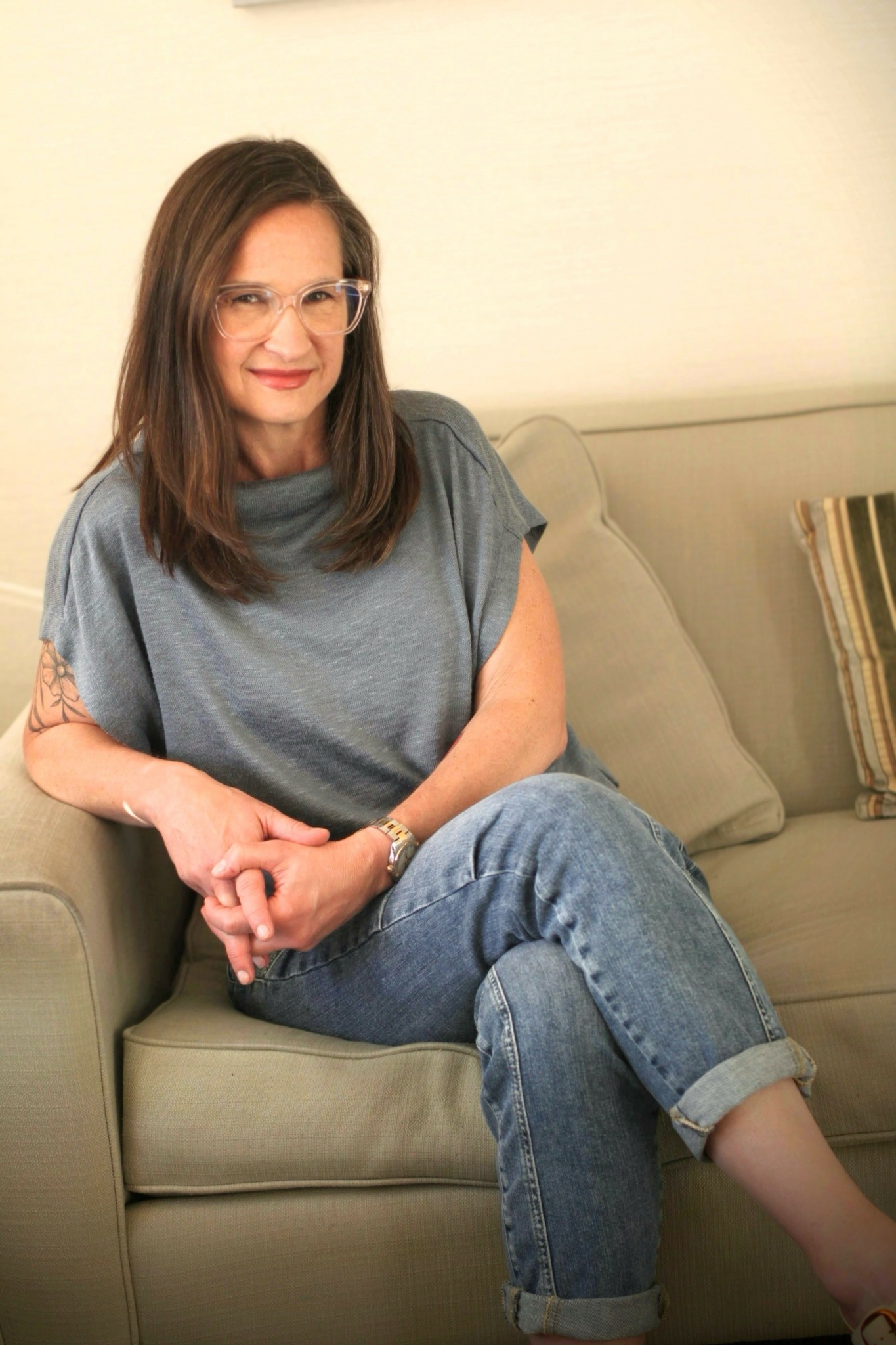

We’re excited to introduce you to the always interesting and insightful Michelle Cantrell. We hope you’ll enjoy our conversation with Michelle below.
Michelle, thanks for taking the time to share your stories with us today We’d love to hear the backstory of how you established your own practice.
When I went back to school to get my counseling degree in my 30s, it was with a very clear purpose: after recovering from a lifelong eating disorder, I wanted to help other women have better lives too. My vision was to create a private practice that catered to adult women — a population often overlooked in conversations about eating disorders, which are too often framed as something only teenage girls struggle with.
In the early days, I devoted about 90% of my energy to my clinical growth and only the bare minimum to the business side. I did just enough to get licensed, set up billing, and make sure I could legally see clients — but I resisted seeing myself as an entrepreneur. Ironically, my practice still thrived in spite of that. At the time, I didn’t fully realize how fortunate I was that it grew without a strong business foundation.
That lesson came into sharper focus when I moved from Virginia to California two years ago. Thanks to telehealth, I could keep working with my existing clients, but I essentially had to start over in a new state. This time, I couldn’t take for granted what I had before. I wanted to expand into a group practice, which meant being intentional about building sustainable systems, hiring well, and leading with both vision and structure. I even hired my first clinician before I was fully established in California — a risky move, but one I felt ready for because I had learned from the mistakes of my early days.
The challenges along the way were significant: a poor money mindset, weak time boundaries, imposter syndrome around the business side of things, and the overwhelm that comes with ADHD. The turning point came when someone told me it was okay to make the money I needed to live the life I wanted — and that doing so would actually make me better at showing up for my clients. That perspective shift allowed me to embrace the business side as an integral part of my work, not a distraction from it.
If I could do anything differently, I would have asked for help much sooner. Early on, I was afraid that admitting I didn’t know something would make me look like I didn’t belong. Now, my philosophy is to find the “who” instead of the “how”: Who has the knowledge I need, instead of how do I figure this out alone? That mindset has saved me time, energy, and stress, and it’s the advice I’d give to any young professional starting a practice today.
Awesome – so before we get into the rest of our questions, can you briefly introduce yourself to our readers.
I didn’t come into this field in a straight line. After recovering from a lifelong eating disorder in my 30s, I knew I wanted to dedicate my life to helping other women live fuller, freer lives. At first, my focus was on adult women — a group that’s often overlooked in conversations about eating disorders, which usually frame them as something only teenage girls struggle with.
Over time, my work expanded. Today my practice, the Center for Growth and Connection, supports individuals, couples, and families who want to feel more connected to themselves and the people they love. We specialize in Emotionally Focused Therapy (EFT), which helps people break out of painful cycles and build stronger, more secure relationships.
What sets us apart is that we don’t pathologize our clients. We believe all behaviors make sense when you understand the context in which they developed even if those same behaviors are no longer serving you today. Our role is to create a safe, compassionate, non-judgmental environment where people can explore those patterns and move toward change. We don’t just work on surface-level problems; we dig into the deeper cycles that keep people stuck. That might look like helping a couple move from constant conflict to deeper understanding, or helping an individual rediscover who they are after years of putting themselves last. I also place just as much emphasis on creating a supportive environment for my clinicians as I do for my clients. Having felt the isolation of private practice myself, I’m proud to have built a team culture where growth and connection are our guiding values.
What I’m most proud of is that my own journey mirrors the kind of transformation I now help others achieve. I went from believing I wasn’t “business-minded” to running a thriving group practice, teaching graduate students, and leading a team of clinicians. That growth is what I want for my clients too — to stop believing the lies that keep them small and to see that change really is possible.
If there’s one thing I want people to know about my work, it’s that therapy isn’t about fixing what’s “broken.” It’s about creating a life and relationships that feel whole, authentic, and deeply connected.
Can you tell us about a time you’ve had to pivot?
One of the biggest pivots in my career came when I moved from Virginia to California two years ago. I had already built a thriving practice in Virginia, but suddenly I was in a new state where I needed to essentially start over. Thanks to telehealth, I could continue working with existing clients, but my vision was to expand into a group practice in California. That meant laying down new roots and being much more intentional about the business side than I had been in the past.
Not long after the move, I also began the process of divorce after nearly 30 years of marriage. That life change brought the added motivation that becoming financially independent wasn’t optional — I needed my practice not just to survive, but to truly succeed. This wasn’t a time I could afford to play small or hope things would “just work out.”
So I leaned into the pivot fully. I hired my first clinician before I was even firmly established in California, which was risky, but it represented a commitment to my vision. The combination of starting over in a new place and facing such a major personal transition forced me to embrace courage, strategy, and leadership in a way I hadn’t before. Looking back, I see that pivot as the moment I stopped treating my practice like something that might grow if I tended to it, and started treating it like something I was determined to grow no matter what.
Learning and unlearning are both critical parts of growth – can you share a story of a time when you had to unlearn a lesson?
The biggest lesson I had to unlearn was the belief that focusing on the business side of my practice would somehow make me a worse therapist. For years, I carried the story that if I thought too much about money, it meant I would start prioritizing my income over my clients’ well-being. That belief kept me with weak boundaries, an unhealthy money mindset, and the habit of pretzeling myself to meet everyone else’s needs without considering my own.
What I eventually came to see is that the opposite is true: when I treat my practice like a healthy, sustainable business, I actually show up better for my clients. I had to unlearn the shame around money and learn that running an ethical, financially strong business isn’t a betrayal of my values. It’s what allows me to live them out more fully.
That unlearning became especially important when I moved to California and, soon after, began the process of divorce. Suddenly, becoming financially independent wasn’t optional. I couldn’t afford to keep playing small or treating the business like a side project. The pivot I described earlier, starting over in California and growing into a group practice, was only possible because I had first unlearned the lies I used to tell myself about business and money.
Now I help my clients do a similar kind of unlearning. Whether it’s about relationships, identity, or the stories we carry about ourselves, change almost always starts with letting go of the old narratives that keep us stuck.
Contact Info:
- Website: https://www.centerforgrowthandconnection.com/
- Instagram: https://www.instagram.com/grow_and_connect_la/
- Facebook: https://www.facebook.com/michellecantrelllpc
- Linkedin: https://www.linkedin.com/in/cantrellmichelle/
- Other: https://www.tiktok.com/@center.for.growth