

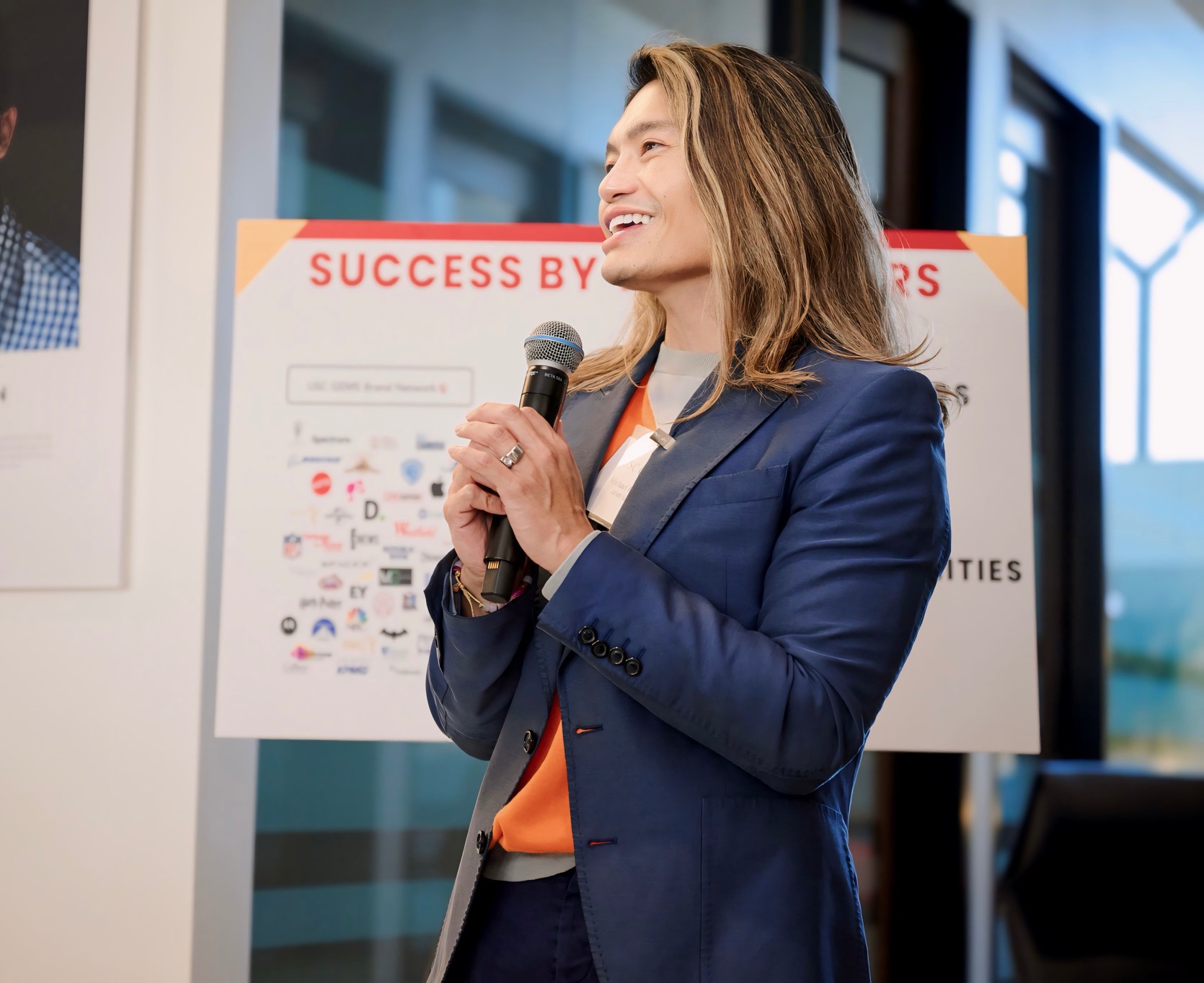

Alright – so today we’ve got the honor of introducing you to Michael Paranal. We think you’ll enjoy our conversation, we’ve shared it below.
Alright, Michael thanks for taking the time to share your stories and insights with us today. Let’s start with education – we’d love to hear your thoughts about how we can better prepare students for a more fulfilling life and career.
If I could change one thing about the education system, it would be to focus less on rigid standardization and more on fostering creativity and individuality. The traditional model we use today was designed during the industrial era, when schools were built to graduate large groups of students in batches to meet the workforce needs of factories. While that system worked for its time, today’s world is vastly different. Modern careers and life challenges require flexibility, creativity, and problem-solving—skills that standardized education often doesn’t prioritize. Instead of preparing students to fit into pre-set molds, we should be inspiring them to explore, innovate, and discover their unique potential.
I once had a student who struggled with accounting. She was diligent but overwhelmed by the traditional approach—formulas, dense textbooks, and constant tests. Her grades didn’t reflect her effort, and she began to see herself as “bad at numbers.”
To help her, I completely reimagined how the class approached accounting concepts. I designed a collaborative simulation where students became “financial detectives.” Each group received a fictional case file involving a struggling business with messy records, missing transactions, and financial inconsistencies. Their task was to identify errors, reconstruct accurate financial statements, and propose strategies to turn the business around.
The activity was immersive. Students worked in teams to analyze receipts, interview the “business owner” (played by me), and debate possible solutions. I introduced unexpected plot twists, like a sudden increase in expenses or a legal dispute, to mimic real-world challenges. This approach emphasized creative thinking, collaboration, and adaptability.
I also shifted the assessment method. Rather than focusing solely on getting the “right” answer, I evaluated students on their problem-solving strategies, teamwork, and ability to explain their reasoning. Mistakes became valuable learning opportunities as students reflected on what they missed and how they could improve.
For this particular student, the transformation was remarkable. By stepping into the role of a detective, she became fully engaged. She discovered a talent for finding patterns in data and loved brainstorming solutions with her team. By the end of the project, she not only understood accounting principles but also saw herself as capable and innovative. She later told me that this experience helped her realize that problem-solving could be fun and meaningful.
This experience reinforced the need for an education system that prioritizes creativity, flexibility, and real-world application over rigid conformity. The world has moved on from the industrial age, and our schools should too. By adapting how we teach and assess students, we can help them not only succeed in school but also thrive in life.


Awesome – so before we get into the rest of our questions, can you briefly introduce yourself to our readers.
I am a proud Filipino American, an immigrant whose story is deeply rooted in the sacrifices and resilience of my family. Like many immigrants, my parents gave up so much—comfort, familiarity, and even their own dreams—to create a better future for us. Their sacrifices instilled in me a sense of responsibility to honor their legacy through hard work and service. For me, the question has always been: how do we transform this story of sacrifice into something greater—something rooted in service, pride, and giving back to the communities that shaped us?
My journey began in accounting and law, where I pursued advanced education and worked in demanding, high-stakes environments. Along the way, I realized that success wasn’t just about individual achievement—it was about creating opportunities for others, especially those who face systemic barriers. This realization led me to pivot into diversity, equity, inclusion, and leadership development, where I could channel my skills and passion into building environments where everyone has a chance to thrive.
Today, I design and lead programs that empower individuals and organizations to grow. From founding USC’s Guiding Exceptional Minds to Success (GEMS) program, which provides transformative leadership opportunities for students, to launching Real-World Ready, a financial literacy initiative that has equipped hundreds of underserved high school students with critical skills, my work focuses on breaking down barriers and building up communities.
What sets me apart is my ability to combine technical expertise with a genuine commitment to people. I’ve worked at the highest levels of law, finance, and education, but what drives me is creating spaces where others can succeed—whether through mentorship, innovative DEI initiatives, or strategies for leadership development.
What I’m most proud of is the ripple effect of this work. Seeing a student discover their voice, an employee feel more included, or an organization transform its culture reminds me of the power of service and connection. It’s this impact that I carry with pride—not just for myself but as a reflection of the sacrifices and dreams that brought me here.
For those who follow my work or engage with me, I hope they see that everything I do is guided by this sense of purpose. At the heart of my journey is the belief that when we honor where we come from and invest in others, we create a legacy of service and pride that lifts everyone around us. That’s the story I strive to live and share.

We’d love to hear a story of resilience from your journey.
One of the most challenging and transformative experiences of my life was the journey that took me to Germany to work at the European Central Bank (ECB) during the height of the European debt crisis. It was a once-in-a-lifetime opportunity—the first time a non-EU citizen had been invited to work there as a finance lawyer. The stakes were high, and I was determined to rise to the occasion. But there was one major hurdle: I didn’t speak a word of German.
When I accepted the role, I knew I had to fully immerse myself in the language and culture to succeed. So, I moved to Berlin months before starting the job and enrolled in intensive German classes. My days were consumed by lessons, and my evenings were spent practicing wherever I could—cafes, markets, or with kind strangers willing to indulge my halting attempts at conversation. It was humbling and often frustrating. I vividly remember standing in line at a bakery, rehearsing my order over and over, only to stumble and mispronounce words when it was my turn. The embarrassed smiles and polite corrections I received became routine.
There were moments when I questioned if I’d made the right decision. One day, during a casual conversation, I completely misunderstood a question and gave a nonsensical response that left my peers chuckling. It was a low point, but also a turning point. I realized that every mistake, no matter how awkward, was part of the process. Gradually, I began to see progress: understanding train announcements, confidently ordering coffee, and holding basic conversations without defaulting to English. Each small victory kept me going.
By the time I started my role at the ECB, I wasn’t fluent, but I could hold my own in meetings, contribute to high-pressure discussions on complex legal and financial issues, and connect with my colleagues in their language. It was deeply satisfying to know that my hard work had prepared me for such a critical moment in history, where decisions we made had a direct impact on global markets.
The most uplifting moment came months later when my parents visited me. They had sacrificed so much for my education and opportunities, and showing them around Germany felt like a full-circle moment. As we rode in a taxi, I chatted with the driver in German, translating for my parents as we passed landmarks. At restaurants, I confidently ordered meals for all of us. My mom and dad beamed with pride, and I could see how much it meant to them to witness this new chapter of my life. For me, it wasn’t just about learning a language—it was about honoring their sacrifices and proving to myself, and to them, that every struggle had been worth it.
That journey taught me that resilience is about more than enduring challenges—it’s about finding pride in your progress, no matter how incremental. And sharing that progress with the people who believed in me the most was the sweetest reward of all.


Can you open up about how you funded your business?
Let’s just say I’m the unofficial mascot of bootstrapping. When I started the Guiding Exceptional Minds to Success (GEMS) program, there was no funding fairy handing out grants—just me, my determination, and my personal bank account. I believed so strongly in creating opportunities for my students that I was willing to do whatever it took. And let me tell you, it made for some unforgettable moments.
One time, I arranged for my students to meet with executives at a big entertainment company (let’s keep them nameless to protect the not-so-generous). It was a fantastic opportunity—but I was stunned when I found out they weren’t providing food. How could they ask students to spend four hours on a Friday touring their offices and not feed them? That wasn’t going to happen on my watch. So, at 6 a.m. that morning, I was at the bagel shop buying enough bagels to feed a small army. I packed them individually in brown paper bags, and as each student boarded the bus, I handed them their lunch like an overzealous parent. No one was going to faint from hunger on my field trip!
Later, when I shared this story with the Board, they were so touched (and probably horrified at the idea of me waking up at the crack of dawn to buy bagels) that they started donating right then and there. It was a moment that reminded me how much passion can move others to action.
Real-World Ready, my financial literacy program for at-risk youth, followed a similar bootstrap story, but this time, I wasn’t alone. My partner-in-crime, Nora Mendez, and I created the curriculum, printed materials ourselves, and went out to teach these students because we knew they needed it. We didn’t wait for funding; we just started doing the work. Eventually, Golden State Bank heard about what we were doing. They reached out, asked to partner, and have since fully funded the program. It’s been incredible to see how something that began with sheer grit and passion has grown into a fully supported initiative.
So, while my business journey doesn’t involve big investors or flashy budgets, it’s fueled by belief, teamwork, and a little bagel-packing hustle. And honestly? I wouldn’t have it any other way.
Contact Info:
- Website: https://gems.marshall.usc.edu/
- Instagram: https://www.instagram.com/mike_paranal/
- Linkedin: https://www.linkedin.com/in/michael-paranal-793b2885/
- Other: https://www.marshall.usc.edu/posts/gems

Image Credits
N/A