



We recently connected with Michael Dorn and have shared our conversation below.
Hi Michael, thanks for joining us today. Did you always know you wanted to pursue a creative or artistic career? When did you first know?
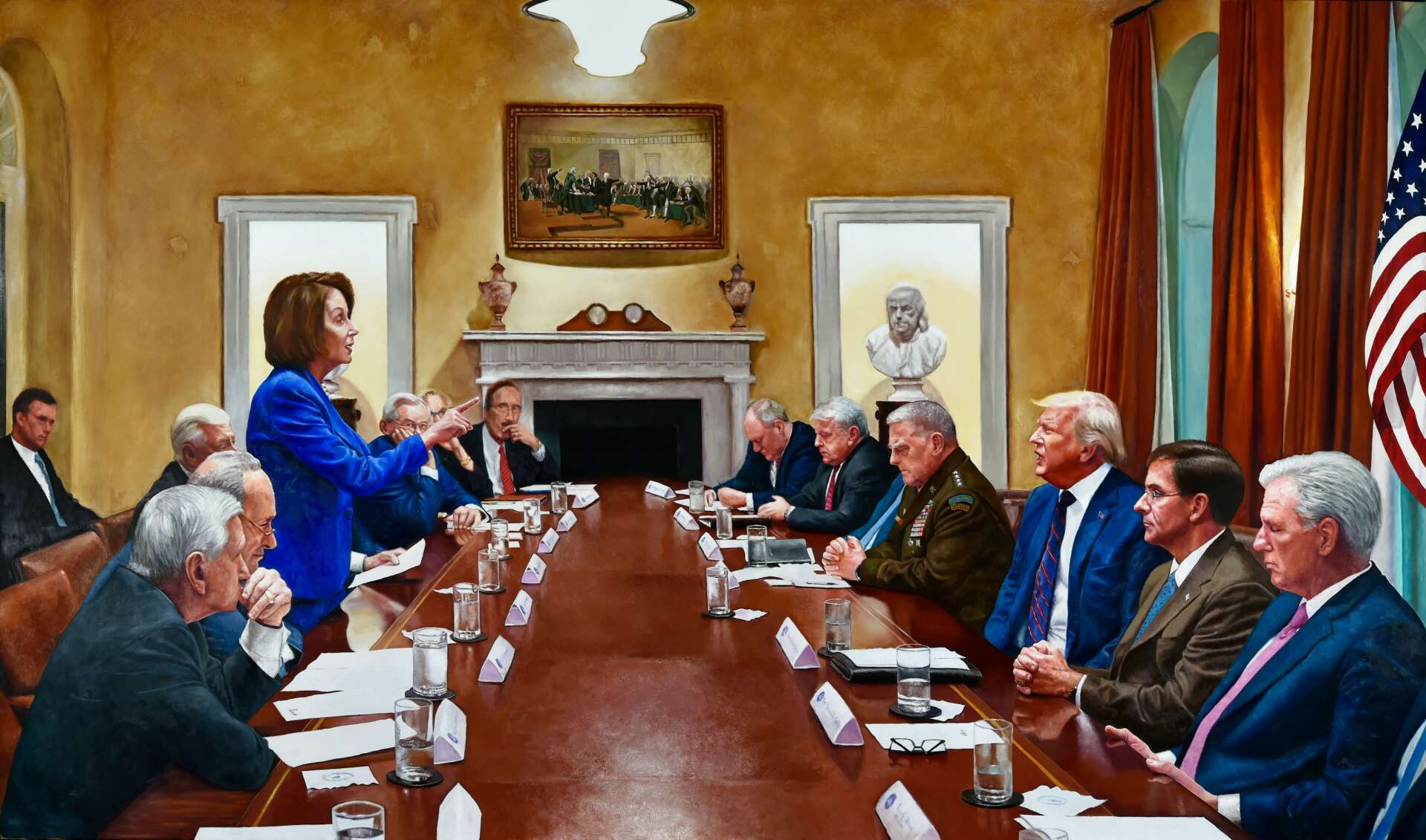
My career path in the arts has been an oblique one, and it has had many vectors. I have worked in the fields of graphic arts, illustration, and landscape design, and scores of other non-art related jobs.
Like many individuals who become a practicing artist, I too wanted to be an artist from a very early age—although, as an adolescent, I didn’t know what being an artist really meant. By the time I was in high school, I had conceived of a definition of an Artist that went beyond the notion of making beautiful decorative objects or as an illustration of some sort—I began to think of the Artist as an agent in the formation of culture and the creation of different values. Of course, I didn’t quite express it that way then.
As a youngster, I made drawings from life, portraits of family members and friends, objects around the house—that sort of thing. I was also interested in what I would later learn to call abstraction—and I made drawings of imagined patterns that I found interesting—these were not depictions of actual objects. Later, during my initial years at college, when I began to receive formal training in traditional art practices (drawing, painting, sculpture), I reluctantly accepted the idea that abstraction and “realistic representation” were separate art historical categories.
My initial training in visual arts was as a traditional “representational” oil painter. However, I completed my undergraduate work with a Bachelor of Arts in Visual and Performing Arts, and a major in film and video production. I have always been interested in combining mediums in a wide range of visual expression.
In 2016, I began the process of realigning my purpose and direction as an artist when I enrolled in a two-year MFA graduate school program at Lesley University in Cambridge, Massachusetts. During that time, as I studied art history more critically, western art history, in particular. I saw its many different aspects as a connected whole in which all its varied traditions relate to other elements of our conceptions of reality. I received my Master of Fine Arts (MFA) degree in August of 2018. I have taken this milestone as the “refocusing” point for my art career.

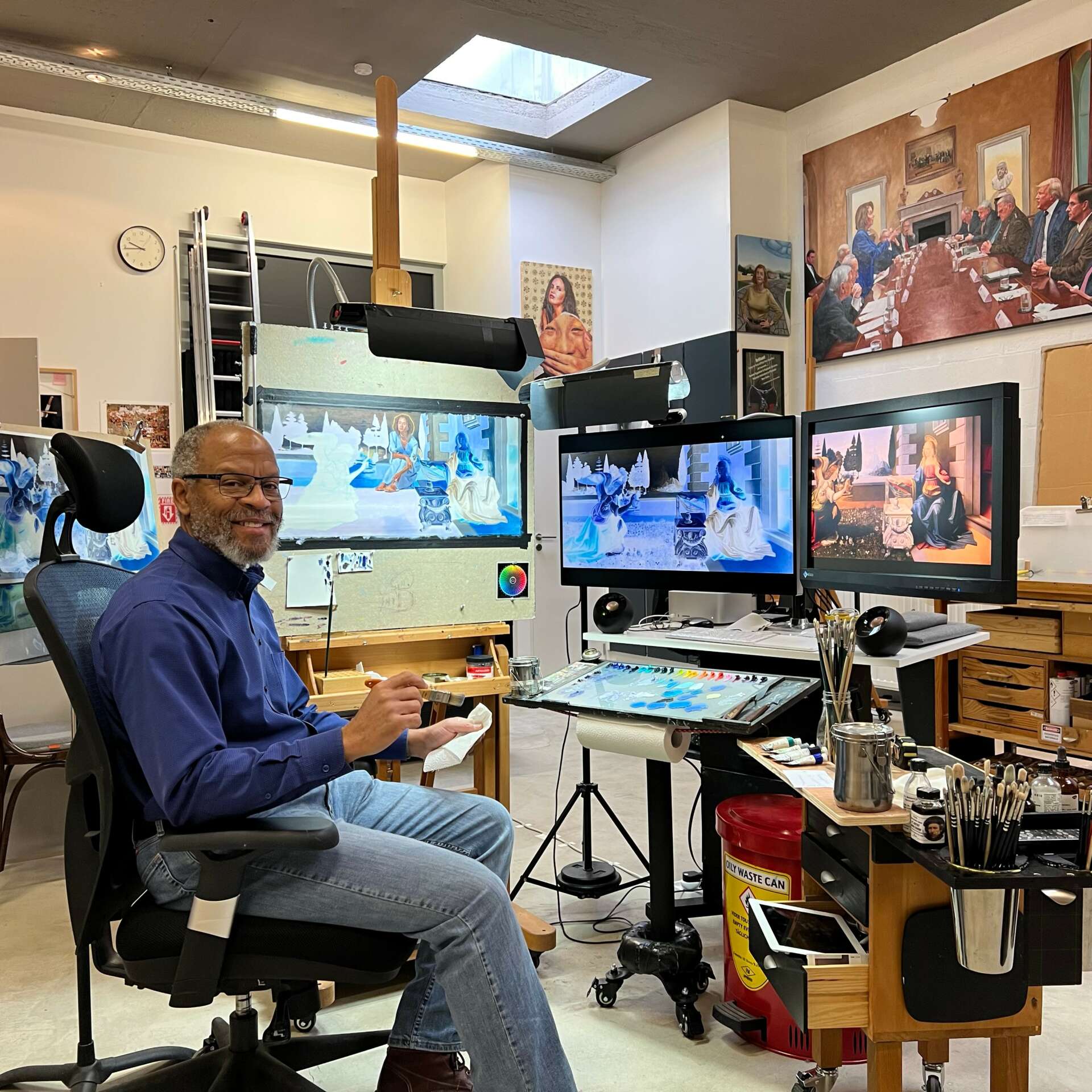
Michael, before we move on to more of these sorts of questions, can you take some time to bring our readers up to speed on you and what you do?
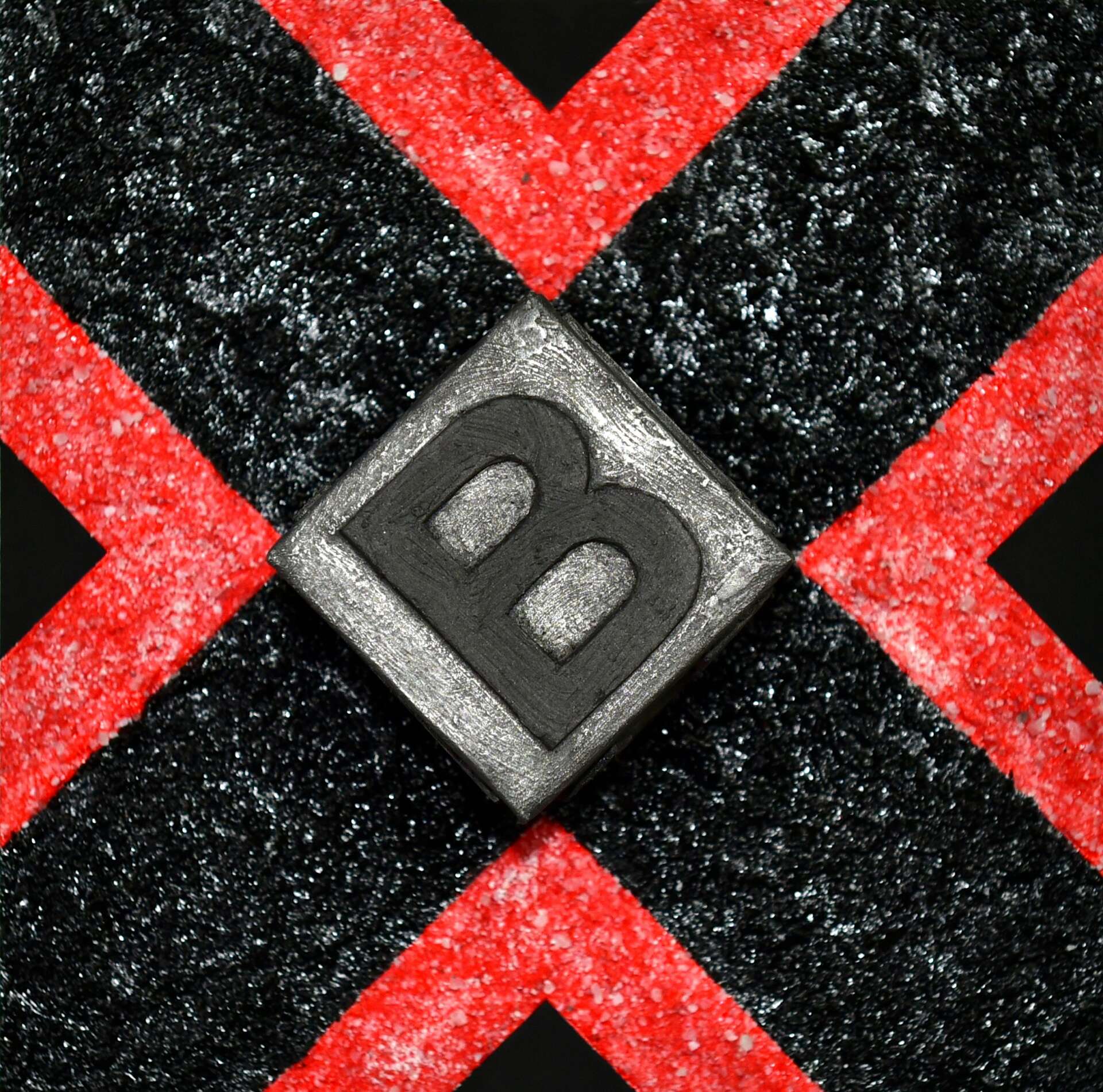
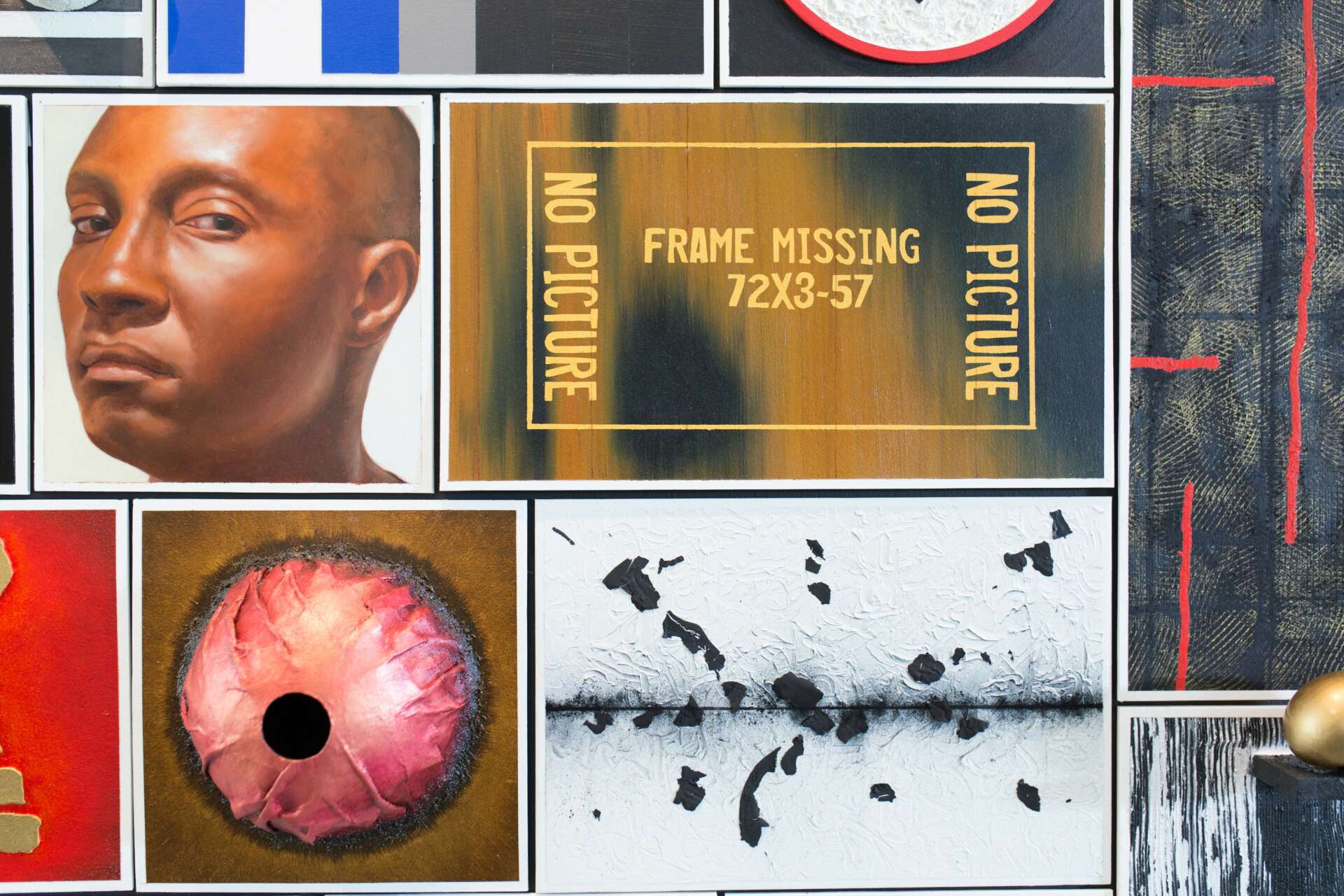
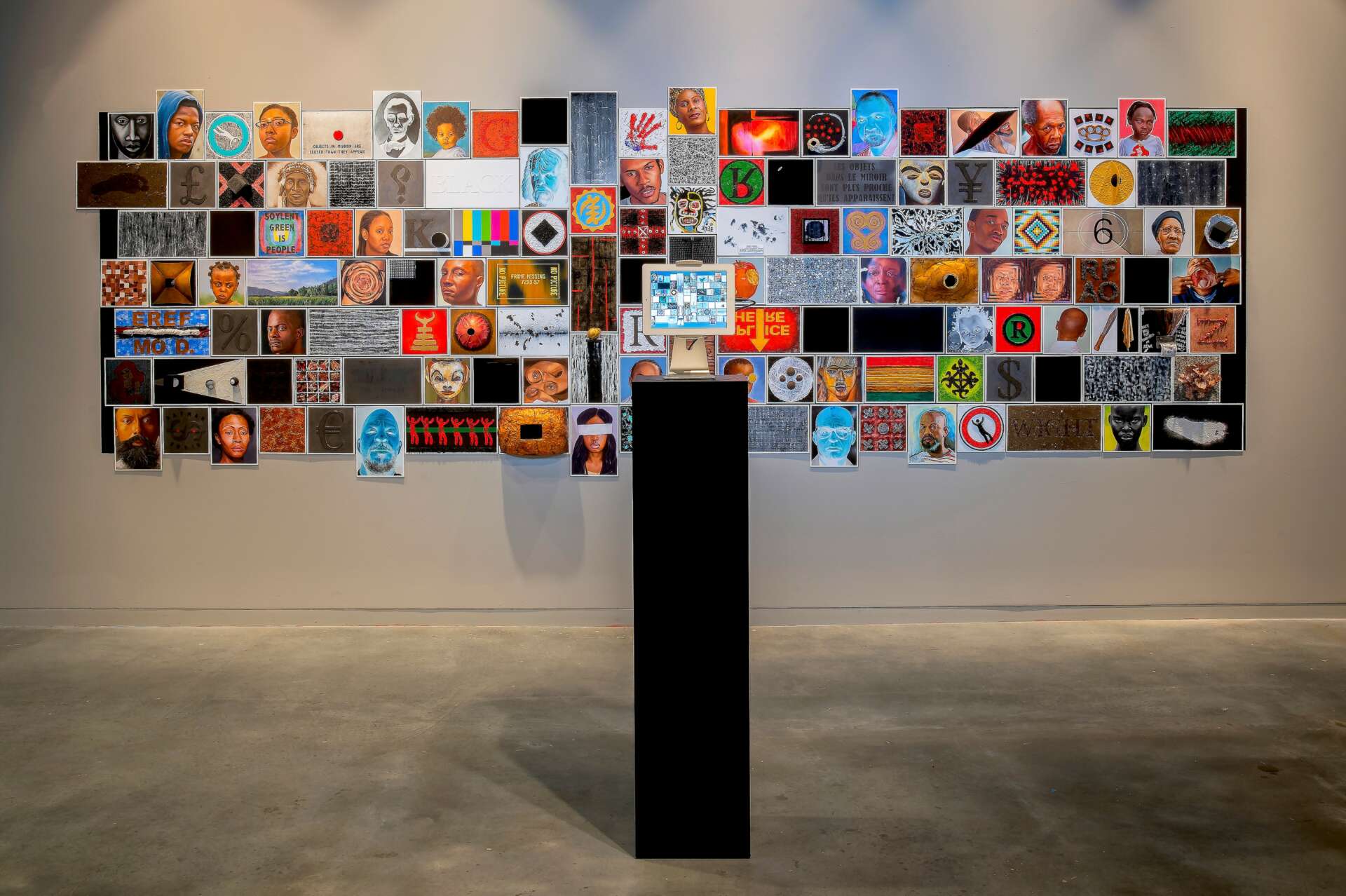
Well, I’m a post-contemporary artist, an oil painter who freely uses a broad range mixed media. My current work is concerned with issues of history and representation. One of my ongoing projects that I have been working on for the last several years, (Self) Portrait Through The AmeryKahn Prism, is a large (20 to 30 foot wide) multi-image installation that incorporates a pedestal mounted mobile tablet device. The tablet’s camara view has been set to invert colors. There are nearly two-hundred picture elements (“pix/els”) in this installation. This project encourages viewers to use their own mobile devices (that they have set to “invert” colors) to view the installation images.
The pix/els, which are all small paintings and scuptures, are modeled from imagination, memory, direct observation, and photographs (some color-inverted). I use many “traditional” European painting techniques and concepts with mixed media elements, contemporary abstract forms, intercultural symbols, textual motifs, and imagined three-dimensional structures. The pix/els are primarily made of and rendered on specially prepared paper. By visually juxtaposing a wide variety of painted images, my project seeks to identify, question, and categorize various racial discourses into a unified pictorial matrix to reveal the fallacy and the ideological nature of a racialized world.
(Self) Portrait Through the Amerykahn Prism’s activates multiple “narratives” as the spectator views the image network. From one pix/el to the next, from one image cluster to the next, the spectator chooses how the images are sequenced in their imagination. This visual exploration takes on a cinematographic quality that is activated by the spectator’s participation in coding, un-coding, and re-coding sequences of images.
The mobile device serves as an intermediary to view the images in an alternative mode. It is true that viewing an analog painting with the aid of a mobile digital media device is an explicitly new way of encountering and extending a painting’s semantic potential by challenging the conventional notion of how we (traditionally) experience or create a “paintings” meaning. The inverted view on the screen of the digital device prompts critical questions about the role of visual media in our interpretive assumptions regarding race and difference.
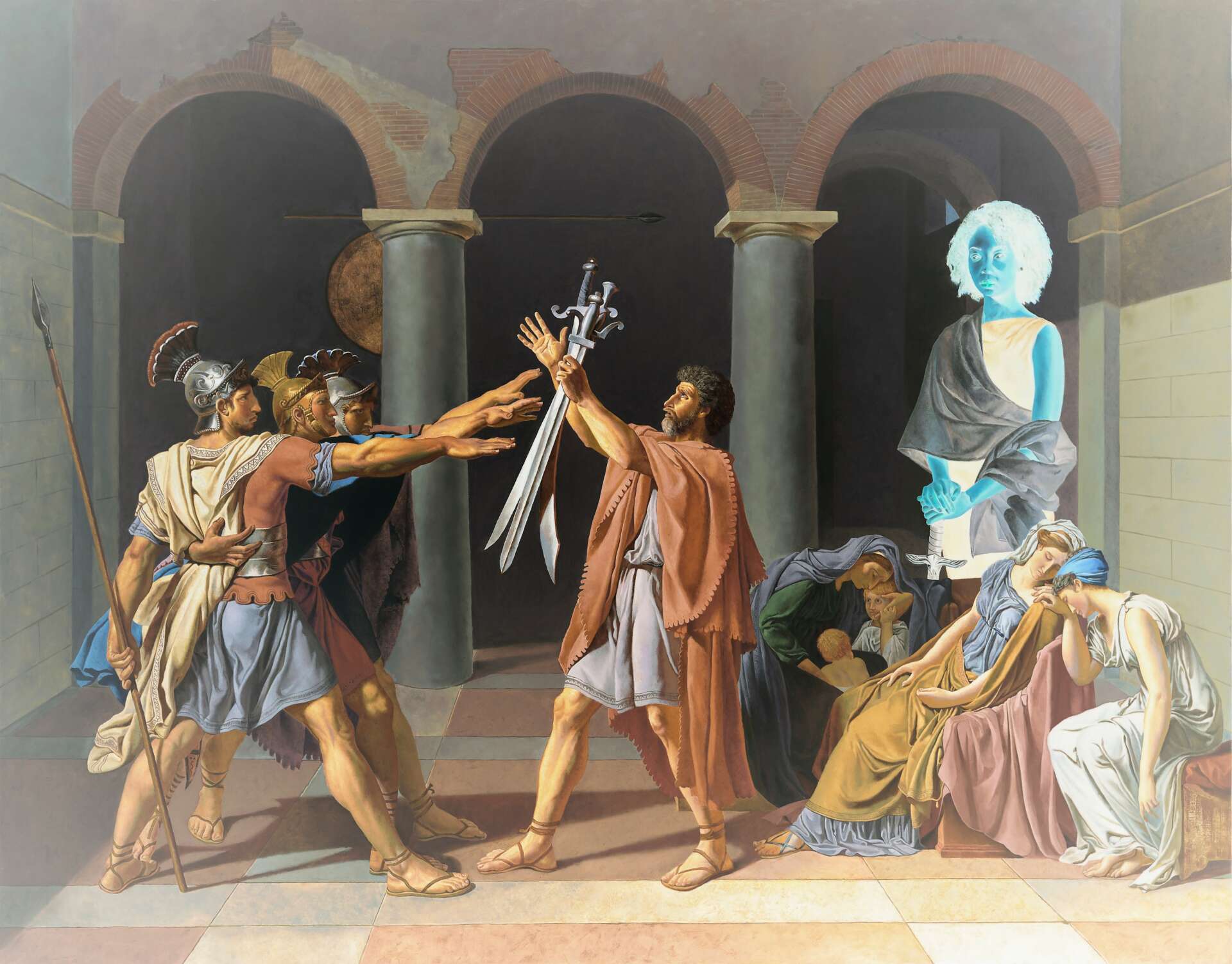
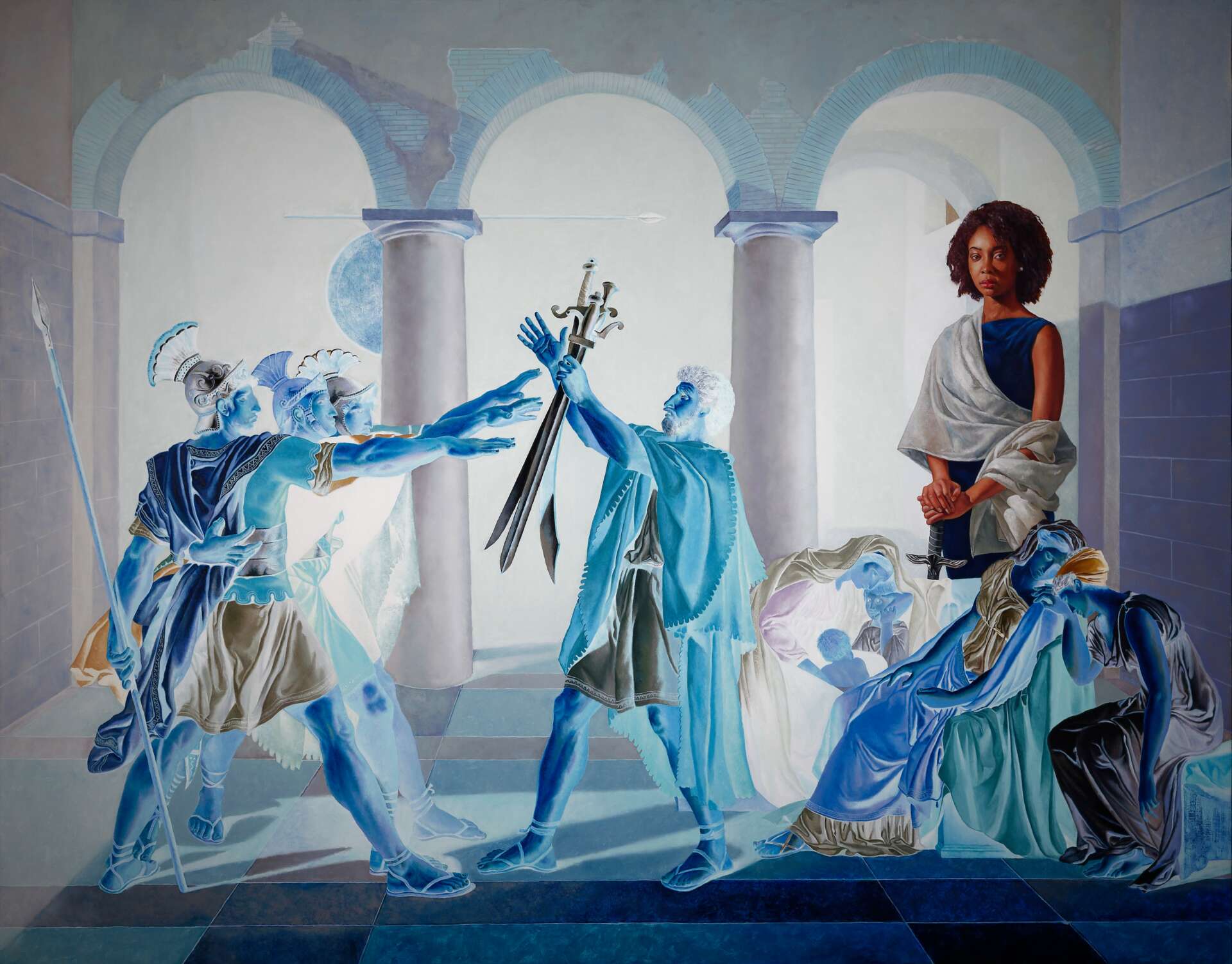
Another project that I am currently working on is a series of large canvases that continue and extend my use of the digital mobile device as a means of extending the semantic potential of traditional painting. This painting series is called “SYLLOGY.” Each of the Syllogy paintings combines traditionally painted color-inverted images of significant art-historical paintings (such as David’s, Oath of the Horatii, and Caravaggio’s, The Sacrifice of Isaac) with a non-color-inverted “interloper” figure added to the composition. The added figure is a “Person of Color.” Again, the viewer is encouraged to use their own digital mobile device to view the exhibited paintings as digital “color-positive” images. The idea is that a new vitalized context for art historical and contemporary representation will be created.
We’d love to hear your thoughts on NFTs. (Note: this is for education/entertainment purposes only, readers should not construe this as advice)
Well, when I first heard about them, I thought it sounded absurd. Then, as I learned more about how a few managed to make them lucrative, I became more intrigued. Although, I still didn’t have a correct concept of what an NFT was. Once I understood that they were essentially a cryptographically encoded virtual “object,” or dataset (called a token), I knew it was absurd! But the idea of such a thing was still interesting to me.
Recently, I have been drawn into NFTs as a solution for selling individual picture elements from “Self Portrait Through The AmeryKahn Prism.” In a normal gallery exhibition, the installation images are viewed synergistically—much like a frame or series of frames in a movie scene. Or, it’s also like a literal pixel in a single digital image! You get the picture! Although each of the images has its own title, I decided not to reveal it during the live exhibition.
However, as an NFT, the images can be read individually or within the context of the other tokenised images presented on the website. Thus, the relational idea has changed and each pix/el can stand on its own and it can be procured individually. Now the titles of the images becomes very important to the interpretive context for the images meaning.
Many people have asked if they could purchase the pixels individually. I have had to turn down all the offers I have received for the individual original paintings because selling them individually would destroy the unity I have conceived in the original work. All the images were created with an awareness for its synthesis with the other elements. So, digitizing or tokenizing the individual images, or pixels, as NFTs has become a real solution for me. By the way, the original installation itself is for sale!
Is there a particular goal or mission driving your creative journey?
I am very interested in communicating the central idea that “all text are political.” More specifically, all of western art historical representation is a multifaceted political, sociological, psychological, and spiritual field of concepts and meanings. These concepts and meanings have a cultural benefit for some and greatly disadvantages others. I am interested in creating an opportunity to have a critical conversation about the inherent ideas within this visual culture.
Contact Info:
- Website: www.michaelherbertdorn.com
- Instagram: michael_herbert_dorn_artist
- Facebook: https://www.facebook.com/Michael.Herbert.Dorn
- OpenSea (NFTs): https://opensea.io/collection/amerykahn-prism
Image Credits
Michael Herbert Dorn