

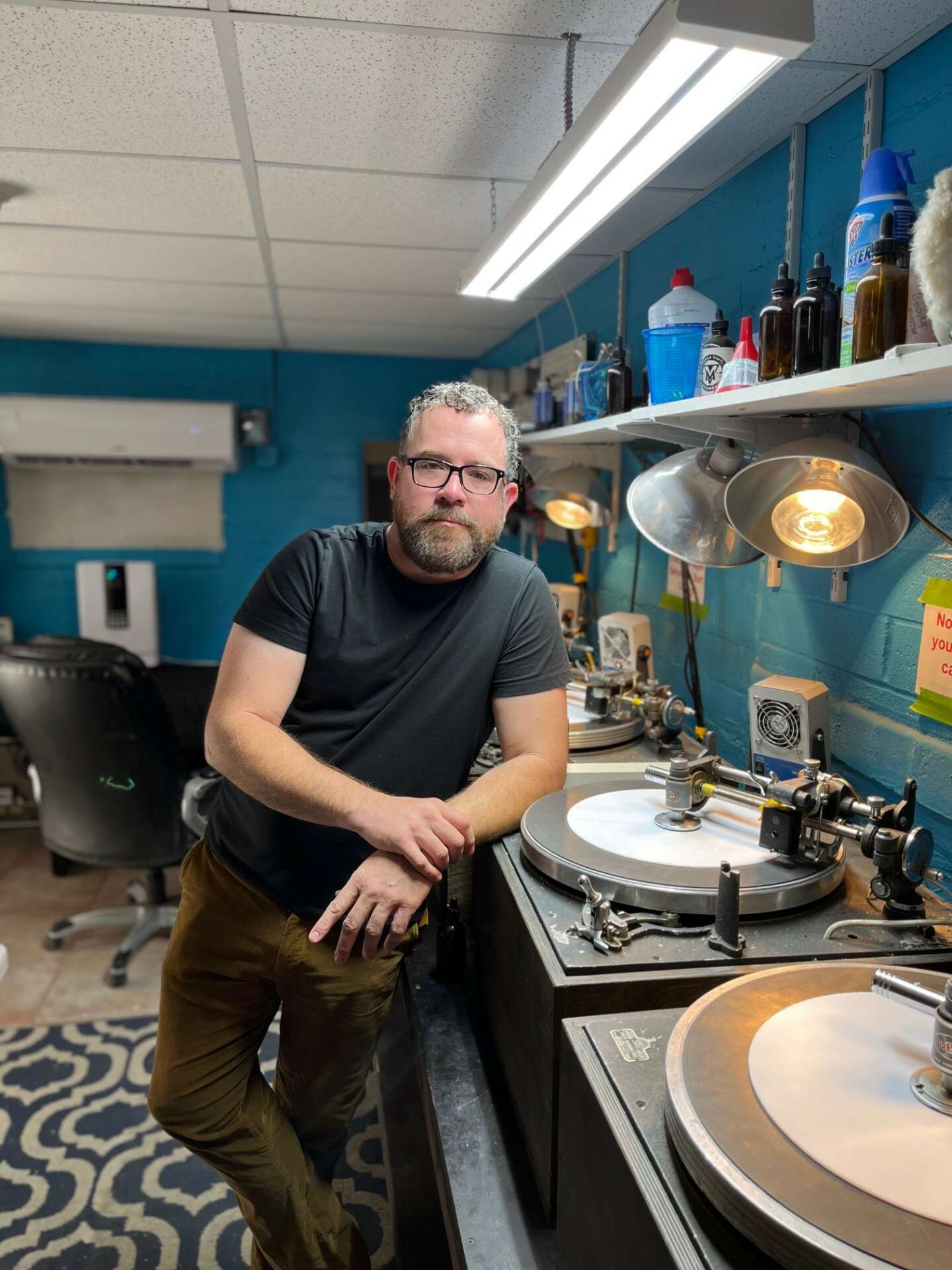

We’re excited to introduce you to the always interesting and insightful Michael Dixon. We hope you’ll enjoy our conversation with Michael below.
Hi Michael , thanks for joining us today. One of the things we most admire about small businesses is their ability to diverge from the corporate/industry standard. Is there something that you or your brand do that differs from the industry standard? We’d love to hear about it as well as any stories you might have that illustrate how or why this difference matters.
When I began making vinyl records in 2006, the “industry standard” was large manufacturing mass production in steam powered pressing plants. The process required many steps, multiple suppliers, large minimums and long lead-times. Myself and about 5 other weirdo musician/artists decided to try to make vinyl records accessible to lesser-known artists who couldn’t afford to order 1000+ copies of their record. Because we were offering a financial entry point that was SIGNIFICANTLY lower than anyone else in the industry, we were able to reach customers that would never be in the market for vinyl records from the pressing plant.
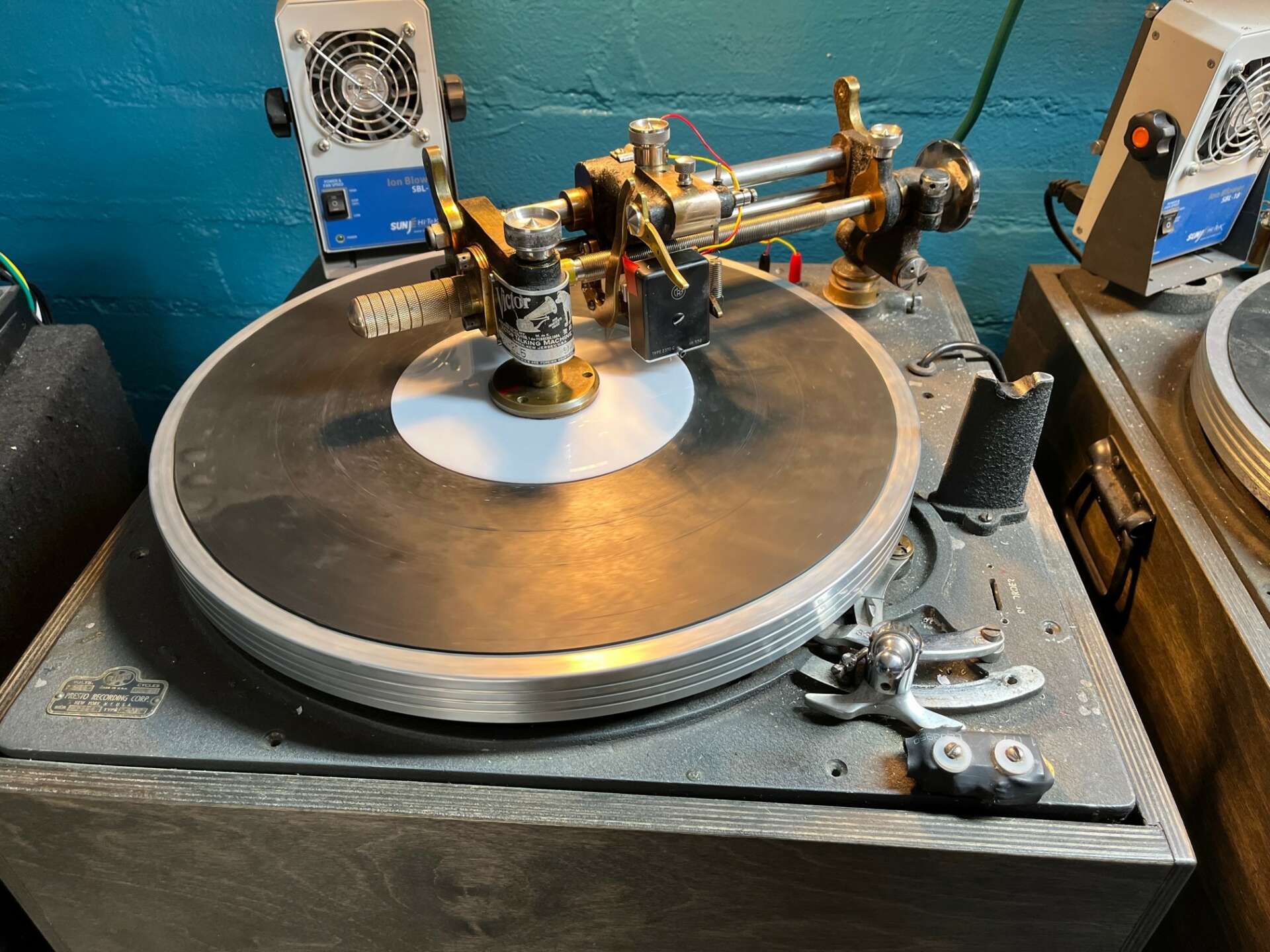
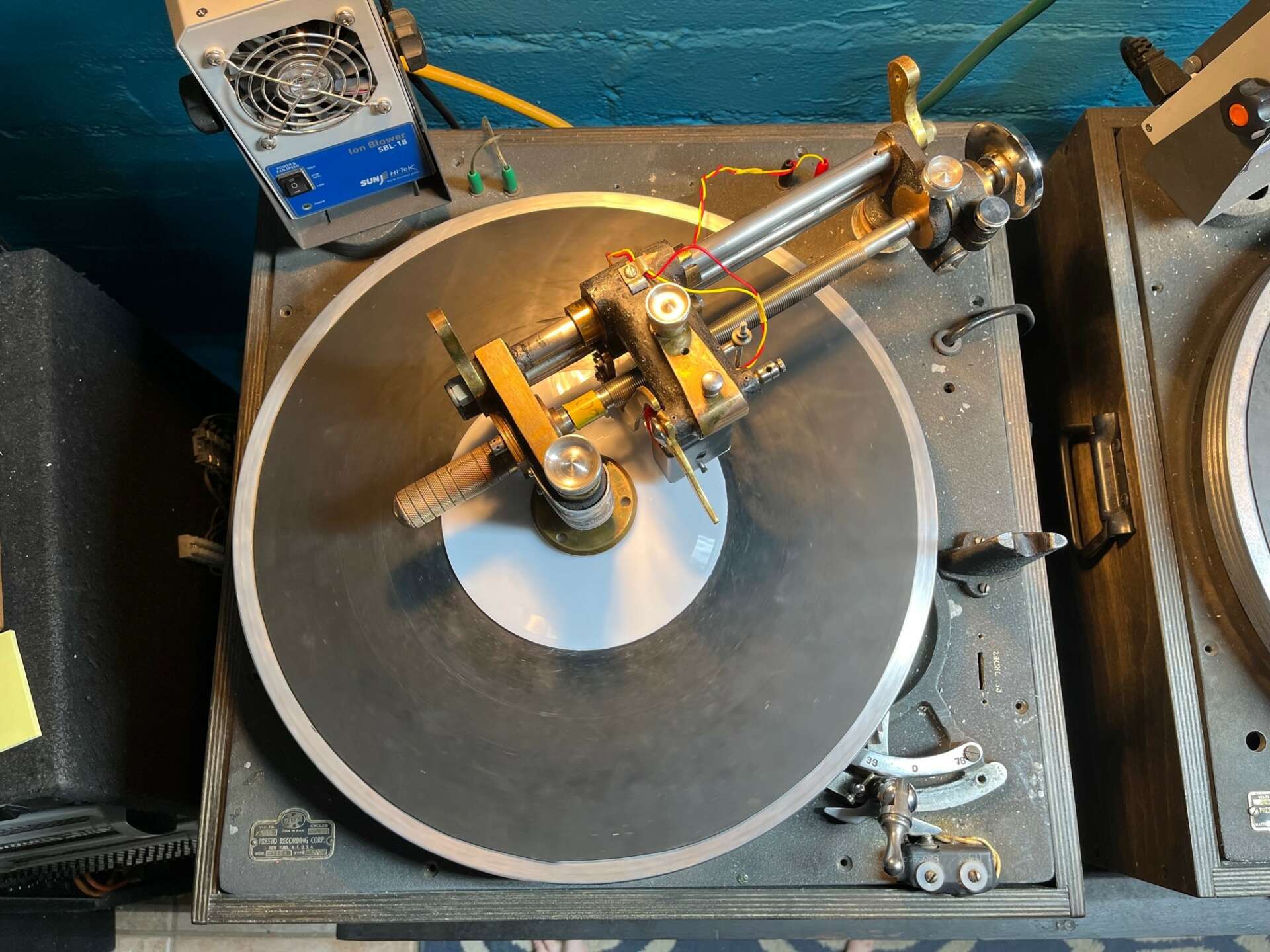
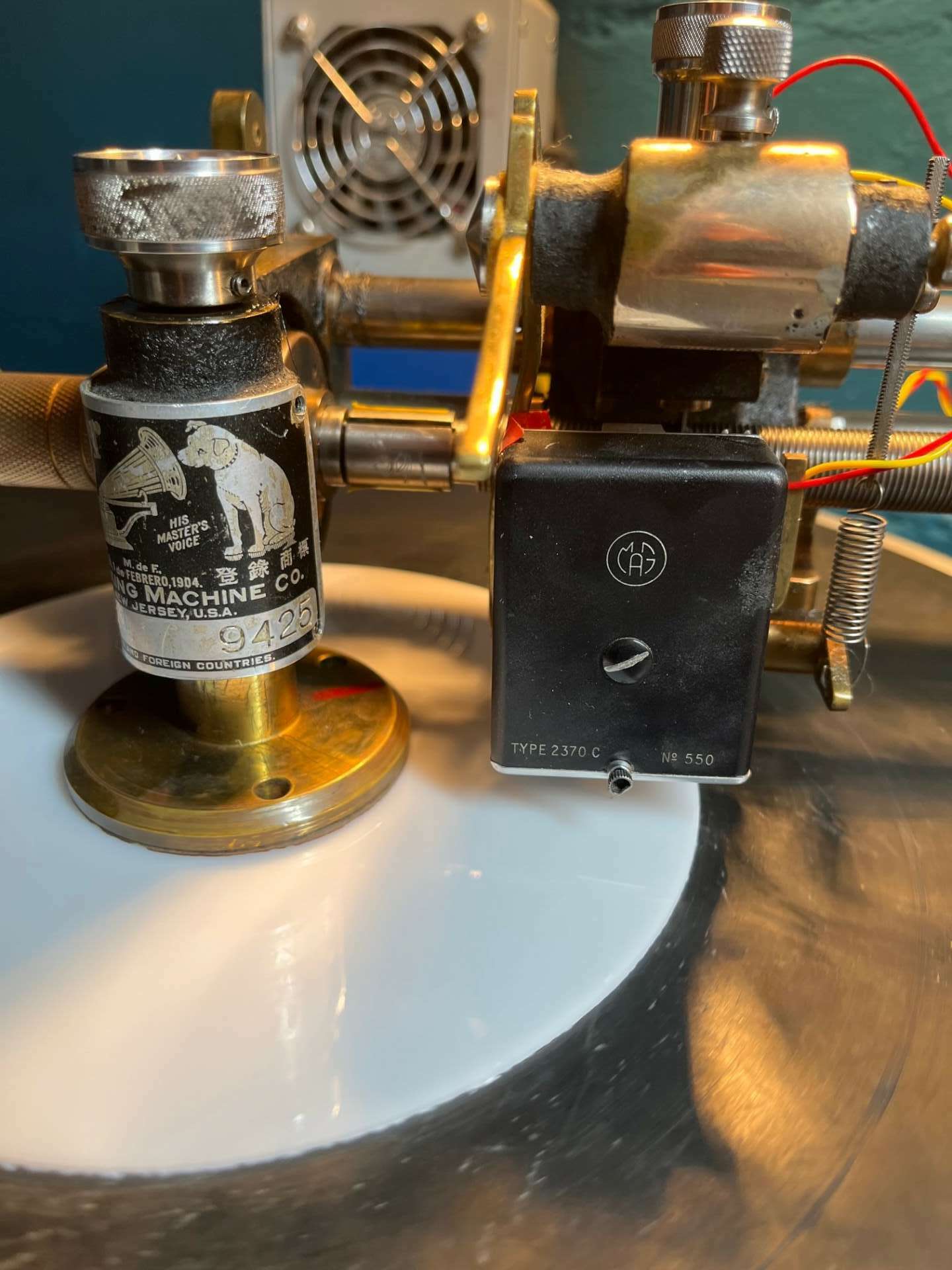
We salvaged 1940s radio station recording lathes to make vinyl records in real time, on nontraditional materials like plexiglass, laserdiscs, plastic picnic plates, and even compact discs that would play on your turntable AND in your cd player. For me, the weird materials started as a necessity because the traditional cutting materials were extremely expensive and difficult to find. But, as I learned and experimented more and more, the unique art and packaging possibilities that these materials offered became the largest draw for me.
I love collaborating with musicians to make limited edition playable ARTifacts that are more than simply a music delivery method. I love turning trash and thrift store finds into unique merch table items. A lot of times, the release begins with the thrift store find and it guides the art format and even the artist that I choose to collaborate on it.
I’ve been able to take a stale manufacturing process and customize it in a way that is exciting and interesting… for myself and for the artists and their fans.

Michael , love having you share your insights with us. Before we ask you more questions, maybe you can take a moment to introduce yourself to our readers who might have missed our earlier conversations?
My name is Michael Dixon. I live in Tucson, AZ and I am a Vinyl Record Artist, Vintage Recording Equipment Rescuer/Resuscitator, and Obscure Knowledge Passer-Onner. I am one of the most active people in a tiny niche of the music industry that focuses on very short run vinyl records that can be bought by artists who could not afford (or afford to wait) for records through the traditional record pressing process. I restore and resell the equipment, cut records live on-site at festivals, parties, weddings, film premiers, etc, host training camps in my studio, remanufacture parts and pieces for the old machines, and make playable ARTifacts for artists from all over the world. I have repaired and/or installed recording cutting studios in Korea, Colombia, France, England, Scotland, Mexico, Australia, Canada, and Spain. I love the challenge and dichotomy of working in an industry that is over 100 years old, but in a capacity that is largely new and unexplored. I also love inventing new processes, and passing along knowledge in a niche that is infamous for its’ antisocial information gatekeepers.
Have you ever had to pivot?
From the beginning, I have always intentionally diversified my revenue streams within the record industry. I have seven businesses with different specialties. LatheCuts.com offers small artist short run, quick turnaround vinyl records. Mobile Vinyl Recorders provides a live, on-site record cutting as a marketing activation at festivals and events for corporate clients. PIAPTK is a record label that I curate as a collaborative art project with artists from all over the world. The Science of Sound is a presentation about the history and science of recorded sound that I give in the summers and libraries and elementary schools. RecordLatheParts.com is a website where I sell remanufactured parts and restored record cutting machines.
Every one of these businesses is feast or famine and completely unpredictable. There are times when I wasn’t able to find any vintage machines to repair, so I ran specials to boost business for the short run records. During Covid, all of the live events dried up, so I pivoted to more work with my record label, because artists were doing lots of home recording and live streams. When I’m not feeling inspired to work on the record label, I spend more time working on the piles of broken machines that I have in storage to sell to aspiring record cutters.
Being flexible, prepared and willing/able to change course at a moments notice has allowed my business to survive and thrive during the leaner times of the “vinyl resurgence”, which ebbed and flowed for about 15 years before REALLY taking off in 2021.
We’d love to hear the story of how you turned a side-hustle into a something much bigger.
I never expected my obsessive hobby/passion of lathe cut vinyl records to ever become a viable business. When I first started, the “vinyl resurgence” was in its’ infancy, and I had a great job that I loved teaching high school. I spent seven years obsessively learning, experimenting with lathe cut vinyl records and the machines that make them as a hobby. Then, one day in 2013, Converse Shoe Company was arranging to throw a VIP party for a second level headliner at Coachella, and asked them what they wanted at the party. The artist said they wanted “Dub Plates” (which are one-off custom vinyl records), and the party planners googled it, found an article about an event I had participated in at an art museum and contacted me about cutting records at their Coachella VIP Party. We had never even thought about this as a corporate event.
My friend (now business partner) and I called in sick at our day jobs and went to Coachella. Because nobody had ever seen vinyl records made, everybody there absolutely loved it. And because it was a VIP party, the attendees were all fashion, music, marketing, etc industry insiders who offered to hire us for THEIR upcoming events. After the party, Converse were so excited about the activation that they offered us more work in the upcoming year.
Two weeks later I was given my new contract for the following school year. I had to decide whether I wanted to stay in my comfortable, well paying job that I loved, or to step out into the unknown with this fledgling idea with no real track record of success, or even of being done before as a business. I decided to trust my gut and take a chance, and move to a place where the cost of living was lower. In the early years I hustled up flexible side jobs, sold things on ebay, whatever it took to pay the bills until the next event popped up, or the next order came in. Over the years it got steadier and more profitable as I got more recognition and press. But, I STILL have to hustle to keep the lights on. And I love every minute of it.
Contact Info:
- Website: www.MichaelDixonVinylArt.com
- Instagram: @lathecuts
Image Credits
Ryer Dixon