

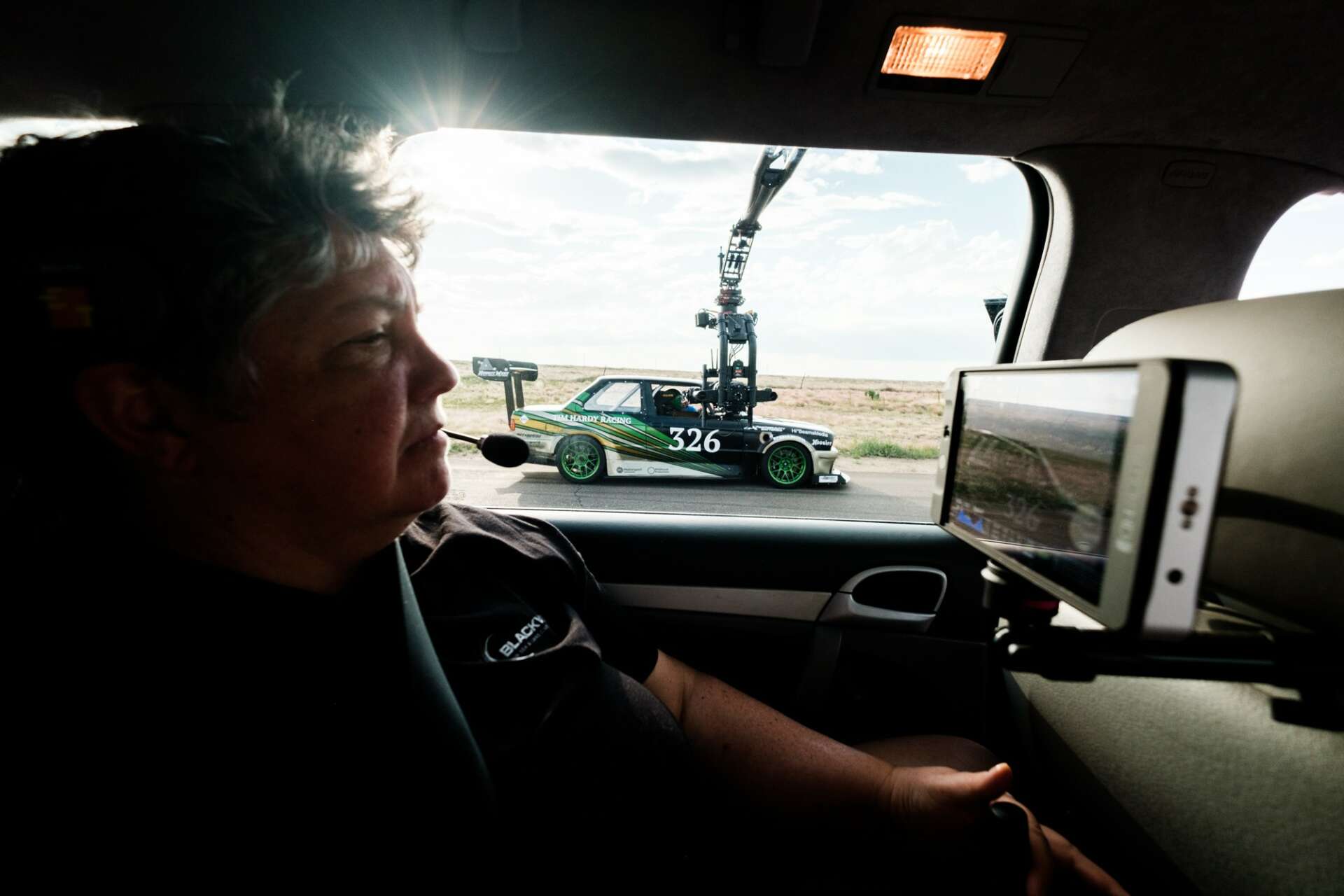

We recently connected with Meryem Ersoz and have shared our conversation below.
Meryem, thanks for taking the time to share your stories with us today Can you talk to us about how you learned to do what you do?
I had an unusual path on my way to working in film and video production. I have a Ph.D. and was teaching at the University of Colorado-Denver in 2000, when my daughter was born. I took a break from teaching to parent and soon realized that raising a child is not the most creatively stimulating activity, and I had always enjoyed a rich creative life, as a writer and as a musician. I needed something that I could pick up and put down. It was the early stages of the DV revolution. I had owned a Hi-8 video camera in college. That camera is still a low-light champ, and I still own it.
But with DV tape, there was no need for a deck. You could do so much with a camera and an editor. It was a revelation. I was good at two things, as an academic – research and working alone. DV supported both of these things. I was teaching Film History and had always taught my courses with a strong formalist approach – encouraging my students to study what was happening in the frame. Where was the camera placed? How was the light being used? What effects were created with sound? We always did a lot of close reading, to consider how meaning was generated from creative choices.
I made a bad documentary that will never see the light of day. But I learned a lot and found myself online researching how to improve my skills. I started a little group a budding wannabe filmmakers, where we shared and critiqued our work.
Film was really a second career for me, but now I’ve been doing it for twenty years, so I have developed a degree of mastery over what I do. I started out because I liked shooting. I enjoyed the alchemy of film, seeing the image transform through the lens and camera. The magical aspects of this craft still intrigue me. Producing is different than shooting. Pushing paperwork is a LOT less magical than shooting, but I found I had a knack for running complex systems, so eventually, I settled into that niche. But I come at producing from an active cinematography background and from a fascination with revolutionizing technology. By now, I have lived through several technological revolutions in my field. Things evolve and change fast. So I am never bored.
I think I had a very fast learning process. I don’t know that I could have learned much more, any faster than I did. Sometimes it feels as if I was launched out of a cannon into this world.
But I do have a few pieces of advice for people who want to start out in film. Be a self-starter. You can’t wait around in this business waiting to be noticed. You have to get on sets, have great situational awareness, and be responsive to the needs of those around you. Those things will get you noticed, and your phone will start to ring for bigger, better things. This is a “skate to the puck” business.
Also, this is an experiential business. You learn by doing things and studying how other people do things. If you are a cinematographer, watch demo reels of every good shooter you can. I had a guy who interned with me once, as a colorist and he was super fast technically in terms of pushing the buttons to run the program, but he had never looked at a single colorist reel. I gave him the homework of watching ten colorists’ reels. How can you be an artist if you don’t study what accomplished artists are doing? The tools to do this are at your fingertips these days.
Make art.
Then be a ruthless self-critic of your own art.
But don’t beat yourself up. That is not being a ruthless self-critic – that is listening to the little nagging voice of fear. Learn this distinction.
Then take what you learned from ruthless self-criticism and go make more art.
Don’t be afraid to fail. Fail spectacularly. When I was a small child, I remember coming home after skiing all day and proudly declaring to my older brother, “I didn’t fall once today!” He looked at me and sneered: “Then you weren’t trying hard enough!” I took my older brother very seriously at a young age, and what he said stuck with me. Falling means you’re trying, in a world where many people are afraid of trying.
Always aim higher than you think you can go, and if you only make it halfway, or two-thirds of the way, you’ll find that you are still doing more than the person next to you.
Also, realize that if you are freelance artist or employee, you are engaged in two businesses. Your craft is one business, and the business of your craft is a separate and equally important thing. You need to embrace both aspects in equal measure. Being an artist/craftsman is not for the faint of heart. Running a business is not for the faint of heart. And you have decided to do both!
Great, appreciate you sharing that with us. Before we ask you to share more of your insights, can you take a moment to introduce yourself and how you got to where you are today to our readers
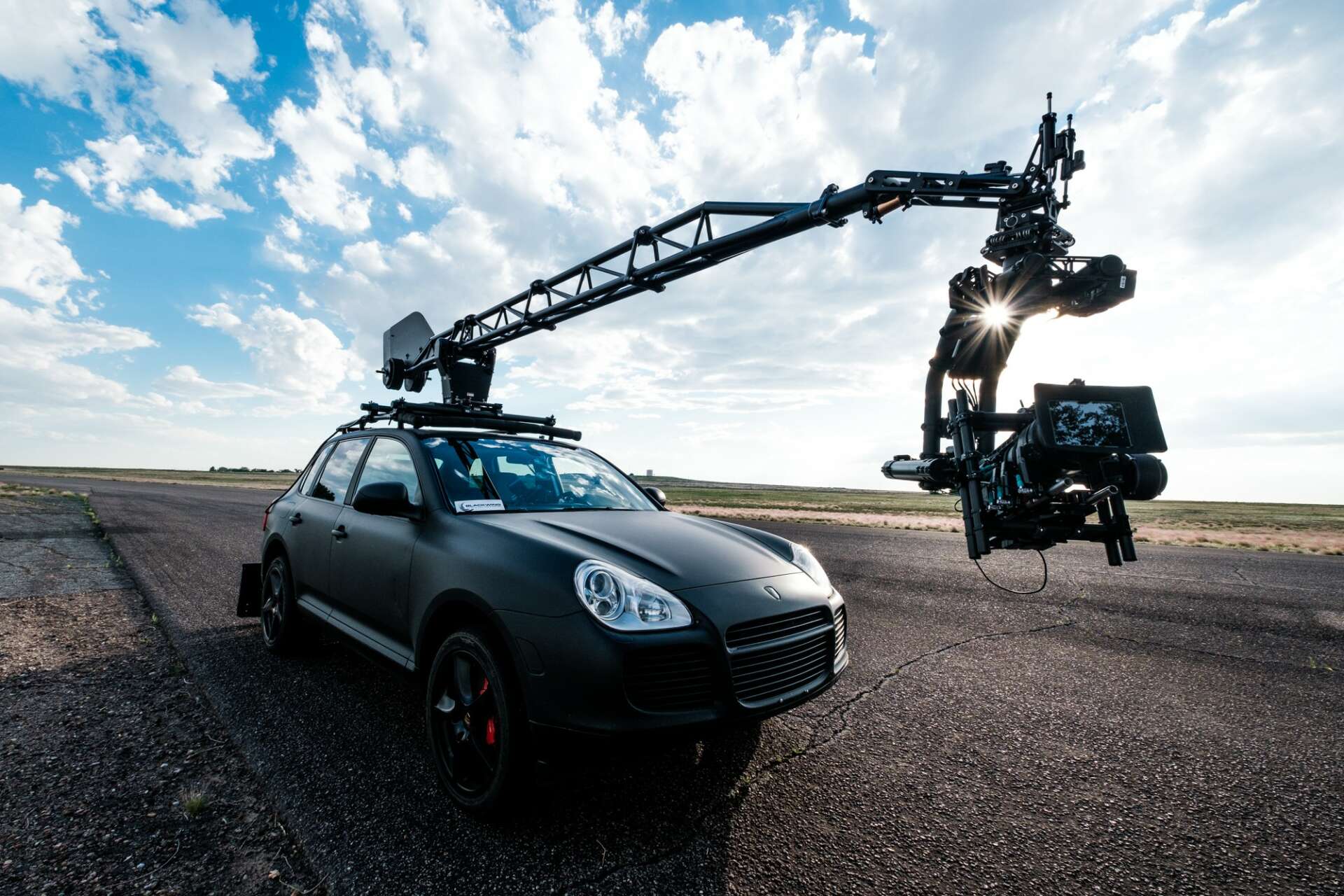
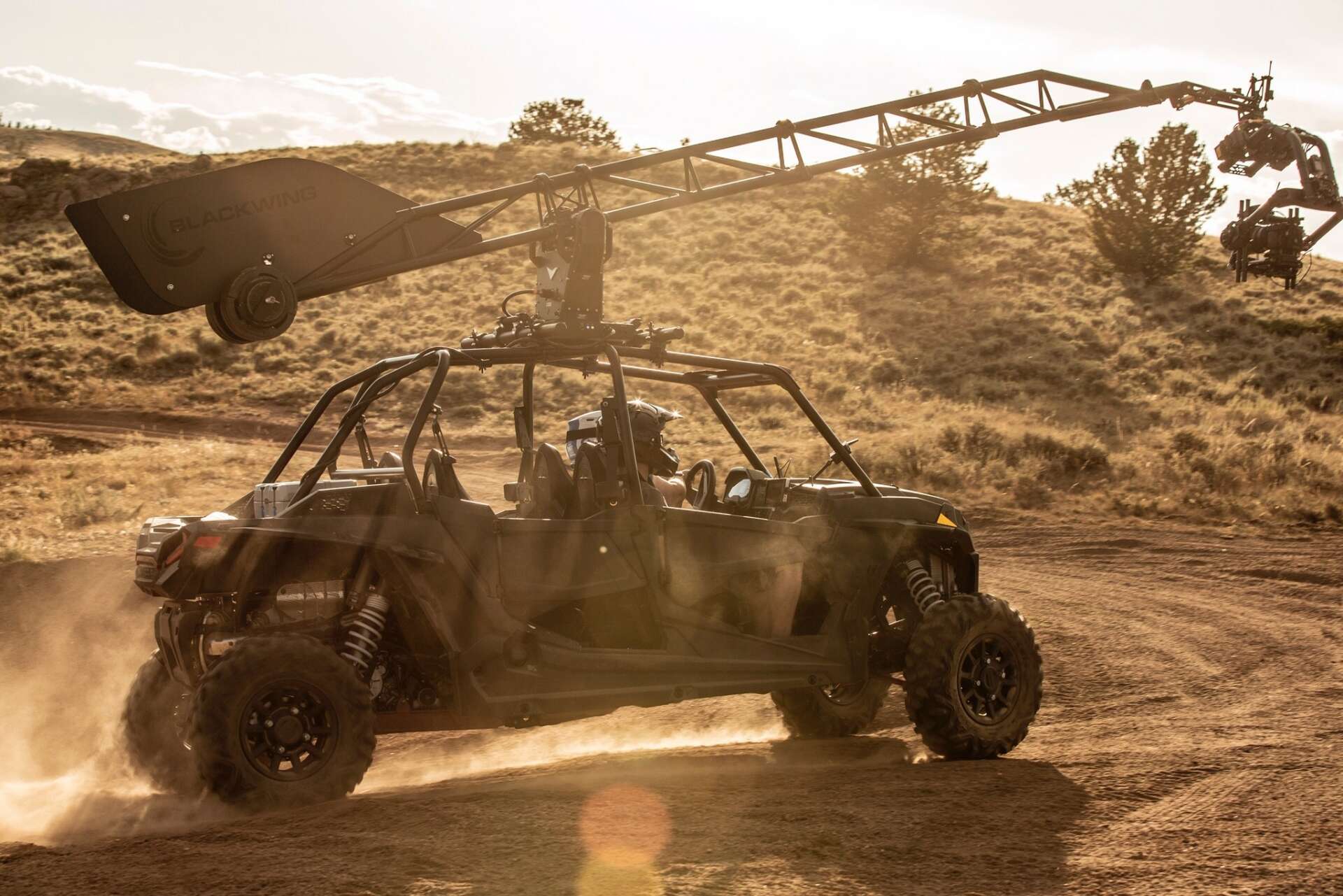
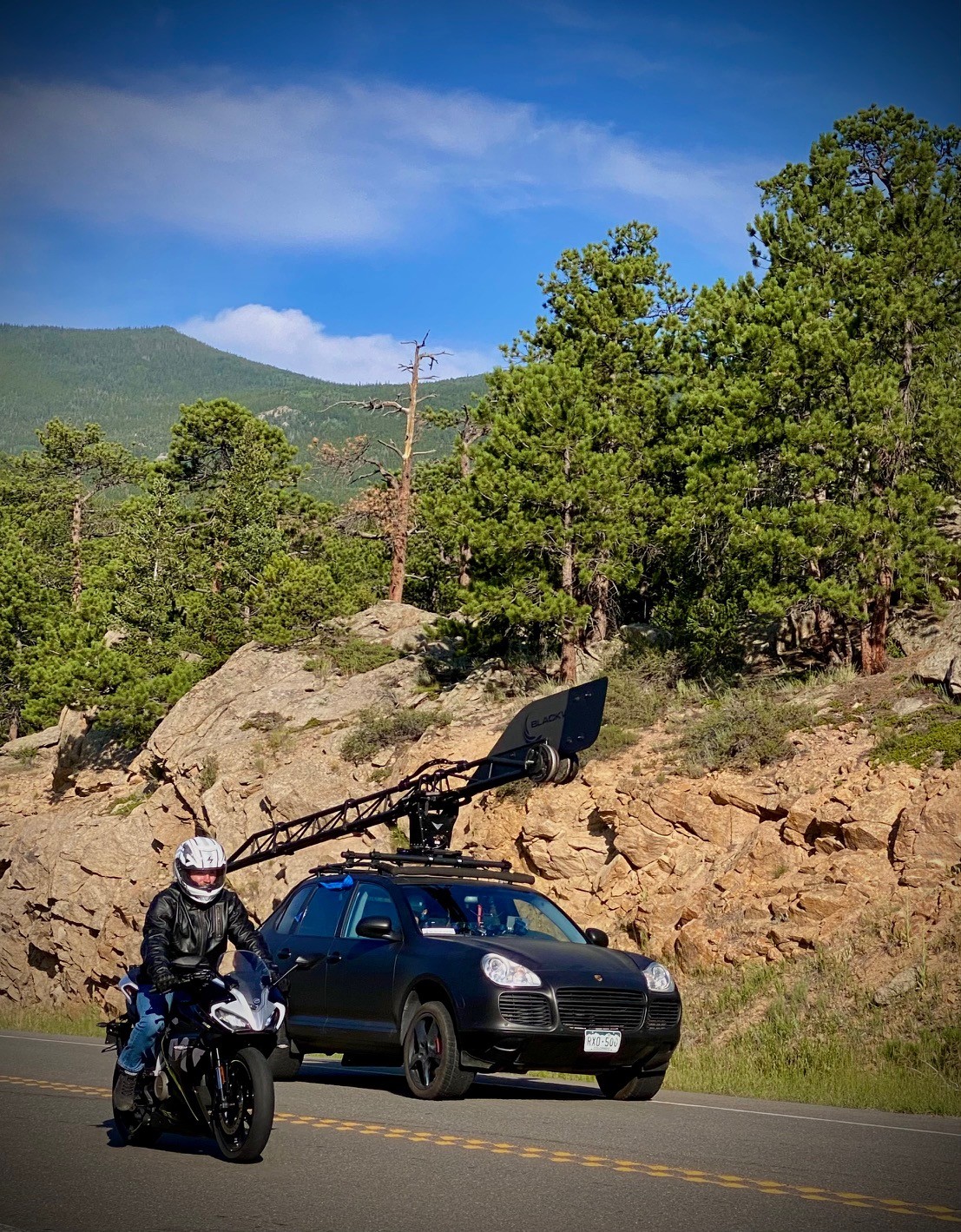
Since I work in a smaller market in Colorado, I’ve had many opportunities to re-invent my filmmaking career. Now I am closer to the end of my film career than I am to the beginning, so I have refined my focus to “only” two things. I manage a pursuit vehicle business, Blackwing, and I produce (and sometimes direct) narrative films.
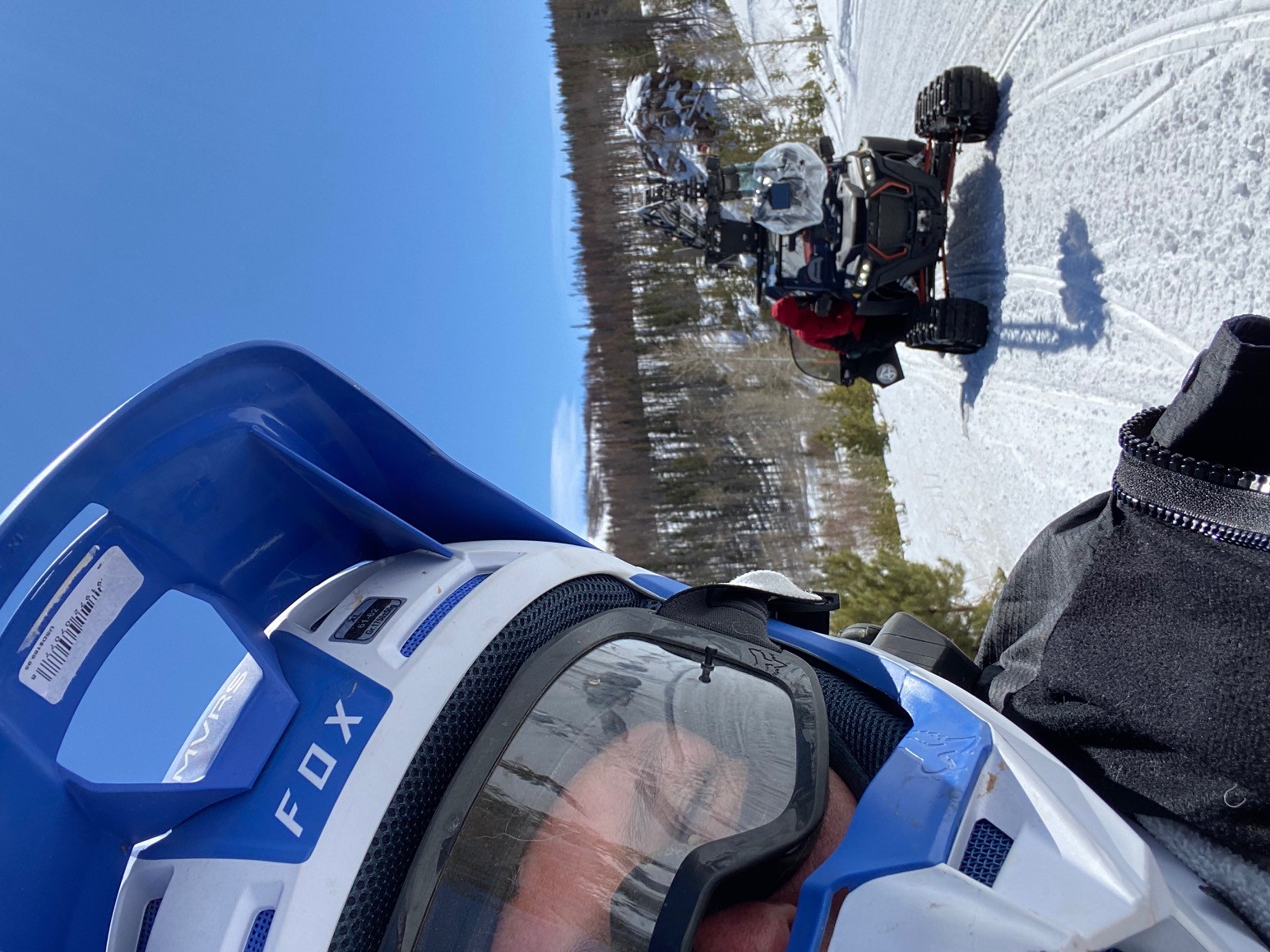
Building and running pursuit vehicles is a lot of fun, but it’s also one of the more complex systems to operate in our business. I like the challenge of it, and I like the collaborative nature of shooting that way. The car teams include the driver, the boom operator, the head operator, the focus puller and the creative director or agency DP. Everyone is in charge of a piece of the frame, and many of our most interesting shots emerge from this collaboration.
What distinguishes Blackwing is the quality of our gear and service. Standards for equipment and performance in the arm car/pursuit vehicle world pre-existed us and were established by some very hard-working, smart, and quality-oriented people. We have always aimed upwards, to meet and exceed these standards with the best equipment and personnel we can find.
One of the thing which I’m most proud of is repeat business. That is all you need to know in the arm car world, is that your clients will come back to you, because you gave them a high-quality experience with your gear and your personnel.
On the narrative film side of things, I am actually starting to wind down. I think I took on that challenge because it’s a good teacher. You learn a lot about yourself, if you’re willing to put yourself in a high-stress pressure cooker! But I think I have exhausted the need to learn those lessons about myself and others.
The pandemic gave me some time to do some screenwriting, so I’m dabbling in that area right now, with a degree of success. I wrote a TV pilot and two feature films and self-produced the TV pilot and sold the other two, with one in pre-production currently and the other one in the earlier stage of fund-raising and development.
I want to get back to more creative work, less paperwork. So, in addition to these screenwriting projects, I have one more film on my slate, and once I push this small pile of projects across the finish line, I will be very particular about taking on new work. Of course, this will take me 5-6 years, so I’m not exactly quitting. But I have turned down three films in the past couple of years, because the work is difficult, and, as a producer, your work persists long after the set wraps.
To work within the challenges of a small market, you have to love it. And for your films to have even a chance of success, you have to marry them for years after they are finished.
If there is one thing that I want people to understand about my experience as a film producer in Colorado, it’s that my goal has never been about making this film or that film…it’s always been about building an entire film industry. I put my back into it, with relative success. With so many people migrating to our state in the past decade, that ball is starting to roll downhill, so that responsibility no longer weighs as heavily as it once did.
I’ve also tried to use my filmmaking as a form of activism – maybe not in the usual sense of the word, by making activist films.
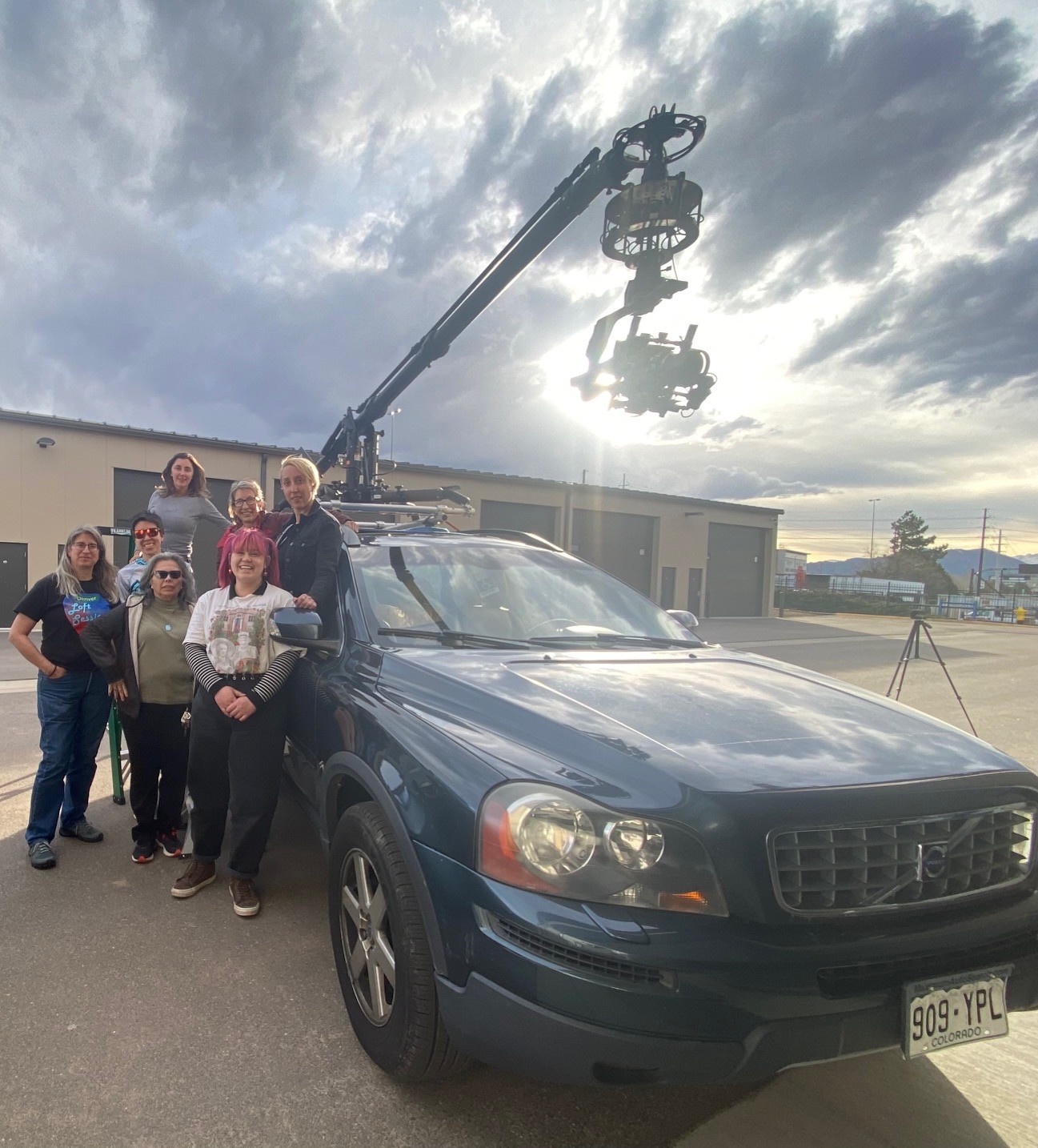
But for the past two years, I’ve sponsored a Blackwing event where we gather a bunch of women together to build an arm car in the Blackwing shop, from the ground up, and operate it. I can’t think of anywhere else in the country – maybe even the planet – where anyone else is giving women this kind of opportunity, to build a complex system like this, from the ground up. I think it is an important thing for women to imagine themselves doing and then to give them an opportunity to execute complicated mechanical and technical tasks.
I buy everybody lunch and supply drinks, but I try to stay out of the build as much as possible and let the group problem-solve their way to completing the build. I give a little bit of advice and guidance, but I mostly try to provide an opportunity, then get out of the way.
It’s always a great feeling when they get the whole car running, with the arm built to a car, and the gimbal and camera balanced, and a video feed sent to monitors inside the car. Then they can tool around in it and get a taste of what it’s like to operate. There are very few women, besides myself, building and operating these systems. But I came up with the idea of doing this last year, and we doubled the number of women interested in the event this year. This is my way of trying to give a boost to the women in my community. Doing stuff together is fun, and we can learn a lot of new skills quickly.
And when you give something a bit of a nudge, it can also take on a life of its own. That same group is already talking about the next thing we can put together to help each other grow in our skills. So that’s gratifying.
It’s a little late in my career to think about my brand, at this point, but if there is one thing that I would like to be known for–and that I think, to some degree, I am known for– it is “helping others grow in their craft.”
There are tons of way better filmmakers out there than I am. But I know I did my part to build a better world within my corner of this industry and to expand my spirit within the choices I have made. At the end of the day, it’s enough.
What do you think is the goal or mission that drives your creative journey?
What drives my creative journey is a burning need for self-expression. I think most people have a similar need, and I don’t think the structure of society is necessarily supportive of the need for people to express their spirits. Our thinking is too polarized between creatives/non-creatives, but I think that anything which supports self-expression is inherently creative. Running a business, any business, is a creative act. You are creating something, a good or a service out of an idea, a thought given form.
Film has been great for me, because it draws on all of my brain. Left, right. Front, back. I use my musical training, my systems thinking, my problem-solving skills, my artistry, my research skills. It’s the right medium for self-expression, for me. Being an academic wasn’t the worst job in the world, but I did find it limiting in terms of being able to unleash my full potential for self-expression. I liked learning more than I enjoyed teaching, and in film production, I am constantly learning. There is always a new skill, a new technology, a new problem to solve, a revelation about yourself to grasp. It’s a flow.
I’ve never been overly concerned about the product. All of my projects have found their way from inception into the marketplace, and that is good enough for me. I am all about the process, the friendships, the people, the journey, the ability to harness modes of self-expression within a particular project. Then I can, at some point, put it behind me and think about the next one. Filmmaking is a perpetual start-up, and it’s the one thing I have found that never stagnates. It may wear you out, at times, but it is never dull.
I think people who hate their jobs hate them, in some part, because they are poor vehicles for self-expression. I’ve had those jobs and know what that’s like. My very first job was a cubicle job, and I only lasted six months at it. I took a 30% pay cut to do something that gave me a greater sense of self-expression and was happy at it, until eventually, I felt that same sense of confinement, and then I had to try my hand at something new. So I understand Millenials, in that sense. Even though I’m technically born in the last year of the Boomer generation, I can more easily align with a generation which refuses to settle.
Have any books or other resources had a big impact on you?
One book that I would recommend digesting sooner than later is Napoleon Hill’s The Law of Success. Some of the material can sound a bit dated, since it was written in the 1920s. But Hill was living through a materialist time, an Industrial Revolution.
What he was doing was turning causality on its ear, informing us, rightly, that all creation begins with thought and that thinking is the precursor to success. We should probably all learn to spending more time in consideration of what we do rather than merely doing it. He teaches us how to align our energy to aim higher.
I studied this book with a friend – we called it “Book Club” – where we went through it very slowly and carefully, reading and working through only one chapter each time we met up. It took us almost a year to finish it, but we studied it carefully.
I don’t think it is a great book to read by yourself. I think it helps to share the burden and the experience of it with another person and to craft exercises for yourselves to do, as you read along. It’s not a book to just read and put down. You have to enact and massage the principles which Hill outlines. You have to do what he says, not just read what he says.
If I ever get bored with making movies, I could write a great workbook to accompany the original. It’s on my bucket list.
Contact Info:
- Website: www.blackasl.com
- Instagram: https://www.instagram.com/blackwingairsealand
- Facebook: https://www.facebook.com/BlackwingASL
- Linkedin: https://www.linkedin.com/in/meryemersoz/
Image Credits
Jason Anderson