


We were lucky to catch up with Meredith “Phee” Avery recently and have shared our conversation below.
Meredith “Phee”, looking forward to hearing all of your stories today. Risk taking is something we’re really interested in and we’d love to hear the story of a risk you’ve taken.
The biggest risk I ever took was deciding to stop treating my creativity like a luxury.
For years, I split myself in two. One version of me did what was necessary to survive. The other wrote, made music, and waited for permission that never came. Creativity was something I squeezed in after responsibility, not something I was allowed to build a life around. It kept me afloat, but it hollowed me out.
So I changed the structure.
I opened my barbershop on purpose—not as a fallback, and not as a dream, but as infrastructure. I was done chasing instability in entertainment and calling it passion. I wanted a business that could generate real income, give me control over my time, and fund my ability to keep creating without compromise.
I built the shop for longevity, not hype. Consistency over flash. Community over exclusivity. I ignored advice to move faster, scale harder, or smooth the edges. A business that lasts gives you something rare in art: time—and the freedom to tell the truth.
That freedom changed everything.
The shop pays for the patience it takes to write novels that don’t flinch. It pays for music that doesn’t sand down grief or resilience to be more palatable. It pays for saying no when something doesn’t fit. The business doesn’t compete with my art—it sustains it.
The risk wasn’t financial. It was choosing an unconventional path and owning it. I risked being misunderstood. I risked being told to pick a lane. Instead, I built my own foundation.
Nothing about it was easy. But it was honest.
That risk turned survival into sustainability—and gave my creative work room to breathe.
It’s been turning out to be outstanding.

Meredith “Phee”, before we move on to more of these sorts of questions, can you take some time to bring our readers up to speed on you and what you do?
I build things that last—spaces, stories, and systems that don’t rely on hype to survive.
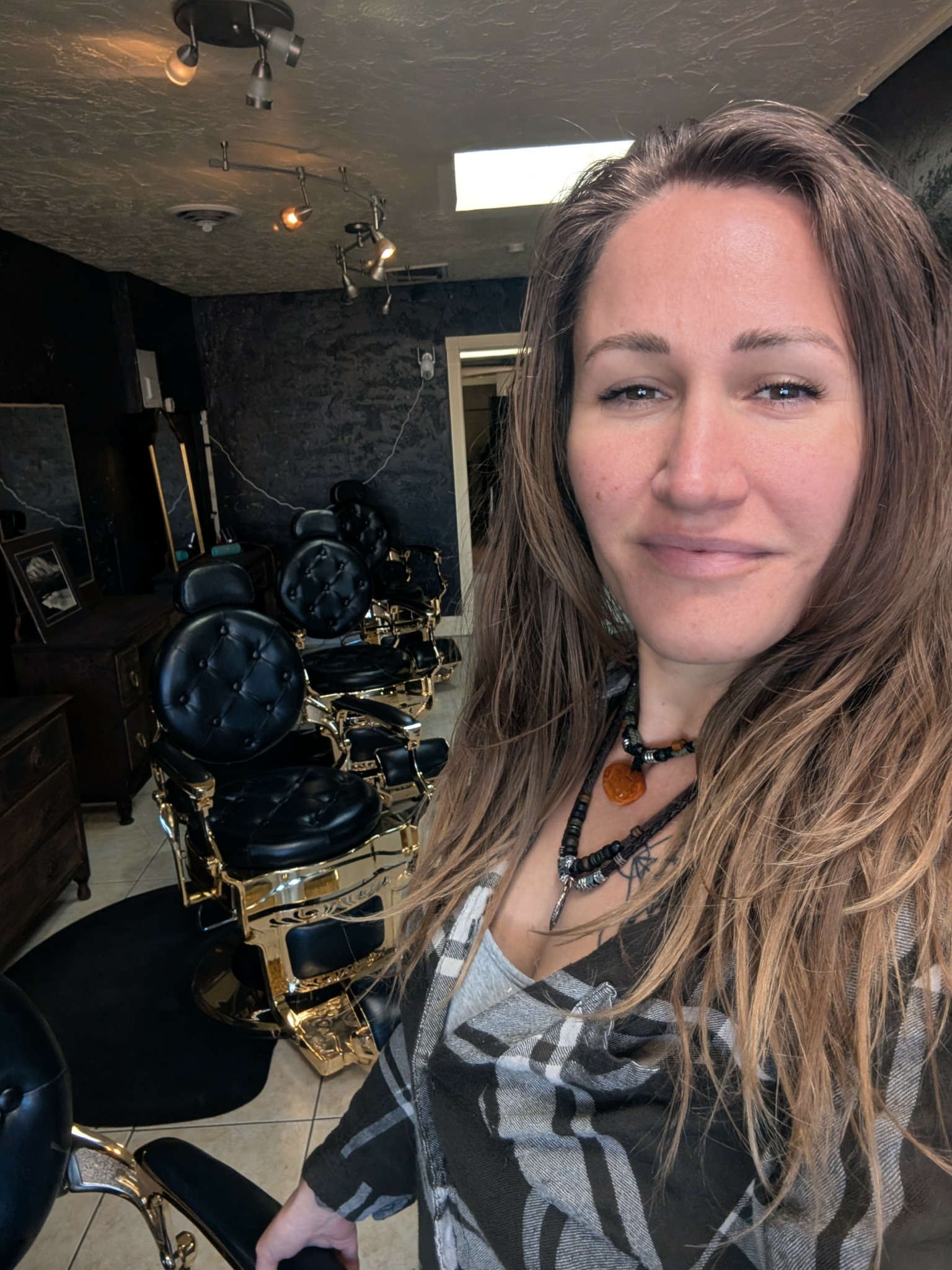
I own The Urban Hideout, a community-driven barbershop built on consistency, standards, and trust. The shop exists for two reasons: personal autonomy and industry repair. On a personal level, it’s the infrastructure that funds and protects my creative work. On a broader level, it’s a controlled environment where I’m developing a repeatable Standard Operating Procedure designed to raise the floor of the barbering industry—one I intend to license once it’s fully proven.
This wasn’t built as a vibe. It was built as a system.
The shop prioritizes reliability over flash, fair pricing over artificial exclusivity, and training over churn. We build barbers, not burners. Interns are trained on standards, ethics, and long-term sustainability. The Urban Hideout also functions as a cultural hub—a safe, grounded place for people to meet, talk, and exist without performance. No velvet ropes. No posturing. Just something solid in the neighborhood.
That foundation makes the creative work possible.
In music, I write and record under Phee, a federally trademarked name that I own and operate as a protected creative brand. My album New Paradigm, released in 2022, is a genre-blending project rooted in emotional honesty, with one intentional blues cover included as a reference point—not a limitation. A new blues album is currently in production and slated for release in 2026, marking a sharper, heavier return to the music that shaped me.
In writing, I work in psychological and crime-driven fiction. My novel The Unknown was released in 2024 and explores power, captivity, and moral collapse without flinching. I’m currently in the final stages of completing my next novel, Serena Vale, which pushes further into agency, violence, and identity and is nearly ready for release.
The business doesn’t compete with the art. It sustains it. It funds the time required to write novels properly. It protects the patience needed to make music without sanding it down for mass appeal.
What sets me apart is alignment. Everything feeds everything else. The shop sharpens the art. The art sharpens the system. Nothing is accidental. Nothing is performative.
What I’m most proud of is building my own foundation instead of waiting to be chosen. If people come to me—for a haircut, a book, a record, or a place to land—they’re getting work that’s intentional, uncompromising, and built to hold up long after the noise fades.
That’s the work.

Let’s talk about resilience next – do you have a story you can share with us?
Resilience, for me, has looked like functioning under a level of stress that most people never see—and doing it without falling apart in public.
The SBA loan process through Huntington Bank was brutal in a very specific way. I was assured it was coming through. Over and over. I was told I was approved in principle, that everything looked good, that we were just waiting on final steps. I planned around those assurances. Then, at the very end, they denied the loan for reasons that didn’t line up with anything they’d said before. Same numbers. Same tax returns. Same reality. It felt like being strung along until the exact moment it would do the most damage.
That kind of failure doesn’t just hit financially—it hits psychologically. You replay conversations. You question your judgment. Meanwhile, rent is still due, build-out clocks don’t stop, and people are waiting on you. The stress doesn’t care that the system broke its word.
At the same time, the city process was a slow grind. Permits, inspections, and rule interpretations that shifted depending on who you talked to. Nothing illegal—just endless friction. Death by paperwork. Every delay cost money. Every delay drained momentum. You can do everything right and still feel like the system is testing endurance, not compliance.
Creatively, there was no escape hatch.
Publishing is brutal in silence. You finish a novel. You know it’s strong. You get agent interest—real interest—and then it stalls or disappears because the market “shifted.” No feedback. No closure. Just waiting while momentum leaks out.
Music has been especially unforgiving. The Denver scene—and the broader U.S. landscape—has shifted hard toward pay-to-play models. That might work for venues, but it pushes risk entirely onto artists. You’re expected to finance your own exposure, subsidize rooms, and be grateful for the opportunity. Add in shrinking pay, venue closures, and algorithm pressure, and you’re left with a system that makes it harder—not easier—to sustain a real artistic career.
And all of this happened at once.
Business pressure. Bureaucratic obstruction. Creative instability. Constant decision-making with real consequences. The stress wasn’t philosophical—it was physical. Tight chest. Shallow sleep. Running numbers and contingencies at 3 a.m., figuring out how to keep everything from collapsing. Quitting was and is never an option for me.
Resilience wasn’t optimism. It was discipline under stress.
When the SBA pulled the rug out, I adjusted. When the city slowed me down, I rerouted. When creative systems proved unreliable, I stopped depending on them to survive and built something that could carry the weight.
The shop is standing. The books are written. The music is coming.
Not because the systems supported me—but because I refused to disappear when they quietly assumed I would.

Have you ever had to pivot?
The pivot came after the loan denial.
I was told the SBA financing was coming. I planned around it. Then it was denied at the last minute for reasons that didn’t add up. The business didn’t get a grace period because of that. Rent was still due. Costs were still real.
So I adjusted the only thing I could control: my personal life.
I changed my entire housing situation to free up cash so I could cover business expenses and make the shop’s rent. No backup plan. No cushion. Comfort stopped being the priority. Keeping the business alive was.
That pivot wasn’t strategic or inspiring. It was necessary. I absorbed the hit personally so the business didn’t collapse.
The shop stayed open. The work continued.
That’s the pivot.
Contact Info:
- Website: https://meredithpheeavery.wordpress.com/ ; https://theurbanhideoutltd.com/
- Instagram: https://www.instagram.com/meredithpheeavery; https://www.instagram.com/theurbanhideoutltd/
- Facebook: https://www.facebook.com/MeredithPheeAvery/
- Linkedin: https://www.linkedin.com/in/meredithpheeavery/
- Twitter: https://x.com/papayaphee
- Youtube: https://www.youtube.com/@MeredithPheeAvery
- Yelp: https://www.yelp.com/biz/the-urban-hideout-lakewood
- Soundcloud: https://soundcloud.com/papayaphee
