

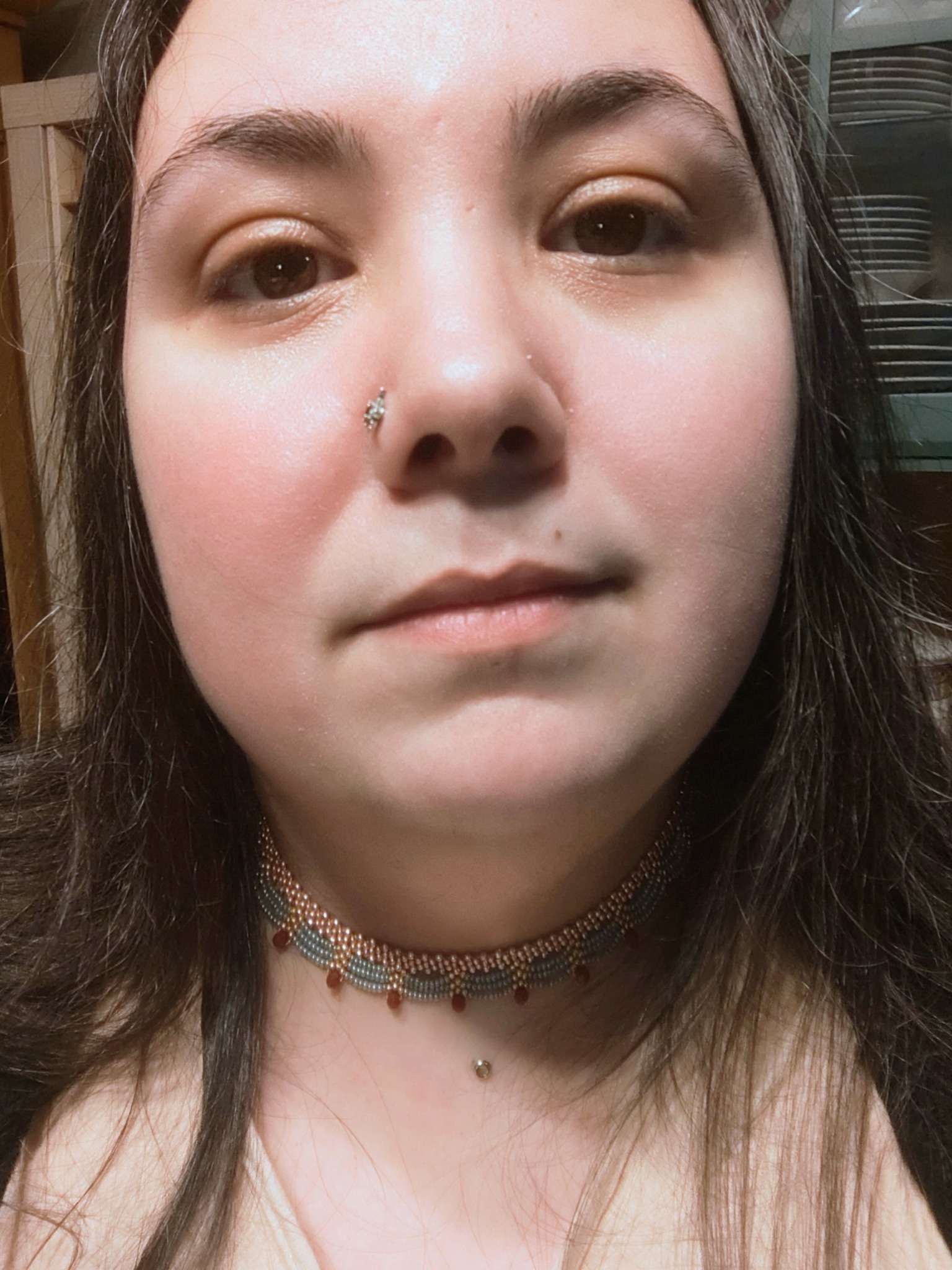

We were lucky to catch up with Mel Moral recently and have shared our conversation below.
Hi Mel, thanks for joining us today. How’s you first get into your field – what was your first job in this field?
My first job, which eventually became the field where I practice, was a direct result of my initial Reiki training and the grief-driven transformation that surrounded it.
The first time I did Reiki on someone—after my third course—I was still questioning authority, lineage, and my energetic place. I had changed my master, a move that was criticized, but I followed my gut. With the pendulum Kim, the northern master, was consulting, giving a definite yes, I felt I was right where I belonged.
I was not looking for a job in a conventional way at that time of my life—I wanted to find a healing paradigm. It was a time when I was coming to terms with CPTSD, generational trauma, and the void left by my grandma’s death, the matriarch who not only was powerful but also practiced Curanderismo. I never thought of Reiki as a merely commercial or side-interest; it seemed to me like the next step of a lineage, a language my body already knew.
During a new moon healing circle, when I was finally allowed to put my hands on the clients, I had already become an ordained minister, according to Florida law at that time. This moment was actually the first real “job” I had in the field—the only difference was that it didn’t feel like a transaction. My first client came forward, and I started doing the signs, inviting the energy with my breathing.
Without thinking, I was only using three fingers for the signing, something later referred to as birdlike, almost ancestral for the movement, which was brought to my attention by someone. The energy that went through me was just wonderful—soft, warm, rhythmic, like a heartbeat which was not mine.
What I was thinking at that very moment was so simple and yet so powerful: this is real. I was not involved in a show; I was connecting. I was like a medium to a pure source, and when the session finished and the woman hugged me with all her might, I got it—this work, this is what service is like.
At that time, my goal was not skill or status, but self-mastery. I was aware that I had to go through different levels of Reiki but at the same time, I understood that this path could aid me in tearing down my inner walls and healing my wounds which even talk therapy had not reached.
Reflecting on it now, the “recruiting process” was not a résumé or interview—it was energetic permission. It was coming from lineage, grief, intuition, legal requirements, and trust of the community all at the very same moment.
That initial experience gave me the courage to keep on performing healing in more formal ways and later on, broaden my scope to other professions where attunement, regulation, and presence are equally important.
I am very thankful and appreciative that this was my first job in the field. It helped me realize that we must first do the work on ourselves if we want to be of help to others. Besides, Reiki equipped me not only with clients but also with a new point of view, limits, and respect for the responsibility that comes with giving space to others.
When the world seemed to be in pieces after the loss of my grandmother, this work was the one that made everything look put back together, stitch by stitch.
As always, we appreciate you sharing your insights and we’ve got a few more questions for you, but before we get to all of that can you take a minute to introduce yourself and give our readers some of your back background and context?
If you haven’t heard of me before, let me introduce myself. Brian, I mean, Mel Moral, founder of Mel’s Dream Weaving, is my name. I am an empath psychic, a Reiki practitioner, and an ordained minister. My work is the intersection of ancestral healing, intuitive guidance, and spiritual practice that is grounded. The thing I do is not to forecast or perform, but it is about remembrance, regulation, and restoration.
I went through the experience of life to become a practitioner of this art, rather than following the trend or novelty. I was brought up in a Cuban Catholic family, and spirituality in my family was not limited to the church. My grandmother, a strong female leader and healer, was a Curanderismo practitioner, and I got it from the very beginning that healing could be one thing or more – prayerful, practical, intuitive, or even all at once. That realization never left me. In her death, I found myself in a very dark and unfortunate time of my life, and it was during that time I got a call from the lineage to come back—not to copy it, but to interpret it in a way that would suit my nervous system, experiences, and the contemporary world.
I entered the field formally through Reiki where I underwent training from different levels and lineages. Finally, I got the attunement that made the laying of hands on others possible, which is what I was doing with clients in community and ceremonial settings. Not only did Reiki offer me a mode, but it also gave me a structure, which was very helpful in my dealing with CPTSD, intergenerational trauma, and long-term energy blockages. That personal healing is what drives my work. I don’t believe in taking others through situations I haven’t experienced myself.
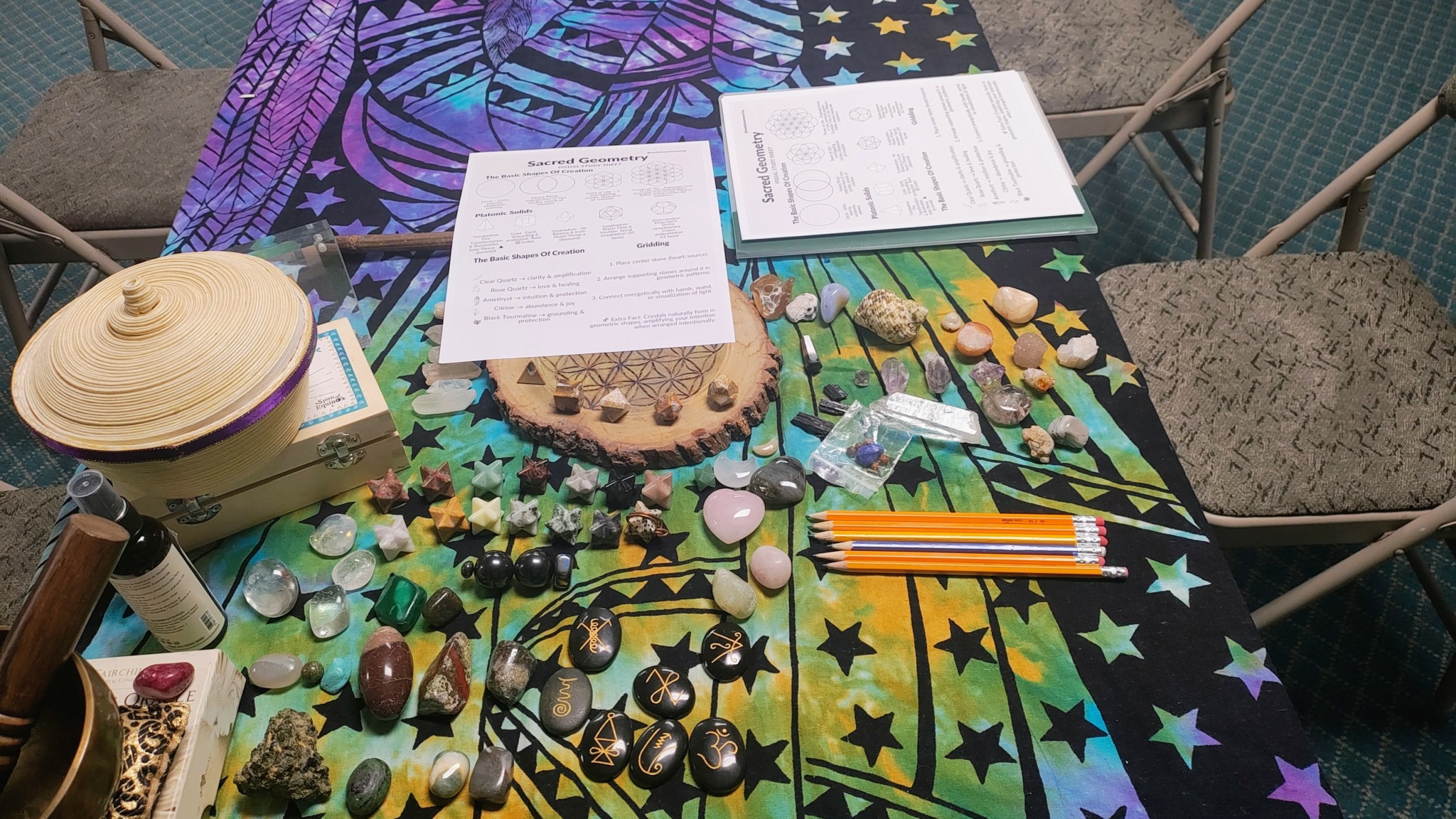
I perform intuitive readings (palmistry, cards, and crystal ball), Reiki energy sessions, and spiritual consultations for individuals and groups through Mel’s Dream Weaving. Event and gathering services are also available through me, where I facilitate the creation of intentional spaces for people’s insight, grounding, and emotional clarity. The situations my clients come to me with which I then must solve are, on the one hand, quite subtle but, on the other, strikingly powerful: disconnection from oneself, entrapment in emotional cycles recurring without fail, grief or transition that overwhelms, and inability to trust own intuition.
The thing that makes my work different is consent, grounding, and integration being the focus of my work. I am not into pain bypass, spirituality glamorizing, or dependency fostering. It is not my job to “fix” people, but through it, reconnect them with their own inner knowing and self-regulation capacity. I am slow, deliberate, and boundary-respecting in my work – both my own and my clients’. My experience in education and various support roles has contributed a lot to this way of working, as it has taught me the skills of reading people, non-intrusive space holding, and communication that is both clear and caring.
The point I take most pride in is that my work is conducted ethically, with awareness of lineage, and trauma-informed. People leaving the sessions more embodied, not more fragmented; more empowered, not dependent is something I take pride in. Besides, I am proud of having established a practice that is at the same time mystical and responsible–where intuition is accompanied by discernment, and spirituality is a way of life, not a show.
There are three things I would want my potential clients, followers, and collaborators to know: first, my job is real, second, it is grounded, and third, respect is its root. Mel’s Dream Weaving is not a media stunt nor is it escapism. It is about merging not only temporal but also emotional and spiritual opposites–past with present, grief with growth, body with spirit–so that people would be able to come forth with more clarity, gentleness, and inner trust.
If you get here, I am sure it is not by chance. In my view, healing comes to us when we are willing to listen, and my job is there to make people hear themselves again.
Can you share a story from your journey that illustrates your resilience?
One of the things I have learned during the years is that having an open heart doesn’t mean that you have to be available to people without limits. For a really long time, I thought that my energy was something that I had to give without holding back, everywhere, and to everyone, in particular, I used this energy in healing spaces, classrooms, and personal relationships. However, the real truth is that the use of discernment is just as powerful as the practice of compassion.
There were instances when I felt that I had no energy left, that I could hardly carry other people’s emotions, their expectations, and their traumas, and eventually, these burdens became mine too. I figured out that it was not a bad thing for me to decline offers, to set up my personal boundaries, and to decide where I wanted to put my energy. Saying no, setting limits, and deciding where to put my energy were not acts of selfishness, rather these were necessary acts. It became a thing: recognizing my boundaries, respecting them, and believing that if I did not support myself first, I would not be able to support others.
This is not about strict regulations or walls, rather it is like tuning in, as I do in Reiki or intuitive work, and deciding where my being there actually brings change. At times, the most significant aid that I can provide is just to take a step back, let others find their own power, and keep my energy safe.
The thing that I find most appealing in this way of working is that it is very truthful. I don’t have to act; I don’t have to tire myself to show my love. Also, ironically, at the times when I am successful in doing this, the effect is more intense, longer, and more transformational, both for myself and for the people I am destined to help.
What’s a lesson you had to unlearn and what’s the backstory?
Probably one of the major lessons that I needed to unlearn was the idea that vulnerability equated to weakness. I used to think for many years that if I exposed too much of my inner-self—my emotions, my intuition, my grief—I would be taken advantage of, misunderstood, or my opinions would not be considered. The belief that I had was quite complex: being raised in two different cultures, following different expectations, and having CPTSD made me very conscious of when it was “safe” to show my true self.
Actually, my early experience with the healing work is the main point of the story. I was the most sensitive to the changed energy, the emotions, and the unspoken things to the point that I myself suffered the most whenever I directly felt these things. Hence, I thought that I had to keep myself safe by pretending to be detached, by not giving too much, or by putting on a mask of me that was in control and capable. At that time I didn’t see that the potency of this work arises from being there, loving, and genuinely connecting, rather than protecting yourself.
My real breakthrough came only when I permitted myself to completely take in that energy—delicate, comforting, vibrant, like a heartbeat—that I came to the point of understanding that being vulnerable does not mean being weak. When my very first client held me in his arms after a session, the idea of my willingness to feel, to open up, and to be fully present resulting in the healing made the biggest impression on me. Not only my work but also my life got transformed by that instant, that insight: power is not in a figurative metal suit; power is in the art of knowing when and how to unveil your inner-self and then having the faith that people will understand you there.
Contact Info:
- Website: https://www.tumblr.com/coffeecatsandcrystals
- Instagram: @melsdreamweaving
- Facebook: Melissa’s Dreamweaving
Image Credits
@melsdreamweaving