



We were lucky to catch up with Megan Shope recently and have shared our conversation below.
Alright, Megan thanks for taking the time to share your stories and insights with us today. Can you open up about a risk you’ve taken – what it was like taking that risk, why you took the risk and how it turned out?
Pursuing any type of art in our current world is a huge risk! I began to step into my role as an artist in 2019 when I had stepped away from my Program Director job, advocating for women and families. We had two small children, and I was working more than full-time driving all over 3 states with my Mom and step-Dad trying to find answers to her fast and extremely debilitating health issues. This was a season that was completely unsustainable and everything came to a head at once. I ended up leaving my Program Director job, although I greatly loved my work and the amazing people and families I worked with over many years in that position. At that time I had no plans to be an artist, I had no art background or formal training. I was applying for other Program Director jobs, but would leave even very good interviews and sob in my car.
In this time of chaos, confusion, and grief I found myself at my dining room table making very small paintings. I still didn’t call myself an artist or have any idea what that title even meant as something to pursue. Yet, I continued to move forward into what brought relief. Fast forward five years later and I am an artist.
Over the years pursuing art in a time when I had two kids (now 3), very sick parents living hours away (continuing to support my Mom and Step-Dad and my Dad and his partner), a global pandemic, and al of the mental load those roles entail it didn’t always seem to make sense to continue to spend time making art. There have been plenty of moments I’ve sat in my studio and questioned, “why am I doing this?” There is plenty of work and needs to fill all of the hours of every single day. Yet, still I press on- making my own marks, pursuing ideas, experimenting, and creating. I can’t not be an artist- it is at the core of my being. It is a revolutionary act of care for myself- to create freely, to dare to put the work of my hands in front of someone else and proclaim there is value here.
As good as it is to take a risk in this way, to be supported by my partner and kids, it is logistically very difficult to find the time.
There is never enough studio time and I can be a person who gets stuck in extremes. If I don’t have 3 hours to work uninterrupted, I might as well not even start. That’s letting perfect be the enemy of good. I have learned as I’ve continued to create through many different seasons where I was at home with a newborn and two teens during covid; now working as a teaching artist as well as maintaining my own studio practice -just make art. Small art, big art, silly art- whatever can fit into those margins. Do that! There was a season when our daughter was about 18mos old when I was desperate for childcare, but she would scream whenever I stayed in the house to work in my 3rd floor studio (which is a desk in our bedroom). Instead I worked at a table at our local library for two hours, two mornings a week using materials from one bag of supplies I carried with me each day. That season produced work that became my first solo show! Just make your work and let go of the outcome. Now I am often making work in the car as I wait for a teen or two. Making art under those confines helps me keep things really clear- right now I need a bag with work in it that’s portable, doesn’t have any paint involved so I can be more mobile, and can be set aside quickly when my parenting hat needs to be front and center.
Awesome – so before we get into the rest of our questions, can you briefly introduce yourself to our readers.
My journey into the art world was very unexpected and organic. The grief of my mother’s disability after a brain injury was a true catalyst for my move into creating art. That time in my life felt like so much was lost. I was a mother before I was an artist- or at least before I identified myself as such. I was a creative person in my “before” life. I made many things- a home for our family, meaningful celebrations. I enjoyed things that were beautiful; things that moved me- these things were true. What was also true was that I was so exhausted and burnt out that I couldn’t see any way off of the hamster wheel that had become my life. There were so many plates in the air- two small children, a full-time, very intense job, parents who were both dealing with debilitating chronic illness, trying to have any meaningful interaction with my partner. The balls in the air were so heavy, but I couldn’t fathom letting any of them drop, until they shattered.
At this time I was not an artist- I was a public health professional, advocating for women and families. Yet, the space where I could breathe was at my dining room table creating small, simple paintings that I had no intention for the world to see. I found this work of taking the terrible and the hard, in all aspects of my life, and transforming it into something new, unexpected, real to be a transformation of my own self. For the first time I had to be still- to sit with myself and all of my feelings/thoughts/needs. It was excruciating, and – it was the beginning. Creating art gave me a container to express myself, to make the invisible visible.
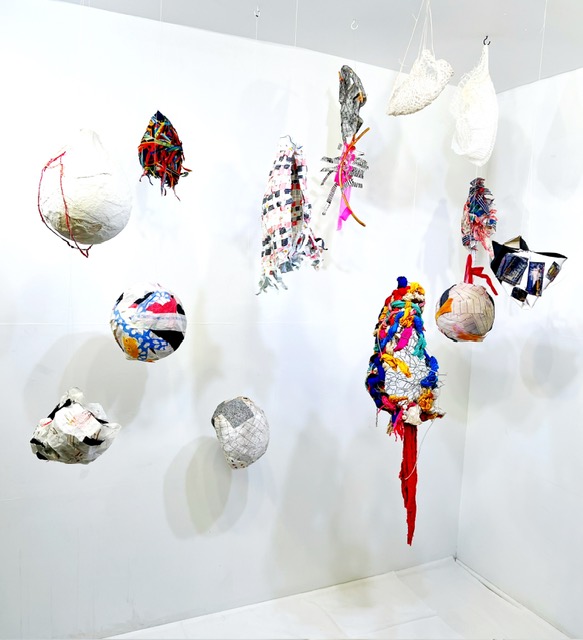
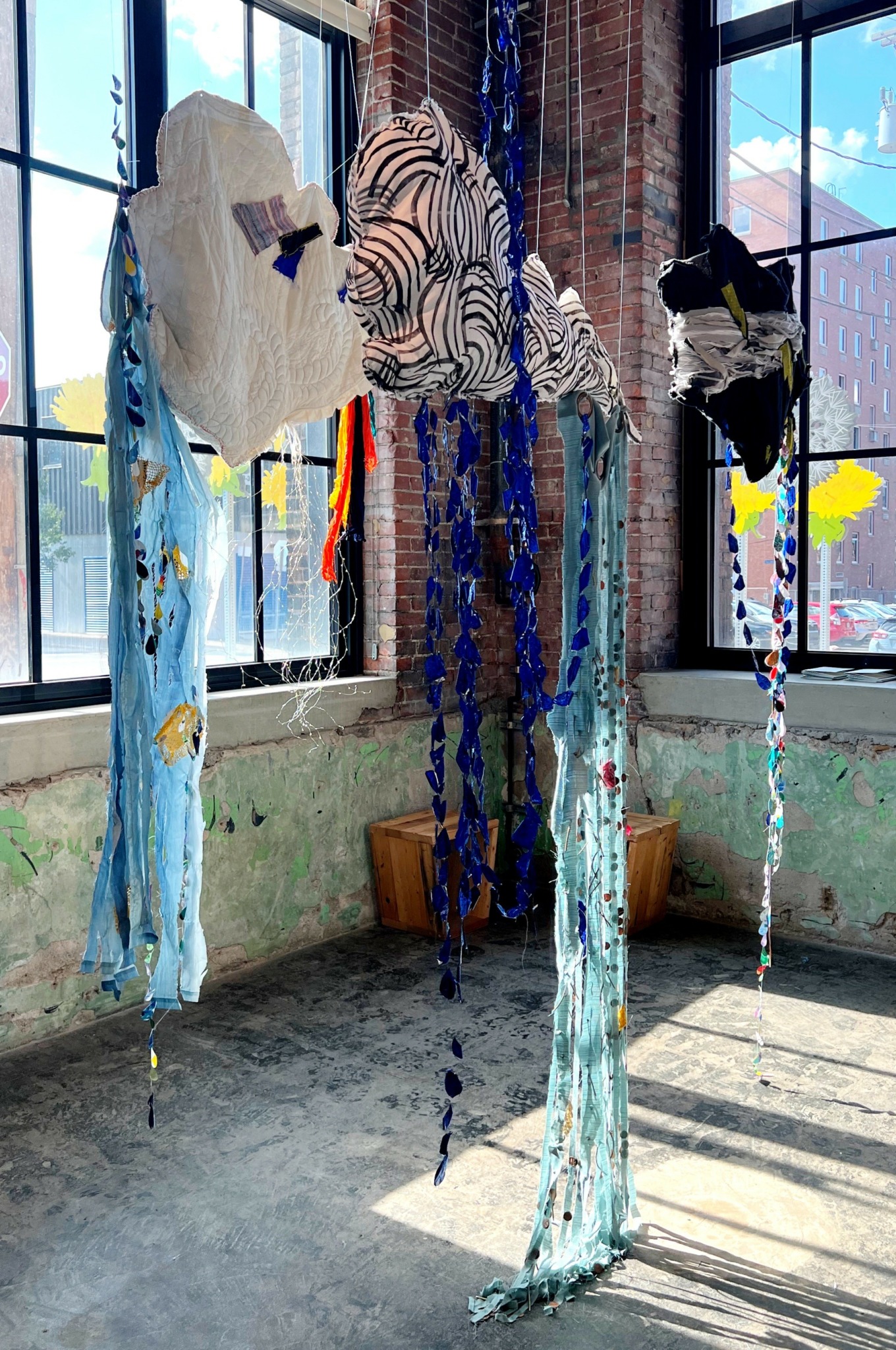
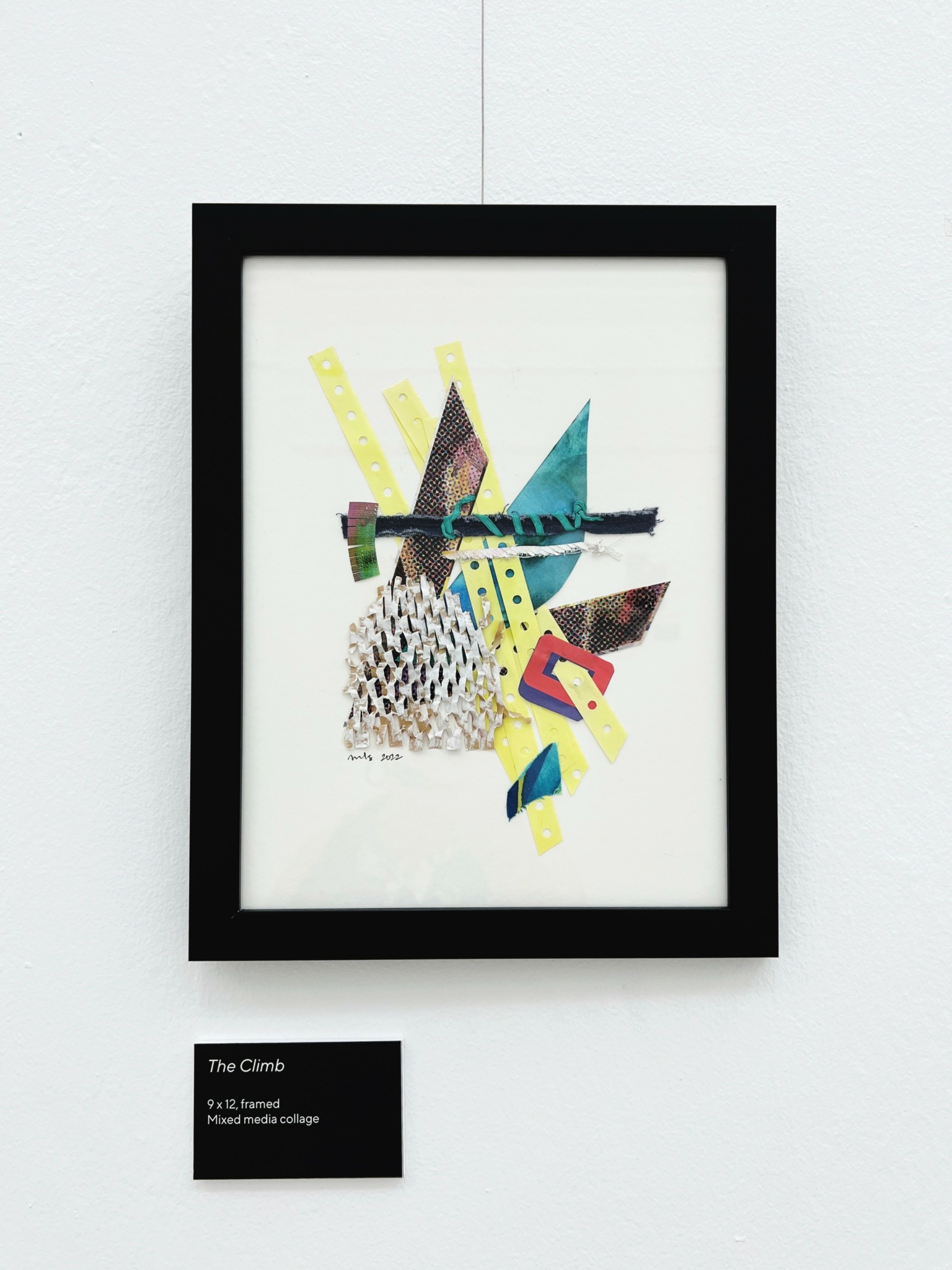
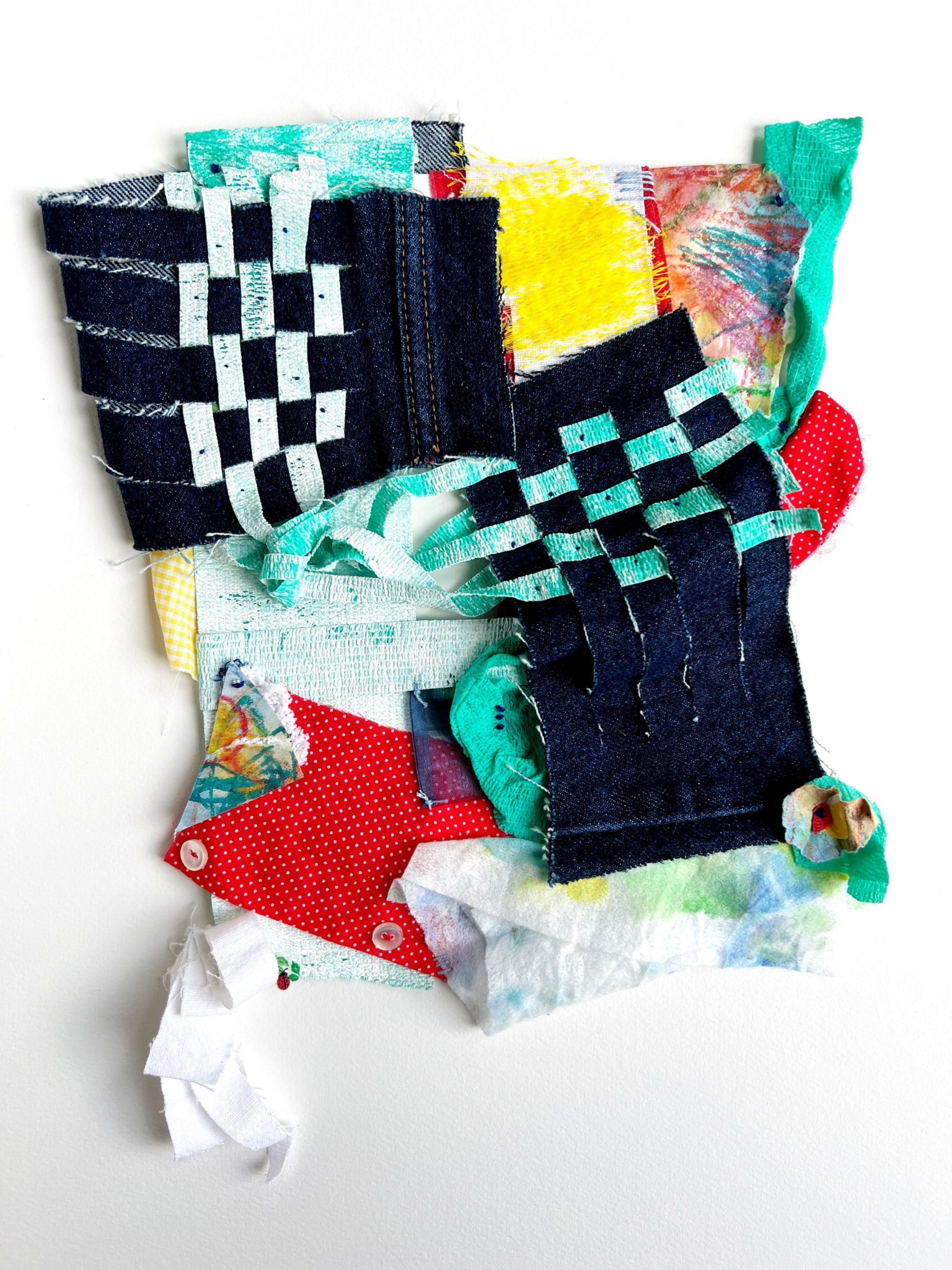
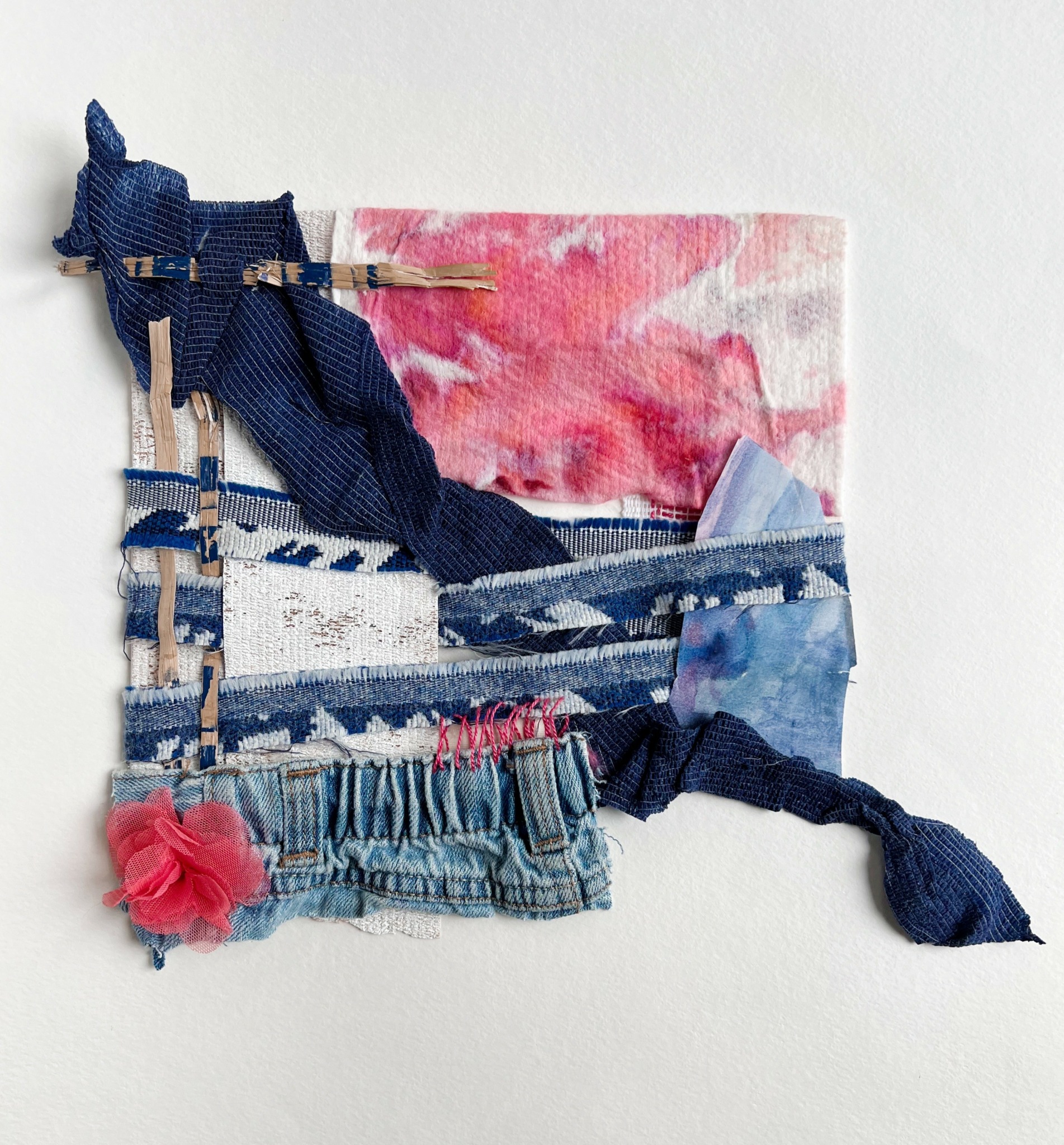
I love piecing unexpected materials together and witnessing their story unfold before me. My work speaks to how the intricacies of layers, pattern, and texture come together to form something new and transformative- with found objects and paper often bearing no resemblance to their former shapes/ forms. I use collage, painting, ink, hand sewing, and sculpture in my work to pair shapes, my own marks, and patterns spontaneously with texture and color. My materials are sourced from family life- my work includes clothes my children have outgrown, rocks found on walks, produce netting, fabric from my neighborhood Buy Nothing group, and parking stubs from the orthodontist. My process reframes the somewhat mundane, somewhat poignant detritus of life with new purpose and narrative, as I ask deeper questions without the need to force resolution. My work asks me to show up, be present, and let go of the outcome- resulting in moments of unexpected beauty and grace. In all of it, these things remain true- life is complex, intricate, beautiful and terrible, sometimes in the same moment. Expressing the good/hard, both/and in a compelling visual manner is breath and space for me.

We often hear about learning lessons – but just as important is unlearning lessons. Have you ever had to unlearn a lesson?
I think one of the biggest lessons I’ve had to unlearn is allowing others to tell me what or who I am. It took me a very long time
to give myself permission to call myself an artist as someone who doesn’t have an art background or degree. I love the way that I came to art after my career in public health- I would not have been ready to embrace this artist life if I had not first pursued things that seemed “productive” or “valuable” in the eyes of the world. Now I can see that I was always an artist, but the world told me I didn’t have anything to offer since I couldn’t draw or I wasn’t painting masterpieces. I listened to that voice as a child that said, “You must produce! You must be perfect! You must ask everyone outside of yourself what would be enough for you to do”. Those voices were so damaging.
I came to art in a season where I was so exhausted from listening to what everyone else thought of me, of what I should do, that there was a simple freedom that eventually came. I can still place myself on the outside of certain groups in the art world or struggle to feel like I belong. As I get older and continue to make art, the voice that gives me permission to create what brings me freedom and joy is easier to hear.
In this season I have the privilege of using both my art experience and my public health background. I work as a teaching artist and outreach coordinator for a non profit, Creative Citizen Studios, working with artists with intellectual and developmental disabilites to make, exhibit, and sell their work. I work with the best artists and they challenge me daily to continue to step into my own knowledge, challenge myself to learn new techniques and materials, and create broadly in a way that isn’t self-limiting.
In your view, what can society to do to best support artists, creatives and a thriving creative ecosystem?
I would love to see more expansiveness in the art world. As someone who came to the art world from a very different background when I was already a parent I didn’t know how limiting it could be. I know from many conversations with fellow artist mothers there are numerous people who are overtly told ‘you can’t be a serious artist and a mother’. How much more expansive would the world of art be if we encouraged all people, regardless of their formal background or training, to create art and to pursue sharing their art in all kinds of settings? Our world is always changing and evolving- in often scary, but sometimes very hopeful ways. We must risk making the table wider, opening the doors more fully. I believe we would all benefit. We don’t have to live in a world where the choices are to be an artist or to be a parent when they both move and flow together constantly, one always informing the other (even if the work itself isn’t directly about caregiving or parenting).
There is so much war and turmoil in our world right now. The violence, oppression, lack of basic rights that so many endure is enough to beat us down; to convince us that what we do in our everyday lives doesn’t matter. But the life of an artist is one of noticing; of paying attention to the beauty that is right in front of us. Making a choice to create- to make something out of nothing- to slow down, notice, and allow something to come out of that moment changes us. When we allow it, our creativity bubbles up and over, capturing beauty, wonder, joy or maybe unveiling dark and hard truths. Either way, when we create work that speaks the truth and shares our own experiences , as parents and caregivers or as humans, we connect with others; we offer something new. We remember that we are here and this moment is worth capturing. There is so much value in seeing and being seen and art offers that to all of us- it is an act of resistance, of restoration.
Contact Info:
- Website: https://www.meganshopeart.com
- Instagram: meganshope_designs
- Facebook: https://www.facebook.com/meganshopedesigns
- Linkedin: https://www.linkedin.com/in/megan-shope-a3b32a12/
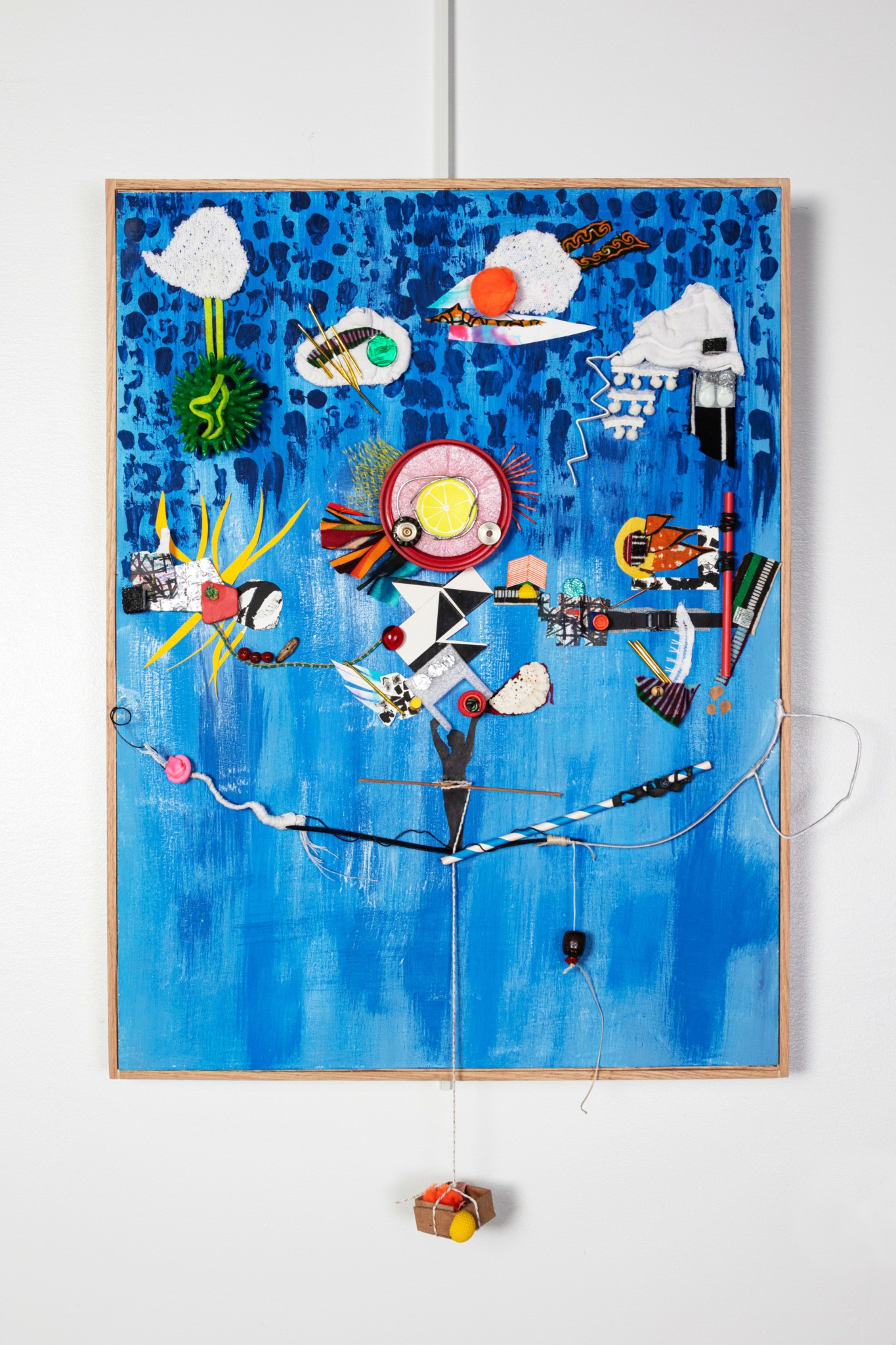

Image Credits
Image one of artist- Yvonne VanHaitsma