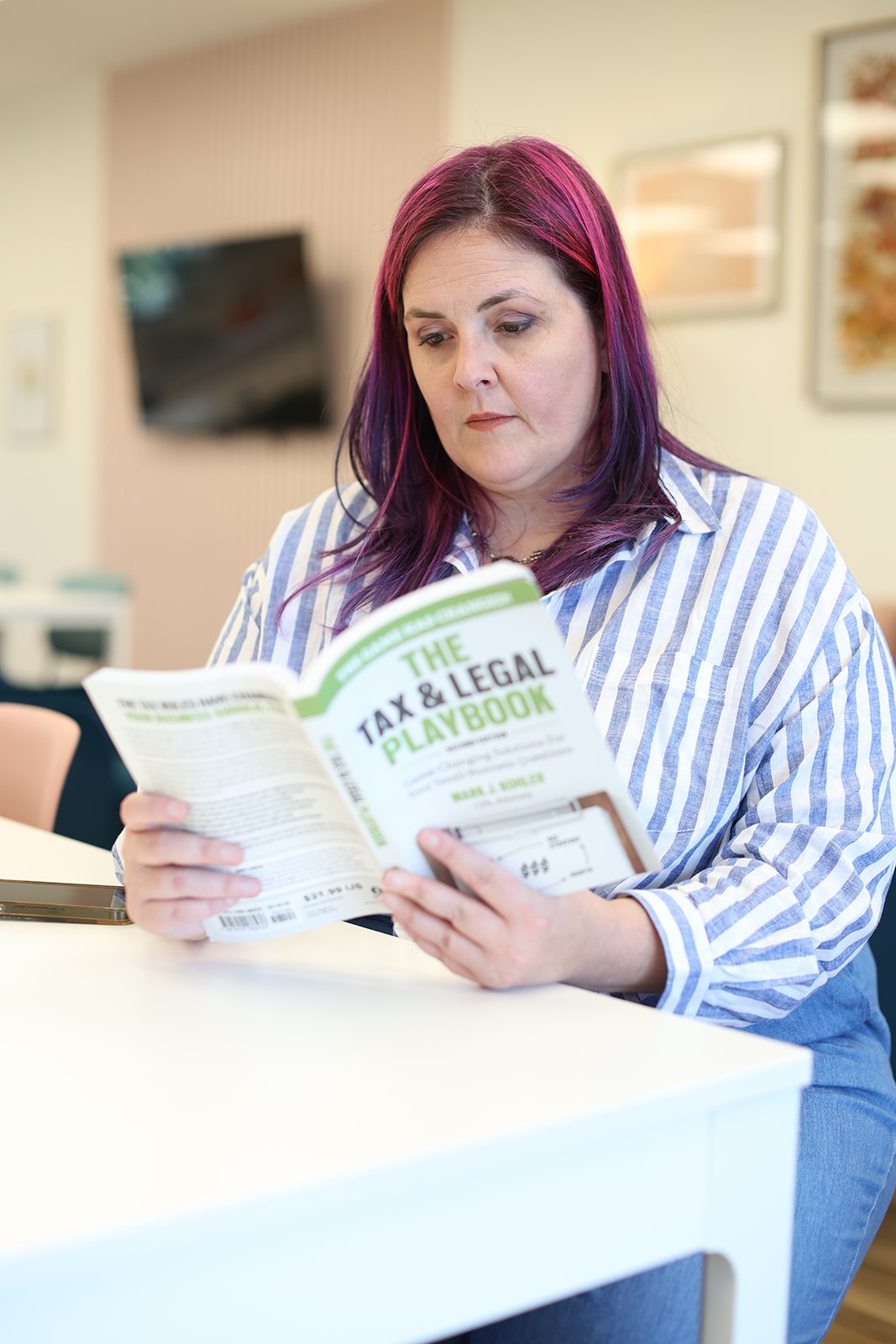
We recently connected with Megan Munsell and have shared our conversation below.
Alright, Megan thanks for taking the time to share your stories and insights with us today. One of the things we most admire about small businesses is their ability to diverge from the corporate/industry standard. Is there something that you or your brand do that differs from the industry standard? We’d love to hear about it as well as any stories you might have that illustrate how or why this difference matters.
One thing I do differently from the industry standard is integrating a highly empathetic, relatable approach into business finances, accounting, and tax strategy. Having grown up with a mother who was an entrepreneur that struggled to get much needed strategic advice, I saw the personal and emotional toll that financial uncertainty can take not only on a business owner but their family as well. This early experience shaped my approach to be about more than just numbers; I focus on aligning financial strategies with my clients’ values, goals, and even personal experiences, so they feel genuinely supported and in control of their business finances.
While many in my field focus on numbers and tax compliance alone, I go beyond that by helping clients understand the ‘why’ behind the numbers. This means breaking down complex financial concepts into straightforward, actionable steps and connecting them to clients’ real-world goals. I also encourage all questions – because I believe the only stupid question is the one that goes unasked. By opening up, asking questions, and learning about why certain things matter for tax and accounting purposes, a business owner can then set themselves up for success.
Ultimately, my goal is to take clients from feeling overwhelmed by financial complexities to feeling genuinely in control. It’s about empowering them to make aligned financial decisions that support their personal and professional goals, and that’s something I believe truly sets my approach apart.
With this approach, I’ve had some amazing results. I have a client that shared with me their goal of becoming a seven figure business within the next two years, and I was able to connect them with other professionals in their industry and they have a roadmap for meeting that goal within MONTHS. Not years.
One common thing I’m told by clients over and over again is that they feel supported, and they know I have their back and that helps them feel at ease and less scared about money.

Great, appreciate you sharing that with us. Before we ask you to share more of your insights, can you take a moment to introduce yourself and how you got to where you are today to our readers.
Well before I was a CPA, I was the daughter of an entrepreneur. My mother had a very successful business during the 80s and 90s that created home decor items for wholesalers. We lived in rural Michigan, so our manufacturing facility was right in our back yard.
While the business itself was successful, I watched my mother struggle to get adequate advice as her business grew. Tax season was a huge stress, and there was no business coach to help her along the way as she tried to reduce her ballooning taxes. As a child, I would go to the annual tax appointment with her and sit behind the CPA and watch the refund/tax due number change as he entered in her information. I was intrigued.
I went to college and studied accounting, passing the CPA exam within 18 months of obtaining my bachelor’s degree. I went into Public Accounting, and then into industry – working for large corporations.
The story has an unfortunate ending, as my mother closed her business in 2001 – the year I left home for college. If she would have had access to the same type of strategies that I implement with my clients, she could have sold her business and retired. Instead, she just closed up shop.
As my career progressed, my desire to go back to my roots and help business owners emerged and I made the decision to start my firm, Abundantia Advisory. My goal is to create wealthy entrepreneurs through a shame and judgment free relationship.

Can you open up about a time when you had a really close call with the business?
I haven’t had any near misses with my business, as I have set up fool proof structures that really minimize the risk that I will have a cash flow crunch. However, I do have some experiences that were quite unique as a senior leader of a publicly traded company.
During my last two years in corporate America, I worked for a Publicly Traded Company that was a silicon valley startup. It was by far the most rewarding and the most stressful experience in my life. I wouldn’t ever go back in time and change my decision to work there, as the challenges I was faced with and overcame really helped build my confidence to jump into any mess and know that there wasn’t any problem I couldn’t solve.
My team and I implemented revenue recognition policies in a 90 day turnaround – allowing the business to regain compliance with the stock exchange after facing being de-listed. We made strides to bring the company to financial stability and health. Unfortunately, due to a variety of reasons beyond our control, the company continued to struggle.
One of the reasons that I left this particular employer when I did was because there was this constant looming stress of running out of cash. We had a “going concern” issue – which means that our auditors told the public that they doubted that the business would be around in the next 12 months. Running a team and knowing that at any moment we could all become jobless was a huge catalyst to really putting myself out there online and building my firm.
The interesting thing about this is that the same issues that small business owners struggle with are the same issues that $150M revenue businesses struggle with. The core issue was pricing, and charging customers an amount that would not only cover production costs but also overhead and shareholder profits. Working with a world-class team on creating forecasts and forward looking revenue plans for an industry-disrupting company left me with a lot of tools that will help small business owners.
The truth is – businesses are messy. It takes skill and knowledge to really hone in on what’s going on within the financials of a company. There’s a misconception that you can just plug everything into your accounting software and let the bookkeeping do itself. That’s not true. You have to understand how the data flows, and how to track it through the system. You cannot learn this in a 6 week online course. The only way you truly learn this is from experience.
In the end, I left this employer because I could not see the pricing change fast enough for the company to become successful on its own legs. We had gone to investors multiple times in the two years I worked there, and each time was to the point where we were concerned about making payroll. I made a great decision, as the business went on to file for bankruptcy, de-list from the stock exchange, and closed their manufacturing facility.
The lesson here is to bet on yourself, and don’t be afraid to walk away from what seems to be a rewarding situation when you know you could do better for yourself and your family.

Any thoughts, advice, or strategies you can share for fostering brand loyalty?
My bread-and-butter clients are seven figure business owners with businesses that are on a high growth track. Access to up-to-date financial information, regular check-ins with their accountant, and high-touch support are key to their success.
And BTW- these regular check-ins don’t have to be long meetings. We really customize how we work with a particular client to what fits their needs, schedule, and goals. I work with one very busy investor who prefers asynchronous videos that she can fit in at any time of the day that suits her.
My clients also love that my work isn’t just about “what happened” in their business in the past, but is also forward looking. They can contact me for support in modeling out what certain decisions would look like for their business. I’m currently working on a forecast for an attorney who is pivoting from an hourly family law model to a retainer based estate planning model. We are looking not only at her revenues and expenses, but what type of lifestyle she will enjoy as she makes those pivots.
My clients also feel very supported because they can reach out when something new pops up on their radar. I had a client with a cash flow crunch contact me, and I was able to give her options to look into for revolving credit, along with a script of what to say when she contacted potential lenders, and a list of files to have ready in the event one of them wanted her to apply. She felt more confident, and was able to have those discussions without being intimidated.
I also recently had a client who is an investor contact me with a potential deal she had found on a business broker website. We received the target company’s financials, and I was able to tell her the risks and rewards of the particular deal. The insights I was able to give her gave her confidence to walk away from the deal when the broker started to push towards getting a non-refundable deposit. She did not have a FOMO or scarcity mindset – she knew exactly what she was running towards or walking away from. In the end, she did not do a deal – and she was confident in her decision.
Clients also love how they can send me social media posts, letters they get from taxing authorities, and questions into our secure portal. I am not an accountant that tries to explain to you why something you want to do won’t work. Instead, I tell you what possible outcomes are if you do go ahead with whatever strategy you want to try (as long as it’s not illegal…that’s the only time you will get a firm “no” from me.)
Our monthly meetings are a great time to catch up with lifestyle and business pivots, as well as gain insight on how to grow, scale, or cut back hours in the operation. I’ve been told by more than one client that I’m the type of accountant they want to do brunch with.
In addition to all of that – the firm also serves as their tax planning and prep firm, so that they are not trying to patch together disparate services. So many entrepreneurs get in a cycle of a bookkeeper telling them that they don’t “do taxes” and then a tax accountant telling them they need to fix bookkeeping before they can calculate taxes. The business owner is left quarterbacking their financial professionals, and to be quite frank they don’t have time for that. That’s where I step in – we either handle their tax needs in-house, or work with their tax accountant to keep them filed and current. It’s a win-win for all those involved.
Contact Info:
- Website: https://www.myabundantia.com
- Instagram: https://www.instagram.com/meganmunsellofficial/
- Linkedin: https://www.linkedin.com/in/megan-m-a58332186/
- Other: TikTok: https://www.tiktok.com/@itsmeganmunsell