

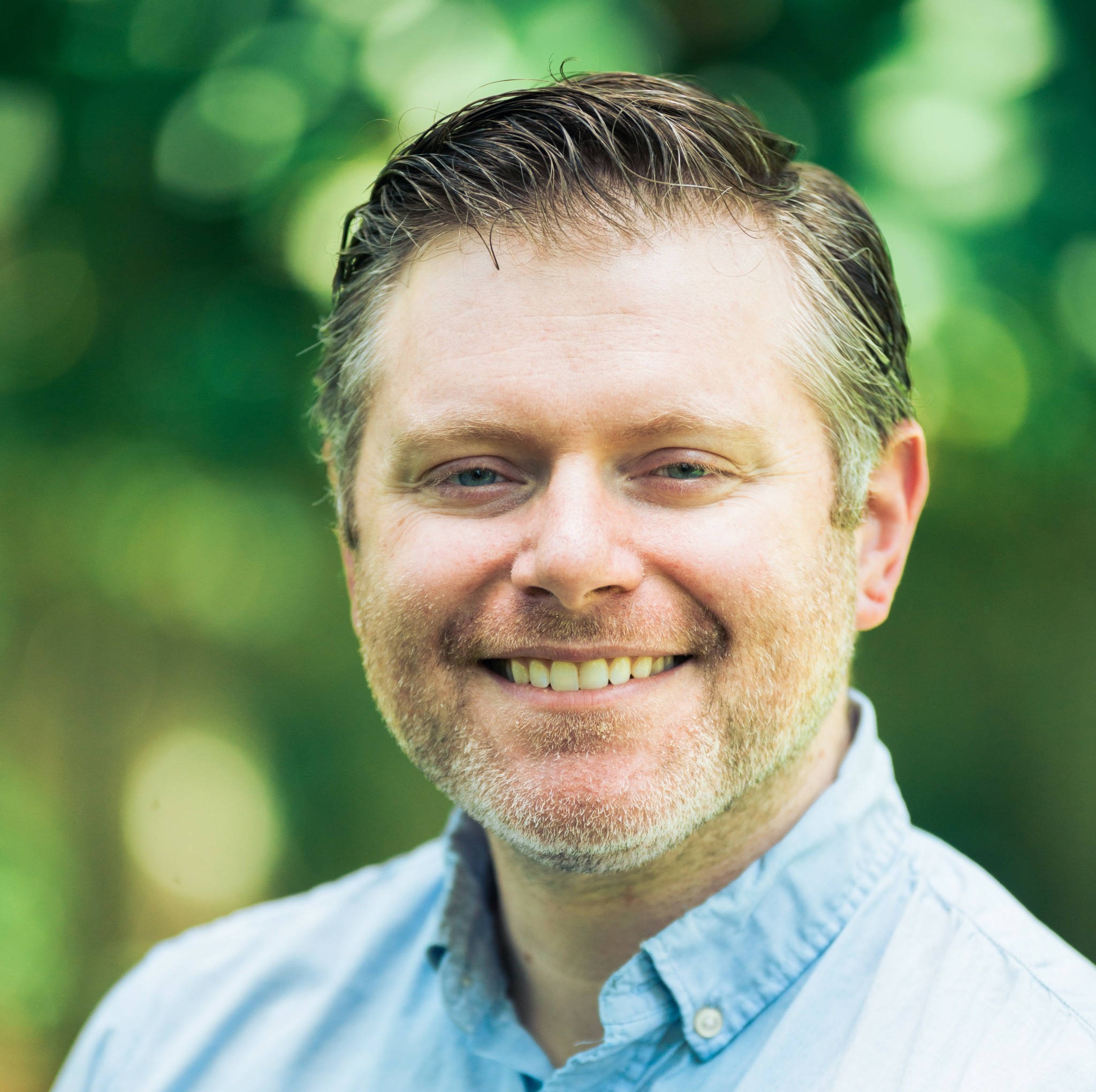

We recently connected with Matt Cox and have shared our conversation below.
Matt, appreciate you joining us today. What was it like going from idea to execution? Can you share some of the backstory and some of the major steps or milestones?
In 2017, when I became CEO, Greenlink had just missed payroll for the first time and we had let go of much of our staff. It’s possible we would have survived without a change in strategy, but how could I take our skill and ambition and make something meaningful?
We had to ask good questions and listen. We developed what we now call our listening tour methodology, now a core part of Greenlink’s culture that aligns well with our research orientation. We have semi-structured conversations with the people and organizations operating in the ecosystems we want to serve. Community-based organizations, local governments, utilities, and some of the largest firms in the world. Adopting a service mentality helps us identify where the struggles are and where our team can significantly help overcome friction that stops things from getting better.
That starts our idea-to-execution process. All of our strategic and programmatic work we’ve pursued since starts with this approach. Truth doesn’t live in the office. We have to learn how we can be helpful.
For innovators, it’s easy to fall in love with an idea and start building, and that’s fine for a hobby. It’s hard to slow down and stress-test your assumptions. But that discipline is the difference between building something you believe is important and building something you know is important. It’s how you know you’re contributing something with real purpose.

Great, appreciate you sharing that with us. Before we ask you to share more of your insights, can you take a moment to introduce yourself and how you got to where you are today to our readers.
I’m Dr. Matt Cox, CEO and Founder of Greenlink Analytics. I got into sustainability work because the more I learned, the more it became obvious that society’s economic actions were harming people today and creating conditions where we could not live up to our obligations to leave a better world for the next generation. Policy has to change to fix these problems.
Greenlink sits at an unusual intersection. We’re a clean energy research nonprofit that combines rigorous analysis with a deep commitment to making sure our work benefits the communities that need it most.
We work across the full spectrum of the clean energy transition: technical work like modeling, forecasting, and data analysis that helps governments, utilities, and community organizations understand what’s happening in energy systems and what’s coming next. A lot of work fails because it ignores the social realities that policy recommendations will encounter in the real world. We pair engineering and economics with social science to ground our work and create holistic, inclusive, and reparative solutions. The evidence supports this as the right way to build a clean energy transition that’s both sustainable and relevant to people’s daily lives.
We’ve helped develop policies and tools projected to protect more than 32,000 lives, avoid 9.6 billion metric tons of CO2, and save communities more than $1.2 trillion. We’ve supported more than 200 policy processes in which overburdened communities shaped real outcomes and drove change in how the policy process works. That work has been recognized by MIT, Georgia Tech, Yale, and the National Science Foundation.
The projects I enjoy most combine all of these aspects: those moments where we unlocked data so a community organization could advocate for constructive change with a responsive government. These situations create breakthroughs. At that point, our work goes beyond research. We’re influencing structural change that shapes our energy future.

Are there any books, videos or other content that you feel have meaningfully impacted your thinking?
Several books have become standards within our (virtual) walls, all sharing a common thread: they’re all about getting to the truth faster.
Andy Grove’s High Output Management changed how I think about my own role as a leader and how to develop staff. The ideas about design process and task-relevant maturity have added support structures within our work culture and influence us every day.
Kim Scott’s Radical Candor gave a language for interacting and communicating more effectively. The failure mode she describes, especially being nice at the expense of being useful, is one approach that doesn’t help us grow. At the same time, we have to remember that we work with people who need to know you care about them and their progress. Reminders of this go a long way.
Chris Voss’s Never Split the Difference changed how I frame questions. The goal must be to understand what’s true for the other person, whether in management, development, or collaboration; this directly connects to how we approach our listening tour work at Greenlink. You can’t build something useful for someone if you haven’t genuinely understood their situation.
Steve Blank’s The Start-Up Owner’s Manual is where the customer discovery framework lives, which most directly influenced how Greenlink operates. His central refrain (get out of the building and talk to people!) is something we’ve formalized into our listening tour culture.

How’d you build such a strong reputation within your market?
Reputation in this space is earned slowly and lost quickly. I think ours is built on quality and integrity.
We’ve invested heavily in building analytical capabilities that are genuinely best in class. Our Tech Team produces some of the most accurate resource forecasts in the country, enabling those we work with to make better decisions across a wide range of impact areas. We bring a unique perspective and mindset to our work that enables us to inform discussions over diverse values and interests.
We also do what we said we’d do. GEM is a good example as a tool we built to help communities and cities share a common picture of reality when designing programs and policies. The people using it can do something with it they couldn’t before, and we keep engaging in the conversation to ensure new information needs are addressed.
Those two things compound over time. Technical credibility gets you in the room. Showing up consistently builds trust and helps people recommend you to someone else. Most of our most important relationships started with a referral from someone who’d seen both from us.
Contact Info:
- Website: https://www.greenlinkanalytics.org
- Instagram: https://www.instagram.com/greenlinkorg/
- Facebook: https://www.facebook.com/GreenlinkOrg
- Linkedin: https://linkedin.com/company/greenlinkorg/
- Youtube: https://www.youtube.com/@GreenlinkOrg

Image Credits
Greenlink