Alright – so today we’ve got the honor of introducing you to Mary Gattorna. We think you’ll enjoy our conversation, we’ve shared it below.
Mary, looking forward to hearing all of your stories today. Looking back on your career, have you ever worked with a great leader or boss? We’d love to hear about the experience and what you think made them such a great leader.
In high school I worked at a vintage clothing store in Baltimore called Ten Car Pileup. The place is so wild, like something from a movie, totally stuffed full of the coolest clothes, accessories, artwork, and random paraphernalia from every decade. There are literally tutus hanging from the ceiling. It was also a neighborhood hangout for all the artists, musicians and punks.
I thought the owner, Shane, was the coolest adult I had ever met. He played music, he had worked in fashion, he made his own jewelry. He always wore his vintage Hawaaiian shirts with a few buttons open, like we lived in Venice Beach or something. He didn’t smoke cigarettes but he didn’t care if I did. I basically forced him into giving me a job by showing up constantly for maybe half a year, until he eventually gave in and hired me.
Unlike the other grown-ups I knew, Shane seemed to really love his work, and he lived a creative life doing what he wanted, on his terms (The sign on the front door still lists the store hours “If we’re in the mood”). He had rent and bills to pay, but he would find cool and interesting ways to make ends meet, like hosting punk music shows in the space above the store, or taking side jobs outfitting musicians, or doing costumes for TV shows and movies that were filming locally. It was obviously a lot of work to run his life the way he did, but the reward seemed worth it. He played his guitar on the front stoop when he felt like it. He practiced with his band in the basement of the store. He could always be found sitting behind the front counter, talking on the phone, mending something or tinkering with jewelry.
Shane has given me a lot of advice over the years about having a creative career: he would warn me about market saturation and the difficulty of making your product sell no matter how cool it actually is, and about how hard it is to make money in a creative field without selling out. He taught me so much about fashion and design, and really helped me develop my own aesthetic and style. But his actions resonated with me more than any of his words – I saw how he set up his life so that he could make a living doing creative work he loved. He was always grumbling about annoying customers, or punk kids crowding his store, but he was so alive with ideas and busy creating new things – there was a freedom to the way he lived that I internalized as a goal for adulthood. I still keep that work model in the front of my mind, and the energy and aesthetics of the store still resonate in my work years later.
Mary, love having you share your insights with us. Before we ask you more questions, maybe you can take a moment to introduce yourself to our readers who might have missed our earlier conversations?
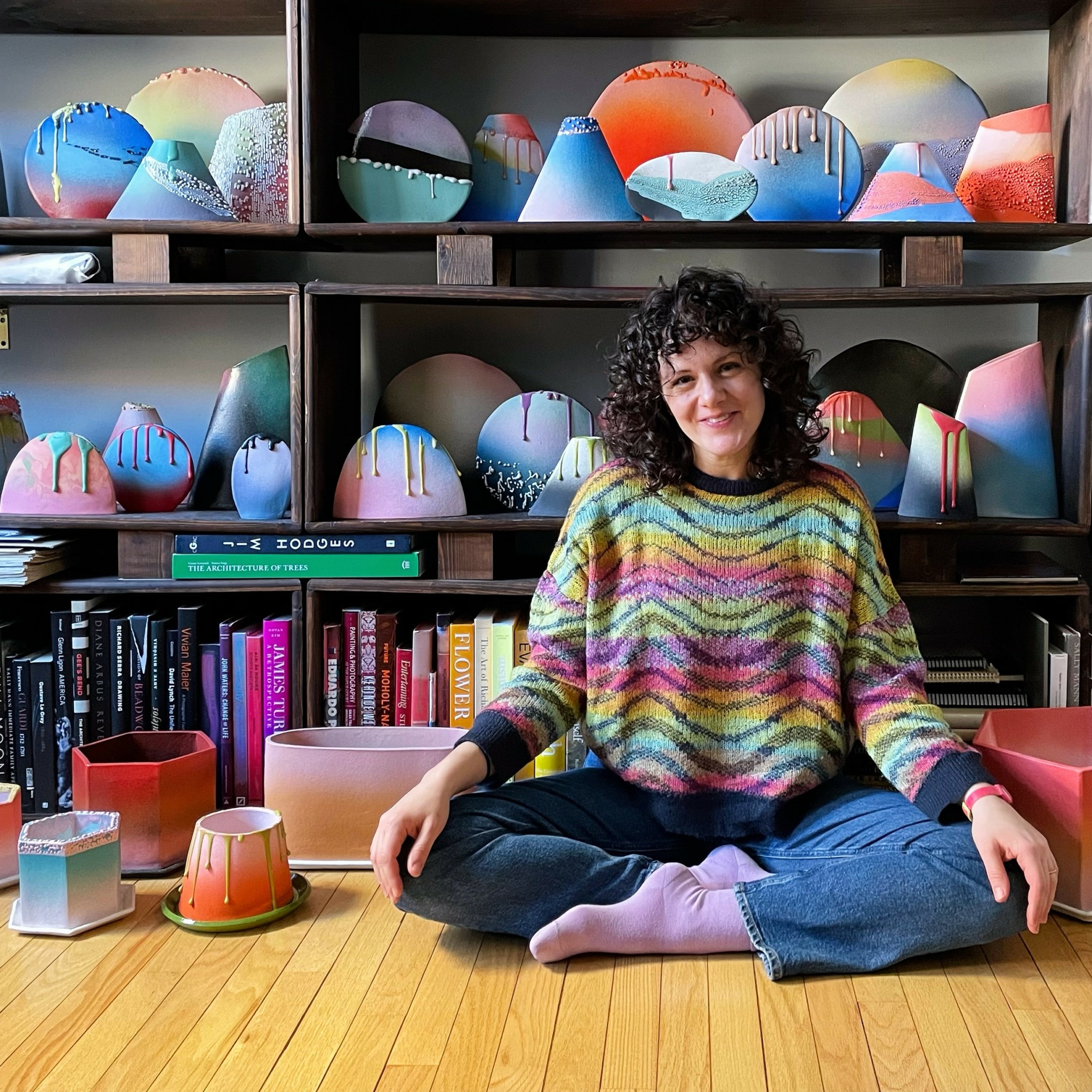
I first took a wheel throwing class right after college in NYC and I totally fell in love with clay, but for a very long time my relationship with ceramics remained a hobby. I have always considered myself an artist, but made mostly 2D work: I went to an art magnet high school where I studied painting, drawing and photography, and in college I focused on photography, paintings and prints. I moved to Santa Fe a couple of years after taking that first wheel class, and became a member at Santa Fe Clay, where I really started to learn about glaze chemistry and different techniques of ceramics. Even then I still focused most of my creative energy on photography and painting; for the next few years I made ceramics intermittently, with no real agenda or vision. I just loved making things with my hands, and I especially loved glazing for its surprise elements and juicy colors.
In 2015, I was in graduate school getting my MFA in printmaking, and I impulsively signed up for a slipcasting class. I was also learning to blow glass at that time, and through the exposure to both of those processes I felt my practice start to turn a corner toward more sculptural, craft-based media. I’m really drawn to how both ceramics and glass have a deep history with functionality; the idea of creating works of art that people can use in their daily life feels more practical and inclusive to me than the fine art world that I was a part of for so long.
When I moved back to NYC after graduate school, I began making more work in glass and ceramics. I spent a lot of time at Urban Glass, where I met so many amazing artists who were producing and selling jewelry, tableware, lighting, bookends, and other sorts of functional objects. I began selling my work in stores and craft markets, and I loved being the face of the marketing and sales – it was rewarding to connect with customers, and it felt expansive to sell my work in more contexts than just a gallery.
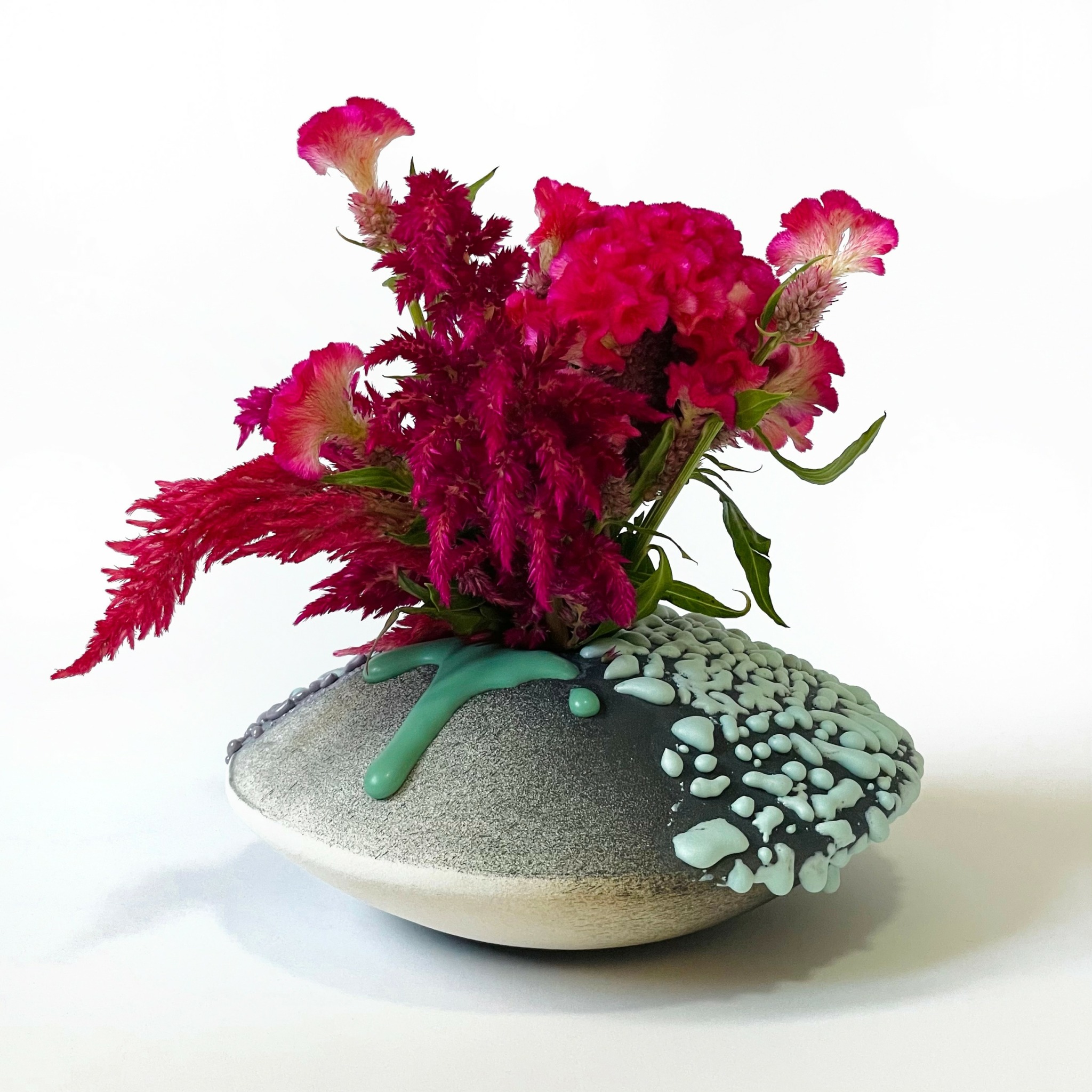
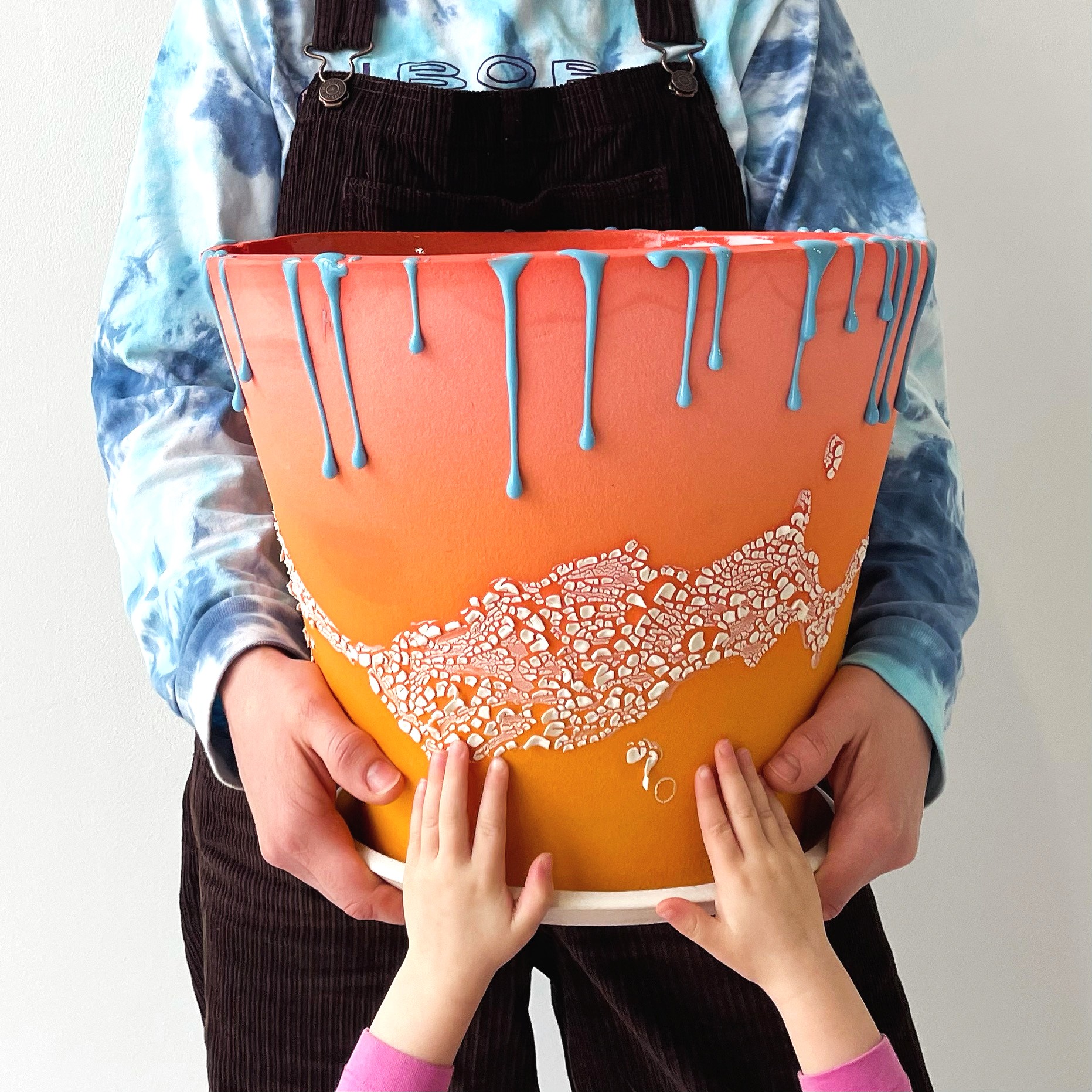
Now ceramics has become my main medium, but am bringing back some glass work into my practice. I still make lens-based art, but I really crave creating directly with my hands, and I love the elements of chemistry and chance that characterize both ceramics and glass. For years I made photographs exclusively using Polaroid Instamatic cameras, which have a particularly impressionistic, serendipitous quality – a quality which definitely influences the way I work in clay, another medium with a lot of chance elements. I especially love using crawl and gloop glazes, forcing myself to let go of expectations and to embrace new possibilities.
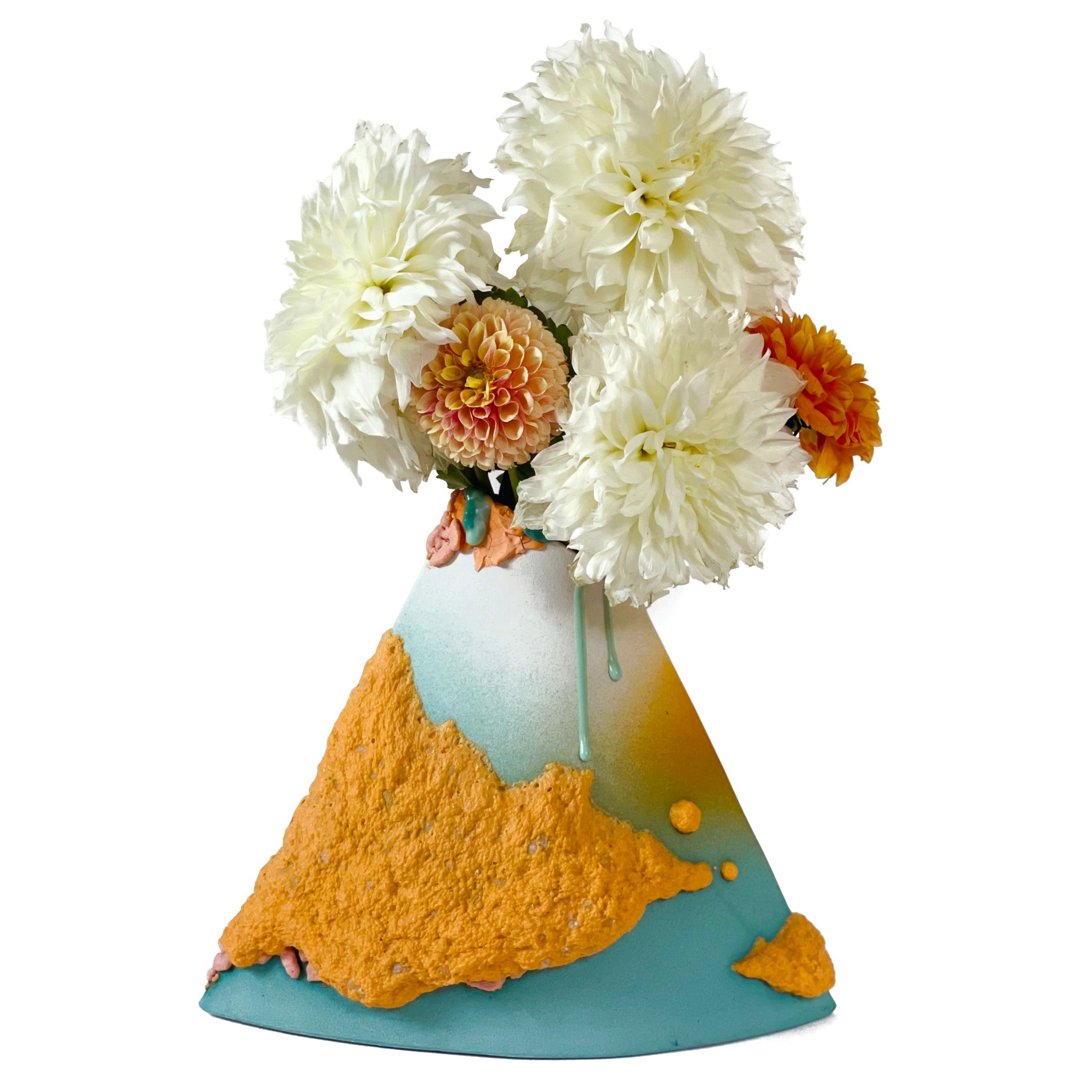
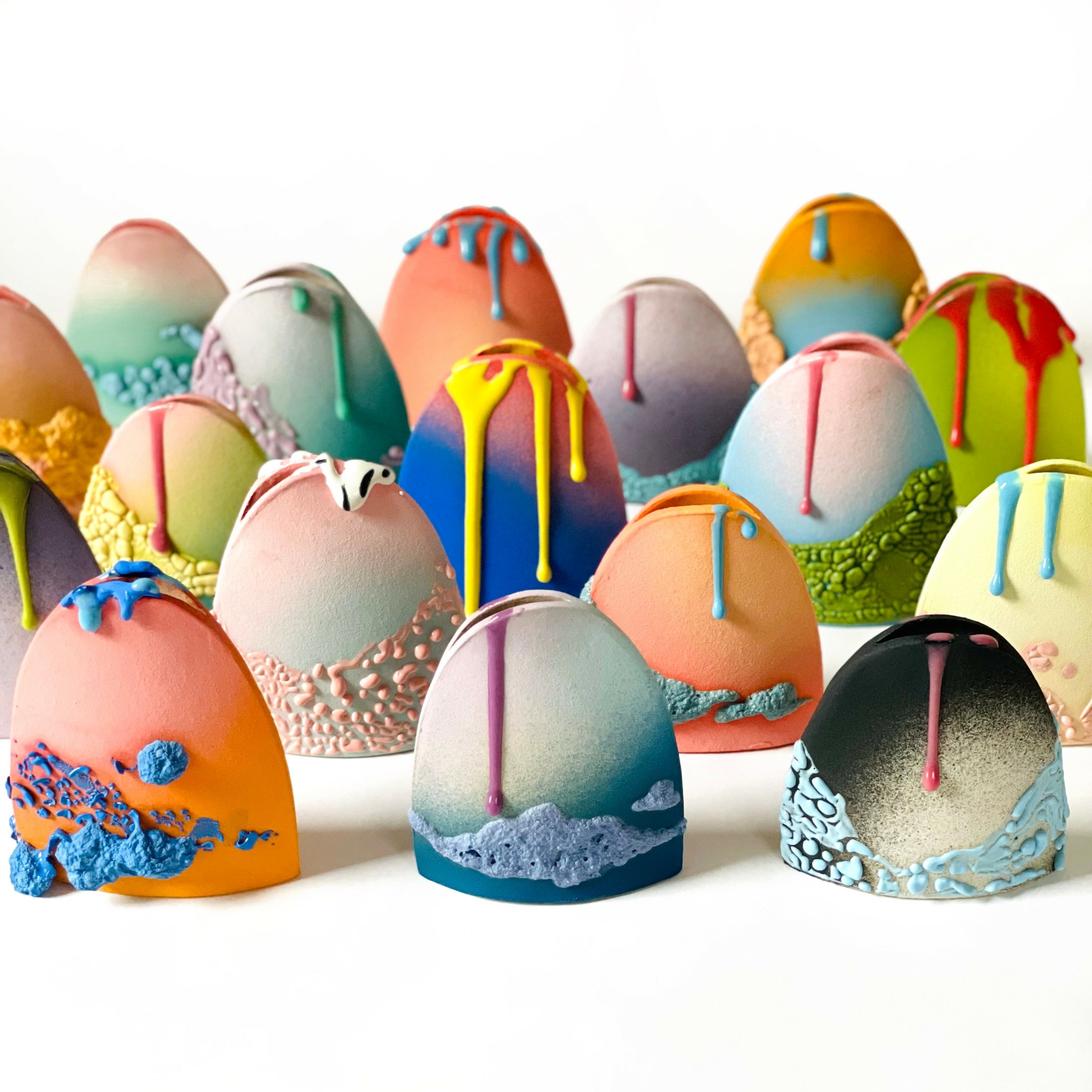
I’m excited to be making works that can function as sculptures/decoration or as useful objects (vases, platters, bookends). I feel like I am finding a balance between abstraction and functionality, and I’m proud to be creating works that are aesthetically unique to me. My style in clay took me a long time to develop – I love color and am inspired by psychedelia, dramatic landscapes, and the neon aesthetics of the 90s. For a long time I struggled to find color and glaze options in ceramics production that felt true to my aesthetic, and was always searching for a way to get brighter, more saturated and more weird. I’ve experimented a lot with mason stains, underglazes and glazes, and in the last few years my work has really started to reflect my vision, which is always a big win for an artist. lol

Is there mission driving your creative journey?
When I was younger my only solid vision for the future was that I would be an artist who could support herself making work. I spent many years making, showing and selling my work in a variety of contexts, and last year I finally quit my day job and made the leap to supporting myself through my own ceramics business.
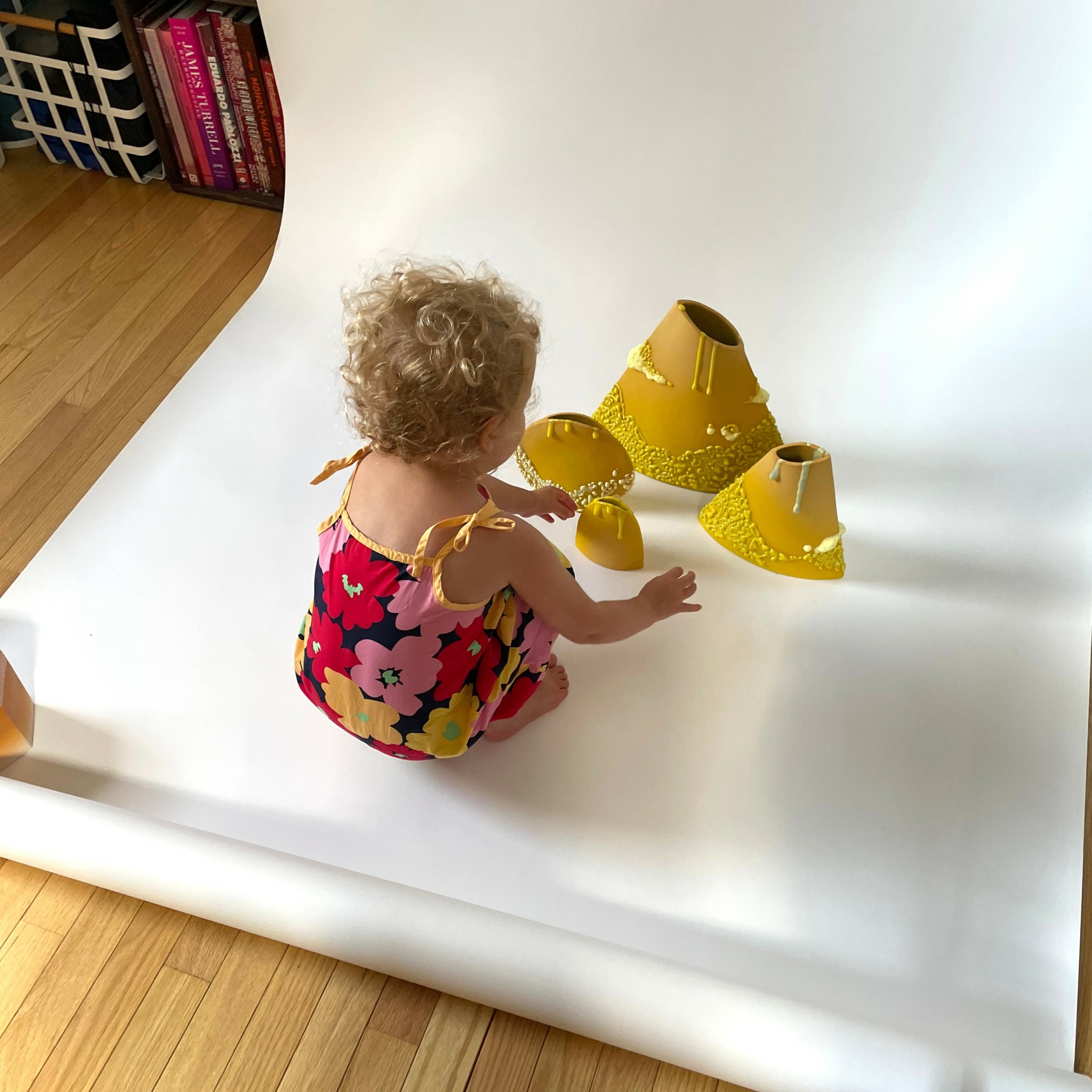
After the birth of my first daughter, my perspective on my mission was challenged and ultimately shifted. For the first time, making art was not my only goal – I now had a tiny human who, much like my work, I had created with my body using an immense amount of effort. I not only needed to keep this baby alive, but I also needed to constantly consider what I was teaching her, and I had to lead by example.
I spent a lot of time reflecting on the myths that I was told around having a career, being an artist, and being a parent. I was never taught that these things could all be equally important in my life, or that it was okay to want emotional and creative fulfillment from my job in addition to financial stability. Work was something you did to live, not for any kind of enjoyment. I realize now that this doesn’t have to be true.
It’s incredibly challenging to be an ambitious, creative person and to also be a parent. Running a business which is also my artistic practice really takes all of my emotion, energy and attention – and being a parent takes even more! The drive I have had for many, many years to sustain myself financially through my creative work is now even stronger because it is coupled with the drive to show my daughters that this kind of life is possible.

Can you tell us about a time you’ve had to pivot?
During the pandemic, my sister Allie and I started a business selling handmade home goods called Pink Door. I made some ceramics, but we also created a lot of textile-based pieces like pillows and meditation cushions, along with prints and stationery. We designed and produced everything ourselves, by hand. We have always been really close, and it was so special to create things together and put them out into the world. It was also a nice way to stay connected to each other, since she lives in Los Angeles and I live in New York, and we didn’t have as many opportunities to be physically together at that time.
Eventually, we decided to split up the company, with me focusing on my ceramics practice and Allie focusing on prints and stationery. We each wanted to hone in on one craft, and the bicoastal production was becoming too complicated. It was really difficult for me to let go of our shared business; I put everything I had into starting the company and I deeply wanted it to succeed. It was a huge effort for me to start over, especially since I had recently become a mom and now had a lot more demands on my attention and time. Although this shift was extremely taxing both emotionally and financially, I realize now that the experience of starting Pink Door served as an important stepping stone: I started Weather Report with a lot of useful experience under my belt, and with an even stronger determination to make my work succeed.
Contact Info:
- Website: https://www.weatherreportceramics.com
- Instagram: @weatherreportceramics