

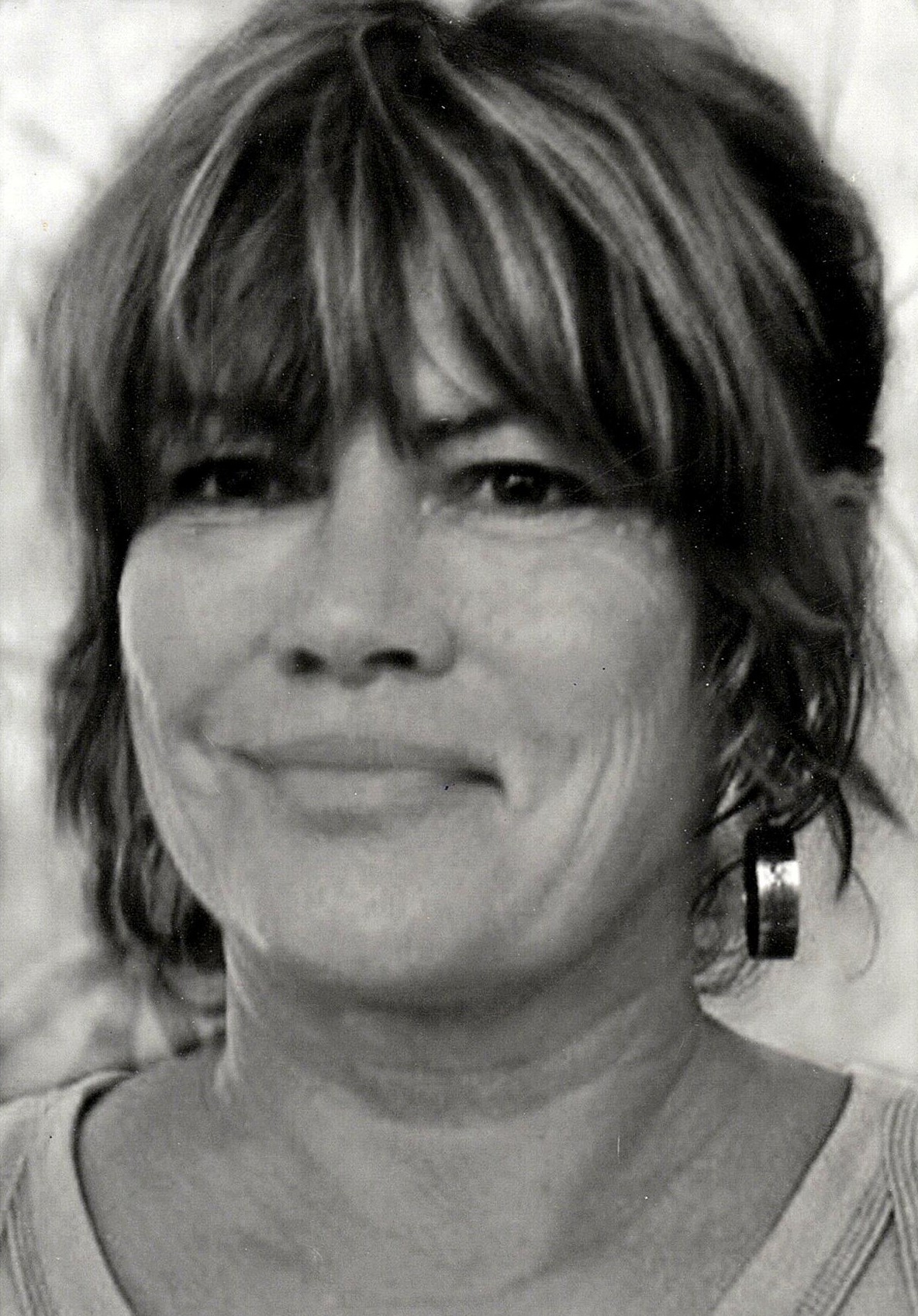

We recently connected with Mary Bruns and have shared our conversation below.
Hi Mary, thanks for joining us today. Can you talk to us about how you learned to do what you do?
It has been a long road to understanding the chemical reactions in oil paint and glaze. No one taught me how to do this. I simply (not so simply) read and researched how artists in the past used oil paints to achieve their remarkable works. Layer upon layer. Much like life, it is not achieved in one swift move. I learned how to be patient, letting everything dry for a couple of days, after application. And the images were suddenly turning out.
Mary, love having you share your insights with us. Before we ask you more questions, maybe you can take a moment to introduce yourself to our readers who might have missed our earlier conversations?
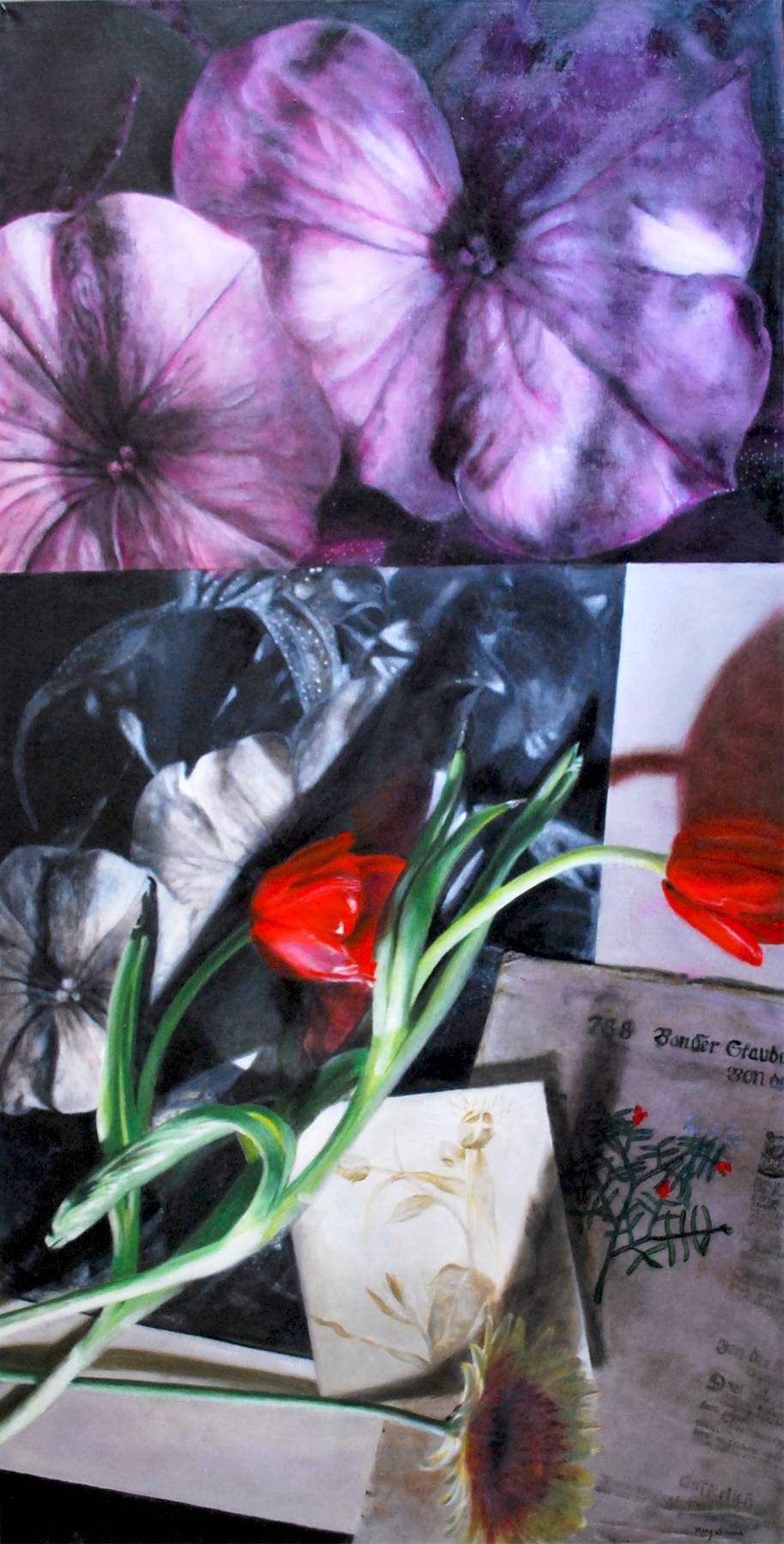
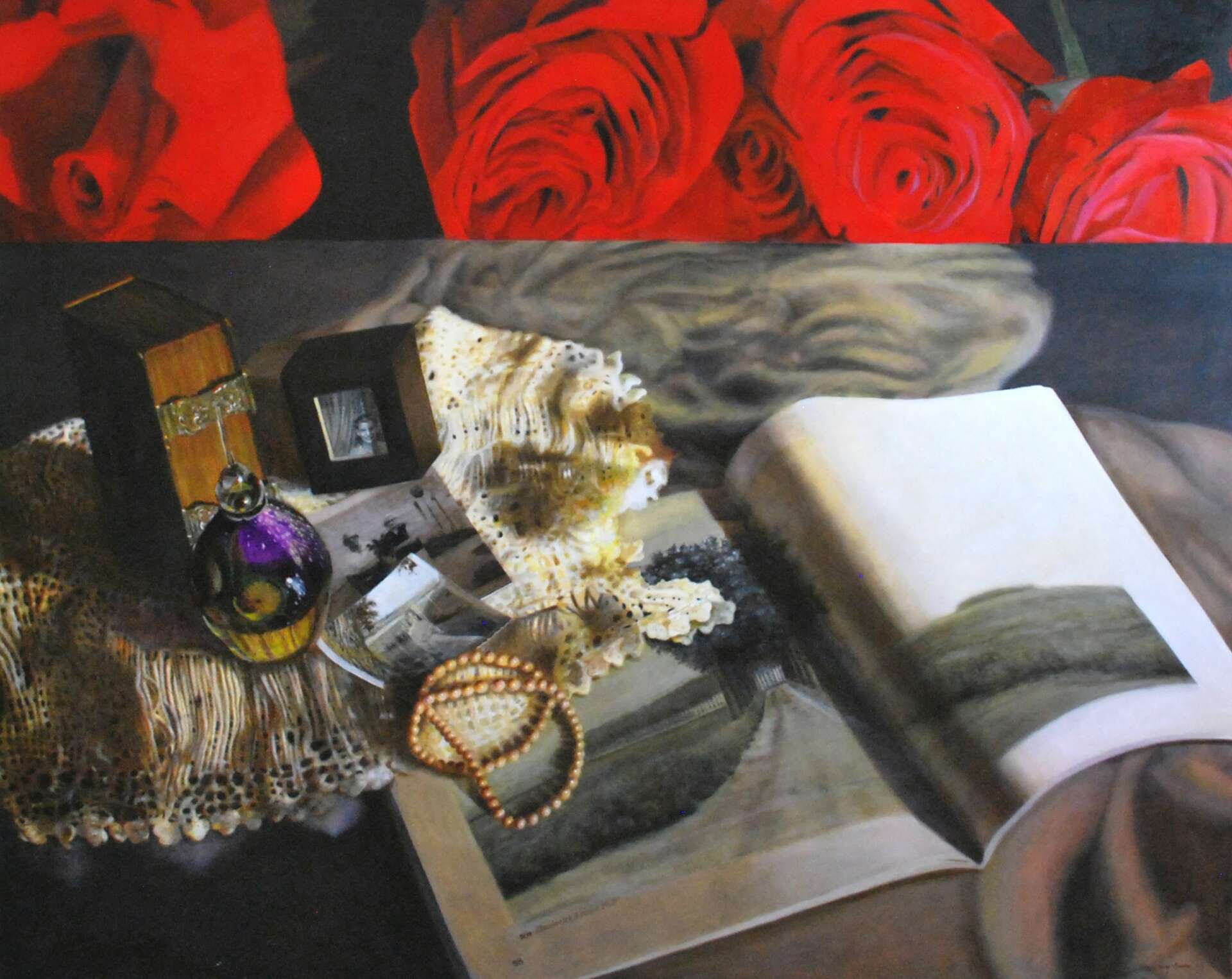
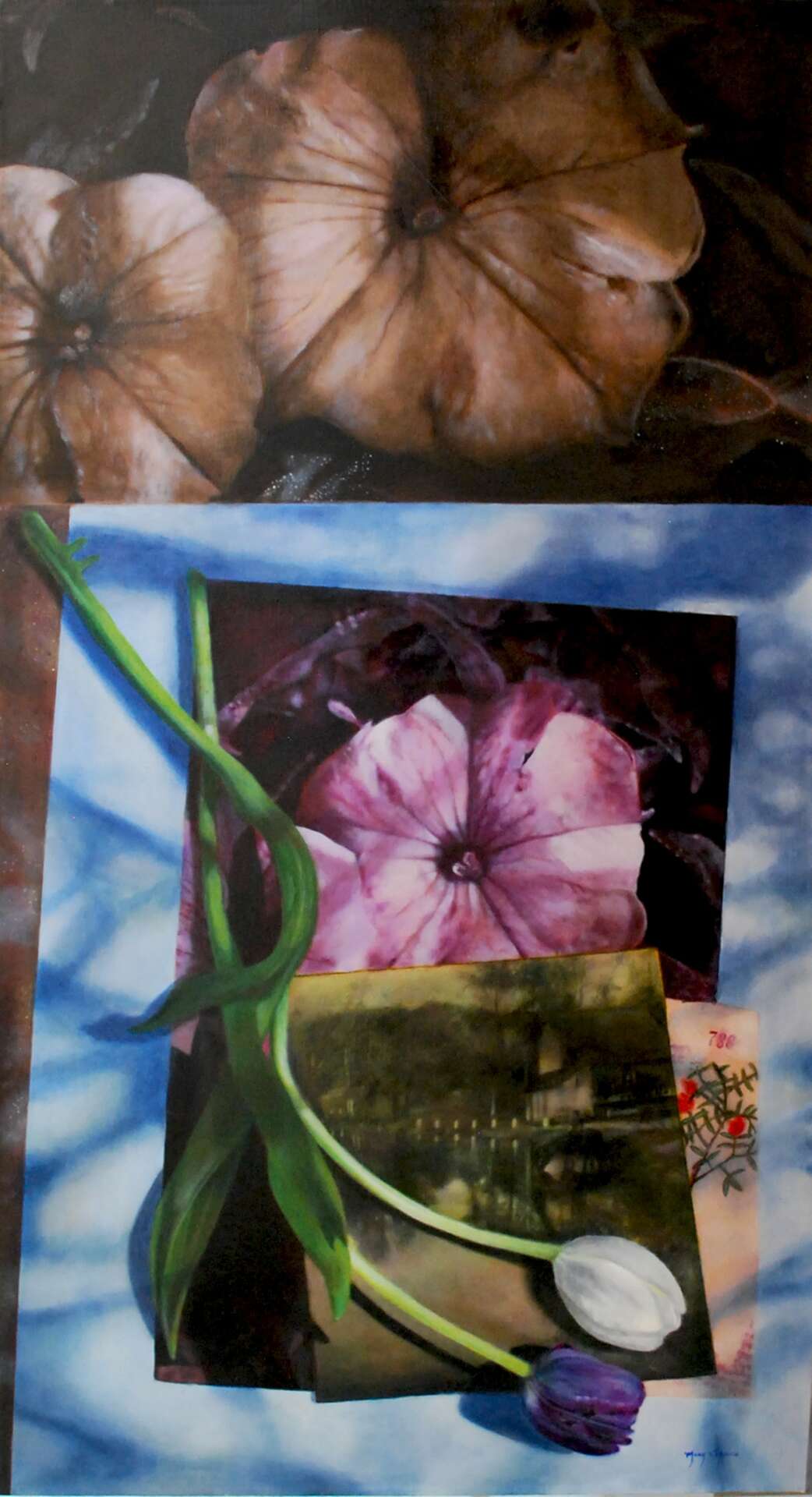
I was born in 1950 in a small farming community of Brunsville, Iowa. My great grandmother owned the land that the railroad purchased and they named the town of 142 after her. I went to a country school that flourished until I was in the 7th grade. I had one person besides myself in the class. Those heart warming days made for the beginnings in art. Classes were filled with board decorating and room warmth. It all interested me so much that my grandparents bought me a painting kit, which I enthusiastically completed and have to this day. That was when I was eight. Life in this remote rural setting meant that one had to find one’s own means of entertainment. There was nothing to be had within even a twenty mile drive, which was rarely if ever taken. I set out to practice calligraphy and went onto use some of this calligraphy in my homework assignments and then with my drawings. I was naturally the volunteer to produce anything the schools asked for and went out of my way to make science projects look like museum mobils. Now at seventy three I produce oil paintings that are as photographically real as I can make them. There are no photographic transfers, tracing or projection work. I refer to photographs and still life objects to produce the pieces that you see. I paint in a glaze over glaze technique as the Old Masters painted.
In my senior year of high school, 1968, I won the Nebraska Young Artist Award and that sealed my fate forever. I began my formal studies at the University of Nebraska in Lincoln and completed a BFA in Art and Art Education. I have a Master of Art in Printmaking and a Master of Fine Arts in Painting, both from California State University, Los Angeles, California.
Even with formal study and degrees, no one taught me to paint. I made up my own formulas and researched Old Master glaze formulas. All of my instructors were abstract and respected me because I was so “realism” oriented, that they let me alone and I created the images that I wanted, the way that I wanted.
I was a deep rooted art history person, with a personal collection of books to continuously be driven to read and research. I studied every Baroque painter and kept this representation as my means of painting. It was at this time that I discovered the Bayeux Tapestry.
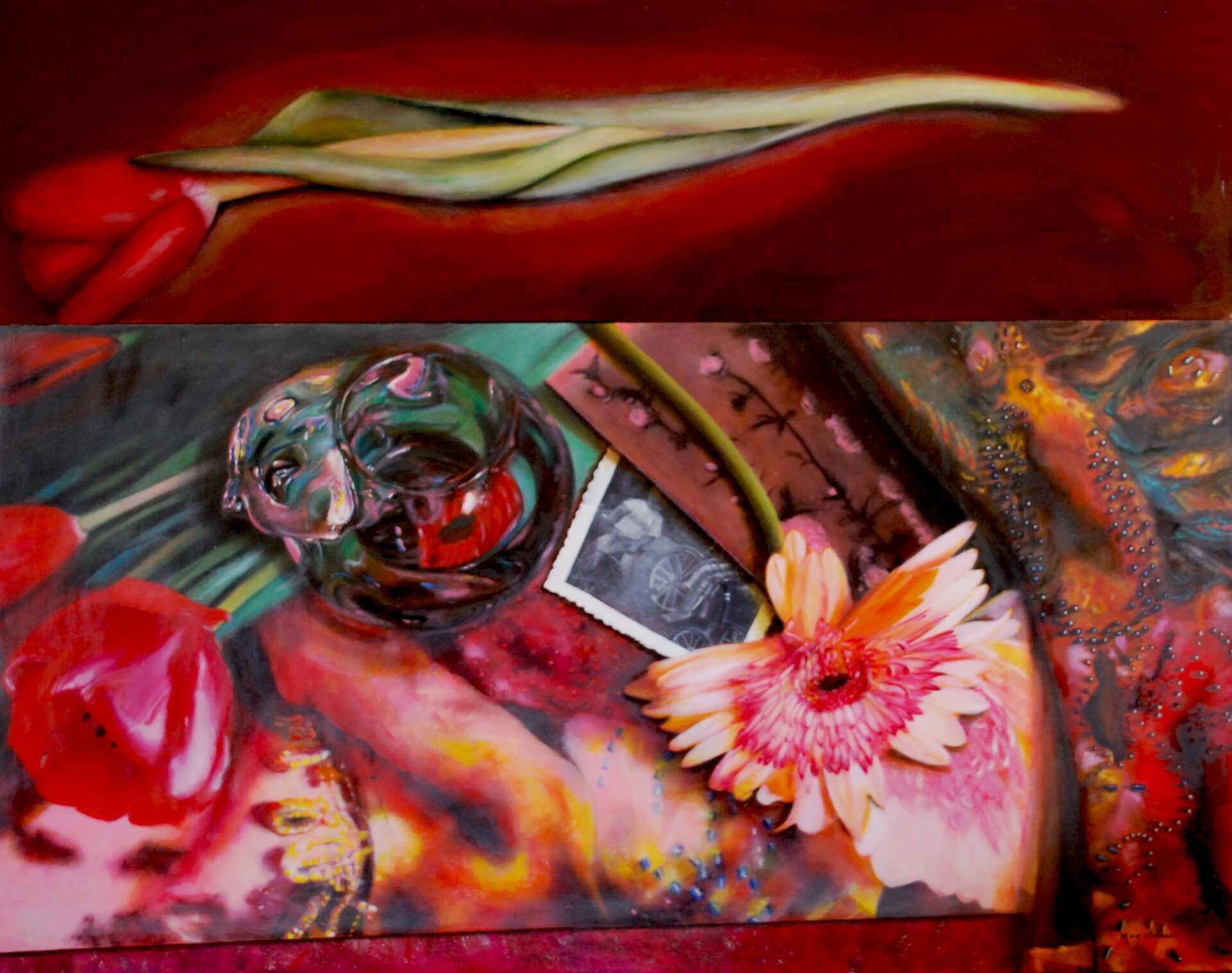
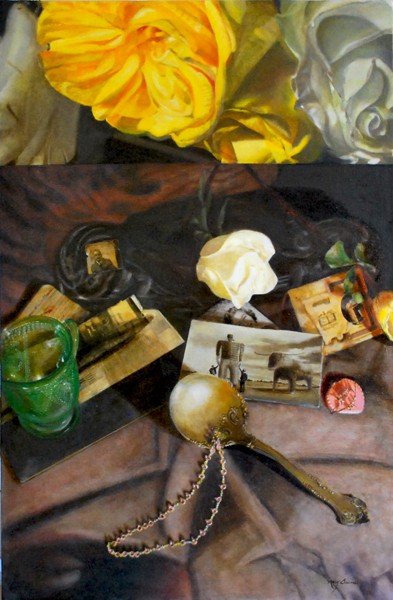
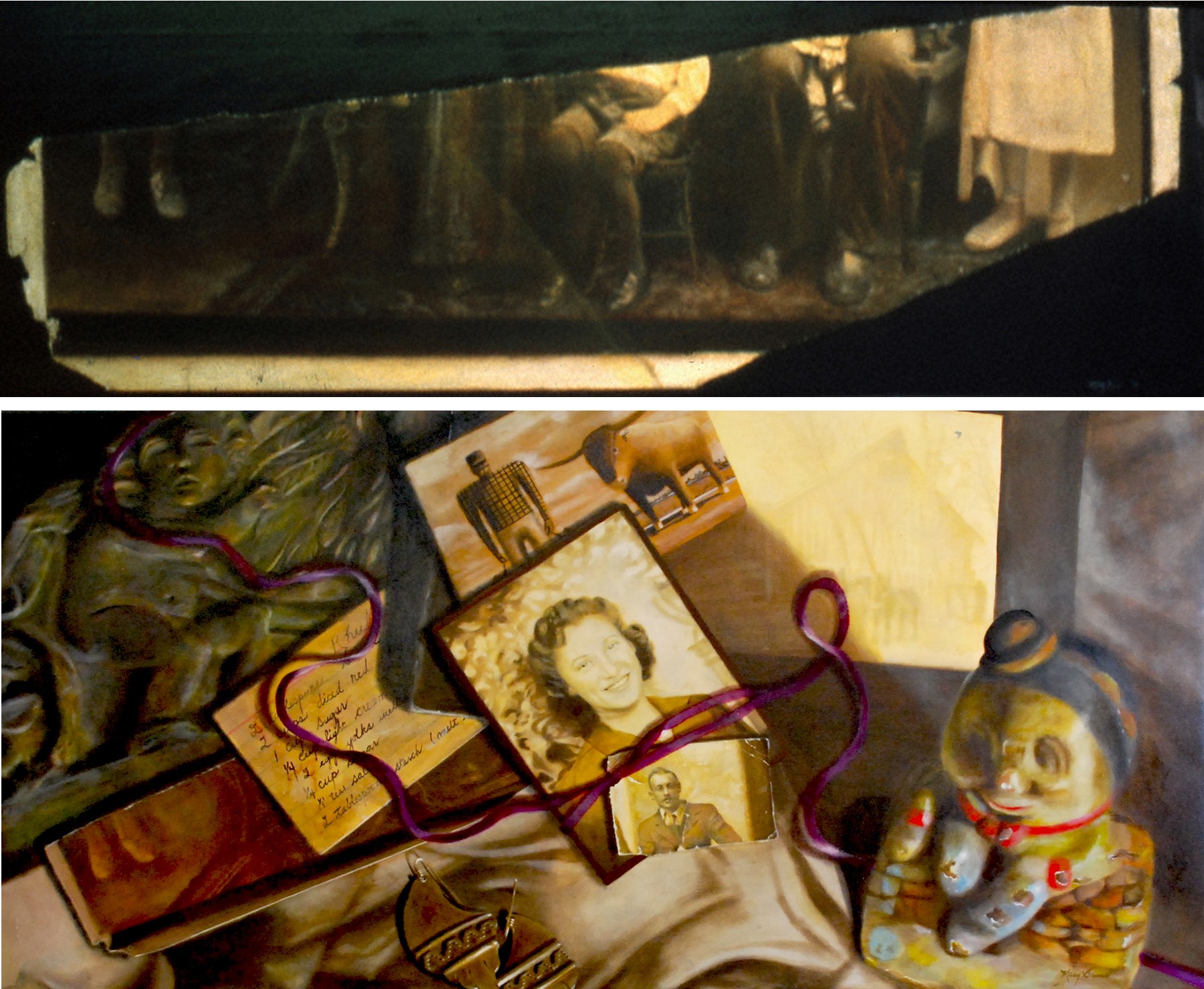
The Bayeux Tapestry is actually not a tapestry, but an embroidered cloth, with the images of events that lead up to the Norman Conquest of England. It measures 70” x 230” long, with a split imagery concept of the larger middle image giving the thrust to the work and supported by theme-etts on the top and bottom. Split imagery. I loved that. That’s how the world works. Not just one static piece of art, but split up into parts making all of it work. Thus, my work used split imagery. One thought, supported by more than one image, done in realism. I use this in all of my paintings, drawings and prints.
I have exhibited in several cities in the United States for over thirty five years and am included in the permanent collection of art at the Museum of Contemporary Art, Atlanta, Georgia. I now live in Cave Creek, Arizona.
In 1983 I was given an Honorable Merit Award from the city of Hollywood for its
ongoing teamwork of citizens creating a better Hollywood image called “Hollywood Heritage”. I have articles of recognition from the City of Los Angeles for outstanding citizenship and activities enhancing the community, better known as the “Cross Pollination Project”. Diversity of ethnic groups and individual insights were published in pictoral posters and distributed to nearly a hundred venues all over the United States.
My work was the front cover and inside story regarding Alzheimer’s Disease, Journal of the Medical Association of Georgia, with text by Sheldon B, Cohen, M.D. My work is always metaphorical by nature.
I have Merit in Exhibition recognition given to me by the Long Beach Arts, which is an exhibition facility in Long Beach, California. Artist and award winning professor emeritus, Walter Askin, who was an advisor and teacher to me in graduate school, was the juror.
The West Valley Arts Council, Surprise, Arizona, awarded my oil painting, “Sorting Through It All” with a First Place Award in February, 2014. Joe Tyler, who is an internationally recognized sculptor and founder of the botanical school at Arizona State University, was the juror.
My studio is located in Cave Creek, Arizona. I work there on an average of eight hours per day. I have taught over the years at four different art schools, but for me the act of being an artist is all that I want to do. I am still researching antique formulas for glazing to ensure a photographically real image.
I am an artist using split imagery as a means of expression. The activity of one side of the painting or drawing is filled with the thoughts, activities and memories which best describe the separate and solo image whose full frontal image is juxtaposed next to it or adjoining descriptive object. I call my painting “collective realism” as it is a chief means of visual energy to satisfy and explain a situation, a life, an encounter or human dilemma, the same way a theater visit gives explanations and insights. In other words I am a narrative artist.
I refer to old photographs, photos I have taken, real life botanicals and ads as references and models in my paintings. I give vintage photos a story and stage and enjoy the process of painting or drawing each one to look like a photograph or the exacting of an ad. These are not transferred images. I never use transfers, only a hand painted technique.
I use a glaze over glaze technique as the old Masters did. At no time are transfers ever used.
Ordinary objects become quite extraordinary if taken the time to look at them.
Let’s talk about resilience next – do you have a story you can share with us?
I married at 20 to a musician, not knowing what that even meant. It was a very difficult and poverty strewn road. The many day jobs that I took just to support us, no one would do. I was married for 43 years and divorced at 64. Now I could create without interruption. It took years to establish my own purpose. I advise no one on anything. Each road will lead to different discoveries. I surely saw plenty on my road with multiple, multiple moves. It meant perseverance and bending, letting go and meeting scores of people that I would have never met had I planted in a University job. I have two Master’s Degrees and have had minimum academic work.
Is there mission driving your creative journey?
My goal has always been the same. When I visited museums I would see an artist and I would set my goal to paint like they did. It was an excellent teacher. Carving into the surface of something that appears to have no depth at all, until you start painting.
Contact Info:
- Website: marybrunsfineart.com
- Instagram: oilpaint70
- Linkedin: mary Bruns
Image Credits
All photos were taken by myself, Mary Bruns