


We were lucky to catch up with Martha Hayes recently and have shared our conversation below.
Alright, Martha thanks for taking the time to share your stories and insights with us today. We’d love to have you retell us the story behind how you came up with the idea for your business, I think our audience would really enjoy hearing the backstory.
The idea for Rework the Room came out of a period of real career disillusionment. I’d been a journalist for nearly 20 years, and had just had my first child, so I found myself rethinking everything – what I was doing, what I wanted, and whether there was something more aligned with this new phase of life.
I think I’d always had a sense that I had a business in me. I was already freelancing, already used to working for myself – it was just a question of what that thing would be.
Organizing came about almost by accident. I initially signed up for a professional organizing course thinking it might make an interesting feature to write about. But as I went through it, something clicked quite quickly. I realized this wasn’t just something I found interesting – it was something that came very naturally to me.
Looking back, it had always been there. Even as a child, I was someone who would instinctively rearrange spaces, creating order when things felt chaotic. Later in life, during more difficult periods – going through infertility and losing my mother in my thirties – organizing became a way of creating a sense of calm and control. It was something I turned to without really thinking about it.
Then, when I had my daughter, it became more obvious. I found setting up our home – figuring out systems, creating spaces that worked – genuinely therapeutic. And through meeting other new moms, I realized this wasn’t something that came easily to everyone. What felt instinctive to me was actually a real gap for other people.
The course gave me the framework, but it also gave me the confidence to see it as a viable business. I could see both the demand and the opportunity to approach it differently.
What really made it feel worthwhile (and still does) is the combination of practical organization with emotional understanding. My background in journalism means I’m naturally curious, empathetic, and a good listener. I’m able to really understand how someone lives in their home, not just how it looks. And that’s what allows me to create systems that actually work for them long-term.
There are plenty of organizers out there, but I felt there was space for a more thoughtful, bespoke approach – something less formulaic, less about aesthetics for the sake of it, and more about how a home makes you feel and function day to day.
That’s the part that excited me most then, and still does now.
Awesome – so before we get into the rest of our questions, can you briefly introduce yourself to our readers.
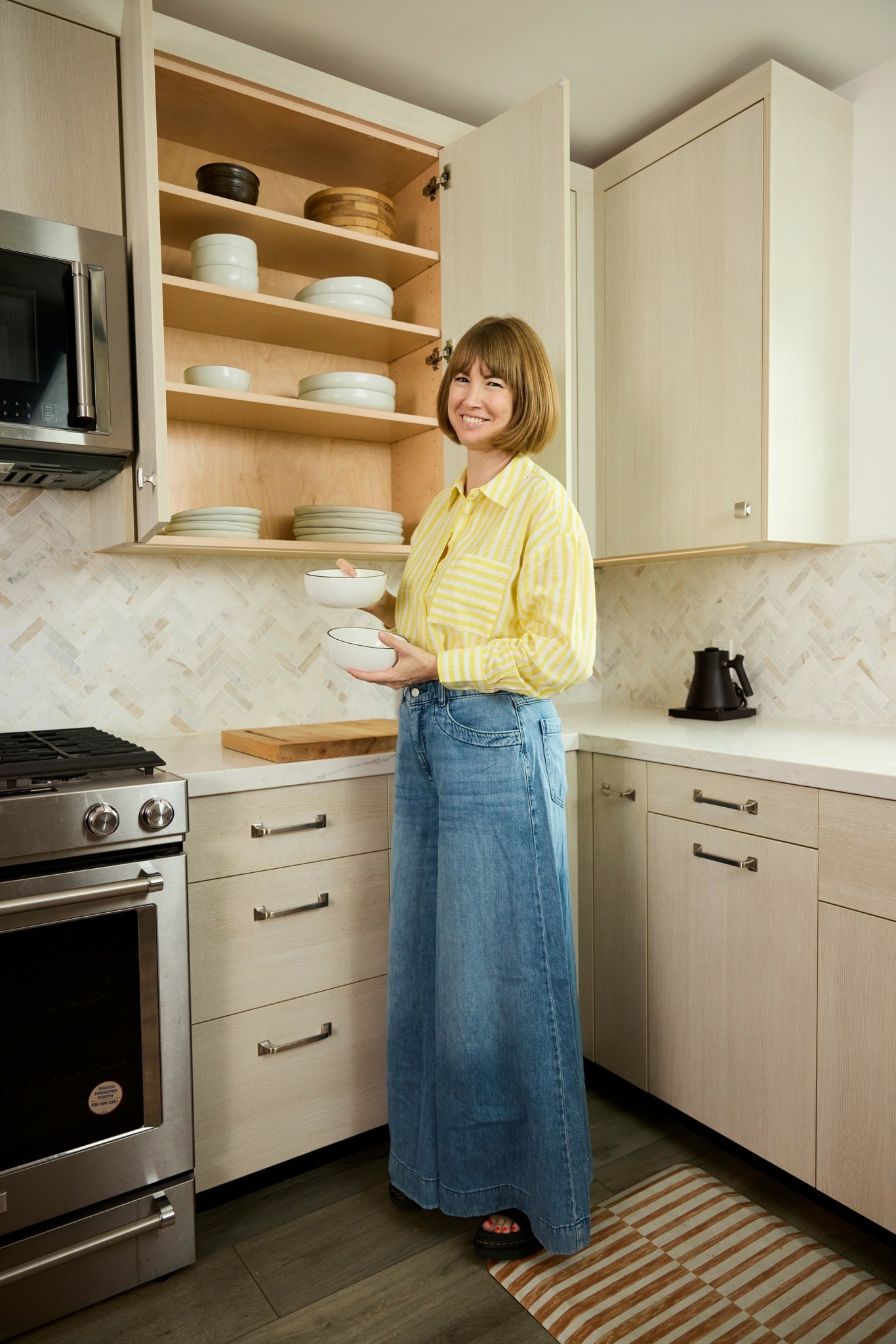
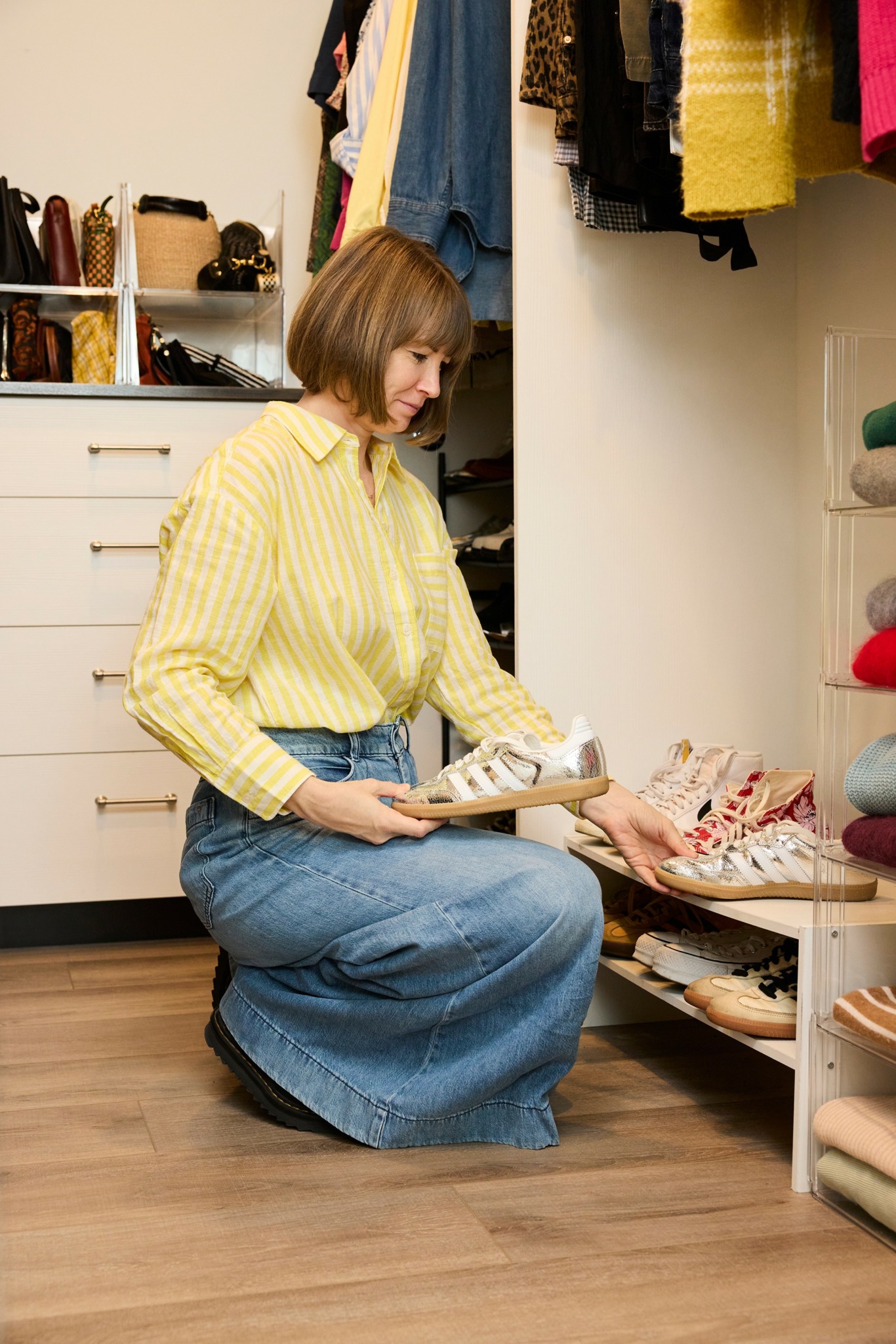
I’m the founder of Rework the Room, a Los Angeles–based home organizing service focused on creating thoughtful, highly functional spaces that support how people actually live.
Before this, I spent nearly 20 years as a journalist and editor, which still shapes how I work. I’m naturally curious, I listen closely, and I tend to understand what’s not working quite quickly – often before a client can fully articulate it themselves.
What I do isn’t about creating picture-perfect spaces or following trends. It’s about making homes function properly. I work closely with clients to declutter, reconfigure, and build systems that are tailored to their routines, their habits, and the pace of their lives – so things don’t just look good, they stay that way.
Most of the people I work with are busy and managing a lot behind the scenes. On the surface, they’re dealing with clutter or disorganization, but very quickly it becomes clear that the real issue is the mental load that comes with a home that isn’t working. When everything feels harder than it should – when you can’t find things, when spaces feel chaotic – it has a real impact on your day-to-day life.
That’s really what I’m there to change. Not just the space, but the experience of living in it.
My approach is entirely bespoke. I’m not interested in imposing systems that look good for a moment but don’t hold up over time. I design everything around real life, which is why the results tend to last. I also take a very considered approach to storage – using what clients already have where possible, and only introducing new pieces when they genuinely add value.
I work alone, intentionally. This is a very personal process – you’re inviting someone into your home, often at a moment when things feel a bit out of control – and I think that relationship matters. My work is collaborative, low-pressure, and handled with a lot of care.
Most of my work comes through referrals or returning clients, which I take as a quiet vote of confidence. Much of it is also intentionally private – my clients value discretion, and so do I.
If there’s one thing I’d want people to know, it’s that my work isn’t about perfection, and it’s certainly not about keeping up with trends. It’s about creating a home that feels calm, considered, and easy to live in – something that works for you, and continues to work long after I’ve left.

What’s a lesson you had to unlearn and what’s the backstory?
One of the biggest things I’ve had to unlearn is the idea that there’s a “right” way to organize.
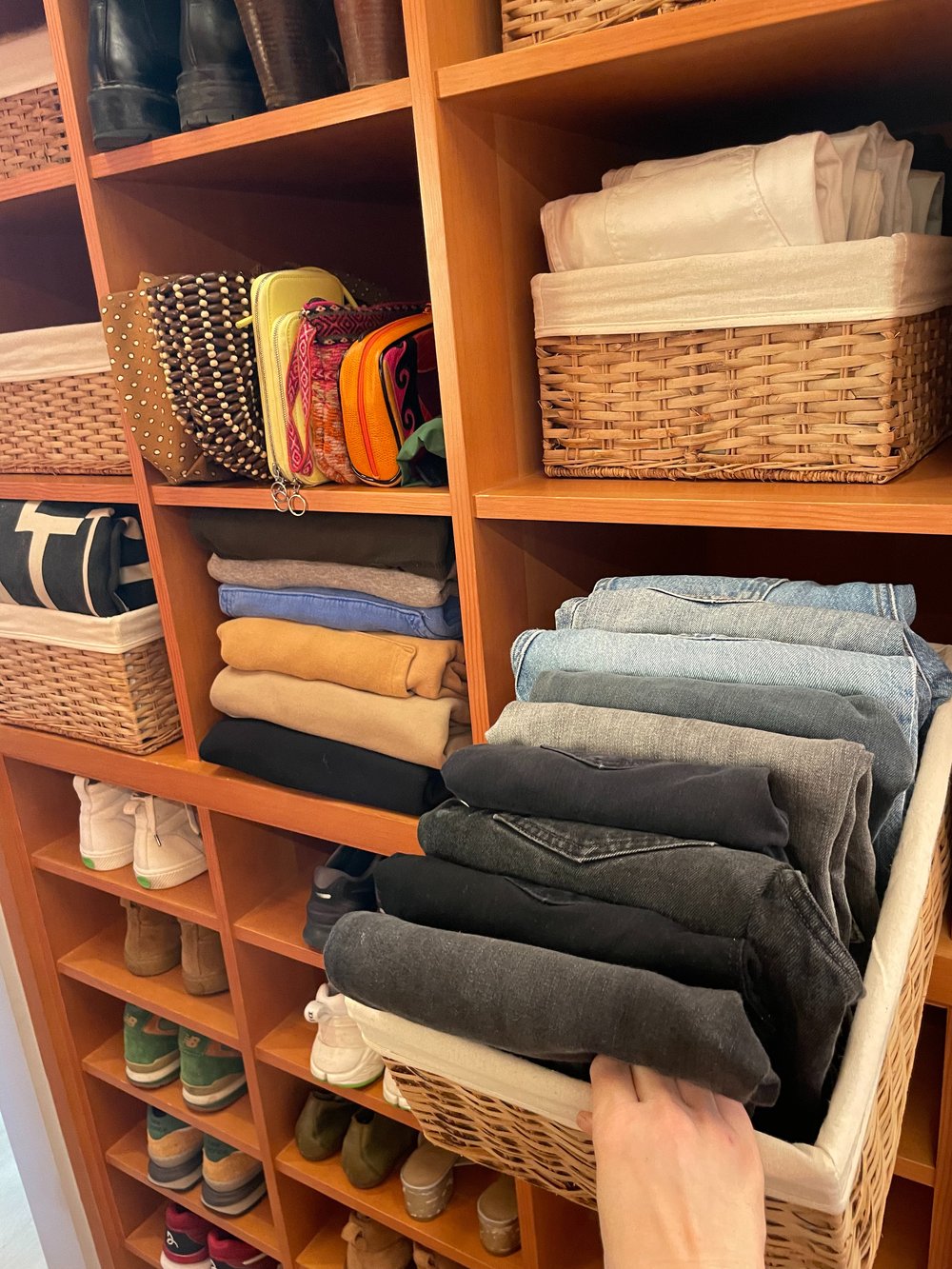
When I first trained, I was taught all the best practices – file folding, uniform systems, everything neatly contained and visually consistent. And it gave me a really strong foundation. On paper, it all made perfect sense. And, to be fair, it looked great… for about five minutes.
But very quickly, working in real homes, I realized that something could look incredibly organized and still not function at all.
The turning point for me was actually in my own home, with my husband’s closet. I had set it up exactly as I’d been taught – t-shirts folded into neat little files, everything categorized, very satisfying to look at. And to his credit, he really did give it a go = he learned how to file fold, he stuck with it for a while!
But in reality, it just didn’t suit how he uses his space. It felt like giving him a job to do every time he got dressed. We also had plenty of hanging space, and t-shirts are what he reaches for most days – so putting them on hangers was simply quicker and more intuitive.
So we switched it. The t-shirts went onto hangers – something I would have once thought was the “wrong” choice – and suddenly it worked. It stayed organized, it was easier to maintain, and it made daily life simpler.
That was a real shift in thinking for me. I realised that the most important question isn’t “What’s the best system?” but “What will this person actually stick to?”
Now, I design everything around behaviour rather than aesthetics. File folding absolutely has its place – it can be incredibly effective in tighter spaces – but only if it makes sense for the person and the environment. A system has to feel intuitive and easy, otherwise it fails – no matter how good it looks.
It’s something I see often when clients come to me after trying to organise their homes themselves, or after working with someone else. The space might look beautiful, but it hasn’t held up, and they’re left feeling like they’ve somehow done it wrong.
In reality, it’s usually the system that was wrong for them.
That’s probably the biggest lesson I’ve carried into my work. There’s no one-size-fits-all approach, and there’s definitely no perfect system – only the one that works for you, in your home, in your real, everyday life.
How’d you build such a strong reputation within your market?
I think my reputation has been built quite organically, largely through word of mouth.
A lot of my clients come through referrals or return to work with me again on new spaces, which I’ve always taken as the most meaningful measure of whether the work is doing what it’s meant to do – holding up over time. I’m not trying to create a “finished” space, I’m trying to create something that keeps working.
Consistency is a big part of that. I’m very considered in how I approach each project, and I don’t apply the same formula to every home. The systems I create are designed to fit into someone’s life in a way that feels natural, which is why they tend to last.
Quite often, I’m brought in when something has already been organized but hasn’t worked long-term. The space might look good, but it hasn’t translated into daily ease. I think that’s where my approach tends to stand out – looking beyond the surface and focusing on how a home actually functions.
I’m also quite restrained in how I work. I’m not driven by trends or the idea that everything needs to be decanted or contained in a certain way. Sometimes the most effective solution is the simplest one, and knowing when to stop is just as important as knowing what to change.
Trust is a huge part of what I do. There’s a level of discretion and understanding that comes with working so closely in someone’s home, and I think that’s a big reason clients feel comfortable recommending me or bringing me back.
Ultimately, I think my reputation comes down to creating spaces that feel considered, work intuitively, and continue to make life easier long after I’ve left.
Contact Info:
- Website: https://reworktheroom.com
- Instagram: reworktheroom
- Facebook: reworktheroom
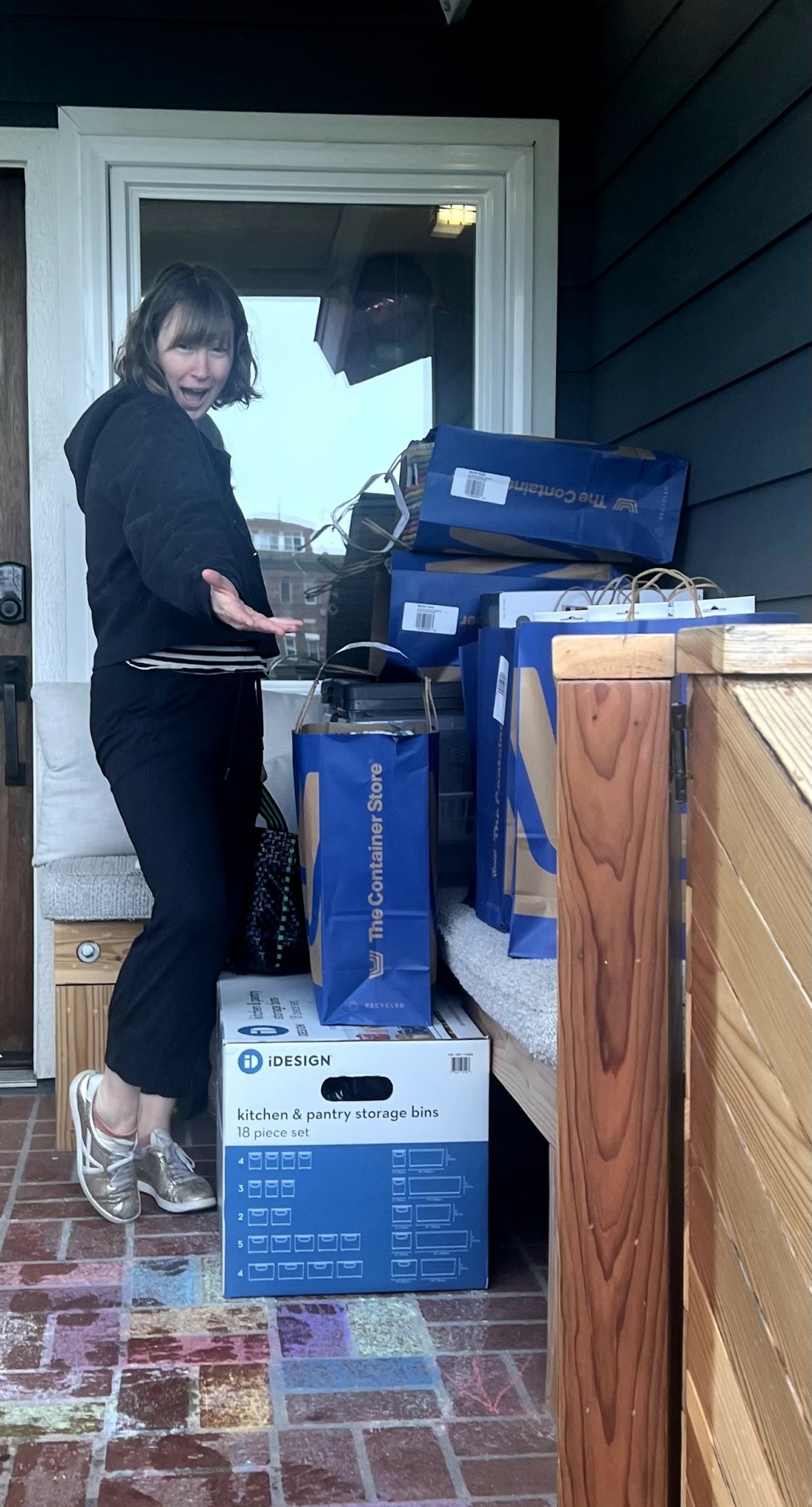
Image Credits
Yuri Hasegawa; Parada Studio