
We caught up with the brilliant and insightful Mark Ingrassia a few weeks ago and have shared our conversation below.
Mark, looking forward to hearing all of your stories today. Was there a defining moment in your professional career? A moment that changed the trajectory of your career?
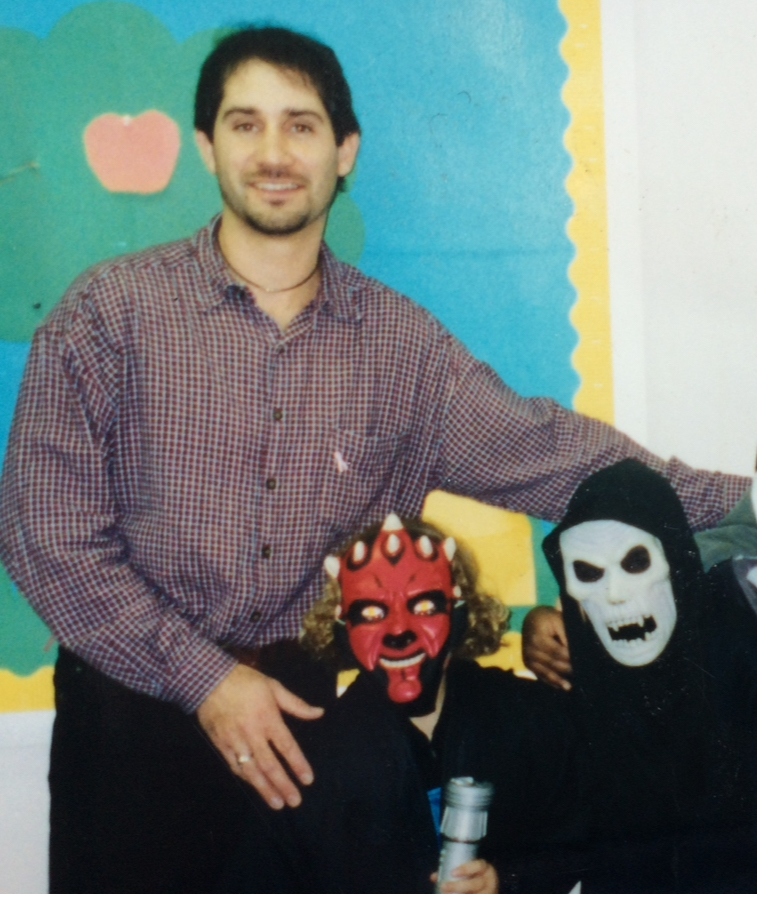
I was working for a PR agency in downtown Manhattan when after 3 months I was laid off. It was around this time that I had strongly been thinking about going back to school for my masters to become a special education teacher. The lure for me was simply ASL (American Sign Language). I had been interested in it for awhile and it became my focus to want to learn it and use it professionally. In the days following my release from the city job I scheduled an observation at a local school for the Deaf. Within the first hour, as I’ve described it, it was as if I had put on a pair of the most comfortable shoes. It felt as natural to be in and among that community as anywhere I’d been in my life. That very night I was seated in a classroom at the school taking my first night sign language class and I never looked back. That was the start of a 30 year teaching journey.
Mark, before we move on to more of these sorts of questions, can you take some time to bring our readers up to speed on you and what you do?
After completing my master’s program, I became a special ed teacher in a school for the Deaf. During those years, I wore many hats—teaching multiple subjects—but nothing compared to being present with the kids as they grew. Connecting with them on a human level, being someone they could trust, that’s what mattered most. Honestly, I didn’t love the academic side of teaching. I did it well—my reviews always said so—but what really got me out of bed each morning for 30 years was helping kids with their behaviors, frustrations, and the real-life challenges they were facing.
Additionally, I was given a special kind of trust by the administration—at least that first couple in charge. They allowed me to write, adapt, and direct the annual school play. I ended up doing that for 27 years. What I saw in my students through theater was nothing short of remarkable. Kids who struggled in the classroom suddenly came alive on stage. It was a path to self-actualization: they discovered their talents, their humor, their best “ham” selves. And for many, it was the first time they were recognized and celebrated by teachers and family in a way they might never have been otherwise. That was powerful.
I tried to raise the experience each year by blending live stage acting with pre-recorded scenes shot on location. We filmed in nearby towns, on beaches, in parks, even around school grounds—anywhere that could add to the magic. The result wasn’t just a school play, it was an experience, something grander, something that left a mark on everyone involved.
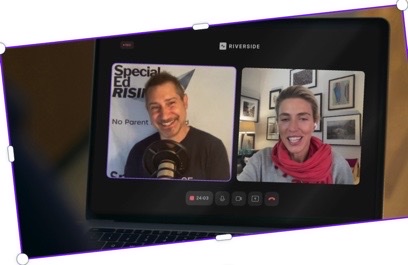
When I retired after the 30 years I came to a cross roads. I kept coming across Bruce Springsteen’s song, “The Rising,” at sort of serendipitous times. One time the song came on and I stopped at a light as a person crossing the street carried a bag with large letters spelling out, RISE! So I took this to heart and from that point any project I tried I named with the word, “Rise” in it. Thus began Special Ed Rising. It started as a website with a blog intended to support parents of children with special needs. After the pandemic I needed a new spark and so I began my podcast, Special Ed Rising; No Parent Left Behind.
It was intended as an extension of the blog; strategies, stories, advice and tips for parents. But then I started reaching out to people on LinkedIn and Instagram and invited them to be guests. It worked! And the mission began to widen to take on advocacy and inclusion and represent disabled people doing amazing things or explaining their struggles. Parents agreed to share their lives and offer hope and an anchor to other parents. Eventually, people began to find me and now regularly reach out to be on my show sharing their books, their art and music education, robotic companion dogs, behavior strategies, and so much more! I create content that moves me and hopefully might make a difference in one person’s life.
Since retiring I have continued to work as a parent trainer as I saw a need that was not being adequately attended. Working with parents I get ideas for my content which enables me to reach even more families. The focus of my work is centered on mindful parenting; a mindful protocol:
M: Mindfulness – Staying present and calm in the parenting journey.
I: Intentionality – Approaching parenting with clear purpose and focus.
N: Nurturing – Providing love, support, and care for both yourself and your child.
D: Development – Supporting the growth of your child and your own skills.
F: Flexibility – Adapting to your child’s unique needs and circumstances.
U: Understanding – Building empathy and deep awareness of your child’s world.
L: Learning – Continuously growing through education, reflection, and experience.
Often their are behavioral issues that need addressing and through the “art” of mindfulness I guide parents and caregivers with strategies which begin by creating routines and schedules and building from there.
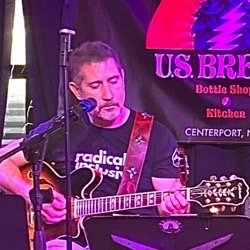
I guess what I’m most proud of is that I’ve just kept going with these projects not knowing the end result and being ok if they failed. I want to help others and so it was never going to be a waste of my time. I created something from nothing and that’s always cool. I’ve been able to help families and I’ve recorded, as of this writing, 140 episodes. I’m pretty proud of that.
Do you think you’d choose a different profession or specialty if you were starting now?
If I knew what I know now and had to choose I certainly would have no problem selecting this path I took. Having the opportunity to impact others lives and learn from their daily triumphs and struggles has been incredibly fulfilling. I think I understood on a more simplistic level the true nature of what I was involved in early on in my teaching. However, over time there was a realization; a crystalizing for me of the “bigness” of the calling. I learned to own and hone my skills. This gave me greater confidence and belief in myself and my ability to make positive change in the lives of my students. Once I began working outside of a school, it became immediately clear that my 30 years in the field of Exceptional Needs and Special Education had given me knowledge and experience I had taken for granted—insights that were like gold to parents who were struggling. Not that I had some kind of special gift—just experience and knowledge that wasn’t obvious or accessible to others. What surprised me was realizing that I could make just as much of a difference for families outside the classroom as I ever did inside it.
That said, I think of the people I’ve come to know as a teacher, trainer, and podcaster—people who have only added to my life in ways that feel extraordinary precisely because they’re not the norm. I believe I could have found similar satisfaction in other areas of public service, but I’m not sure anything could have been more rewarding than how I’ve devoted my professional life.. So while I am curious, fascinated and interested in so many areas from a human rights perspective, I would feel comfortable choosing my profession again. The one thing I would do differently is pay closer attention to policy and speak up more—not just with administration, but to really fight for my students’ rights. But you only gain that perspective with experience, and I wasn’t the person then that I am now. So I use this moment to rise!

Training and knowledge matter of course, but beyond that what do you think matters most in terms of succeeding in your field?
When this question comes up the first thing that I mention is the need for patience and compassion. I believe that without these qualities you have no chance of reaching your clients because you are giving them no space to be who they are. If we are not responding instead of reacting then we do a disservice to ourselves and those we are purposed to help. With mindful parenting, the response is a considered choice made after a stimulus. Viktor Frankl said, “Between stimulus and response there is a space. In that space is our power to choose our response. In our response lies our growth and our freedom.” It’s a powerful reminder that no matter the circumstances, we have the ability to decide how we respond. And how we respond will predict to a large degree, how our encounters with our clients will proceed. Will we respond with respectful recognition; giving room for the client to be where they are and not where we want them to be? Or will we react emotionally, potentially escalating the situation and increasing the stress and anxiety of the person we want to help?
Recognizing that human compassion is far more relevant than ego when working with clients, helps to remove us from the equation which then gives us greater perspective and an ability to stay present in the moment; calmly offering guidance and patience to aide in de-escalation. It is us giving safe harbor during a client’s internal rough seas.
I have a shirt that says, “Time. Patience. Consistency.” I try to impress this upon the parents and caregivers in my work. I believe these are the keys that make every strategy we employ effective when followed. They create a “lightness” and a sense of calm that allows one to manage most upheavals.
Contact Info:
- Website: “I believe these are the keys that make every strategy we employ effective when followed.”
- Instagram: special ed rising
- Facebook: https://www.facebook.com/specialedrising/
- Linkedin: https://www.linkedin.com/in/mark-ingrassia-m-s-04680a77/
- Youtube: https://www.youtube.com/@markingrassia1892
- Other: Tik Tok: special ed rising