



We were lucky to catch up with Marina Badillo recently and have shared our conversation below.
Marina, thanks for joining us, excited to have you contributing your stories and insights. Risk taking is something we’re really interested in and we’d love to hear the story of a risk you’ve taken.
In the summer of 2023, I began planning to launch The AI Social Worker on January 1, 2024. At the time, ChatGPT was still new, and almost no one in the social work field was talking about it. In fact, many professionals were outright against using it, voicing strong opposition and skepticism. I knew stepping forward could be risky. Many colleagues were hesitant about technology, and there was real concern about protecting ethics, privacy, and human connection. Yet I believed deeply that social workers needed a space to explore how AI could be used responsibly and ethically, and I was committed to creating that space.
The risk was putting myself out front as that voice. I knew it could fail. Colleagues might dismiss it as a fad or view me as turning away from the profession’s values. Instead, I kept service to the profession at the center of the work. From the start, The AI Social Worker has offered free resources, guides, and trainings to ensure access without cost barriers. When our website launched, it received over 12,000 views in its first year from social workers around the world, Evidence that the profession was hungry for thoughtful, values-driven leadership in this area.
Since then, the work has grown beyond what I imagined. I have led over 80 trainings across the United States and Canada, reaching more than 4,000 social workers. Bookings are already scheduled through July 2025, and we are preparing to expand to social workers in South Africa. What started as a risk to step into the unknown has become a movement shaping how social workers worldwide think about technology and ethics and transforming their practice in incorperating this technology ethically and responsibly.
Taking that risk taught me that when you keep service and values at the center, stepping forward into uncertainty can open doors not just for yourself, but for an entire profession.
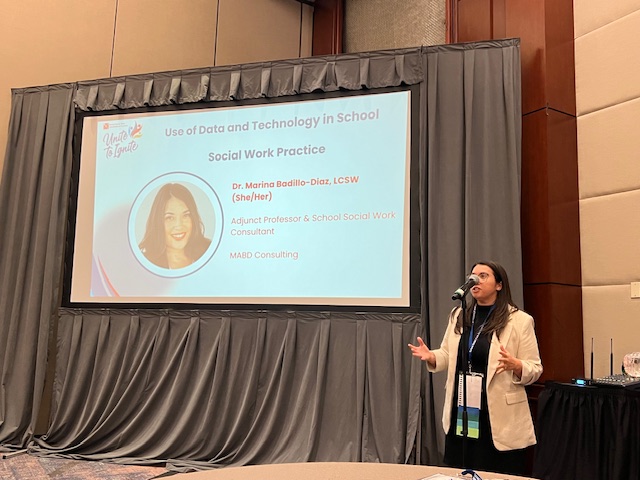
As always, we appreciate you sharing your insights and we’ve got a few more questions for you, but before we get to all of that can you take a minute to introduce yourself and give our readers some of your back background and context?
My name is Dr. Marina Badillo-Diaz, and I am a social worker, educator, and consultant who has dedicated my career to serving people and communities through both direct practice and systems-level change. My path into this work began in community mental health and K–12 education, where I saw firsthand the challenges social workers face: heavy caseloads, limited resources, and the need to balance ethics, care, and advocacy every single day. Those experiences shaped my commitment to support my colleagues in the field with tools, training, and frameworks that help them thrive while keeping service to clients and communities at the center.
In 2023, when AI technologies like ChatGPT began to emerge, I recognized both the risks and opportunities they posed for social work. At that time, many in the field were hesitant, or even outright against, using AI. I took the risk of stepping into that conversation by founding The AI Social Worker, a platform and consulting practice dedicated to equipping social workers with the knowledge, resources, and ethical frameworks to engage with AI responsibly. We launched officially in January 2024, and in the first year our website reached over 12,000 views globally. To date, I have trained more than 4,000 social workers across the U.S. and Canada, with upcoming trainings expanding into South Africa and Australia.
The AI Social Worker provides workshops, keynote talks, customized training for organizations, consultation for program AI policy development, and free resources that make AI literacy accessible to the profession. What sets us apart is that everything we do is grounded in social work ethics, transparency, and human dignity. We’re not selling AI as a quick fix. We’re genuinely helping social workers ask the hard questions about privacy, equity, and bias while also learning how to practically integrate tools to reduce their workload, improve documentation, and strengthen practice so they can spend more time doing the work with their clients and communities.
What I’m most proud of is that this work has always been in service to the profession. From free guides to large-scale trainings, my goal has been to empower social workers to feel confident, informed, and prepared for a changing world. I want potential clients and partners to know that The AI Social Worker is about more than technology. It’s about protecting what makes our profession unique while embracing the skills we need to lead into the future.
What do you think helped you build your reputation within your market?
I believe my reputation in this space was built on a combination of trust, visibility, and service. When I started The AI Social Worker, most of the profession wasn’t ready to talk about AI. Many social workers were hesitant—or even outright resistant. By stepping into that gap early, I positioned myself as someone willing to take the risk of exploring uncharted territory, but I did so with the profession’s values at the center. Every training, keynote, or resource I created was grounded in ethics, transparency, and service to the field. That clarity of purpose helped colleagues see that I wasn’t promoting technology for hype, but instead creating a thoughtful, safe space to engage with it.
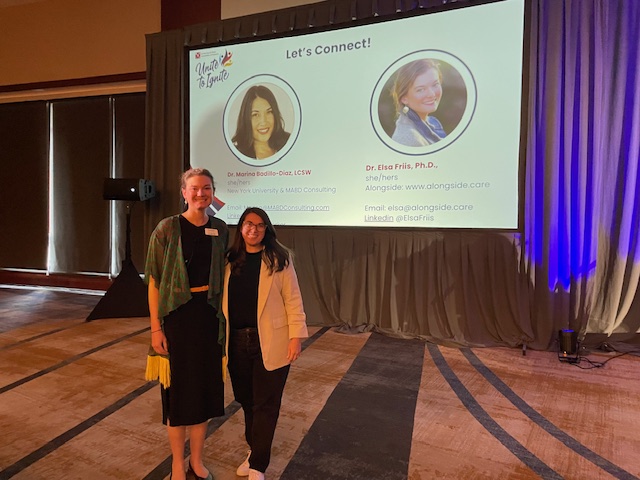
Visibility has also played a major role. I’ve built a strong social media presence on LinkedIn, leveraging the platform to share ideas, free resources, and conversations that reach thousands of social workers each month. Beyond digital reach, I’ve invested time presenting at conferences at local, state, national, and now international events. These opportunities allowed me to connect directly with practitioners, hear their concerns, and demonstrate how AI can be aligned with our ethics and values.
Equally important has been my service to the profession. Serving as a Board Member for the School Social Work Association of America (SSWAA) and as a Board Member for the National Association of Social Workers New York Chapter (NASW-NY) has not only broadened my reach but has also deepened my commitment to leading from a place of service. I see board service as a way to ensure the field’s needs are always at the center of the work I do.
What truly sets me apart is leading with service, authenticity, and accessibility. I’ve made it a priority to make resources free and approachable, to show up consistently both online and in person, and to keep social work values at the core of this work. That combination has helped build trust, credibility, and a reputation that continues to grow as our profession steps into conversations about technology and the future.
How did you build your audience on social media?
One of the biggest ways I’ve built my audience has been through LinkedIn. When I first started sharing about The AI Social Worker, I was intentional about using the platform to spark conversations that weren’t happening anywhere else in our field. I didn’t focus on follower counts, but rather on being consistent, authentic, and service-driven. Over time, that approach resonated and now my LinkedIn following has grown to nearly 8,000.
What’s most meaningful about that growth isn’t the number, but the engagement. I regularly receive messages from social workers, educators, and leaders across the U.S. and internationally who want to connect, collaborate, or learn more about AI in practice. Some of the trainings, speaking invitations, and partnerships I’ve developed over the past two years started as LinkedIn messages or connections. The platform has become a space where I can share resources, amplify conversations, and also listen to the questions and concerns that social workers are voicing in real time.
For those just starting out, I always suggest thinking of LinkedIn as a community, not just a feed. Post consistently, follow accounts that inspire you, comment and engage with colleagues, and most importantly, lead with value and authenticity. Another key piece of my growth has been connecting with local university marketing intern partnerships. For example, through the City University of New York (CUNY) Launch Internship Program, I’ve had the opportunity to host bachelor-level marketing interns twice a year at no cost. Together, we leverage AI tools to create and edit content, develop campaigns, and promote innovation for The AI Social Worker content. This combination of social media presence, authentic engagement, and innovative partnerships has helped expand my reach while staying true to service and accessibility.
Contact Info:
- Website: https://www.theaisocialworker.com
- Instagram: @_theaisocialworker
- Linkedin: https://www.linkedin.com/in/drmarinabadillo-diaz/
- Other: Free Resources
Free Guidebook for Social Workers Integrating AI: https://www.theaisocialworker.com/free-ai-social-work-guide
Free Monthly Newsletter Link: https://www.theaisocialworker.com/ai-resources#ai-resouces-sign-up
Free Social Work AI Prompt Library: https://www.theaisocialworker.com/ai-social-worker-prompt-library
Free Slack Community “AI for Social Work”: https://join.slack.com/t/theaisocialworker/shared_invite/zt-3cheulk8k-xZcD37EHVu3Q3P6DOrKIEg
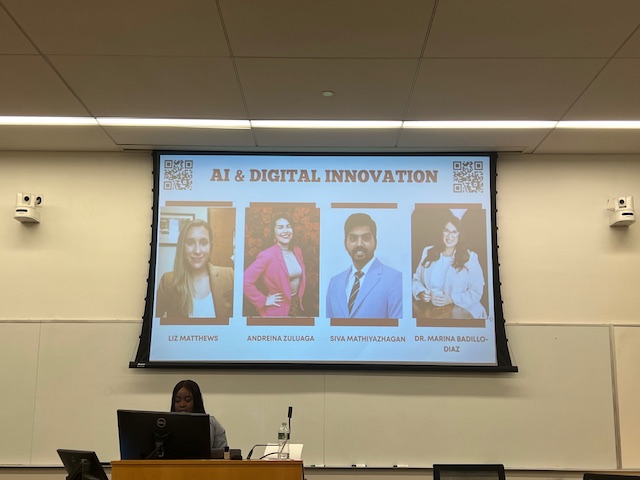
Image Credits
Whitney Heard Photography (headshot image)