

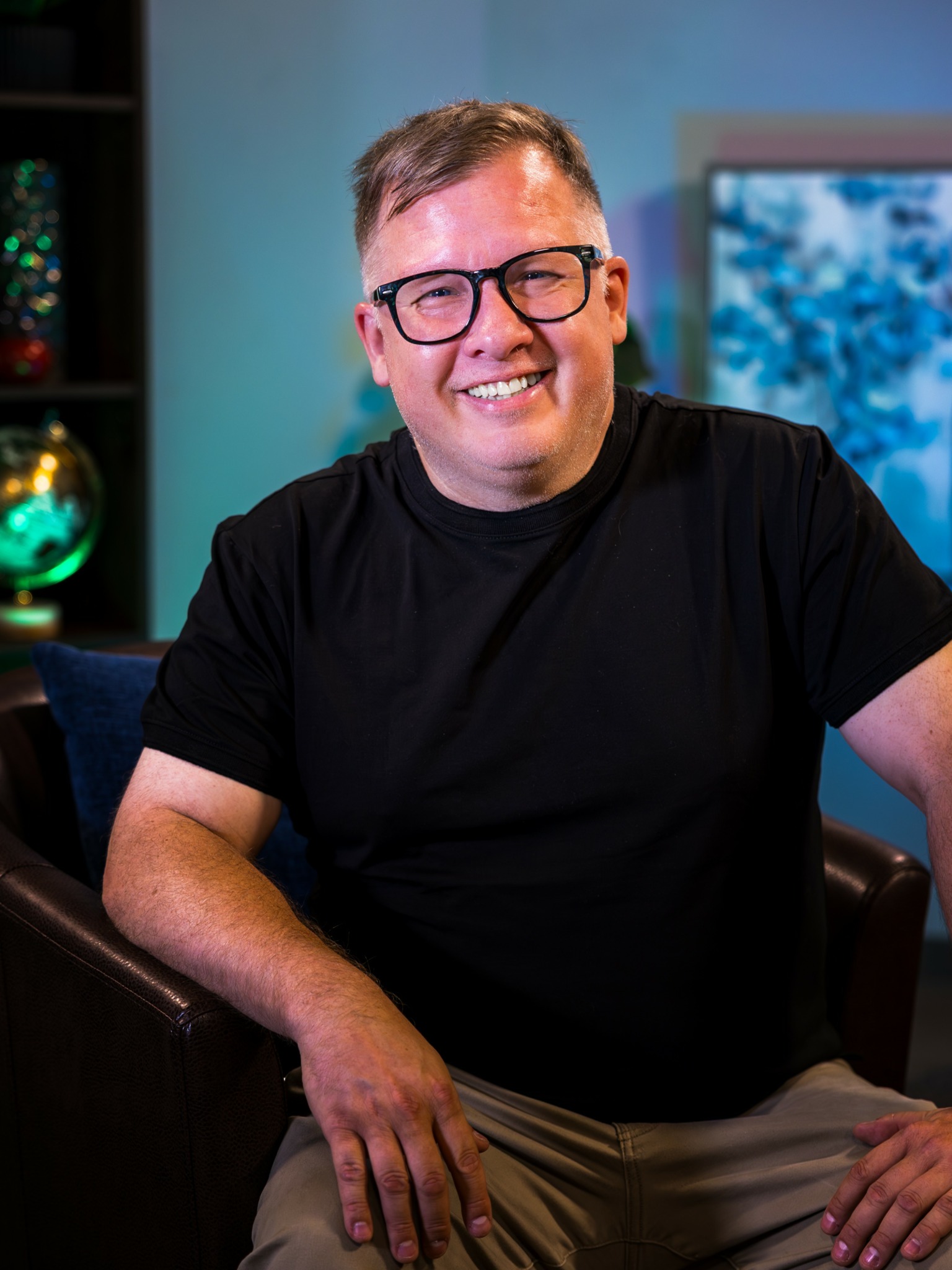

Alright – so today we’ve got the honor of introducing you to Marc Isaacs. We think you’ll enjoy our conversation, we’ve shared it below.
Marc, appreciate you joining us today. Alright – so having the idea is one thing, but going from idea to execution is where countless people drop the ball. Can you talk to us about your journey from idea to execution?
On the morning of July 23, 2004, I walked into the 24-hour Houston news channel where I worked, unaware that everything was about to change. The TVs around the newsroom showed a message about our station’s immediate closing. The night before, until nearly 2 AM, I had shot and reported on story that hadn’t even aired yet. That is how sudden the station’s shutdown was. One moment we were covering the area, and the next we were turning in our employee badges and absorbing the shock.
But even in that moment of uncertainty, I was not starting from zero. Weeks earlier, almost on instinct, I had reached out to a national news organization that distributed stories to stations across the country. I did not know it at the time, but that small step, just an email and a conversation, became the foothold I needed when the bottom dropped out. Within days of the station closing, I was producing stories for them from Houston. I had built a path without realizing I would need it so quickly.
Those early days felt strangely liberating. For the first time, I was not reporting to a newsroom; I was reporting to myself. My home became my office. My schedule became my own. And without social media or a website, I relied entirely on hustle, phone calls, relationships, and being physically present in the film and TV community.
I met former TV journalists who had broken away from the traditional newsroom to become freelancers. They had contacts I did not, experience I admired, and, most importantly, they showed me it could be done. Their influence helped me secure more national news producing assignments.
Just a few months later, everything accelerated. I interviewed for a freelance producing position on a home improvement series at another local station. I did not get it. A colleague I had worked with years earlier did. But that “no” opened the door to a bigger “yes”, the opportunity to co-create a brand-new children’s educational series to be filmed at the Houston Zoo.
This was not a small assignment. It required developing content for 13 episodes, each one structured as a game show with pairs of middle-school students competing in a tournament-style format. I researched and wrote four competitions per episode. I conducted pre-interviews with the zookeepers who would appear on screen. And when filming wrapped, I moved into post-production, shaping the rhythm of each episode, adding bumpers, trivia, and other transitions to meet the exact 25-minute broadcast requirement for Saturday morning educational programming. It was intricate, challenging, and thrilling.
Producing a weekly show taught me something I had not fully believed about myself before. I learned that I was capable of creating, designing, and executing ideas at a scale far larger than I had ever imagined. It was not just about surviving after the station closed. It was about expanding into a fuller version of what I could do. That growth became even clearer later, when the show earned multiple Lone Star Emmys, and I would realize I had crossed into an entirely new phase of my career.
Looking back, the first weeks were all momentum. The closure of the news station was news in itself, and I used that visibility to keep my name circulating. But it was the following months, the quieter ones without the adrenaline of sudden change, that required real discipline. I networked constantly. I found mentors who had already done what I wanted to do. And I learned quickly that freelancing was not a single leap; it was a chain of small choices that had to be renewed repeatedly.
That was the real launch. Not a single moment, but the arc itself: a sudden end, a prepared beginning, a community of freelancers showing me the way, the hustle of those early months, the projects that pushed me further, and the realization that I could build a creative career on my own terms.

Awesome – so before we get into the rest of our questions, can you briefly introduce yourself to our readers.
I’ve always lived at the intersection of storytelling, communication, and human connection. I began my career in my hometown in broadcast radio, working in sales while also spending my evenings announcing local sports and hosting a Saturday night request show. I grew up listening to the very stations where I later worked my first professional job, and those early years became my foundation. They taught me that great media is a team effort and that all departments, from sales to programming to production, contribute to a shared mission. I also learned to work across roles, which shaped the versatility that defines my career today.
Radio eventually opened the door to television. After filling in as a TV weatherman, I soon stepped into producing the morning news, just as the show expanded with new hosts and fresh energy. That period marked the start of my broadcast writing career, and I was doing it at the same station I had watched as a kid. It was the first time I felt the full weight of storytelling as a responsibility and a craft.
A move to Houston took everything I’d learned and amplified it. Producing a talk show designed for a national audience meant interacting with celebrity guests, thought leaders, and newsmakers. The scale was larger, the expectations higher, and the environment fast-paced. But the thread that anchored me through every transition was writing. It remained the skill that opened doors, whether I was crafting scripts, developing segments, or shaping narratives for television.
Writing eventually carried me into acting, filmmaking, and the world of creative production. These were natural evolutions of my interest in story in all its forms. As a freelancer, writing became my primary service offering to small businesses, advertising agencies, and national and international clients. I provided everything from web copy to campaign messaging to publication-ready articles. I also developed a long and meaningful connection to organizations working in substance use and mental health, delivering more than 250,000 words of content in those fields while working entirely remotely.
Today, I offer a blend of creative services rooted in writing, producing, story development, and content strategy. Clients come to me when they need narratives shaped with clarity, empathy, and authenticity, whether for film, digital platforms, education, or brand storytelling. What sets me apart is my background across multiple mediums. I understand story not just on the page, but also in the edit bay, in the studio, and on set. I help clients articulate what they want to say and transform it into something that resonates with the people they want to reach.
One of the projects I’m most proud of is my collaboration with clients in nonfiction film and documentary storytelling. Among them is the daughter of a WWII radio operator whose book preserves her father’s 522 wartime letters. I adapted her family’s story for the screen, and it is now being developed as both a short film and a limited series. Projects like hers remind me why I fell in love with storytelling in the first place. They embody the heart, history, and humanity that I believe great stories should hold.
Copywriting has paid the bills, but amplifying voices, preserving lived experiences, and helping others tell stories that matter is what fulfills me. If there is one thing I hope potential clients and collaborators understand about my work, it is that I bring care, depth, and intention to every project. Whether I am crafting a script, developing a film concept, or writing for an organization halfway across the country, my goal remains the same: to create stories that make people feel seen, understood, and connected.

What do you think is the goal or mission that drives your creative journey?
Absolutely! The driving force behind my creative journey is bringing the scripts I write or co-write from the page into full production and, ultimately, distribution as completed films or series. I have been fortunate to see numerous short films produced, along with one feature, and each project has reinforced my commitment to long-form storytelling rooted in real lives and real history.
My focus is on biopics and true stories, often period pieces, which require a deeper lift in terms of research, authenticity, and production scale. These projects move more slowly through the pipeline, but they are also the stories that matter most to me. My mission is to identify the right collaborators, producers, directors, financiers, and champions, who share my passion for spotlighting lesser-known figures in New York State’s history.
I am especially driven to bring forward the lives of people whose contributions or experiences have been overlooked, misunderstood, or forgotten. Among them are America’s first supermodel, who spent the final 64 years of her life in a psychiatric institution; pro football’s first soccer-style kicker; an aging pitcher in the American League who shocked the baseball world as an unexpected World Series starter and record-setter; and a rising star in the National League who kept a promise to his mother by returning to college while already on an MLB roster.
These are stories about resilience, reinvention, and humanity. My mission is to ensure they find their way to the screen and to audiences who will finally see each person for who they were.

Can you tell us about a time you’ve had to pivot?
I have experienced several major pivots throughout my career, including the cancellation of a TV talk show I produced, the shutdown of the television network where another one of my programs was airing, the 2008 recession that caused a major automotive client to pull out after only two commercials, and a layoff at a creative agency that suddenly lost key accounts. Each of these moments forced me to adapt quickly, rethink my path, and rebuild my professional footing.
But the most significant pivots in my life have come from personal circumstances rather than professional ones.
In 2009, my wife and I divorced and began sharing custody of our 3-year-old daughter. At the time, my ex-wife moved from Houston to North Texas to pursue a graduate degree and work at a Dallas radio station, which meant I was regularly traveling four hours each way to see my daughter and often bringing her home with me. That was the beginning of a long series of moves, not for my own career but to stay connected as a parent.
Over the next decade, my ex-wife’s work in radio led to several relocations, none of which were within the same state. I followed so that my daughter could have both parents in her life. This meant moving from Texas to Wisconsin in 2015, from Wisconsin to California in 2017, and from California back to Texas in 2019. Each move required me to adjust to new cities, find new communities, and rebuild my professional networks from scratch.
It was often challenging to maintain ties with colleagues scattered across multiple states and time zones, and I watched my professional circles contract and then slowly expand again as I worked to stay visible and connected. Still, each relocation taught me resilience and reinforced a valuable lesson: in the world of writing and storytelling, mobility is a necessity.
Every pivot, whether professional or personal, pushed me to reinvent, reconnect, and remain flexible. And each time, I came away with a deeper understanding of how to sustain a creative life no matter where I land.
Contact Info:
- Website: https://www.imdb.com/name/nm2304794/
- Instagram: https://www.instagram.com/wordmasseur/?hl=en
- Facebook: https://www.facebook.com/MarcJIsaacs/
- Linkedin: https://www.linkedin.com/in/marcisaacs/?skipRedirect=true
- Other: TikTok: https://www.tiktok.com/@wordmasseur


Image Credits
Luke Smith, Dylan Avery