

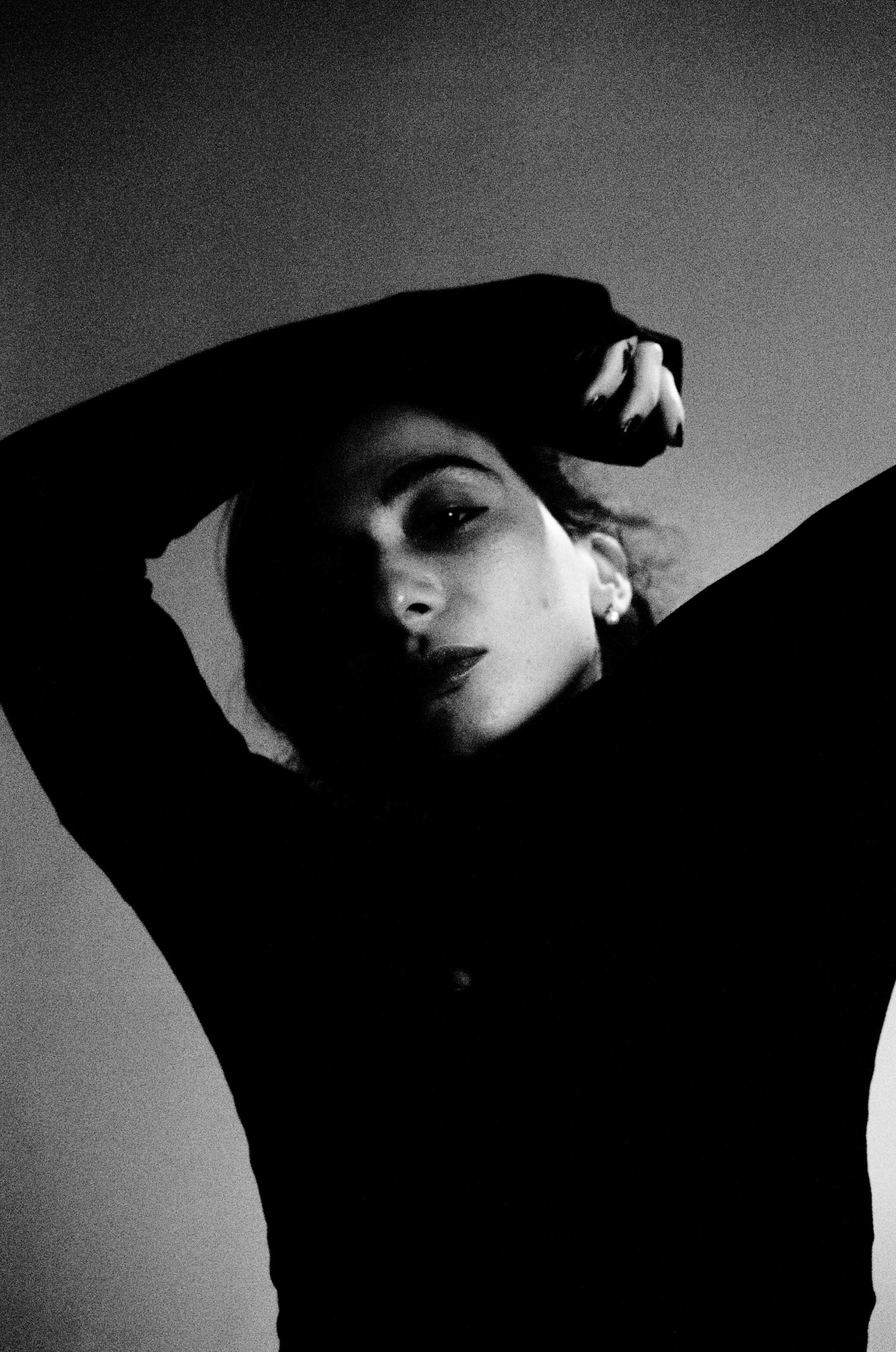

We recently connected with Mane Dias and have shared our conversation below.
Mane, appreciate you joining us today. Going back to the beginning – how did you come up with the idea in the first place?
I think the path into tattooing was forming itself long before I consciously realised it. I was always drawing, collecting images, obsessing over visual details, and at the same time I was completely fascinated by tattoos as objects and as a form of self-expression. Since my early teens I knew I would be heavily tattooed myself. I kept notebooks filled with sketches, ideas, references, and designs I imagined either for myself or other people.
As I got older, the question of what I actually wanted to do with my life became impossible to ignore. I knew I wanted to create art in some form, but I also understood that I needed a medium that felt alive, direct, and connected to people. Traditional painting felt too distant from the kind of interaction and intensity I was looking for, while design felt too structured for my personality.
Tattooing naturally combined everything that interested me: drawing, composition, psychology, aesthetics, human connection, and permanence. Once I started, it immediately felt like the right language for me. Not something I randomly chose, but something I had already been moving towards for years without fully realizing it.

Mane, love having you share your insights with us. Before we ask you more questions, maybe you can take a moment to introduce yourself to our readers who might have missed our earlier conversations?
I am a self-taught tattoo artist and visual artist currently based in the United States. My work exists mainly between tattooing, painting, and visual storytelling. I work primarily in black ink, creating atmospheric compositions influenced by noir cinema, avant-garde photography, symbolism, and modernist art.
Drawing has been a part of my life for as long as I can remember. I was always fascinated by images and visual language more than words. Over time, tattooing became the medium that allowed me to combine art with human interaction in the most direct and permanent way possible. I started tattooing at a young age and built my career through experimentation, observation, travel, and constant practice rather than through academic education.
A large part of my artistic journey has been about finding my own visual voice and pushing against narrow ideas of what tattooing is supposed to look like. I was never interested in treating tattoos purely as decoration. I see them more as emotional and psychological objects — something intuitive that stays in the viewer’s mind as a feeling rather than simply an image.
Throughout my career I worked in different studios, traveled extensively, participated in conventions, and eventually opened my own private studio shortly before Covid. Later, moving to the States became another major turning point for me both professionally and personally. It pushed me into completely new environments, audiences, and creative opportunities.
Alongside tattooing, I also work with painting and photography-inspired visual projects. Recently I’ve been focusing on a series of liquid charcoal paintings that I hope to exhibit in the near future.
I think what sets my work apart is probably the fact that I approach tattooing less like a service industry and more like a continuation of artistic practice. Atmosphere, composition, emotion, and cohesion matter to me just as much as technical execution. My social media presence, visual presentation, and artwork all exist within one connected language.
At the end of the day, I want people to feel something when they look at my work — even if they can’t immediately explain what exactly that feeling is.

What’s the most rewarding aspect of being a creative in your experience?
For me, the most rewarding part of being an artist is probably the feeling of building your own world and slowly seeing other people connect to it. There’s something very special about creating images or atmospheres that exist first only inside your head and then suddenly become meaningful to someone else.
I also value the freedom that comes with creativity. Not necessarily financial or practical freedom, but the ability to shape your life around your own vision, instincts, and curiosity.
At the same time, being an artist constantly forces you to evolve. You can’t stay mentally static for too long without your work becoming empty. I think that continuous process of searching, doubting, experimenting, failing, and redefining yourself is both the hardest and the most rewarding part of it.

Is there something you think non-creatives will struggle to understand about your journey as a creative?
People often imagine artists as constantly inspired, expressive, or emotionally chaotic, but in reality a huge part of creative work is discipline, repetition, self-doubt, and learning how to continue despite all of that. Inspiration alone is not enough to build a long-term artistic career.
At the same time, creativity teaches you to tolerate uncertainty and trust your instincts more. You learn that there is rarely a “correct” path, and that sometimes the most important decisions are the ones that make sense emotionally before they make sense logically.
Contact Info:
- Website: https://manedias-tattoo.com
- Instagram: themanedias


Image Credits
First (profile) picture: Natasha Austrich