

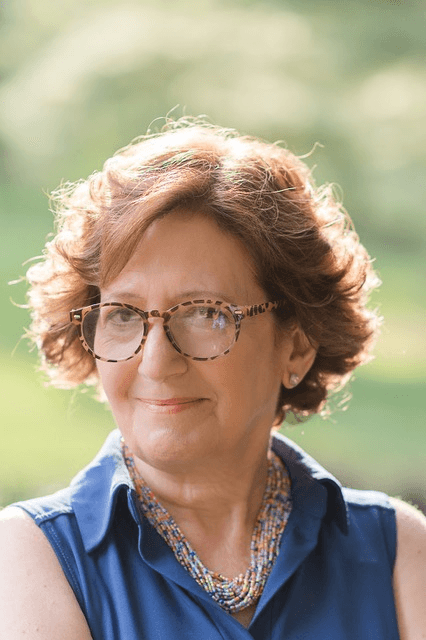

We recently connected with Mally Becker and have shared our conversation below.
Alright, Mally thanks for taking the time to share your stories and insights with us today. If you could go back in time do you wish you had started your business sooner or later?
I wouldn’t wish away any part of my life. So, no, I don’t wish that I’d started writing sooner, even though I didn’t begin until I’d turned fifty.
After The Turncoat’s Widow, my first mystery, came out, a podcaster complimented my writing. Sounding puzzled, he asked, “What took you so long? Why didn’t you start writing earlier?”
The question took me aback, and I blurted out, “Because I was busy.” Which is silly, really. We’re all busy. My husband and I were busy raising our son. I was busy working full-time as an attorney and busy volunteering.
That question, though, got me thinking for the first time about why I hadn’t tried writing fiction earlier.
Don’t get me wrong. I’ve spent my life writing almost everything BUT fiction. I wrote a column for my local newspaper. I’ve written speeches, freelance articles, op-eds, and briefs. I dreamed of writing a mystery but didn’t think I could. I thought and still think that creating fictional worlds is magical, and I knew I was not a magical type of person. I didn’t think my imagination could come up with a story that I’d want to read. I didn’t want to discover that my belief was correct.
Looking back, I can see what I couldn’t then. It wasn’t that writing fiction DIDN’T matter enough to me to follow through on any of my ideas. It was that writing mattered too much.
I gave up on writing fiction so that I never had to discover I couldn’t do it. I didn’t love the idea of some stranger, an editor or agent, rejecting my work. But that wasn’t what scared me: I was afraid of disappointing myself. So I decided without putting effort into it that this was something I couldn’t do. I couldn’t fail if I didn’t try.
It’s a good thing we learn to walk as one-year olds when we don’t mind taking endless spills. If we had to learn the skill as adults, most of us would never make it. Because as we get older, a lot of us lose the bravery we had as children, the courage that let us jump off the high dive for the first time, do a cartwheel, or audition for a school play in front of our middle-school peers. We lose the courage to try something new and be really, really bad at it at first.
We take a tentative step into a deferred or a new dream and start writing or running or painting, then quit despite our passion. Because it’s scary to be a beginner as an adult. Because the story in our mind, we are shocked to discover, seems so awkward on the page at first. It’s painful to fall below our own expectations. We are trained over the years and decades to see efforts that are less than stellar as failures.
So what made me brave enough to try something new? I’d reached my 50th birthday and felt the press of time. If there were things I wanted to do, really wanted to do, I’d better start. That year, I climbed Mt. Marcy in the Adirondacks and I went to Paris. But I still didn’t start writing. Not then. A year or so later, my closest girlfriend, the only friend willing to climb the highest peak in the Adirondacks with me, got sick with one of those diseases no one wants. That’s when I knew in a real way that time was finite.
I didn’t make the connection between my friend’s illness and my writing til years later. But that year – at age 51 – I finally asked myself: What do you want to do with this one beautiful life? At some point, we all ask ourselves that question, don’t we? And what I wanted was to see if I COULD write a novel.
That was when I signed up for my first writing class at The Writers Circle Workshops in Summit. I was worried I’d be the oldest student. I wasn’t. I was worried my writing would be crappy. It was. I was worried I’d be judged. I wasn’t. In the process, I discovered that creating a story was fun. Not fun every second, but more fun than I could have imagined. I hadn’t known how much pleasure I’d find in the rigorous, creative, intellectual process of piecing together a mystery with characters I cared about.
So, no matter your age, I hope you’ll dust off that dream you’ve had and take a step toward making it real, whether it leads you to write, skydive, paint, or start a new business. You can’t know where those dreams will lead nor what adventures you’ll have if you never try.
Would I have appreciated writing and being published even more if I’d started earlier? I doubt it. Having had an earlier career—with all its highs and lows—give me the perspective to shrug off minor frustrations pretty easily and appreciate even more the privilege of being a published, award-nominated mystery writer.
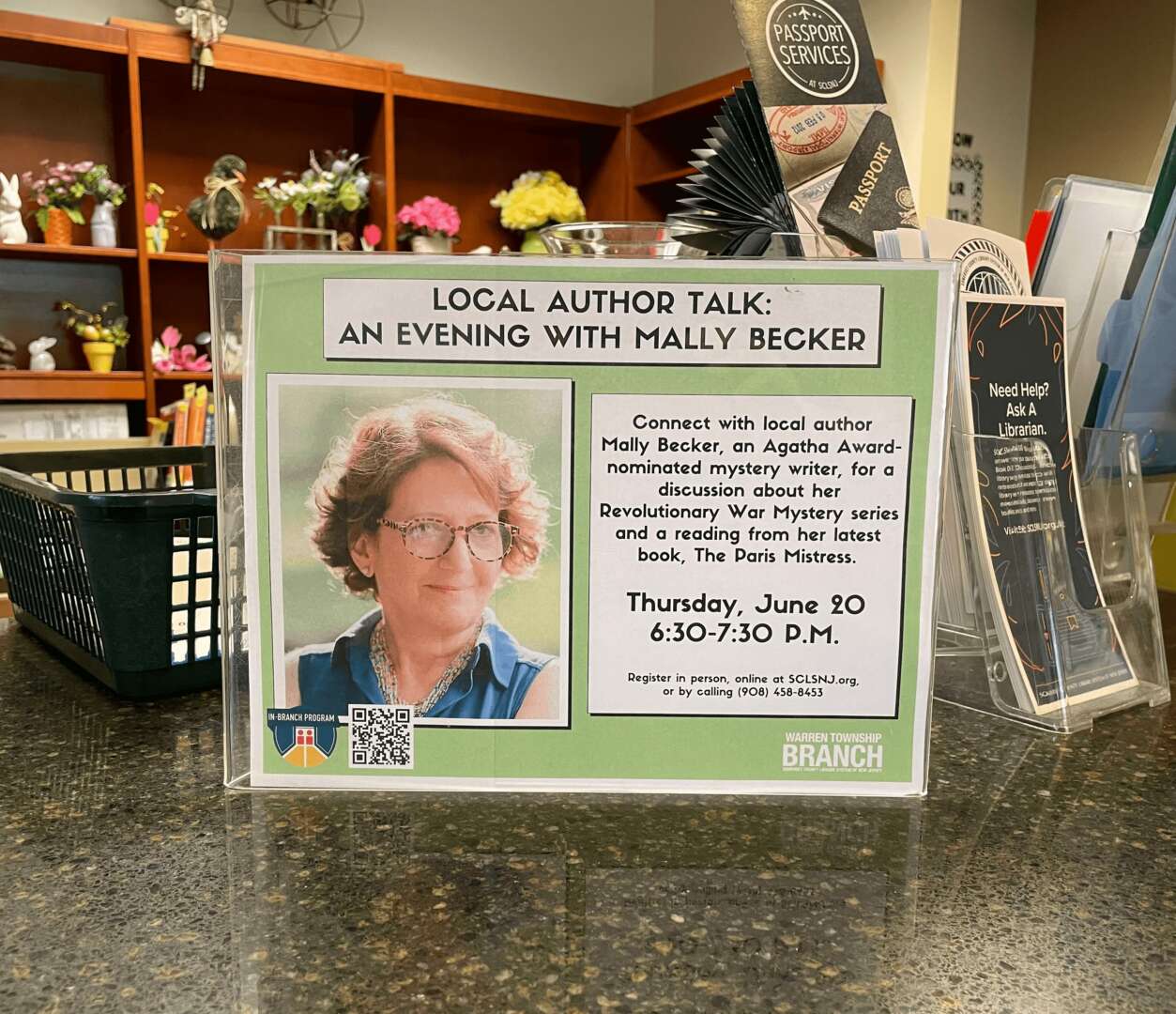
Mally, love having you share your insights with us. Before we ask you more questions, maybe you can take a moment to introduce yourself to our readers who might have missed our earlier conversations?
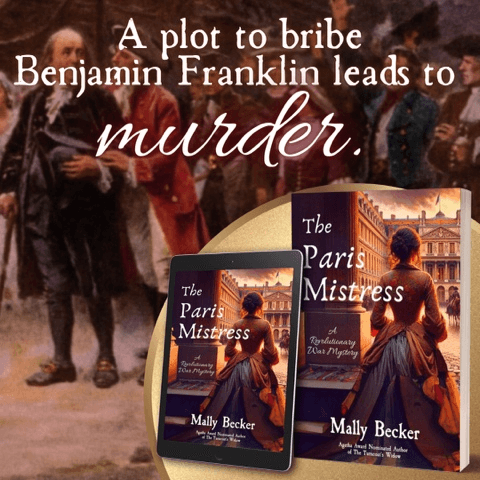
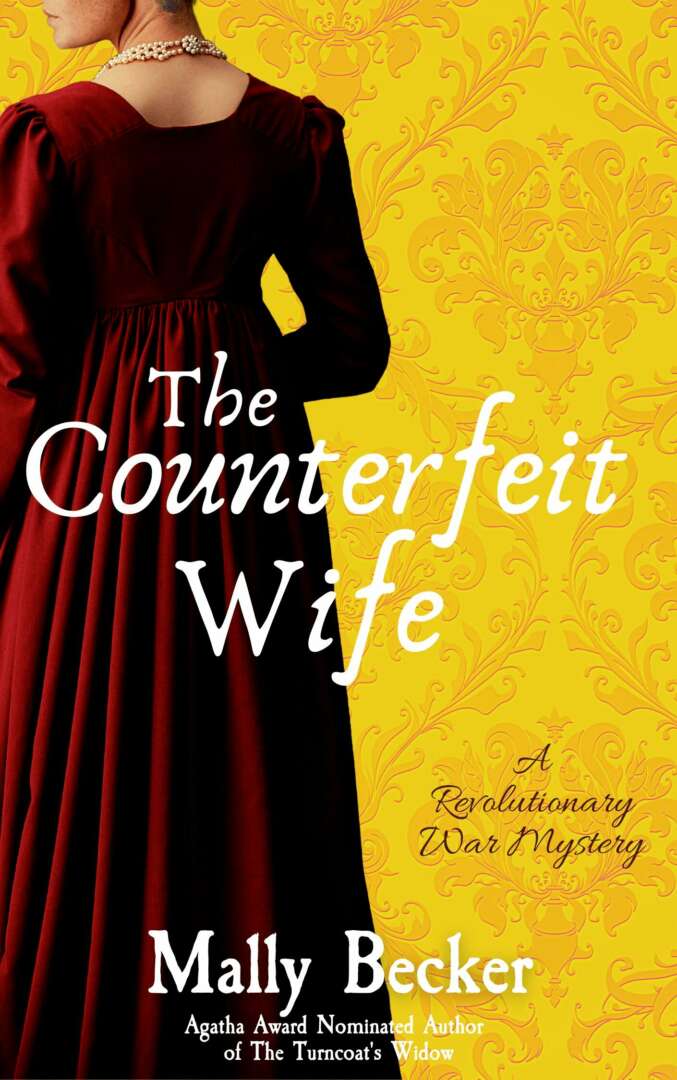
I write a Revolutionary War mystery series, which includes The Turncoat’s Widow, The Counterfeit Wife, and The Paris Mistress. Published by Level Best Books, the series follows George Washington’s two unlikely fictional spies, young widow Becca Parcell and former British POW Daniel Alloway. With their attraction slowly growing, they race to uncover traitors in 18th century New York City, Philadelphia and Paris.
My mysteries tell the story of everyday people like ourselves facing enormous challenges in unprecedented times. I hope that readers cheer for my two protagonists who find themselves grappling with a world much more like our own than I ever realized. The 13 colonies faced hyperinflation, their own pandemic (yellow fever), and—especially late in the war—an ineffective, bickering Congress.
Readers can also expect to feel as if they’ve time-traveled back to 1780, from the Continental Army’s winter encampment in Morristown to glittering British balls in New York City in The Turncoat’s Widow, and from the waterfront in 18th century Philadelphia in The Counterfeit Wife to the Tuileries Gardens and Versailles in The Paris Mistress.
The first two installments in the series, The Turncoat’s Widow and The Counterfeit Wife, were nominated for the mystery community’s Agatha Award, respectively, as best debut and best historical mystery. Published earlier this year, The Paris Mistress is the latest book in the series. All three can be found or ordered wherever books are sold.
Before becoming a full-time writer, I was an attorney and volunteer advocate for foster children. Now, I lead mystery writing workshops at The Writers Circle Workshops in New Jersey, interview authors for the Historical Novel Society’s website, and, until recently, cohosted a crime fiction Podcast, Guns, Knives & Lipstick, with three other female crime writers. My husband and I live in Somerset County, New Jersey.
I didn’t know that volunteering at my local National Historical Park would lead me to write mysteries full-time. When I filled out the Park’s paperwork for that volunteer gig, I figured I’d be clearing trails. Instead, I was assigned to the archives where I found the document that literally changed my life.
It was an indictment of a New Jersey farmer for the crime of traveling to New York City during the American Revolution without the government’s permission. A crime to travel into the city? I couldn’t imagine having to ask permission to head into Manhattan. I took the indictment to the Park historian and asked, “What the heck is this?”
So many of us were spying for the British and carrying secrets to Redcoat-controlled New York City, he explained, that the government made it a crime to go there without its permission. Historians believe that, south of New England, 50% of the country or less supported independence. It seems we were just as argumentative and divided a country then as we are now.
I started playing the writers game of “what if” without knowing that’s what I was doing. What if an 18th century woman discovered that her husband was one of those British spies? What if that woman was a widow, and what if Washington enlisted her help to find the secrets her spying SOB of a husband left behind? I read. I researched. And slowly, I began to write my first mystery.
We’d love to hear a story of resilience from your journey.
This is my rejection story. Almost all writers have one…or several.
Eight agents asked to see my entire first manuscript. I was on a writer’s high…until all eight rejected the story.
“Eight rejections is nothing,” a published author told me, pointing out that J.K. Rowling was repeatedly rejected both for Harry Potter and her follow-up mysteries, which she penned under a pseudonym.
I’d like to tell you that I brushed myself off and submitted a pitch letter and sample chapters to 80 more agents. I didn’t. I put the manuscript in a drawer—or the computer file folder equivalent—never intending to touch the novel again. Because who needs rejection?
Apparently, I did, and I have those rejections to thank for the eventual publication of The Turncoat’s Widow. Three of the agents had sent what’s known as “good rejections.” They had taken the time to explain what they didn’t like about my mystery, and all three mentioned one identical factor. I couldn’t see what they meant at the time. (I was too busy feeling rejected.)
Reading is a subjective experience. Everyone has their own taste in books. But when more than one agent, publisher, or bookstagrammer has the same gripe, it’s worth taking a closer look. I found myself revisiting the agents’ emails over the next few months and reimagining the story I’d written. Call it resilience or just stubbornness, I thought I owed The Turncoat’s Widow another chance. With the benefit of time, I reread what I’d written and finally understood the problem those three agents highlighted.
“A quick rewrite is all this needs,” I said to myself, thinking I’d complete the revision in a month or two. The rewrite took a year.
Level Best Books responded within a week of receiving my “pitch” and requested the full manuscript. My series and I have been with them now since 2020.
And I still hate rejection.
For you, what’s the most rewarding aspect of being a creative?
Hearing from readers who talk about my characters as if they’re friends.
Contact Info:
- Website: https://www.mallybecker.com
- Instagram: @mallybeckerwrites
- Other: https://www.facebook.com/mally.baumelbecker/
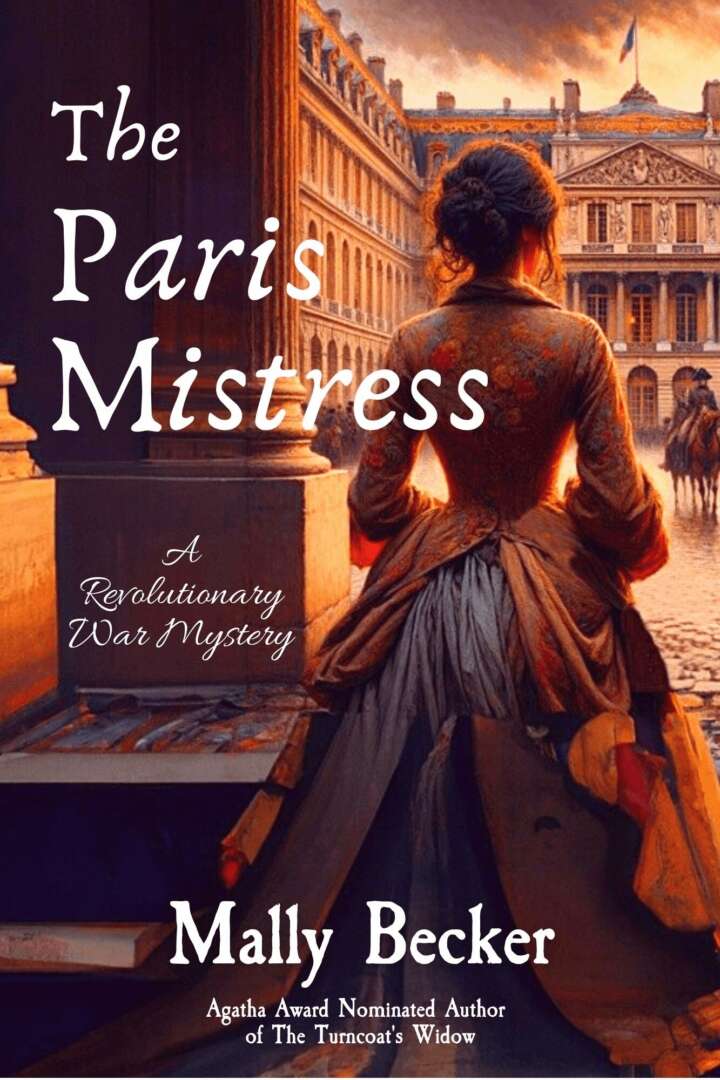
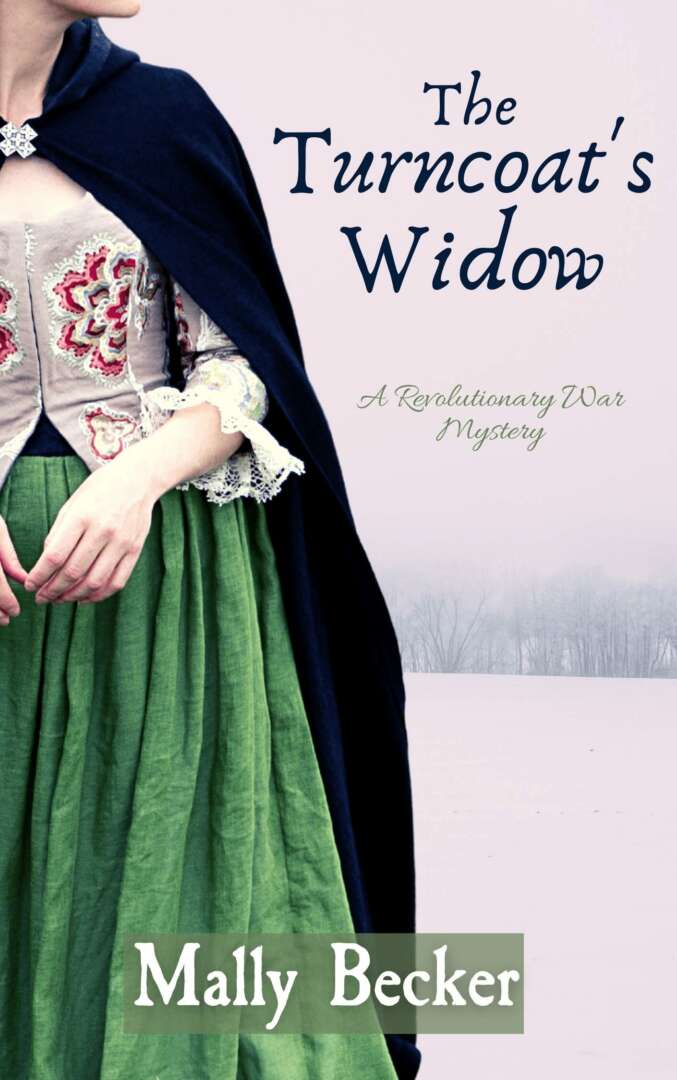
Image Credits
Book covers by Level Best Books