

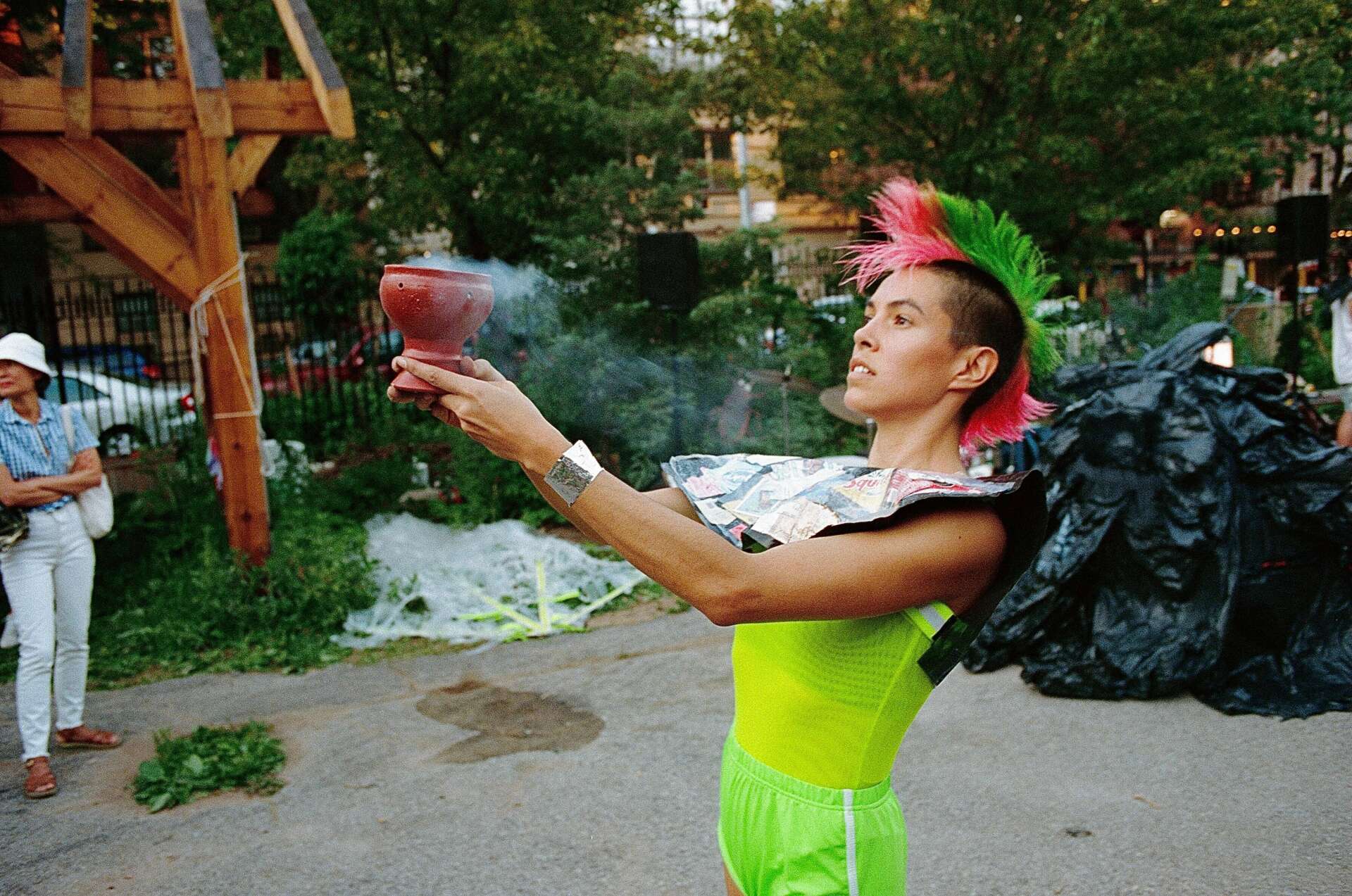

We were lucky to catch up with Maira Duarte recently and have shared our conversation below.
Hi Maira, thanks for joining us today. Are you able to earn a full-time living from your creative work? If so, can you walk us through your journey and how you made it happen?
When I was 17 I was fortunate to be surrounded by beautifully creative people. I had joined a physical theater troop and, although they were older than me, in their 20’s, they invited me to perform with them and shared here and there very valuable advice. My favorite person was Vanessa, she is a painter. She told me once: Don’t ever worry about money, if you do what you love, money will never be a problem.
Two decades after that advice, I make most of my living not from performing, but from teaching dance. And that is sometimes a sour thing to swallow. I love teaching and by now, I’m at least competent at it. Still, I wish I could be paid only to go to a studio and make my art, to be commissioned to present work, or to perform for someone else and just be directed… and paid.
I know I made choices along the way that brought me here (like, getting a masters in dance education). I also know that in the world we live in, there’s simply not enough funding for the arts, and applying for grants is exhausting and confusing. I am trying to learn from activists and movement leaders how to develop alternative organizing methods that are independent from institutional funding.
Last year I did get some public funding and that was a boost for my ego. Most of the money was spent right away in producing a piece that was performed once. It is hard to continue the momentum when artists are asked to also produce, market, promote, write grants, design the flier, edit the video, etc.
I live in New York City, one of the most expensive cities in the world, and I’m also a new mother. So, money, sustainability, and housing are in my mind. I’m not sure how I am going to make it. But I know that I am resourceful, and I know I won’t stop doing what I love.

Great, appreciate you sharing that with us. Before we ask you to share more of your insights, can you take a moment to introduce yourself and how you got to where you are today to our readers
My name is Maira Duarte.
I am an artist, a movement researcher, an educator, and an organizer. My media are dance theater, performance art, costume making, and sometimes, ukulele playing.
I was born in Guanajuato, Mexico, where I studied dance, theater and pantomime from a young age. I moved to Mexico City to study Social Communication at the Metropolitan Autonomous University of Xochimilco. On the side, I continued my dance education, and started choreographing and producing dance works. I came to New York City in 2008. I obtained my masters in Dance Education at NYU and started working as a teaching artist in NYC public schools through several organizations. I became disillusioned with my life in NY, because I was teaching more than I was performing or creating. I started to notice that opportunities to live a sustainable life as an artist were very limited. I went back to Mexico for one year to teach dance at the University of the Americas, Puebla. I came back to NYC in 2014 with renewed energy and the seed ideas for the creation of a collective project called: Dance to the People (DTTP).
The goal of DTTP was to join efforts with other dance makers to open opportunities for learning and creating. By collectively seeking funding, occupying under-utilized spaces, and exchanging our time and skills, we would produce work in an autonomous way, breaking capitalist models of competition prevalent in the art world of today.
DTTP’s work has taken the form of class series, workshops, street performances, environmental movement research, community practices, forums, festivals, performance parties and choreographed dance works, all of these donation-based and open to anyone regardless of skill level or experience. Our work has been presented both in New York City and in Mexico (Cholula, Puebla and Mexico City in 2018, and Tulum, Quintana Roo in 2020 and 2021).
In 2018 DTTP collaborated in the creation of a protest dance film titled Papalotl Muyus. The film, premiered in 2021, features children of immigrants, who reclaim their cultural identity and dignity and denounce the U.S. government for the inhumane treatment of migrant families.
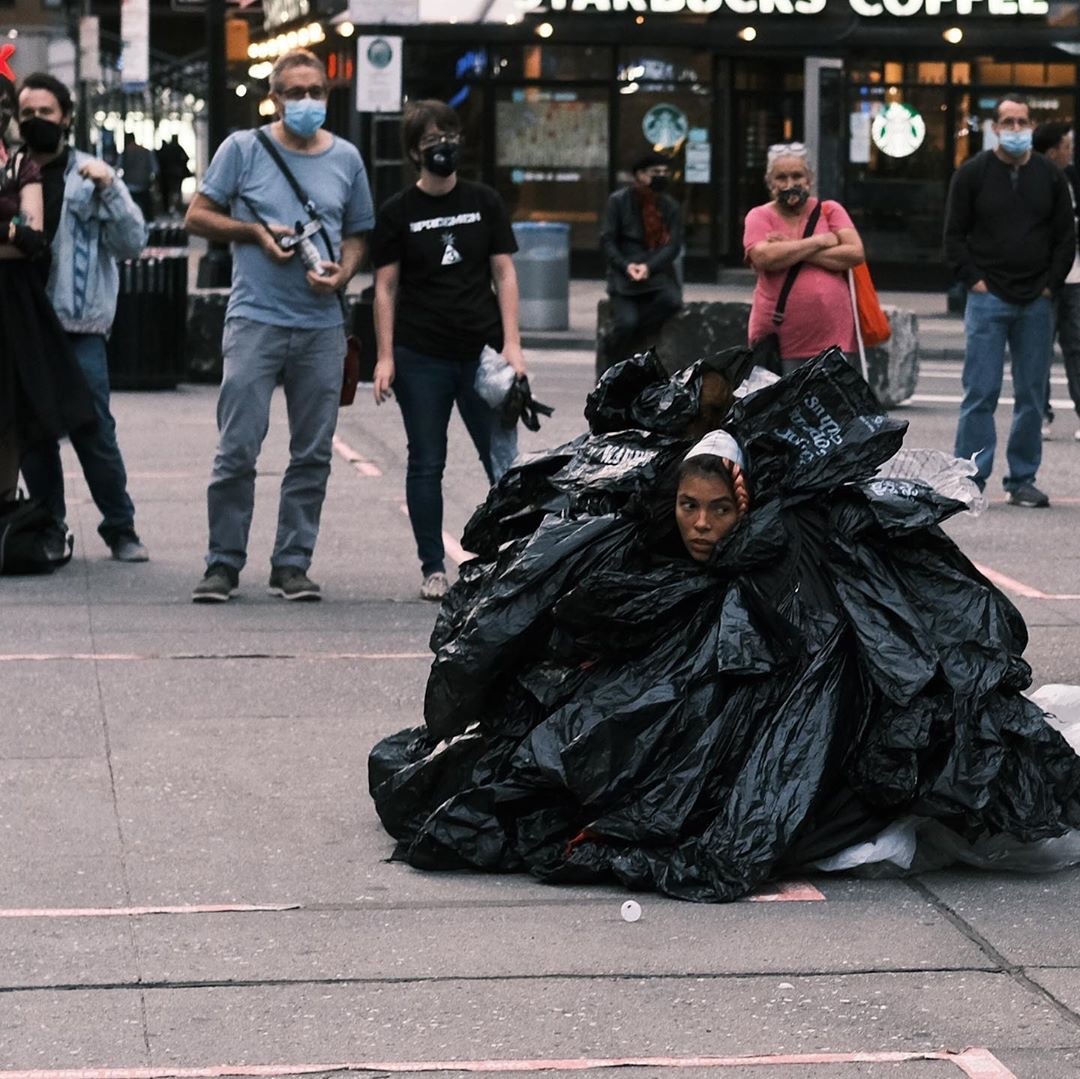
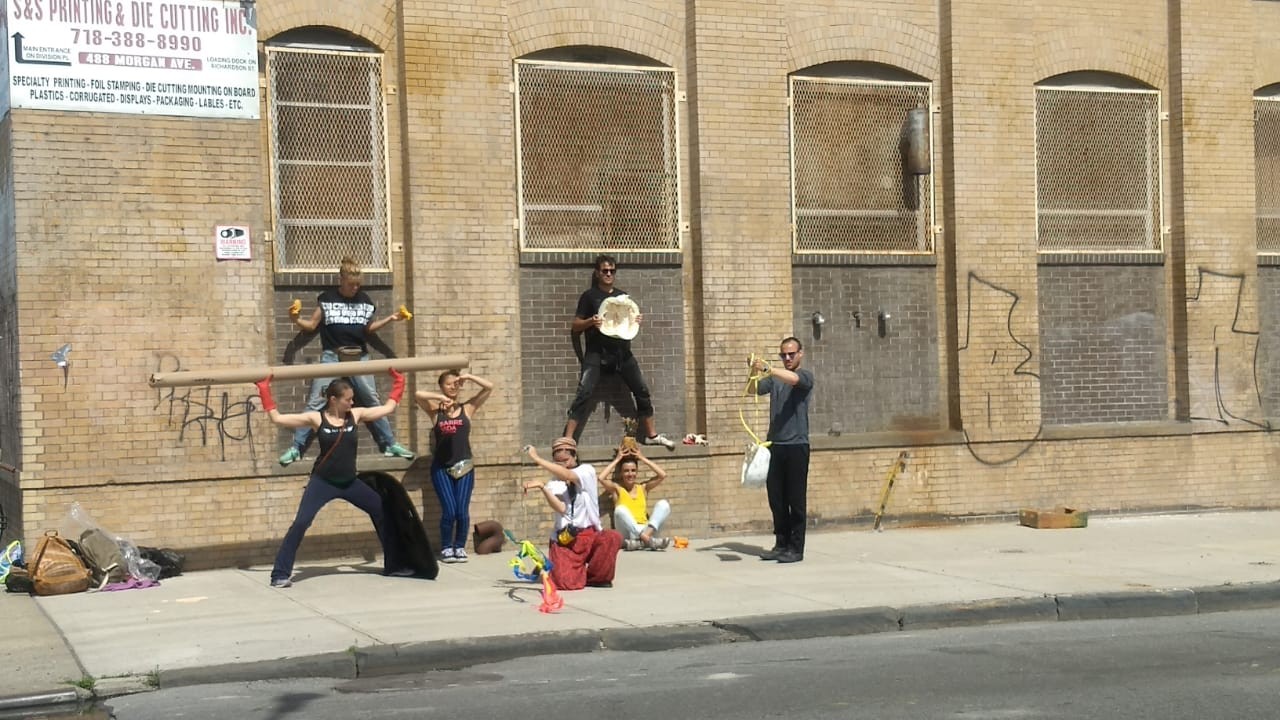
In 2019 DTTP’s work focused on developing movement practices that would get the public engaged with the environmental crisis, as well as the social injustice that is tied to it. We created a practice called Trash Outings, where participants would join in for a movement meditation in a natural space, a trash collection route, and an improvised performance with the collected items in a high-traffic public space.
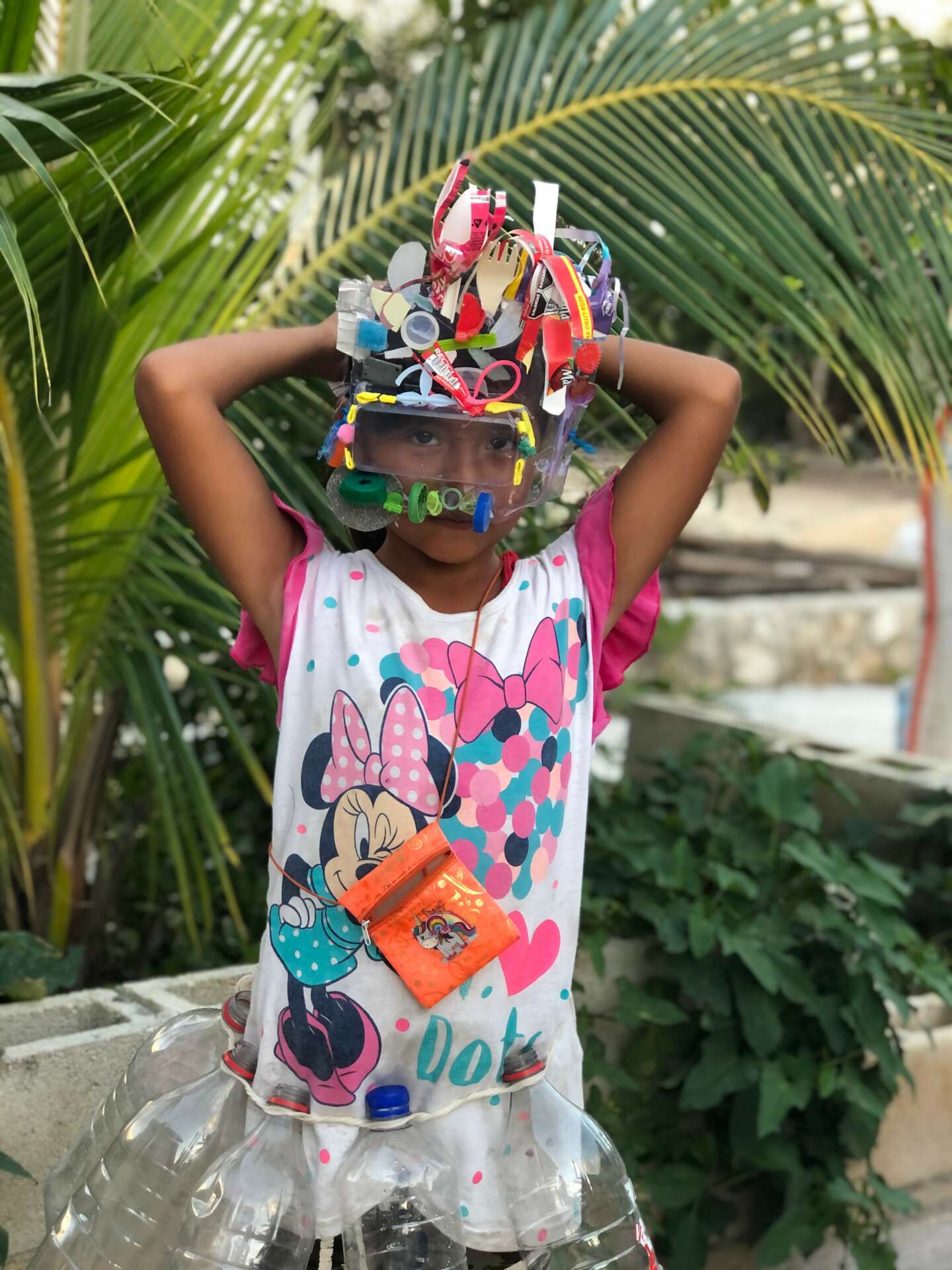
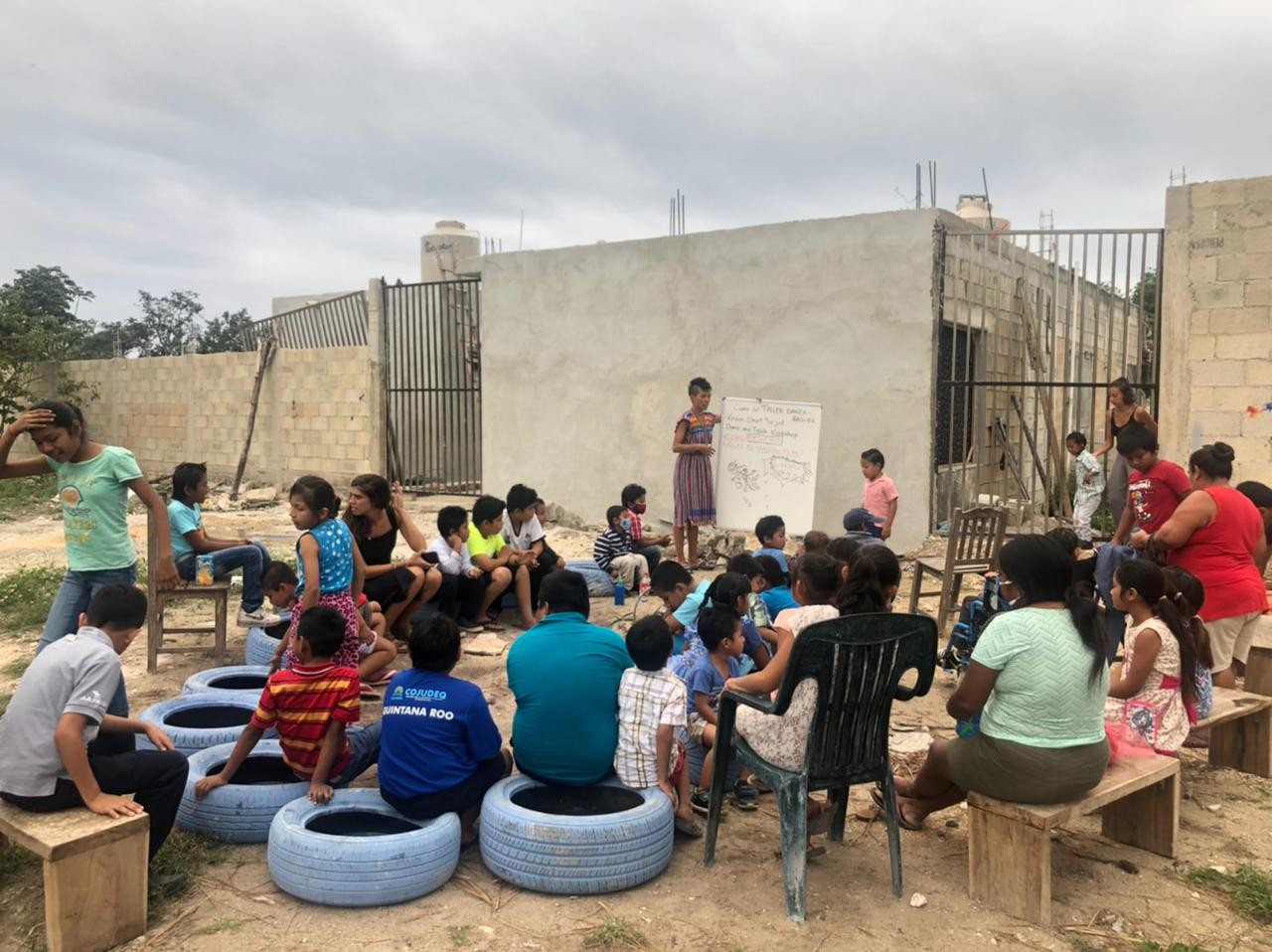
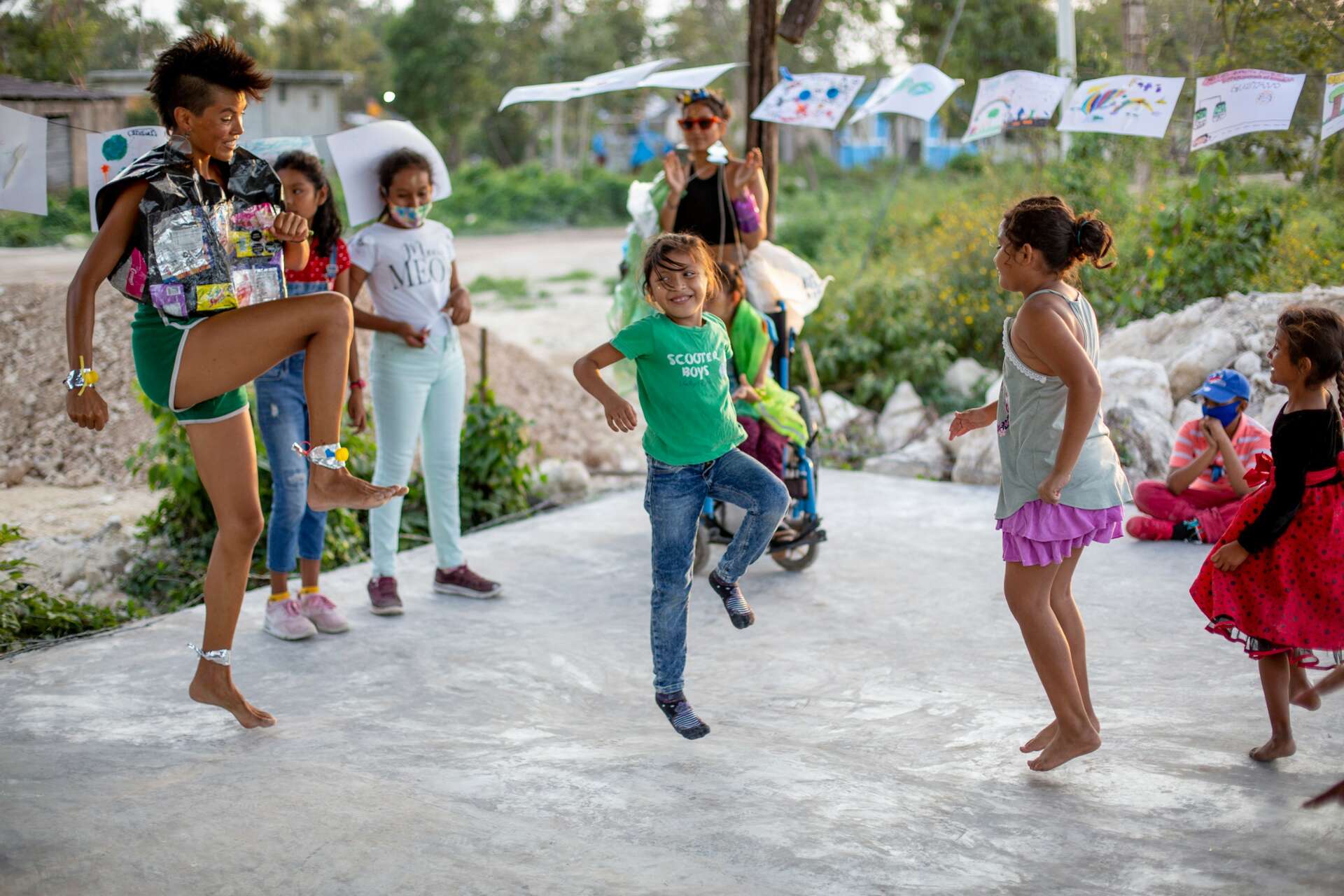
In 2020 and 2021 DTTP implemented environmental dance workshops with children and families of a marginalized area of Tulum, Mexico. The community joined to pick up trash from streets, beaches and their homes, sort out recycling materials, produce costumes and artwork, parade through the neighborhood and perform in a newly built community school.
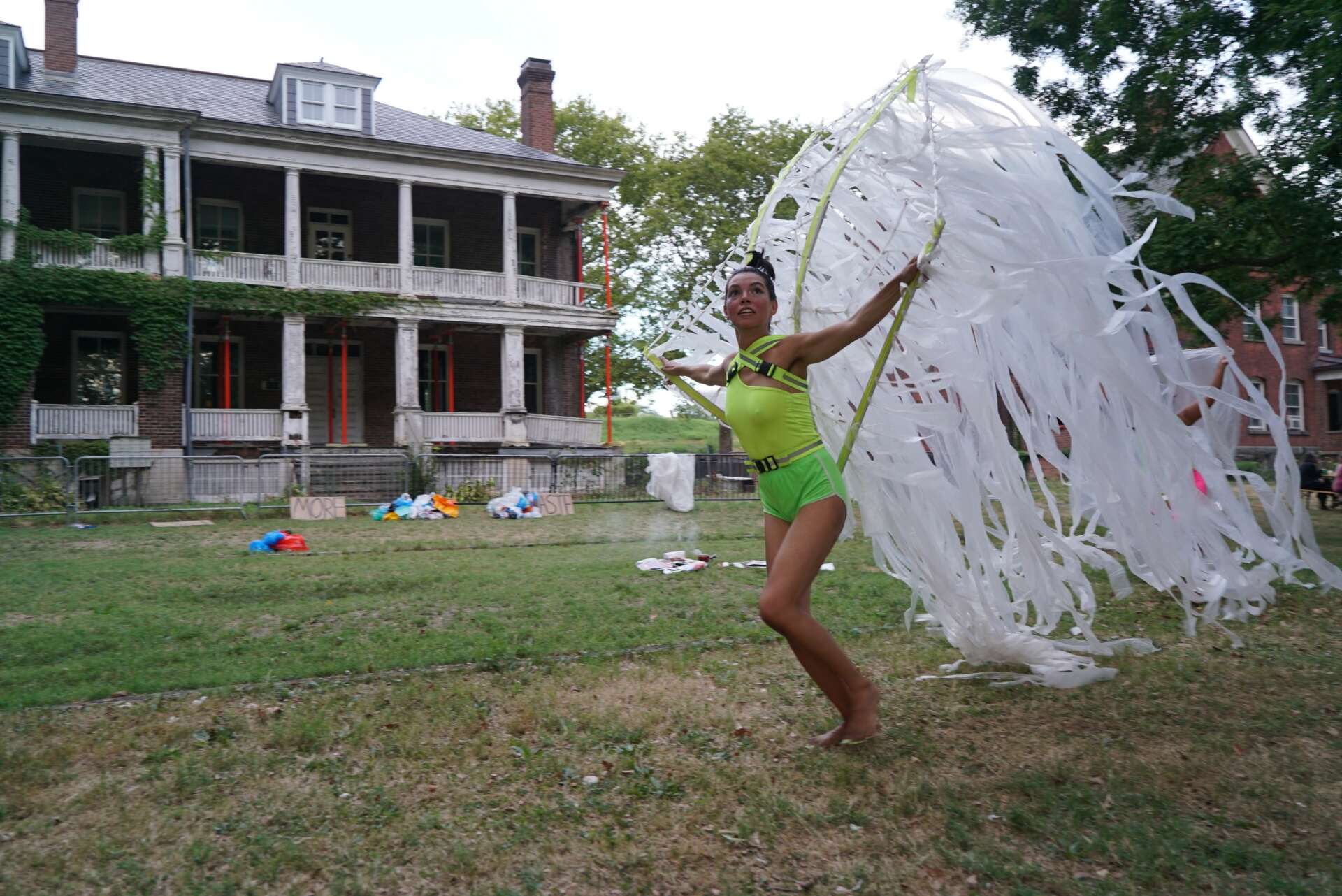
During the same period, in NYC, DTTP members developed choreographed performances with costumes made of plastic trash to be performed in open public spaces such as parks and community gardens.
These works were the seeds of our most recent dance theater work, titled: Apocalitzin.
Apocalitzin tells the story of a character born from trash and tragedy. In this case, the murdering and disposing of women’s bodies in Mexico’s border with the U.S.. Apocalitzin is a futuristic hybrid of plastic and human. She is also a descendant of the Mexica people, one of the original inhabitants of today’s Mexico, also known as Aztecs. In her journey, she reconnects with her indigenous roots through Danza del Maíz, the dance of the corn, a ritualistic dance that honors the earth and its fruits. Making connections with the resilience of indigenous culture, the piece strives to tell a story of hope in the face of environmental collapse.

Let’s talk about resilience next – do you have a story you can share with us?
My most recent experience in persisting to exist with all my identities has been becoming a mother. On one hand it feels like I’m entering a tribe of warriors and as each challenge is presented and overcome, one is left with the humbling knowledge of the power of caregivers around us. On the other hand, the experience is othering, spaces and opportunities start to close down, paid labor shrinks. People assume your retirement and are surprised by your presence with and without the child. At the same time that one is connected to the most essential life giving and life supporting mechanisms of our biological being, society reminds us that the socio-economical model under which we operate does not allow for such indulgence.
My mechanisms of resilience have been giving myself time and space to learn about what kind of support I need to thrive. How can our society work towards the types of care we need as interdependent individuals? Community care, structural care. I have continued to exist in realms where one does not usually witness mothering. I have asked others for support that they are not used to, but are pleased of, giving, and have taken advantage of opportunities offered by organizations that are aware of the important role of caregivers as leaders of social movements.
Thanks to this experience, my vision as an activist has refined.
Sustaining systems I am looking forward to investing in are gardening and food autonomy, environmental education, upholding of indigenous voices, and housing rights.
How can we best help foster a strong, supportive environment for artists and creatives?
There’s so much that needs to be done that is at times demoralizing. We could look at some European countries for examples of how the state takes care of artists, offering livable wages, and housing and other basic needs are subsidized. Even those models don’t really work if what we want is a diverse ecosystem, one that is accountable to underrepresented identities. Europe is, after all, sitting on the riches extracted from Africa and the Americas.
Now here, in the U.S.A, the heart of unrestrained capitalism, where inequality is growing, there’s so much unlearning to do. I think artists need to come to terms with the role they play as cultural creators, and break away from the ways in which they might be upholding systems of oppression.
I believe that a big part of the solution lies in a paradigm shift. Are housing, healthcare, or migration undeniable human rights? As long as people struggle to say yes, or are unable to see that we already have the resources to feed, house, and take care of all members of our society without depleting the land, (it is indeed by nurturing the land that we can sustain human life in more dignified conditions), if people continue to try to find the solution by applying a neo liberal, imperialistic, white-savior technocrat mindset, then, I don’t see us getting out of it.
I advocate in and through my art for the opposite framing: thrift, learn, repair, exchange, support, build networks, uphold indigenous narratives, defend the land, know your rights, teach the children, pick up the trash, dance, rest, resist, and breathe.
Contact Info:
- Website: www.dancetothepeople.org
- Instagram: @dttp.nyc, @dttp.mex
- Youtube: @dancetothepeople
Image Credits
Eric Lichtenstein Fernando Angeles Danny Alveal Aravena Effy Grey Shantel Moses Melissa Orozco Fernando Angeles Calaveras Grande Alex Romania